ABOUT
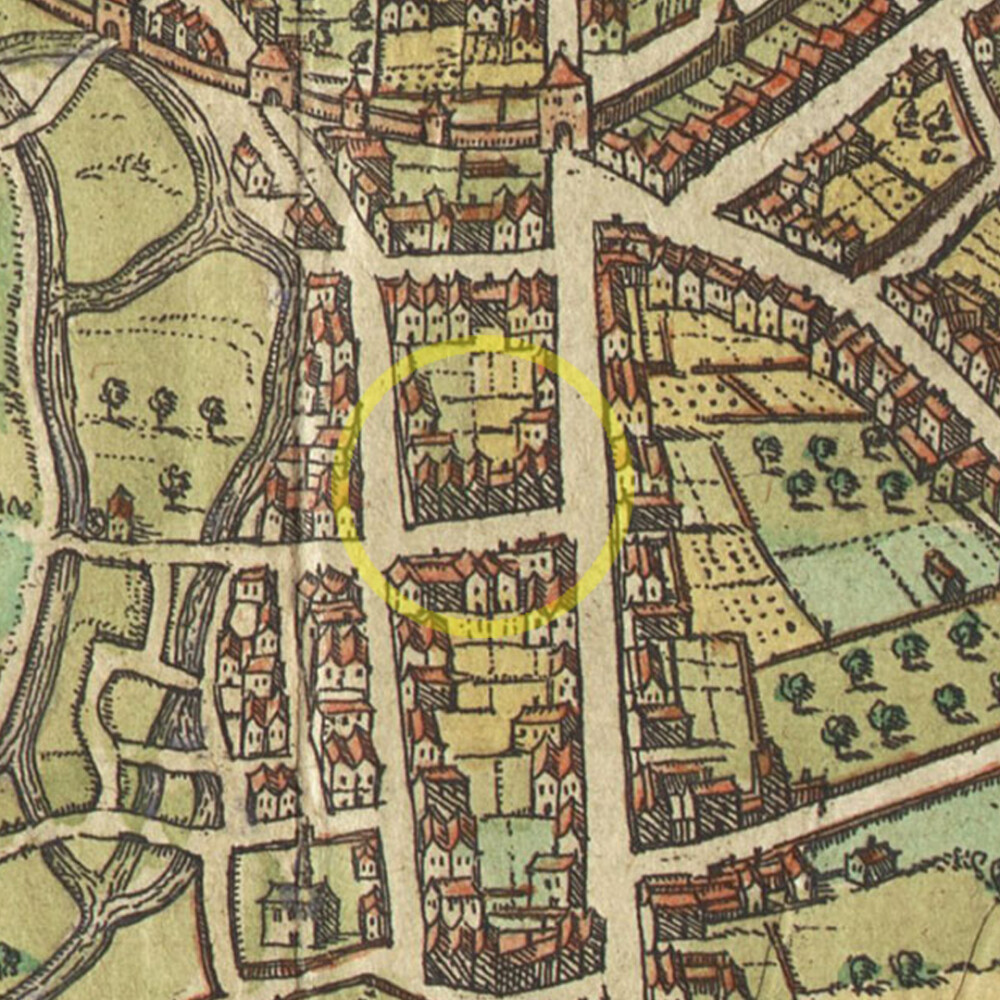
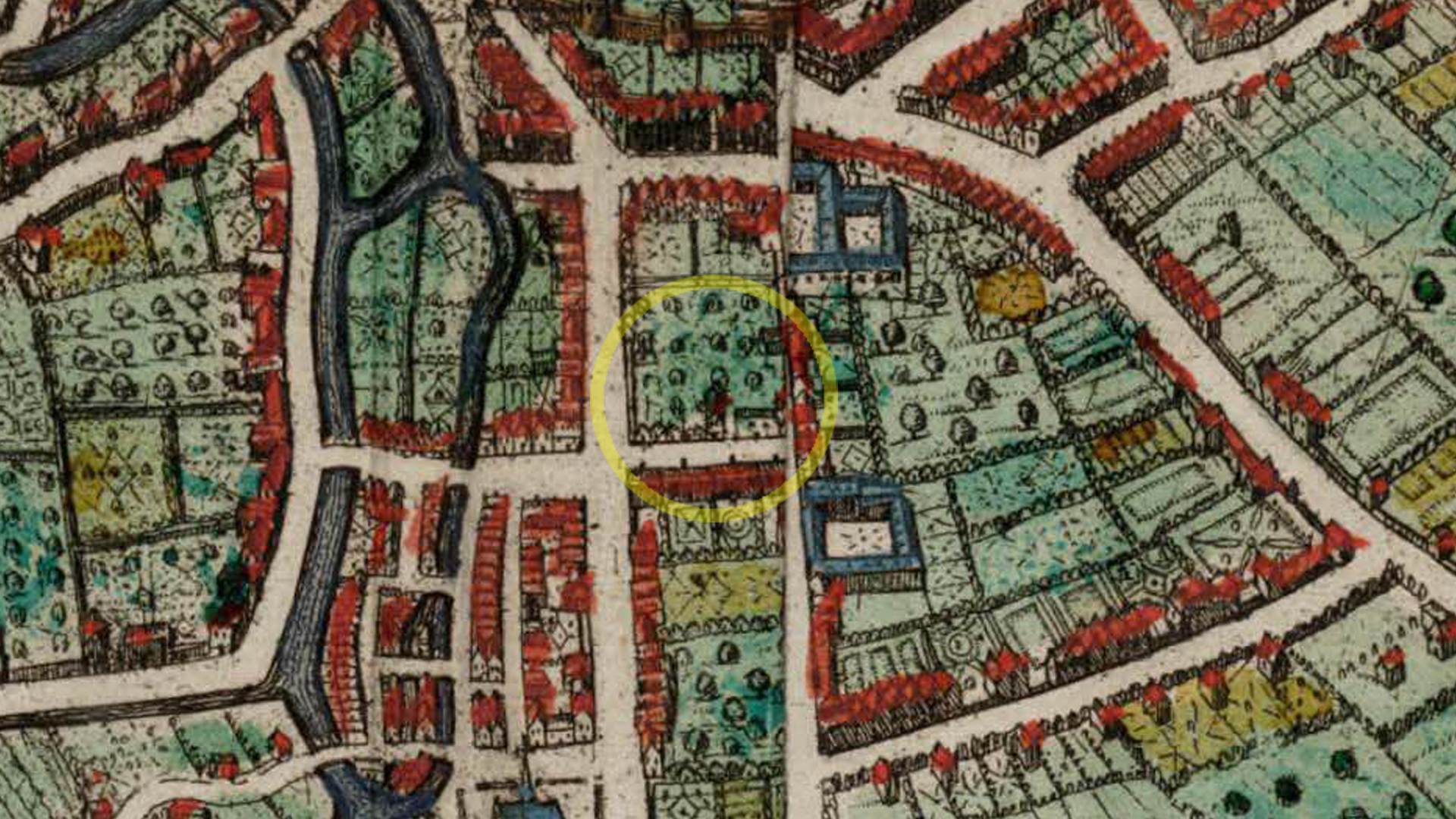
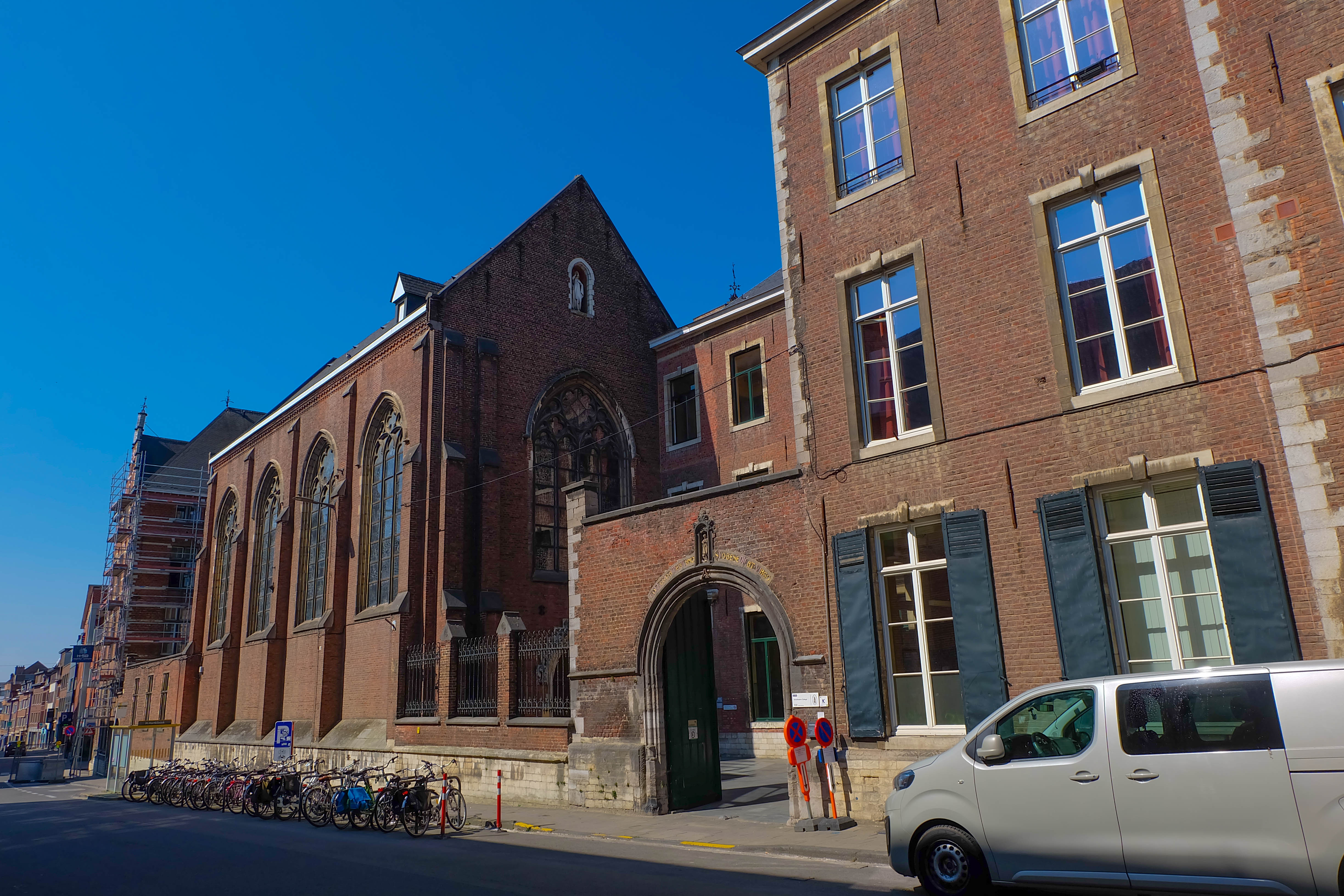
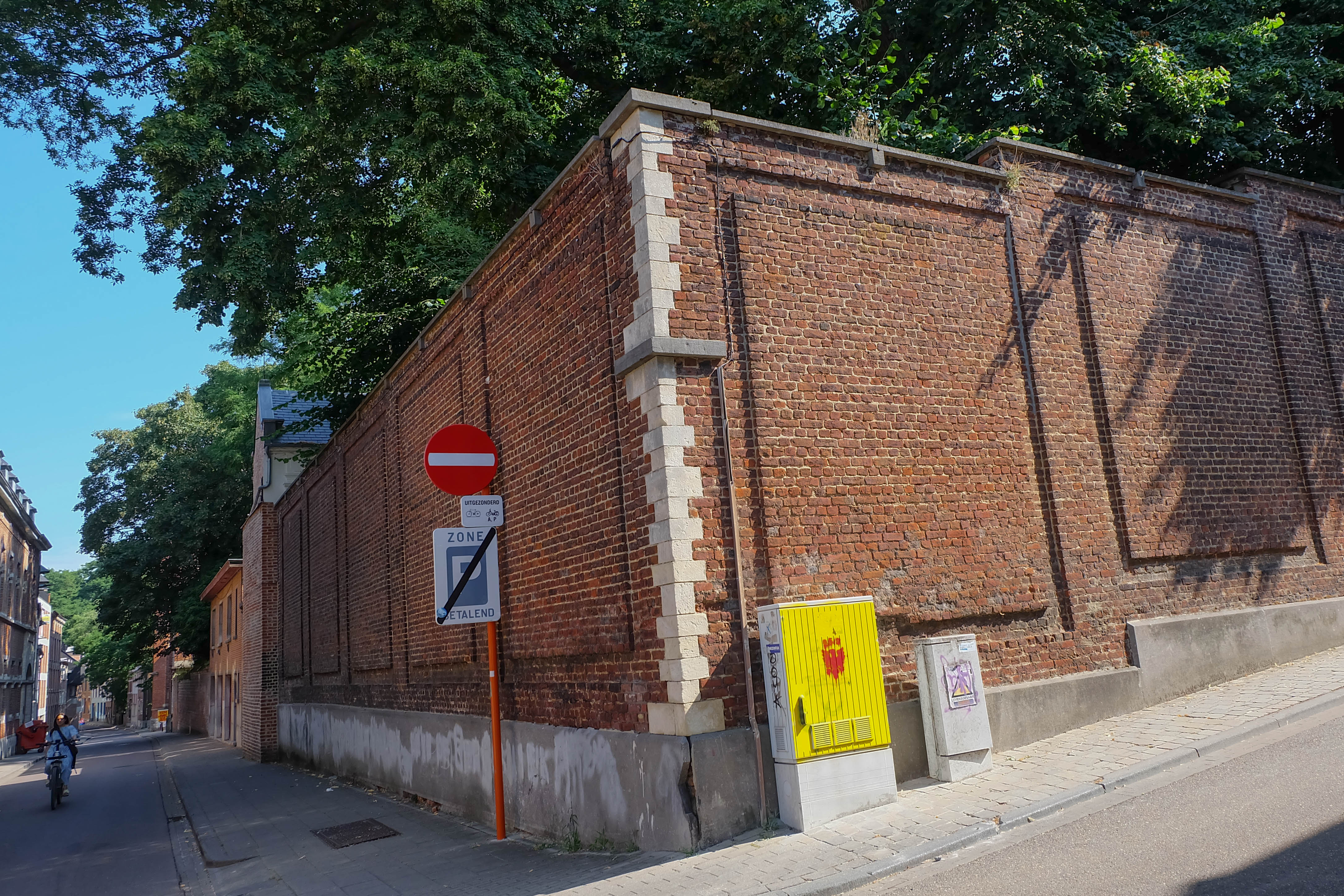
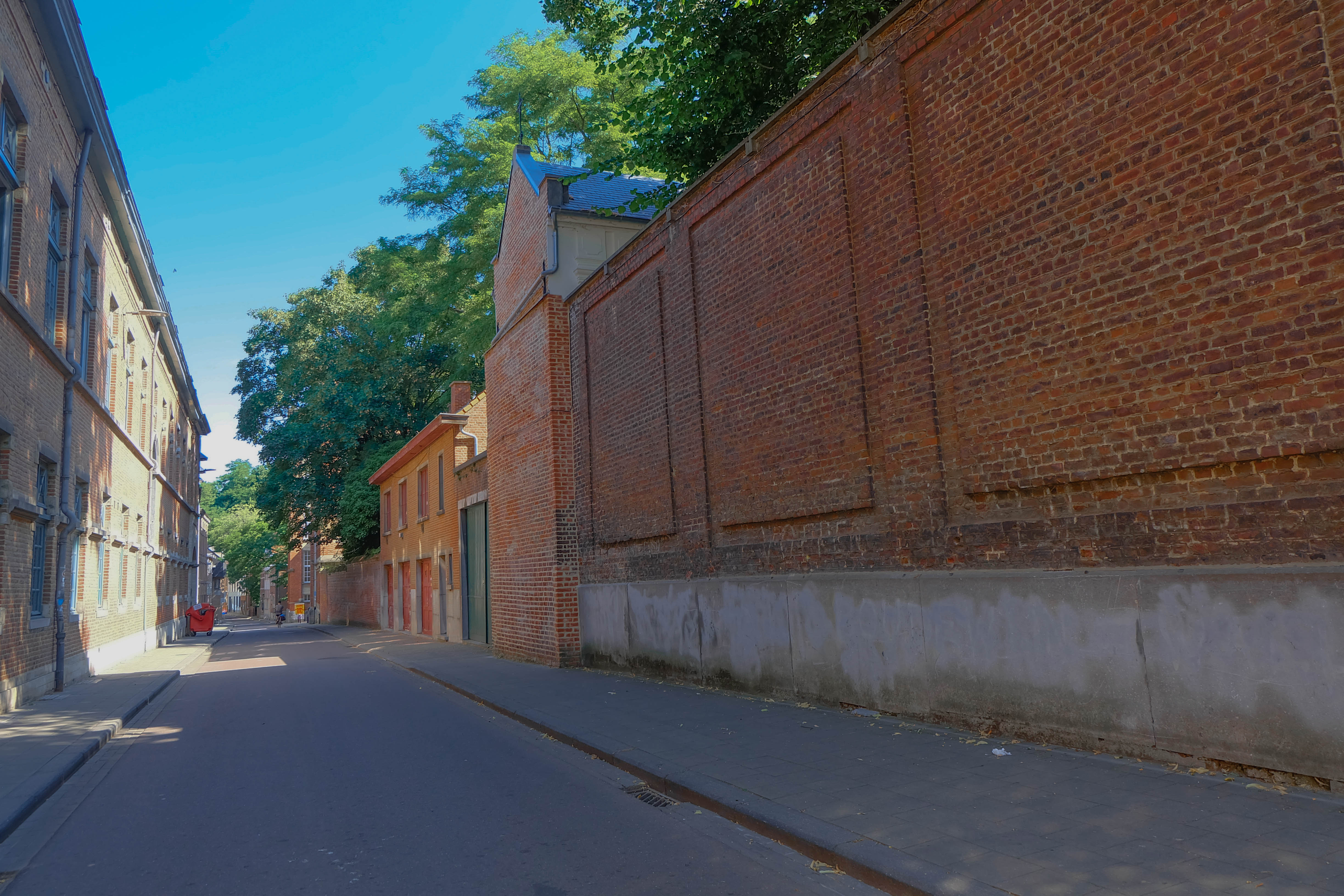
The Aulnecollege existed from 1629 to 1796. It was situated on a prominent, sloping corner lot in the heart of Leuven where the Sint-Quintensstraat (today’s Naamsestraat) met the Goeden Hoelewech (today’s Karmelietenberg). The college eventually expanded down the hill to reach the Legestraat (today’s Schapenstraat). The location is occupied today by the American College.
Origin
From Cistercian Refugium to Missionary Gateway
The history of the site began long before it became a place of formal study. As early as the beginning of the 14th century, the Cistercian monks from the Abbey of Aulne in Henegouwen (known in French as ‘Hainaut‘ in Wallonia) established a refuge house in Leuven. For centuries, Aulne’s Cistercian monks seeking higher education were sent exclusively to Paris to study at the ‘Collège des Bernardins‘, which held a virtual monopoly on their training. However, as new universities arose in the 17th century, that monopoly began to crack.
One of the monks who broke the tradition was Edmundus Jouvent. He studied at the University of Leuven himself, earning the rank of licentiate in theology. When he was elected Abbot of Aulne in 1622, he dreamed of transforming the old Leuven refuge into a full-fledged college where his monks could experience both monastic discipline and academic rigour.
His vision was realized in 1628 when the General Chapter of the Cistercian Order granted the Leuven house a “privileged status” equal to that of the Paris college, provided they also accepted monks from other monasteries within the order. To accommodate this new status, Jouvent rounded out the property by purchasing adjacent land and a house on the corner of the Legestraat, opposite the klooster der Zwartzusters (Convent of the Black Sisters). While a magnificent new chapel was completed for the inauguration in 1629, the college buildings themselves were in poor condition; in 1634, the college president was forced to borrow 2,000 guilders from the Hollands college nearby just to fund necessary repairs.
What's so special about this place?
A Most Successful College
In its 18th-century “Golden Age,” the Aulnecollege was one of the most prestigious and wealthy monastic institutions in Leuven. It was a place of high academic achievement; under Abbot Barthélémy Louant (1728–1753), no fewer than thirty monks earned their baccalaureate and fifteen their licentiate in theology—an impressive feat for a house that typically only housed six or seven students at a time! These monks followed a rigorous routine, attending lectures at the Halle but returning to the college for daily repetitions and theological disputes led by their president.
According to 19th century historian Edward Van Even, the Aulnecollege’s library once housed 50,000 volumes and 4,000 manuscripts before they were lost to a fire.
The wealth of the mother abbey provided unique perks for the college’s leadership. Records from 1724 reveal that the farm of Beausart was required to deliver 300 bales of wheat straw every single year specifically for the president’s horse. Quite a difference from when they had to borrow money for renovations the century before!
Two College Maids
Back in the 17th century, university education was strictly reserved for men. There were also no female presence inside the colleges, except for the servant girls.
According to historian Edward De Maesschalck in his 2024 book about Leuven’s colleges, life inside the college walls is vividly preserved in a rare set of regulations from 1749 written for the two college “meiden” (maids). The first maid held total responsibility for the kitchen and pantry, ensuring the grain was ground and food stocks were maintained. The second maid handled the heavy labour: carrying water, hauling firewood, washing dishes, and acting as the “portierster” (gatekeeper). She also looked after the poultry kept in the lower courtyard. Together, the two women were responsible for baking all the college’s bread.
A Symbol of Prestige
The college’s reputation for peace and prestige made it a sanctuary for elite figures.
During the War of Austrian Succession (1740-1748), the French army led by Count d’Argenson (Marc-Pierre de Voyer de Paulmy) successfully captured and briefly occupied Leuven in early 1746, which was part of the Habsburg Empire. As the French Minister of War, the Count occupied a residence next door while his massive entourage of secretaries and aides took over the halls of the Aulnecollege.
Decades later, the famous theologian and Leuven University’s last librarian before its dissolution, Jan-Frans Van de Velde, found safety here. After being banned from office by Emperor Joseph II in 1786, he spent a year and a half at the Aulnecollege, later recalling this peaceful time of study as his “otium Alnense” (Aulnean retreat).
How did it look like?
An Architectural Jewel with the Best Panorama View
By the mid-17th century, contemporaries described the Aulnecollege as an architectural jewel. A description from 1657 highlights the college’s magnificent chapel and its “wide, beautiful, and fertile garden“. The garden was positioned to the west, allowing students to enjoy the “slowly setting sun” over the city walls toward Brussels. To ensure they did not miss the “charming rising sun,” the college featured a tall, square tower in the southwest corner of the courtyard, providing a 360-degree panorama of Leuven.
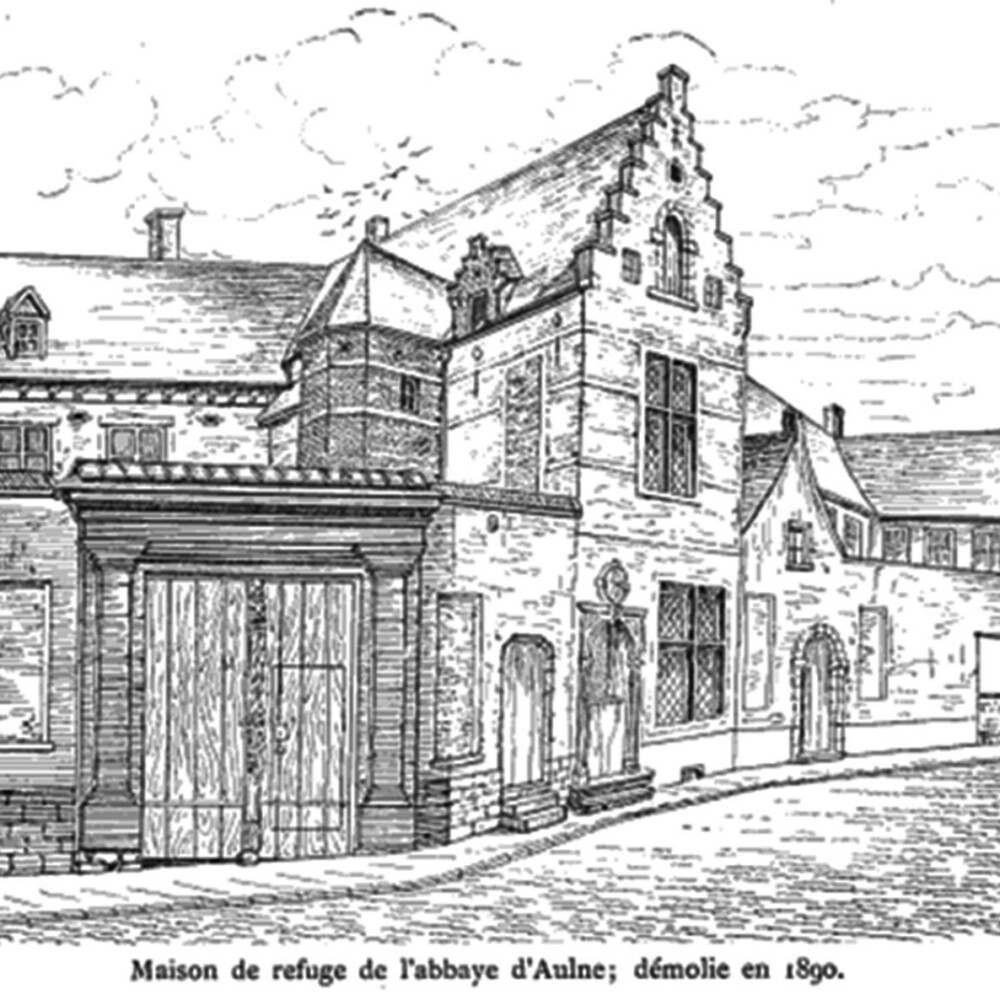
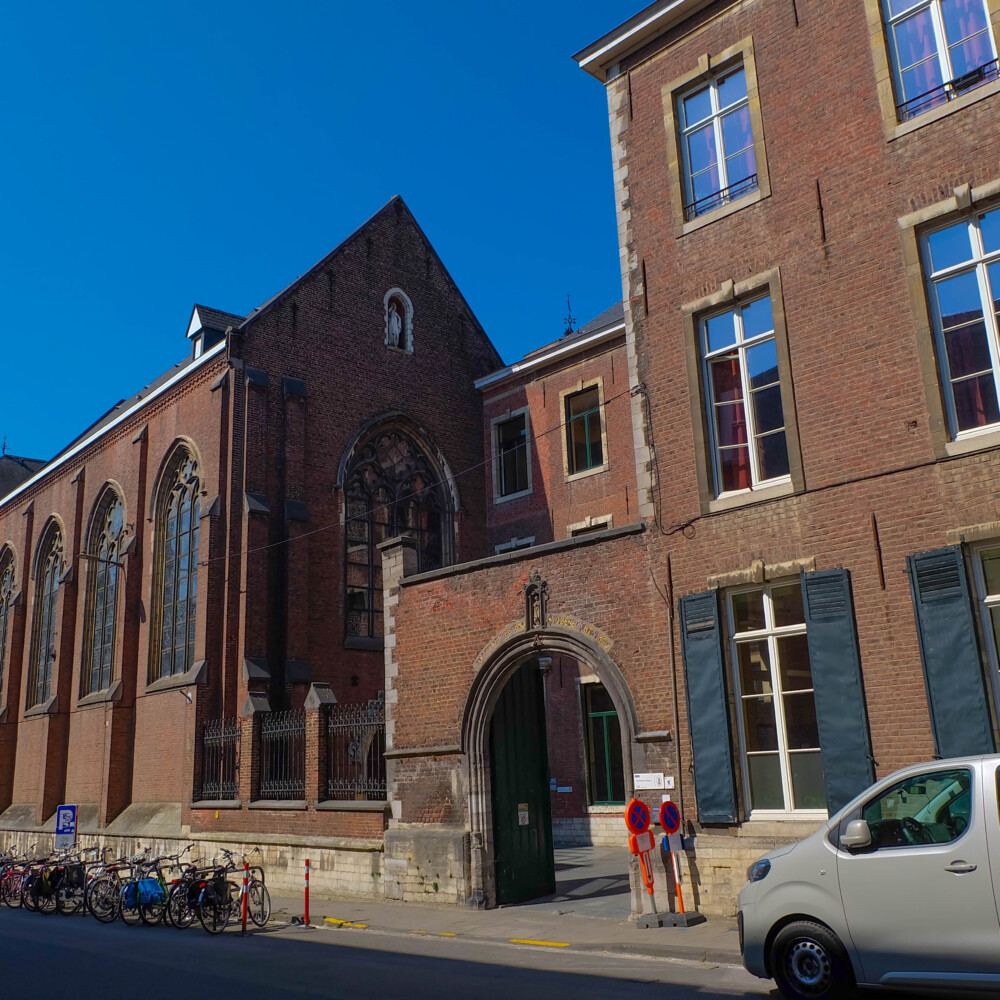
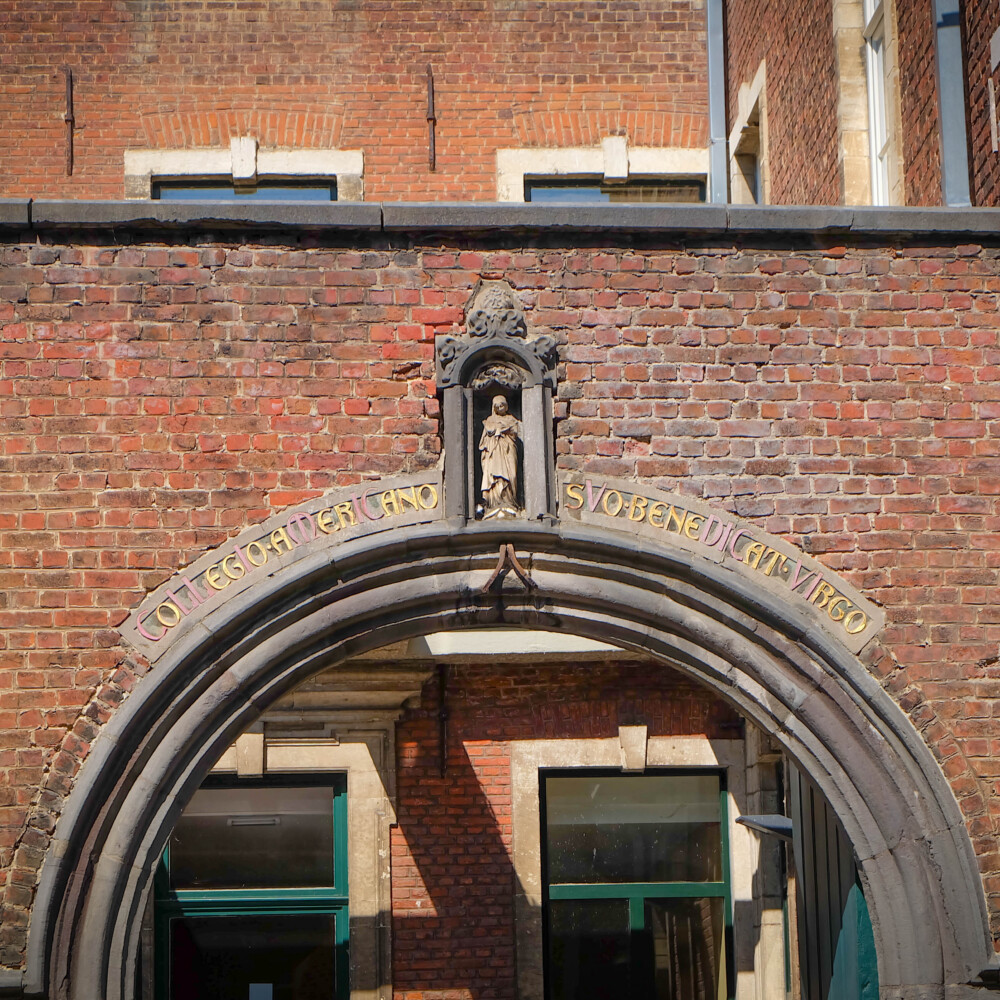
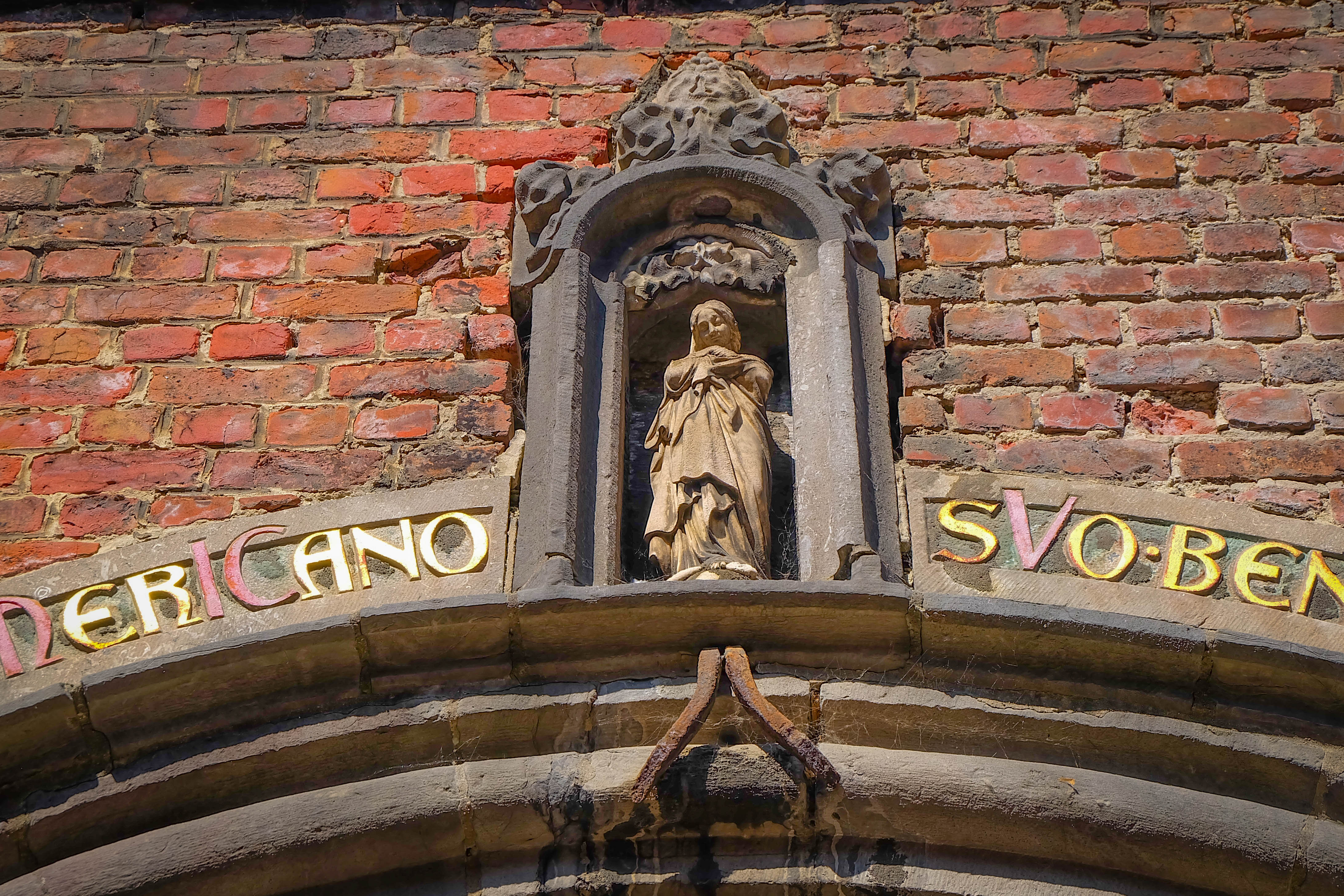
The complex was arranged around a square forecourt and enclosed by a crenelated wall. A grand arched gateway, dated 1726 and decorated with stone scrolls, greeted visitors on the Sint-Quintensstraat. Inside, three wings were arranged around the court; the side wings ended in traditional stepped gables facing the street. The chapel was located in the left wing. You can see the only surviving image of the Aulnecollege in an etching by G Welis from 1890 just before its demolition.
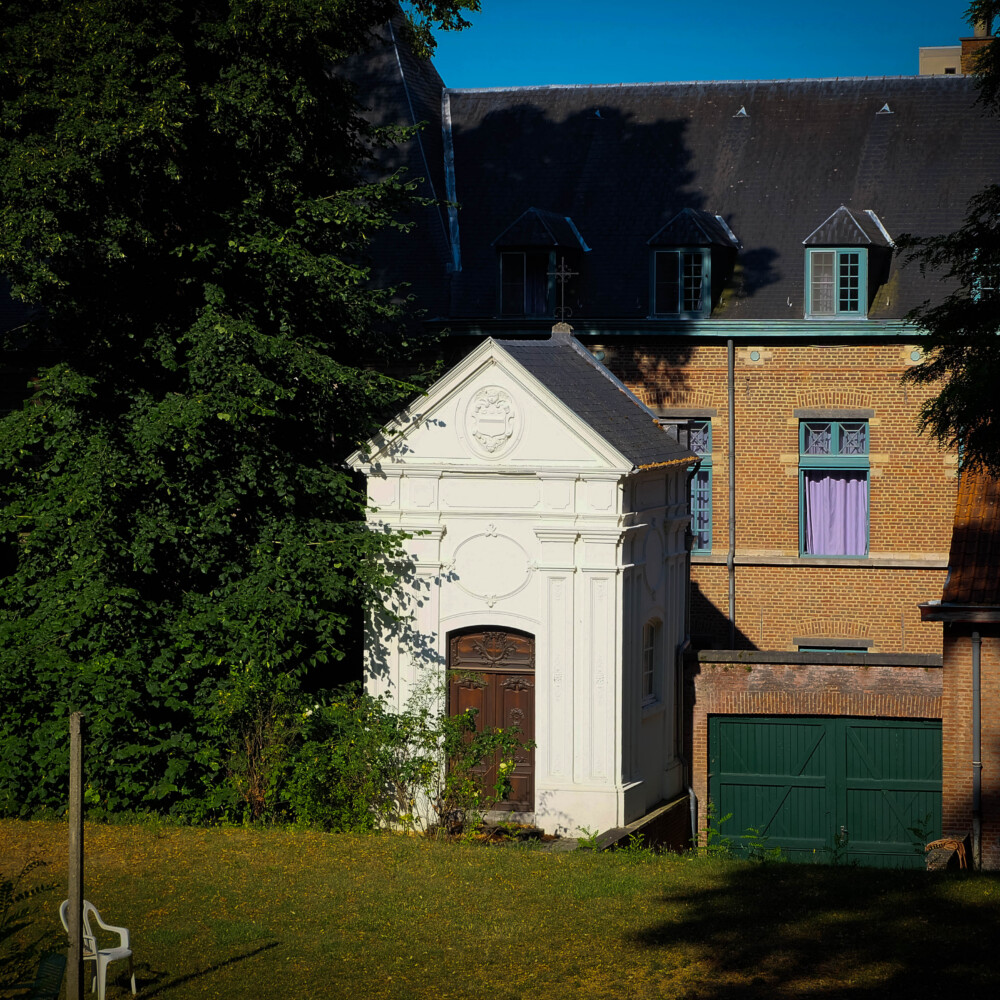
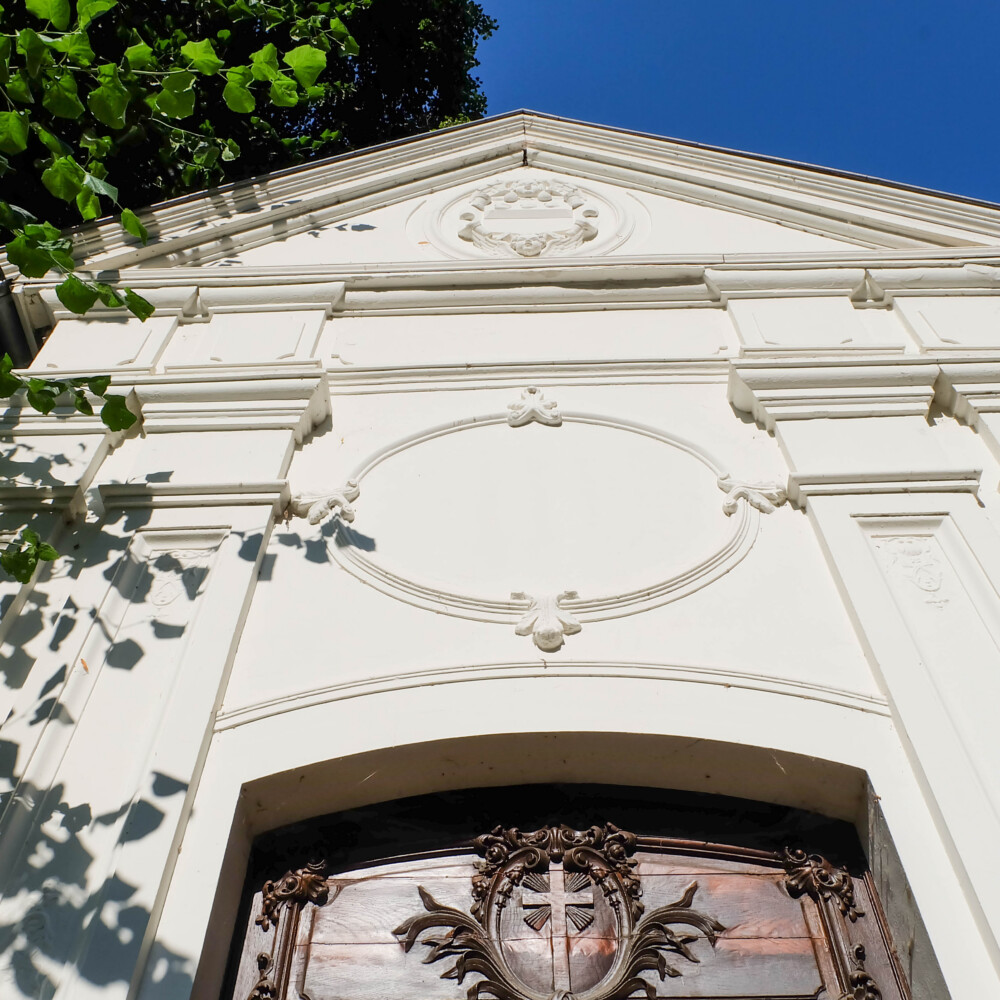
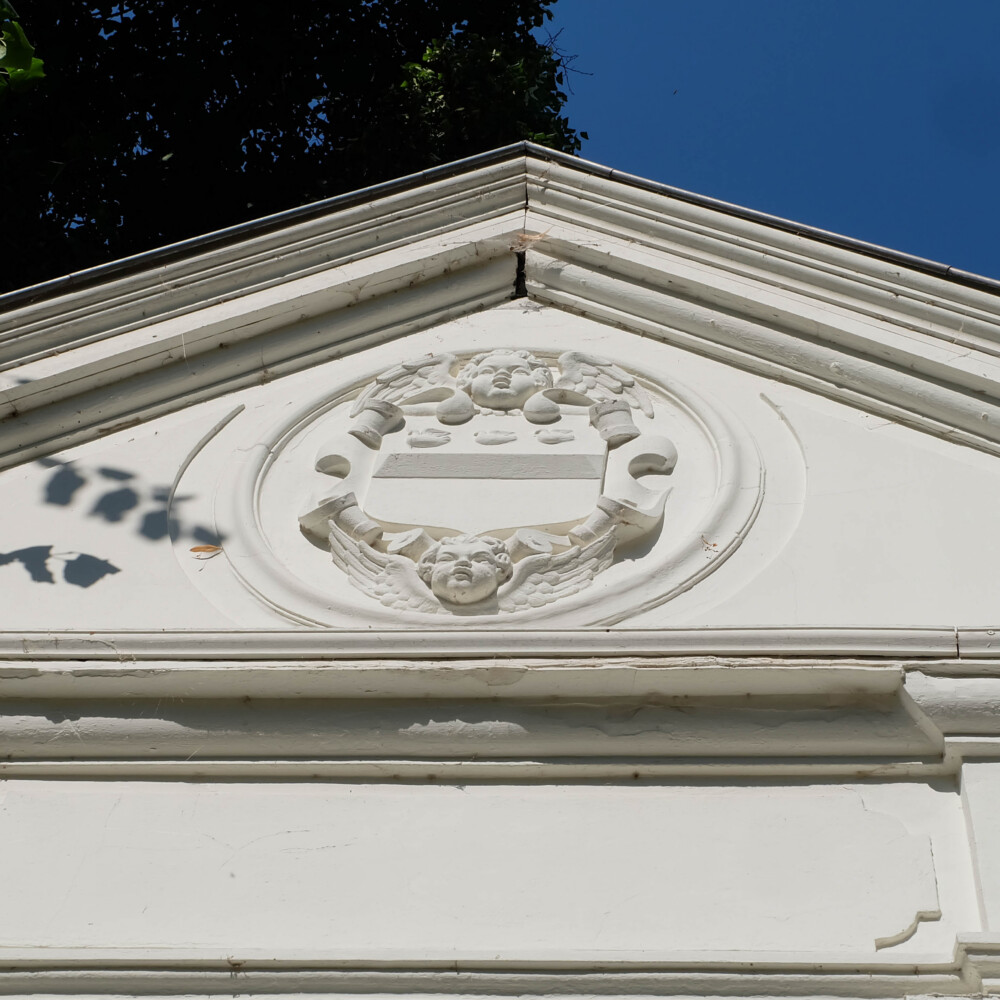
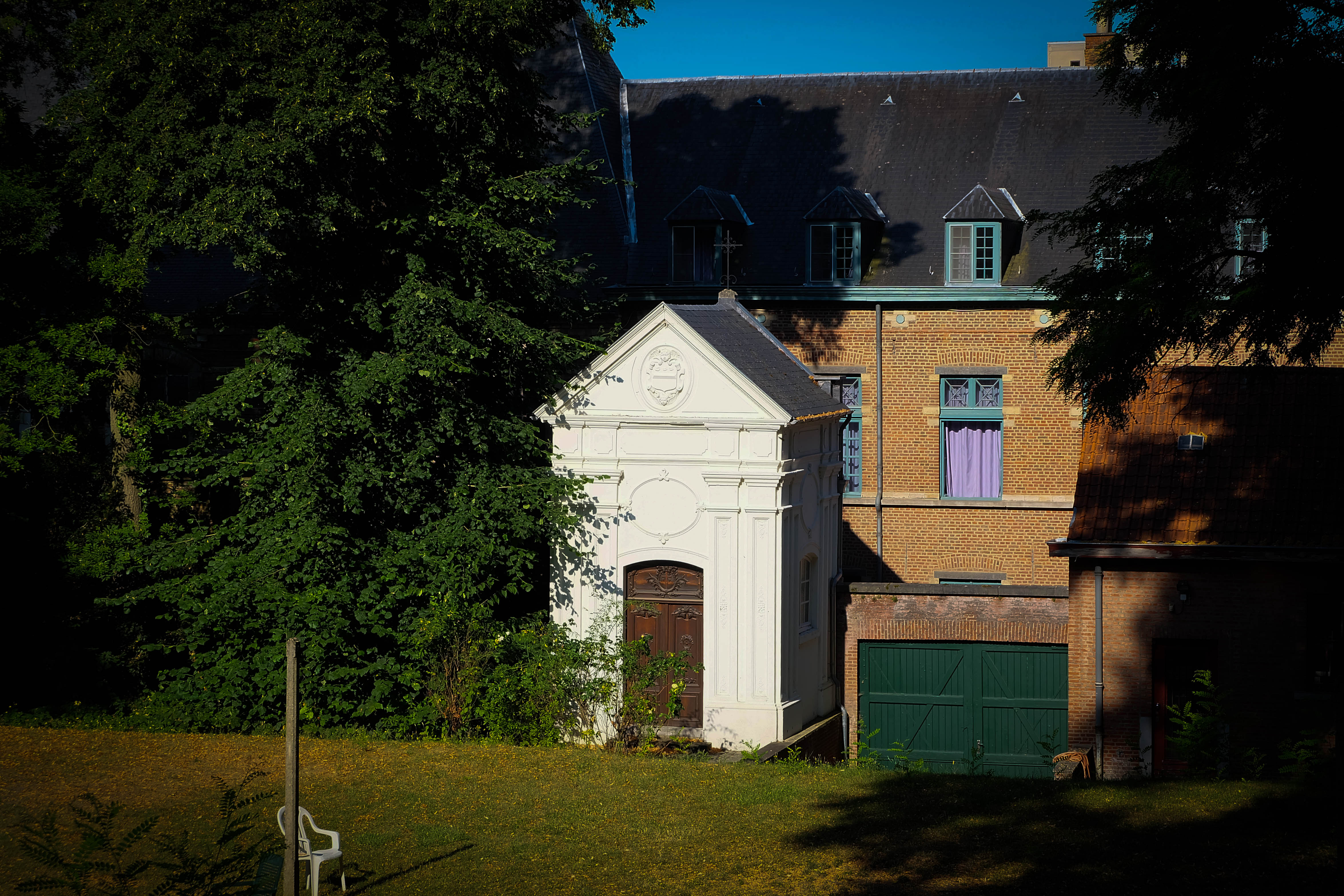
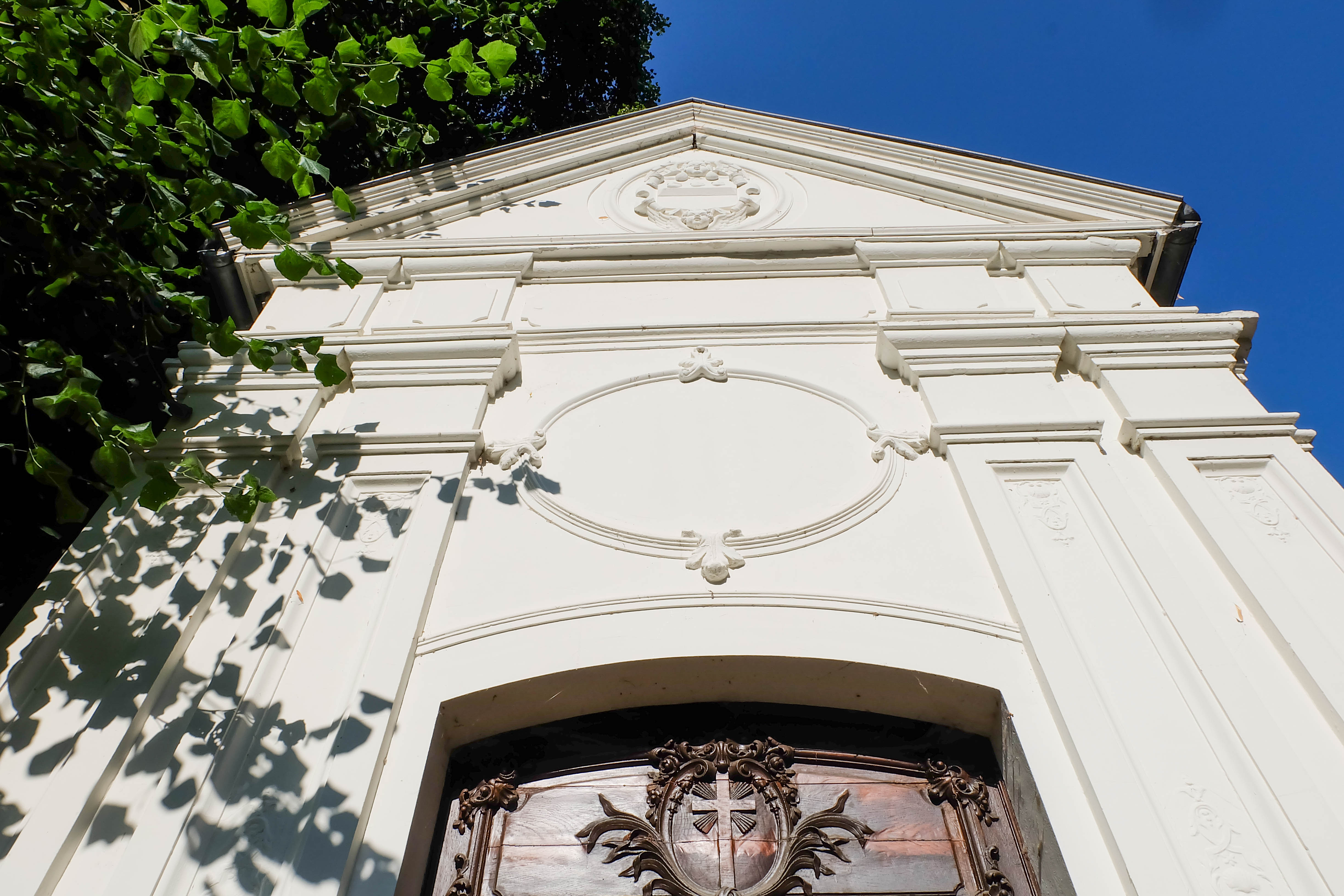
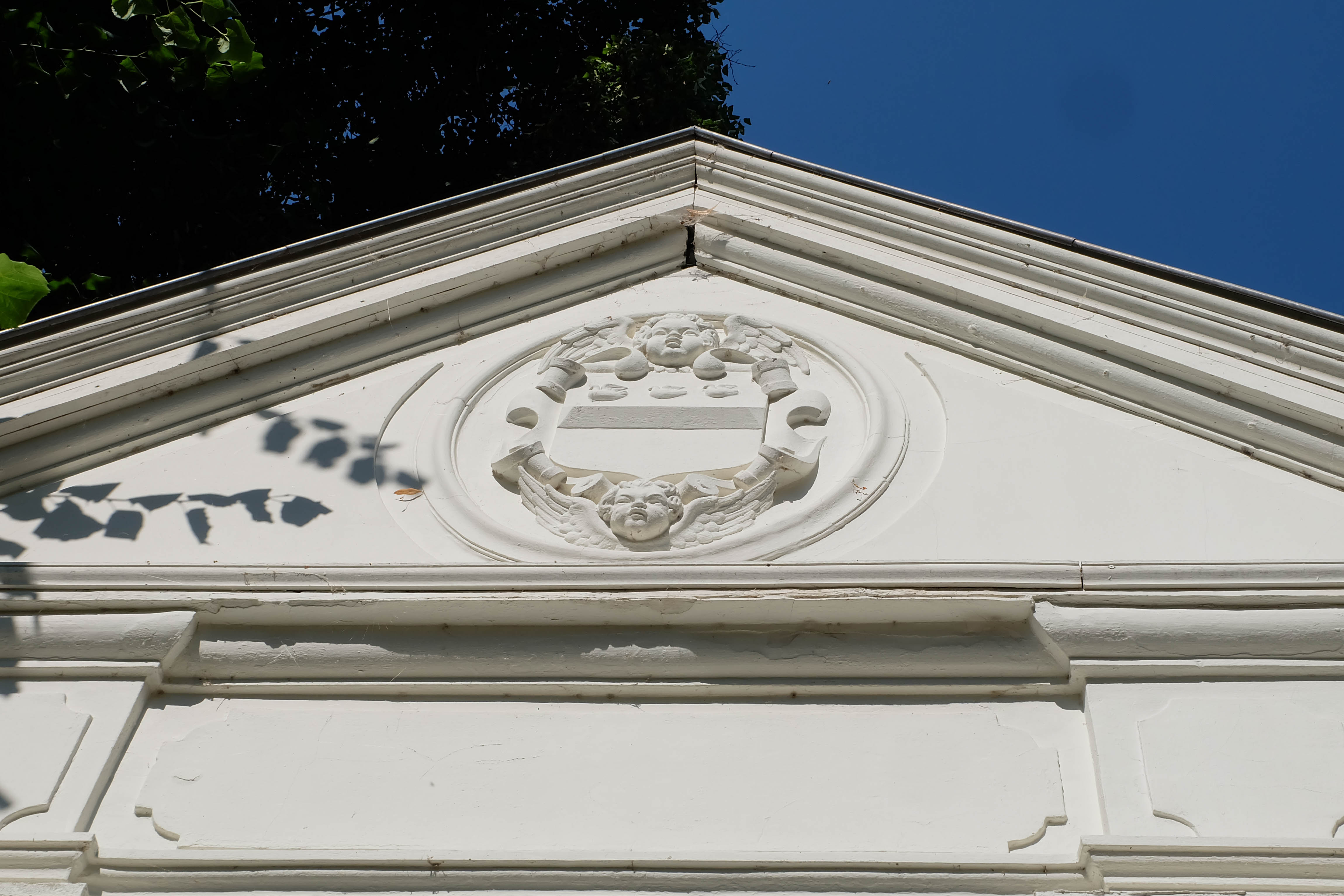
At the back of the famous sloping lush garden, is a refined, white-washed pavilion built in 1734 in the Regency style.
1796: The End of the Aulnecollege
The college’s downfall began with the French Occupation. In 1794, as the Abbey of Aulne burned, its monks fled to the Leuven college for a final, brief sanctuary. By 1796, the French occupiers had seized the building, and it was soon sold off to private owners. The once-sacred corner wing was partitioned and degraded, housing an pub and a butcher shop.
Current situation
1857: A Phoenix Rises from the Ashes
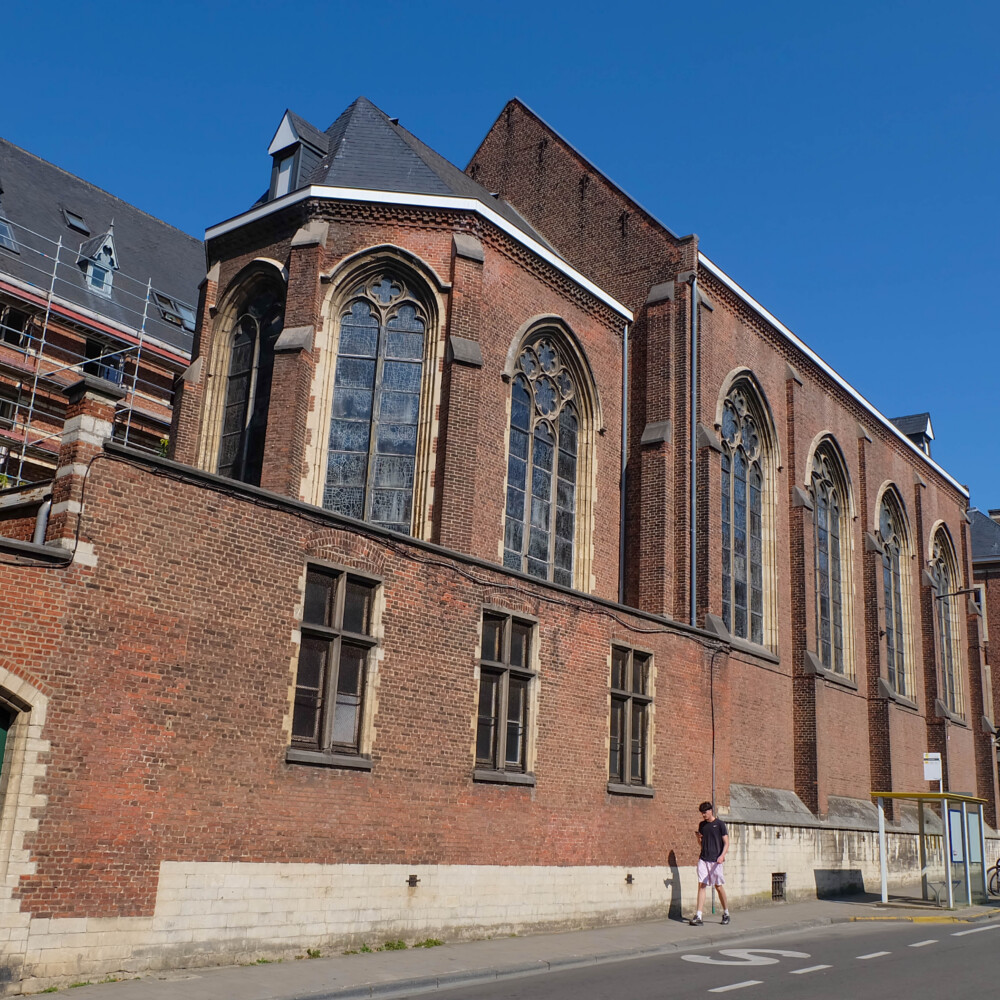
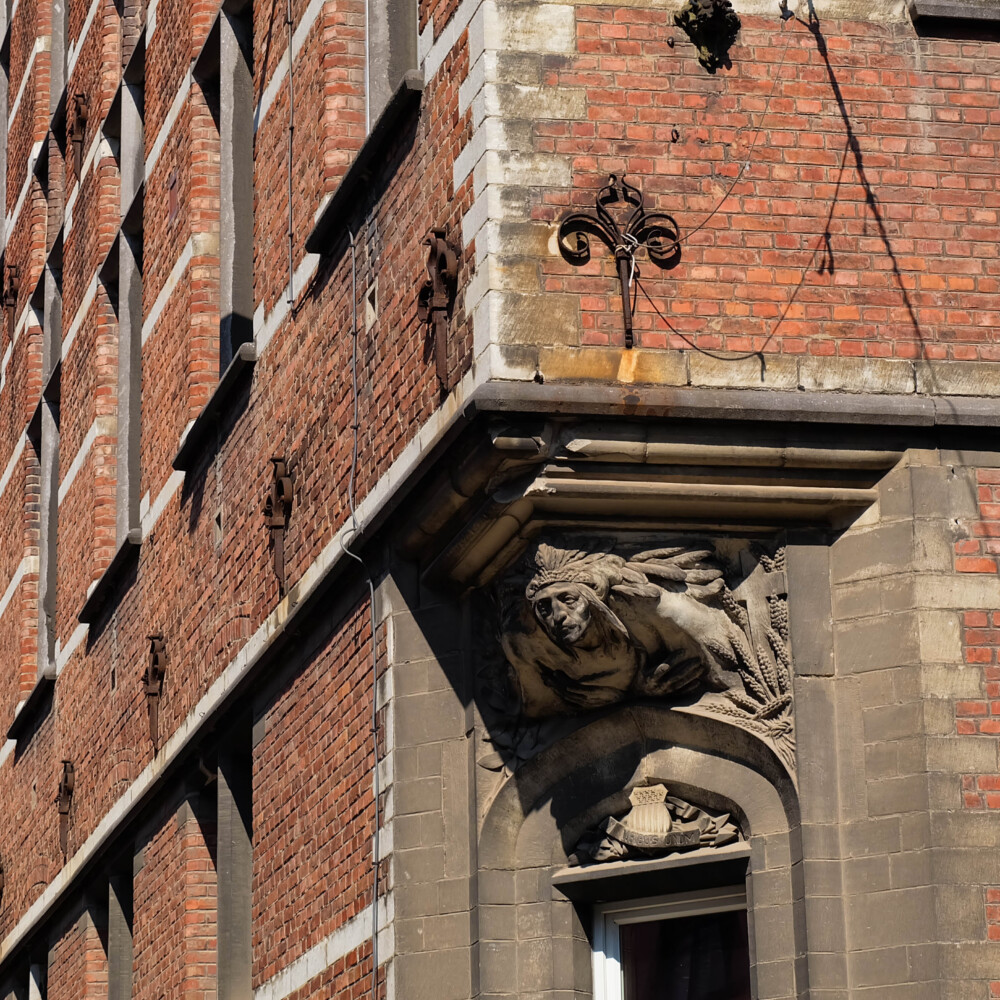
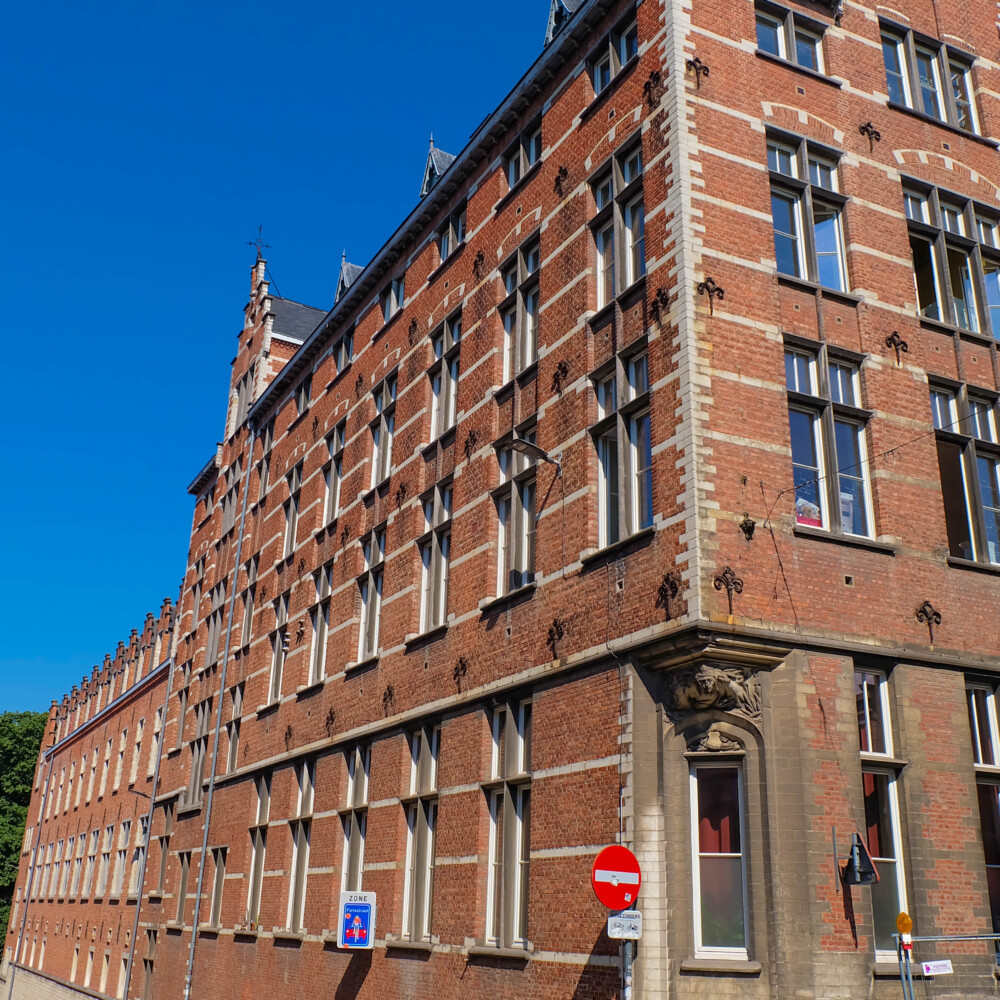
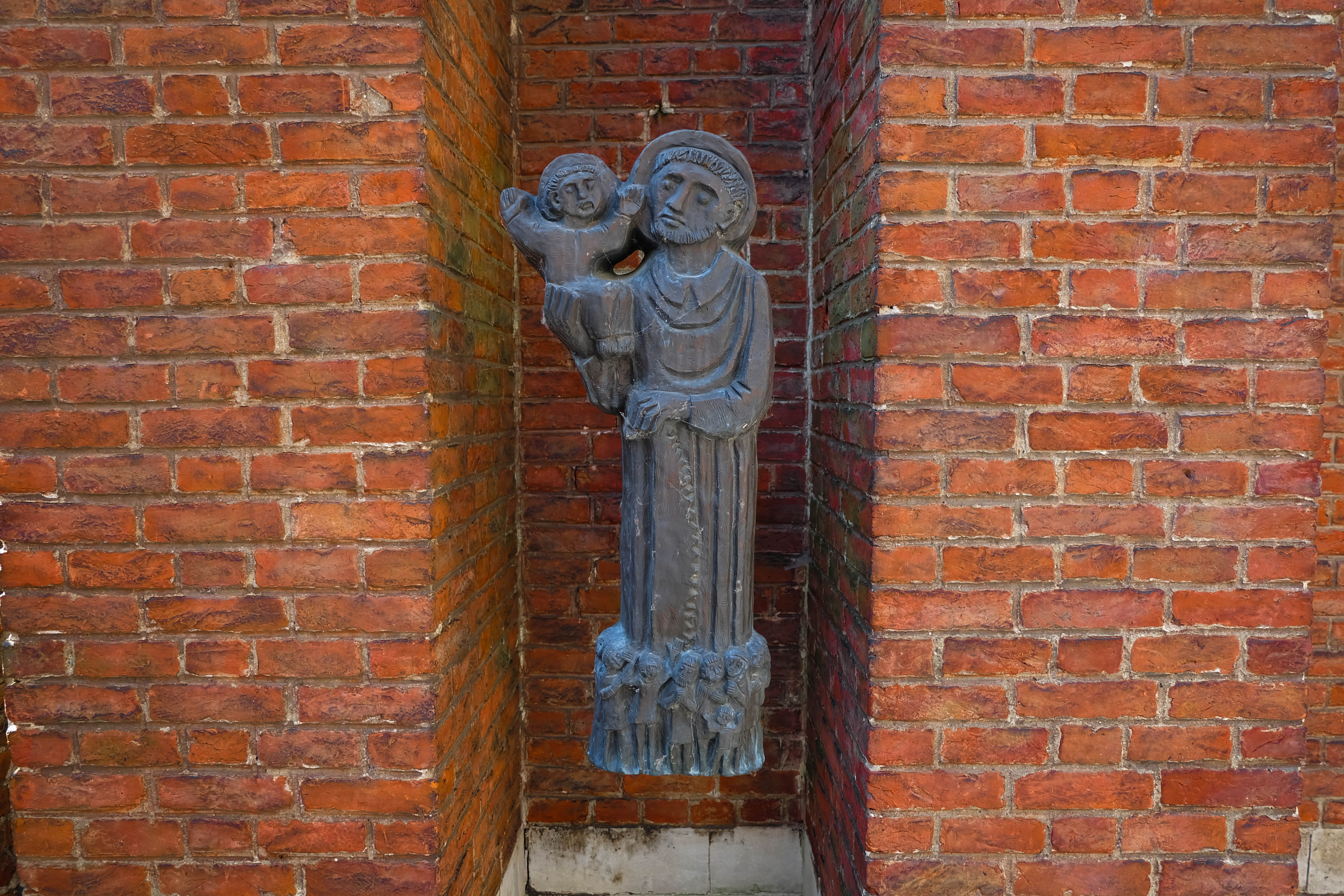
More than half a century later, the site was fortunately rescued from its domestic decay. In 1857 the American Board of Bishops purchased it to establish the American College. This new mission brought a complete Neo-Gothic transformation to the site. Today, a modern visitor can still see the stone bust of a Native American chief on the facade, a tribute to the college’s historic mission to the United States.
Guardian of the Leuven’s University
The establishment of the American University became a blessing for the university and its treasures. During the First World War, the college became a fortress of preservation. The staff hid the city’s medieval ‘Sedes Sapientiae‘ statue – the emblem of the university – and many precious documents from the German occupation, while simultaneously running an emergency hospital that assisted up to 1,500 residents a day.
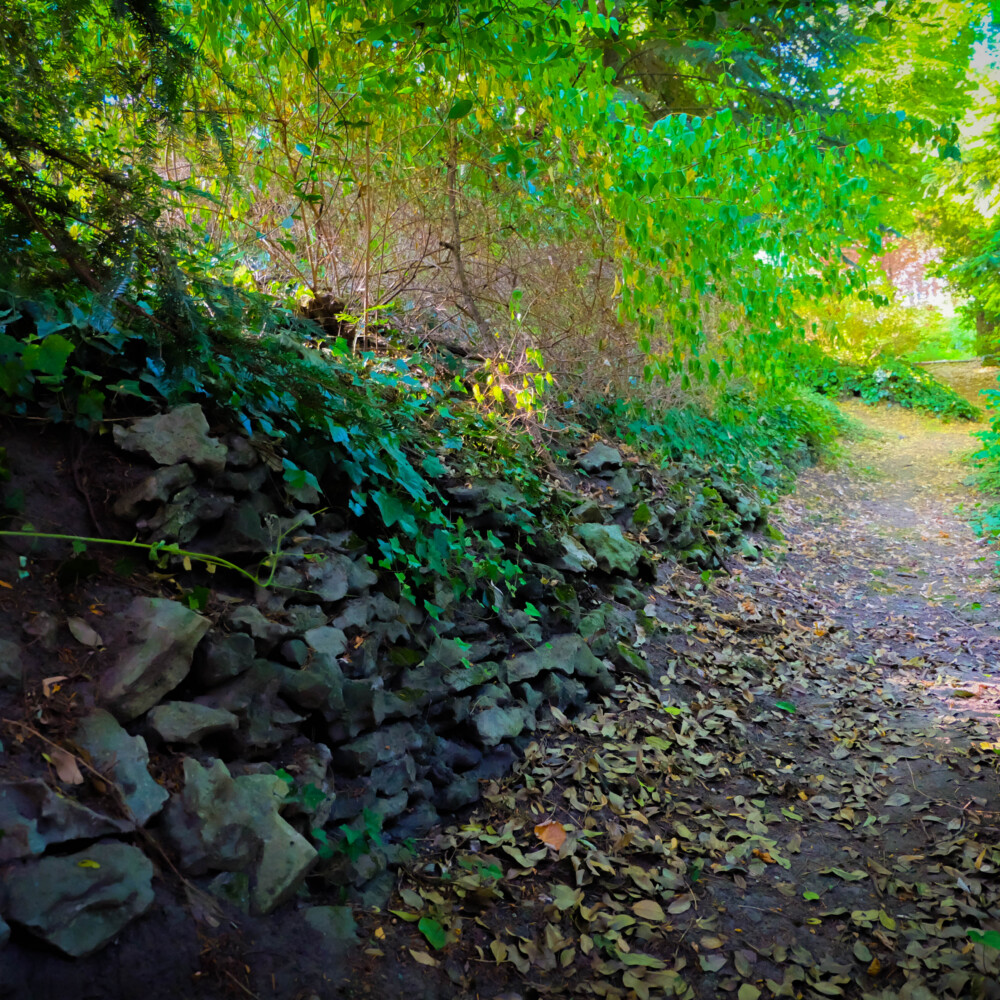
According to oral anecdotes, the current overgrown part of the garden today used to house a tennis court. When the weed was cleared after the war to re-establish the tennis court, hundreds of books were found buried there. The American College played a vital role in saving many of the precious collection of the university library when the building was burnt down by the Germans.
What still remains from the Aulnecollege
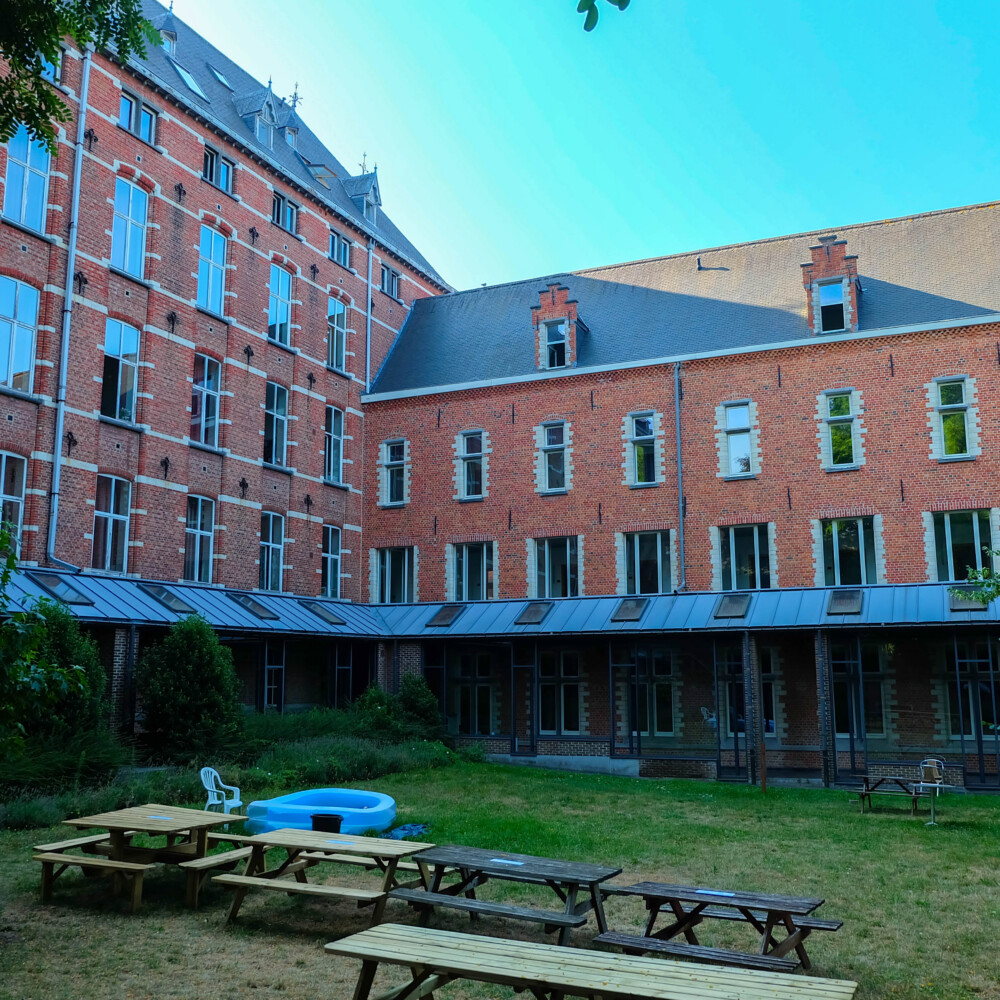
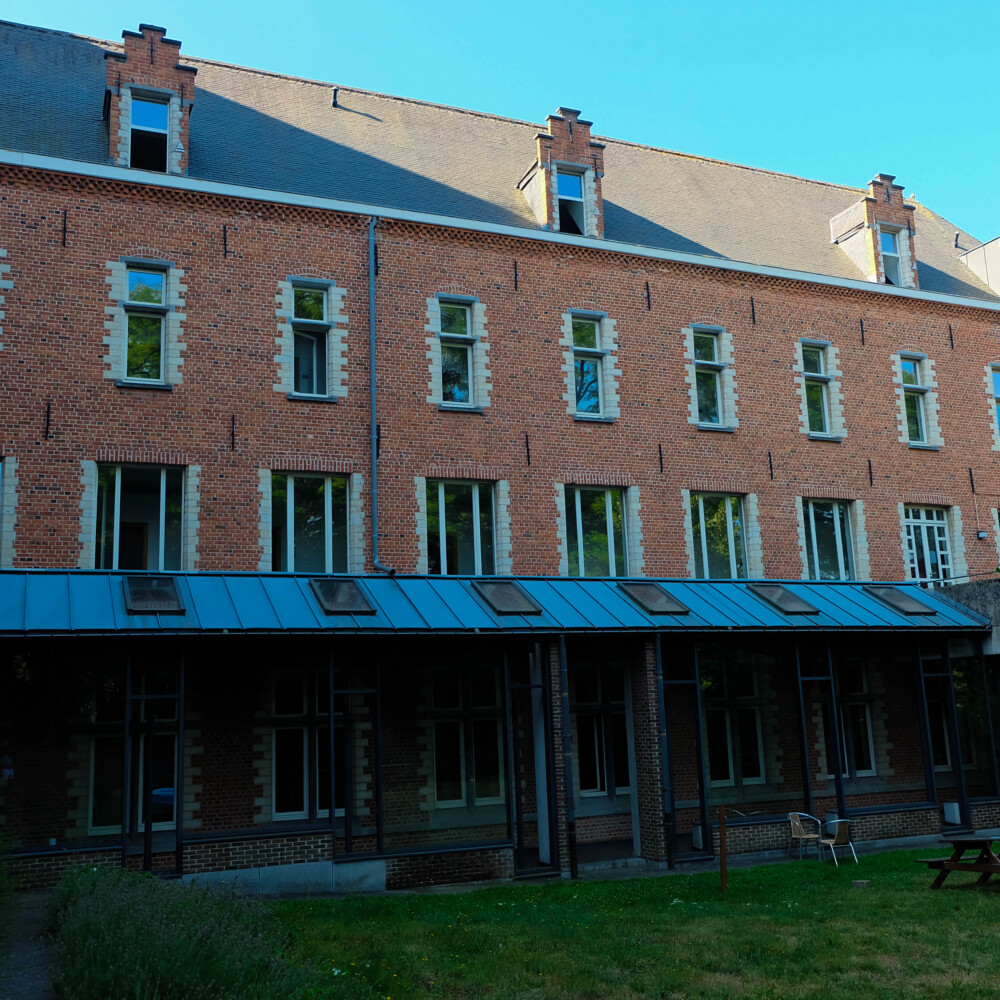
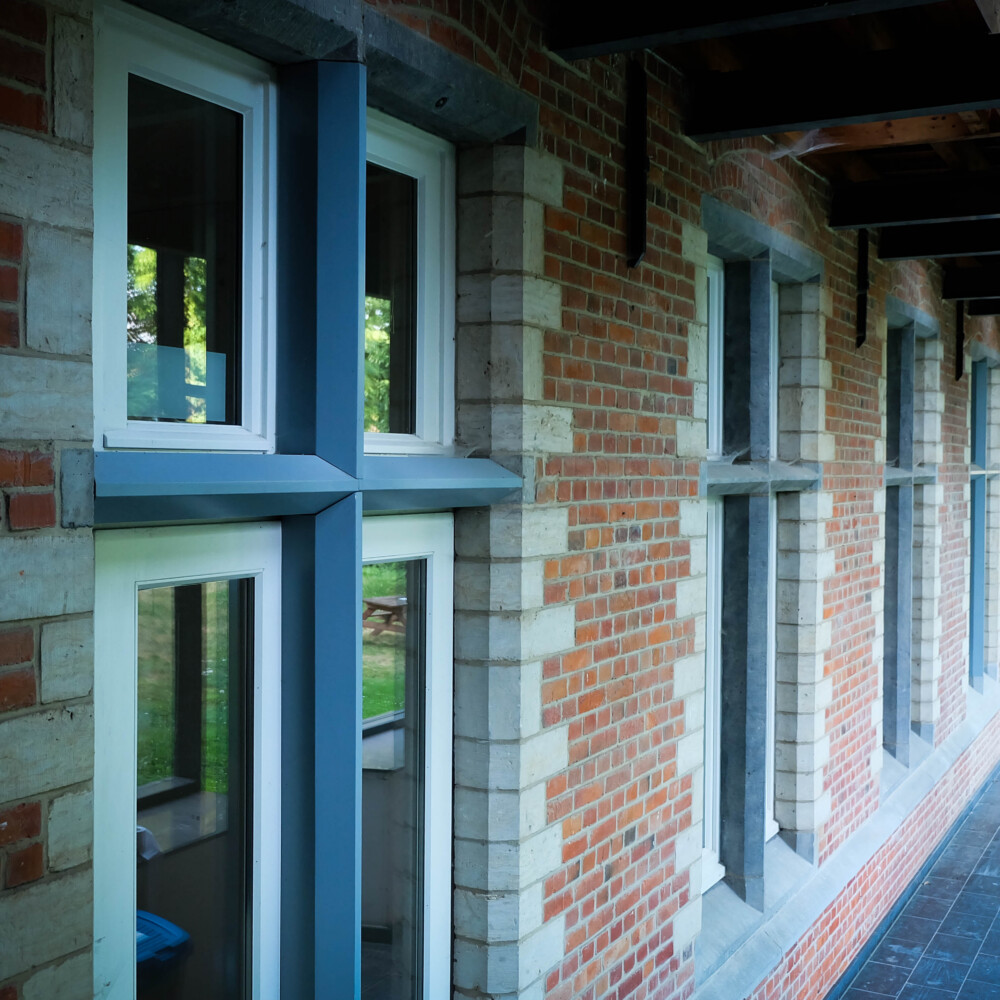
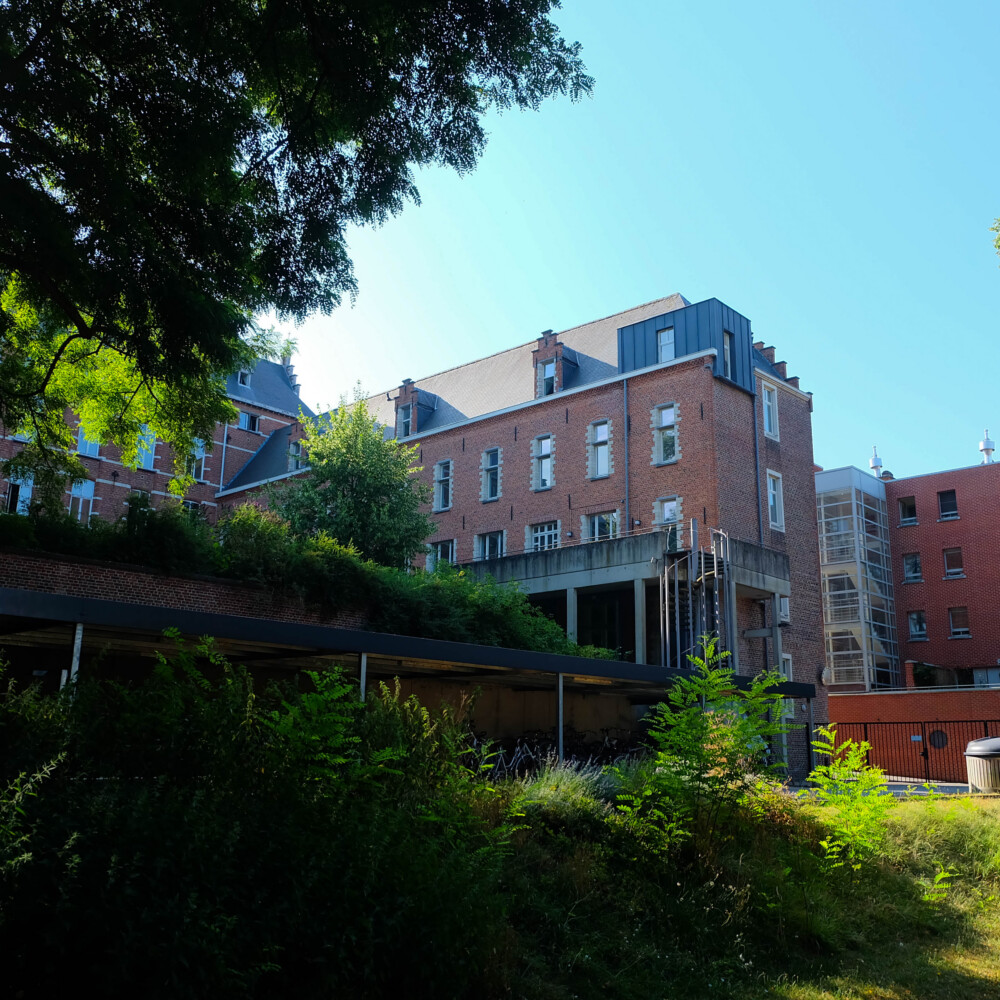
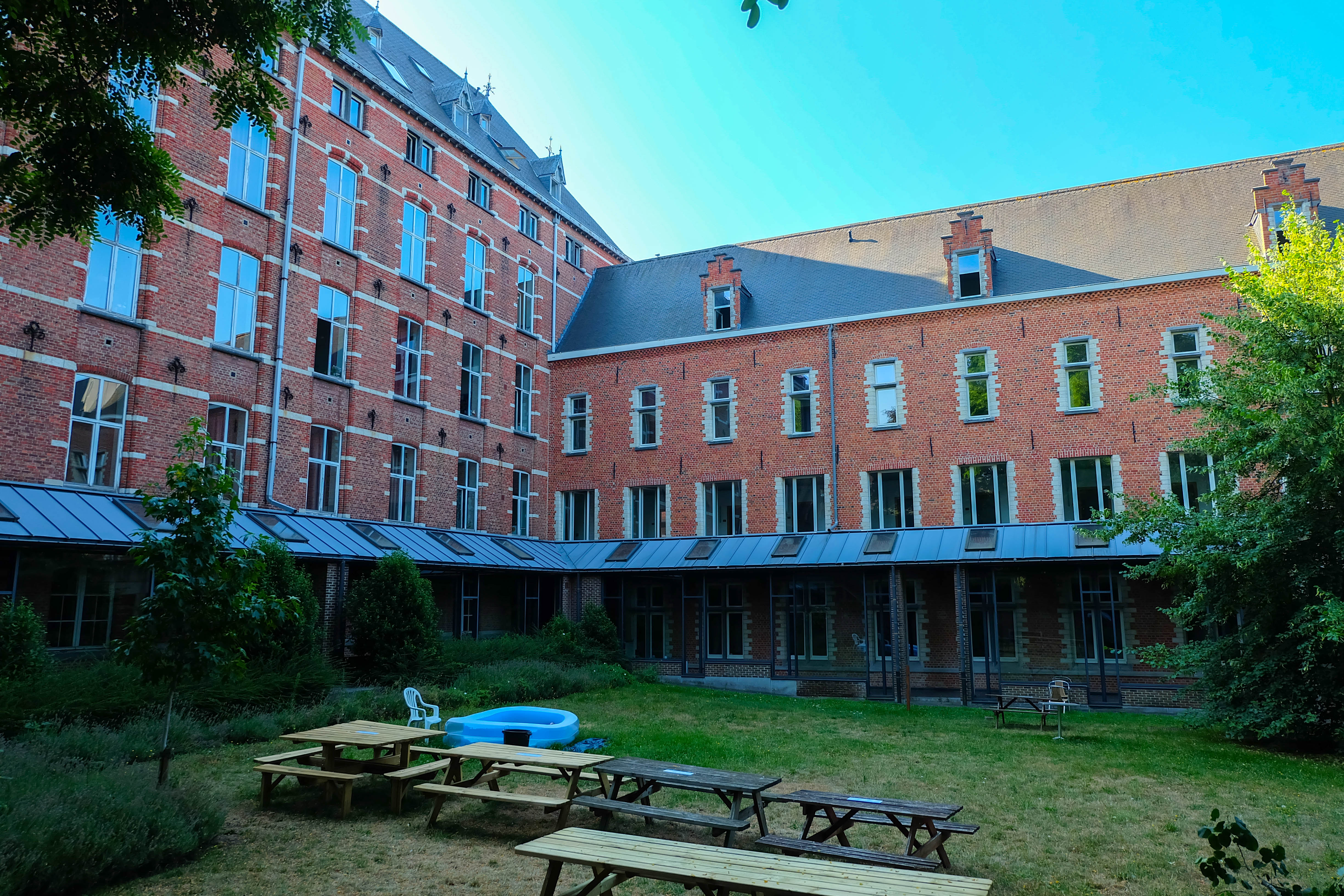
Although the seminary closed in 2011, the American College was beautifully renovated in 2014 and now serves as an international student residence for the KU Leuven.
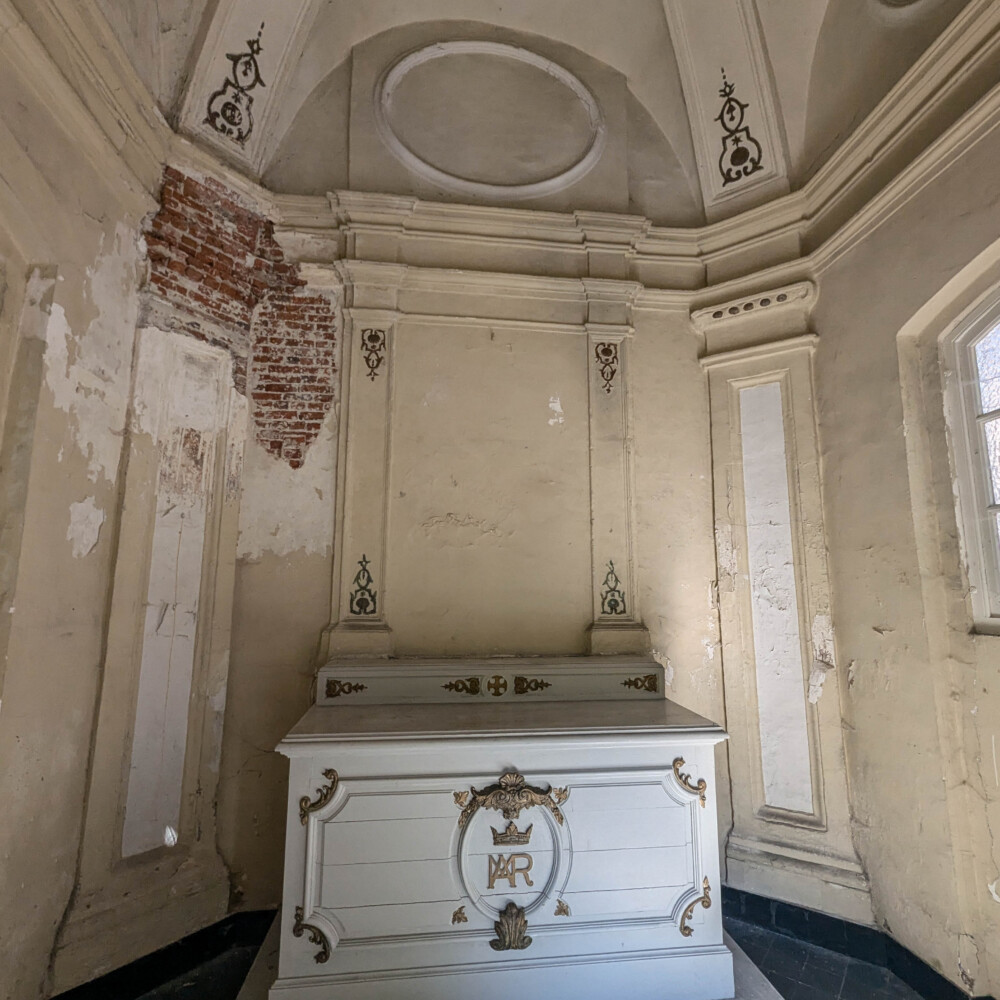
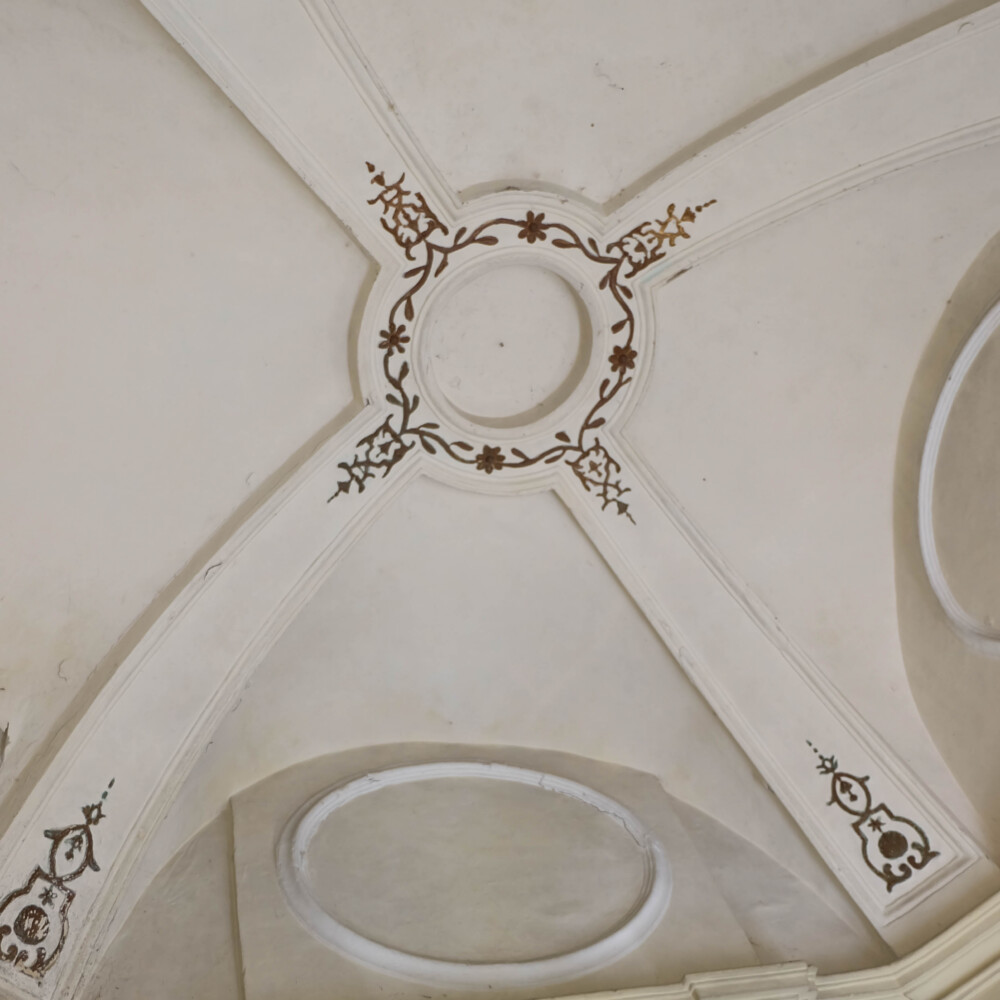
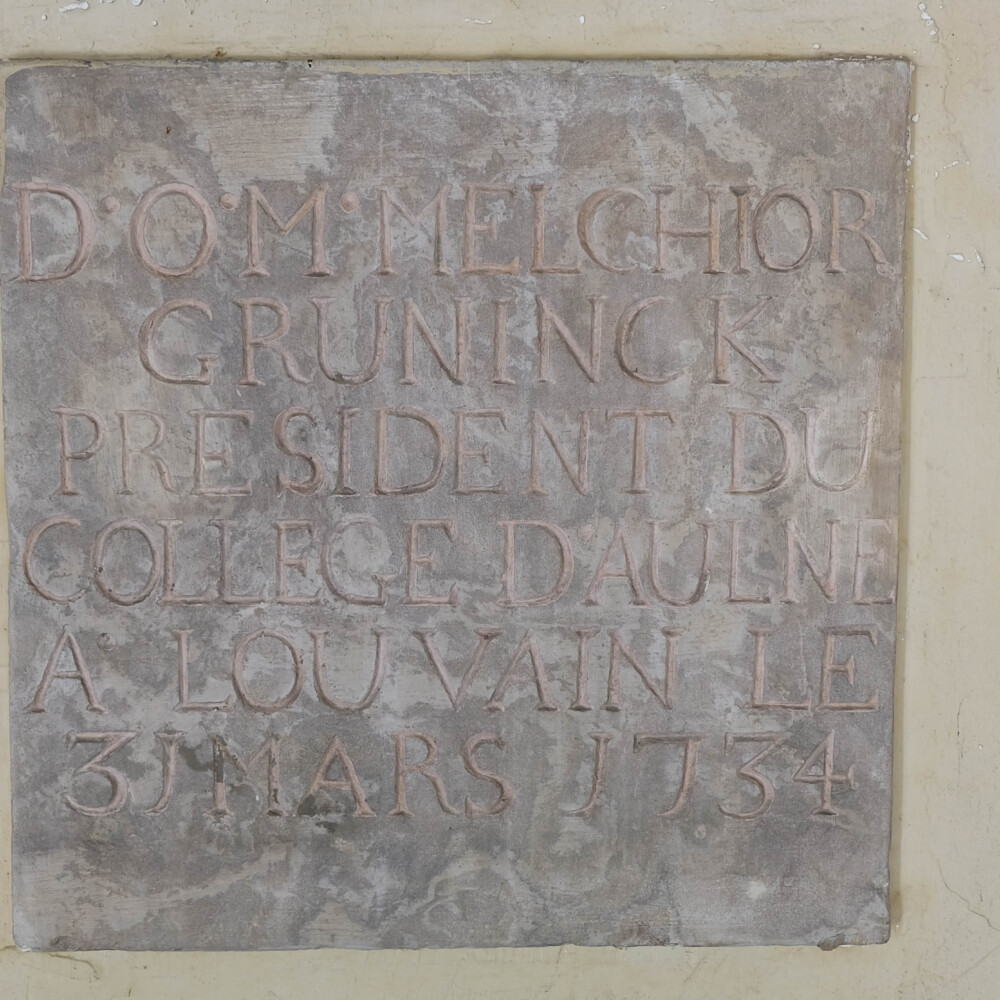
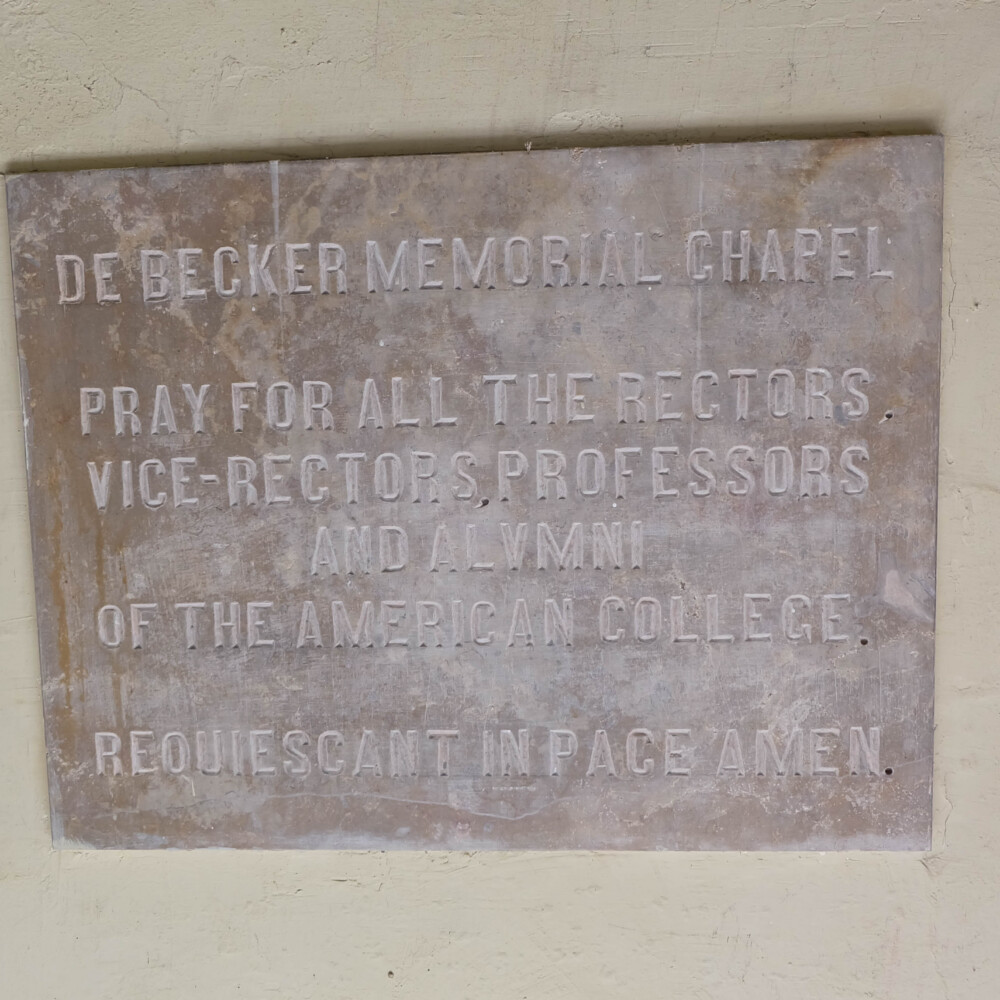
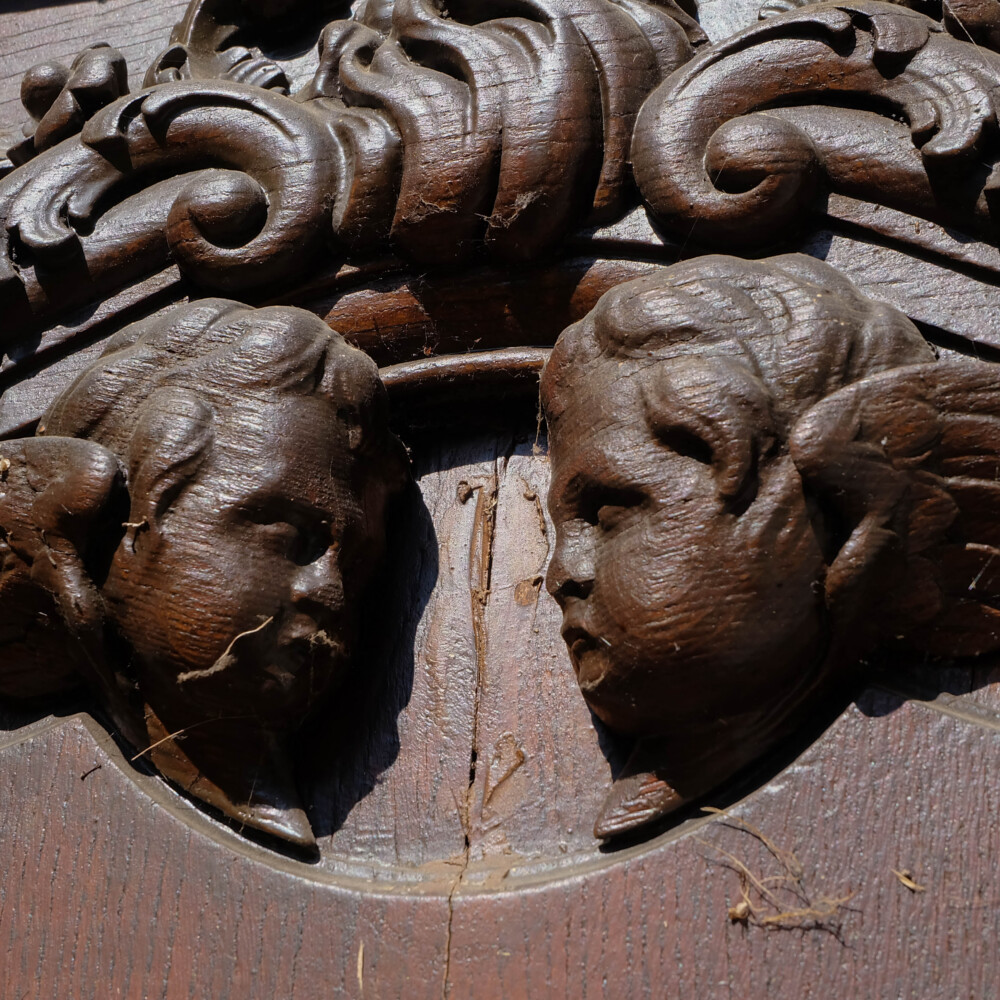
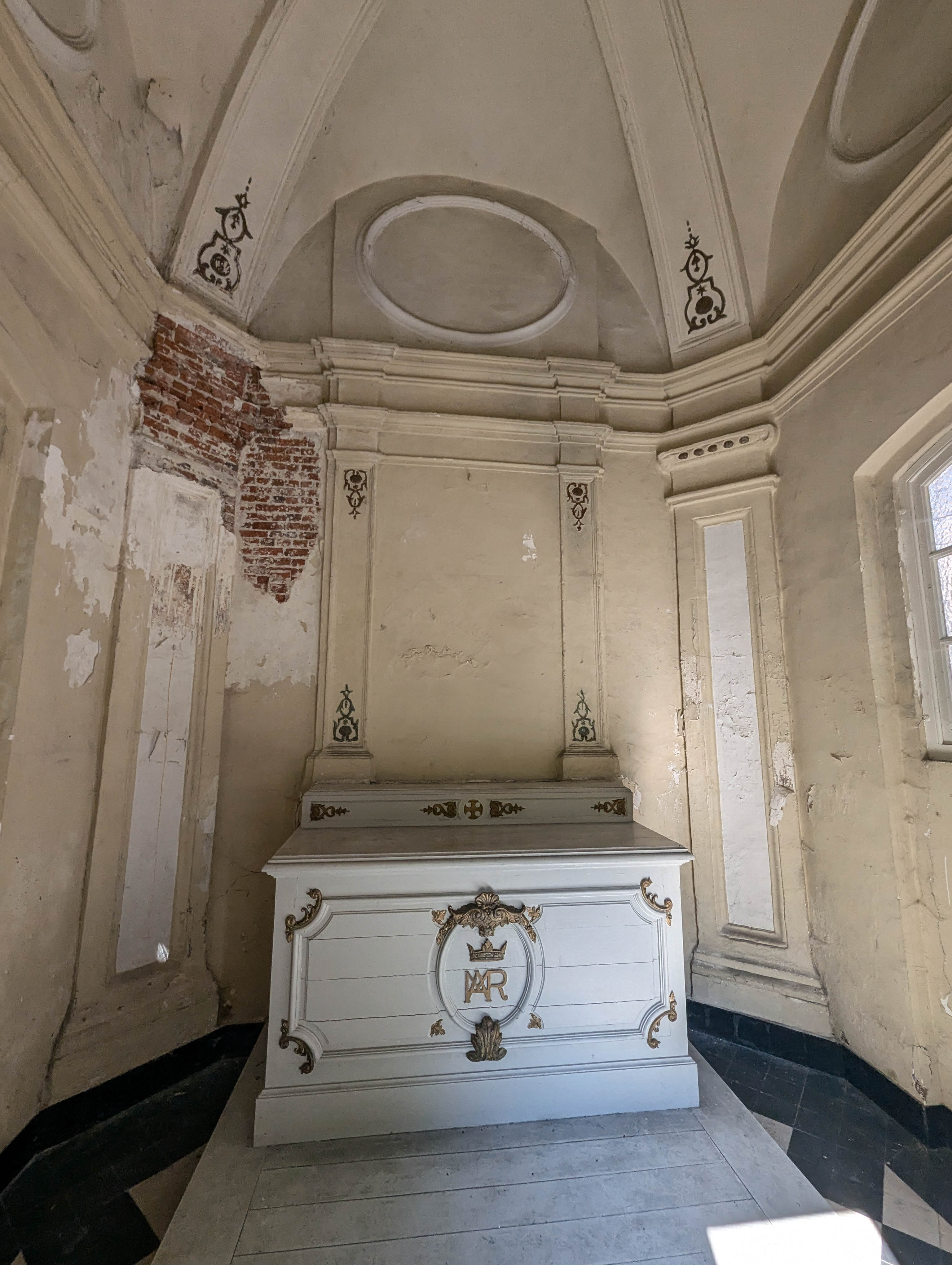
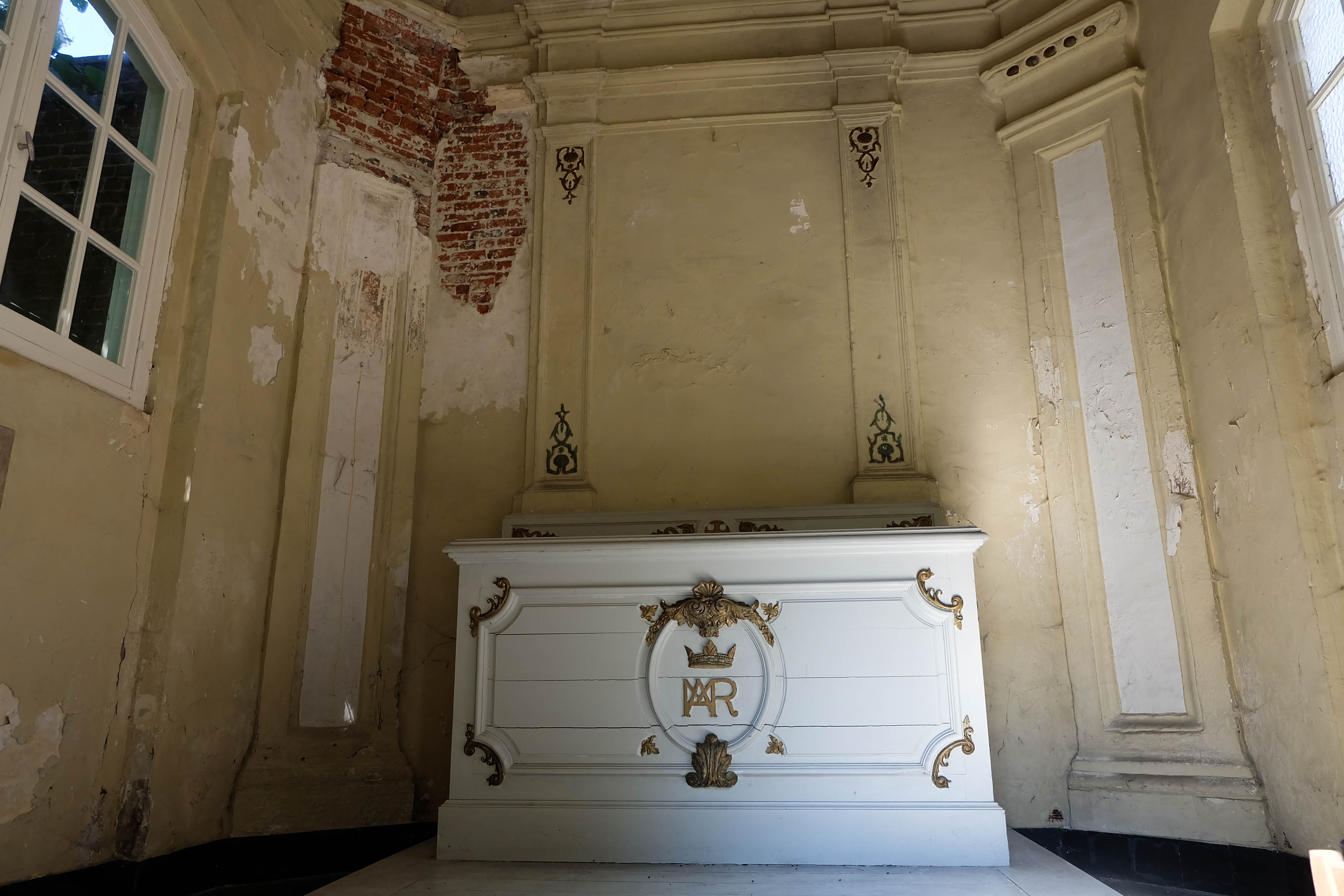
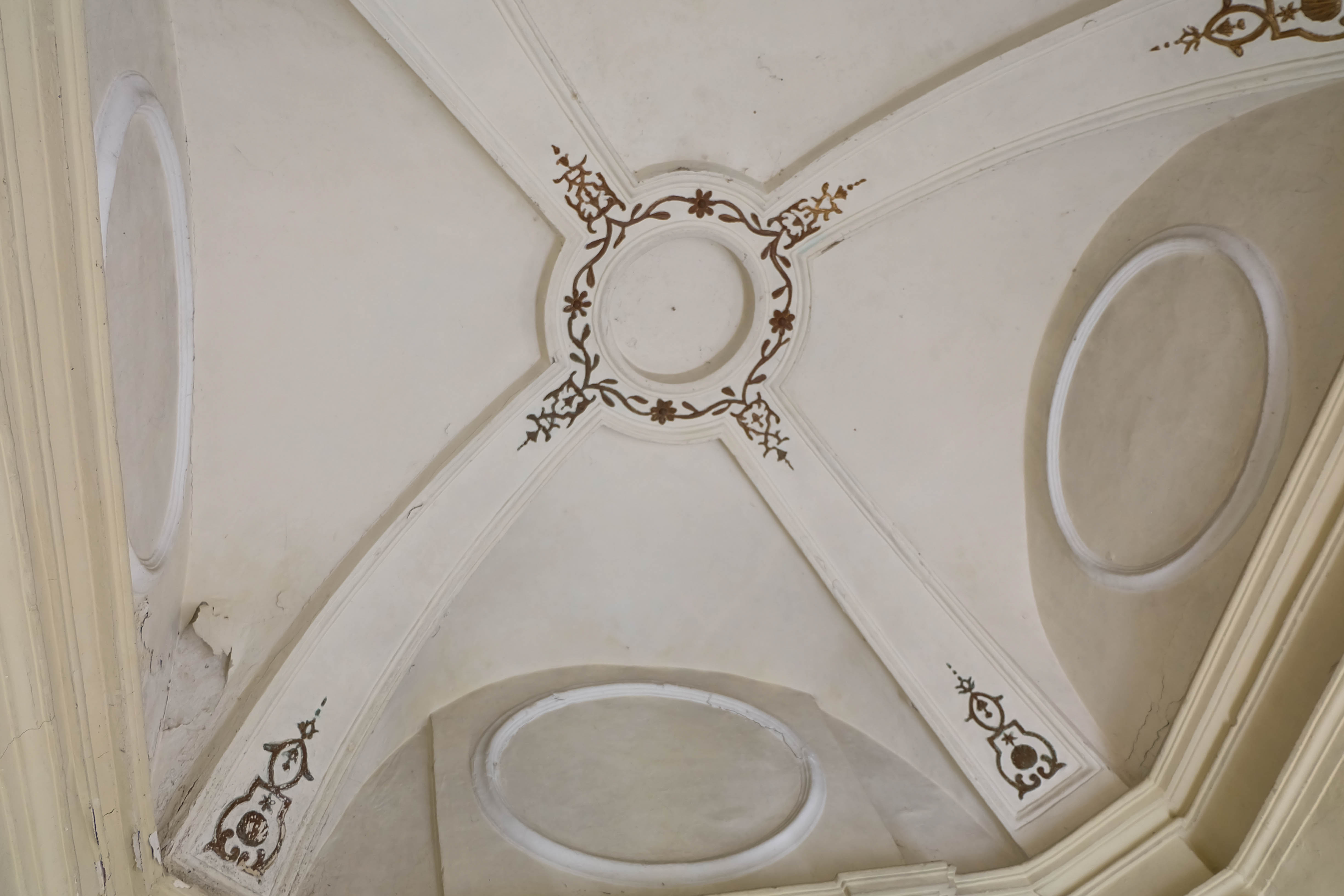
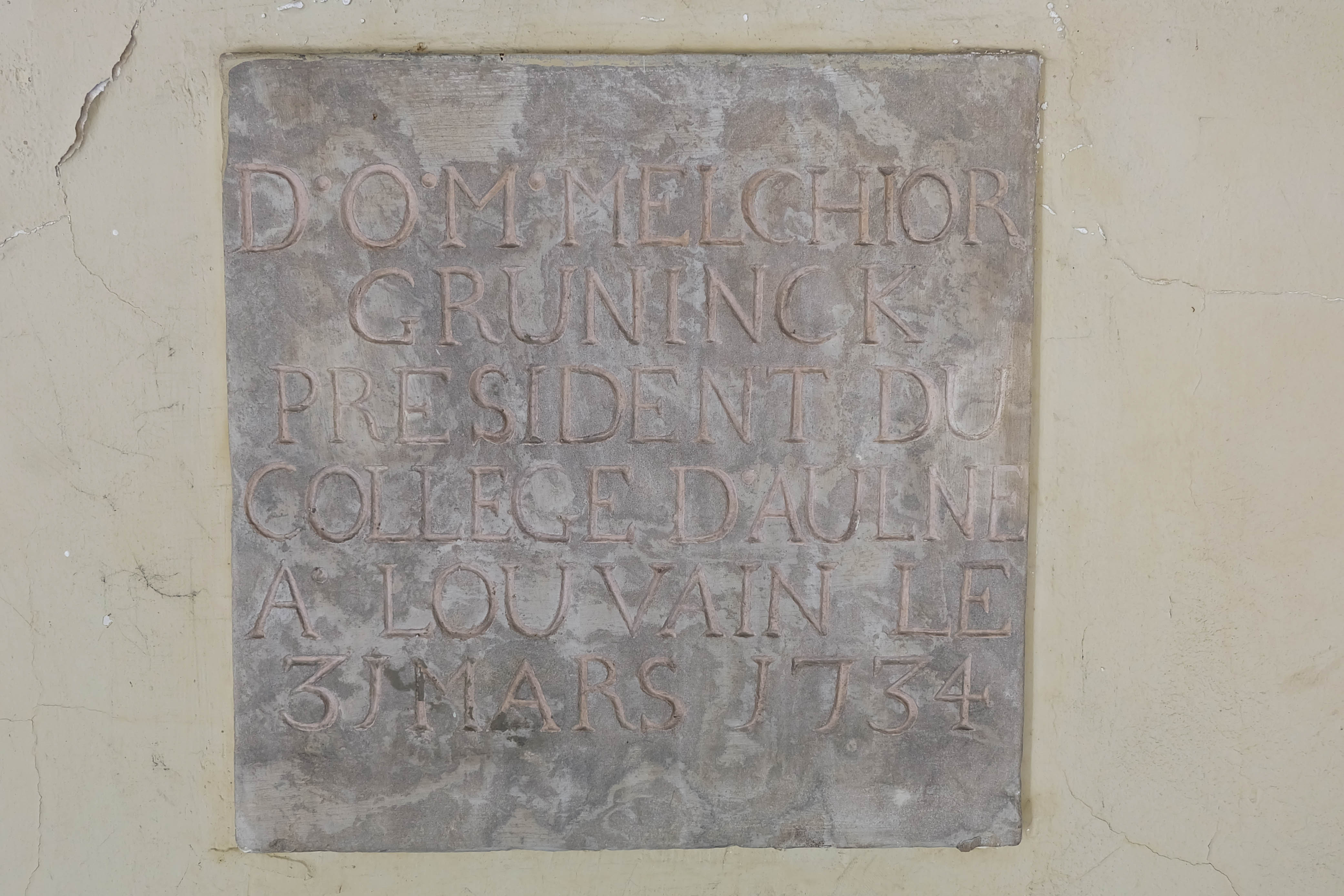
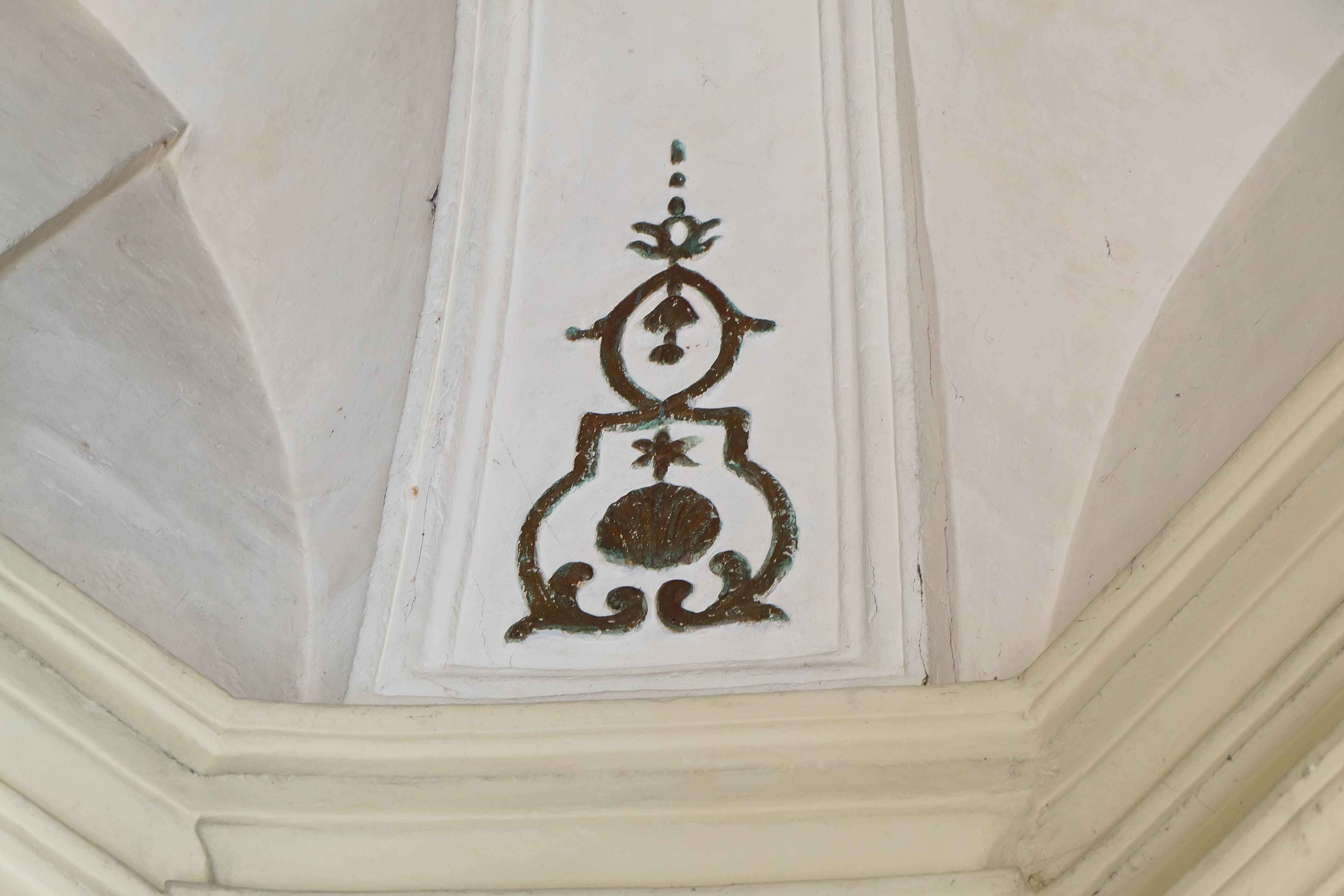
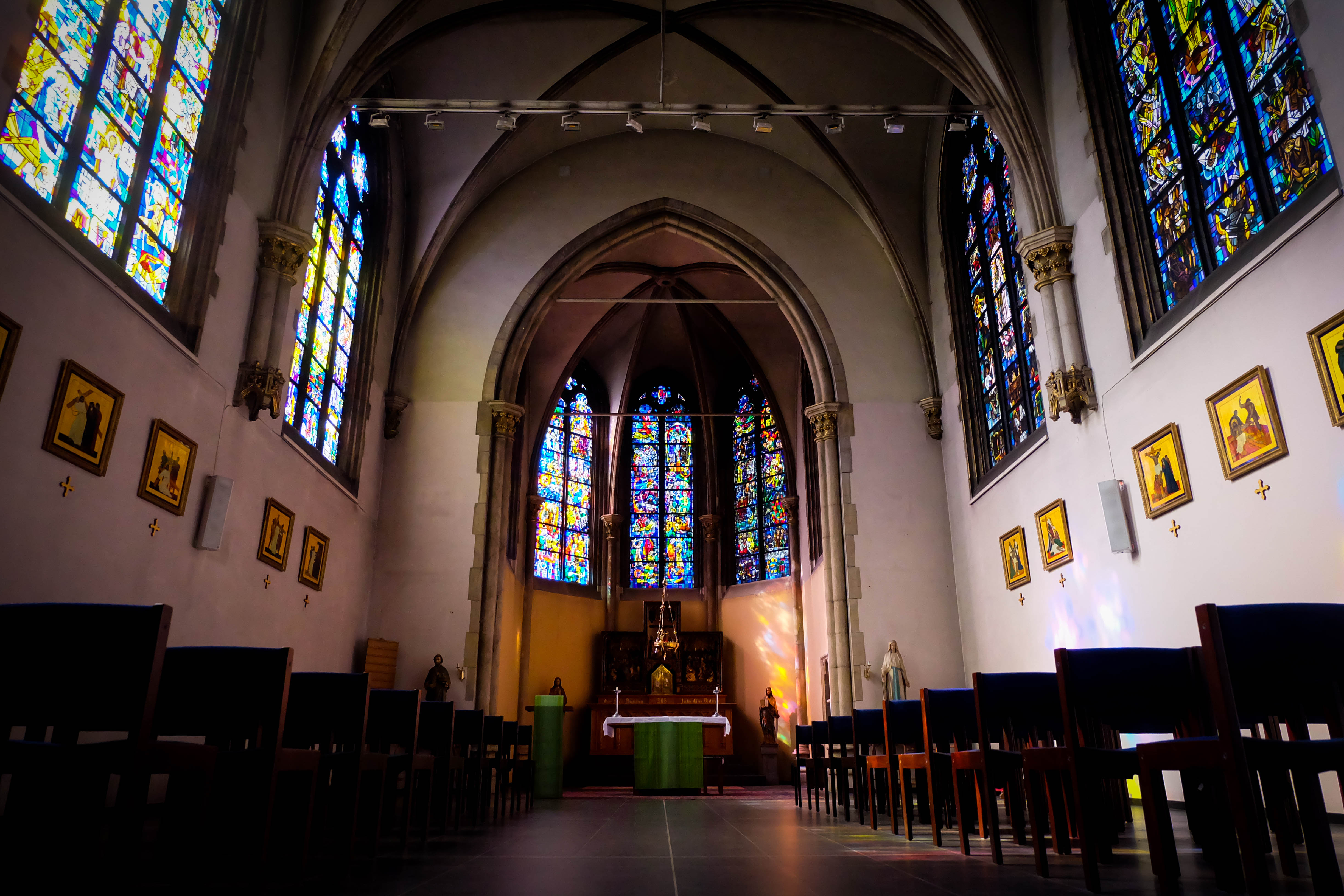
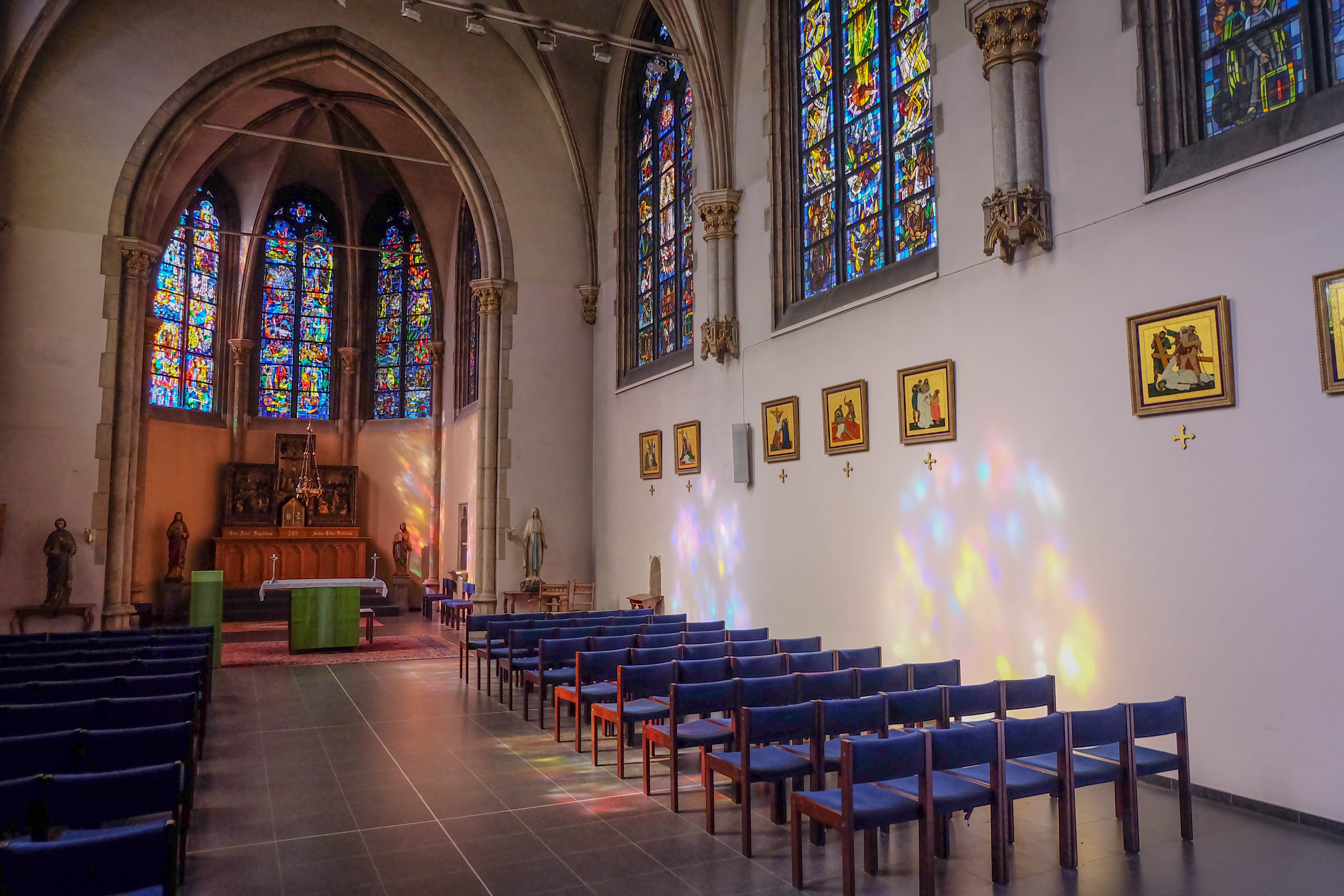
The huge garden that wowed visitors for more than four centuries is still there, and is a favourite summer spot of students. At the back of the gardens, the original 1734 garden pavilion of the Aulnecollege now refurbished as the De Becker Memorial Chapel still stands. It is the only intact structure left from the time of the Cistercian monks, standing as a silent witness to centuries of academic and religious transformation. Inside the chapel, you can still see a plaque dedicated to their former president Melchior Gruninck:
D.O.M. MELCHIOR GRUNINCK PRESIDENT DU COLLEGE D’AULNE LE 31 MARS 1734
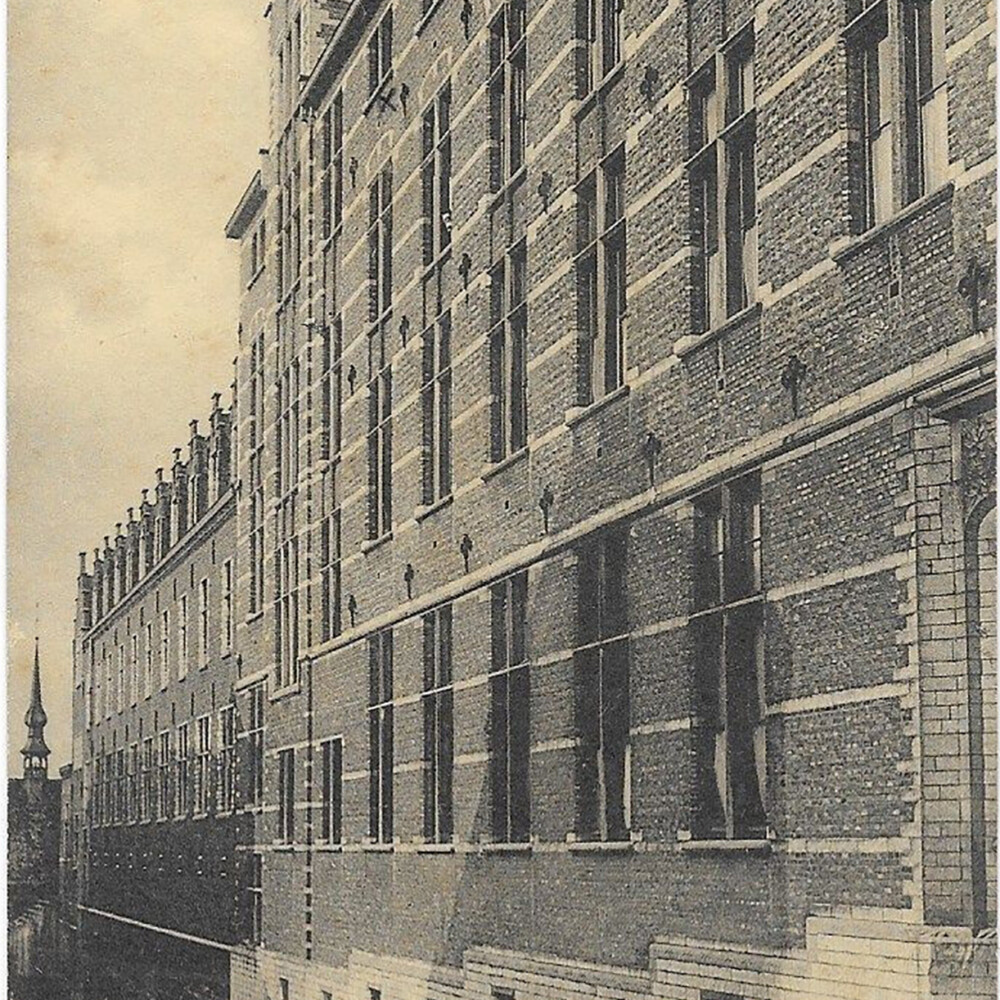
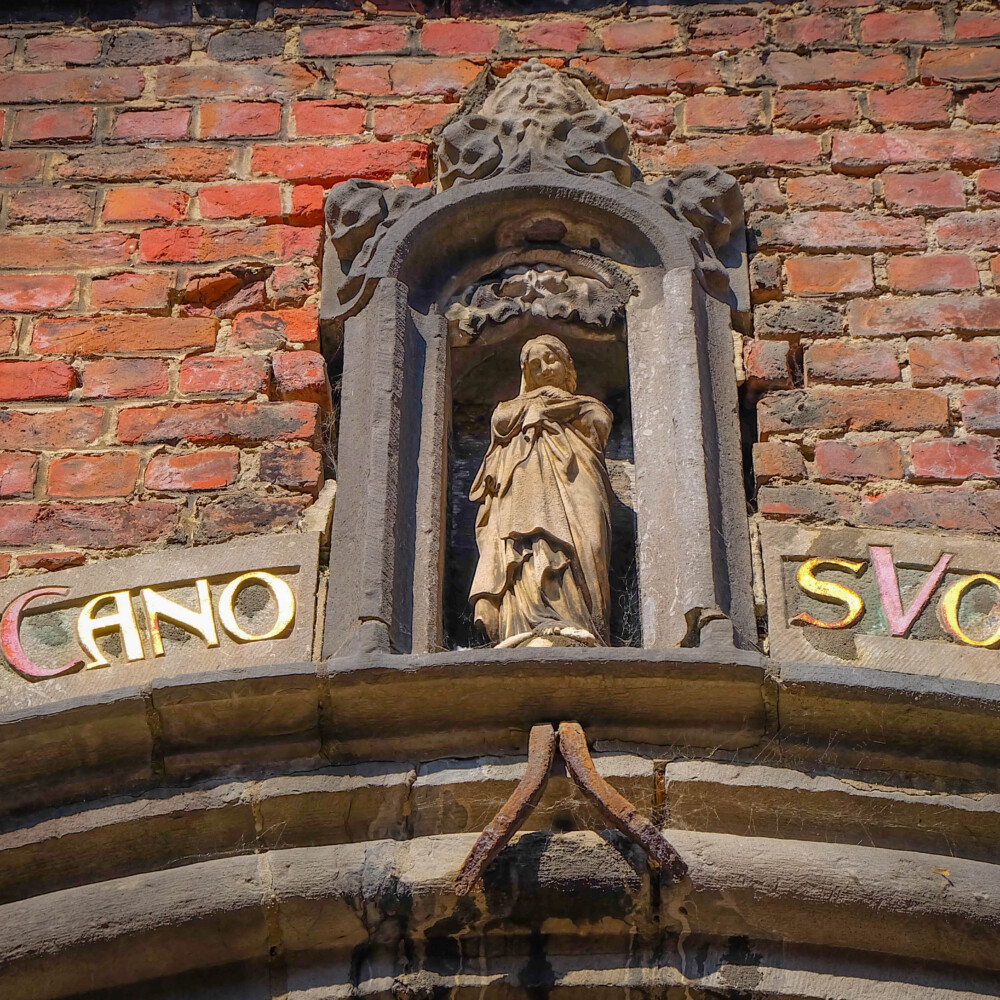
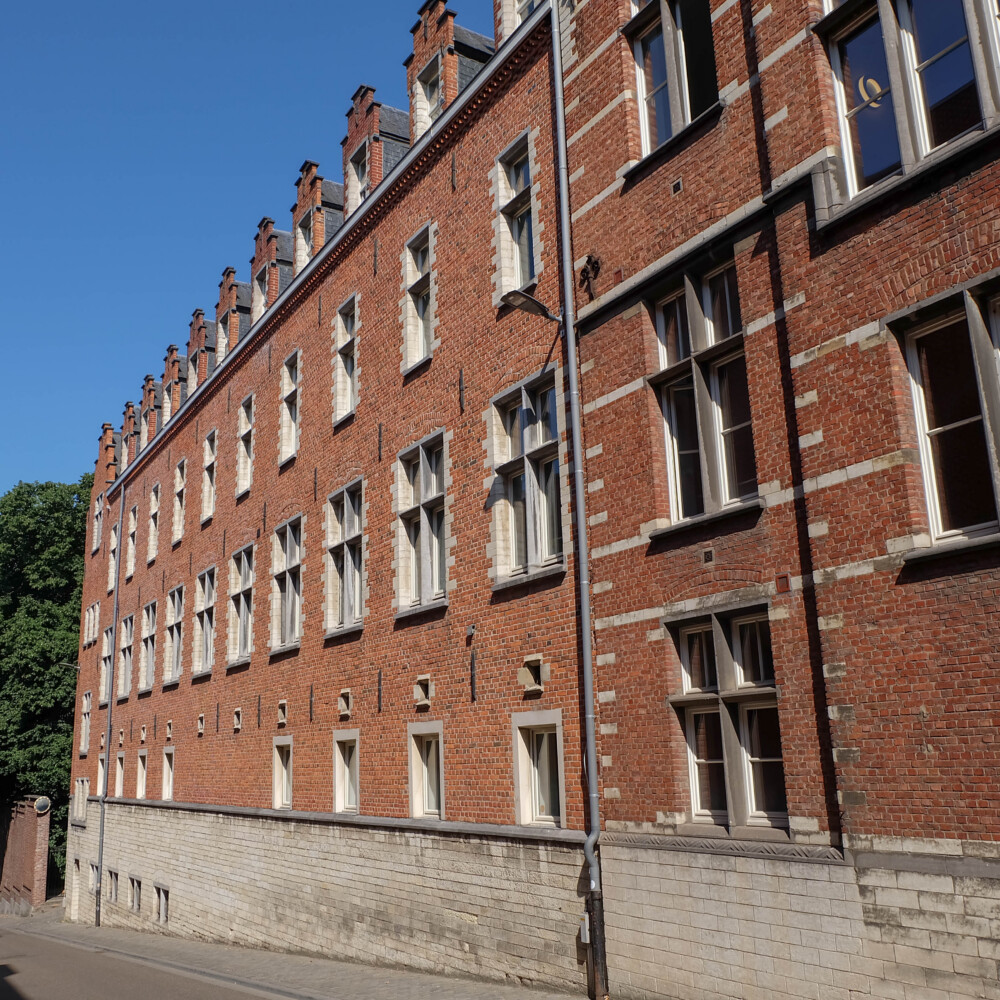
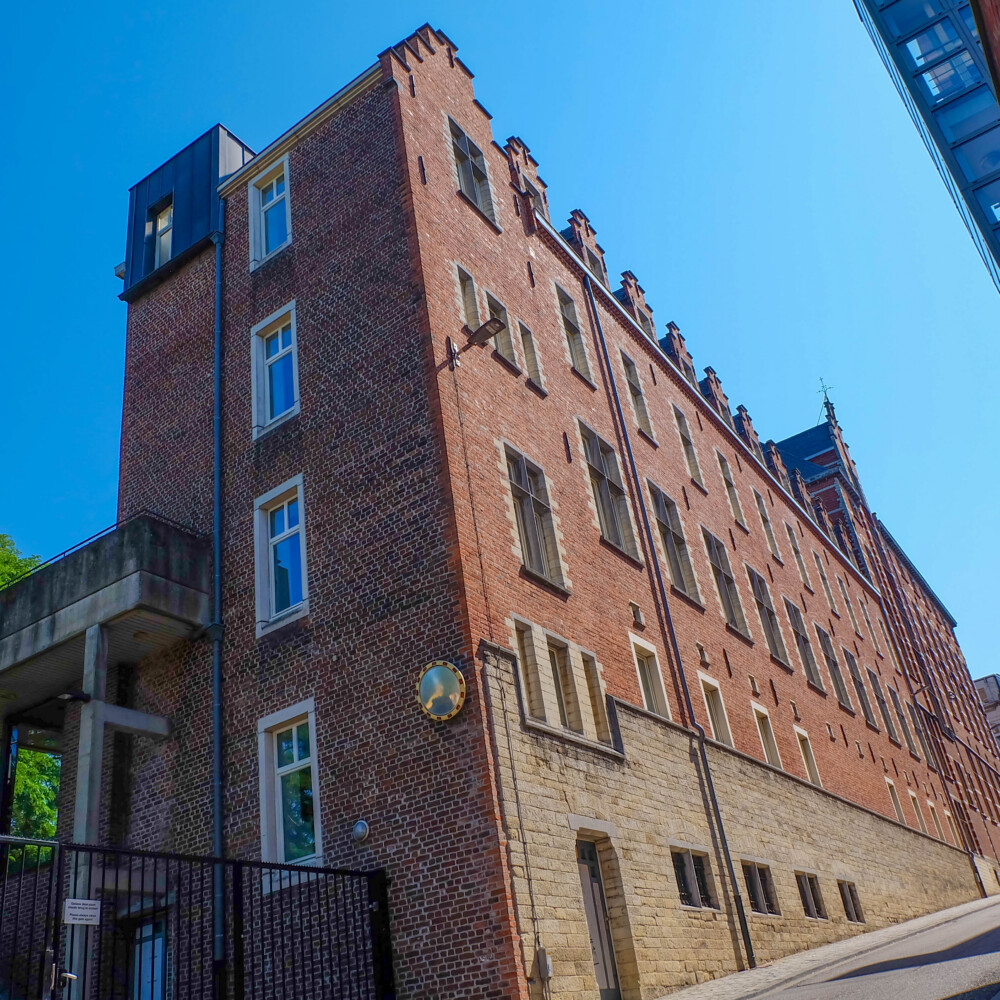
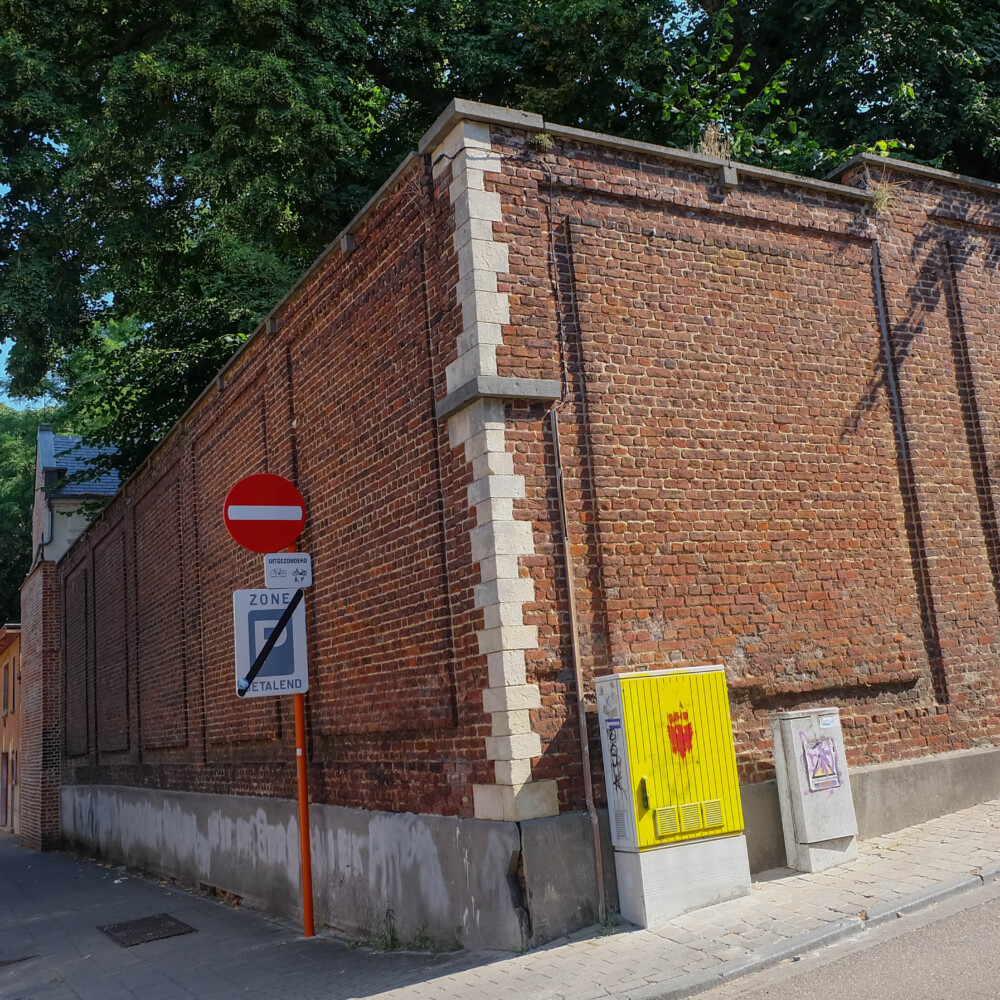
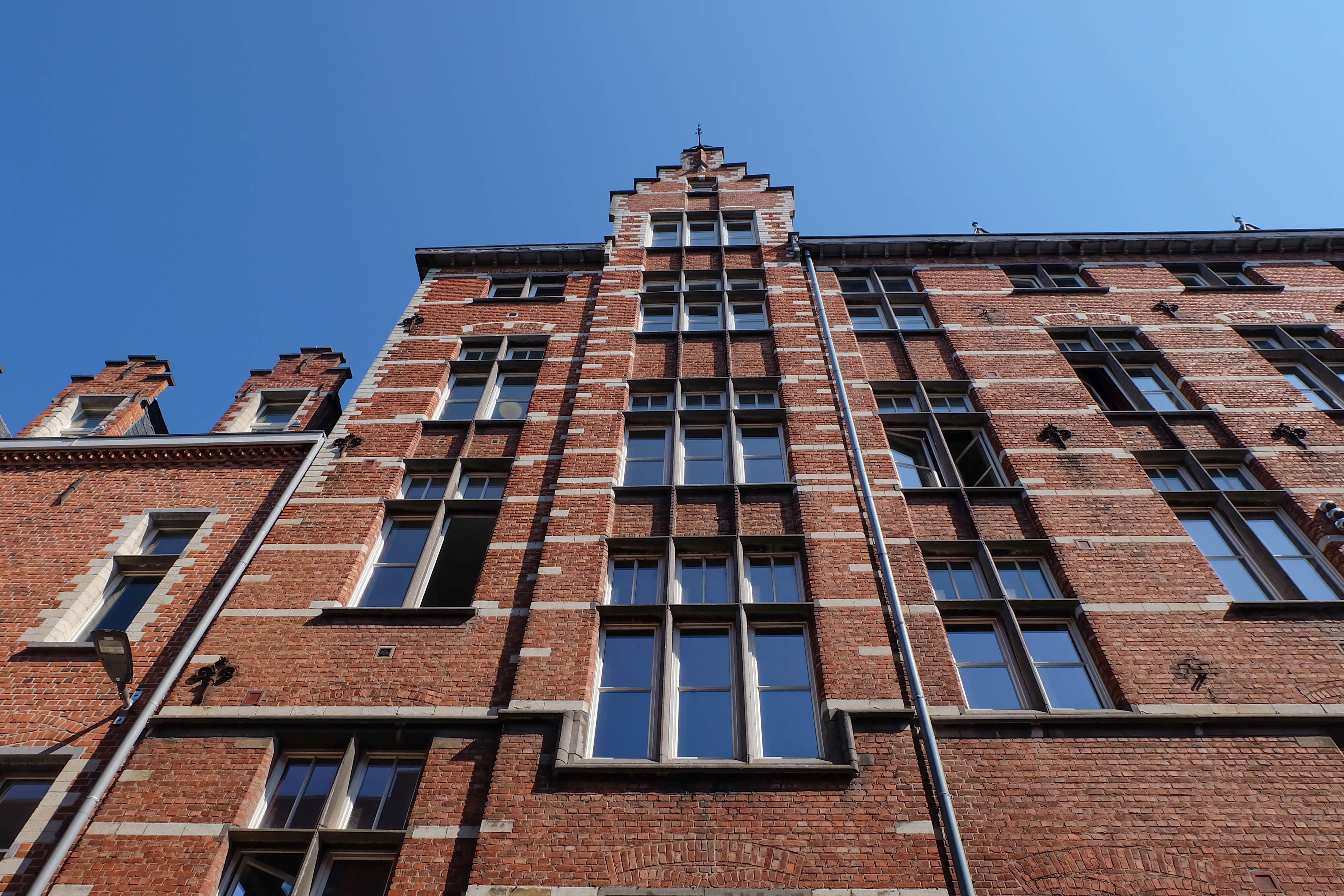
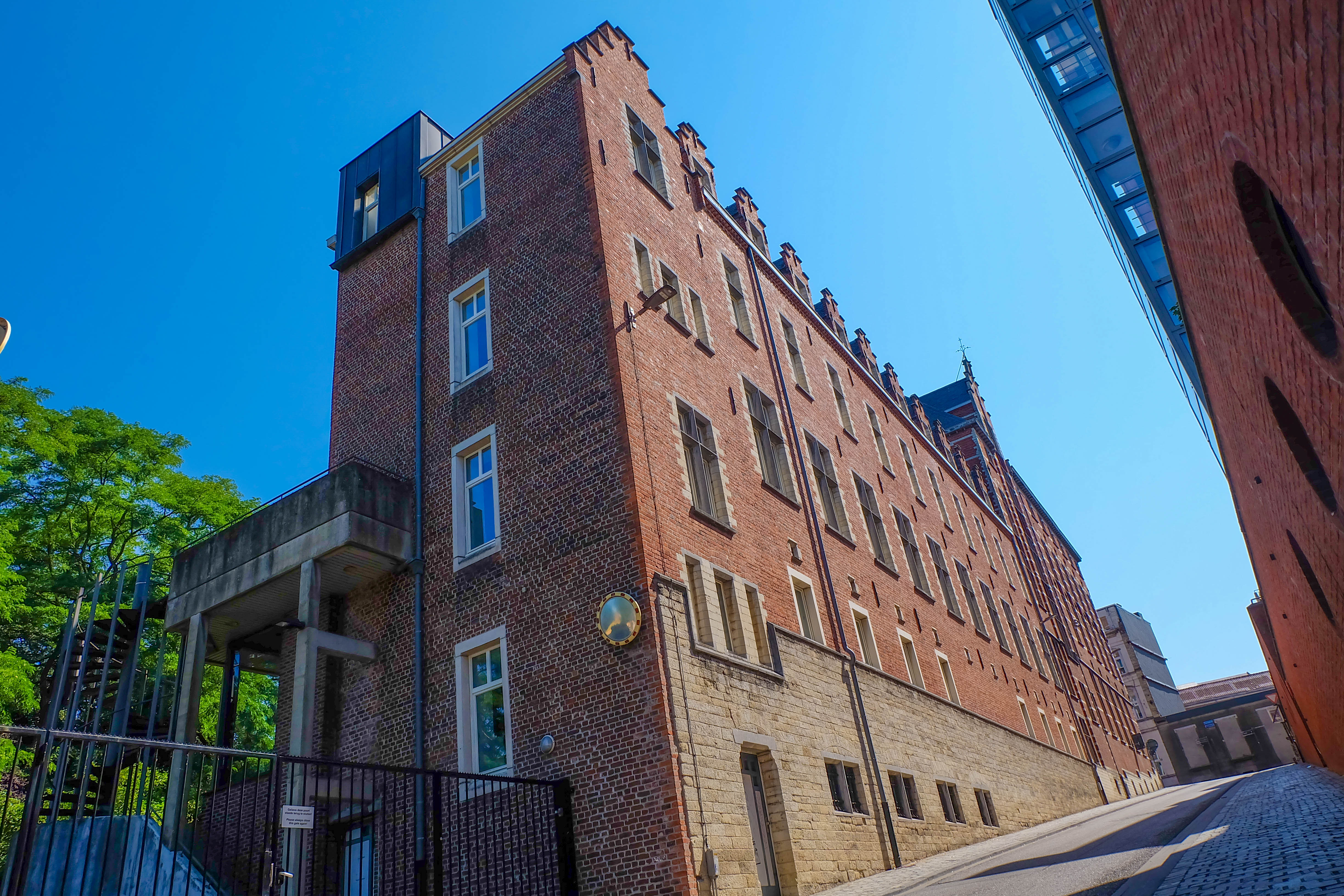
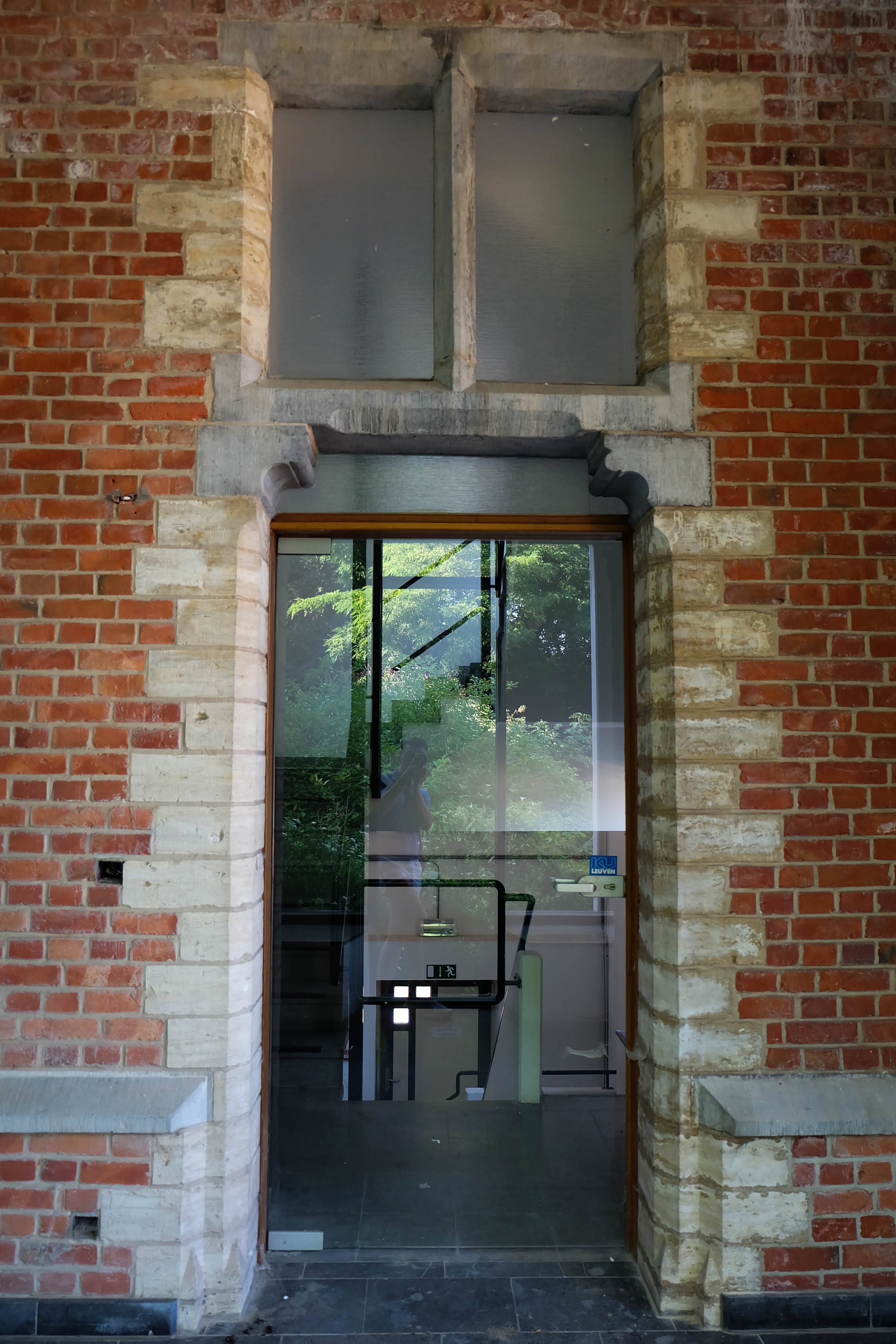
In 1890, the original buildings of the Aulnecollege were demolished to make way for the 19th century neo-Gothic buildings we still see today. With the purchase of a prestigious house of the family Jochams – the so-called “Blauw Huys” (Blue House), the American College started with a pomp, especially when the traditional stone gate of the Blauw Huys was reassembled piece by piece in its new location. As it turns out, this stone gate is the former gate of the Aulnecollege! You get to admire the 18th century stone gate of the Aulnecollege on the Naamsestraat.
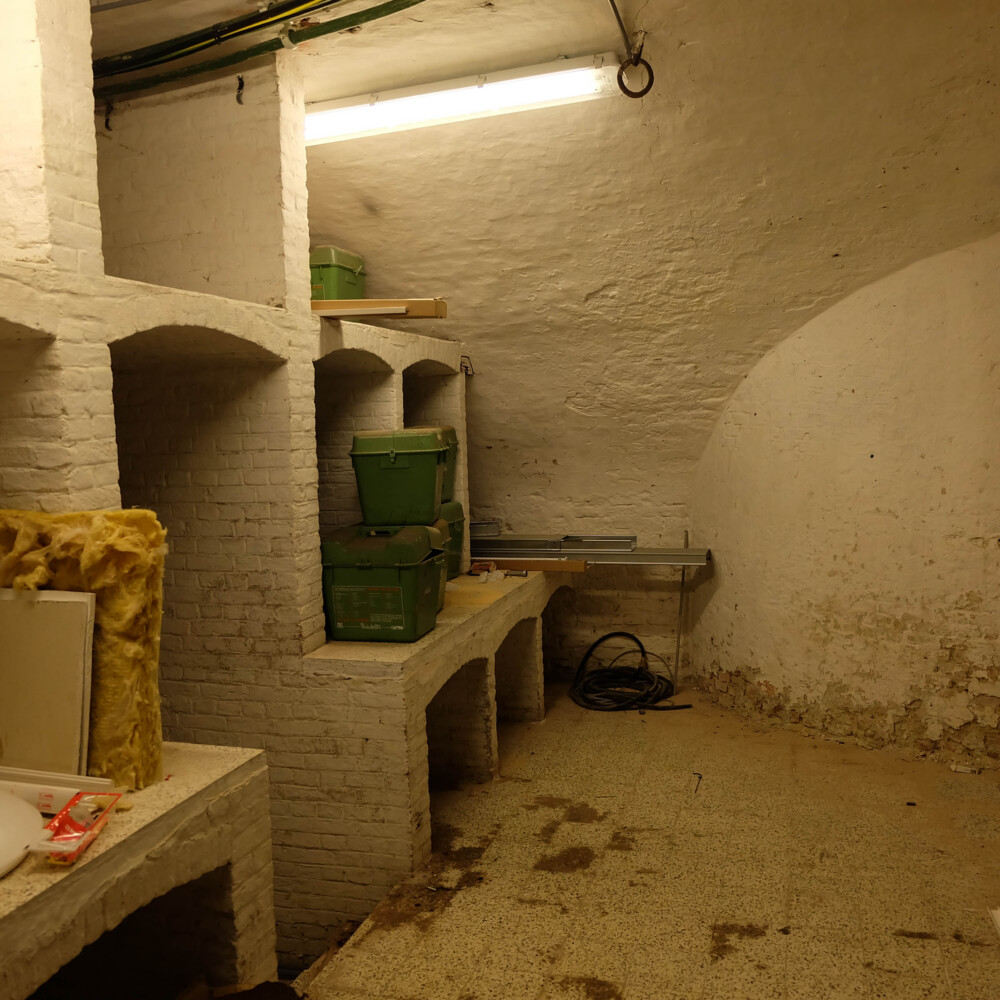
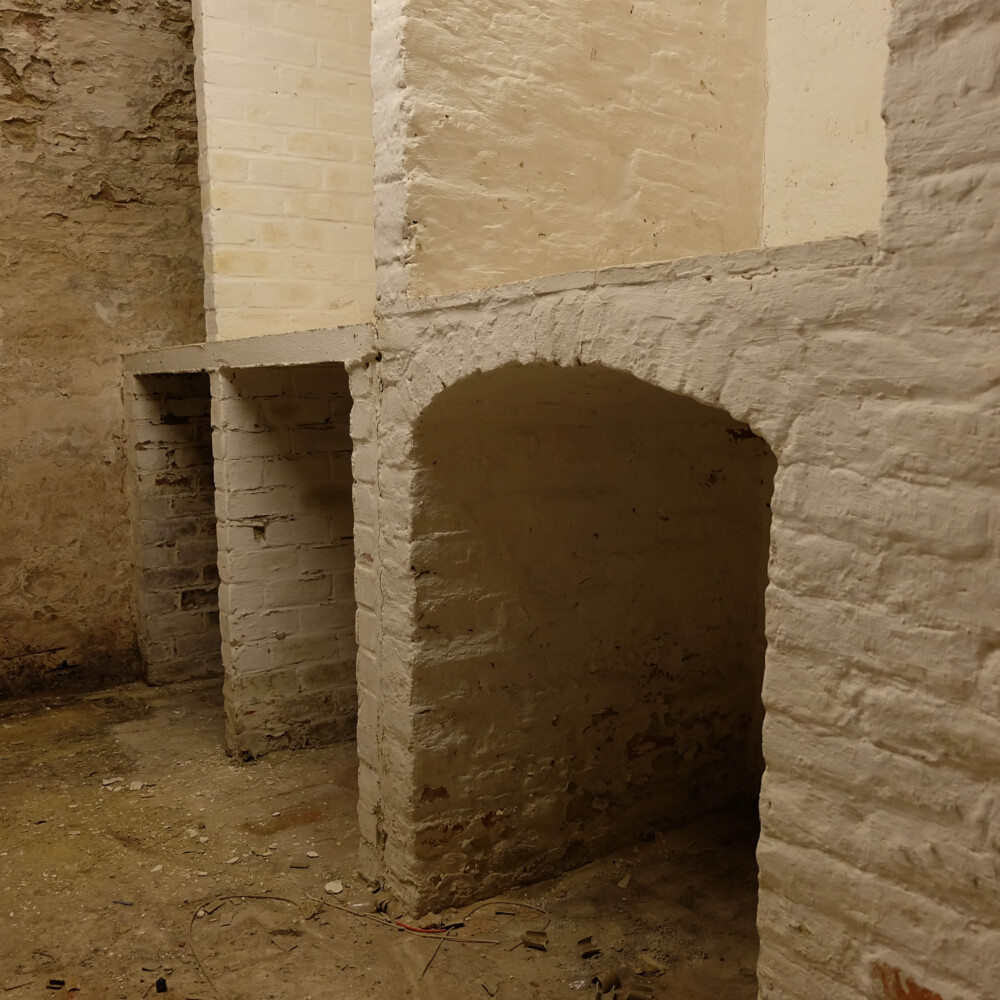
Thanks to the kindness of the manager of the American College, I was able to take a look at the basement of the existing buildings. The round brick pillars as well as the lower basement look more like 17th and 18th century than the 19th century buildings above. They are quite certainly remnants of the Aulnecollege.
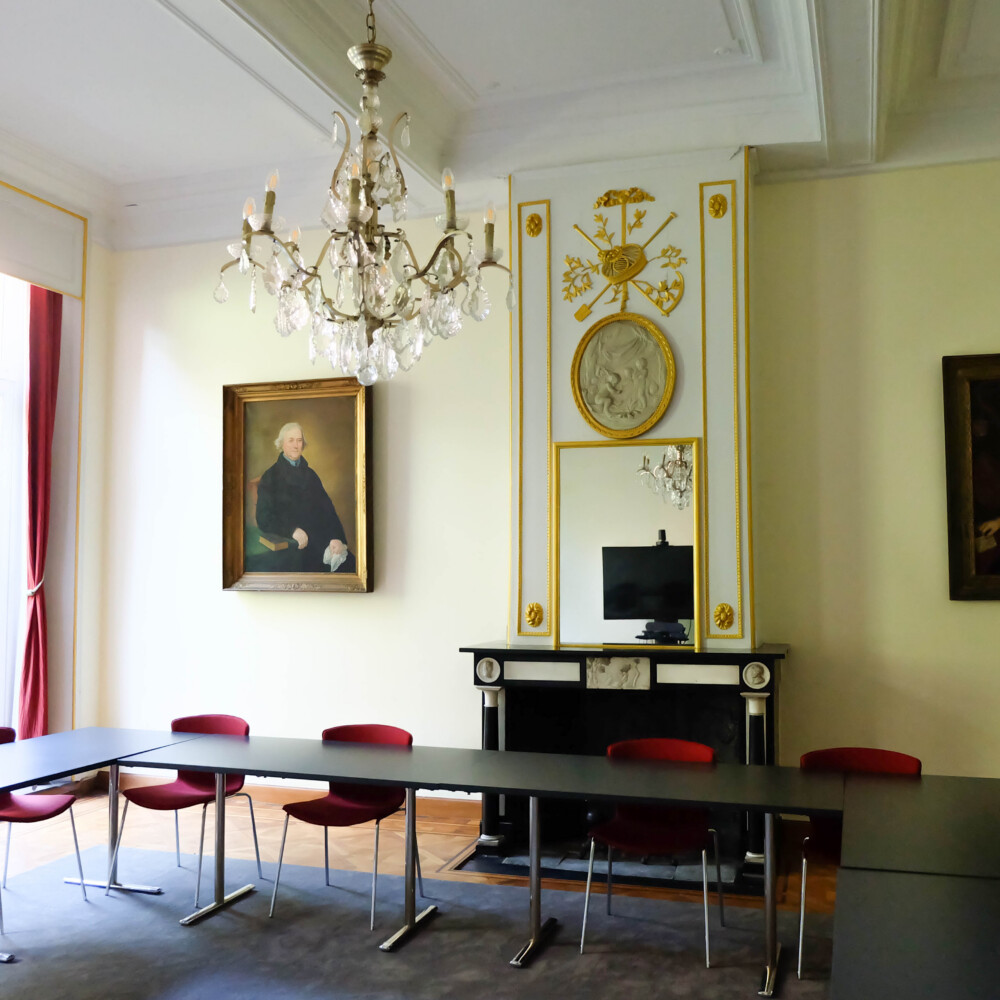
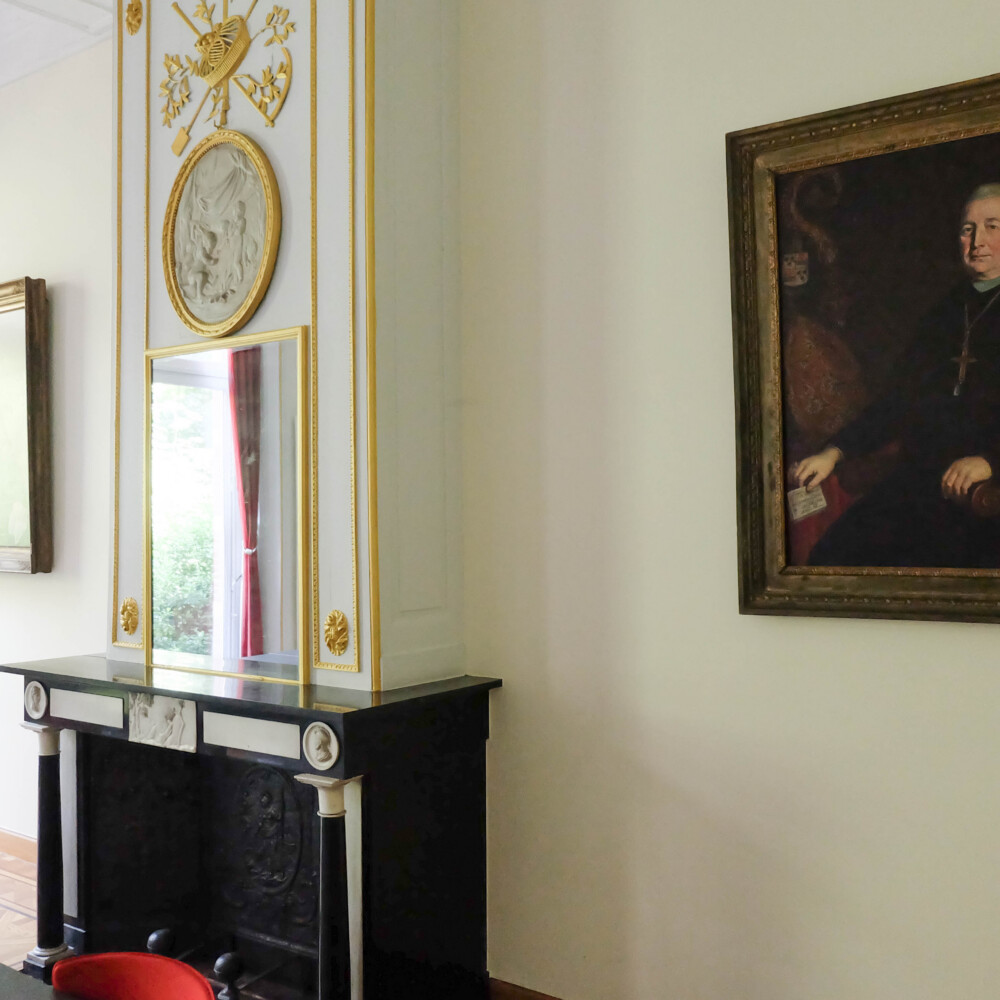
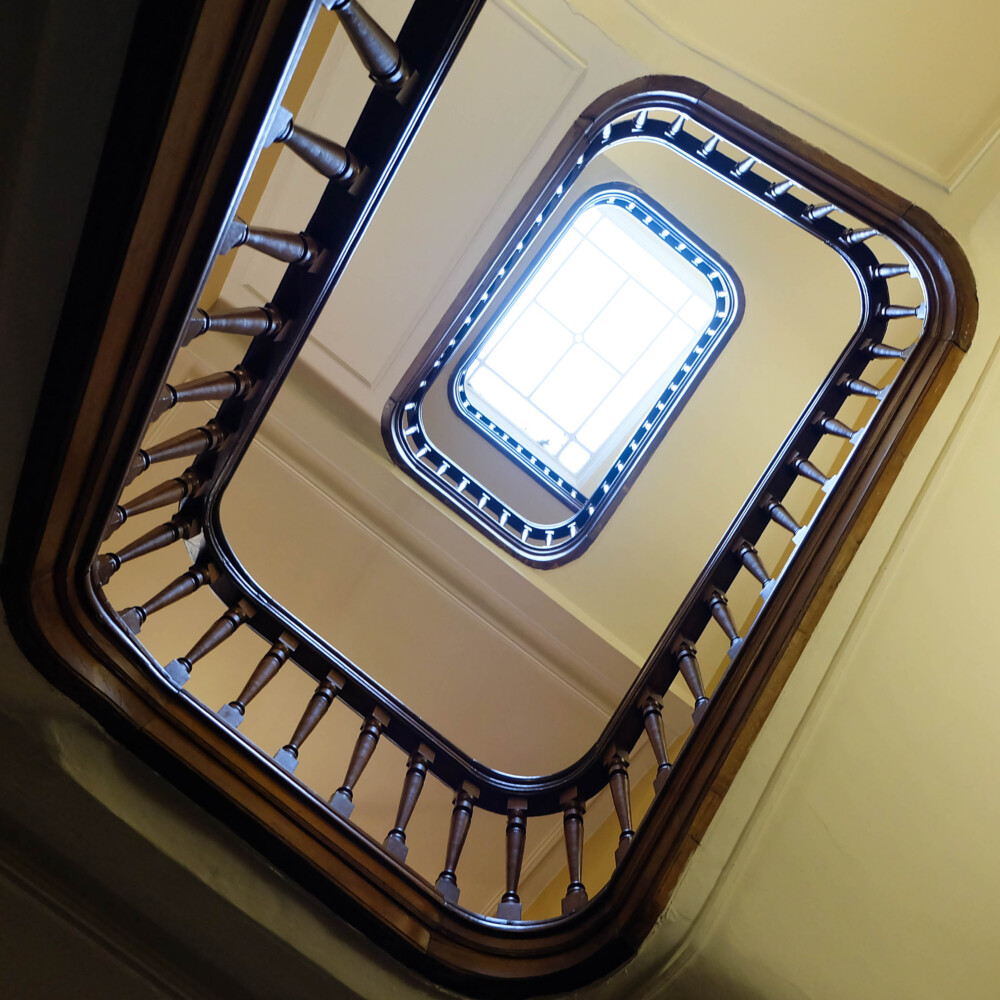
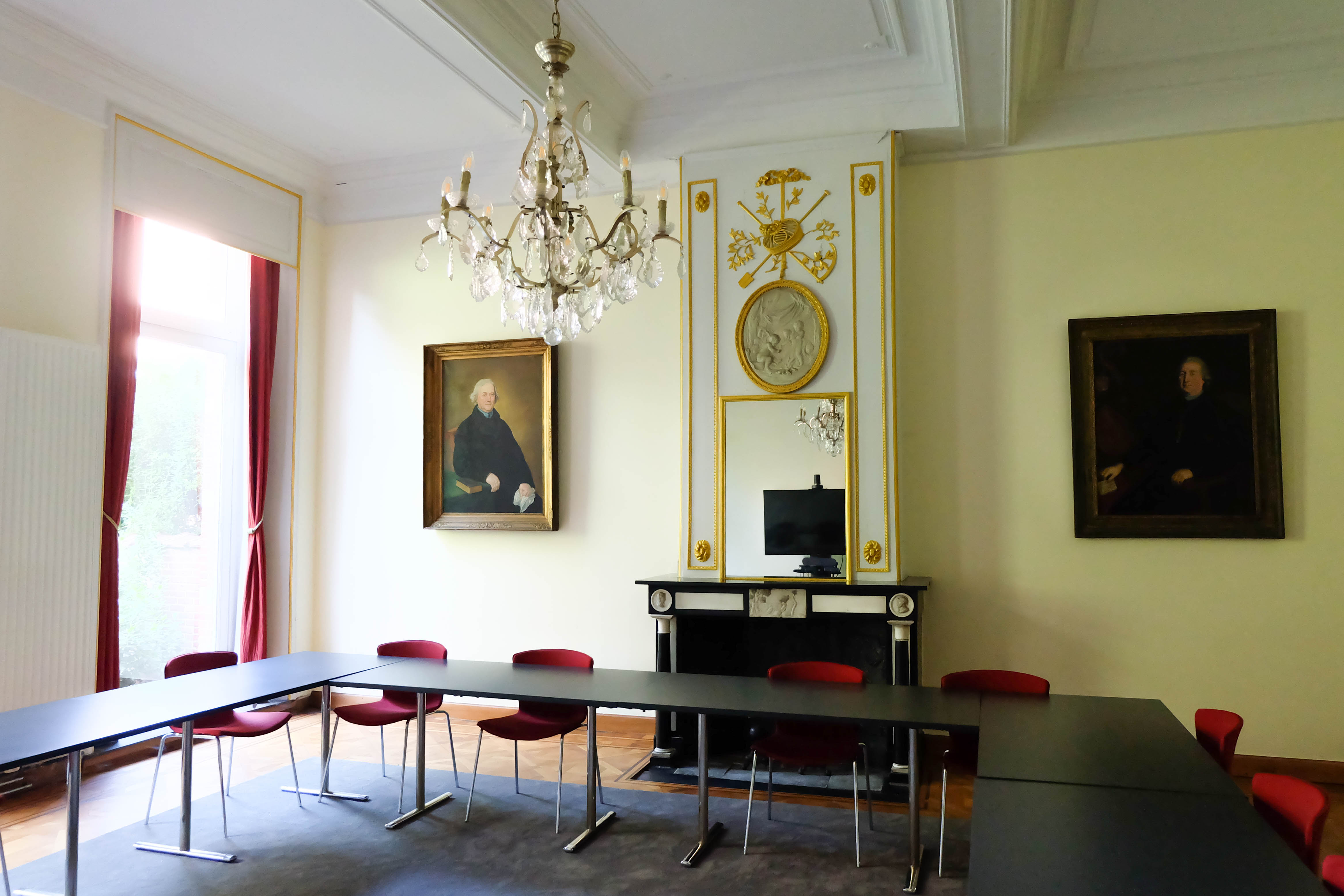
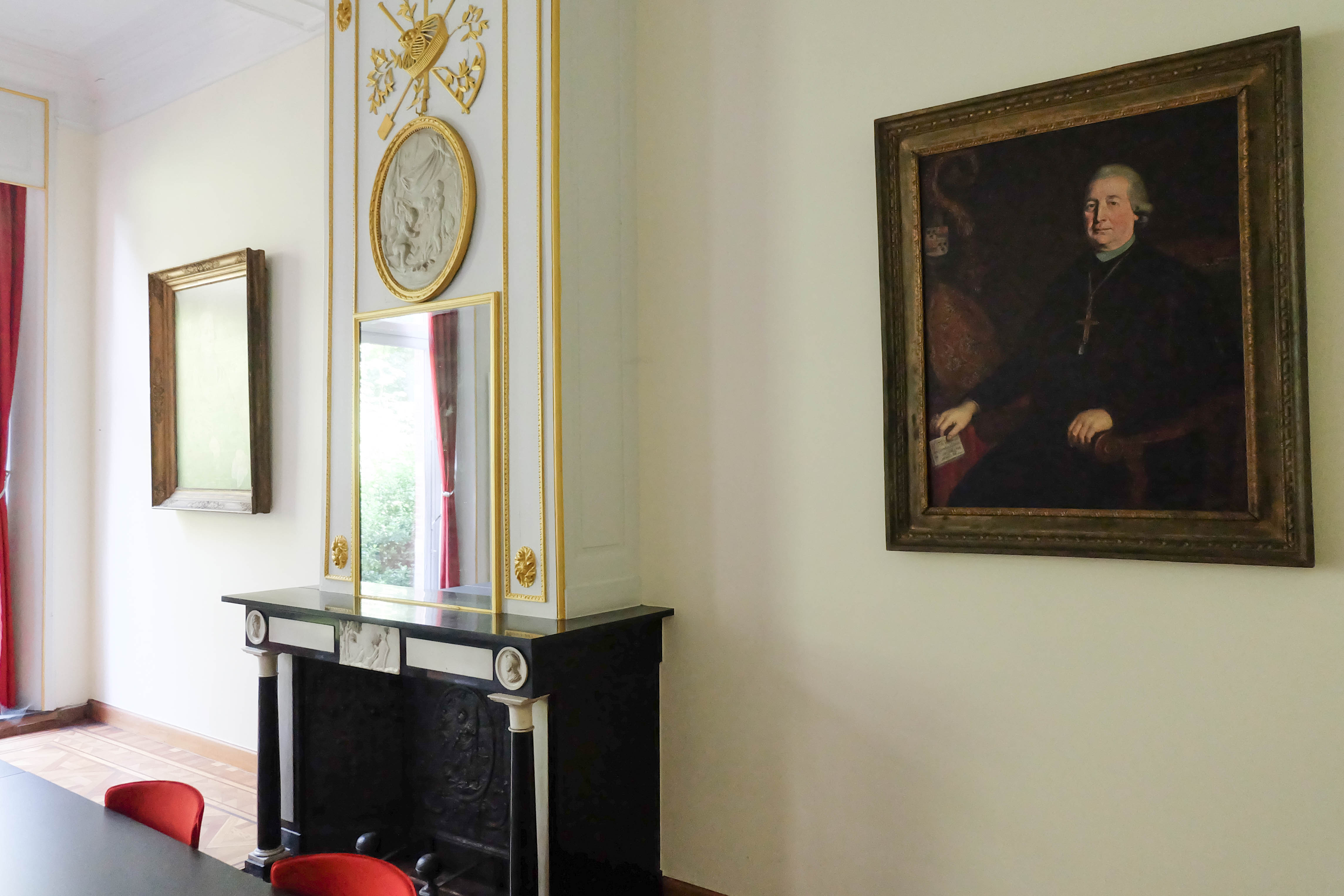
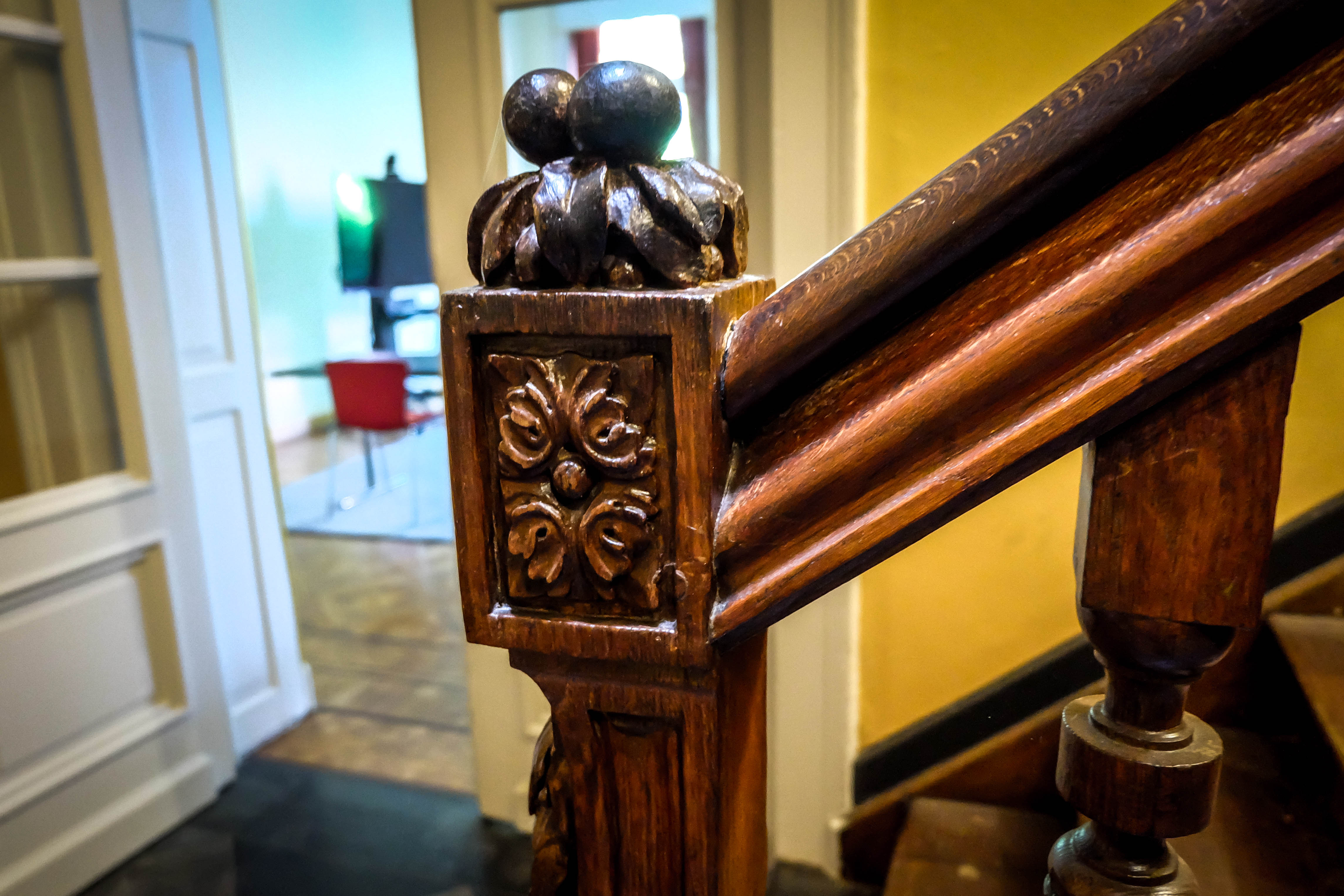
There are also some remarkable heritage elements of the American College. Its grand wooden staircase and its Renaissance Revival meeting room are impressive. There are also early 20th century remains such as an old safe of the chapel, and a pre-war lift for goods.
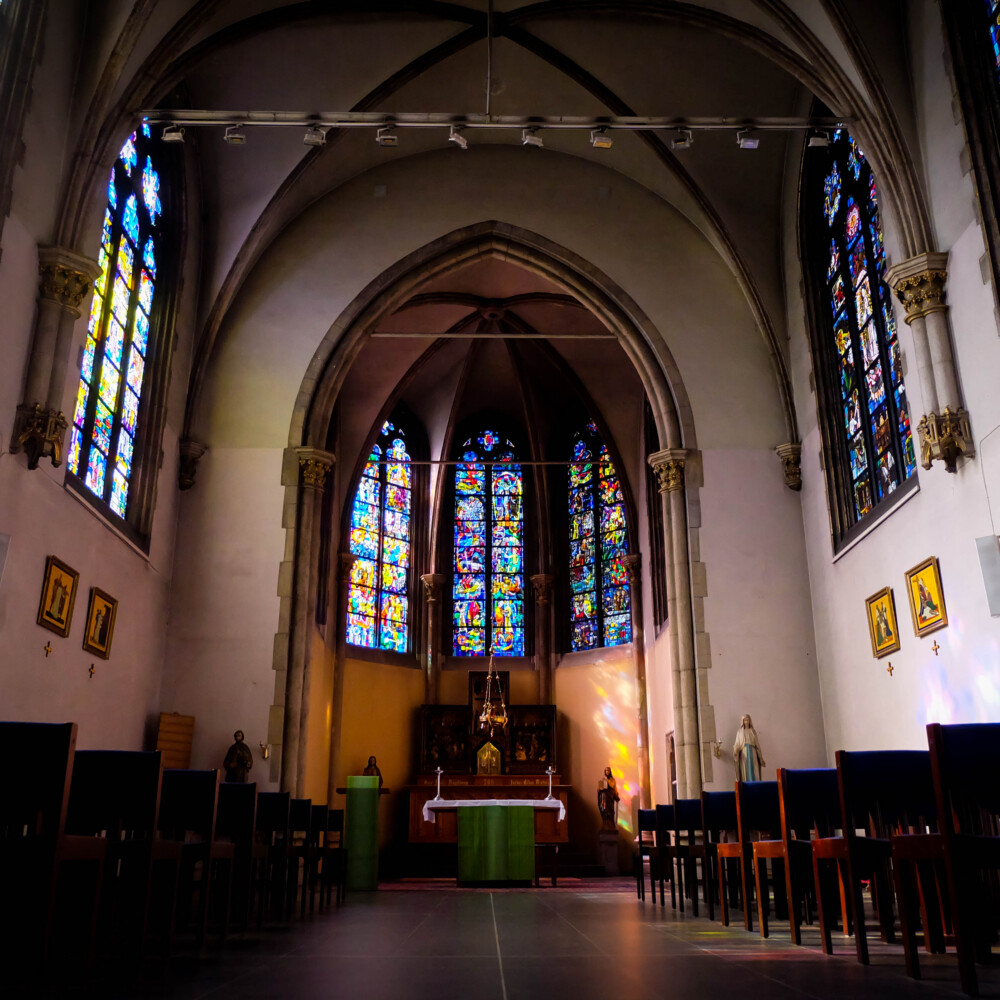
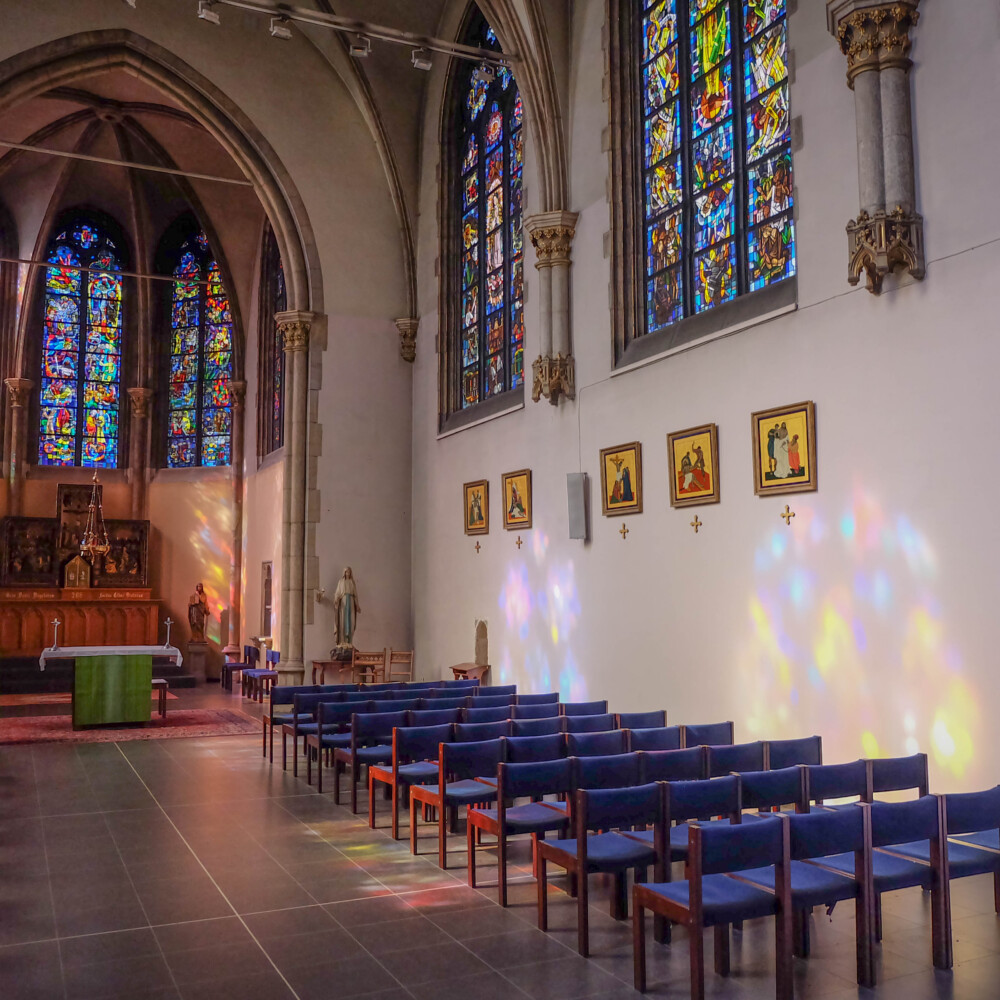
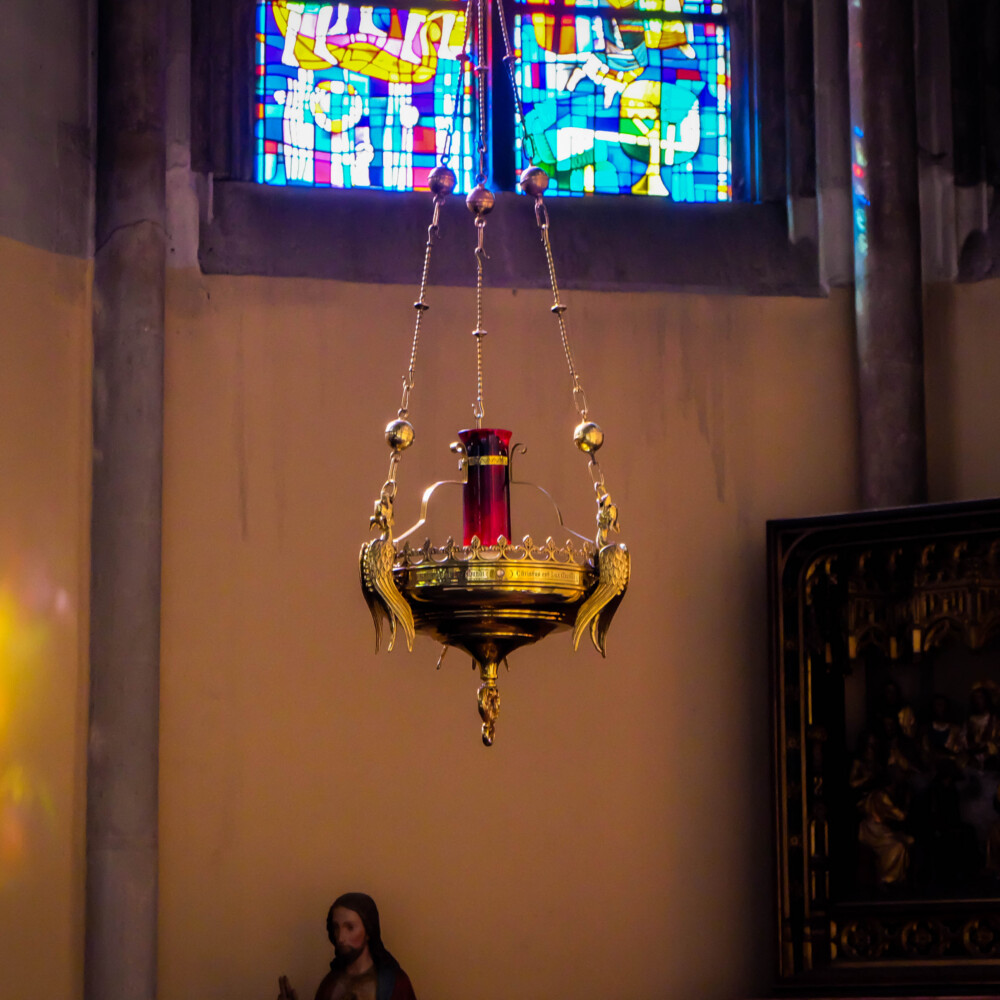
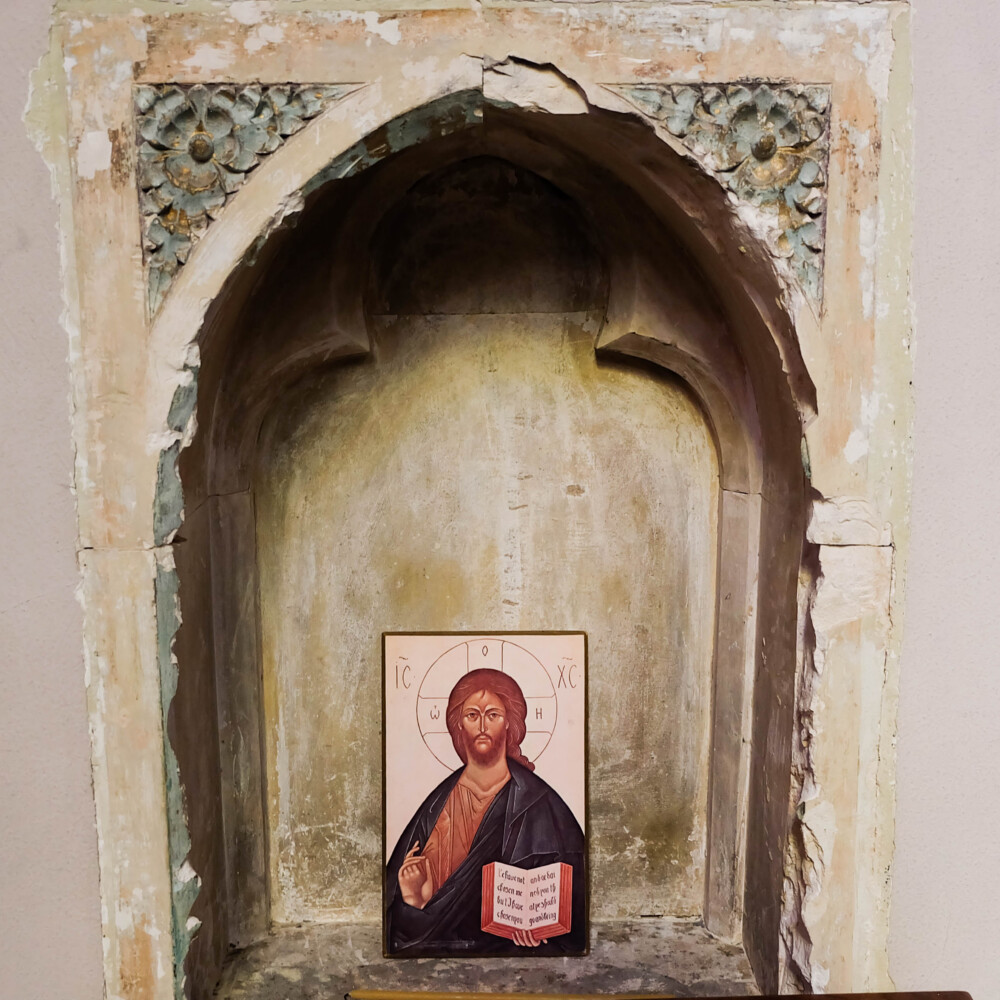
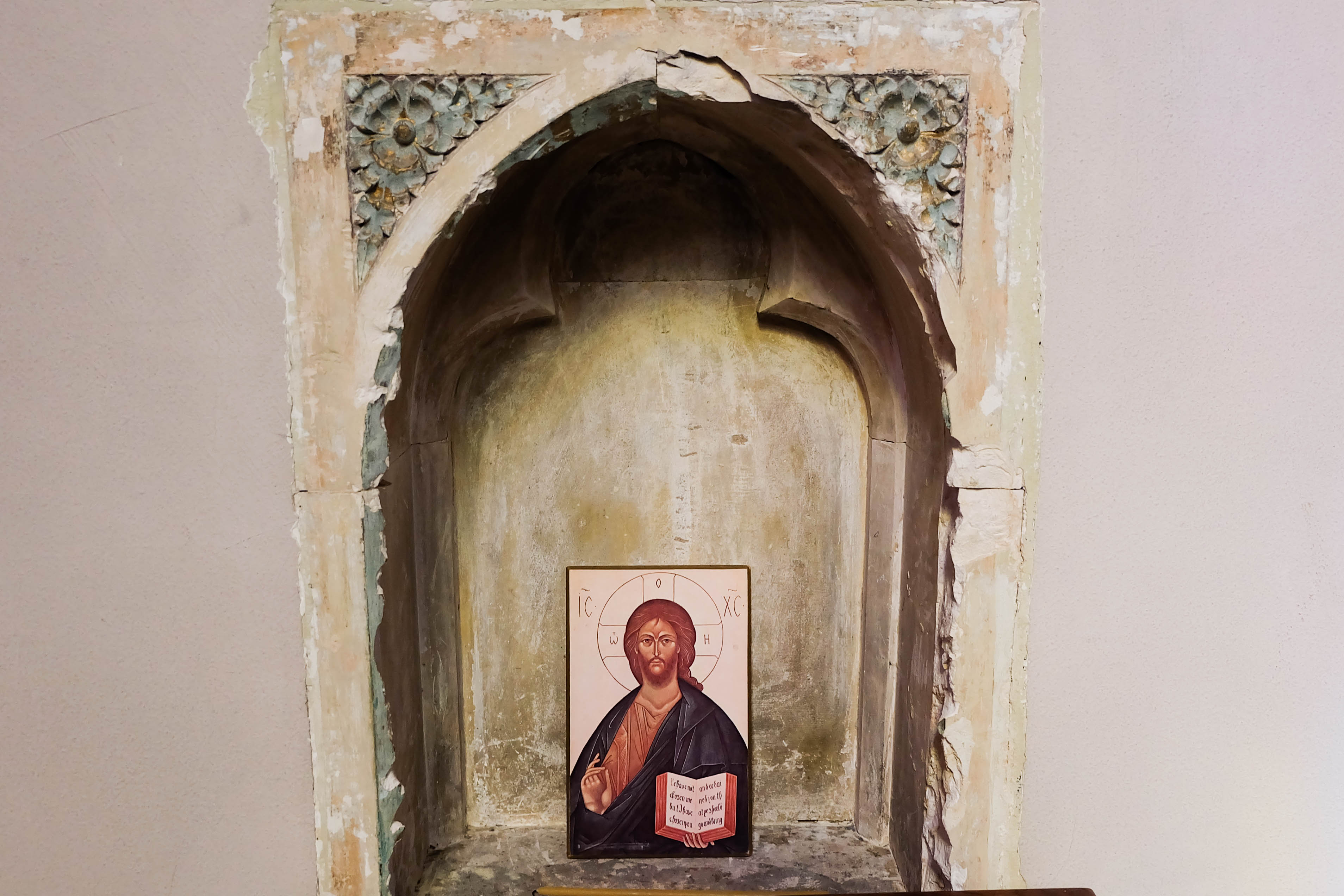
Its church is likewise an exquisite beauty. Filled with the most magnificent colours when the sun shines through the stained glass windows, it is sometimes used by the Orthodox community for their liturgy.
Sources:
Boonen, Willem. (1593-1594) “Geschiedenis van Leuven” Leuven.
Lipsius, J. (1610) “Justi Lipsi Lovanium” Leuven.
Van Even, E. (1860) “Louvain monumental ou Description historique et artistique de tous les édifices civils et religieux de la dite ville.” Leuven: Leuven University Press.
Van Even, E. (1895) “Louvain dans le passé et dans le présent.” Leuven: Leuven University Press.
De Maesschalck, E. (2024) “Leuven en zijn colleges – trefpunt van intellectueel leven in de Nederlanden (1425-1797)” Gorredijk: Sterck & De Vreese.
https://inventaris.onroerenderfgoed.be/erfgoedobjecten/42154
https://nl.wikipedia.org/wiki/Abdij_van_Aulne
https://fr.wikipedia.org/wiki/Abbaye_d%27Aulne
https://nl.wikipedia.org/wiki/Amerikaans_College
https://en.wikipedia.org/wiki/American_College_(Leuven)
https://fr.wikipedia.org/wiki/Coll%C3%A8ge_am%C3%A9ricain_de_Louvain
https://it.wikipedia.org/wiki/Collegio_americano_dell%27Immacolata_Concezione
https://www.kuleuven.be/residenties/amerikaanscollege/over-de-residentie/geschiedenis
- Braun, G, Hogenberg, F. (1572-1617) “Civitates orbis terrarium: Lovanium vulgo Loven” Universiteitsbibliotheek Utrecht (image)
- Blaeu, J. (1649) “Lovanium vulgo Loven” in “Novum Ac Magnum Theatrum Urbium Belgicae Regiae (Atlas van Loon – Delen XV-XVI)” Amsterdam: Museum Van Loon. (image)
- de Ferraris, Joseph-Jean François. (1771‑1778) “Atlas van België”. Brussels: KBR (image)
- Welis, G. (1890) “Aulnecollege” (image)
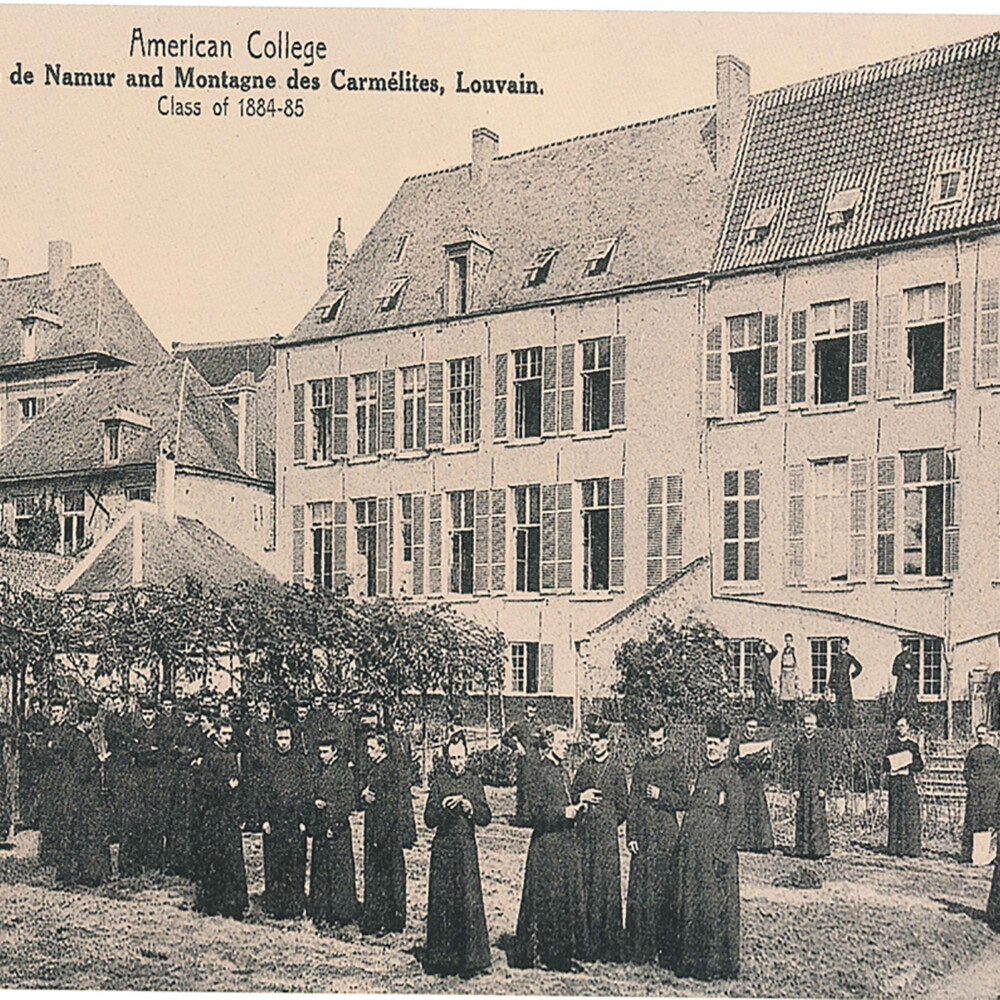
- Unknown. (1885?) “American College. Cor rue de Namur and Montagne des Carmélites, Louvain, Class of 1884-85” Leuven: American College. (image)
- Unknown. (1880s?) “American College. Cor rue de Namur and Montagne des Carmélites, Louvain” Leuven: American College. (image)
HOW IT LOOKS LIKE TODAY
Click on the zoom icon to view the full size.