Oud Leuven: #63 Pensstraat

Oud Leuven: #63 Pensstraat

  • Name in 1649:

    Pense marckt

  • Other names:

    Rue aux Tripes

  • Current name:

    Pensstraat

  • SHARE:

ABOUT

The ‘Pensmarkt’ (Tripes Market) is the only surviving remnant of the previous Meat District of Leuven. Also called ‘Pensstraat’ (Tripes Street), the street still hosts two butchers one of whom – Rondou – is a Leuven institution.

Origin

The Pensstraat used to be the place where the Pensmarkt took place. Known in the earliest written records in 1253 as ‘Panchestrata‘, the name slowly evolved to be ‘Peenstrate‘ in 1370.


Part of the “Seven Corners of Leuven’s Meat District”

The Pensstraat leads from the Brusselsestraat to the square known as the ‘Mathieu de Layensplein‘. Leuven’s inhabitants still call this square the ‘Zeven Hoeken‘ (Seven Corners). This is because it was the area is enclosed by seven street corners with the Leverstraatje, the Pensstraat, the Schrijnmakersstraat and the Jodenstraat.

The Pensstraat also led directly up to the Vleeshuis (Meat Market), which stood right in front of the Sint-Pieterskerk.

Up until the First World War, the Zeven Hoeken was Leuven’s Meat District (Slachthuiswijk).

It was unsanitary and smelled really bad, and many of the rubbish and rotten meat found themselves in the nearby Dijle river.


1914: The Great Fire of Leuven

In August 1914, Leuven was nearly completely destroyed by the invading Germans. The university library was burnt down. The Tafelrond was ruined. The Sint-Pieterskerk was reduced to its bare bone foundations. The Vleeshuis – together with the Pensstraat – was so completely burnt that there was absolutely nothing left.

It was then that the city took the decision to turn this into an open space called ‘Parvis Saint-Pierre‘. In 1940, the space was renamed ‘Mathieu de Layensplein‘ to honour the city’s renowned architect.

After the dreadful destruction of 1914, the city administration decided to make use of the opportunity to sanitise the whole Meat District, which was their plan for a long time, since the area was dirty, unhygenic and very poor – right in the centre of the city.

Already in 1781, the slaughterhouses in the Slachtstraat were centralised in a building further down the road in the corner between the modern-day Amerikalaan and Lei. This was initiated by the mayor Jan Laurent de Vroye, and was the first central public slaughterhouse in Belgium. In 1908, an even larger building was erected along the Kapucijnenvoer, and this moved the slaugherhouse to the outlying quarters of the city.

With the meat business moved outside the centre of Leuven, the tripes stalls in the Pensstraat also went away.

What's so special about this place?

Slagerij Rondou

As much as I would like to fantasize about Leuven’s famous butcher ‘Rondou‘ being a survivor of the meat business here since the 13th century, it is not.

Slagerij Rondou started its business in Oud-Heverlee in 1946 and moved to their current spot in the Pensstraat in 1965. The family worked really hard through those decades, against the rise of supermarkets, in order to keep the trade alive. Their struggles were the inspiration of the 2009 TV drama series ‘Van Vlees en Bloed‘ (Of Meat and Blood), and the butcher shop became an instant star throughout Belgium.

Today, it still serves high quality meat and has kept its familiar personal touch in spite of its fame. It is also the favourite butcher of Belgian TV chef Jeroen Meus.

Current situation

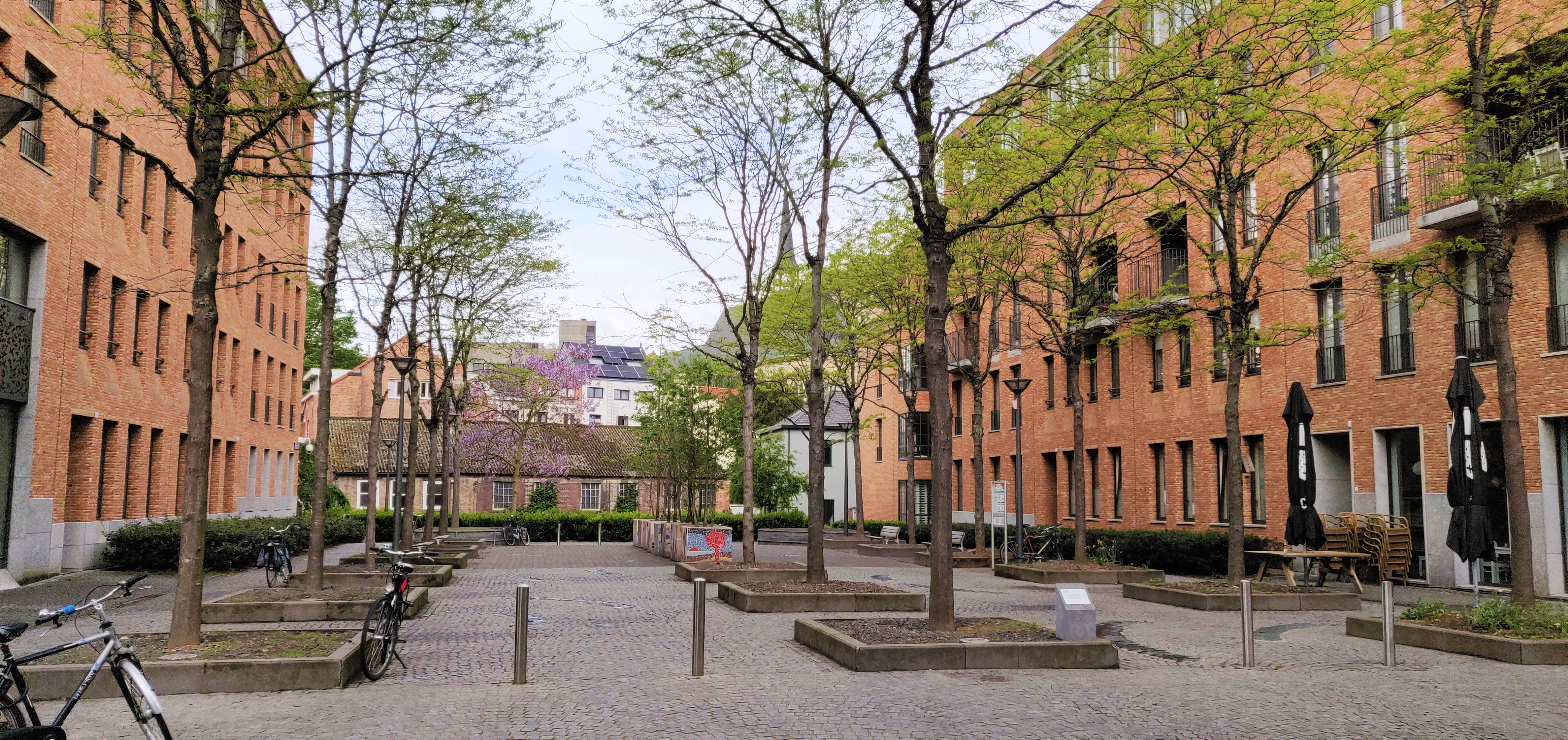
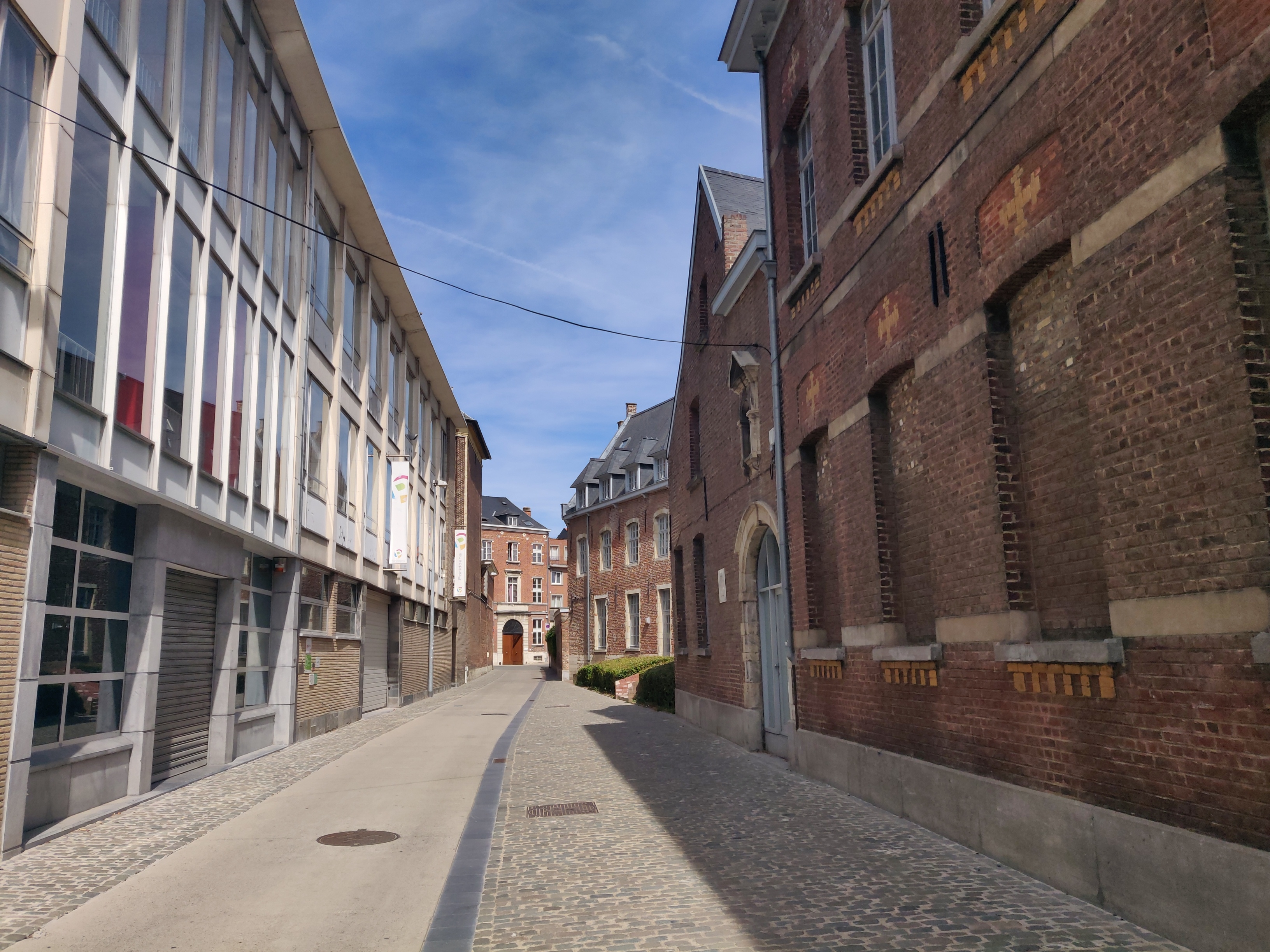
Today, the Pensstraat is a pleasant little street that connects the Brusselsestraat and the Mathieu de Layensplein. Fortunately, the smell and sight of tripes with encircling flies are no longer present. It is one of the few places left in Leuven where you can experience the charm of thriving local small businesses.


Sources:

https://inventaris.onroerenderfgoed.be/themas/8176
https://www.slagerijrondou.be/ons-verhaal
https://en.wikipedia.org/wiki/Van_Vlees_en_Bloed
Stadsarchief Leuven, Nieuwsbriefjaargang 11, Nr. 4 Dec 2015

HOW IT LOOKS LIKE TODAY

Click on the zoom icon to view the full size.

  • SHARE:

Oud Leuven: Redingenpoort The Redingenpoort (Redingen Gate) was located in the Redingenstraat, not far from its junction with the Schapenstraat. Oud Leuven: Klooster van de Geschoeide Karmelietessen The former "Klooster van de Geschoeide Karmelietessen" (Convent of the Unreformed Carmelite Sisters) (1658-1783) was located at the beginning of Vlamingenstraat, where it meets the Tiensestraat. Today, the site is occupied by the Ferdinand Verbist Foundation of the KU Leuven university and a large part to the elderly home (Woonzorgcentrum Booghuys). Oud Leuven: #46 Sint-Barbarakapel The Sint-Barbarakapel (Chapel of St Barbara) was located along the River Dijle. The site is now the housing complex called Barbarahof, around the square of Joris Helleputteplein. Oud Leuven: #11 Jezuïetenklooster The "Iesuiten cloost. en collegie" (Jesuit Monastery) mentioned in the map, is no more. The exact location of this monastery is the current-day Sint-Michielskerk (St Michael's Church) located in the Naamsestraat. This former Jesuit church is now one of the Seven Wonders of Leuven still existing, and one of the most monumental Baroque churches in... Oud Leuven: Broekstraatpoort The Broekstraatpoort (Brook Street Gate) was located in the Janseniusstraat before the bridge and not far from the Irish College. Oud Leuven: #41 Koningscollege The King's College (Koningscollege) is located along the Naamsestraat at the corner of the Charles de Bériotstraat in Leuven. Today, the Koningscollege houses the Zoological Institute (Zoölogisch Instituut) of the KU Leuven. Read about its rise as a Royal College of the Spanish King. Oud Leuven: Heilige-Geestpoort The Heilige-Geestpoort (Holy Ghost Gate) was one of the city gates of the first and inner city defence wall of Leuven. The gate was located on today's Diestsestraat, at the junction with the Vital Decosterstraat. Oud Leuven: #29 College van Mechelen The Collegium Mechliniense was mistakenly placed in the Mechelsestraat by the cartographer in the 1649 map. The College van Mechelen was actually located in the Diestsestraat, at Nummers 26-28 today. Oud Leuven: Klooster van de Ongeschoeide Karmelieten van Sint-Albertus The former "Klooster van de Ongeschoeide Karmelieten van Sint-Albertus" (Monastery of the Discalced Carmelite Friars of St Albert), also known in the 17th century as "Tacet", was located along current-day Naamsestraat right opposite the Karmelietenberg. Today, it is the site of the city hospital 'Heilig Hart (Sacred Heart)'. Oud Leuven: #7 Predikherenkerk The Predikherenkerk, short for “Onze-Lieve-Vrouw-ten-Predikherenkerk”, is located not far from the Brusselsestraat. Hidden at the end of a beautiful medieval alleyway now called the Predikherenstraat, you will find this oldest Gothic church in Leuven and one of the earliest Gothic churches in Belgium. Oud Leuven: #63 Pensstraat The 'Pensmarkt' (Tripes Market) is the only surviving remnant of the previous Meat District of Leuven. Also called 'Pensstraat' (Tripes Street), the street still hosts two butchers one of whom - Rondou - is a Leuven institution. Oud Leuven: Abdij van Kortenberg & Charter of Kortenberg 1312 The Abdij van Kortenberg (Abbey of Kortenberg) is located in today's Belgian municipality of Kortenberg, strategically positioned between the major cities of Leuven and Brussels. The abbey is renowned for being the site of the signing of the Charter of Kortenberg in 1312, which was the first constitution in continental Europe after England's Magna Carta. Oud Leuven: Klooster van de Ongeschoeide Karmelieten van Sint-Jozef The former "Klooster van de Ongeschoeide Karmelieten van Sint-Jozef" (Monastery of the Discalced Carmelite Friars of St Joseph), also known in the 17th century as "Placet", was located along currrent-day Mechelsevest right of the Brusselsepoort. Today, it is the site of the private residential complex "Keizershof", and the surrounding buildings. Oud Leuven: Aulnecollege The Aulnecollege existed from 1629 to 1796. It was situated on a prominent, sloping corner lot in the heart of Leuven where the Sint-Quintensstraat (today's Naamsestraat) met the Goeden Hoelewech (today's Karmelietenberg). The college eventually expanded down the hill to reach the Legestraat (today's Schapenstraat). The location is occupied today by the American College. Oud Leuven: #24 Klooster van de Geschoeide Karmelieten The cartographer misnamed the spot #24 as the Clarissen Regulier klooster (Clarissenklooster). It was in fact the Monastery of the Carmelites (Klooster van de Geschoeide Karmelieten).
  • Share:

Leave a Reply