ABOUT
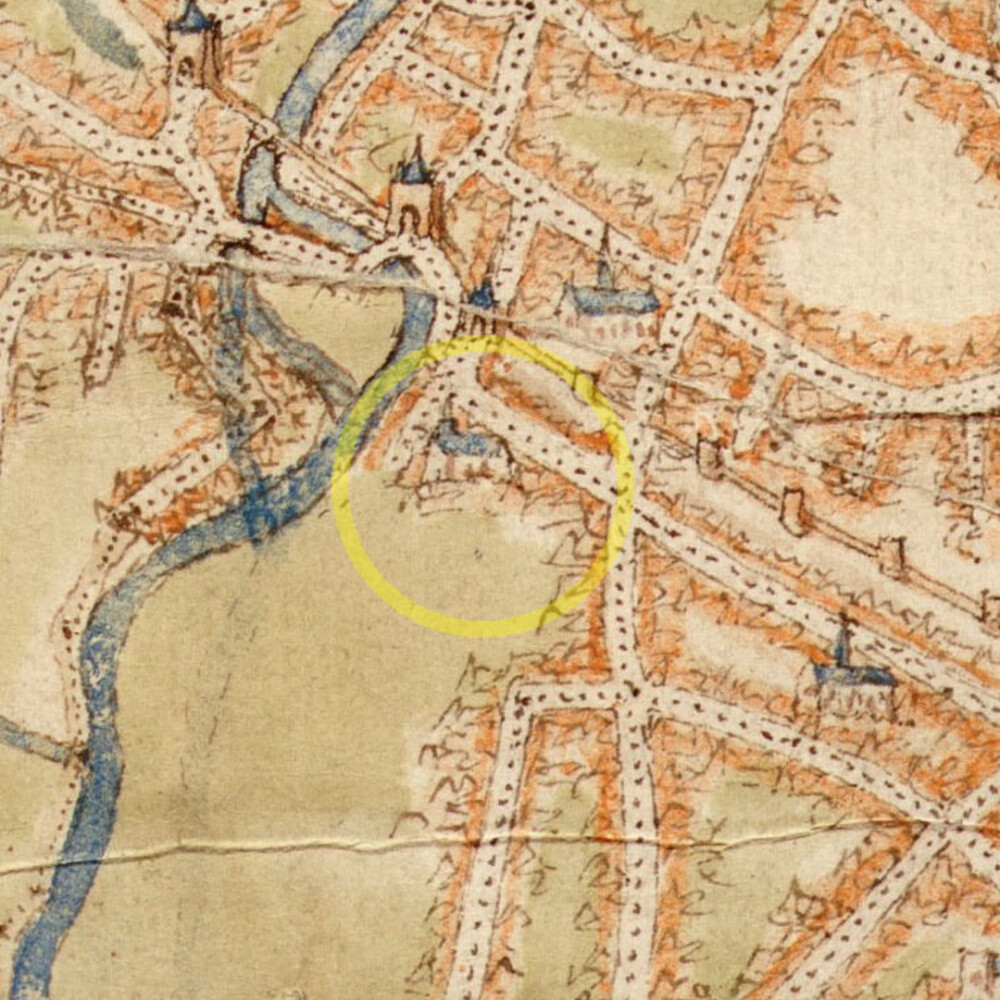
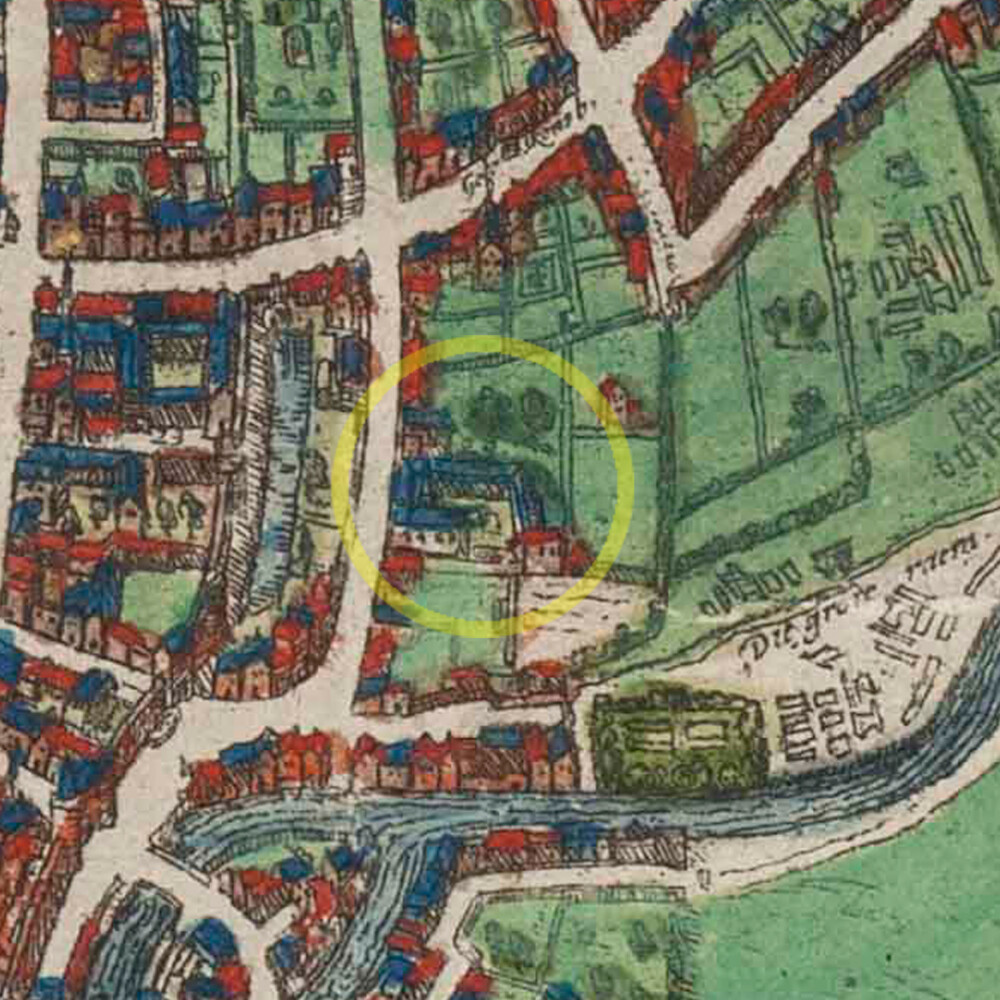
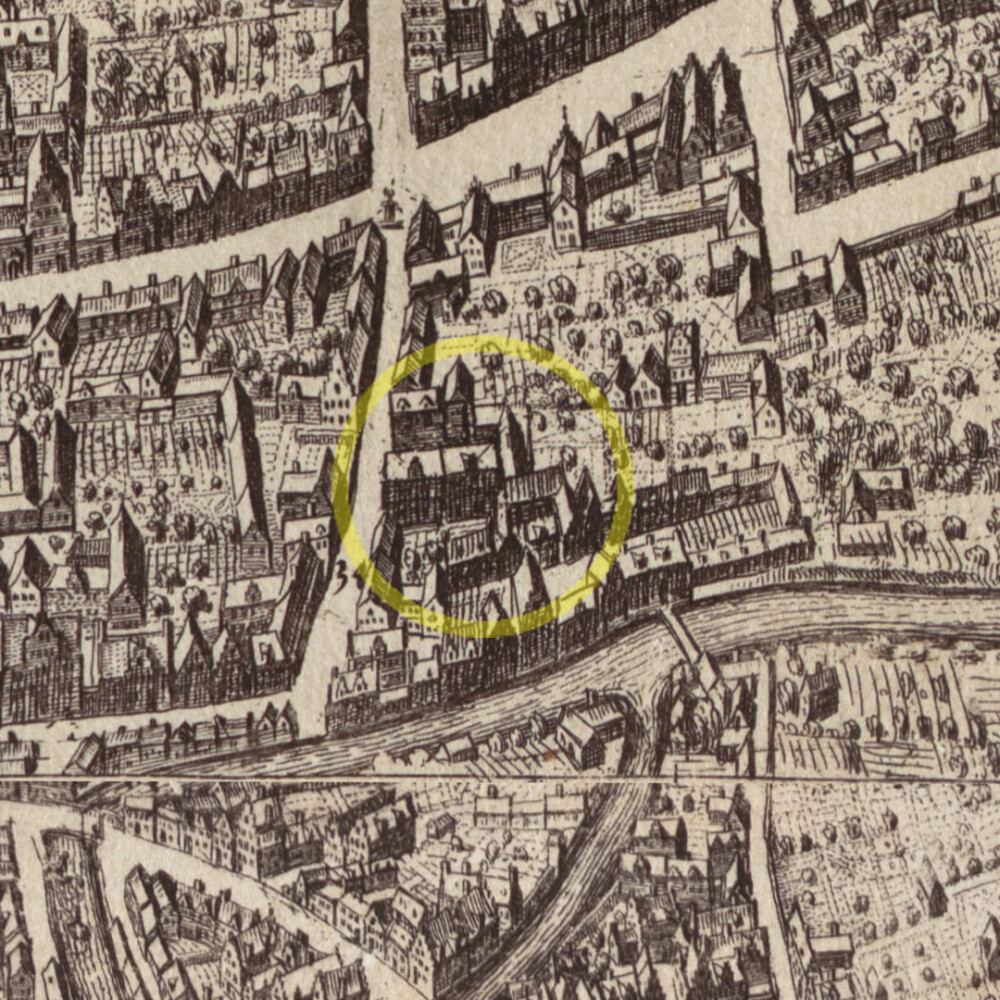
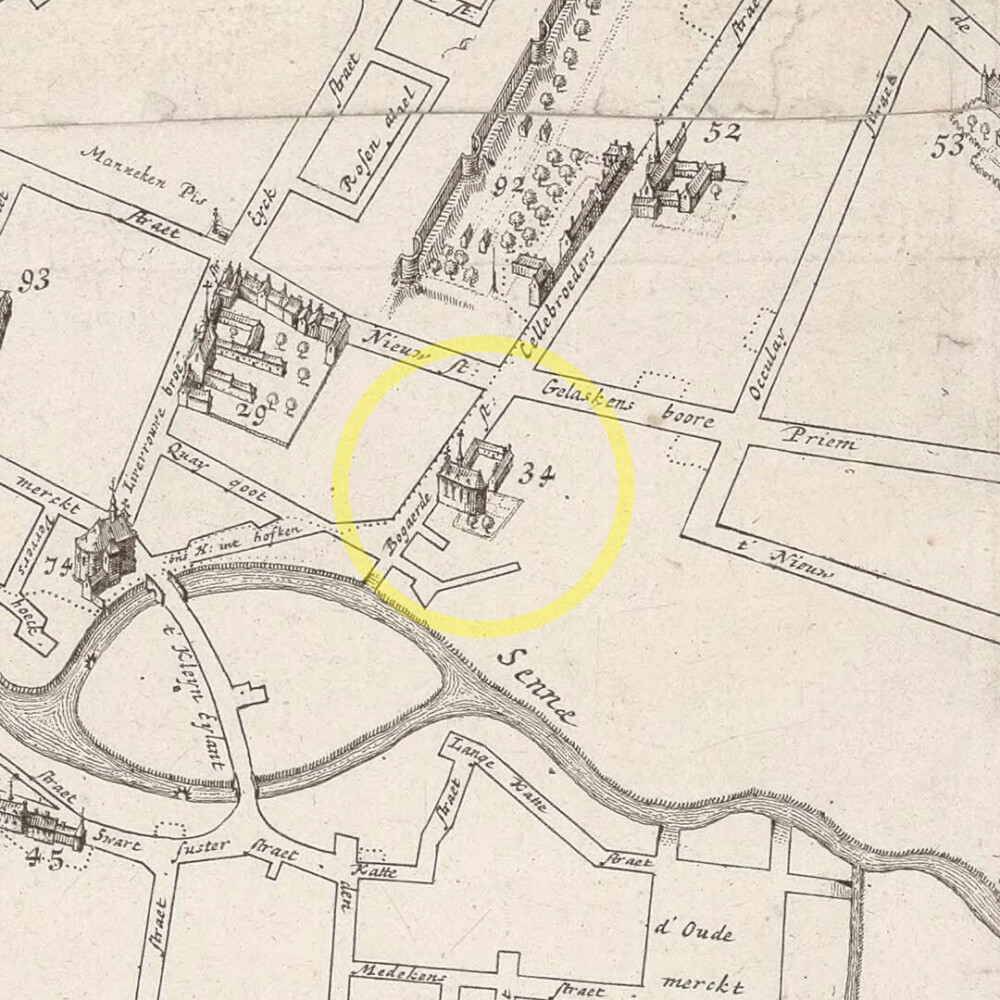
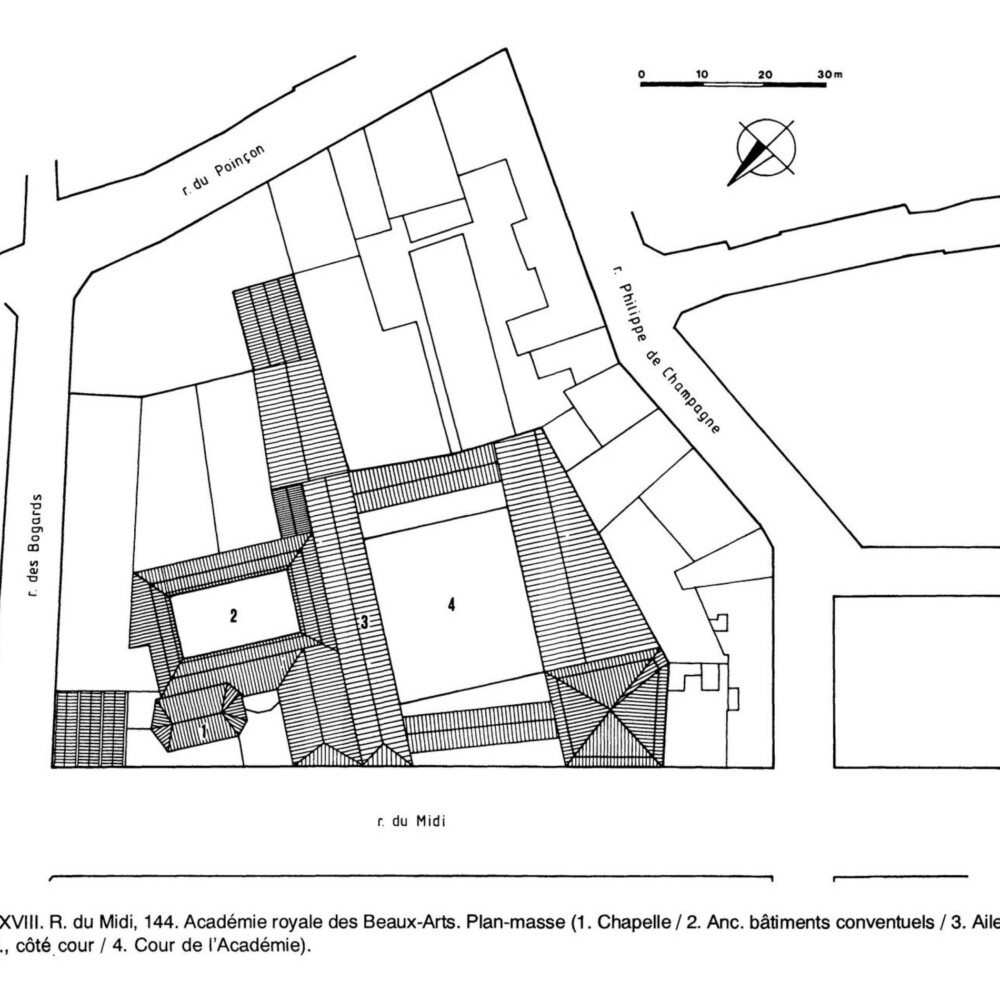
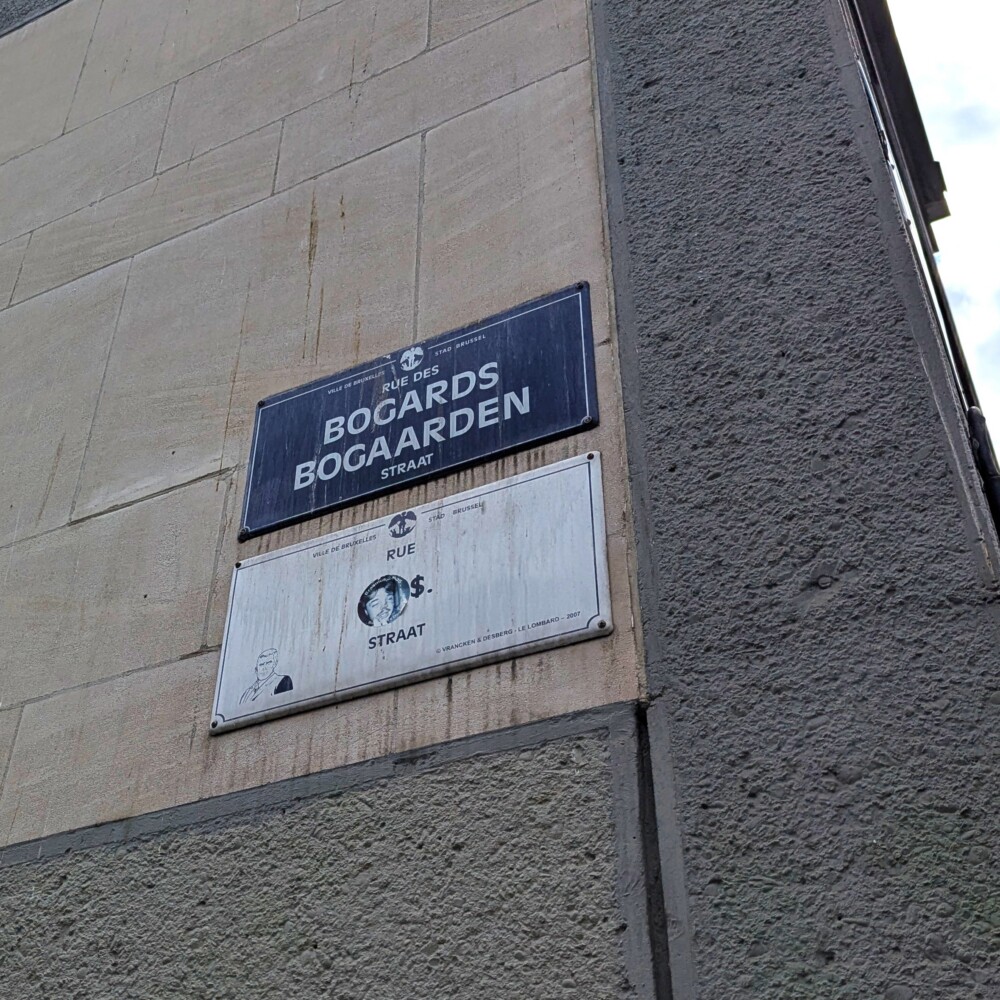
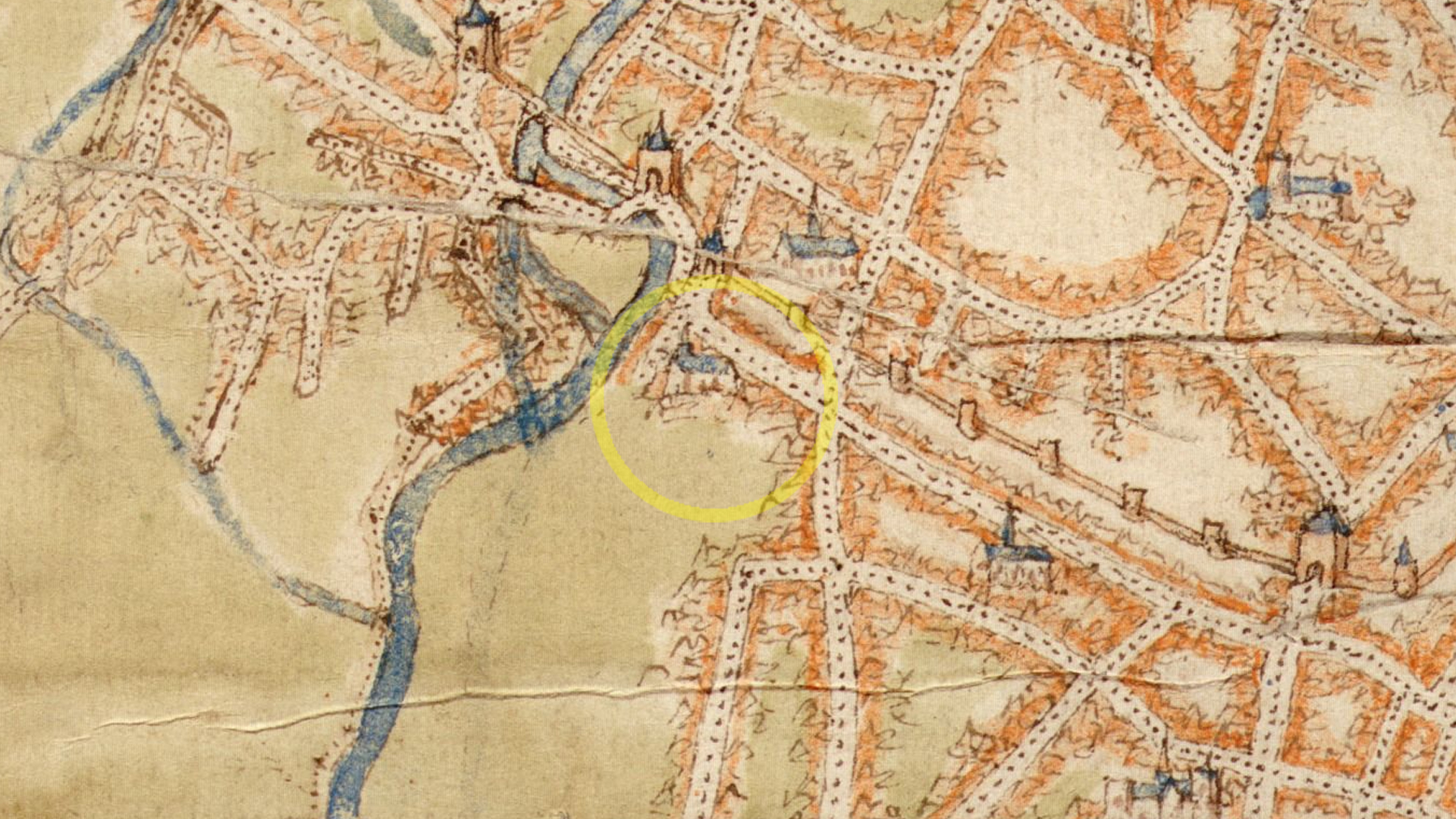
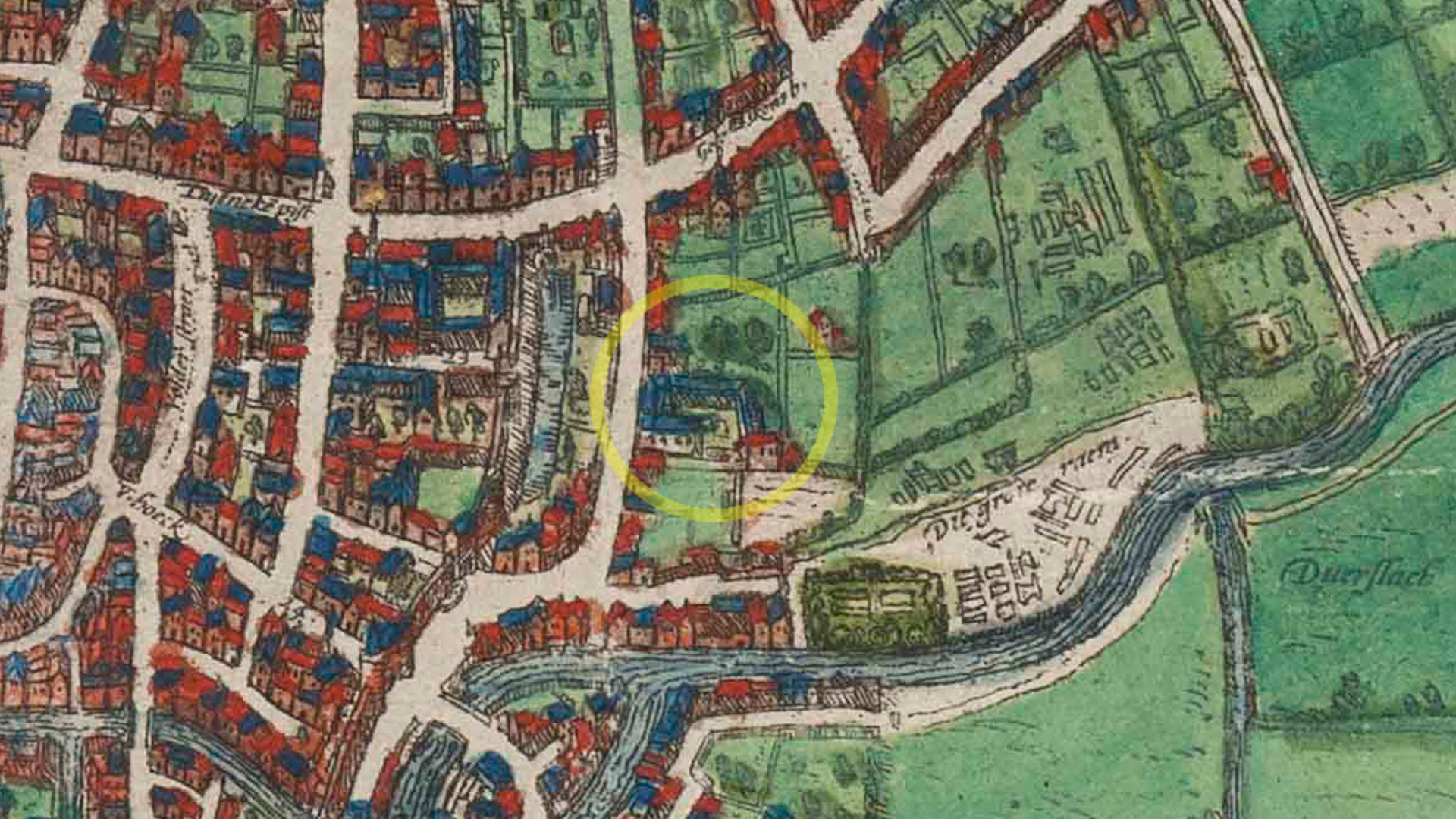
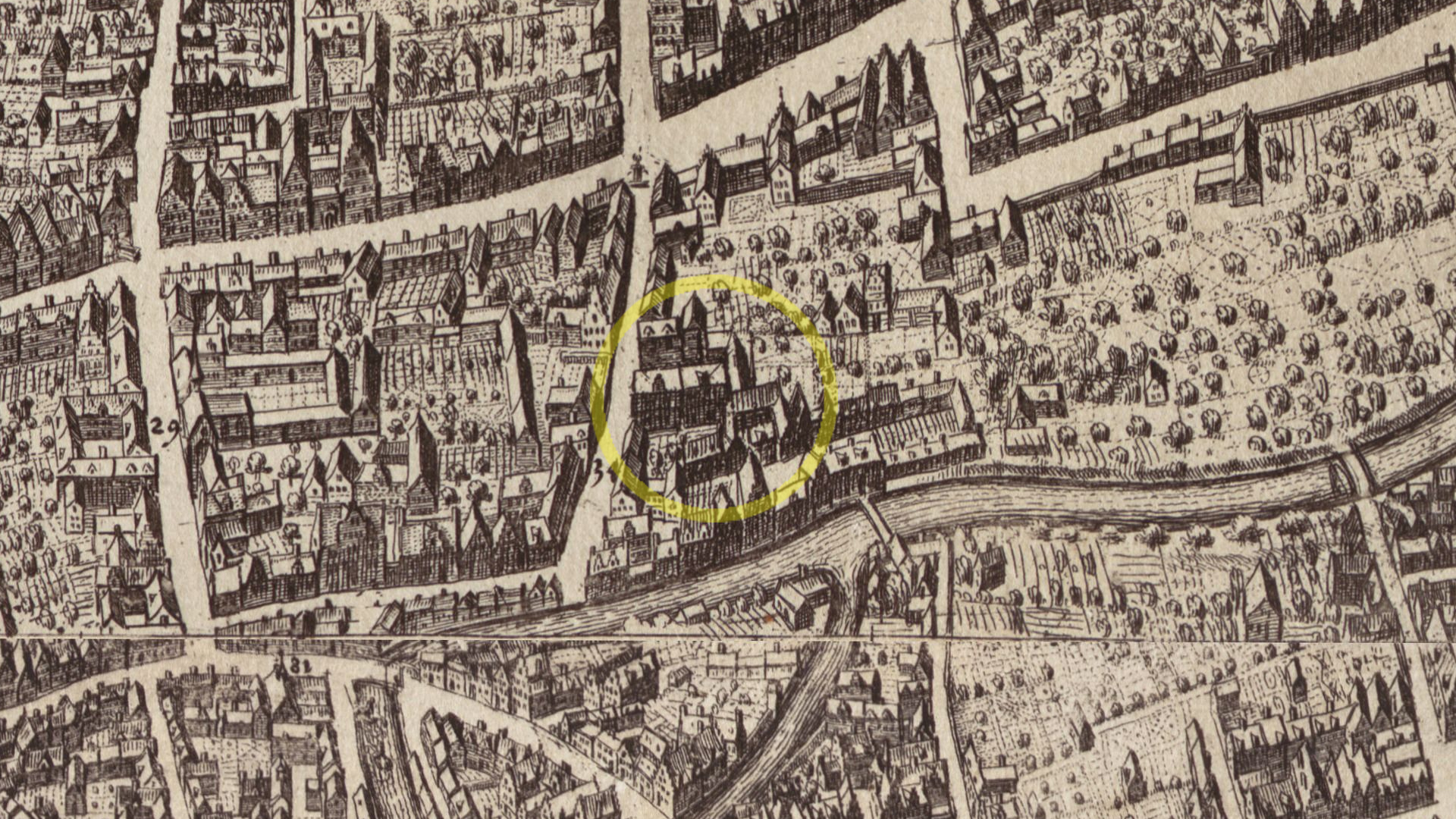
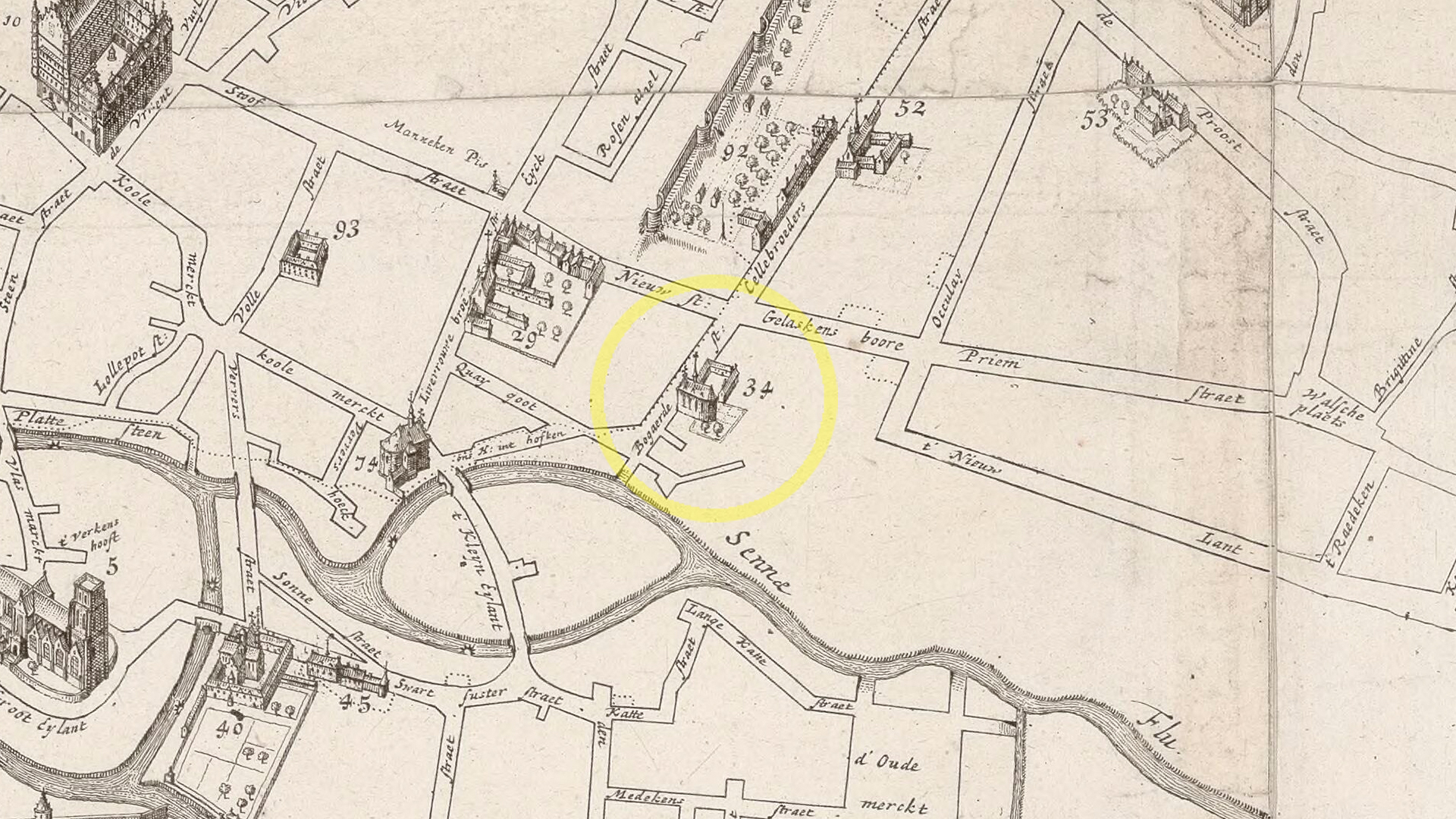
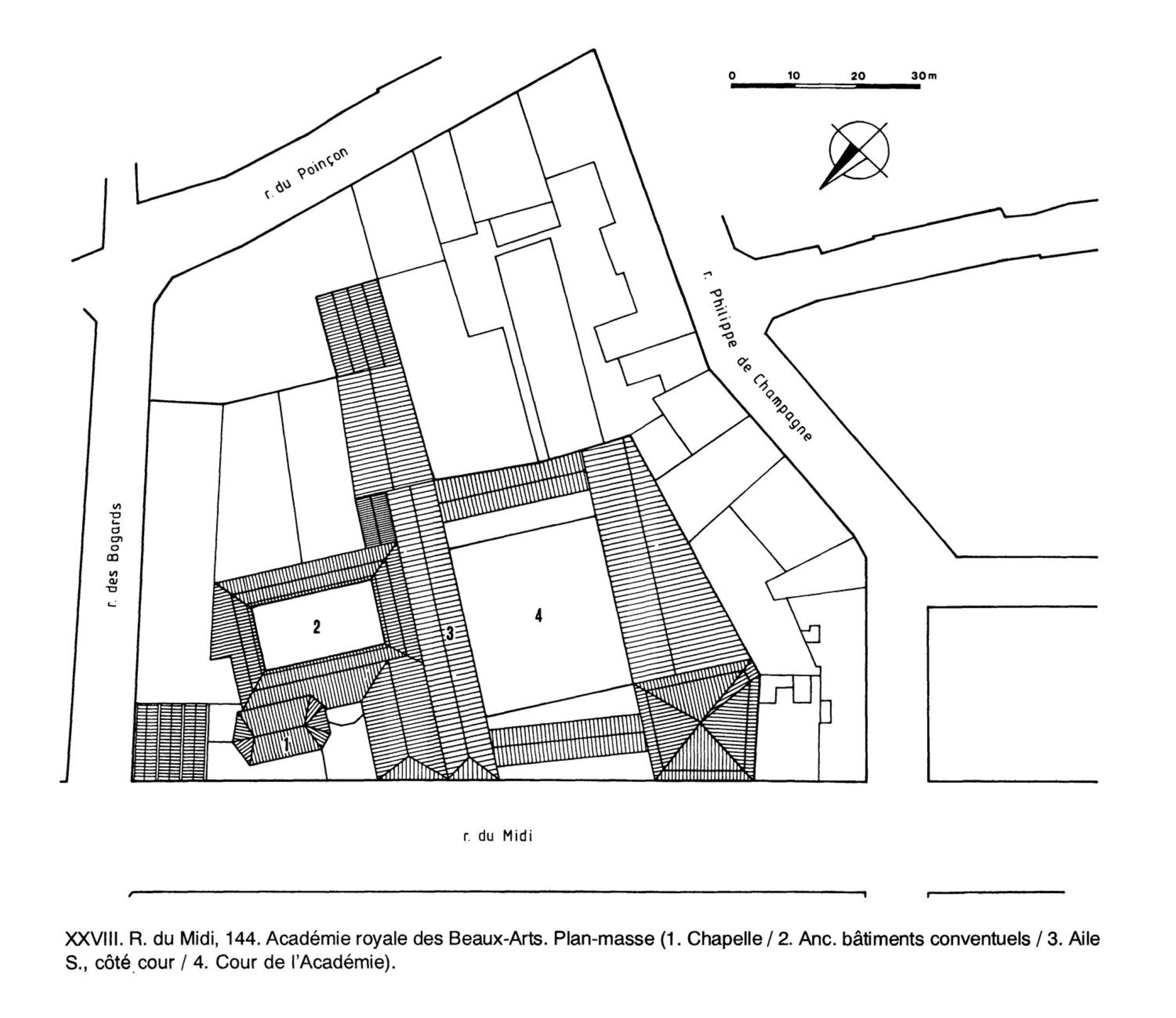
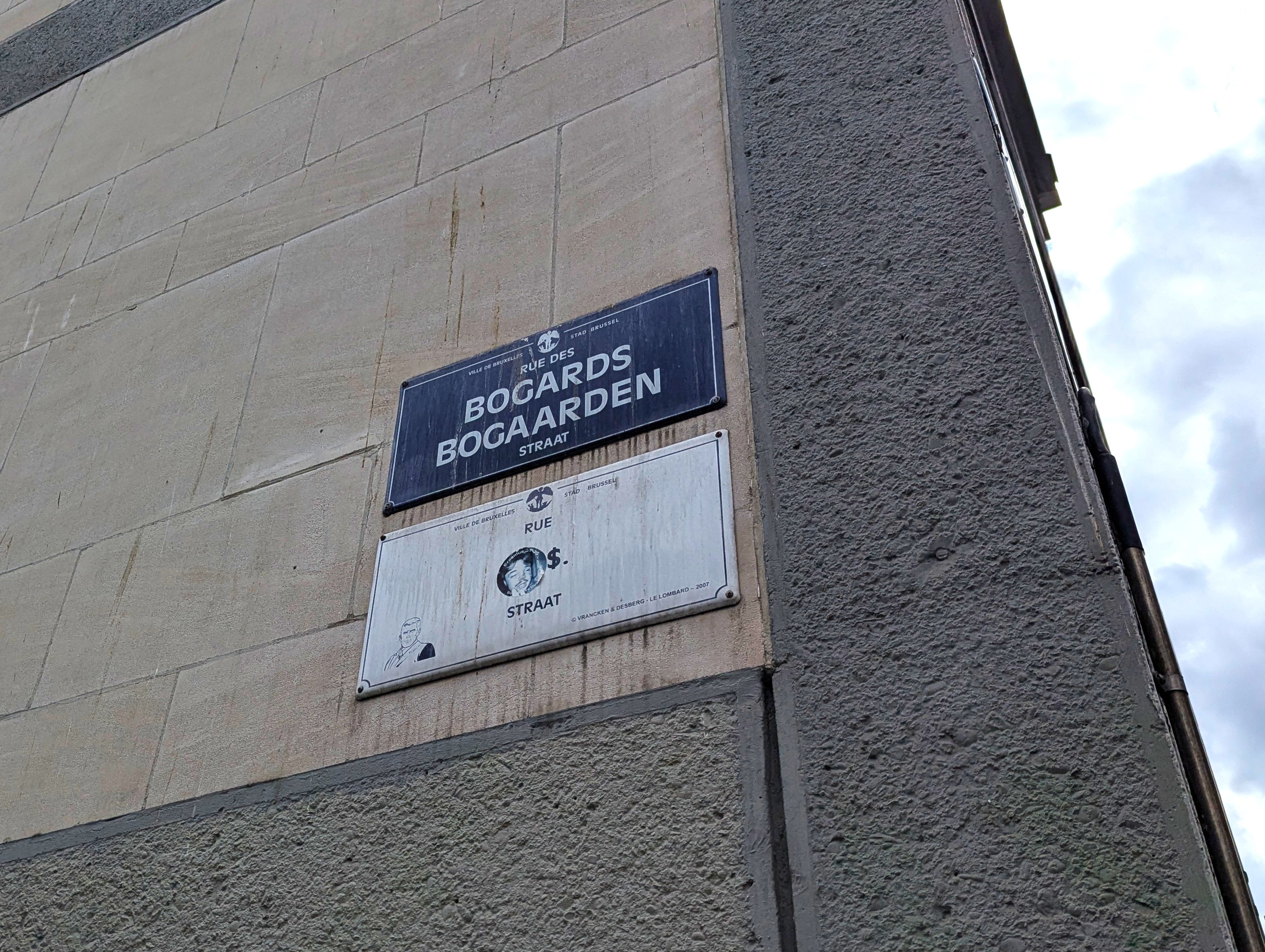
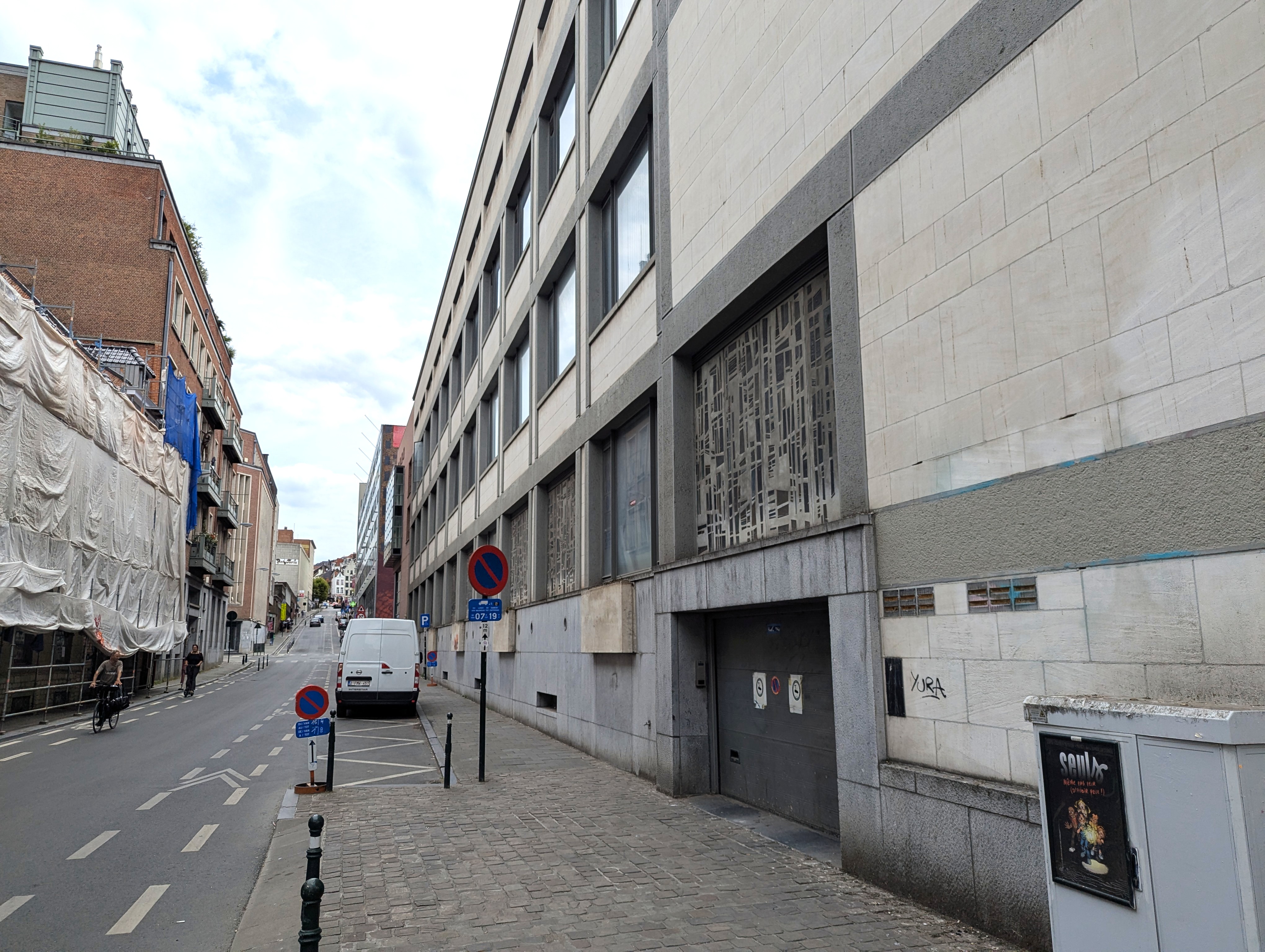
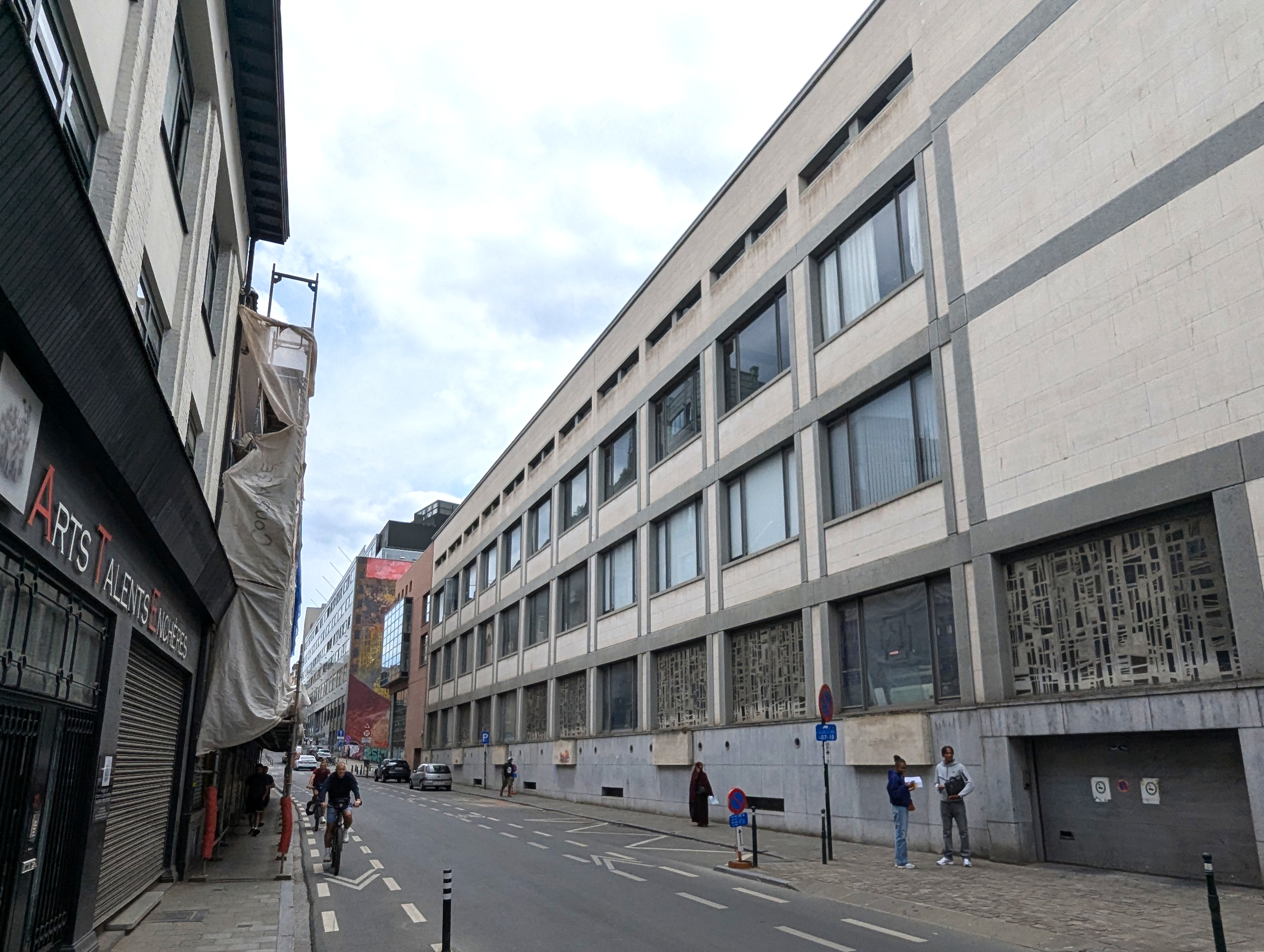
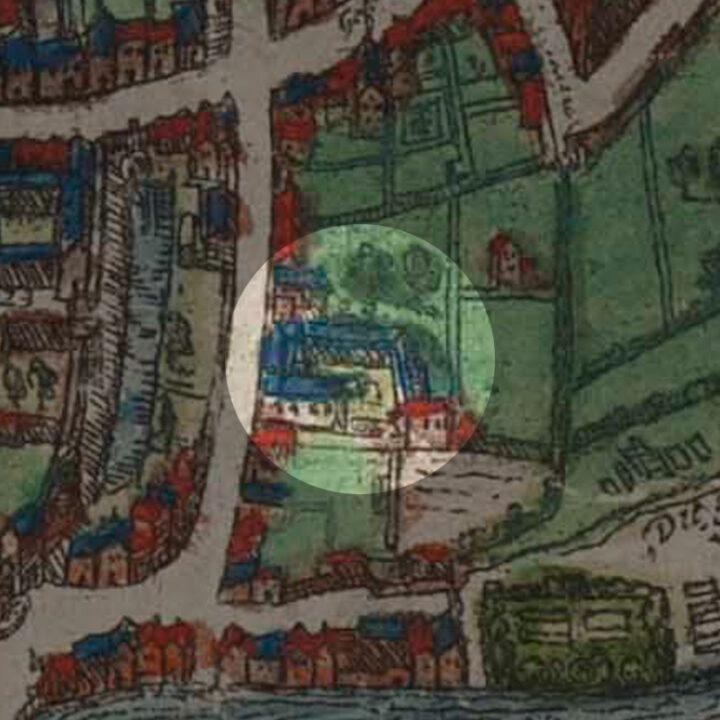
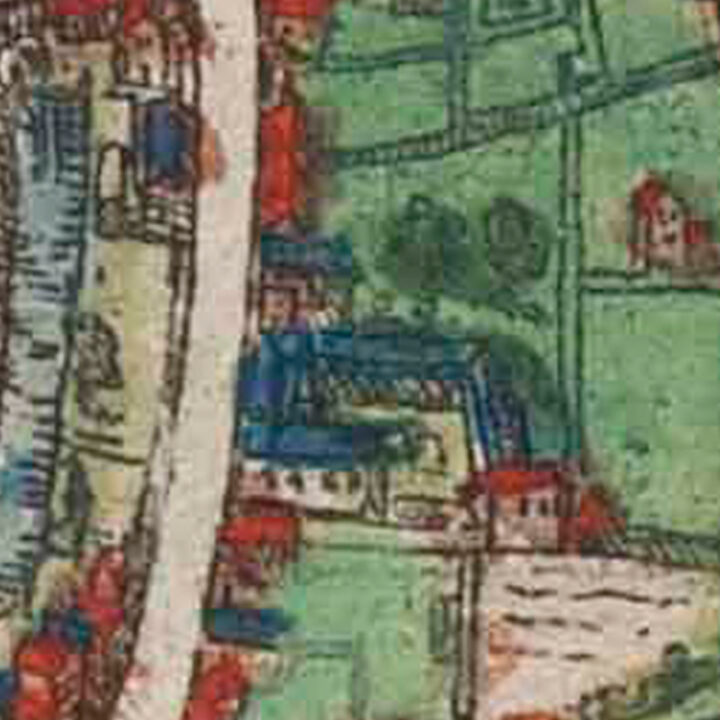
Brussels’ Bogaardenklooster (Monastery of the Beghards) was located in the lower city, nestled between the Van Helmontstraat (Rue Van Helmont), the Bogaardenstraat (Rue des Bogards), and the Priemstraat (Rue du Poinçon). The modern Zuidstraat (Rue du Midi) cuts through the site. The monastery stood just outside the first city walls, alongside the moat that was later named after them, the Bogaardenheergracht.
Origin
Who were the Beghards?
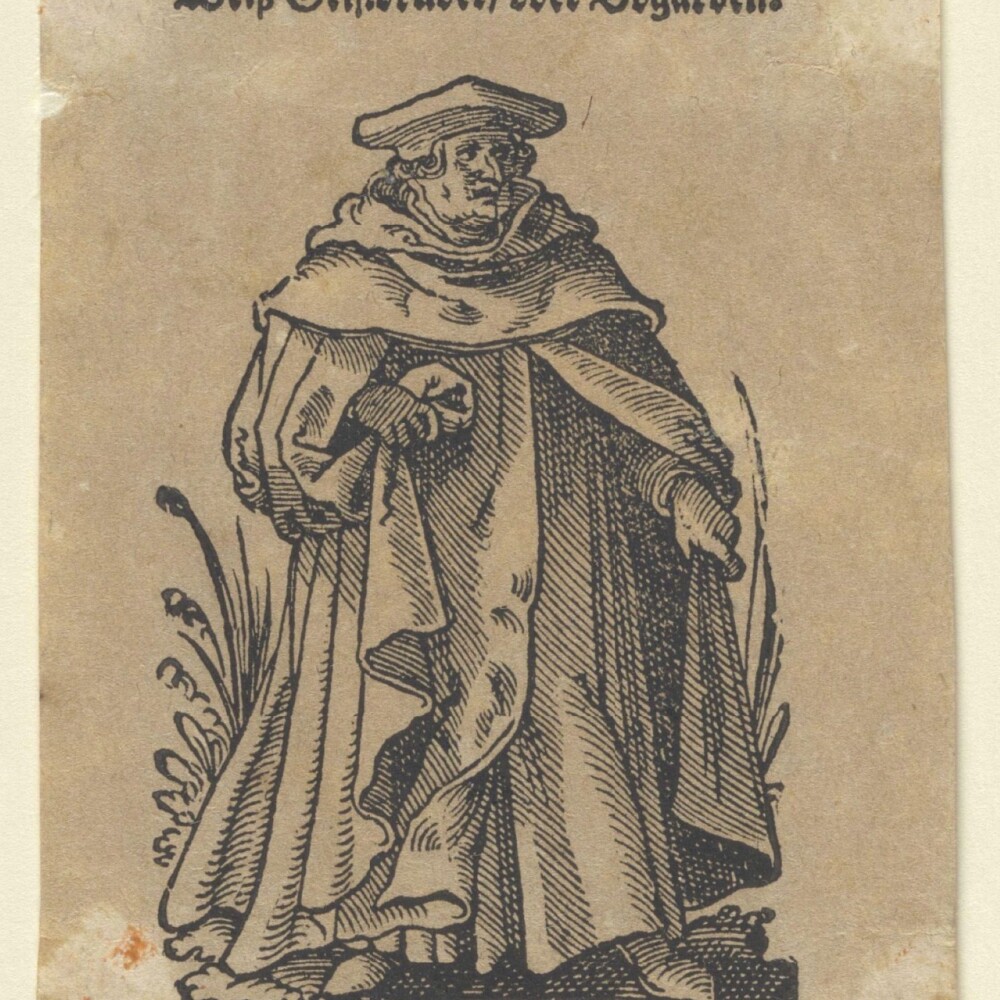
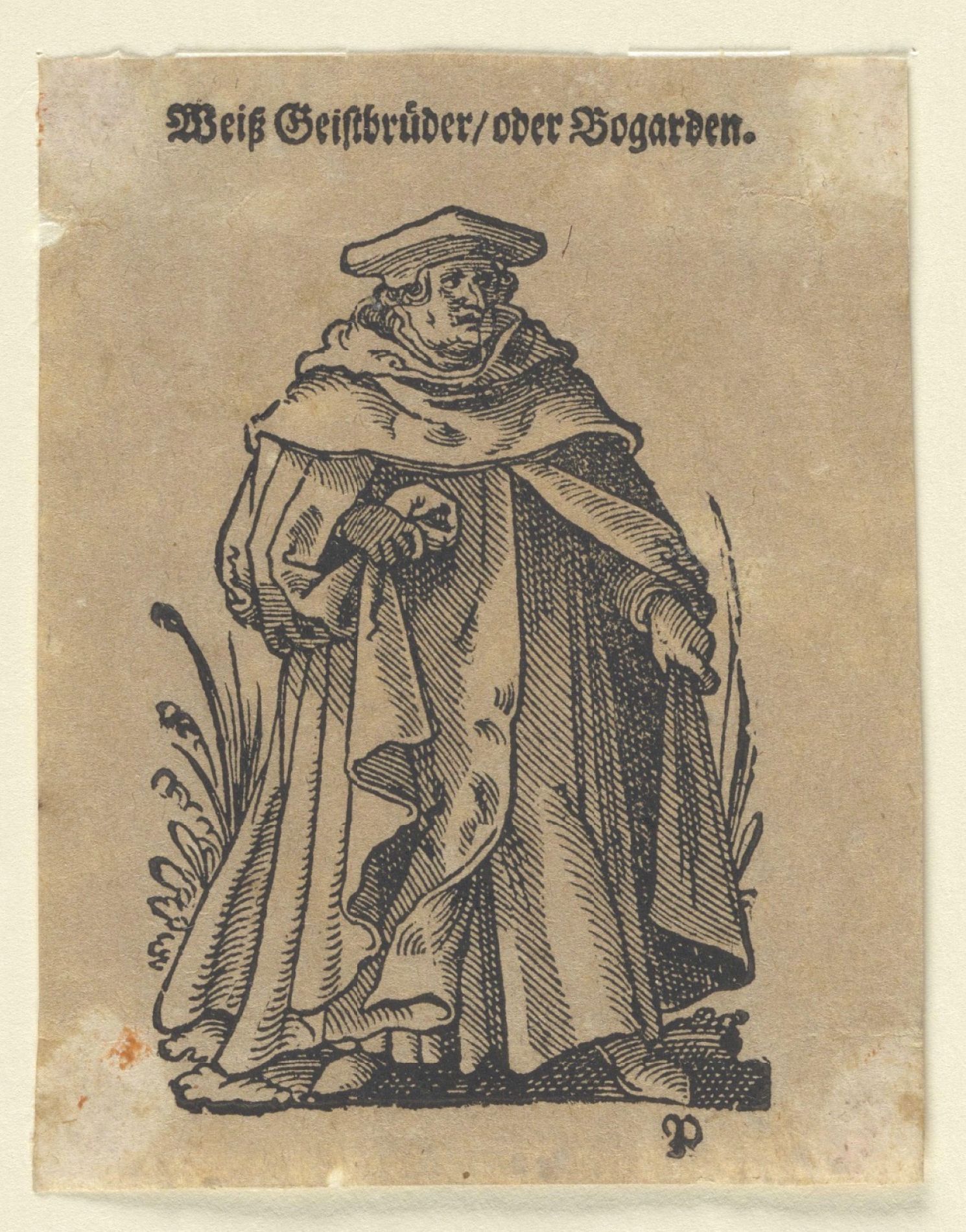
The Beghards (known in Dutch as begarden, begaarden, or bogaarden) were the male counterparts to the Beguines (begijnen). Arising across the Low Countries, Germany, and France in the 13th century, they were unordained laymen who lived in semi-religious brotherhoods rather than joining traditional cloistered orders. Unlike monks of strict observance, Beghards did not take perpetual vows of poverty, nor did they follow a formal rule recognised by the Papacy; instead, they made temporary, usually annually renewed, vows of chastity and obedience while earning their living through manual trade — primarily weaving and textile craftsmanship (hence their frequent designation as ‘Broeders van het weefambacht’). They engaged in parochial works of mercy, such as nursing the sick, caring for orphans, and teaching youth, often establishing schools that prepared pupils for chapter schools or university studies.
Because they lacked a centralised monastic hierarchy and lived under flexible vows, Beghards were frequently viewed with suspicion by ecclesiastical authorities and trade guilds alike. During the 13th and 14th centuries, various Beghard communities were infiltrated by heretical movements, such as the Brothers of the Free Spirit. In 1311, the Council of Vienne under Pope Clement V issued a sweeping decree prohibiting Beghard brotherhoods across Europe. While Beghard communities in neighbouring regions were dismantled by the Inquisition, the communities in the Low Countries such as here in the Duchy of Brabant survived, thanks to their economic utility in the cloth industry and the protection of local magistrates.
Before 1277: The Beghards in Brussels
Brussels’ community of Beghards was said to have emerged in the 13th century as a lay community) of disabled weavers. Historian Bram Vannieuwenhuyze thinks that they probably first established themselves near the Sint-Eglisiuskapel (where today’s Muntpunt stands) close to the modern Schildknaapstraat, as it was this chapel that was assisting artisans in need.
These were men who could no longer compete in the cutthroat textile industry of the city but found strength in communal living and shared prayer. While 17th-century chronicles like those of Jan Frans Foppens suggested a founding date around 1330, deeper archival research reveals they were already a fixed presence by 1277, when Duke Jan I of Brabant granted them exemptions from certain taxes.
Sometime in the 14th century, they moved to a permanent location just outside the first city wall beside the moat, next to the Cellebroedersklooster (Monastery of the Cell Brothers) and not far from the Kapellekerk. This area was known in folk’s tongue as the Mariendael (the Marian Valley).
1311: The Ban by the Council of Vienne
The Council of Vienne was the fifteenth ecumenical council of the Catholic Church that met between 1311 and 1312 in Vienne, close to Lyon. Remember that this was the time when the Pope resided in Avignon and this was the council that banned the Order of the Knights Templar at the instigation of King Philip IV of France. Both beguines and beghards were denounced as heretics.
Not in Brabant. The brothers here were too vital to the local economy to disappear. By rebranding themselves as a formal religious body and adopting the Third Order of Saint Francis in 1359, they managed to stay in their home at the Mariendael, though city magistrates insisted they remain under the secular jurisdiction of the Cloth Guild and the municipality.
What's so special about this place?
The Servile ‘Monks of the Comb’
The economic importance of the Beghards may have saved them from extinction, but it became an existential double-edged sword.
For centuries, the Bogaardenklooster was the site of a bizarre “industrial-spiritual” hostage situation. The brothers were locked in a legal battle that lasted 150 years with the weavers’ guild. The guild insisted that the monks perform a specific secular task: the making and repairing of wool combs. The brothers desperately wanted to focus on their religious life and tried every trick in the book to escape this “manual servitude”, even appealing to Holy Roman/Habsburg Emperor Charles V in 1549, but the Emperor sided with the guild. It was only in 1623 that they were finally able to buy their freedom for 400 florins and a yearly rent, finally shedding their identity as ‘monks-of-the-comb’.
Like other religious institutions in Brussels, the Bogaardenklooster did not have an easy time during the Reformation under the Brussels Republic (1576-1585). In 1579, the beghards’ chapel was seized and masses were banned. Meanwhile, the Calvinist rebels met in a house called ‘Schavershuyse’ directly facing the chapel, mocking the silent cloisters with their new sermons.
The ‘Schavershuyse’: Did Bruegel the Elder live here?
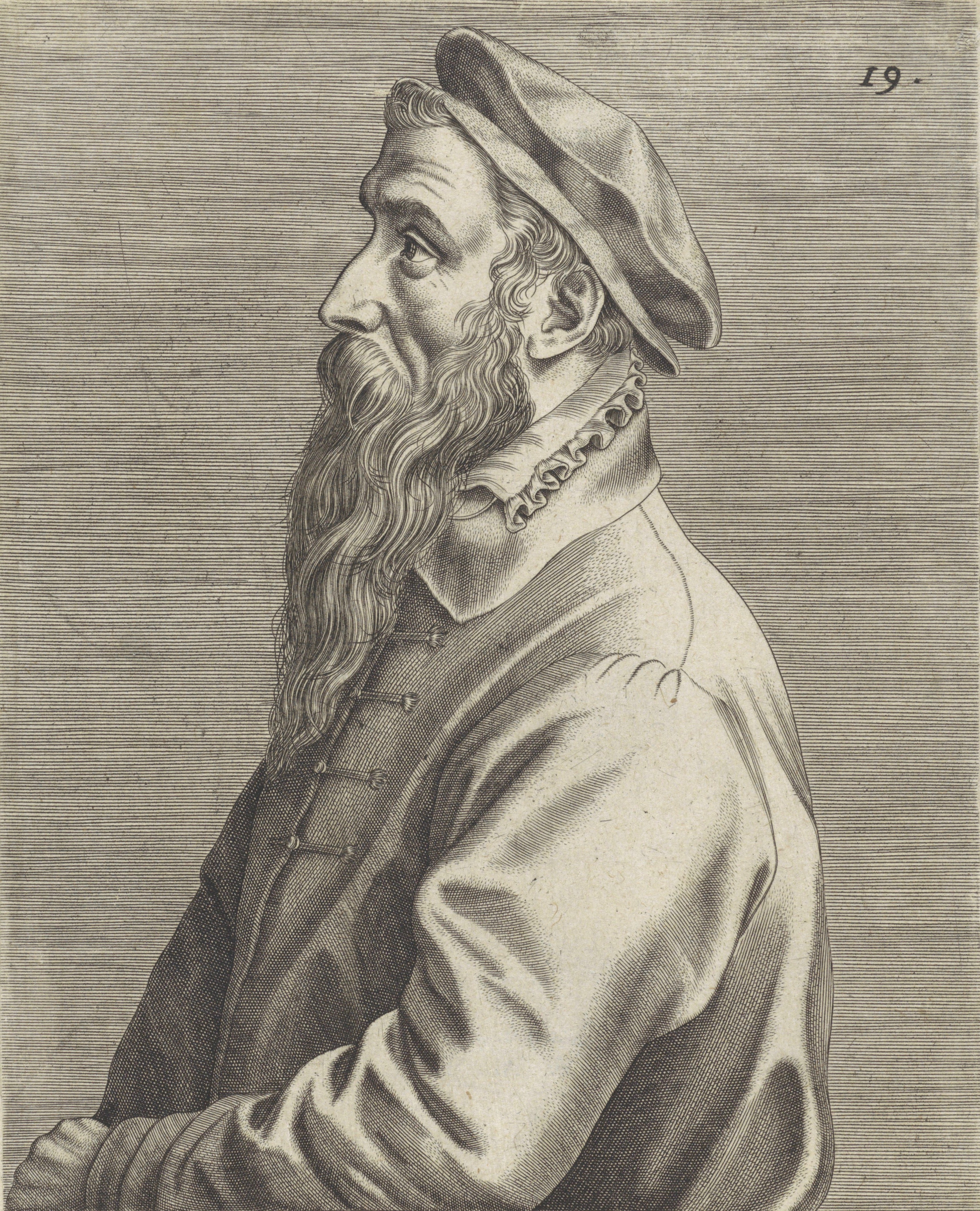
According to traditions, Netherlandish Renaissance painter Pieter Bruegel (also Brueghel or Breughel) the Elder (ca. 1525-1569) moved to Brussels from Antwerp in 1561 or 1562. Other sources claimed he only moved in August 1563. When he died in 1569, he was buried in his parish church the Kapellekerk.
An extremely well-preserved 16th century house on the Hoogstraat (Rue Haute) number 132 was attributed to be his and a museum was even planned in the early 2000. Plans fell through when evidence emerged that Bruegel’s house was on the other side of the Kappellekerk. So why did people assume that Bruegel lived in the Hoogstraat?
First of all, earlier historians claimed that he lived and worked in the Hoogstraat, first by Alphonse Wauters in 1897 who stated that his atelier was beside an alley known as the Rodepoort but that house had been demolised, and then by Guillaume Des Marez who claimed that although the atelier was demolished, Bruegel the Elder lived in the house on the other side of the alley, so it had to be number 132.
The second assumption was due to the will of painter David III Teniers, who was the son of David II Teniers and Anna Brueghel, the granddaughter of Bruegel the Elder. In his will, David III Teniers died in the house ‘beside the roode poort’ – which confirmed Wauters and Des Marez’s claim but it had to be either one or the other. The assumption was of course that he had inherited the house from Bruegel the Elder through his mother. Yet David III Teniers and his parents only moved from Antwerp to Brussels in 1650, not to the Hoogstraat but to the neighbourhood close to the ducal palace. After the death of his mother, David III then moved to Isabellastraat and then to the Hoogstraat between 1679-1681. He could not have inherited any property of Bruegel the Elder from his mother.
A new piece of evidence was then discovered in the city archives of Ghent, in Flanders. The document was drawn up in January 1583, fourteen years after the death of Pieter Bruegel the Elder, by the order of the nephew of his wife Maeyken Coecke, who was Pieter Coecke (Coucke) who was a lawyer based in Ghent. The document described in detail the geneology of Maeyken’s family and mentioned in passing where she and her husband lived in Brussels. The document started with Pieter Coecke van Aelst, also a very renown painter, who was Maeyken’s father and Pieter Bruegel’s father-in-law:
“De selve Pieter by synder twee huusvr(ouwe) ghenaempt Marie vern Hulst van Mechelen heft achterghelaten Marie, Johanna, ende […]. Marie thuwel(yck) gheallereert met Pieter vanden Bruule oock schildere heeft achterghelaten diversche kinderen woenende te Brussele al waarer oock Johanna en dandere woenachtich synrent het manneken pist recht overe den bogaert.”
The aforementioned Pieter, by his two wives — one of whom was named Marie van Hulst, from Mechelen — left behind Marie, Johanna, and […]. Marie, who was married to Pieter van den Bruule (also a painter), left behind several children living in Brussels; Johanna and the others also reside there, in the area near the Manneken Pist, right across the Bogaert.
At first sight, this document concerns a completely different family. Bruegel was not the only spelling of his name. This was confirmed by the baptism record of his son Jan in 1568 in the Kapellekerk where he was named as ‘Petrus vanden Brughe‘ and he has also signed himself off as ‘vanden Bru(e)ghele‘.
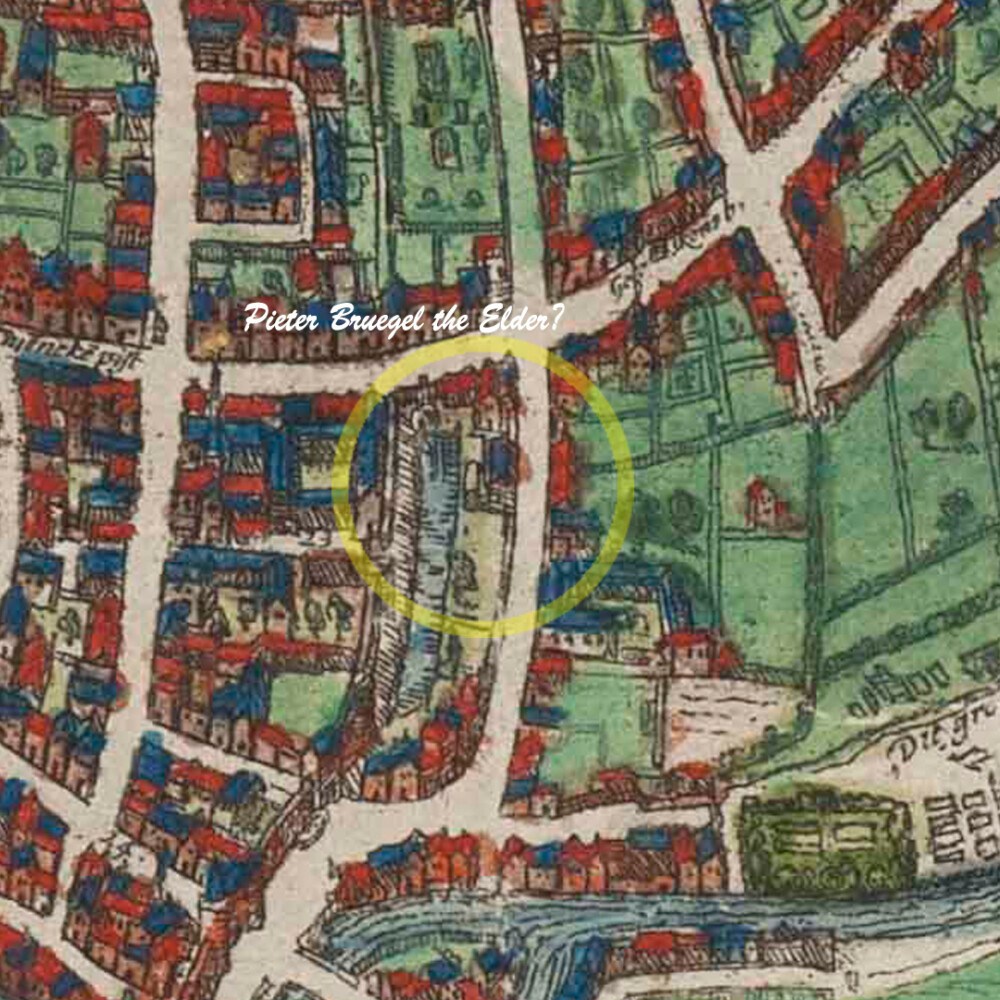
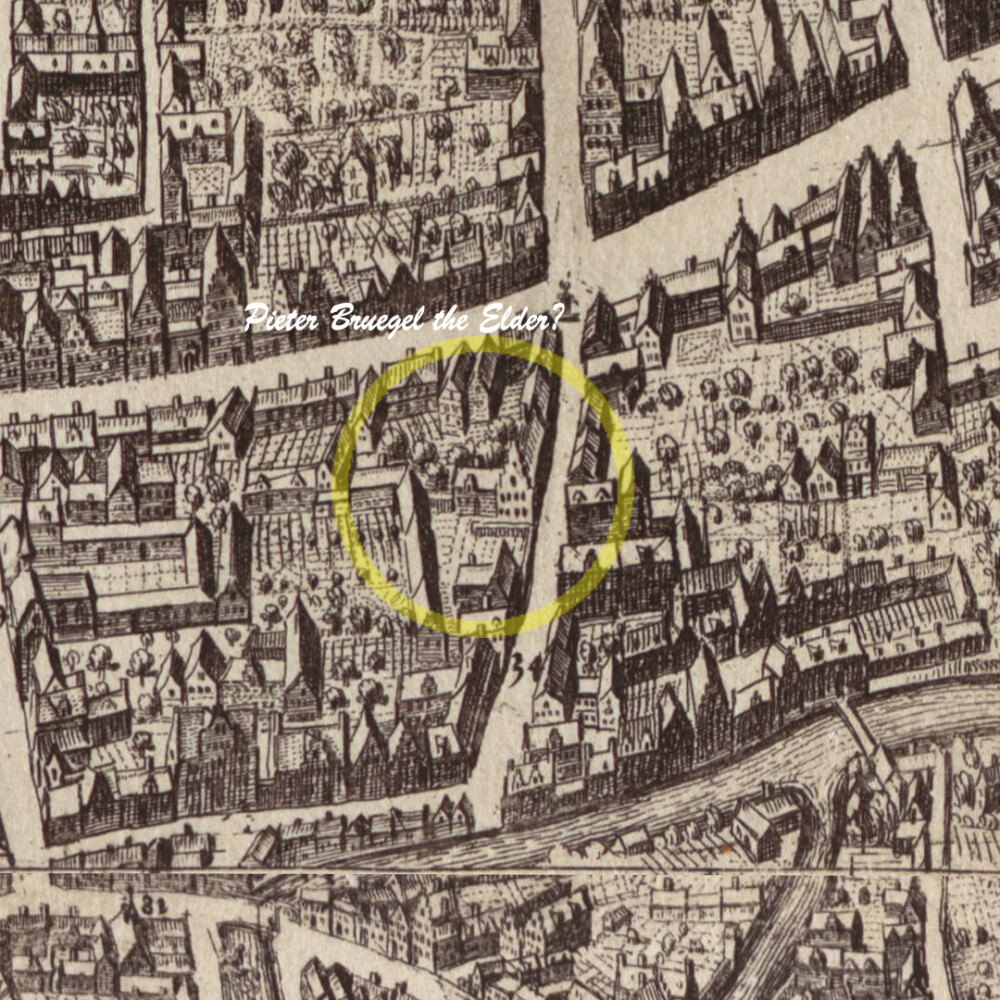
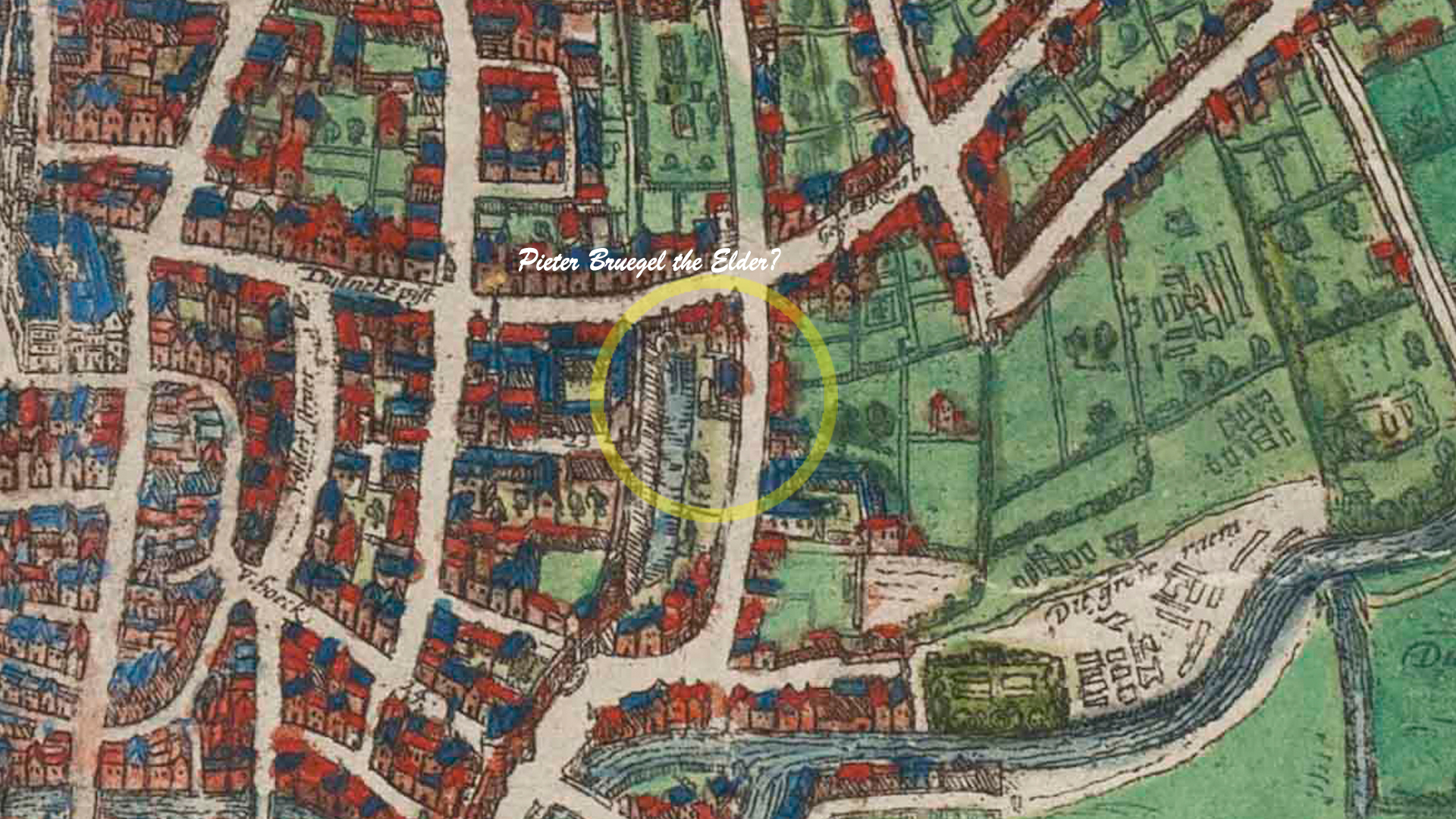
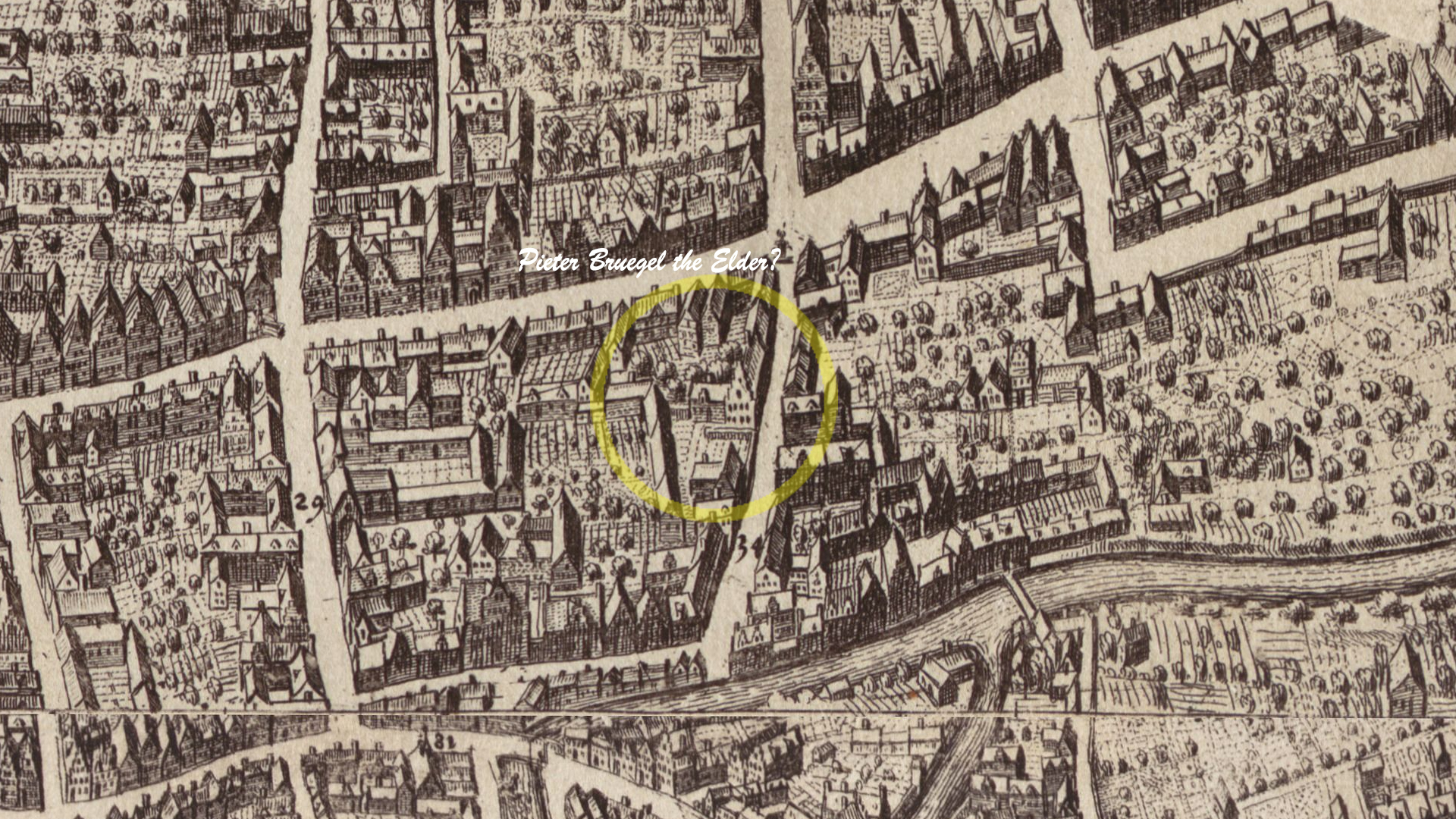
If the document accurately describes the Bruegel family, then it stated that Bruegel the Elder, his family and his parents-in-law lived “not far from the ‘Manneken Pis’ and directly across from the ‘Bogaert’, the Bogaardenklooster“. If you look at our map from from 1572, on the opposite side of the monastery, there were several houses built beside the first city wall’s moat, which later was named after the Bogards as the Bogaardenheergracht (Bogards’ Lord’s Moat). It is a possibility that one of these houses included that of Pieter Bruegel and his in-laws.
Could the ‘Schavershuyse‘ – the house opposite the Bogaardenklooster in which the Calvinists later held their regular meetings be the house where the Bruegel family used to live?
Was Brussels’ Bogaardenklooster the inspiration for Pieter Bruegel the Elder’s ‘The Beggar’?
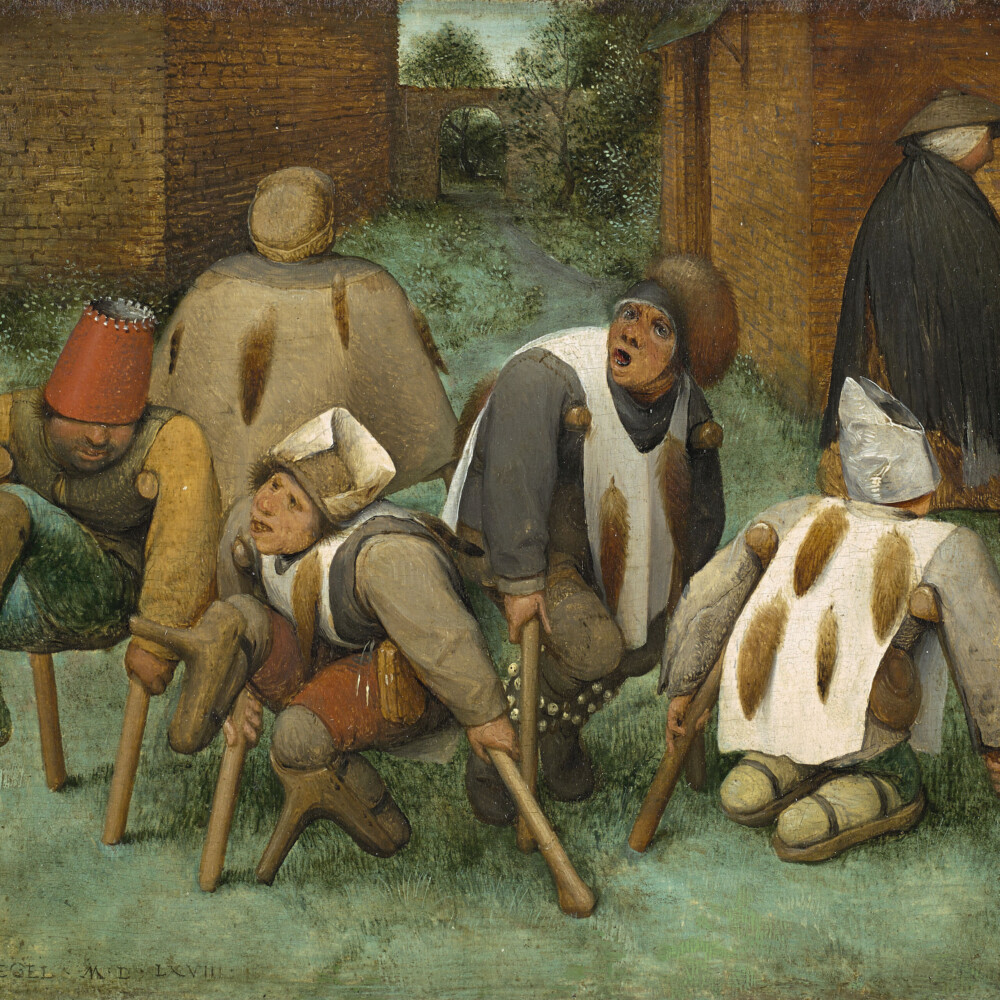
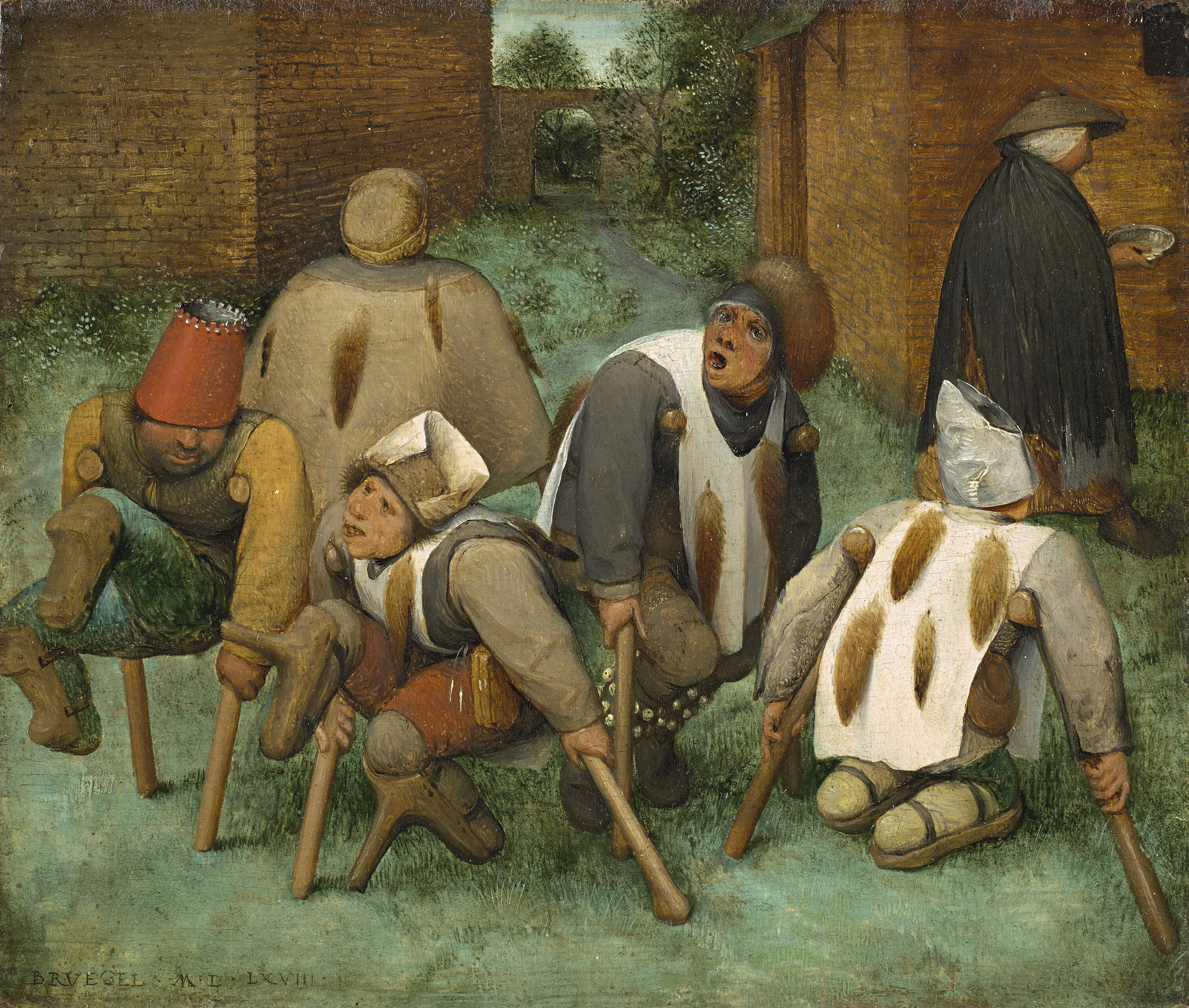
After the new evidence of the possible house of Pieter Bruegel the Elder broke out, some analysts took a closer look at an odd painting ‘De kreupelen‘ (translated ‘The Crippled’, but more commonly called in English as ‘The Beggars’) painted in 1568. The painting is currently housed in Paris’ Louvre Museum.
The painting features five crippled beggars in wooden prosthetic limbs. They looked grotesque, some of them were wearing bishop’s hat and their back was covered with fox’s tails. They were begging in front of some large bricked buildings. A woman who was passing by with an empty bowl clearly was not paying them any attention.
Was this a satire of the church, inspired by the handicapped beghards living opposite him in the Bogaardenklooster?
On the back side of the painting were two hidden inscriptions in a 16th century handwriting.
On the back of the painting, there are two inscriptions in a 16th-century hand – one in Middle Dutch (most likely written by Bruegel the Elder himself) and the other in Latin (by someone else).
According to Marijnissen, the incomplete Middle Dutch sentence is a word of encouragement that was customary when giving alms:
“[k]ruepelen [bisschop] hooch [gemoet] dat u nering beteren moe[t].”
“[C]ripple [bishop], take heart that your livelihood is bound to improve.”
The Latin writing however seemed to be a humanist tribute to the painter:
“NATVRAE DEERAT NOSTRAE QUOD DEFUIT ARTI [НАЕС] DATA PICTORI GRATIA TANTA [FUIT] ALIUD HIC NATURA STUPET PICTIS EXPRESSA FIGURIS VISA SUIS CLAUDIS HUNC BRUEGEL ESSE PAREM”
“What nature lacks is absent from our art
So great was the grace bestowed upon this painter
Here is nature, rendered in painted figures
struck dumb at the sight of these cripples
to find that Bruegel is her equal”
Modern eyes may assume that Bruegel intended to invoke sympathy for the plight of the disabled beggars, but from a historical perspective this was very unlikely. People during Bruegel’s time gave little regard to beggars, and the painting provides hints that Bruegel shared this denigration: the figures are posed in such ways as to provoke contempt and amusement. The foxes’ tails on some of the figures was a symbol at the time of ridicule in political caricature and real life.
How did it look like?
A Gothic Monastery with Lush Gardens
In the 16th century, the Brussels Bogaardenklooster was a vast complex of Gothic brick and stone, with lush gardens that stretched all the way to the Zenne river. The chapel was a substantial three-aisled building, and the cloister was famous for its stained glass windows. The Beghards’ refectory was particularly beautiful, decorated with eleven tapestries of the Brussels landscape by Daniël Abbeloos.
The Gambling Monks
Shedding the servitude of making wool combs may have meant that the beghards now have to fund themselves adequately, something in which they might not have succeeded well enough.
For example, in the 18th century, the beghards were caught illegally burying their dead within their walls to avoid paying burial fees to the Collegiale kerk van Sint-Michiel en Sint-Goedele.
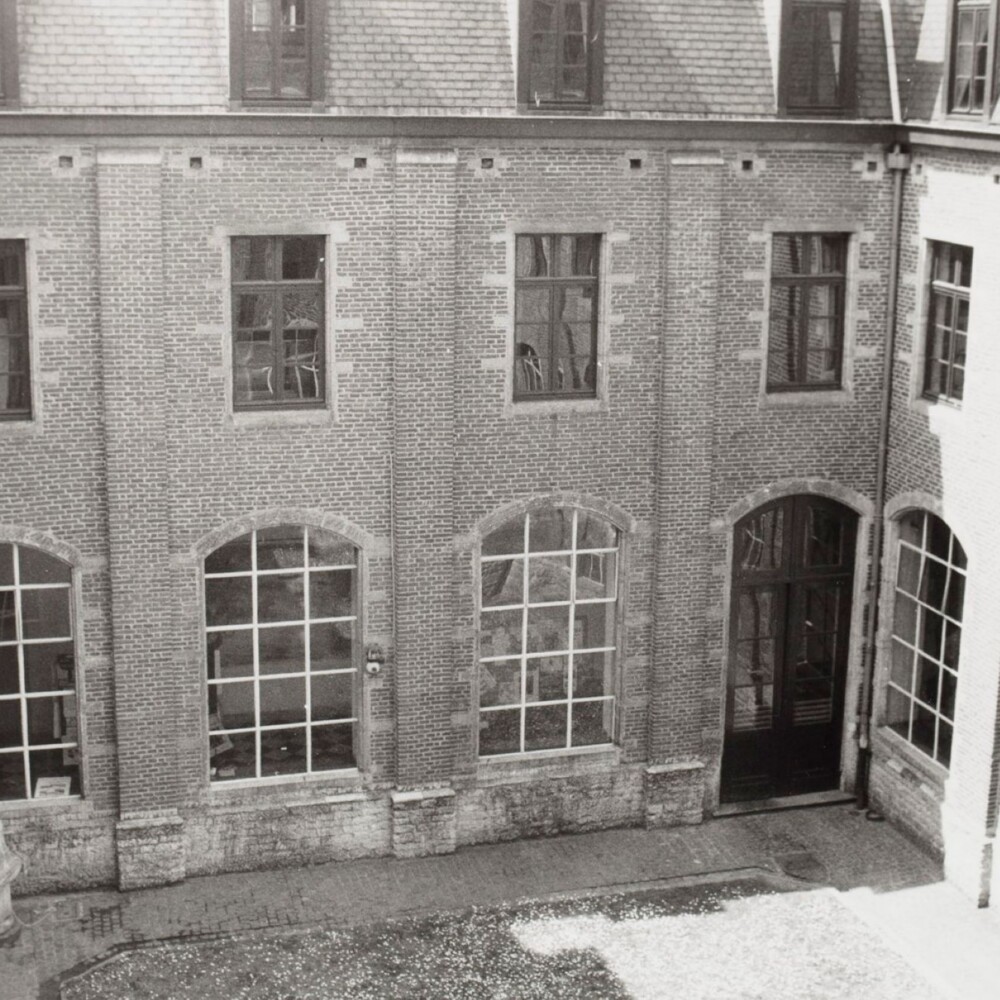
In its final years as a monastery, the beghards turned to a more modern form of prayer: the lottery. In 1752, they held a city-wide lottery to fund the massive renovation of their aging wings, a gamble that resulted in the elegant Louis XV-style garden facades that still exist today!
Sliced in half
The end came with the French Occupation. On 3 December 1796, the last beghard brothers were driven out of the century-old Bogaardenklooster. Their chapel was converted into a tobacco warehouse and later a horse stable. The cloister rooms, once silent for prayer, became a detention centre for prisoners of war.
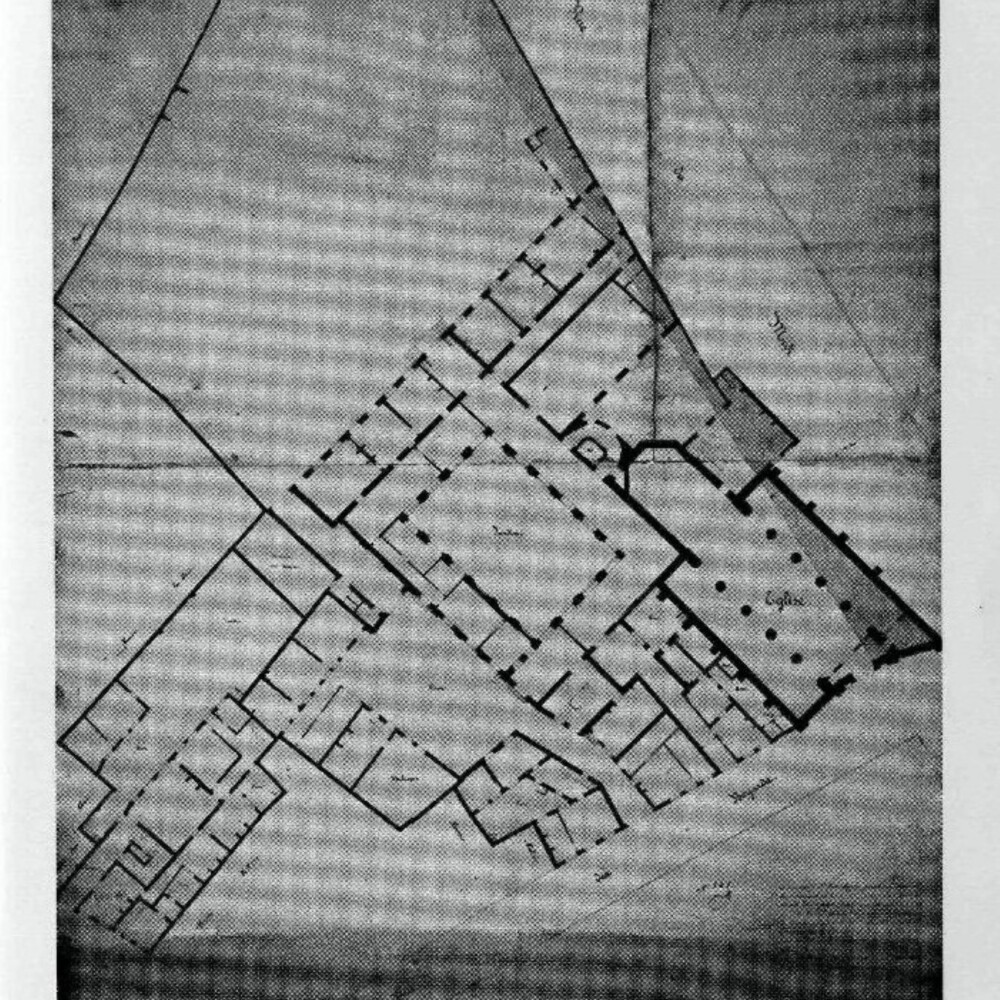
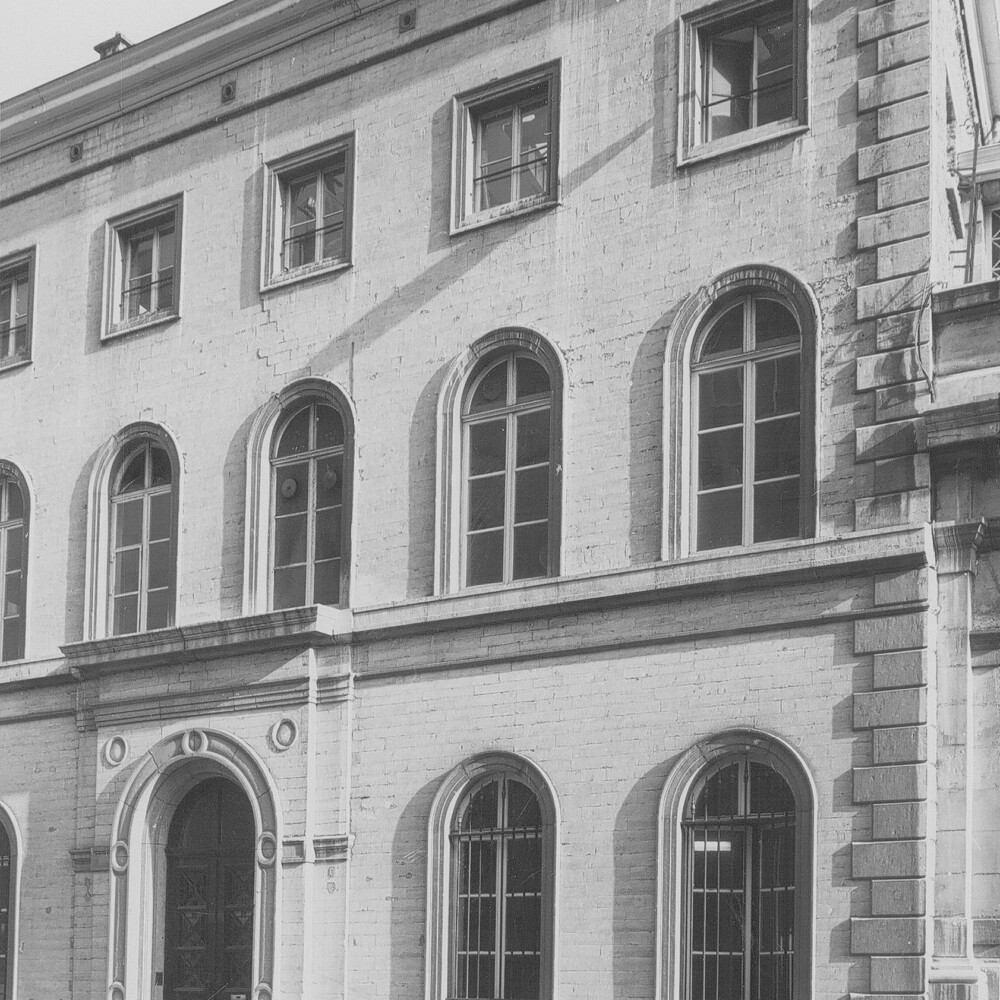
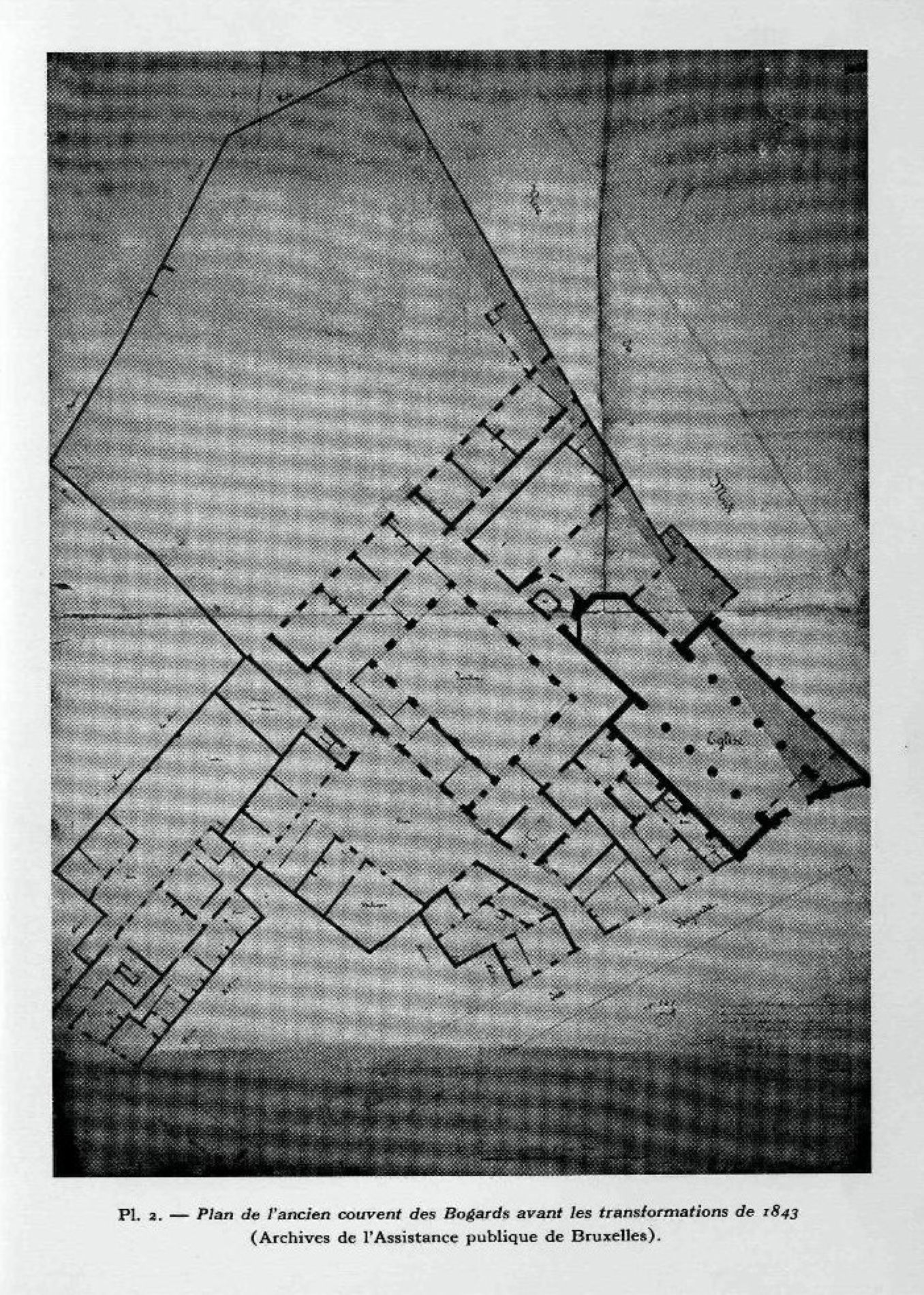
The most violent physical change occurred between 1841 and 1844, after the formation of the new nation-state of Belgium. To modernise the city and create the wide Zuidstraat (Rue du Midi), the city government literally sliced the monastery in half. They demolished the entire nave of the church, leaving only the choir standing like a severed limb. The city architect Hendrik Partoes then stepped in to wrap the remaining ruins in a neoclassical shell to serve as a girls’ orphanage. You can see the floor plan of the Bogaardenklooster and the later amputation below by Bonenfant-Feytmans.
The Founding of the OCMW/CPAS
The origins of the Belgian social welfare centres – Openbaar Centrum voor Maatschappelijk Welzijn (OCMW) in Dutch and Centre public d’action sociale (CPAS) in French – are deeply intertwined with the former site of the Bogaardenklooster. Following the centralisation of public aid under the occupying French regime at the end of the 18th century, the diverse properties and art collections of the city’s suppressed charitable institutions were consolidated and initially housed within the monastery’s former buildings.
This administrative presence, overseen by the Raad der Godshuizen (Council of Hospices) — a direct predecessor to today’s OCMW/CPAS — remained at the site until 1843, when the administration moved to the new Sint-Jansziekenhuis (Hôpital Saint-Jean) on the Kruidtuinlaan (Boulevard Botanique). Even today, the OCMW-Museum (Musée du CPAS) preserves a significant portion of its historical heritage, much of which was first gathered and curated within the repurposed walls of the old Bogaardenklooster.
The Transformation into Art School
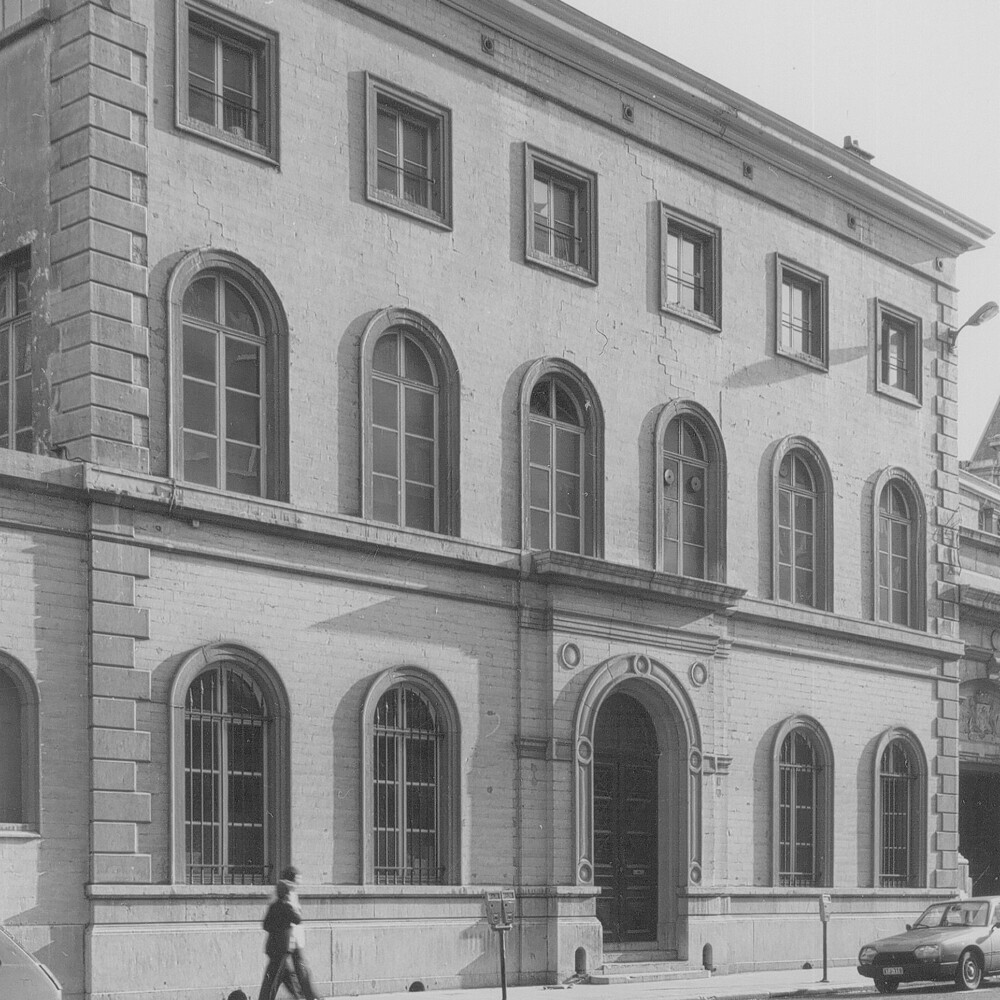
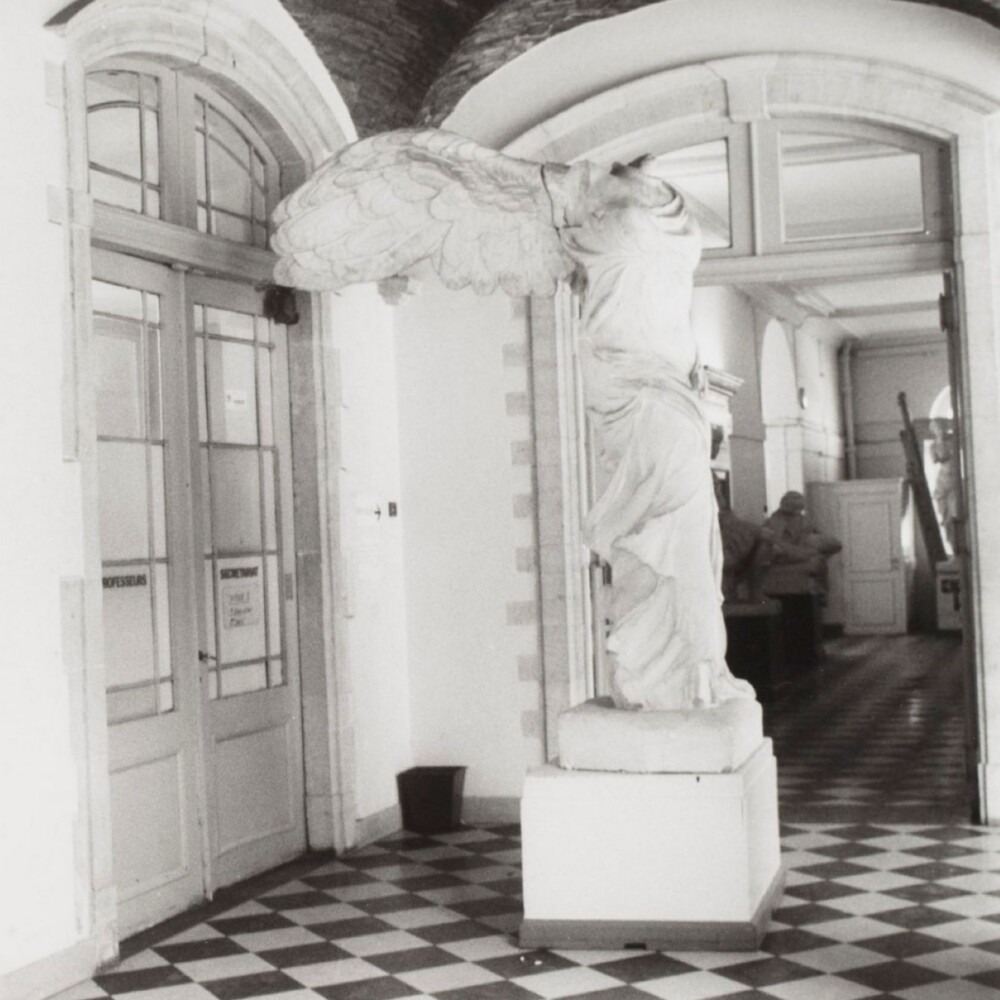
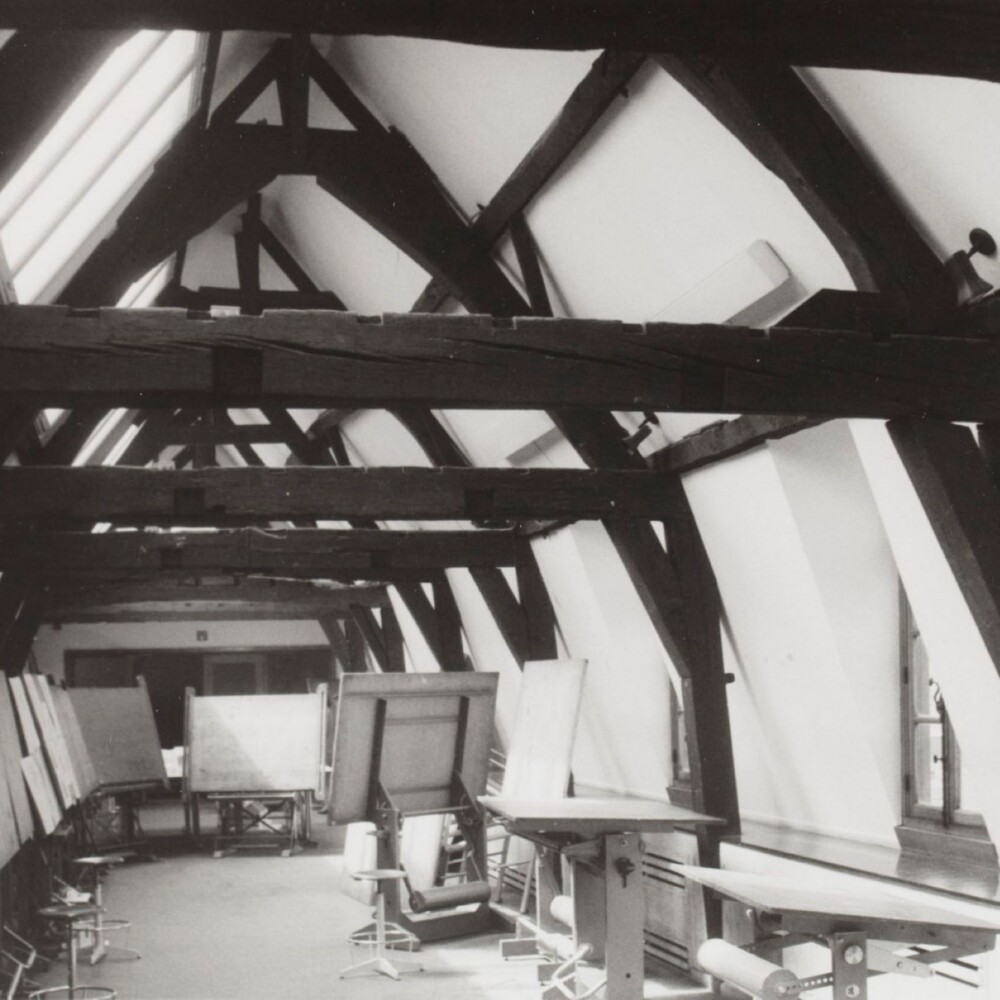
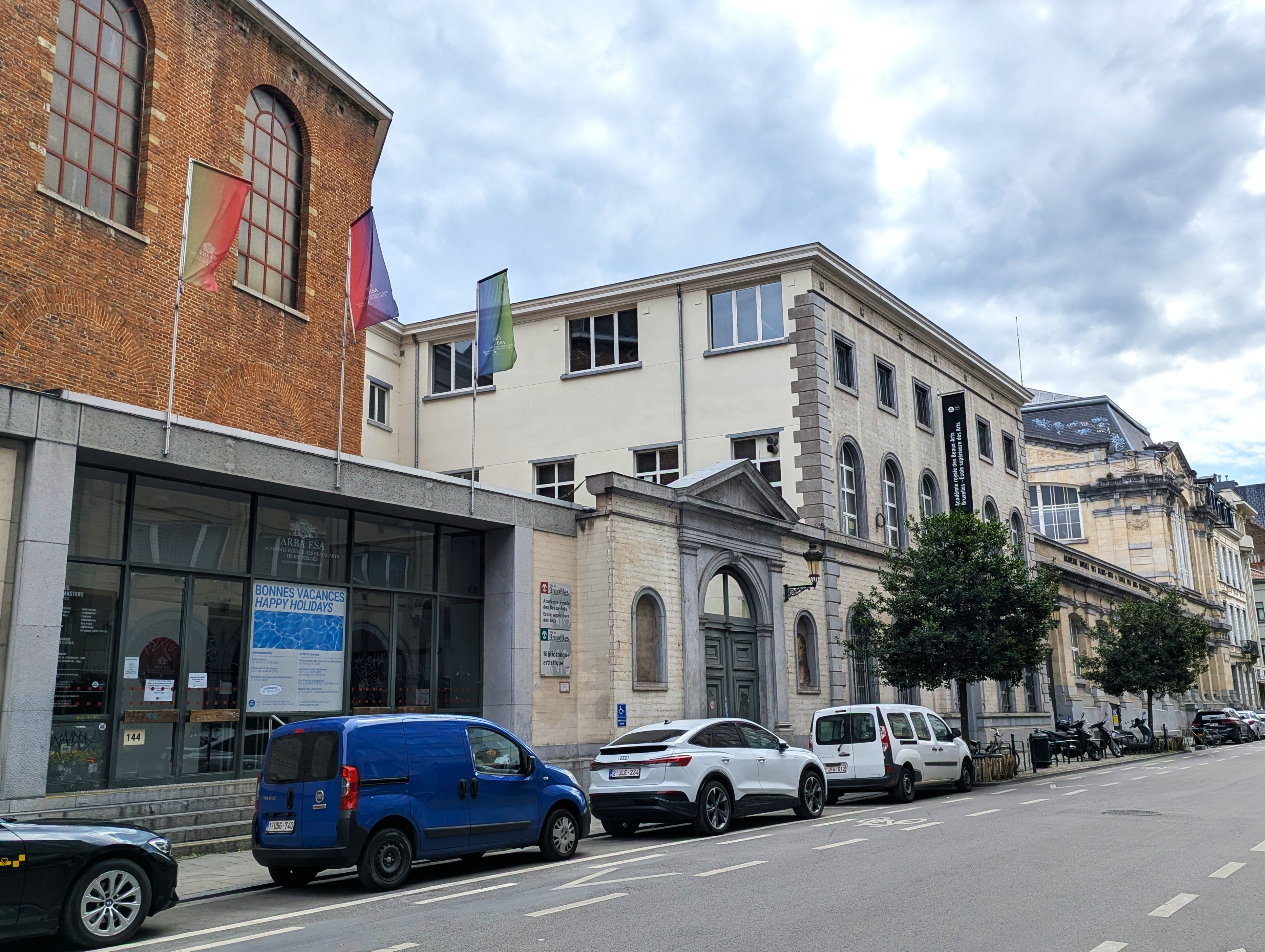
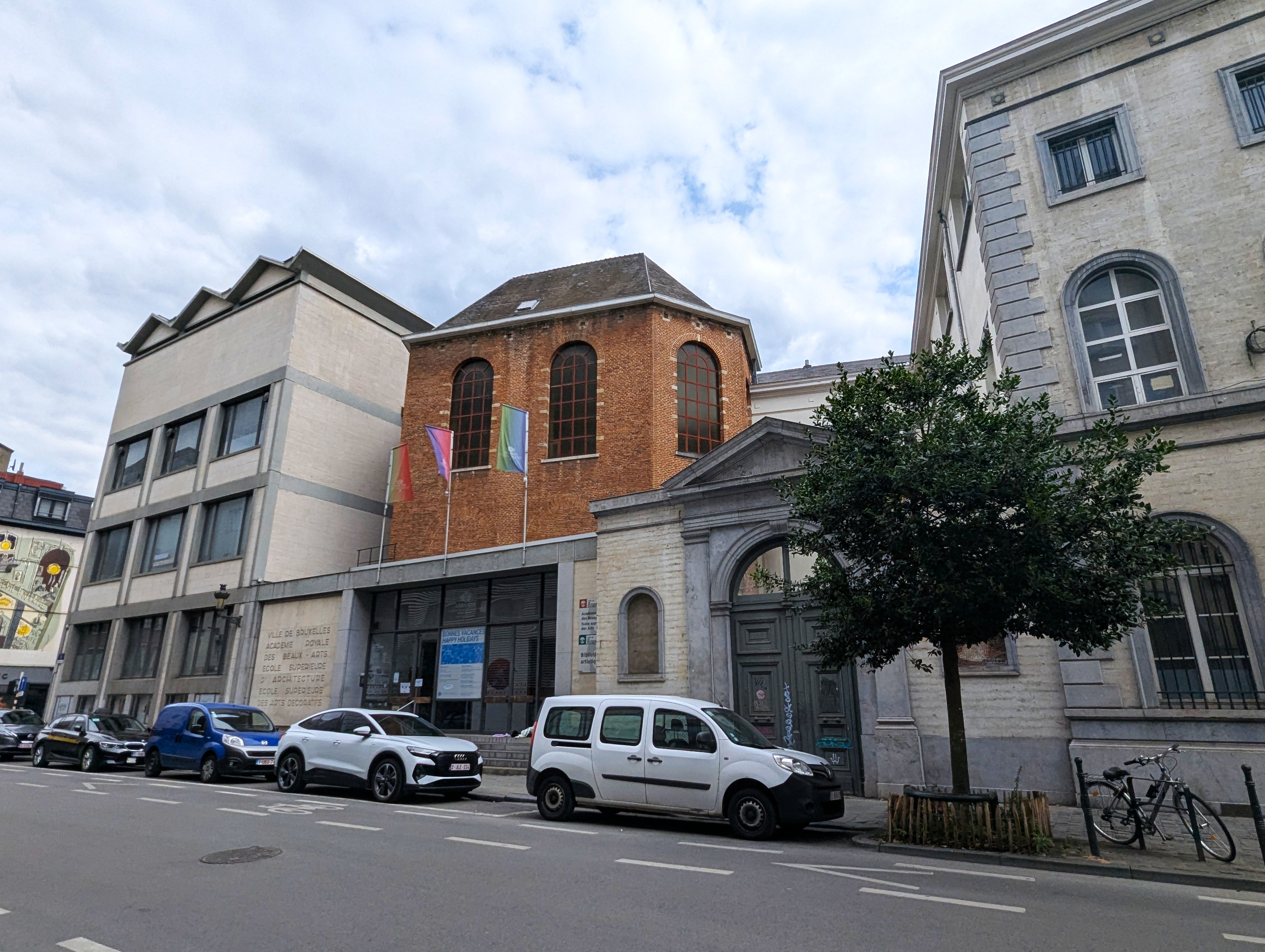
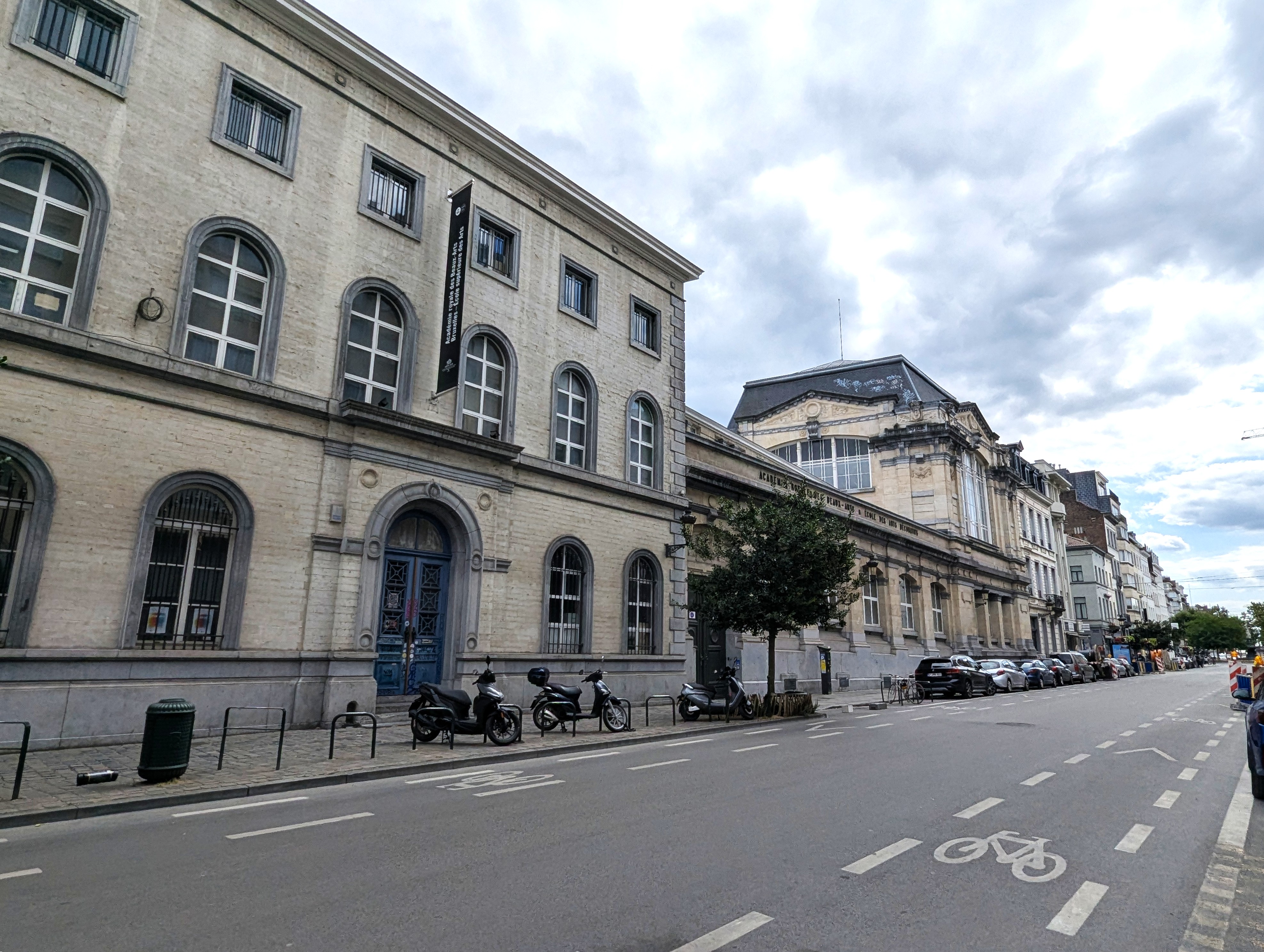
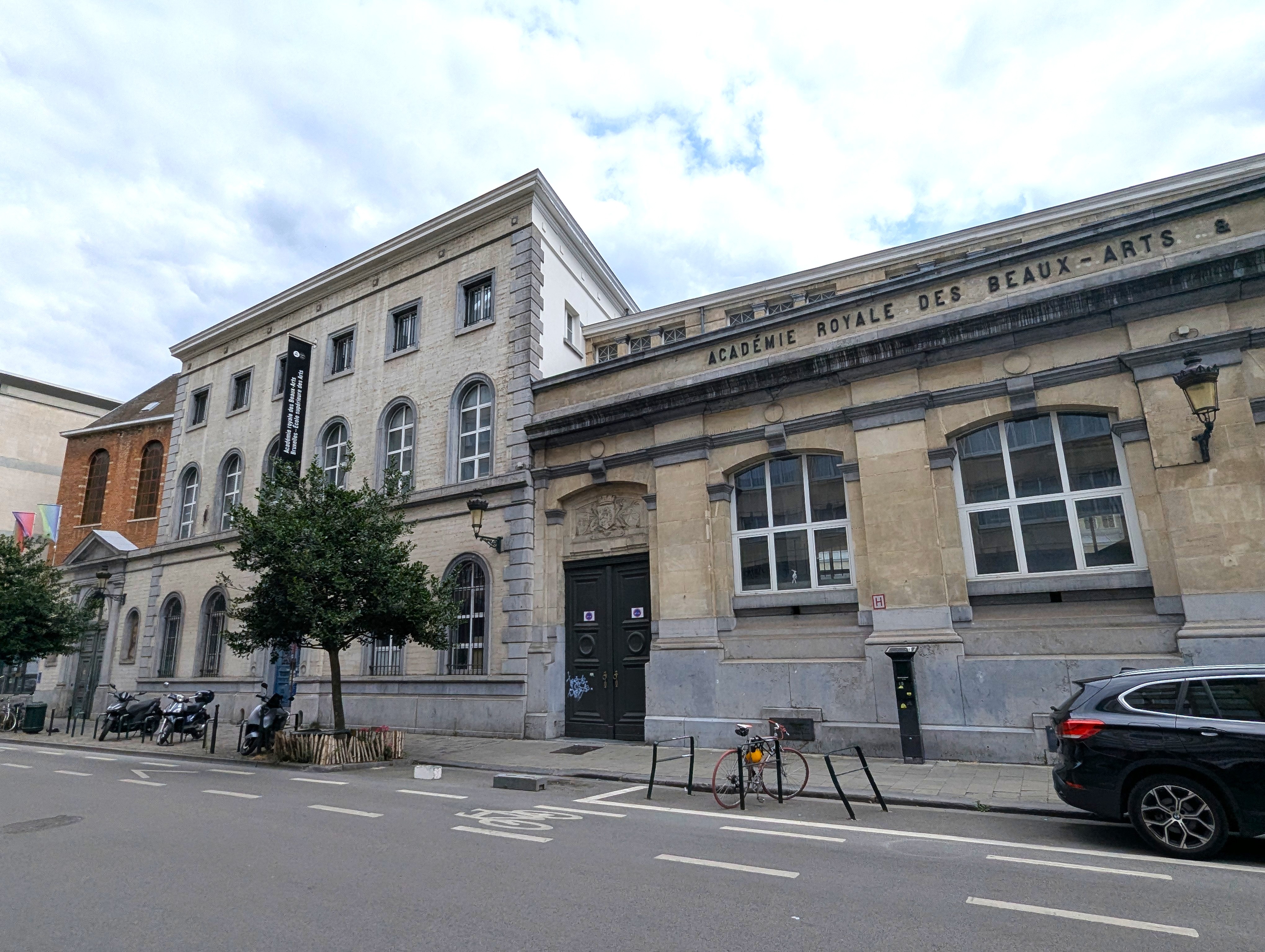
The French-medium “Académie royale des beaux-arts” (Royal Academy of Fine Arts) did not occupy this historic plot until 1876, yet its own story is deeply rooted in the city’s guild traditions. Originally established by the Brussels magistrate in 1711, the school began humbly in the Stadhuis (City Hall), where the deans of the painters, sculptors, and tapestry-weavers gathered to teach drawing to local talent. After a century of shifting between temporary venues — including a period in the cellars of the Nijverheidspaleis (Palais de l’Industrie) — the institution found its modern identity under director François-Joseph Navez, whose rigorous reforms led King Leopold I to bestow the “Royal” title upon the school in 1835. When the move to the Zuidstraat was finally realised, it was architect Pierre-Victor Jamaer who was tasked with bridging the site’s monastic past and its artistic future. Behind his grand, eclectic facade, designed between 1874 and 1876, he carefully integrated the skeletal remains of the Mariendael Bogaardenklooster, ensuring that while the weavers were gone, the site would remain a sanctuary for the city’s creative spirit.
Current situation
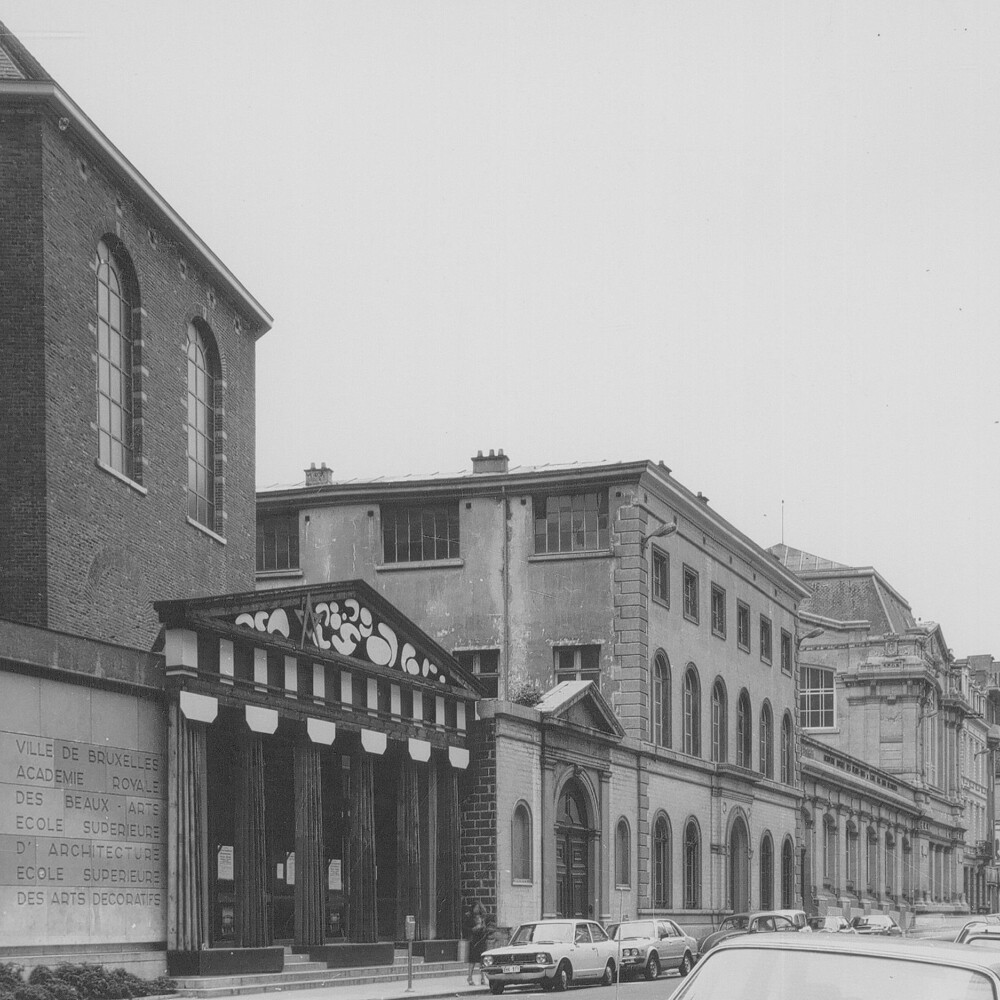
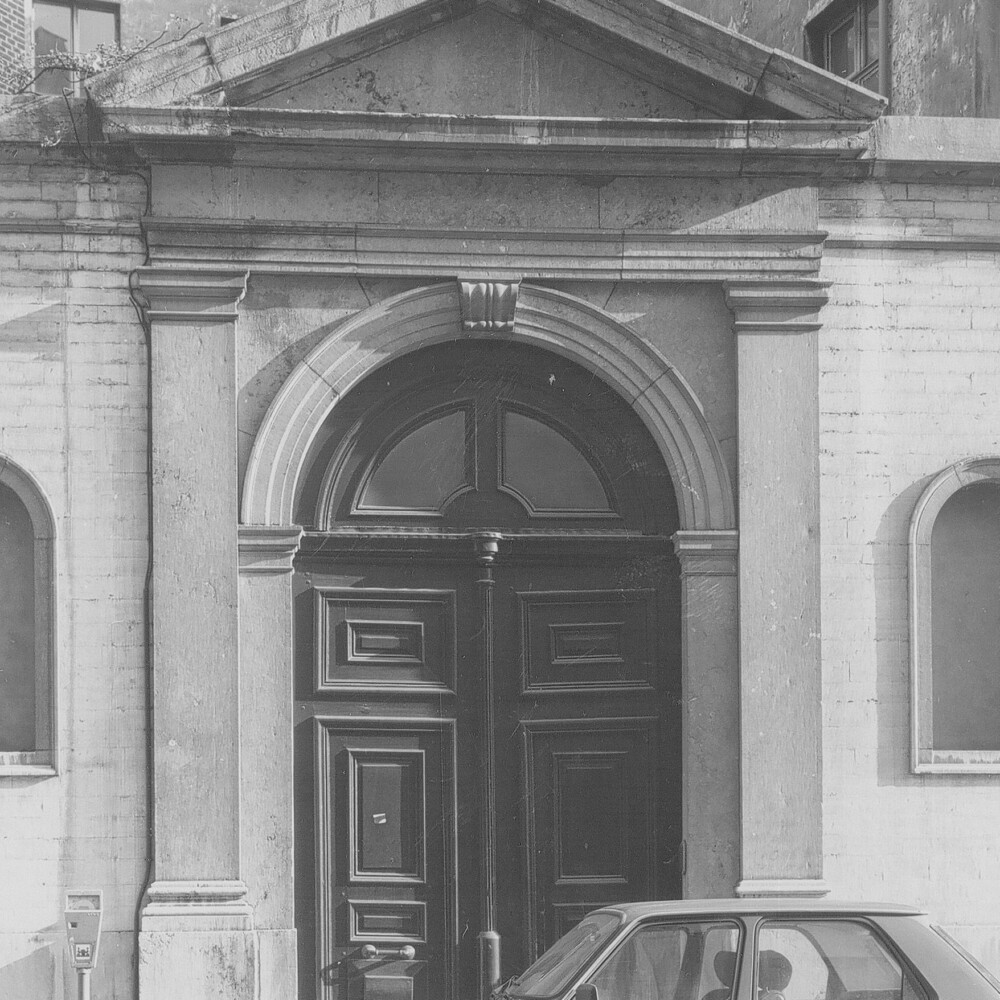
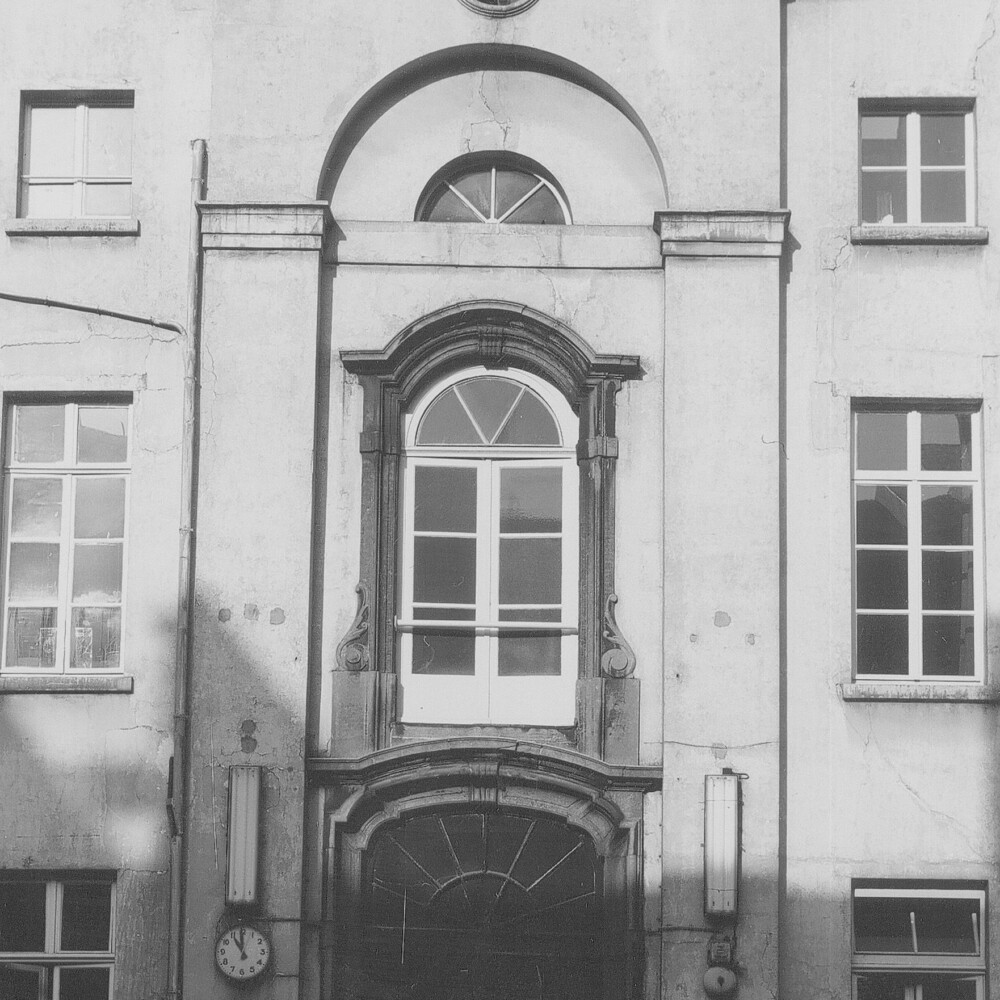
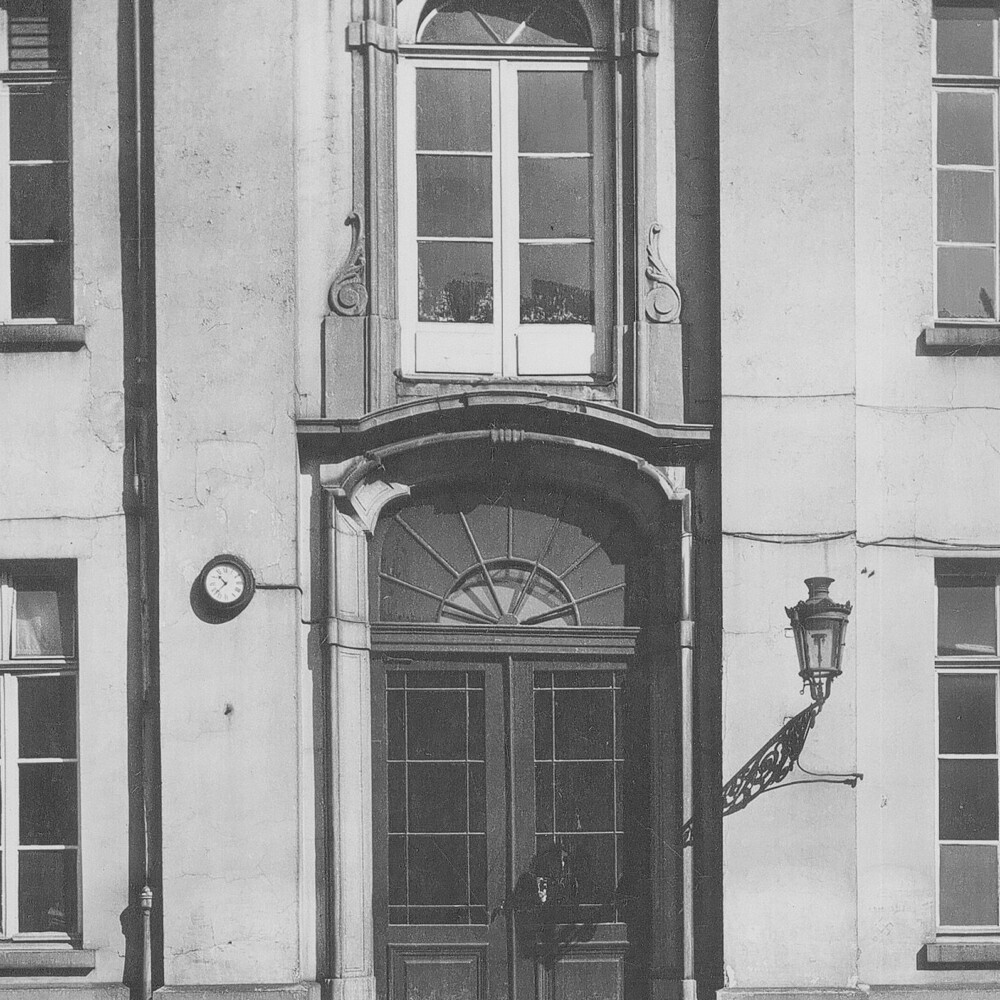
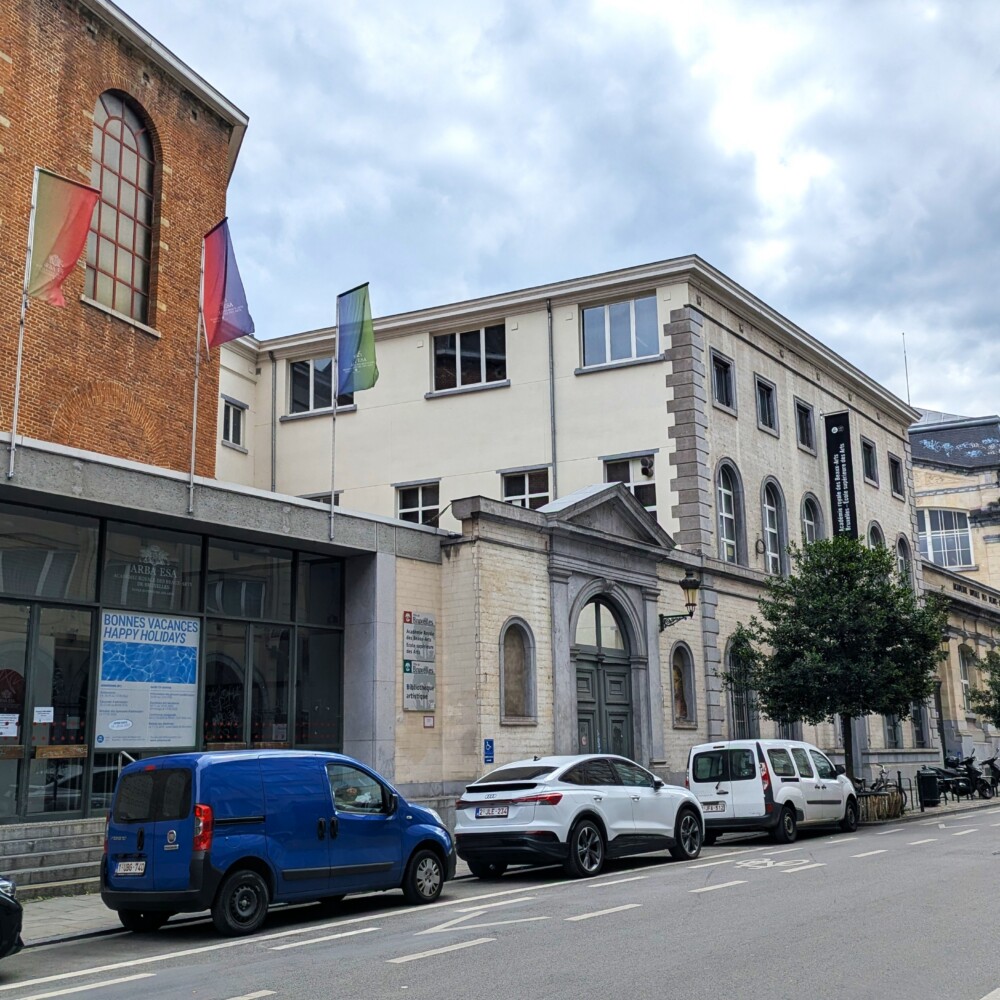
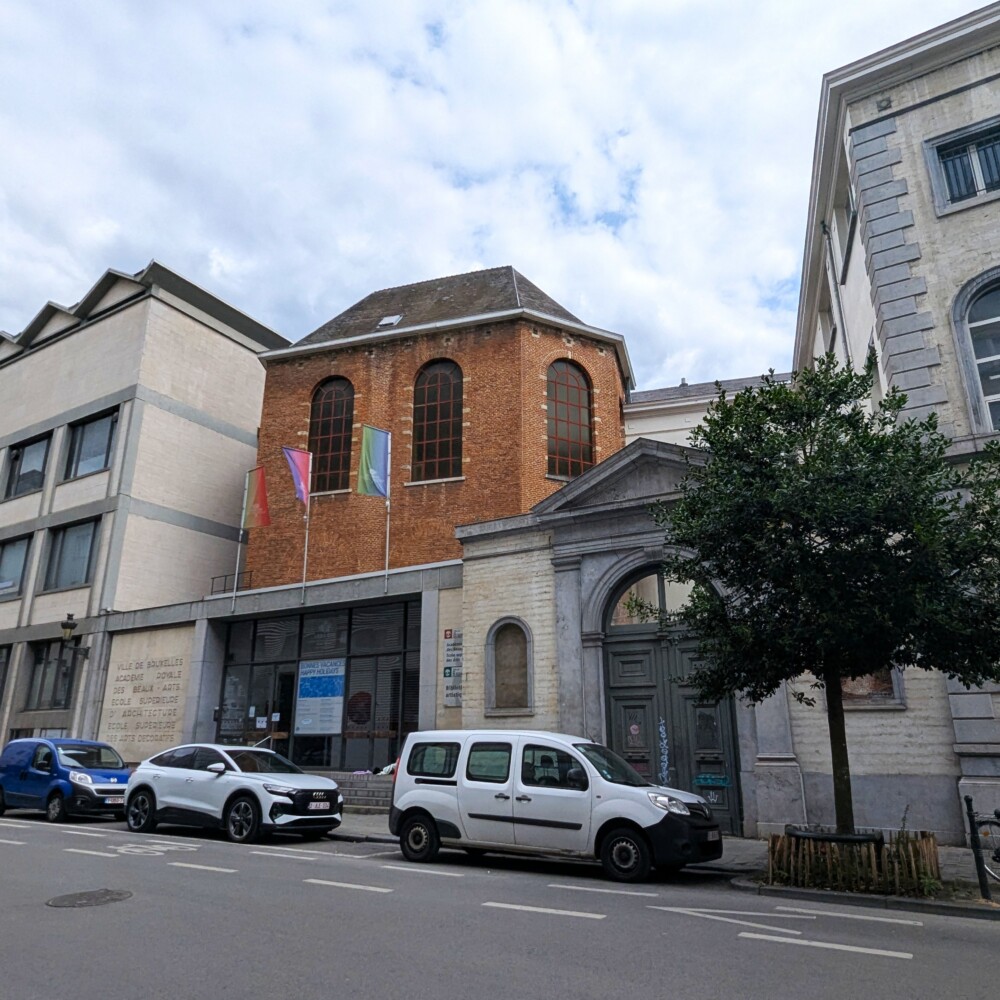
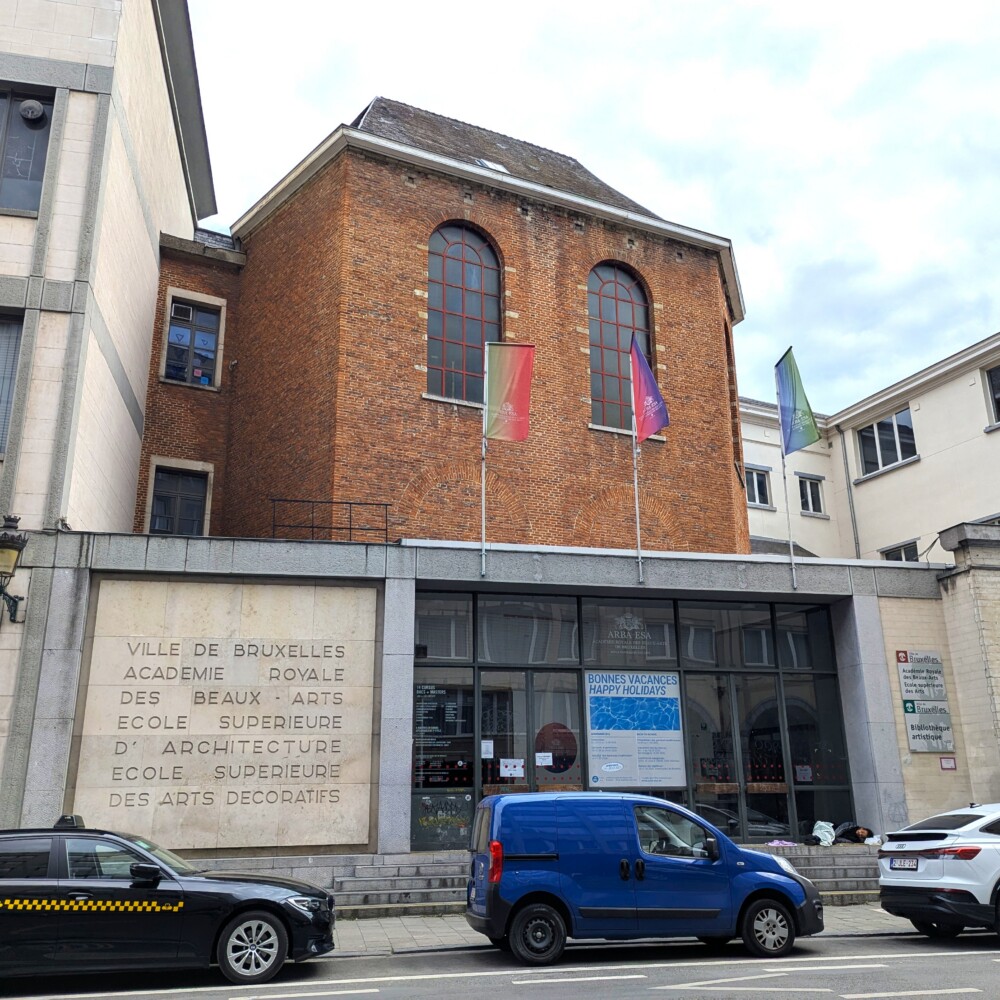
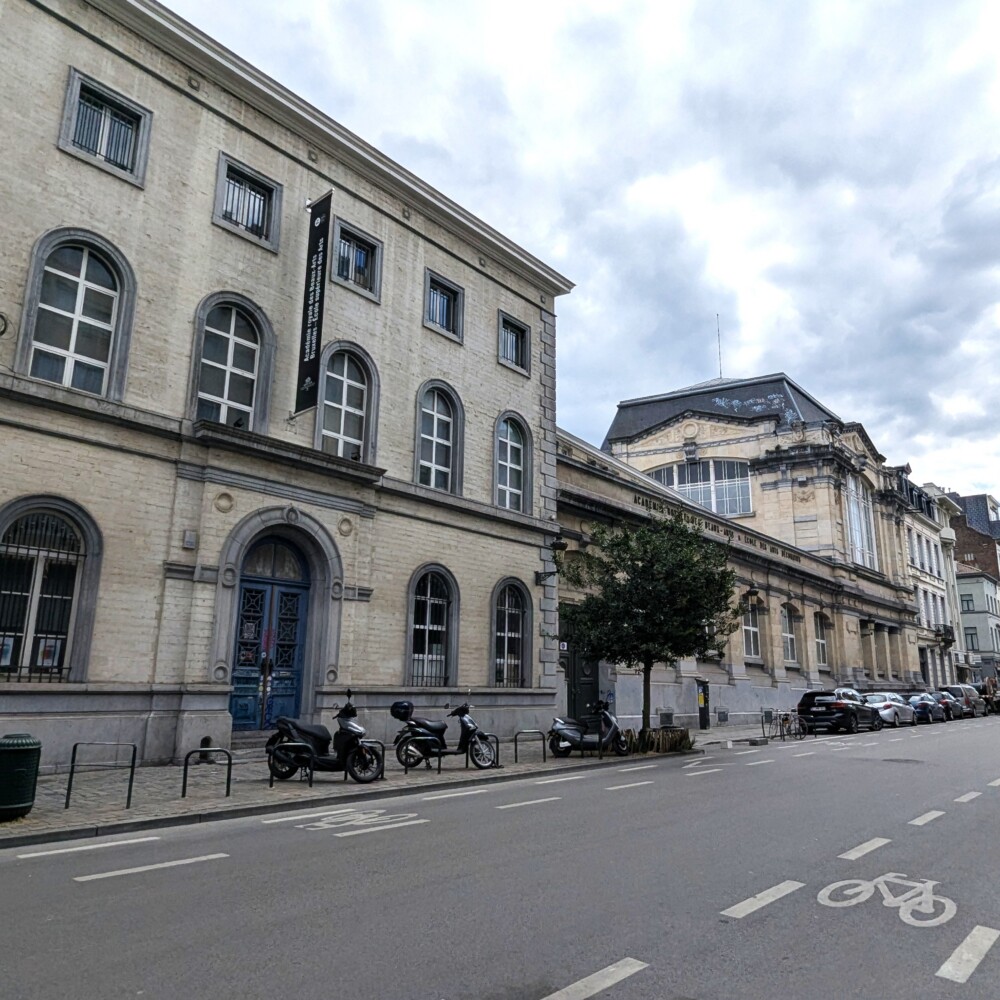
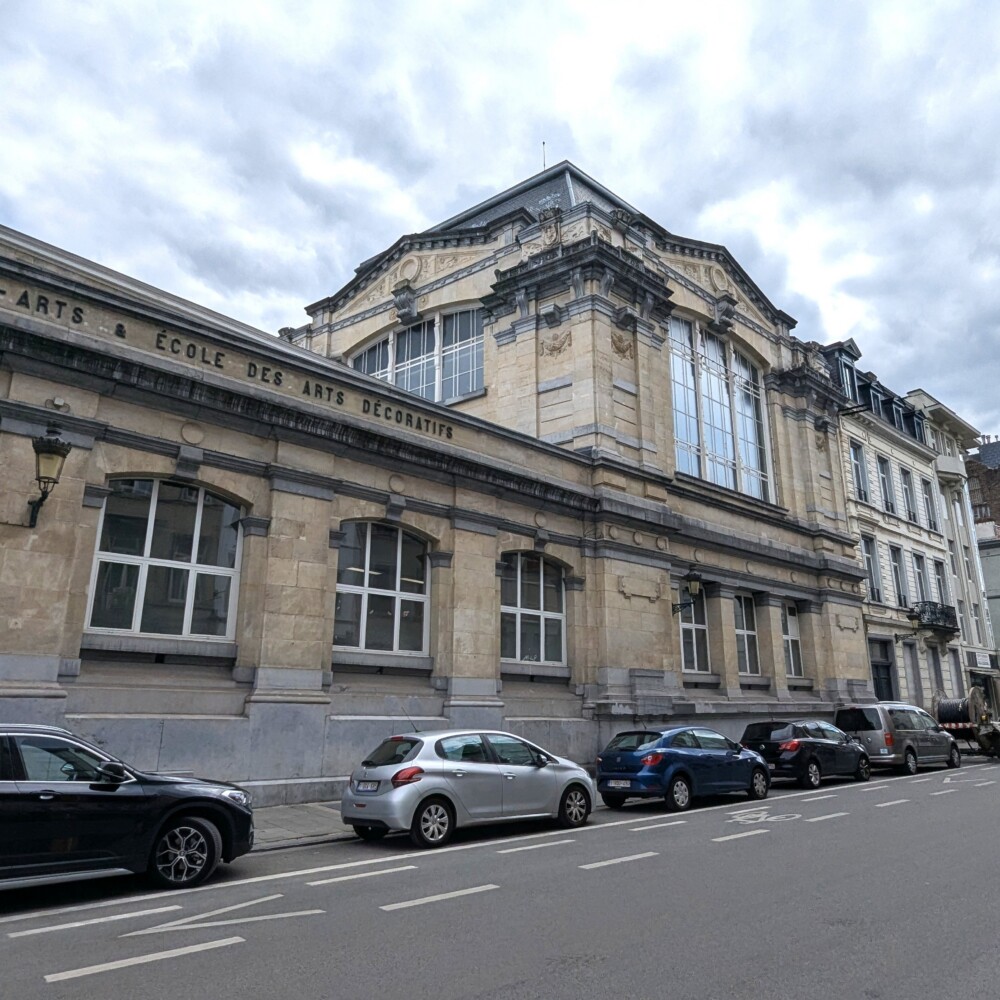
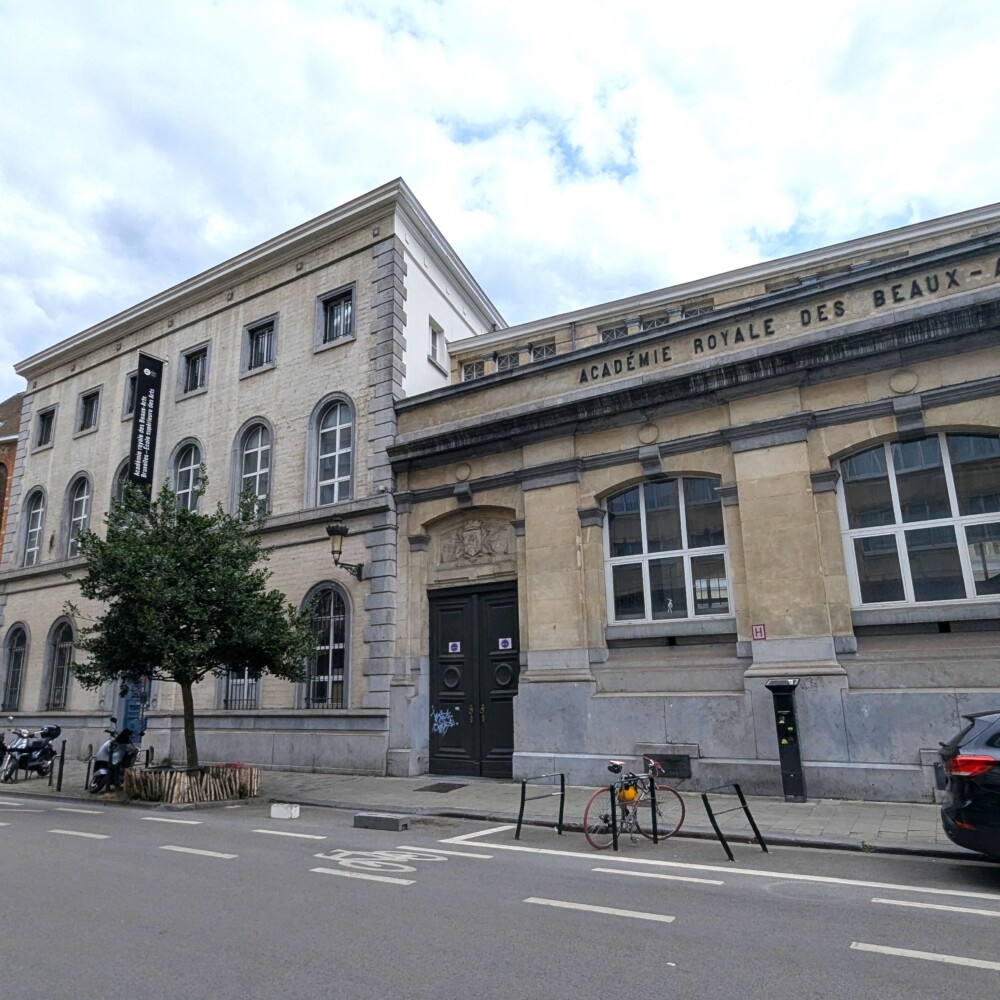
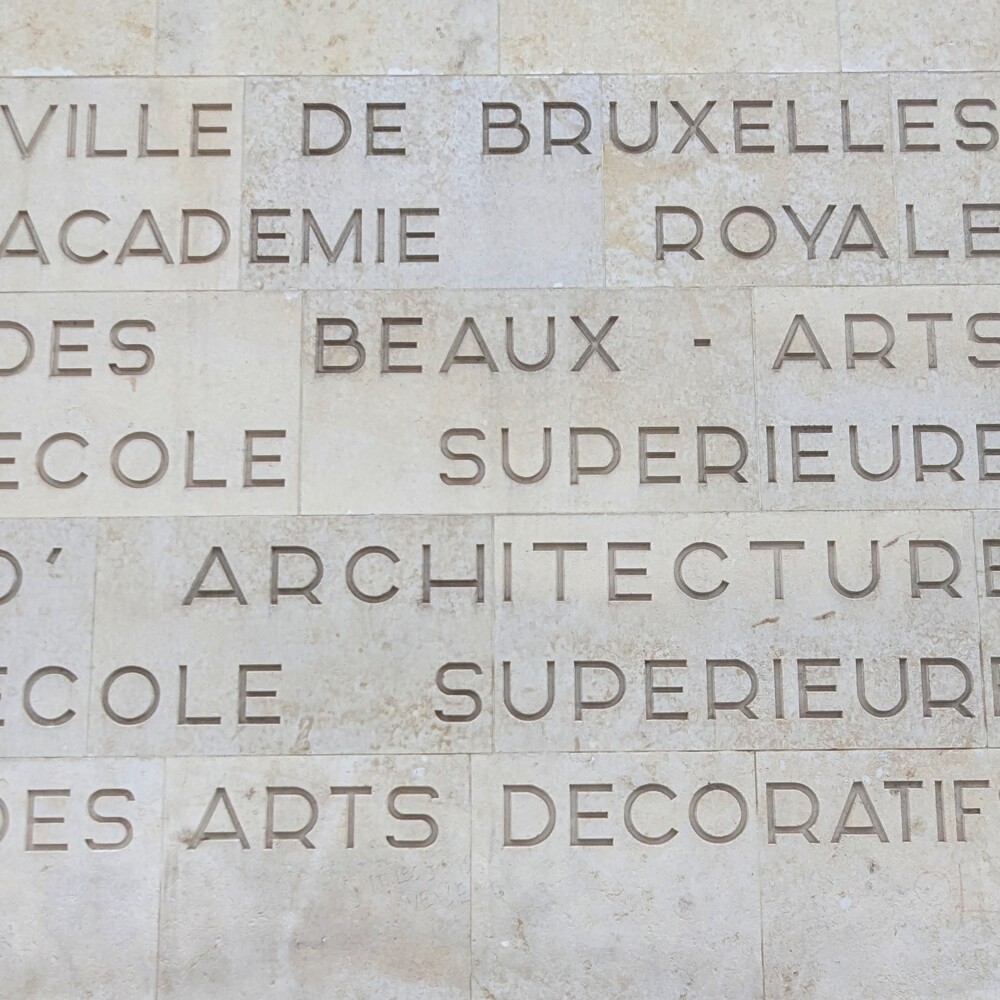
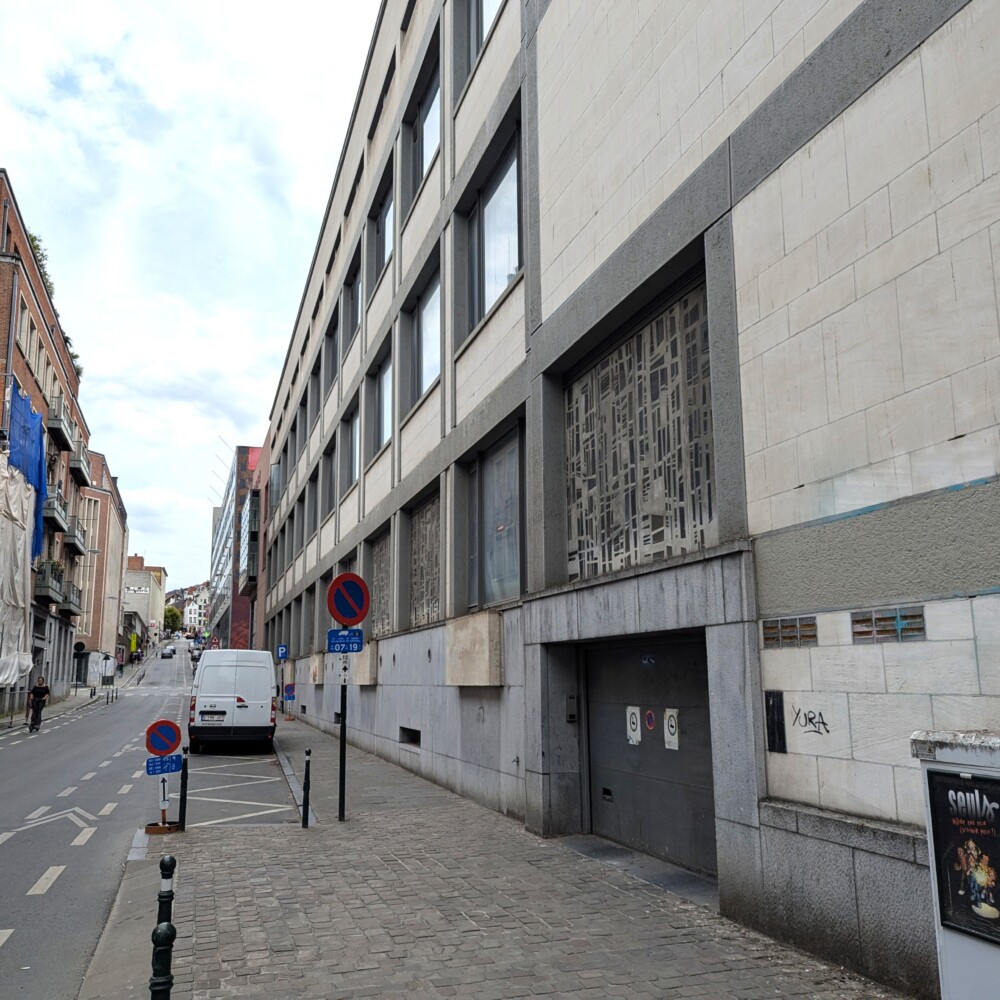
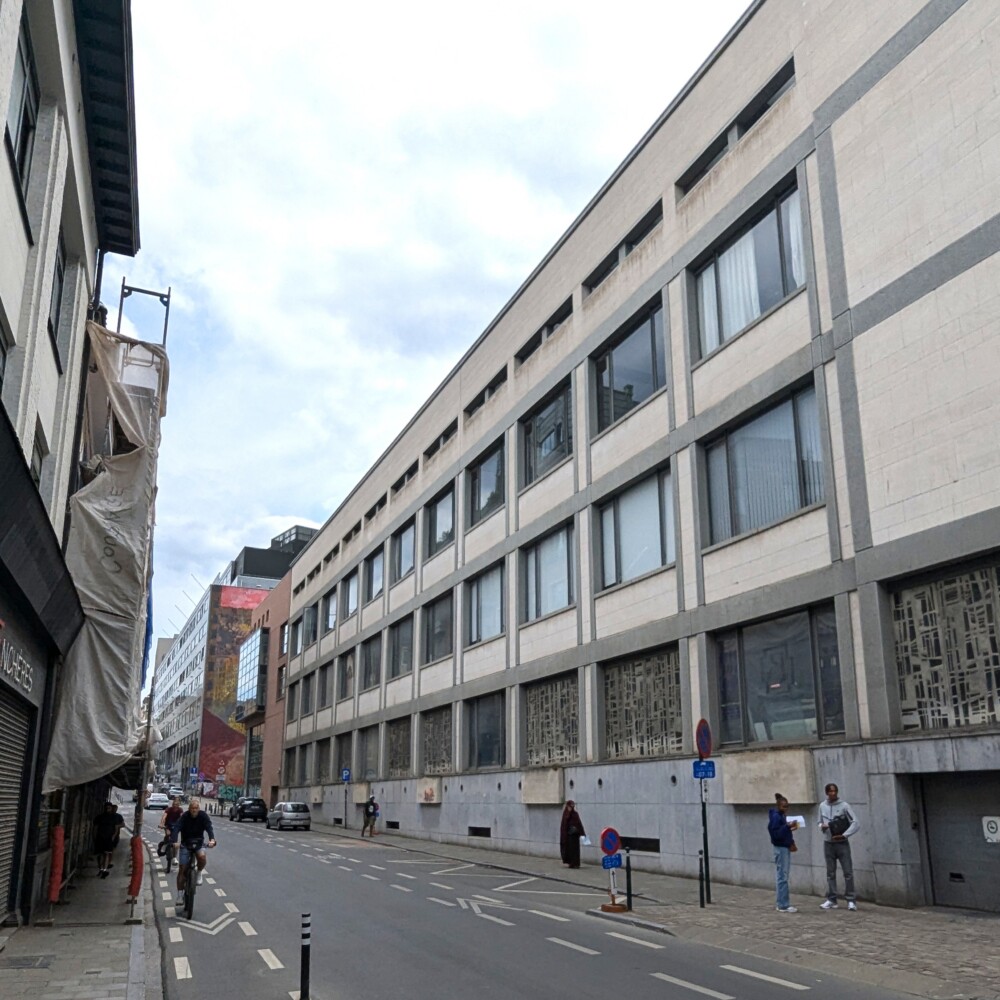
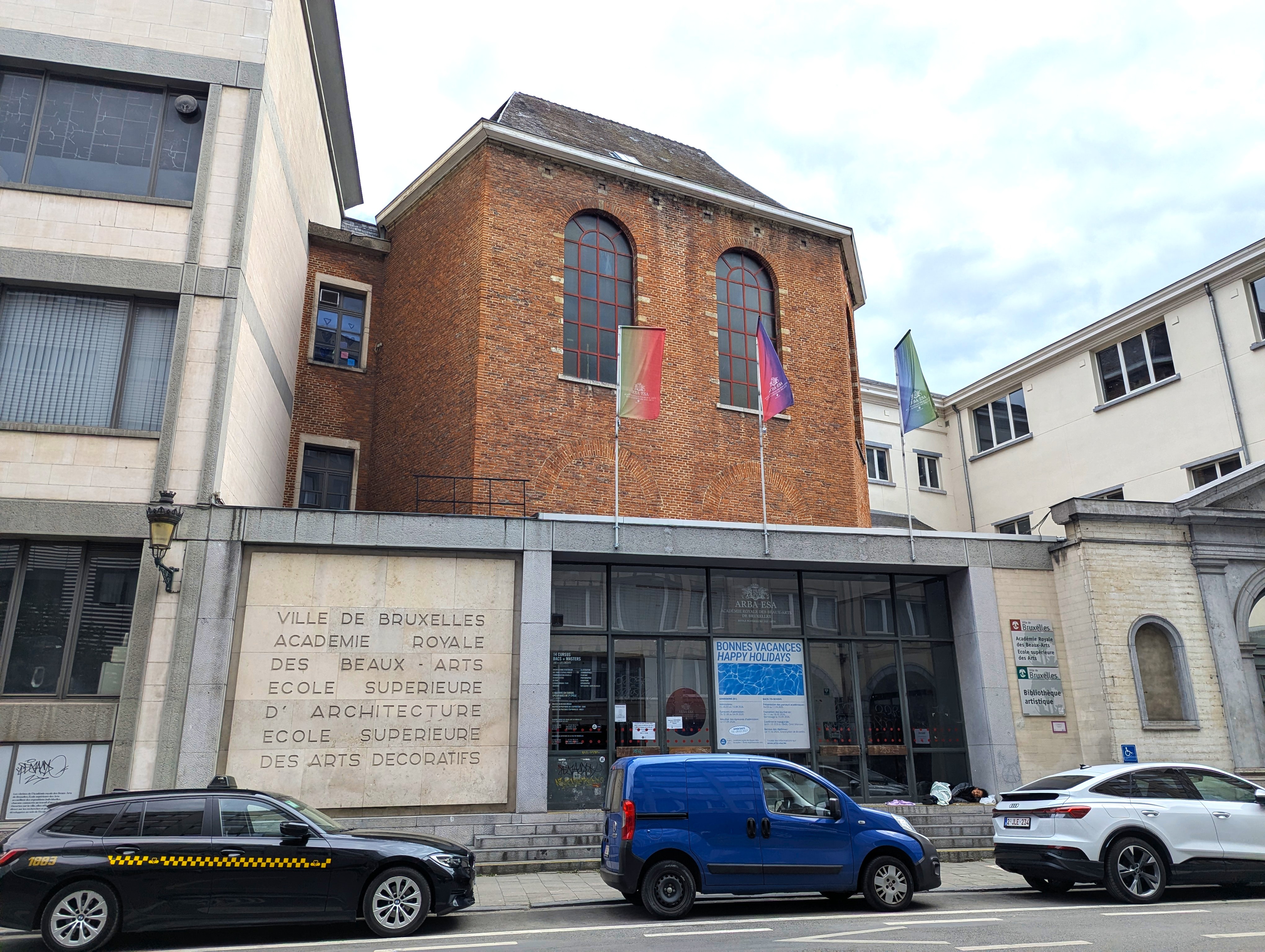
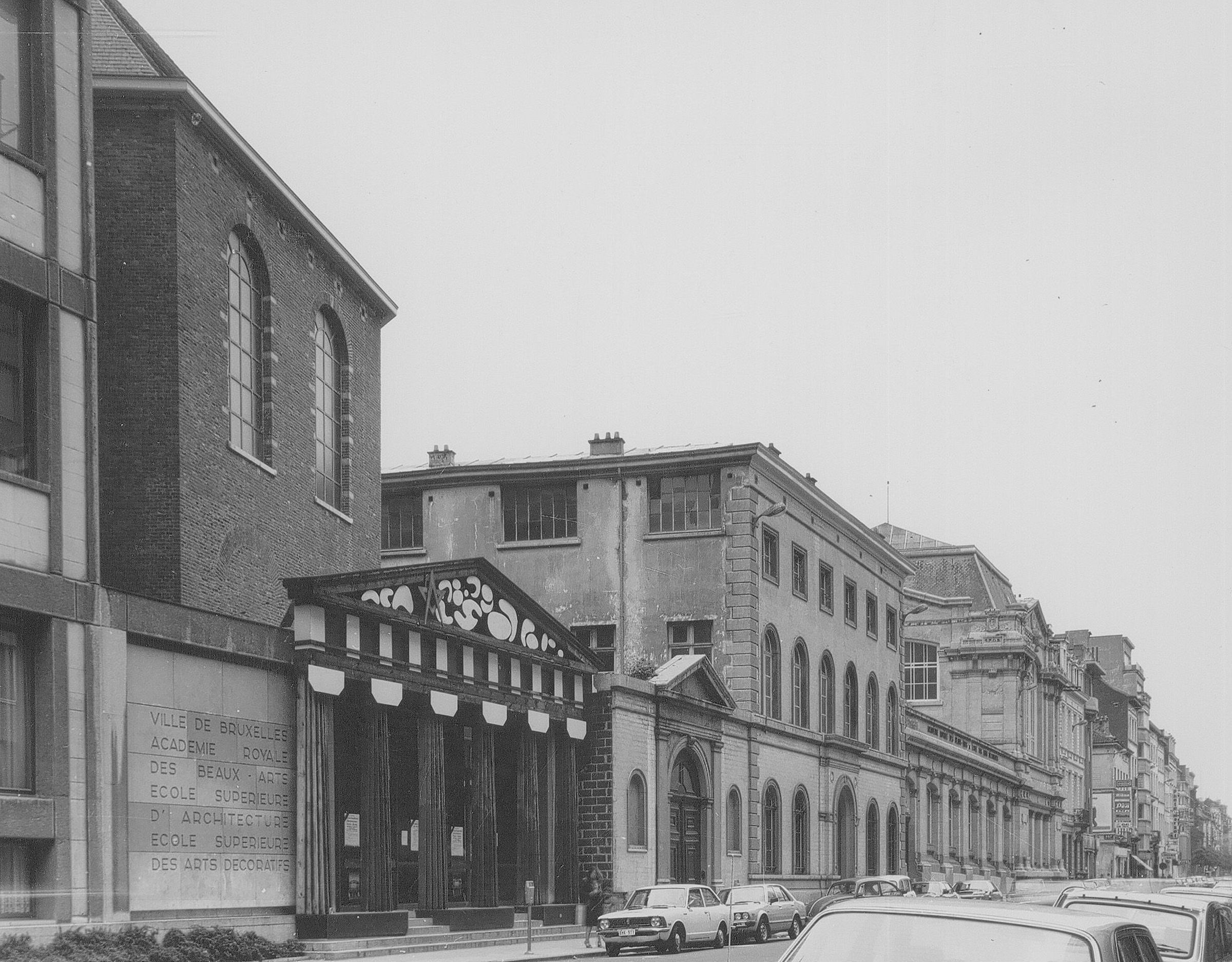
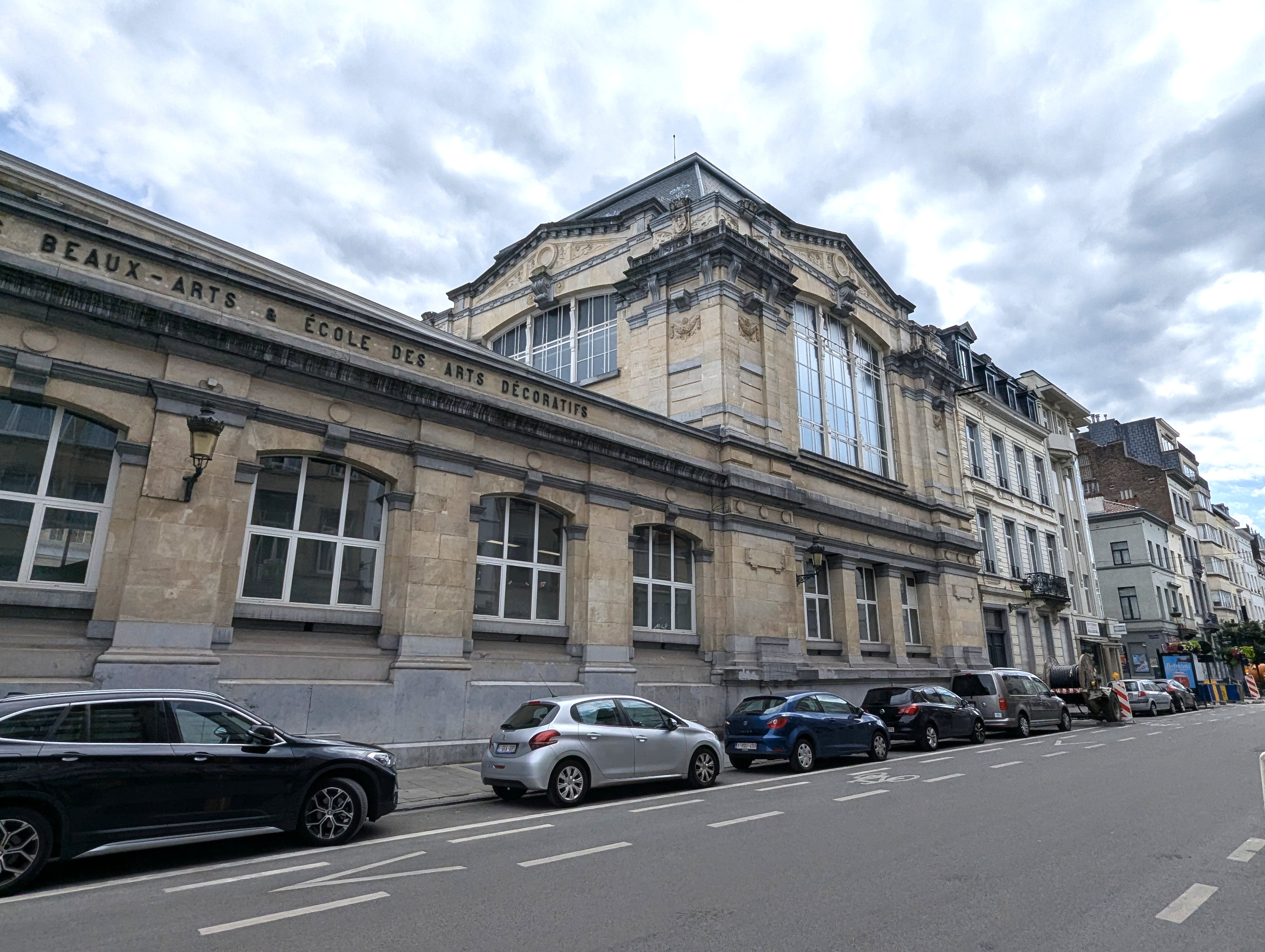
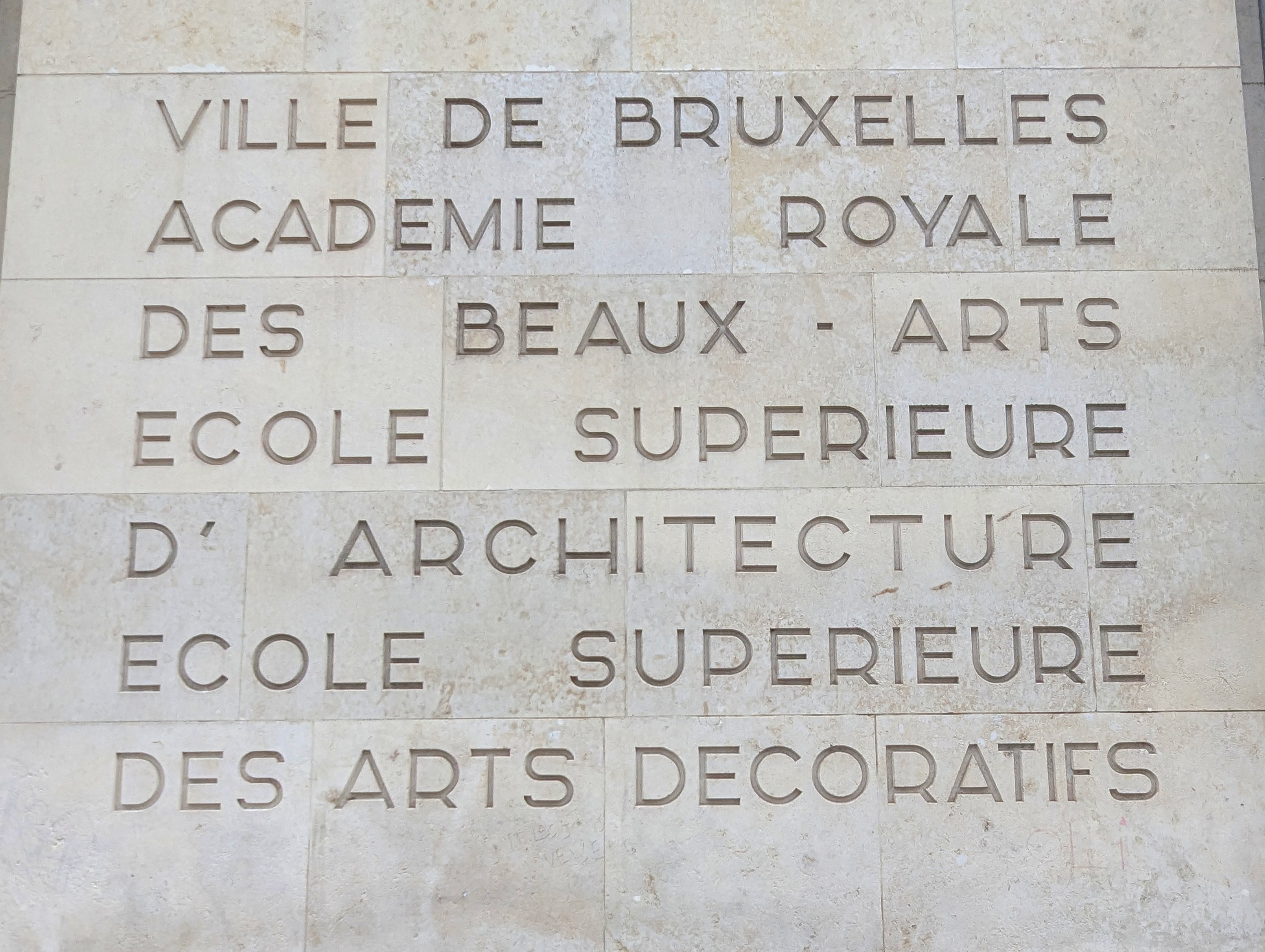
Today, if you walk down the Zuidstraat (Rue du Midi), you are actually walking through what was once the centre of the chapel of the Bogaardenklooster. The site is now the home of French-speaking Royal Academy of Fine Arts. Modern art students now sketch and paint where disabled weavers once laboured.
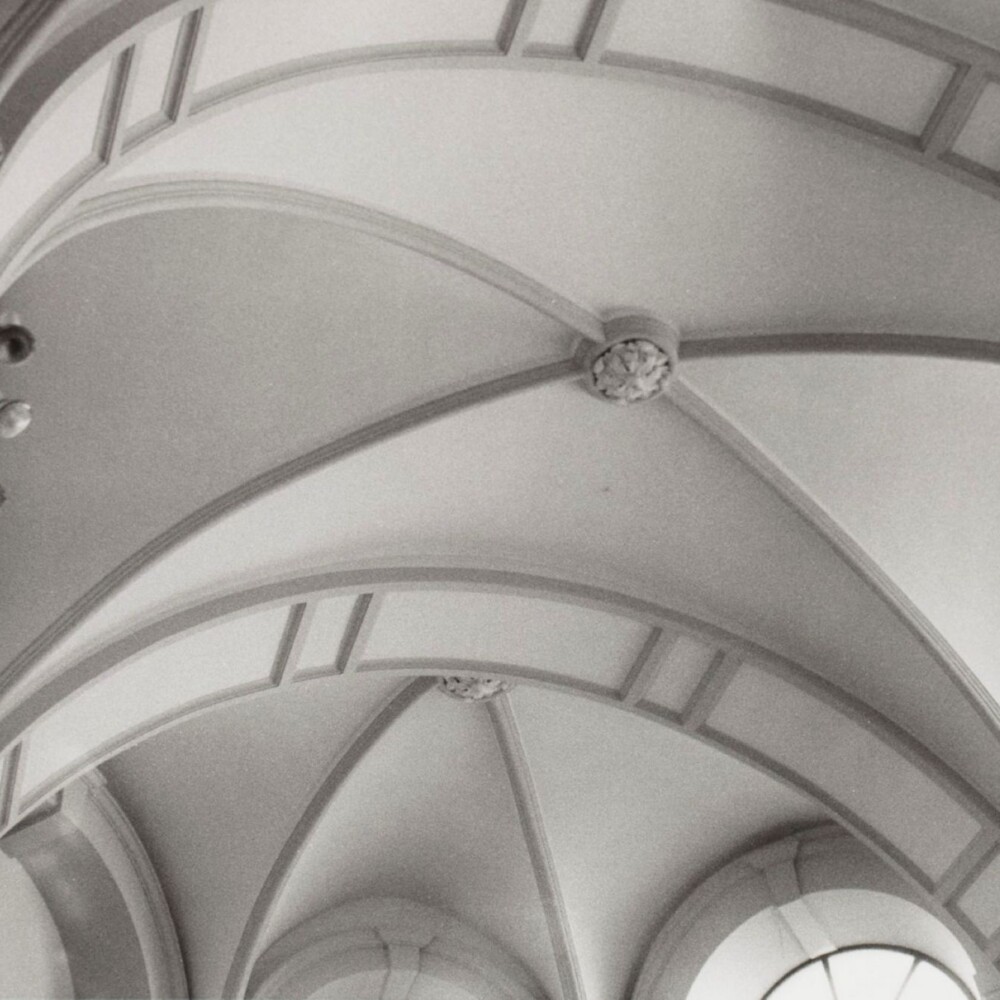
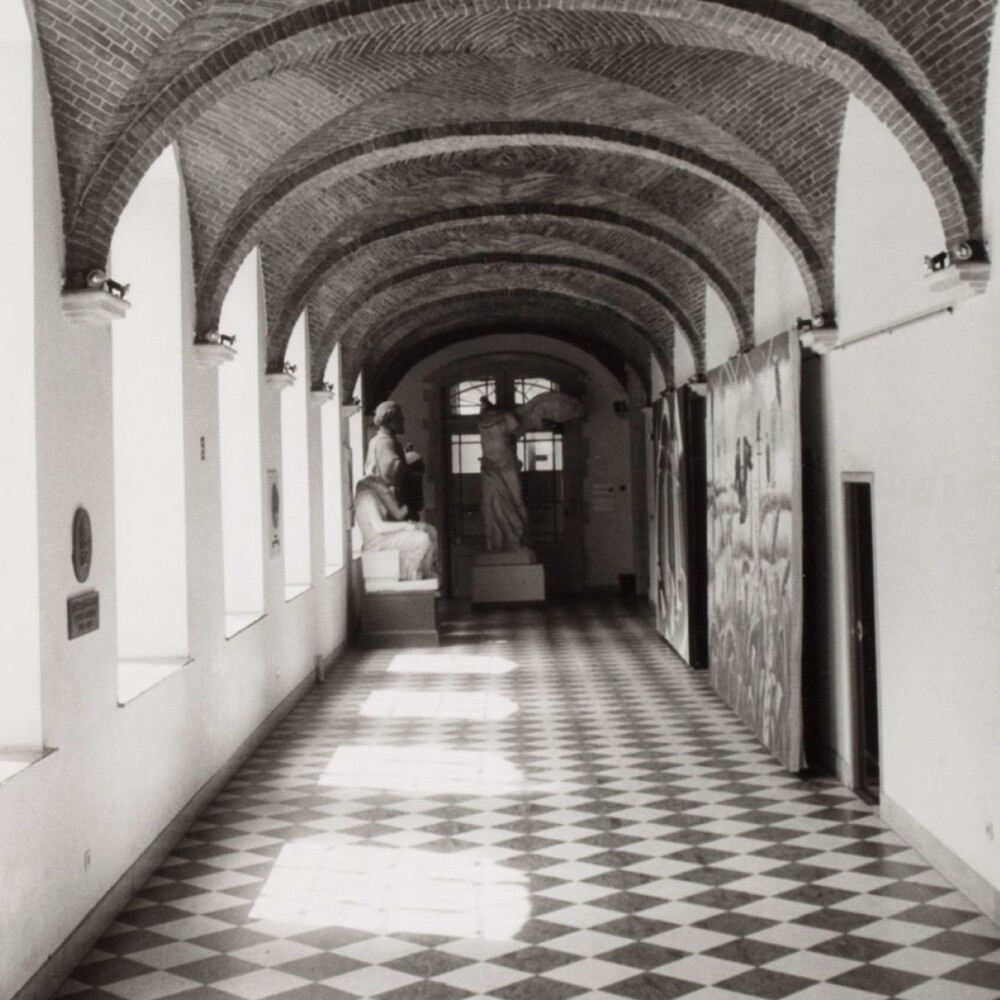
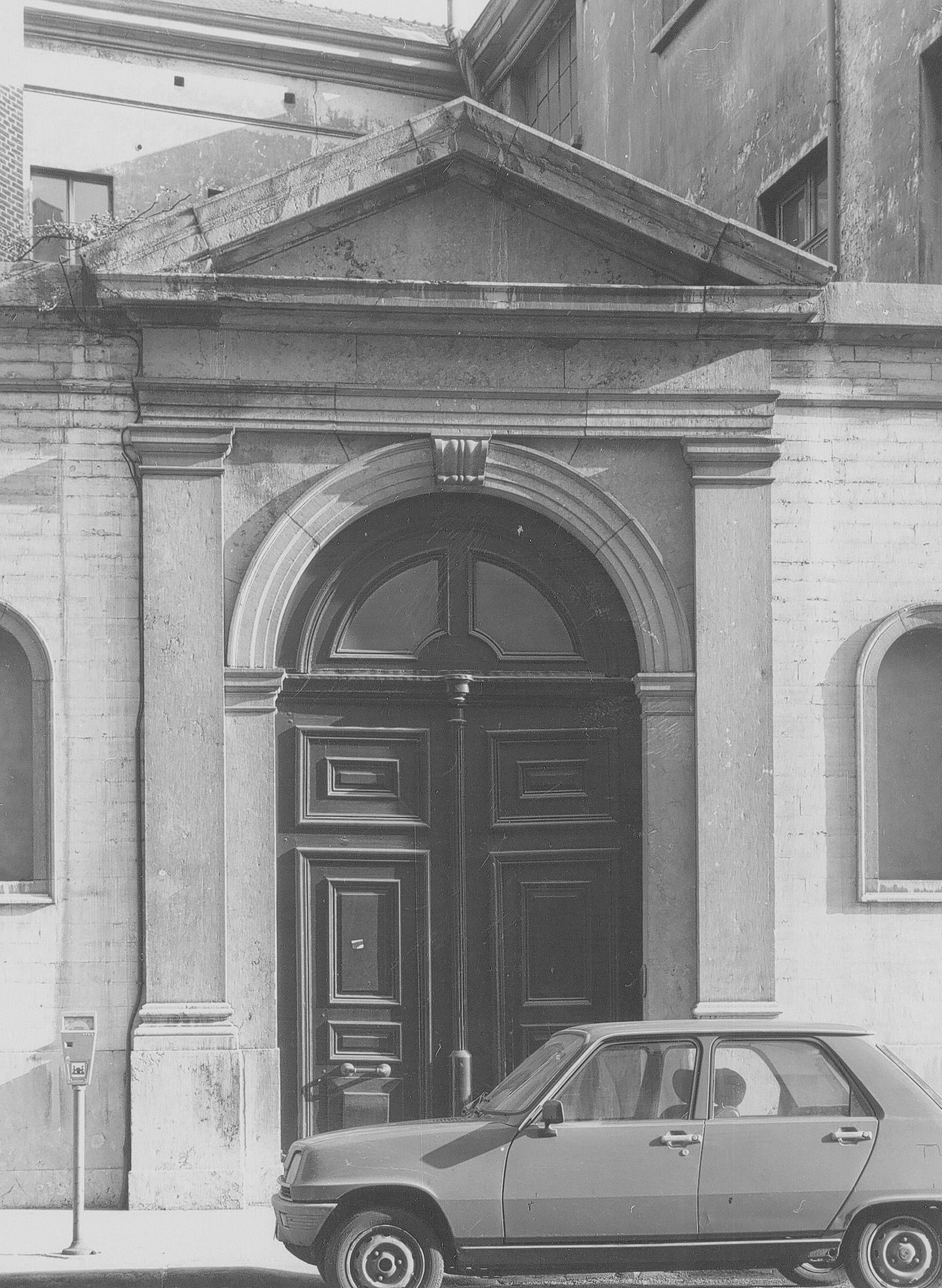
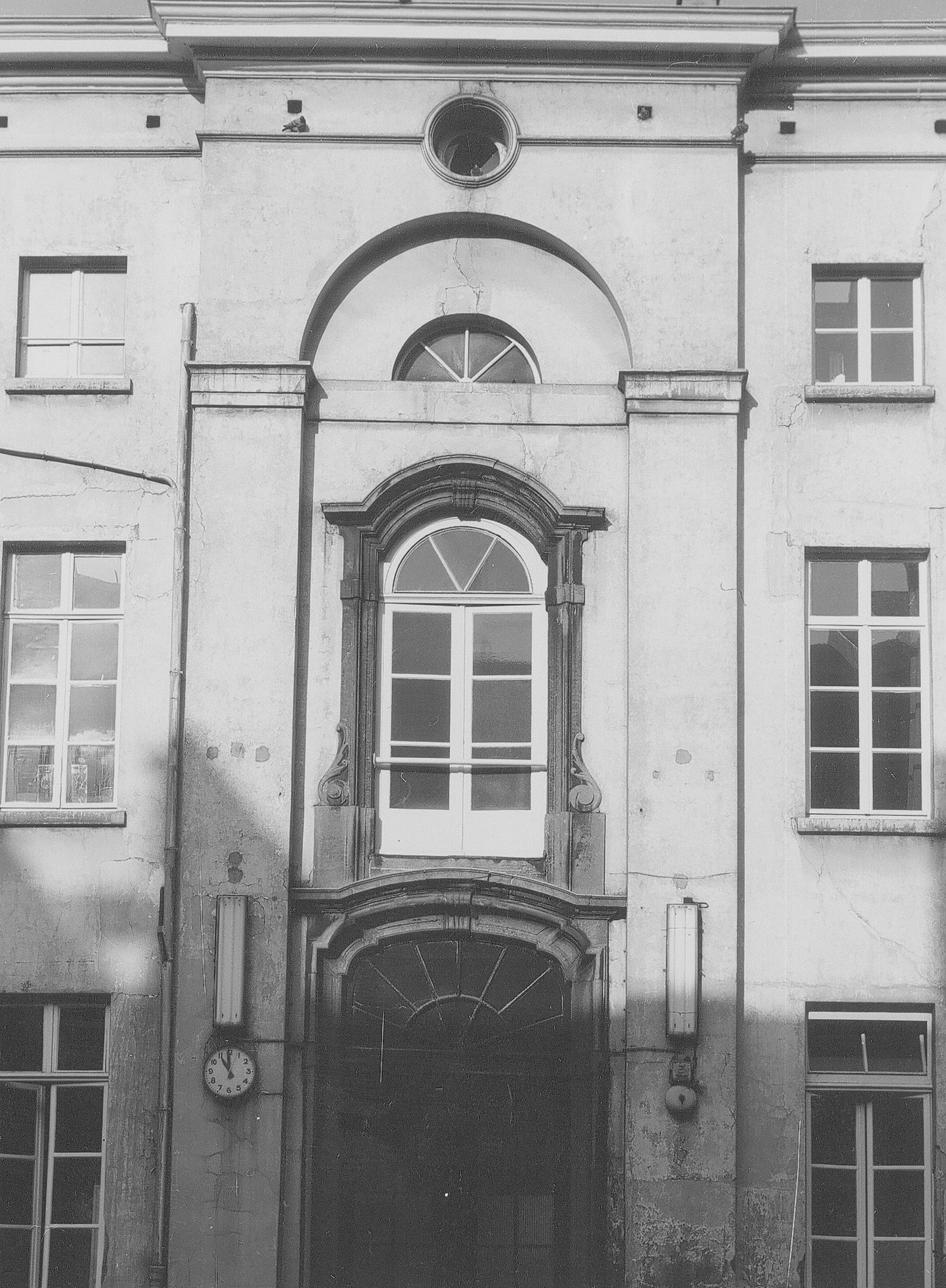
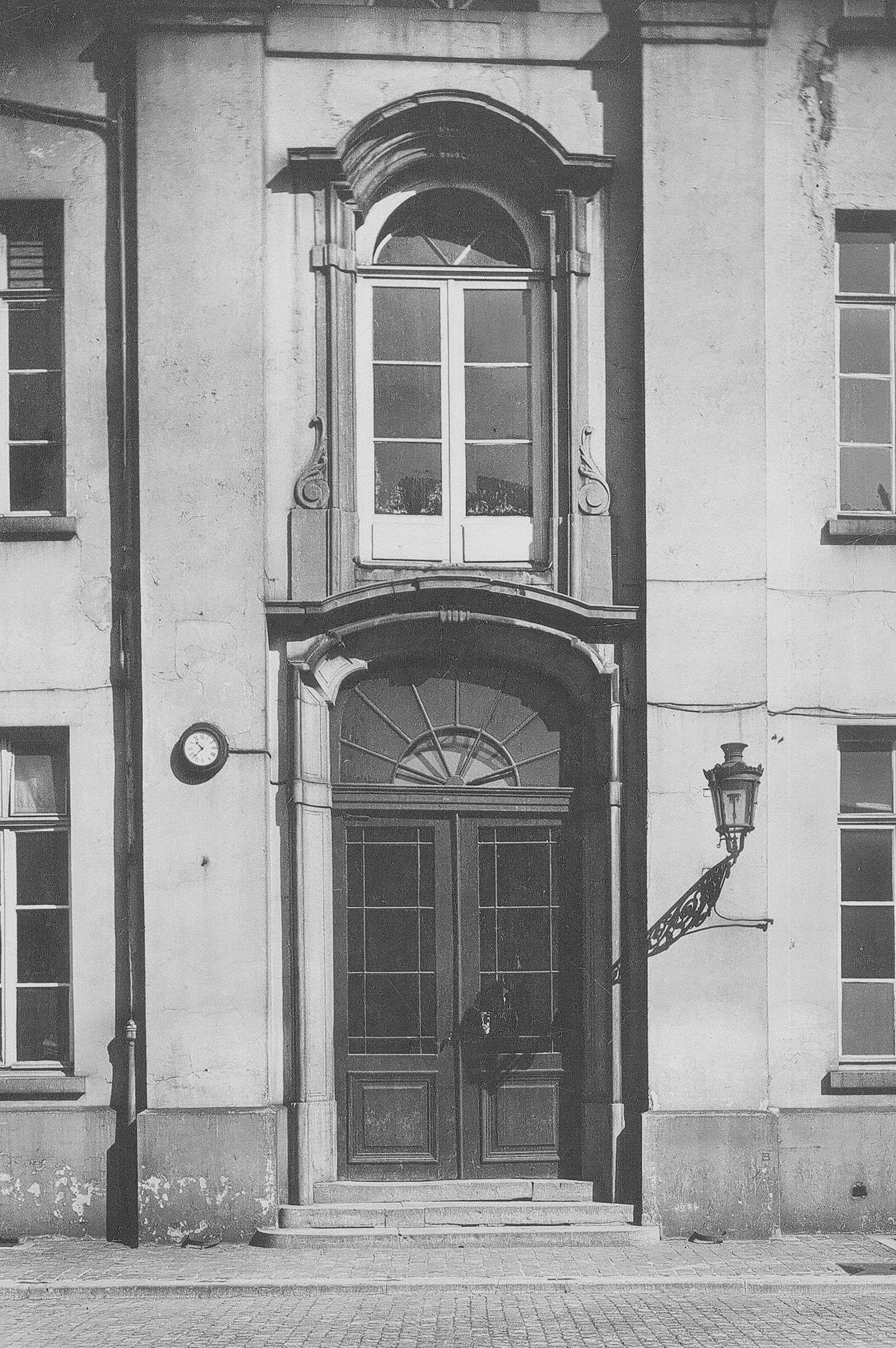
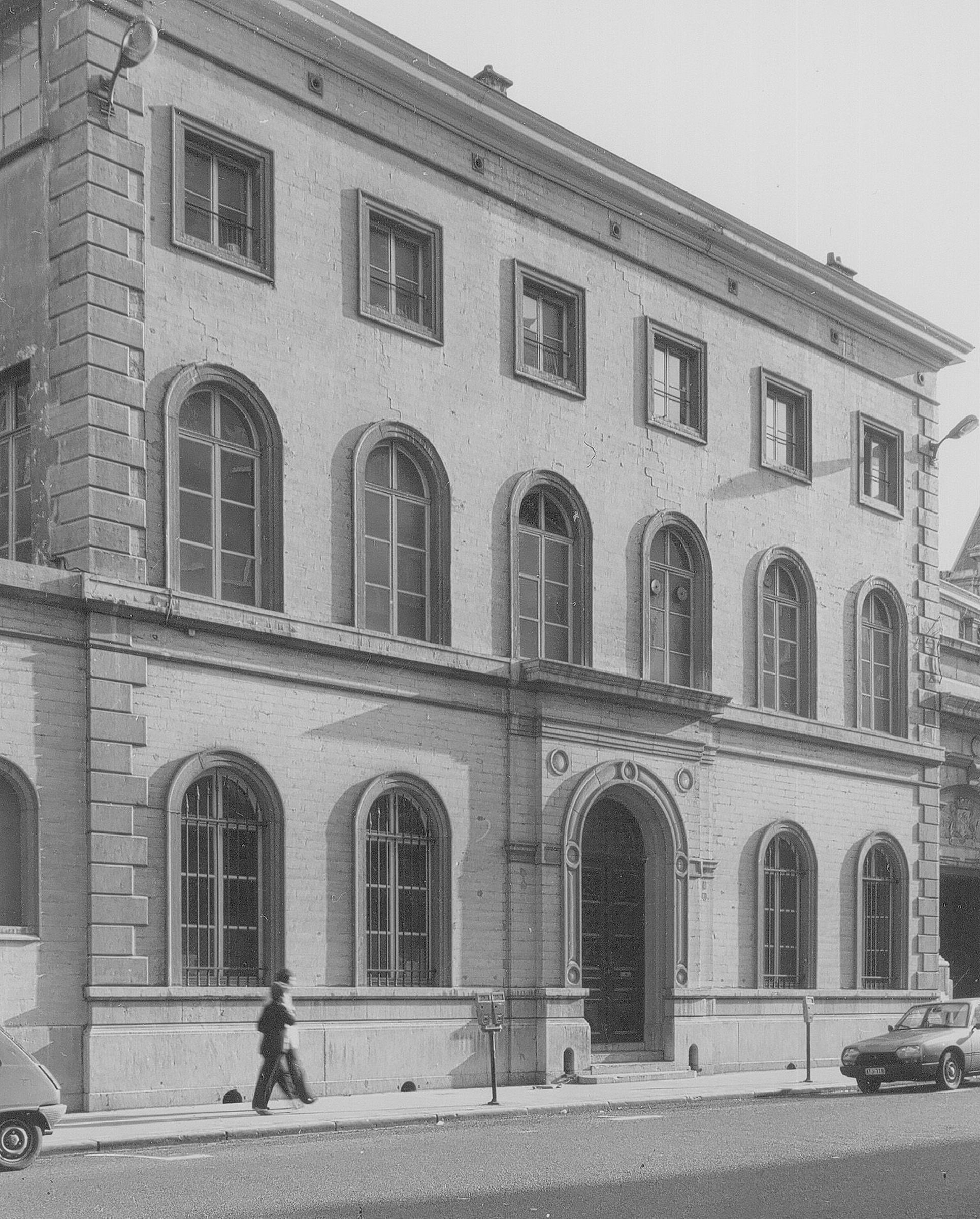
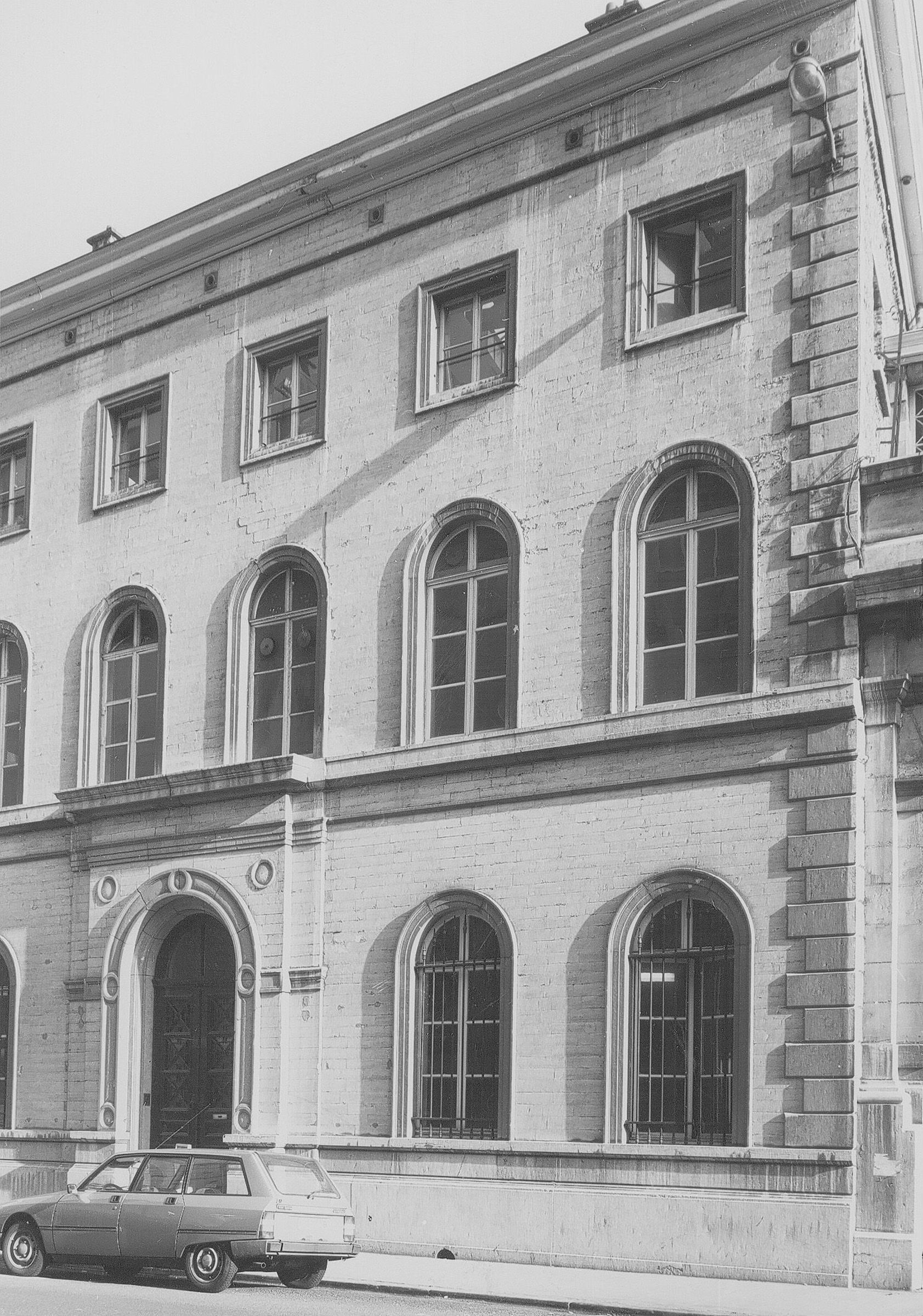
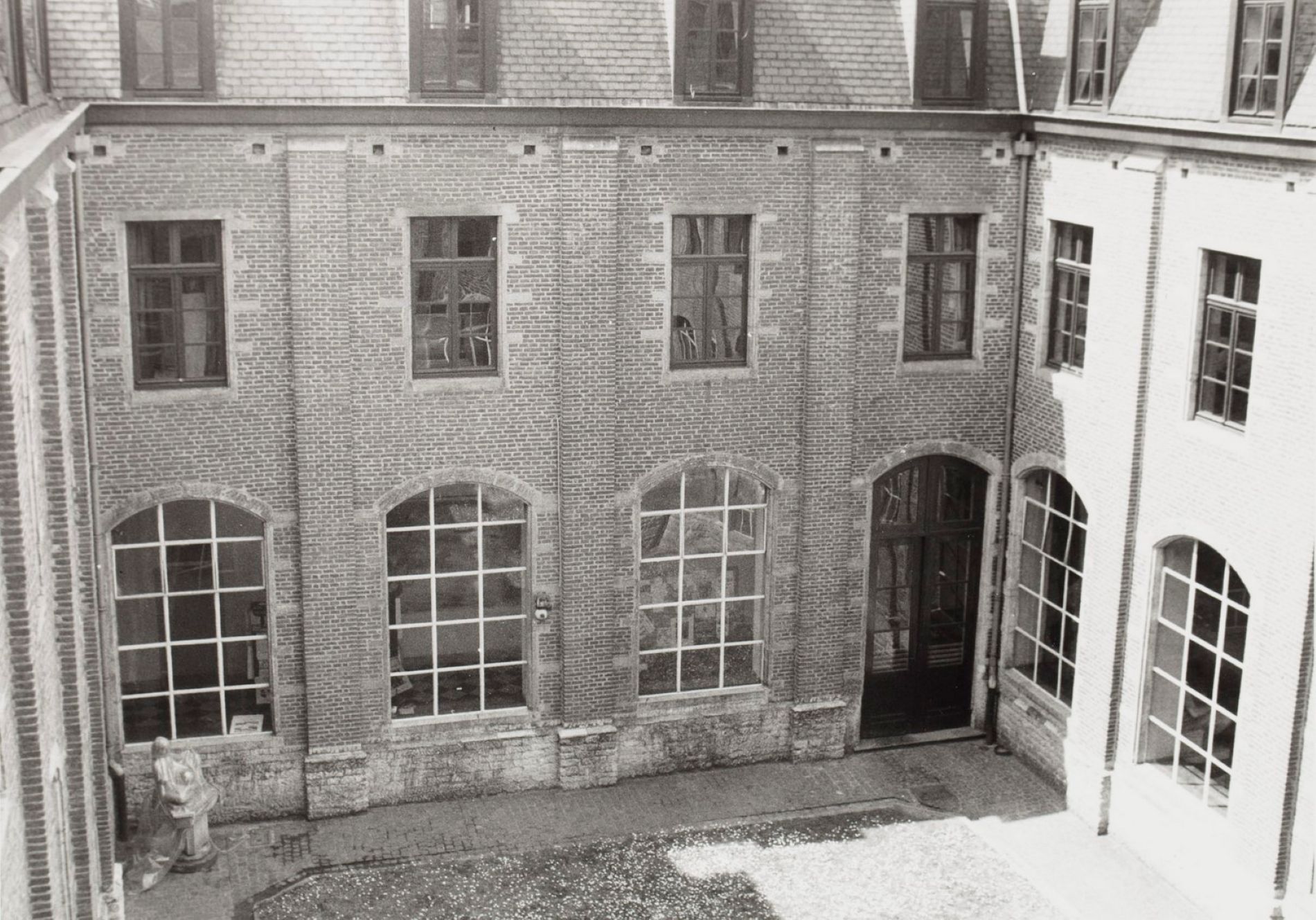
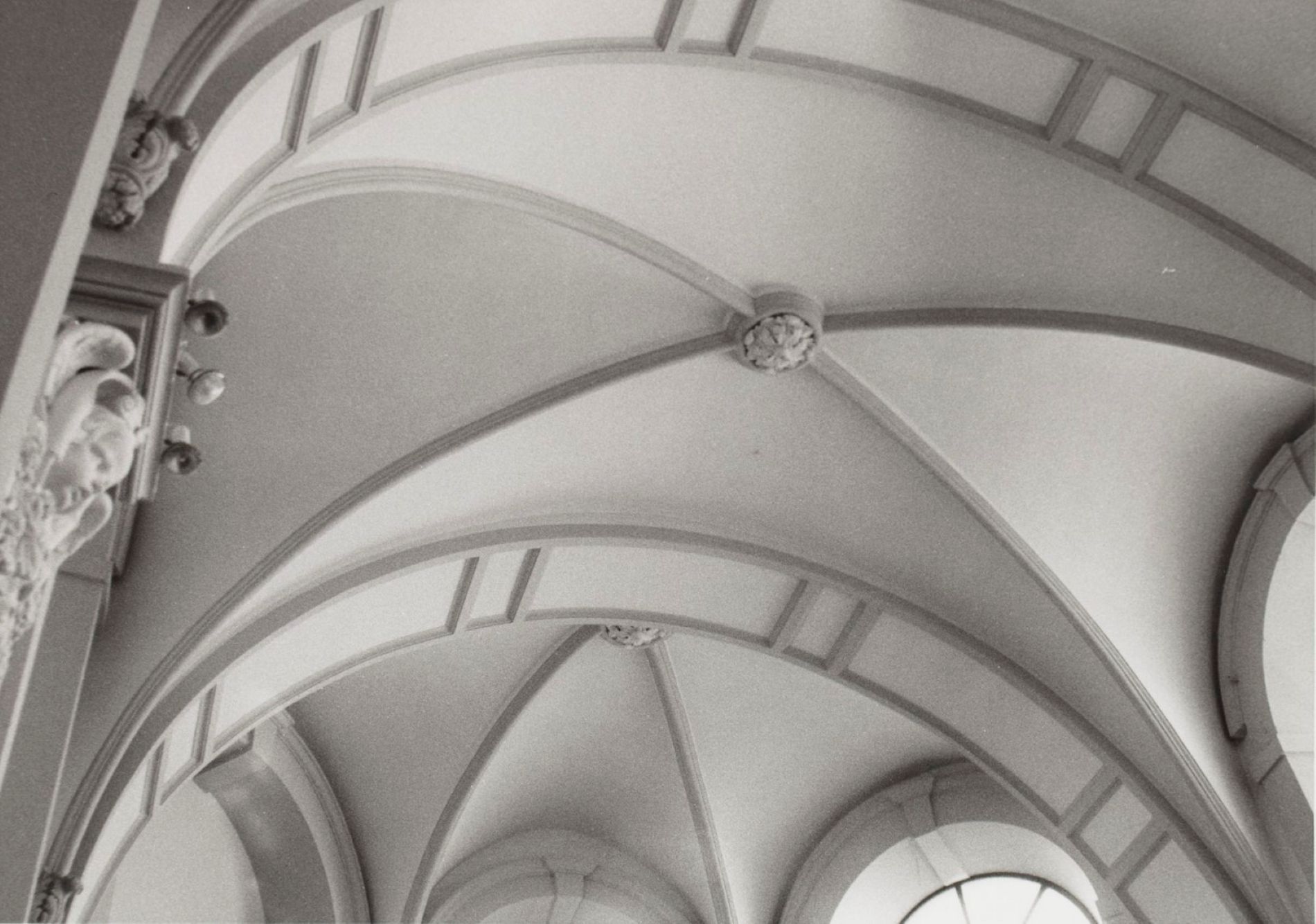
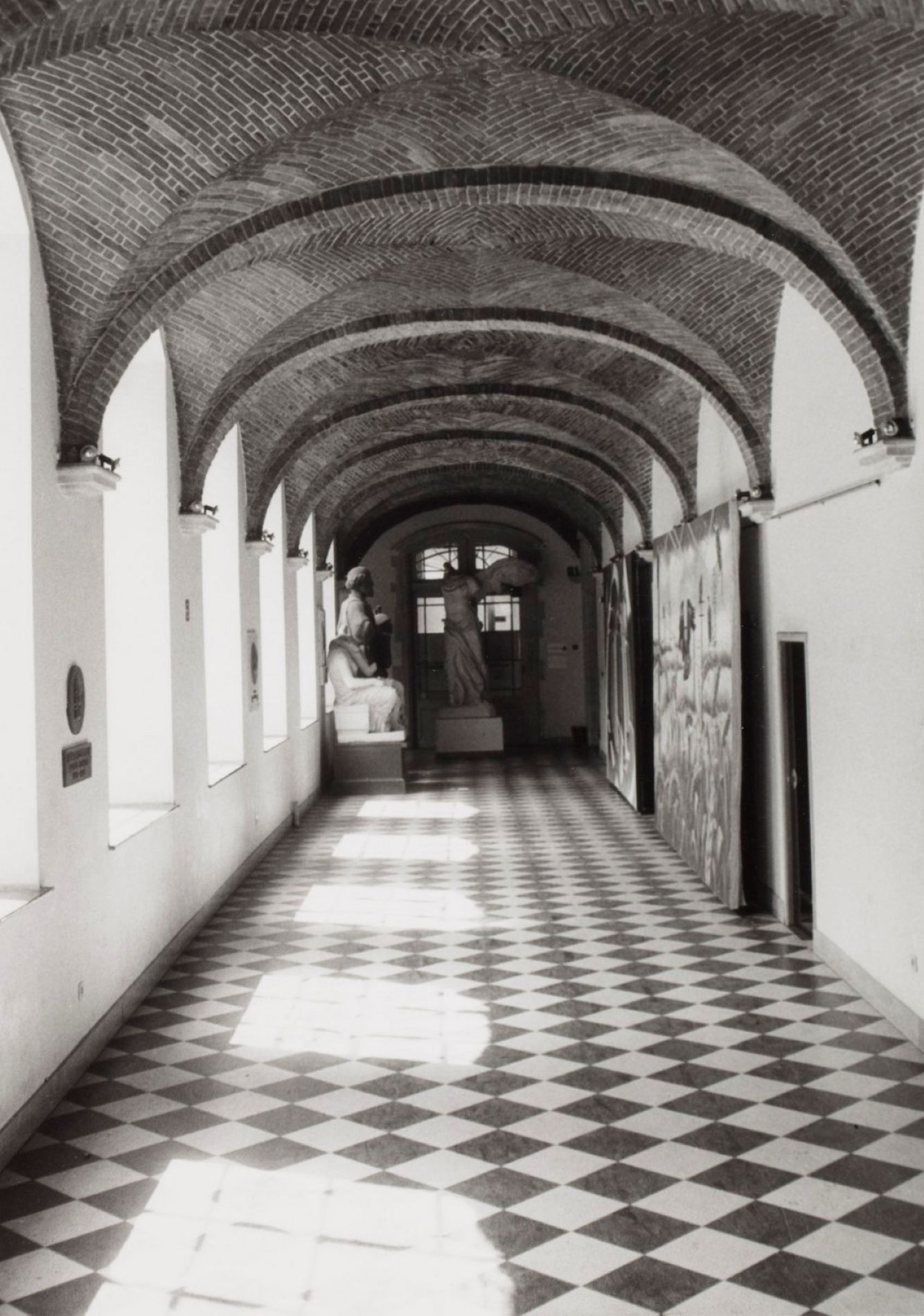
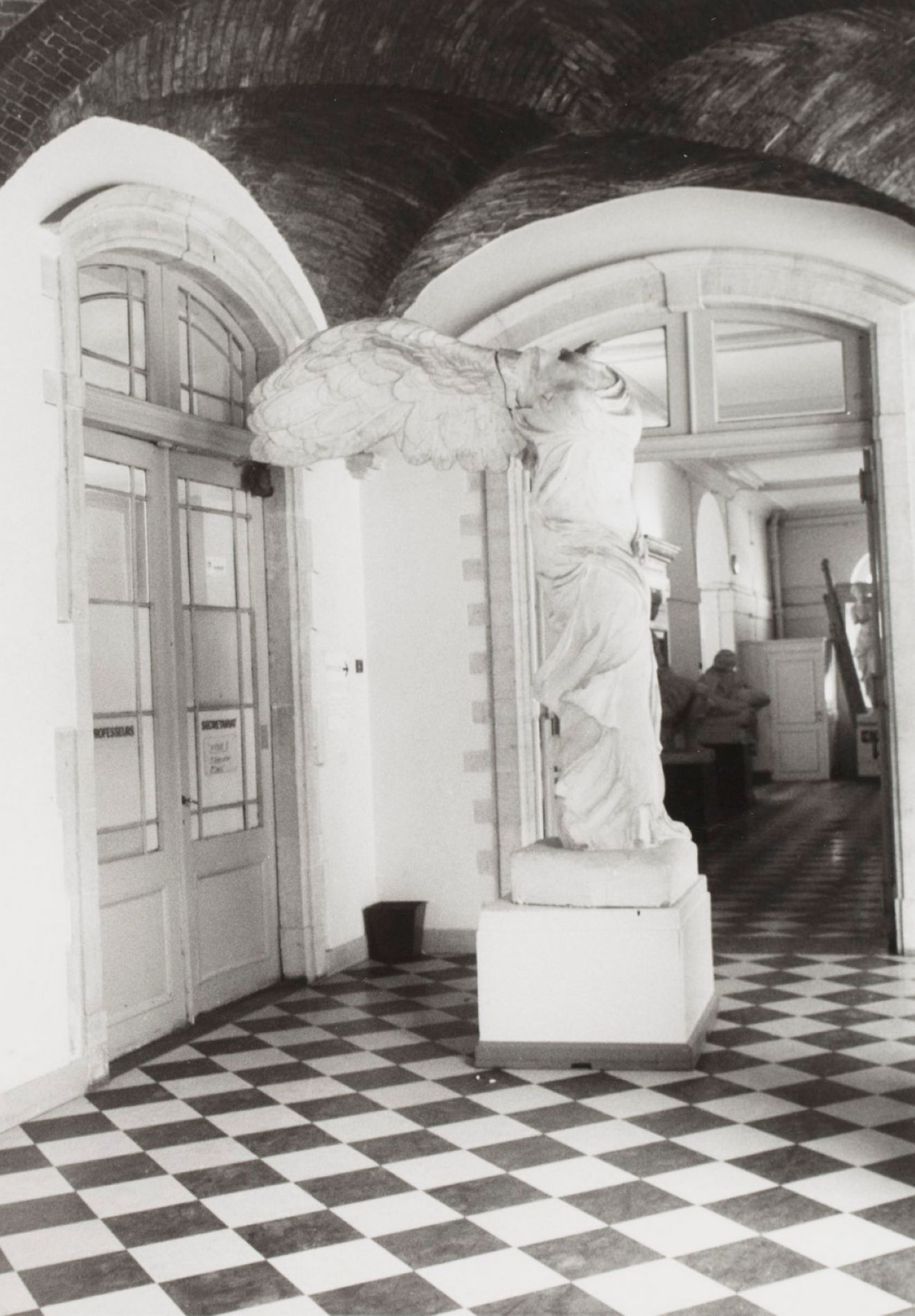
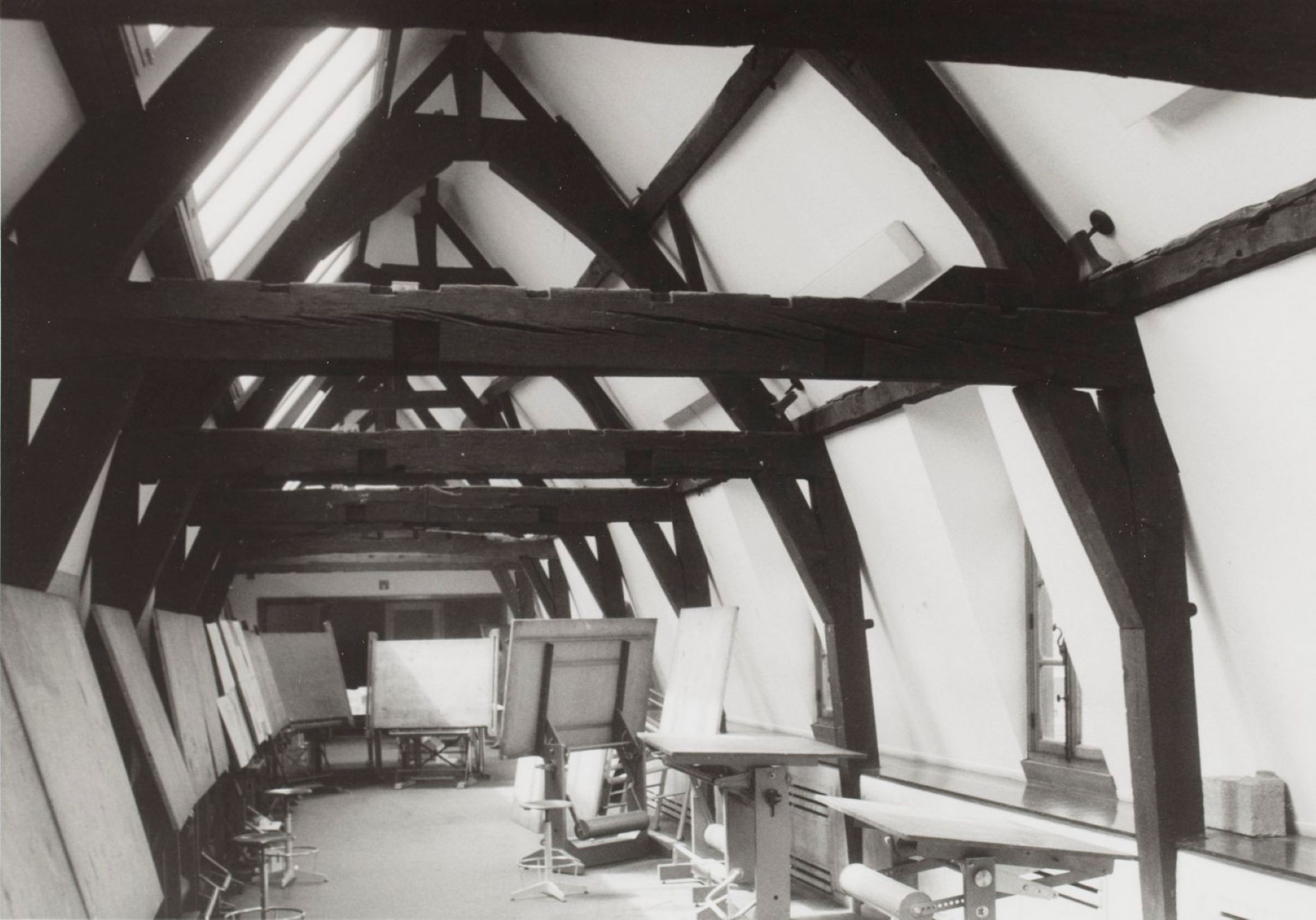
However, the original Bogaardenklooster has not entirely disappeared. If you enter the academy, you will find yourself in the only square cloister with brick cross-vaults remaining in all of Brussels. The chapel choir from 1701 still stands, though it has been repurposed as a school hall. Even the southern garden wing, built from the lottery winnings of 1752, remains visible, its graceful Louis XV lines a stark contrast to the functional 19th-century street outside.
Note: I have approached the Académie Royale des Beaux-Arts several times by email in French (because it is the only language they are willing to communicate in and which I am also fluent in), writing first to their communications and marketing department, then to their whole administrative unit including their headmistress. None of them bothered to respond. I went personally to their reception only to be treated with contempt and petulance. So far, in all my contacts for this project, I was never met with such haughty attitude, not least from an educational institute. Therefore, I regret to say that I have not been able to procure current photos of the remains of the Bogaardenklooster nor provide an update of their state of preservation these days.
Sources:
Vannieuwenhuyze, B. (2011) “Brussel, de Ontwikkeling van een middeleeuwse stedelijke ruimte.” Amsterdam: Amsterdam University Press.
Henne, A. Wauters, A. (1845) “Histoire de la ville de Bruxelles. Volume I-III” Brussels: Librairie Encyclopédique de Périchon.
Hymans, L.S. (1884) “Bruxelles à travers les âges” Bruxelles : Bruylant-Christophe
Rombaut, J-A. (1777) “Bruxelles illustrée, ou description chronologique et historique de cette ville.” Brussels: Chez Pauwels.
Bonenfant-Feytmans, A.M. (1959) “Le sort du couvent des Bogards à Bruxelles depuis la fin de l’ancien régime” in (Cahiers Bruxellois, 1959, Tome IV, 3-4, p. 295-317). Brussels: Archives Ville de Bruxelles.
Bastiaensen, J. (2016) “Waar woonde Pieter Bruegel de Oude in Brussel?” in (OKV 2016.3). Brussels: OKV.
Goffin, J. (2016?) “Où résidait Pieter Bruegel l’Ancien à Bruxelles ?” (translation and notation of Bastiaensen). Brussels: bruges-la-morte.net
https://nl.wikipedia.org/wiki/Begarden
https://nl.wikipedia.org/wiki/Bogaardenklooster_(Brussel)
https://nl.wikipedia.org/wiki/Koninklijke_Academie_voor_Schone_Kunsten_van_Brussel
https://monument.heritage.brussels/nl/buildings/31482
https://fr.wikipedia.org/wiki/Rue_des_Bogards
https://collections.heritage.brussels/nl/institutions/37
https://discoverbrussels.wordpress.com/2017/02/11/pieter-breugel-de-oude/
https://www.okv.be/artikel/waar-woonde-pieter-bruegel-de-oude-brussel
https://en.wikipedia.org/wiki/The_Beggars
https://nl.wikipedia.org/wiki/De_kreupelen
- Van Deventer, J. (1550-1565) “Atlas of the city of the Low Countries : 73 minutes between 1550-1565 on orders of Emperors Charles V and Philip II” KBR (image)
- Braun, G, Hogenberg, F. (1572-1617) “Civitates orbis terrarum” Universiteitsbibliotheek Utrecht (image)
- de Tailly, M., van der Horst, N., Santvoort, A. D. (1640) “Bruxella nobilissima Brabantiae civitas anno 1640” KBR (image)
- Laboureur, J., Van der Baren, J., Harrewijn, J. (1695) “Bruxella Nobilissima Brabanti Civitasae” Bibliothèque Nationale de la France (image)
- Possible location of Pieter Bruegel I’s house on Braun, G, Hogenberg, F. (1572-1617) “Civitates orbis terrarum” Universiteitsbibliotheek Utrecht (image)
- Possible location of Pieter Bruegel I’s house on de Tailly, M., van der Horst, N., Santvoort, A. D. (1640) “Bruxella nobilissima Brabantiae civitas anno 1640” KBR (image)
- Bruegel, P. (the Elder). (1568) “The Cripples / The Beggars” Paris: Louvre Museum (image)
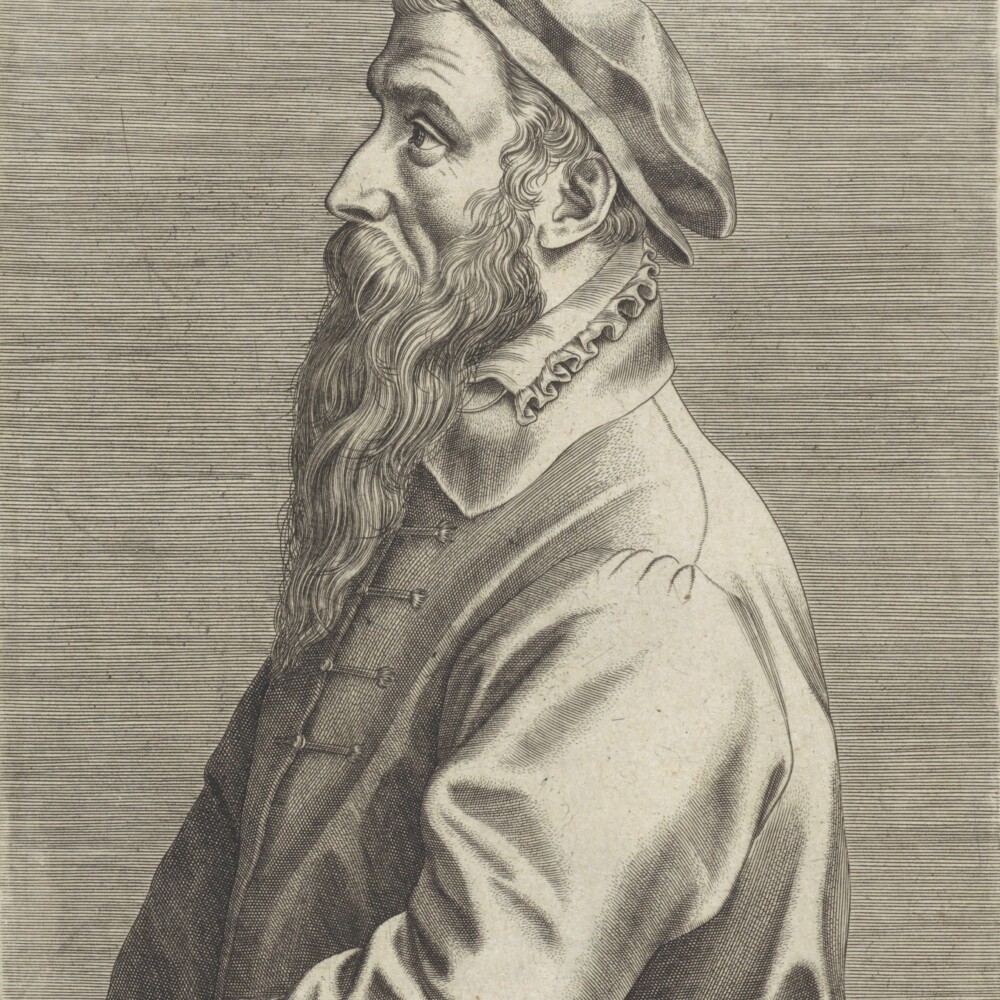
- Wierix, J. (1572) “Portret van Pieter Bruegel de Oude” Amsterdam: Rijksmuseum (image)
- Unknown. (1600-1699) “Weiß Geistbrüder oder Bogarden” (image)
- Académie Royale des Beaux Arts (1985) “Académie royale des Beaux-Arts de Bruxelles, 275 ans d’enseignement, Bruxelles, 1987.” Brussels (image)
HOW IT LOOKS LIKE TODAY
Click on the zoom icon to view the full size.