ABOUT
On the spot of today’s Beursplein (Place de la Bourse), Anspachlaan (Boulevard Anspach) and the former Beurs (Bourse) [Stock Exchange], stood the earliest monastic order of Brussels – the Order of Saint Francis. Known in Dutch as the “Minderbroedersklooster”, this Franciscan monastery existed from 1238(?) right until its dissolution in 1796. You can still see some of its ruins underground in the Bruxella 1238 museum.
Origin
The Establishment of the Franciscan Order: Where the Birds Sing
St. Francis of Assisi died in 1226. According to some historical sources, like Gramaye, it was noted that the first Franciscan friars arrived in Brussels as early as 1227/1228. These mendicant friars, also known as the ‘Friars Minor‘, were granted a piece of land along the bank of the River Zenne. As the land was filled with beech trees and bushes where birds made nests, the friars first established themselves by building a small Marian chapel called ‘Vogelenzangkapel‘ (Chapel of the Bird Song). It was said by Henne et al that the spot of Marian worship could have existed before the Franciscans.
They were the first religious order of their kind to settle in the rapidly growing city on the River Zenne. Their dynamic style of public preaching and their aid to the poor were met with great public enthusiasm and veneration. Soon, the Franciscans sought to build their church and monastery around the chapel.
However, their growth soon led to a significant dispute. When they wished to build a chapel within their monastery grounds, the powerful chapter of the Collegiale kerk van Sint-Michiel en Sint-Goedele (Church of St. Michael) opposed them, fearing it would harm the interests of the nearby Sint-Niklaaskerk (St. Nicholas Church). The conflict escalated through various ecclesiastical courts until Duke Hendrik II of Brabant (1207-1248) intervened. He proposed arbitration to resolve the matter, but the Franciscans’ resistance to this process displeased the Duke, leading him to impose restrictions on their activities.
Despite this rocky start, the original Minderbroedersklooster was built in 1238, and it grew to become a central institution in the city life of Brussels. It was much more than just a religious community; it contained a hospice for the sick, a school, a library, and its own brewery and cooperage. The mendicant order also functioned as the city’s fire service, with the monastery housing a storage facility for fire hoses. The monastery’s bell, which marked a curfew, was so familiar to Brussels’ inhabitants that they referred to the hour as ‘broedertijd‘ (brothers’ time).
The order’s standing was further cemented by the patronage of the Dukes of Brabant once they moved their capital from Leuven to Brussels, starting with Duke Jan I (1252-1294). In fact, Jan I held them in such high regard that he chose to be buried in their church, a privilege later extended to other members of the ducal family. Subsequent rulers, including Duke Jan III of Brabant (1300-1355), Duke Philip the Good of Burgundy (1396-1467), and his son Duke Charles the Bold (1433–1477), confirmed generous gifts to the monastery, such as an annual allowance of wood from the Sonian Forest and the bestowal of a fine organ, solidifying the Minderbroedersklooster’s importance for centuries to come.
What's so special about this place?
Through Plague and Pestilence
The monastic chronicles record an act of pious zeal during a plague outbreak in Brussels in 1489, displayed by a Franciscan brother named Thierry of Munster (although Brother Thierry was in fact not a member of the local Minderbroedersklooster community). The friars of the Minderbroedersklooster did, however, prove their dedication to the city during a much later and devastating epidemic. From 1667 to 1670, when the plague raged within the city walls, they stayed to minister to the population and paid a heavy price, suffering sixteen deaths among their own brothers.
The Recollect Reform
The early 16th century was a period of significant turmoil for the Franciscan order, marked by a painful internal struggle. The core issue was a perceived relaxation of the original strict rules of poverty, which led to a series of reforms aimed at restoring religious rigour.
This movement directly impacted the Brussels monastery. Under a degree of gentle coercion, the Minderbroedersklooster was brought into the fold of the stricter Recollect reform in 1517. This was part of a wider pattern, where the existing Friars Minor were often replaced by Observant factions; similar reforms had already taken place in Mechelen in 1447 and Leuven in 1499.
In Brussels, as the Duchy of Brabant was part of the Holy Roman Empire, this transition was enforced by a bull from Pope Alexander VI, secured through the influence of Holy Roman Emperor Maximilian I and his confessor, the French Recollect friar Jean Glapion. This official decree forced the opposing friars to withdraw to their conventual brothers in the province of Cologne, effectively removing them from the city.
Ironically, the new Recollects themselves soon strayed from their strict principles. As a result, they were replaced just a year later, in 1518, by friars of the Observance, closing a brief but turbulent chapter in the monastery’s long history.
But the name stuck. Up until the closure of the Minderbroedersklooster, it had become known as the ‘Klooster van de Minderbroeders-Recoletten‘ (Monastery of the Recollect Friars Minor).
16th century: Desecration and Survival in the Protestant Troubles
The Protestant-Catholic religious conflicts of the 16th century, particularly the Geuzen (‘beggars’) Revolt within the Eighty Years’ War (1566/1568–1648), left a deep and violent mark on Brussels and its religious institutions, including the Minderbroedersklooster. The monastery’s role as a significant civic and religious site made it a prime target during periods of upheaval.
Found guilty on counts of treason, Earl Lamoraal van Gavere of Egmont and Earl Filips van Montmorency of Horne, were beheaded on Brussels’ Grote Markt on 5 June 1568. The third accused was Willem of Orange who escaped in time. It was at the Minderbroedersklooster where the bodies of the two Protestant earls were brought into and embalmed. This grim political spectacle underscoring the tense climate where the Franciscan friars were deemed complicit was well remembered by the rebels.
A decade later, during the Calvinist Republic of Brussels (1577-1585), the unrest turned directly upon the monastery itself. As radicalism intensified in 1579, the monastery buildings and the provincial house were stormed. The attack was brutal; the high choir, containing the tomb of Duke Jan I, was destroyed, and a Scottish friar who had sought refuge there was slaughtered at the foot of the altar.
The Calvinists then took over the complex, establishing their consistory in the cloister. The systematic demolition of the church began on 17 August 1583, though only the choir was fully razed. In a final act of desecration, the nave was repurposed for industrial use, housing three horse-powered mills.
Following the Habsburg reconquest of Brussels in 1585, the church was found in a deplorable state. While the church itself was officially restored by 28 May 1585, the full restoration of the entire convent proceeded slowly for years, hampered by widespread public poverty and scarce resources.
Singing like Birds: The Most Beautiful Gregorian Chants in the Habsburg Empire
In the later period of their history, the Franciscan friars of the Minderbroedersklooster earned widespread renown for their exquisite and precise performance of Gregorian chant. Perhaps in relation to their founding Kapel van Onze-Lieve-Vrouw van Vogelzang (Chapel of Our Beloved Lady of Bird Song). Their reputation for musical excellence was so esteemed that it was said the governor of Habsburg Netherlands (1598-1621) Archduke Albert VII of Austria, and Archbishop of Mechelen (1621–1655) Jacobus Boonen preferred the pure, unadorned sound of their voices to any instrumental music or organ accompaniment.
The Minderbroedersklooster was also a home to friars of significant political and diplomatic stature, who were distinguished by their talents beyond the cloister. Among them were figures such as Father Jan Neyen (1568-1612), who played a pivotal role in negotiating the Twelve Years’ Truce with the United Provinces in 1609, and Father Andrés de Soto (1552/3–1625), who served as confessor to the Infanta Isabella. This unique blend of spiritual devotion, artistic mastery, and political influence cemented the Minderbroedersklooster’s status as a central pillar in the religious and cultural life of Brabant.
1618: The Coming of the Shrine of the Martyrs of Gorcum
The Minderbroedersklooster became a pivotal site for a major Catholic relic in the early 17th century, inextricably linking its history to the Martyrs of Gorcum. This event occurred against the backdrop of the Eighty Years’ War, a conflict which saw the Protestant northern provinces break away from the Catholic Habsburg Empire to form today’s Kingdom of Netherlands.
The story began in 1572, when the South Holland town of Gorcum was captured by the Protestant ‘Watergeuzen’ (sea beggars). In a brutal act of religious persecution, nineteen Catholic clergy — including eleven Franciscan Recollects — were seized, tortured in Den Briel, and executed. They passed into history as the ‘Martyrs of Gorcum‘.
In 1616, with the permission of Archbishop of Mechelen (1621–1655) Jacobus Boonen, the Franciscan friars, led by Commissioner-General Andrés de Soto, orchestrated the clandestine transport of the martyrs’ relics from Brielle and brought to the Minderbroedersklooster.
Their public enshrinement on 18 October 1618 was a momentous civic and religious event. A grand procession, attended by the two co-governors of Habsburg Netherlands (1598-1621) Archduke Albert VII of Austria and his wife Archduchess Isabella Clara Eugenia, the entire chapter of Collegiale kerk van Sint-Michiel en Sint-Goedele, government officials, guilds, and confraternities, drew a crowd of over five thousand. The subsequent eleven-day solemnity saw the church constantly packed, a fervour partly attributed to the fact that one of the martyrs, Father Francis Koning, was a native of Brussels.
The archdukes’ deep affection for the Recollects was further demonstrated when Albert expressed a wish to be buried in a Franciscan habit, and the Infanta Isabella publicly took the habit of the Third Order in 1624.
Following the dissolution of the monastery during the French Occupation (1795–1814), the relics found a new home in the nearby Sint-Niklaaskerk. The current gilded copper shrine was crafted in 1886 in the workshop of goldsmith Franz-Xaver Hellner, a gift from the Archbishop of Mechelen.
1634: The Imprisonment of Jan Baptist van Helmont
The Minderbroedersklooster served not only as a centre of piety but also, in 1634, as a prison for one of Brussels’ most brilliant and controversial minds: Jan Baptist van Helmont (1580–1644). A renowned chemist, physiologist, and physician, van Helmont found himself at the centre of a dangerous conflict between emerging scientific ideas and established religious authority.
If you did not know Jan Baptist van Helmont, he gave us the word “gas” (from the Greek word chaos) and first discovered carbon dioxide which he called “gas sylvestre” given off by burning charcoal.
The trouble began with the unauthorised publication of his work, “De magnetica vulnerum curatione” (“On the Magnetic Healing of Wounds”), in Paris in 1621. In it, he argued that the healing power of relics could be explained by magnetism, drawing on the theories of Paracelsus. While the book was well-received in some circles, it alarmed theologians and Galenist physicians. The Jesuit Roberti spearheaded a campaign against it, leading to 24 propositions in the book being condemned. It was placed on the Church’s Index of forbidden books, and van Helmont was prosecuted by the ecclesiastical tribunal in Mechelen.
For years, his prominent social status afforded him some protection. However, in the heightened climate following the condemnation of Galileo in 1634, the case was reopened. On 3 March of that year, the Archbishop of Mechelen issued a decree for his arrest. The promoter of the officiality, assisted by the bailiff and two aldermen, seized van Helmont, his papers, and all his books.
He was imprisoned within the walls of the Minderbroedersklooster. His confinement was brief but severe; he was soon released after his father-in-law posted an exorbitant bail of 6,000 florins, allowing him to live under house arrest. The matter was finally settled later that year through the direct intercession of Marie de Medici.
The restrictions on him remained crushing. He was forbidden from publishing, and the many texts he had written between 1599 and 1634 were confiscated. The persecution was so intense that in 1635 he was denied permission to visit two of his own children who were dying of the plague.
Van Helmont only regained a measure of freedom from 1638 onwards, though he never recovered his confiscated manuscripts. The persecution was officially halted in 1642, and he received an printing authorisation for a work on fever (“Febrium doctrina inaudita“) two years before his death from a lung disease in 1644. His posthumous rehabilitation was granted to his widow by the Archbishop of Mechelen in 1646.
Destruction in the 1695 French Bombardment of Brussels
The catastrophic French bombardment of Brussels in 1695 dealt a devastating blow to the Minderbroedersklooster. The convent was almost entirely destroyed, and with it, the invaluable provincial archives were lost to the flames — an irreplaceable loss for the Franciscan community’s historical memory.
In the aftermath, the displaced friars were forced to seek refuge wherever they could find shelter. Some stayed with friends, while others were dispersed to monasteries that had been spared by the fire, including those of the wealthy and poor nuns, the Annonciades in Brussels, and their sister houses in the cities of Aalst and Ledeberg in the neighbouring County of Flanders.
Displaying remarkable fortitude, the guardian and the eldest monks refused to abandon their home entirely. They chose to remain amidst the smouldering ruins of their monastery, constructing makeshift cells to endure the harsh winter that followed.
Their determination laid the foundation for a rapid recovery. As early as 1696, with the crucial assistance of a large contingent of lay brothers from what is now French Flanders (in the Kingdom of France), the arduous task of rebuilding the monastery buildings began. The very next year, their church rose from the ashes, a powerful symbol of the community’s resilience and its enduring presence in the heart of Brussels.
How did it look like?
The Catholic Restoration in Splendour
To take a snapshot of how the Minderbroedersklooster looked like, let us first go back to the Habsburg reconquest of Brussels in 1585, after the devastating Calvinist Republic.
The turn of the 17th century marked a golden age for the Minderbroedersklooster, driven by the Catholic restoration under the Archdukes Albert and Isabella. In 1599, the Spanish Franciscan Recollect friar Andrés de Soto, who became Archduchess Isabella’s confessor, arrived in Brussels, providing influential leadership. Under his guidance and with ducal patronage, the monastery was not only restored but significantly enhanced. The high choir was rebuilt in the Baroque style, and a new Baroque monument with recumbent figures (gisants) was erected to replace the destroyed tomb of Duke Jan I of Brabant and his wife, Margaret.
The Layout of the Monastery
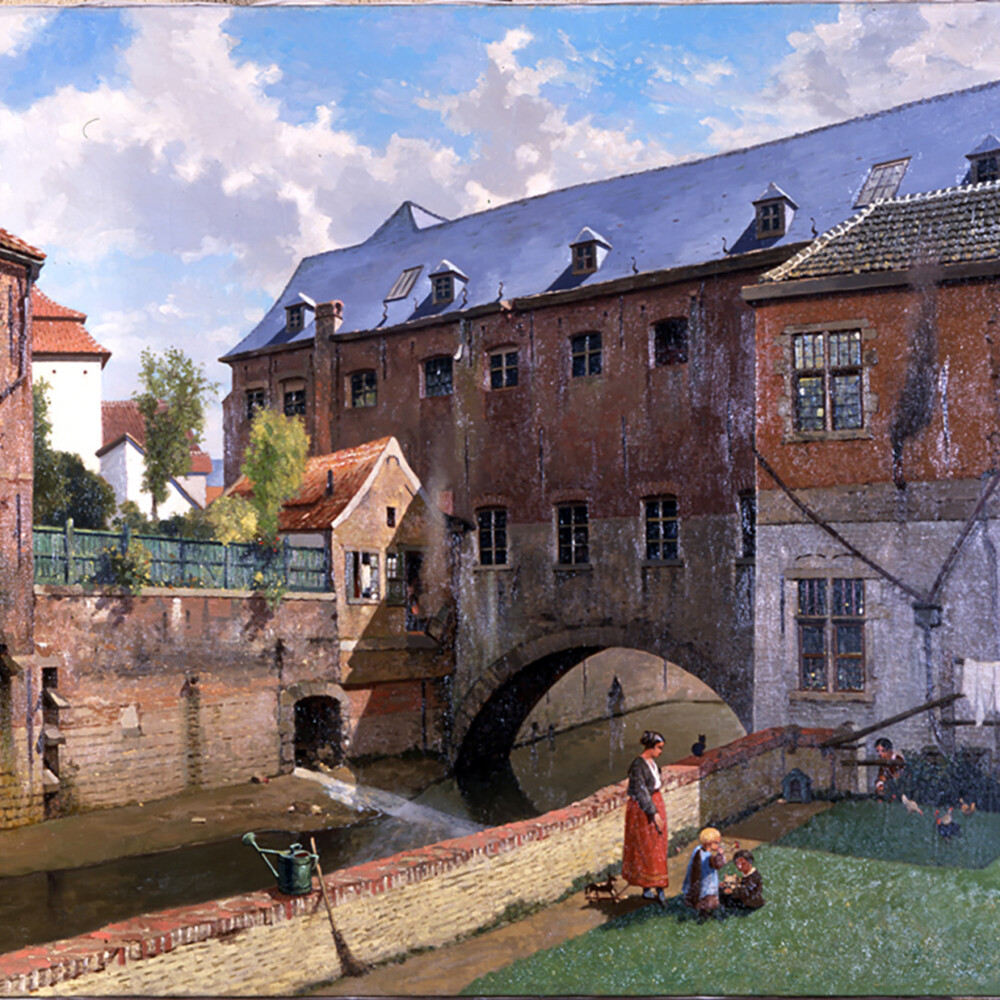
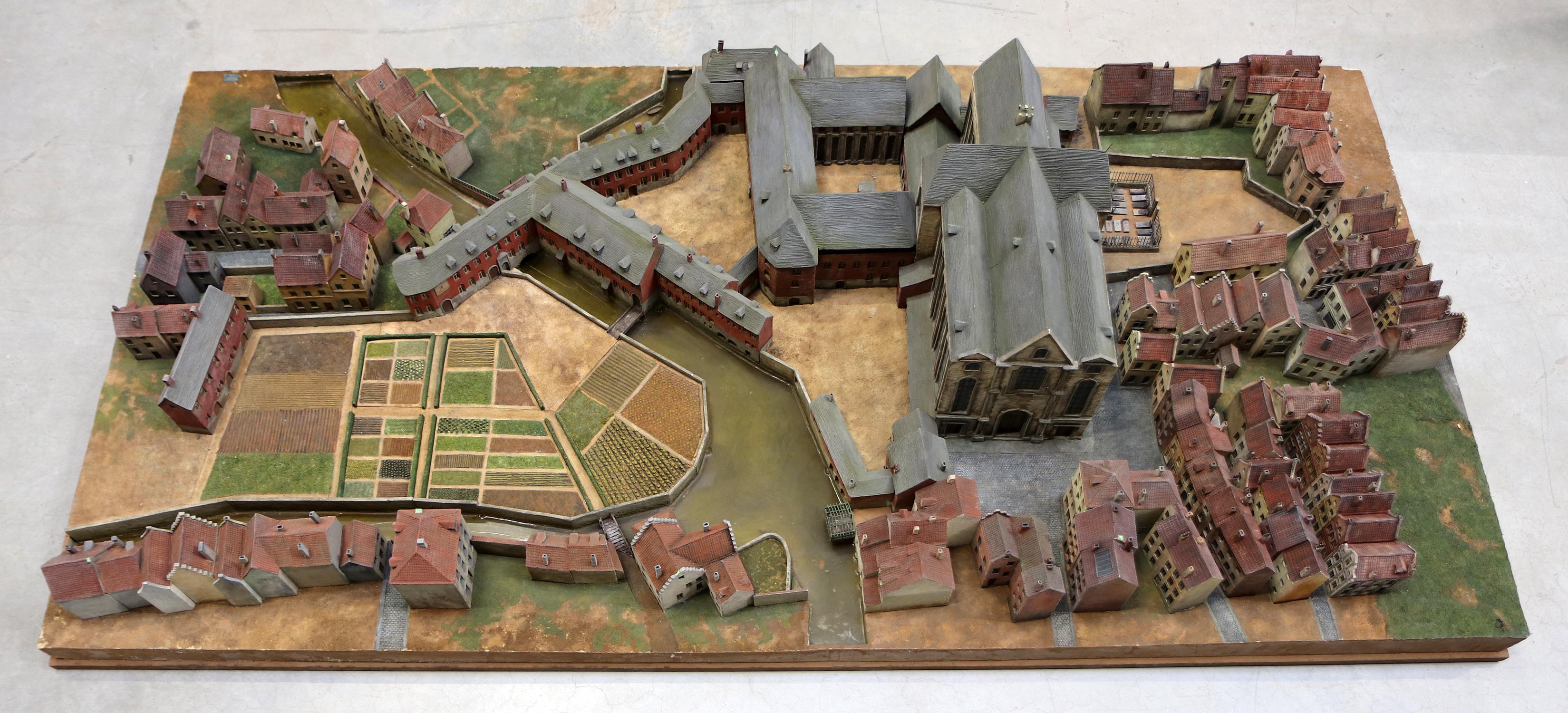
The convent was a large complex nestled in the urban fabric. Bordered by the Zenne River to the west, it was enclosed by the Kiekenmarkt (Chicken Market) to the north, the Sint-Niklaaskerk and the Pand to the east, and a small square to the south. It was accessible through three entrances: one in the Vaelbeke alley, one near the Pand, and a main entrance on the Recolletenmarkt. The grounds included two courtyards, a refectory, a dormitory, and a fine library that held 2,500 volumes before the 1695 bombardment. Practical facilities like a brewery (1707) and an infirmary for visiting friars were also established across the river, connected by a bridge that was later rebuilt in stone.
The Church and Its Artistic Treasures
The church itself was a focal point of this renewal. The Calvinist-destroyed chancel was rebuilt as early as 1588, with the nave and cemetery enlarged two decades later. The church was consecrated in 1699 and dedicated to Saint Martin and Saint Catherine. Its interior was a testament to Baroque devotion, adorned with works by notable artists. Wooden statues of Saints Francis and Anthony by Willem Kerckx graced the choir entrance, while paintings by Pannemaeckers lined the nave. The church housed several chapels, including the Onze-Lieve-Vrouw van Gratie (Chapel of Our Lady of Portiuncula, dedicated in 1628 by Lord Johan Kesseleer of Maquette) and the unique Onze-Lieve-Vrouw van Vogelzang (Chapel of Our Lady of the Song of the Birds).
The Tomb of a Duke and the Most Unique Chapel of Bird Song
A point of great pride was the tomb of Duke Jan I of Brabant (c. 1253-1294), the victorious Duke of the Battle of Woeringen and a celebrated poet. He was buried “more teutonico” (a Frankish practice involving the boiling of the corpse). His restored Baroque mausoleum, commissioned by Archduke Albert in 1620, depicted him lying down, his hands clasped on his chest, and wearing the ducal mantle. The following inscription was placed on a copper plate:
POTENTISSIMUS JOANNES I. LOTARING. BRABANT. LIMBUR. DUX, SACRI ROM.
IMP. MARCHIO, IN HASTITUDIO
VULNERATUS OBIT DIE MARTII
ANNO MCCLXXXXIV.
This splendid baroque tomb monument was tragically destroyed in the 1695 bombardment.
Perhaps the most singular feature was the Kapel van Onze-Lieve-Vrouw van Vogelzang (Chapel of Our Lady of the Song of the Birds). The original Vogelzangkapel was lost.
Rebuilt after the bombardment in 1698, the new Vogelzangkapel was known for a most unusual auditory experience: hanging from the ceiling were birdcages, and the songs of the living birds mingled with the organ and plainchant during services, creating a unique and memorable effect. This chapel, with its own confraternity and indulgences, had deep roots, believed to stand on a site of Marian veneration predating the city’s 1040 walls.
This period represented the monastery at its architectural and cultural zenith, a centre of art, power, and popular devotion before the trials of the late 17th century.
The Extension Across the Zenne
The Franciscans did not have a garden. But they purchased a large plot of land beyond the River Zenne in 1684, between the Ruyssche-Molen branch of the river and some private properties; the following year, they enclosed it with walls and obtained its amortization by a decree dated May 30. The wooden bridge built at that time to provide access was replaced by a stone bridge in 1714.
You can see this extension in the engraving of Jacobus Harrewijn (1660-1727).
1796: The Final Closure Under French Occupation
Despite having been patiently rebuilt after the 1695 bombardment, the Minderbroedersklooster would not see the dawn of the new century. Its long and tumultuous history, spanning over five and a half centuries at the heart of Brussels, came to a definitive end under the French Revolutionary regime.
On 31 October 1796, the monastery was officially closed by law. The fifty or so Franciscan friars were expelled and dispersed from the city in 1799, their order dissolved. The church and monastic buildings were sold as national goods and systematically demolished, erasing the physical structure from the cityscape.
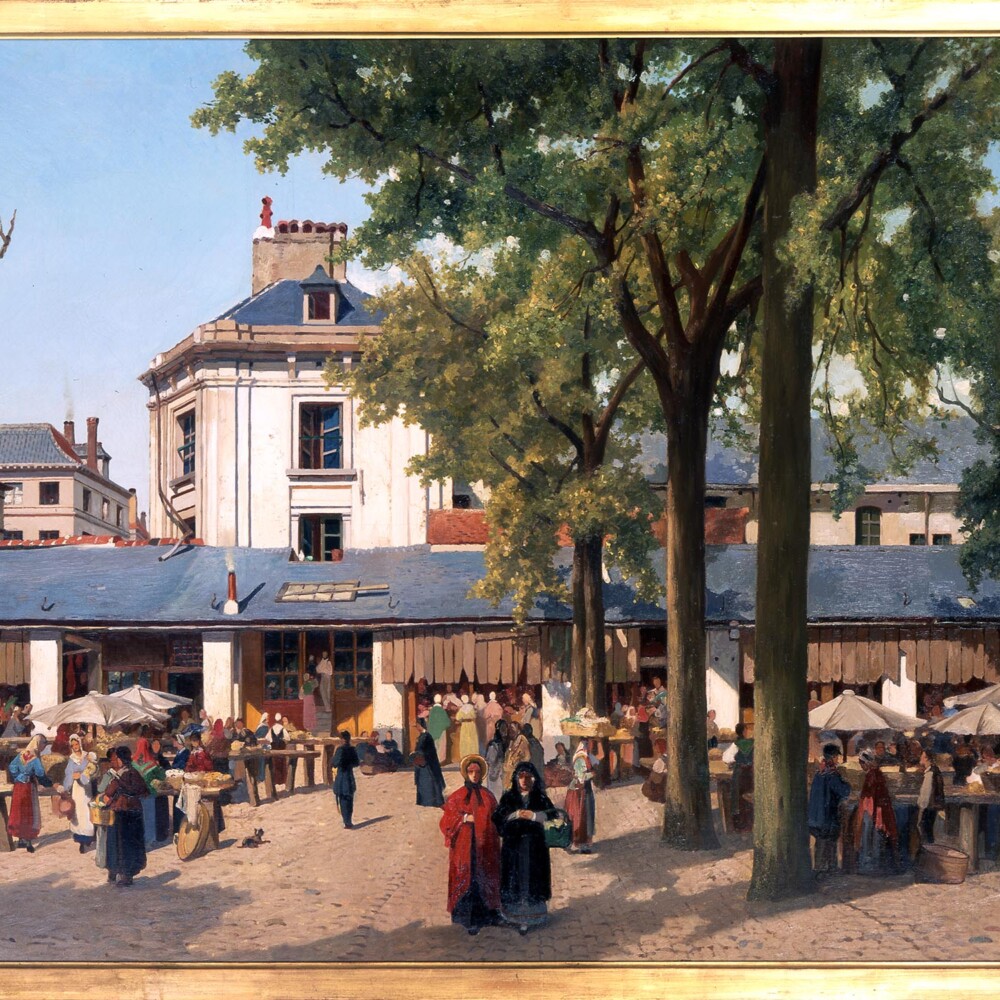
The site was rapidly transformed to serve new, secular purposes. From 1799 until 1871, the vacant plot where the church once stood became the Botermarkt (Butter Market). The urban fabric was rewoven with new streets: the small square beside the church became ‘Rue du Cerfeuil‘, while the ‘Impasse du Vaelbeke‘ was extended through the former cloisters to create ‘Rue au Fer‘. Fragments of the convent, though unremarkable, were reportedly still visible along this new street.
The only sacred element to survive this dissolution was the revered Shrine of the Martyrs of Gorcum, which was transferred for safekeeping to the nearby Sint-Niklaaskerk. Today, the sole testament to the monastery that once stood there is the archaeological site beneath the modern Beursstraat, a silent witness to a vanished world of the Franciscans.
From Botermarkt to Beurs: The Zenne is Covered and a New Brussels Emerges
Following the demolition of the Minderbroedersklooster, the site was repurposed from 1799 as the Botermarkt (Butter Market). However, this was merely an interim chapter. The area was destined for a much grander transformation, one that would utterly reshape the lower town and seal the riverine character of old Brussels.
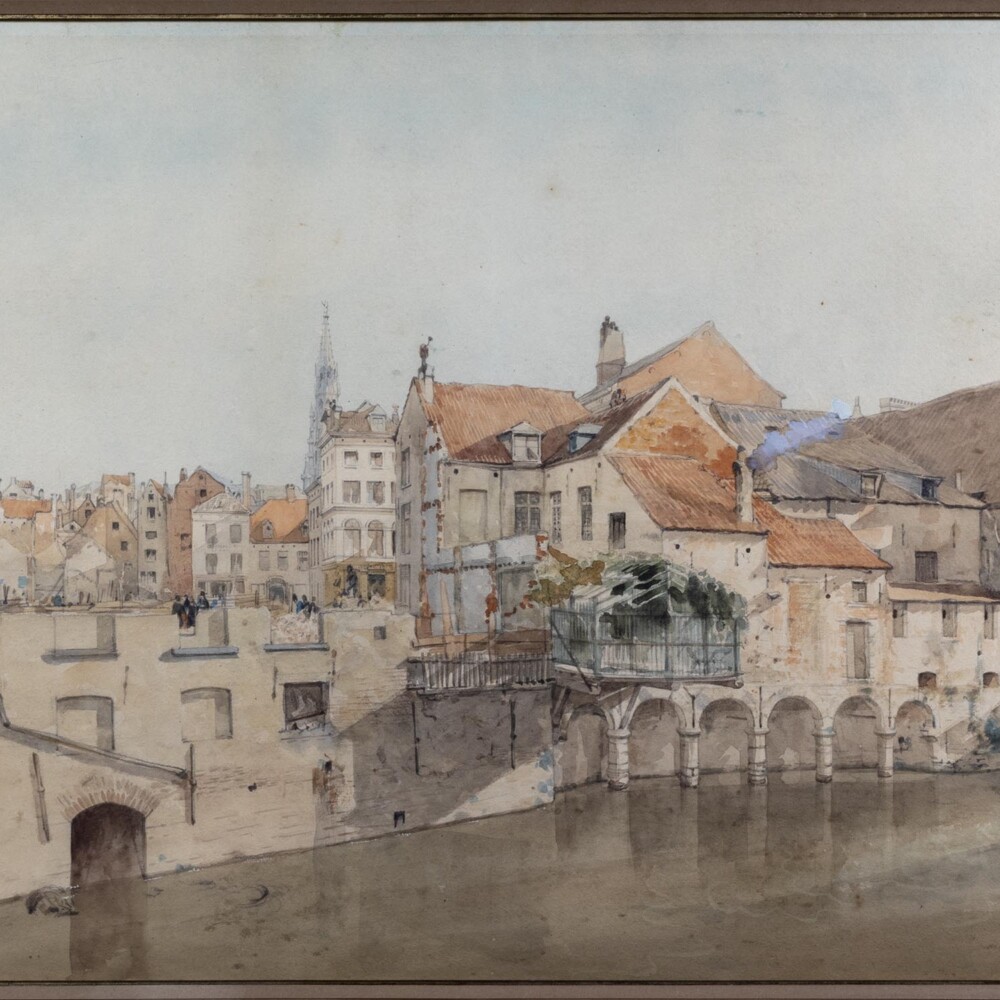
The catalyst for this change was the Zenne River. After severe floods in 1839 and 1850, the city was forced to confront the problem of its polluted and unruly waterway. After much debate, the ambitious project to completely cover the river, championed by the liberal Mayor Jules Anspach, won the day. For Anspach, this was a unique opportunity to eradicate the insalubrious neighbourhoods of the city centre and replace them with modern boulevards and prestigious real estate designed to attract a wealthier, tax-paying bourgeoisie.
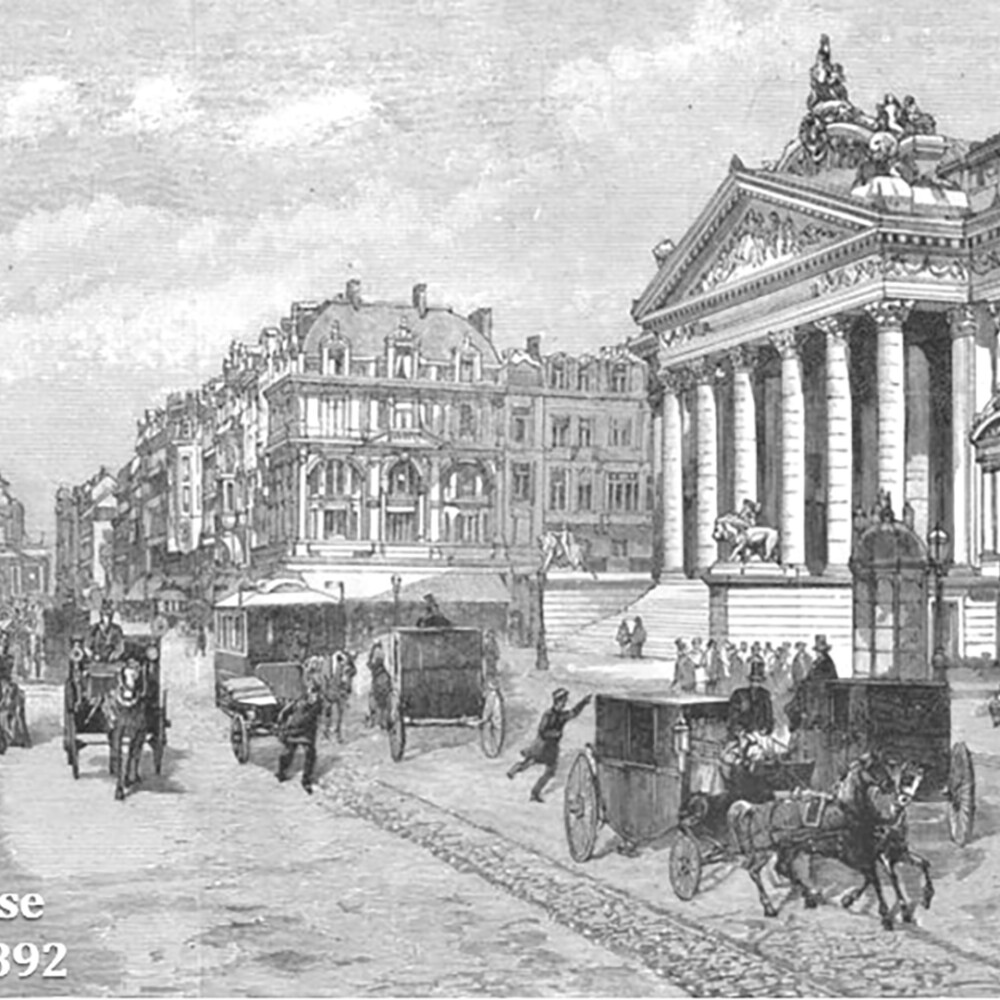
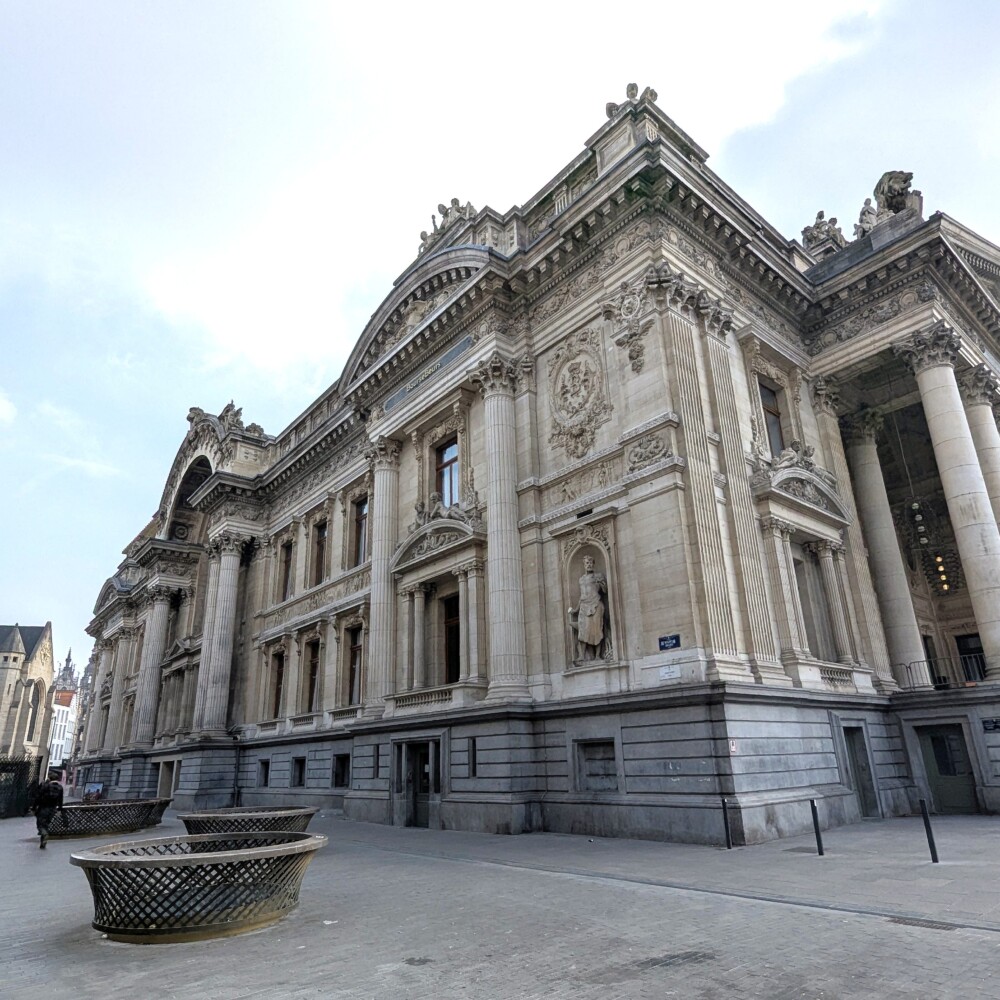
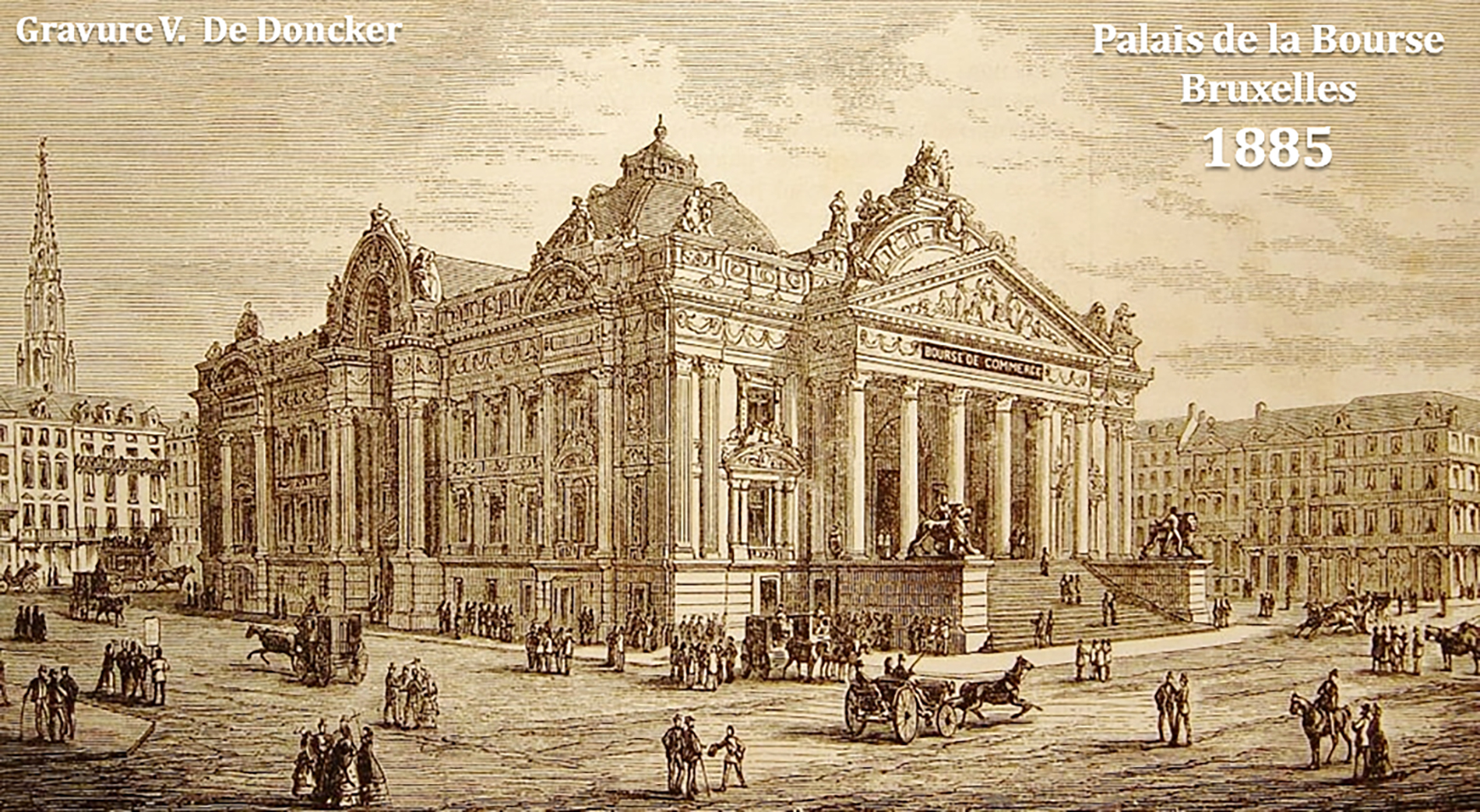
The gigantic engineering works began in 1867 and were completed in 1871. This operation radically altered the urban landscape, and the old Butter Market, now deemed unsanitary and sitting on one of the last large available plots, became the ideal location for a new, emblematic building: the Brussels Stock Exchange, known as ‘Beurs’ in Dutch and ‘Bourse’ in French.
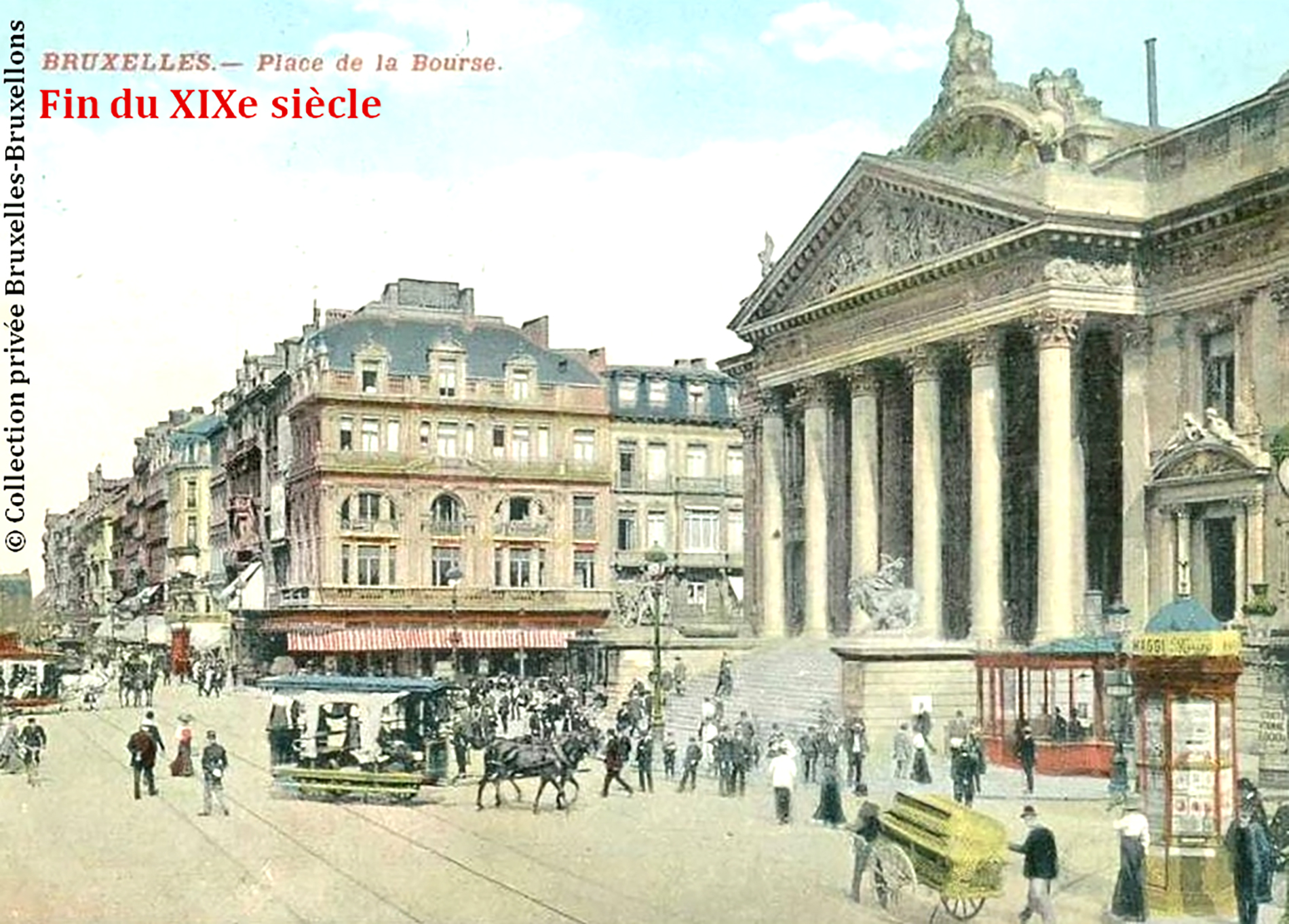
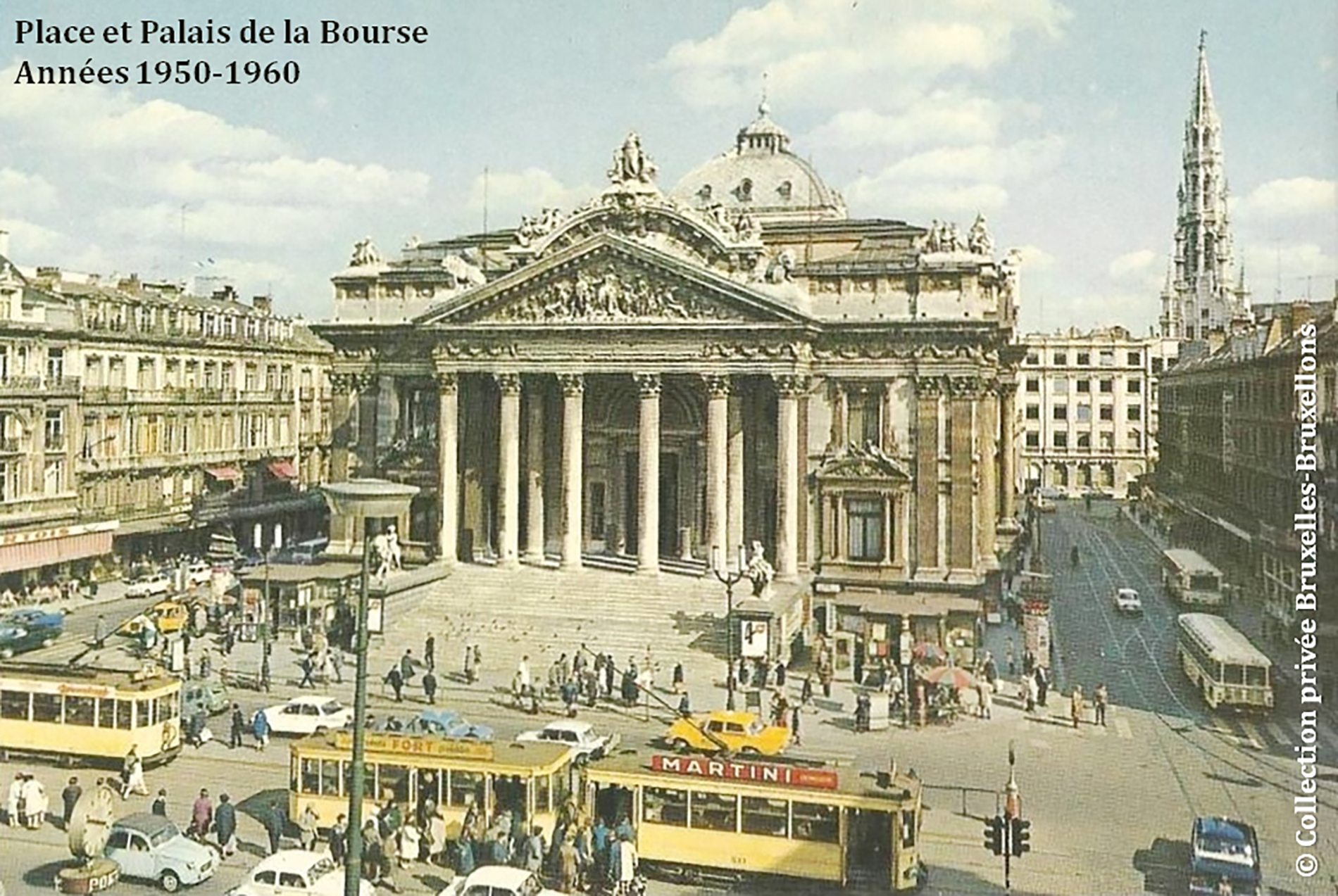
Designed by architect Léon-Pierre Suys, the Stock Exchange was conceived as a monumental temple to Belgian industrial and financial success. Its façade, adorned with Corinthian columns and sculptures representing Commerce, Industry, and Agriculture, was a powerful statement of the era’s confidence. Interestingly, the final orientation of the building — placed perpendicular to the new central boulevards — was a fortunate archaeological accident. Had the original plan to build it lengthways been followed, the last surviving underground foundations of the Minderbroedersklooster, rediscovered much later, would have been completely destroyed.
Construction began in 1869, and the building was inaugurated by King Leopold II in 1873. In a symbolic conclusion to the site’s long evolution, the world of high finance had settled directly upon the foundations once occupied by mendicant friars.
Current situation
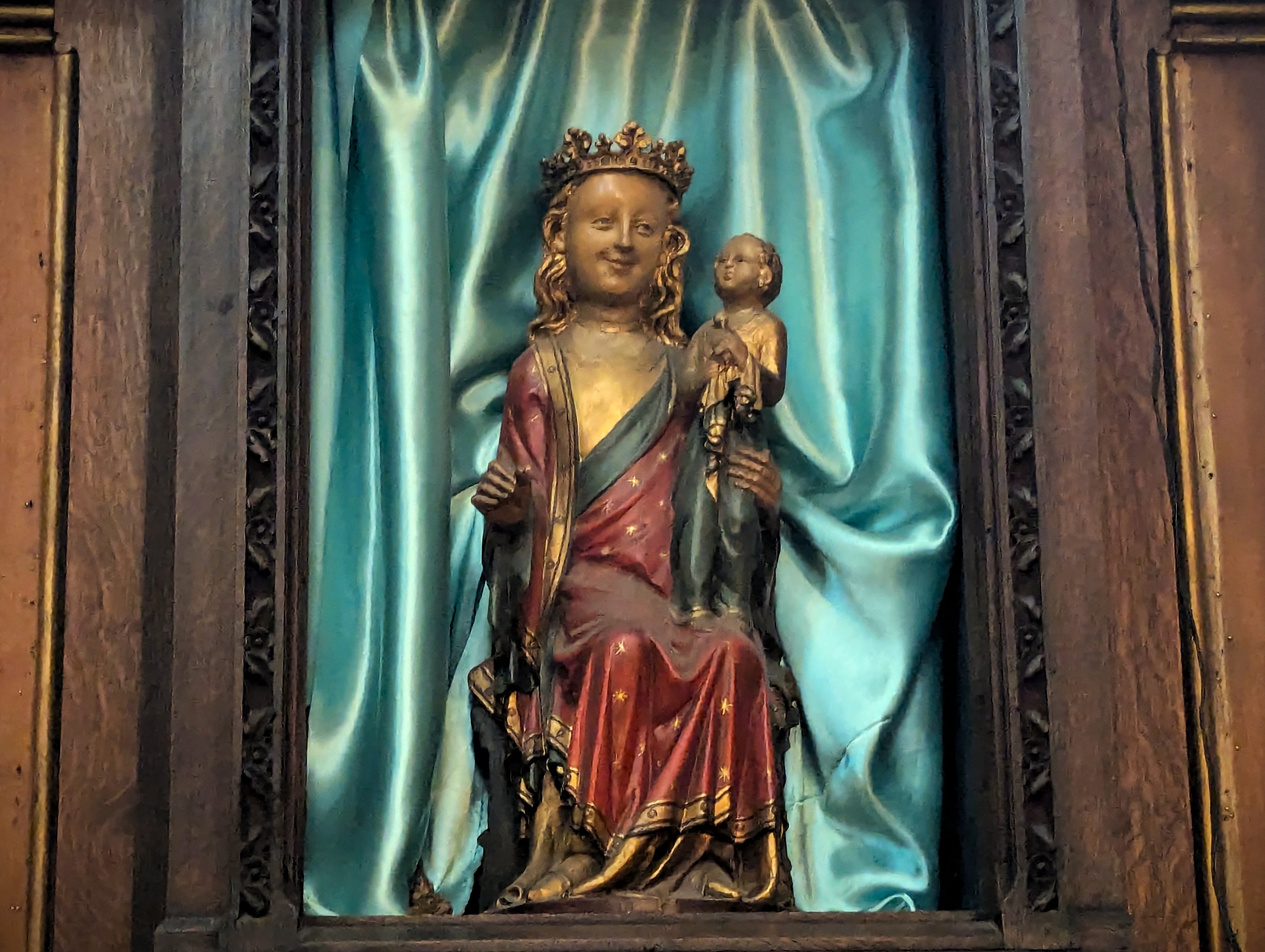
The Only Existing Artefact from the Minderbroedersklooster: The Virgin Mary Statue of the Vogelzangkapel
The original Minderbroedersklooster was plundered in 1579 by the “Geuzen” Calvinists. From among the ruins, a certain Jan van Linthout recovered the statue of Virgin Mary worshipped at the Vogelzangkapel, the very original one at the founding of the monastery. The statue was returned to the monastery once it was splendidly rebuilt. Having survived another series of attacks and destruction, the Minderbroedersklooster was closed by the French occupiers in 1796. Then from the mess, a friend of the friars a certain Mr Cammaerts recovered the centuries-old Virgin Mary once again from the destruction in January 1797. He gave it to his daughter who lived with her husband in Aalst. Their daughter, Charlotte Beulens, inherited the statue.
In 1871, the Franciscans once again returned to Brussels with a new monastery built on the Artesiëstraat (Rue d’Artois) called the “Sint-Antonius-van-Paduakerk en klooster van de minderbroeders-konventuelen“. Mrs Beulens then brought the Virgin Mary statue to this new Minderbroedersklooster, where it rightly belongs, until today.
But the story did not end here.
A group of Walloon Franciscan friars wanted to move to Brussels to advance their students in philosophy and theology. They found a spot in the outskirts of Brussels in the neighbourhood of Sint-Pieters-Woluwé, called ‘Duivelsput‘ (Trou du Diable – Devil’s Pit). They bought the land to build their new monastery inaugurated on 21 November 1935 – and named its church “Onze-Lieve-Vrouw-van-Vogelzangkerk” (Église Notre-Dame-des-Grâces de Woluwe) after the original Vogelzangkapel. The avenue is now called “Avenue du Chant d’Oiseau“. The new monastery asked the Brussels friars for permission to place a replica of the original 13th century Virgin Mary in their church, and today, this second version now stands in this church.
Today, the statue remains in worship inside the gated community of the Sint-Antonius-van-Paduakerk en klooster van de minderbroeders-konventuelen. According to Heritage Brussels, the statue and its offering box date from 1201 to 1300, making them very likely to have belonged to the original 13th century Minderbroedersklooster’s Vogelzangkapel. Furthermore, there is a bird held in the hands of baby Jesus, making it a strong case for it to have been created specifically for that chapel.
This statue is the only remaining artefact of Brussels’ Minderbroedersklooster, its first monastic order that lasted a span of five hundred years.
The 1988 Excavations: The Minderbroedersklooster Rediscovered
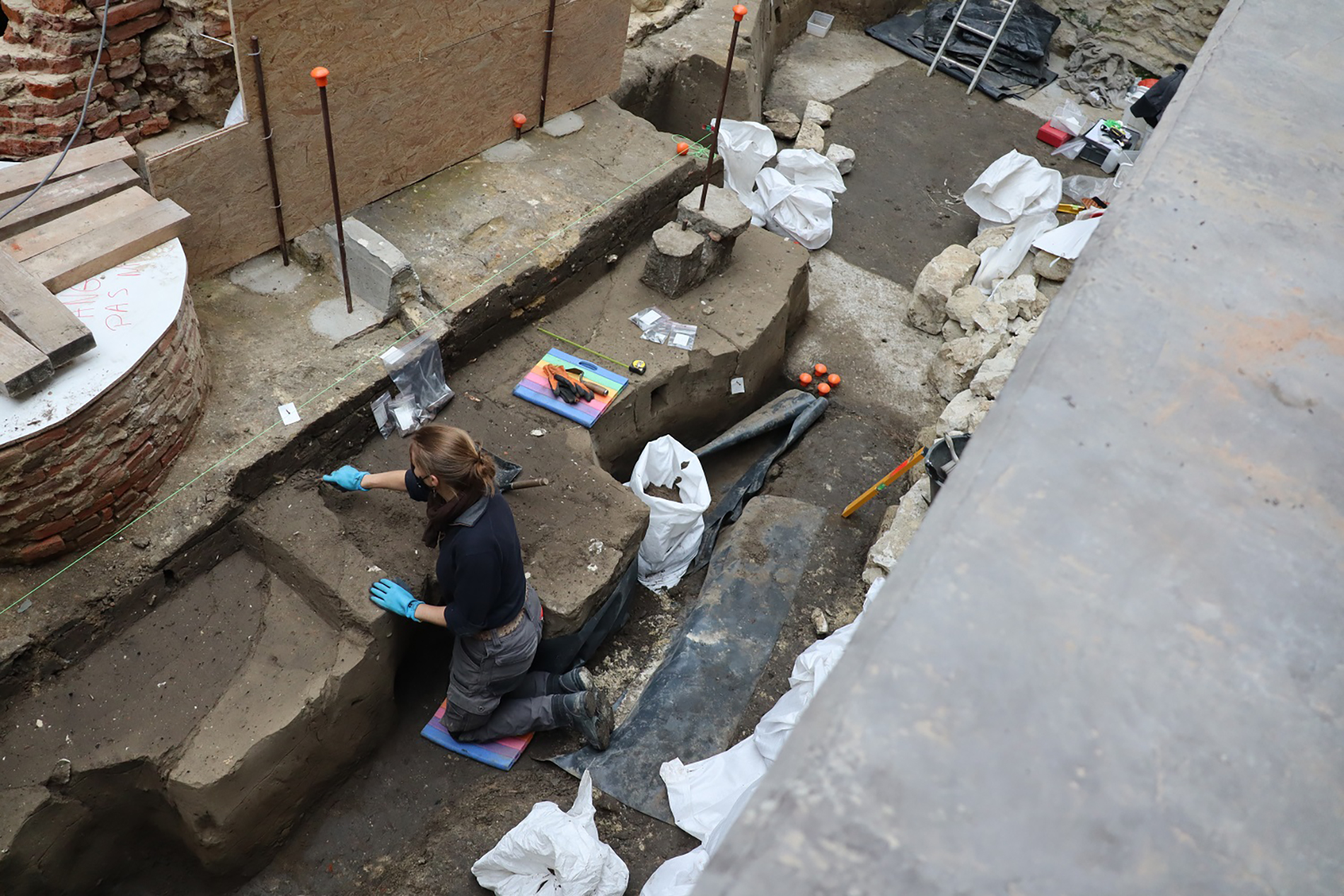
For nearly two centuries, the precise location and layout of the Minderbroedersklooster were lost to memory, concealed beneath the streets and buildings of modern Brussels. This changed dramatically in the summer of 1988, when rescue excavations on the Rue de la Bourse, led by the Royal Archaeological Society of Brussels in collaboration with the Free University of Brussels, brought the monastery back to light.
The archaeological team followed the city’s utility works around the Stock Exchange, making a series of significant discoveries. While initial work south of the building yielded little, the northern side on the Rue de la Bourse revealed a stunning archaeological trove. Powerful walls emerged, including the convent’s boundary wall cutting across the modern street, along with human bones. As the dig extended towards the central boulevards, the remains became more numerous and substantial, culminating in the clear identification of the church’s chancel and apse.
The excavation confirmed that the choir of the church—oriented notably towards the north, much like the nearby Sint-Niklaaskerk — lay directly beneath the centre of the street. The digs uncovered a portion of the cloister gallery, burial vaults, and, in an emotionally charged moment for historians, the rediscovery of the ‘lost tomb of Duke Jan I of Brabant’.
A New Museum: Bruxella 1238
Recognising the immense historical value of these finds, the City of Brussels decided on an innovative form of preservation. In 1993, the remains were integrated into a unique underground museum, ‘Bruxella 1238‘. Designed by architect Jean-Paul Jourdain, the museum featured a glass window in the pavement, making the street ‘transparent’ and allowing passers-by to look down upon the ancient choir of the church, with the outlines of its walls inlaid in the street surface above.
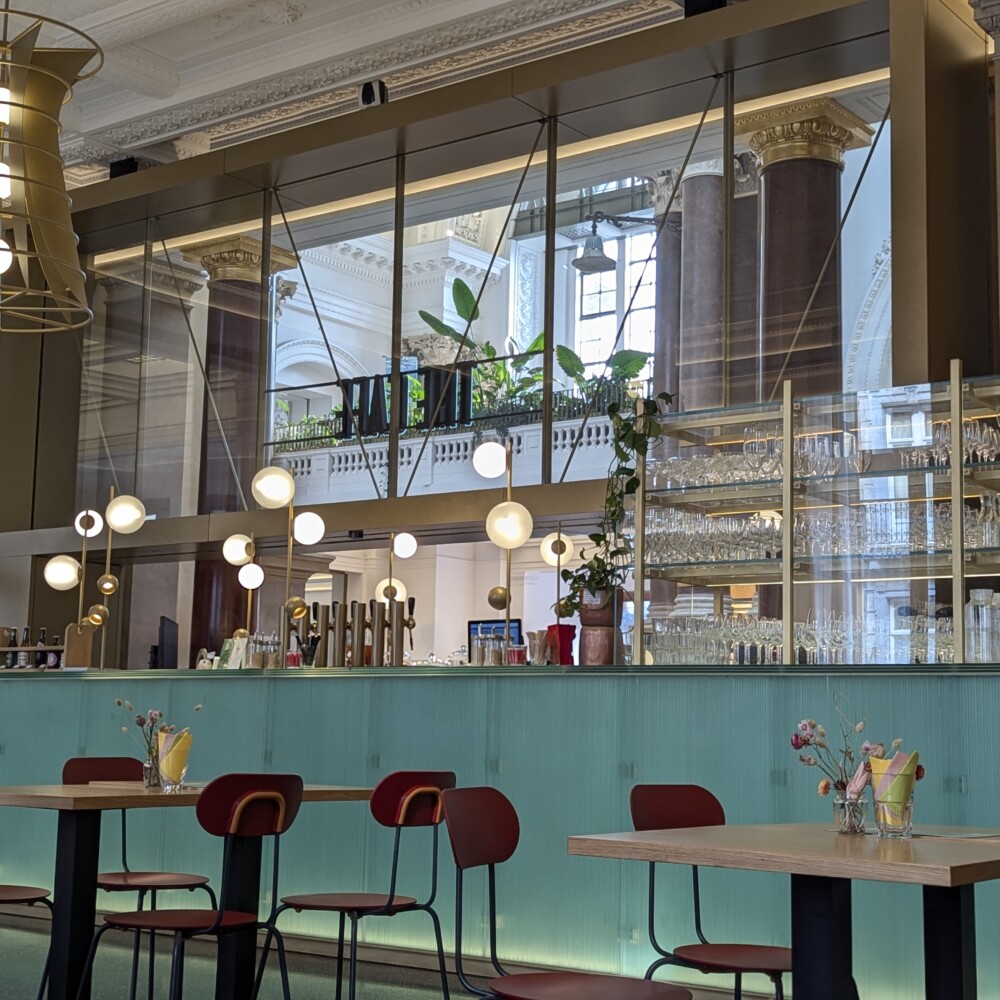
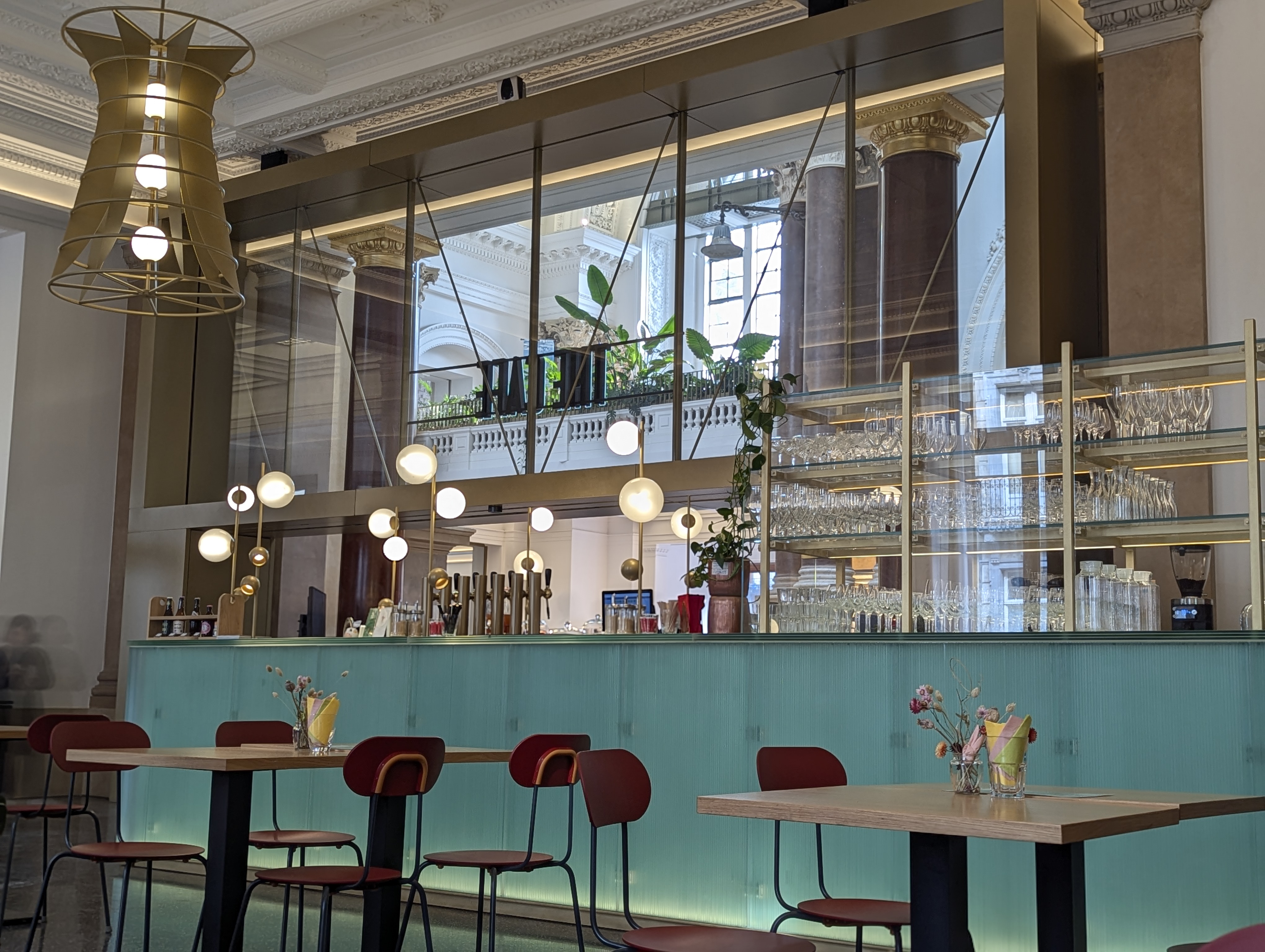
The story of discovery continued in the summer of 2020, ahead of the transformation of the old Stock Exchange into the Belgian Beer World. A new preventive archaeological campaign was launched, allowing for a more systematic recording of the masonry. This work confirmed the intensive use of the site for burials from the 13th to the 18th century and revealed that human occupation on the spot dates back even further, to the second half of the 10th century.
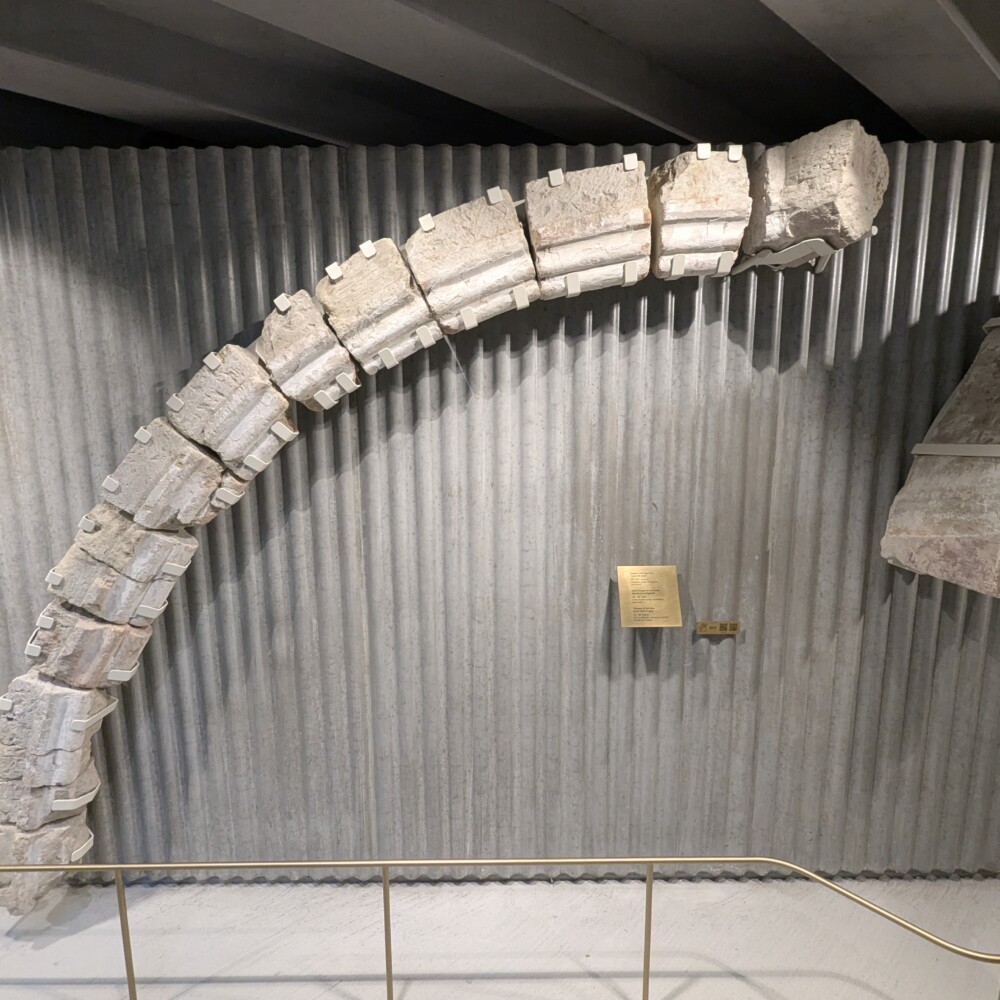
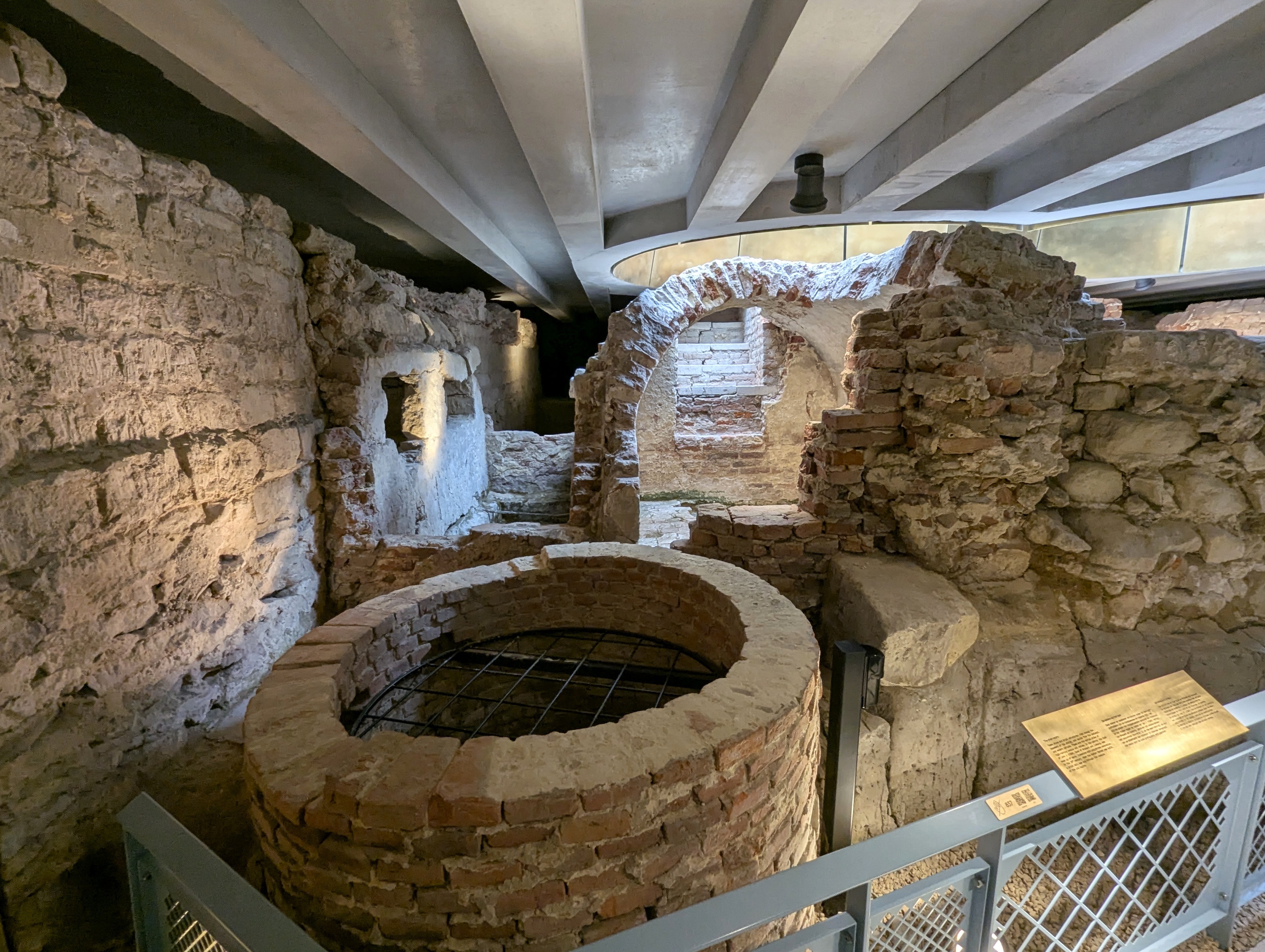
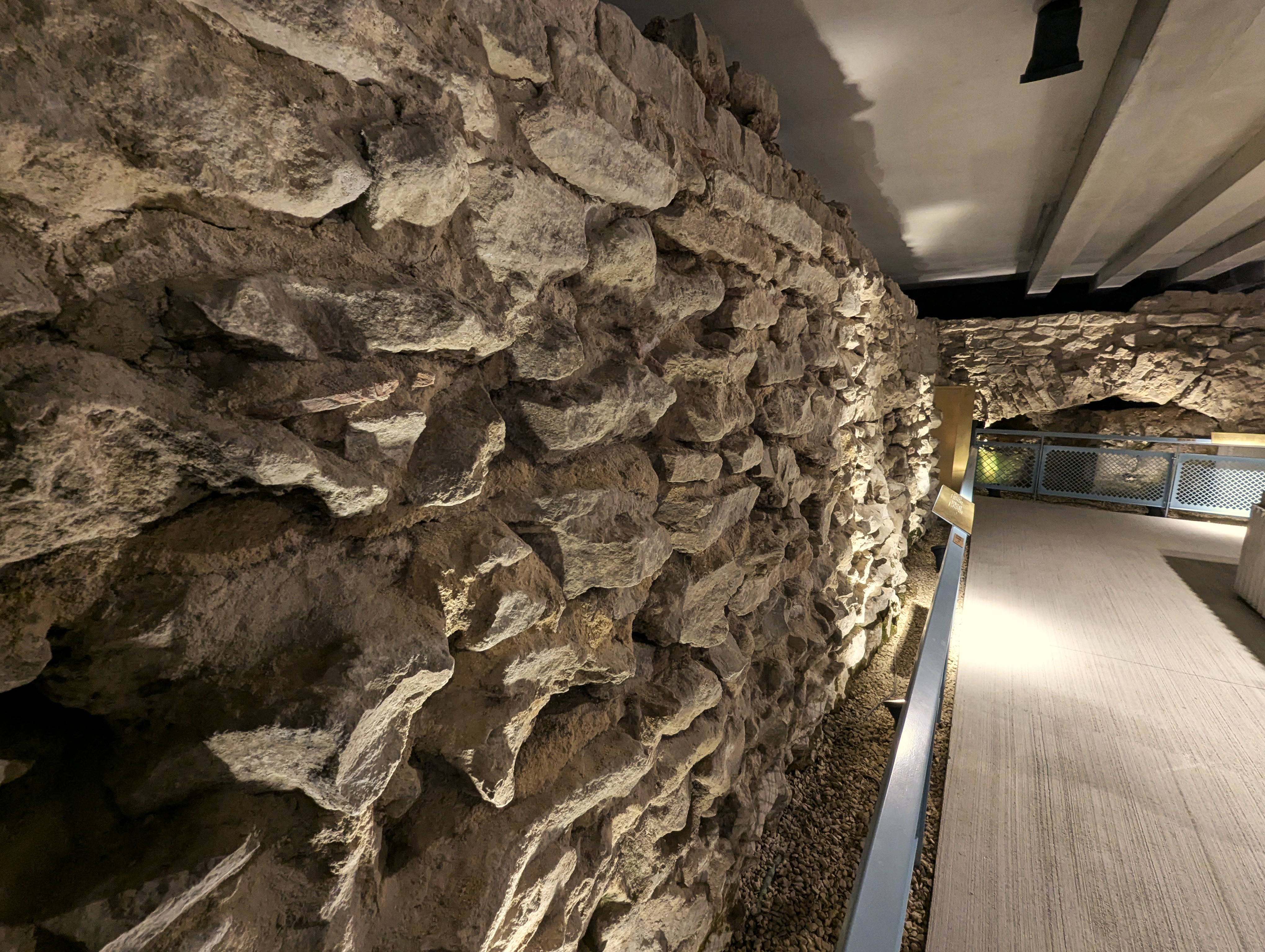
To improve public access, a tunnel was excavated connecting the archaeological site directly to the interior of the Stock Exchange building. The 1993 glass structure was removed to restore the street’s early 20th-century appearance, and a new, enhanced ‘Bruxella 1238’ museum opened to the public in 2023. This final chapter ensures that the memory of the Minderbroedersklooster, once erased by revolution and industry, is now permanently woven into the visible fabric of the city it served for over 550 years.
Today, when you visit the new museum, you get to see a digital reconstruction of how the lost tomb of Duke Jan I of Brabant may have looked like, because archaeologists have managed to salvage two fingers in bluestone which may have been his effigy.
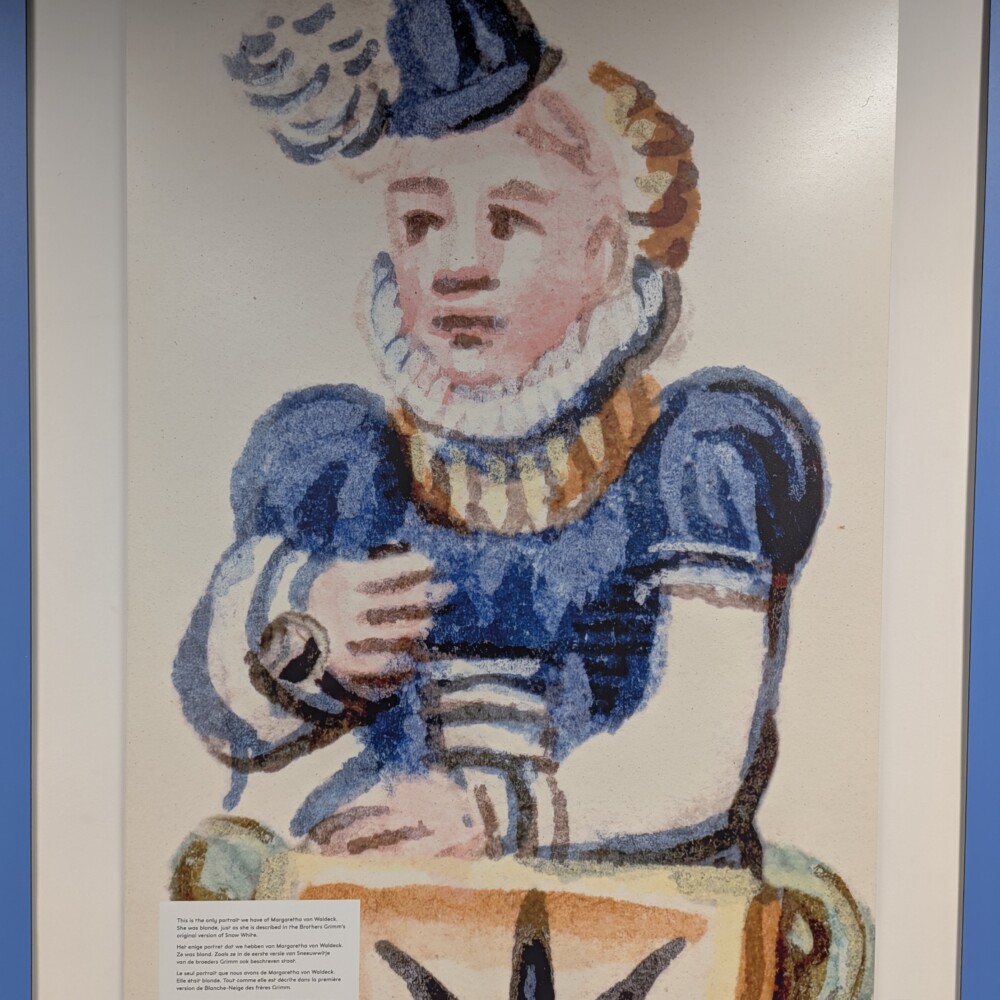
Also noted in the museum was a remark about Margaretha von Waldeck (1533 – 15 March 1554) who was also buried in the Minderbroedersklooster. It is said that the tale of Snow White, written by the Brothers Grimm was inspired by her life story.
Below ground, you get to see the foundations of the church of the Minderbroedersklooster. Above ground, the wall boundaries are marked with bronze lines on the street.
Many thanks to:
- Jipé of bruxelles-bruxellons.blogspot.com for the use of photos from their private collection.
- Sint-Antonius-van-Paduakerk en klooster van de minderbroeders-konventuelen/Couvent Saint-Antoine-de-Padoue de Bruxelles for photography of the statue.
Sources:
Vannieuwenhuyze, B. (2011) “Brussel, de Ontwikkeling van een middeleeuwse stedelijke ruimte.” Amsterdam: Amsterdam University Press.
Henne, A. Wauters, A. (1845) “Histoire de la ville de Bruxelles. Volume I-III” Brussels: Librairie Encyclopédique de Périchon.
Rombaut, J-A. (1777) “Bruxelles illustrée, ou description chronologique et historique de cette ville.” Brussels: Chez Pauwels.
https://nl.wikipedia.org/wiki/Bruxella_1238
https://bruxelles-bruxellons.blogspot.com/2014/01/place-de-la-bourse-au-fil-du-temps.html
https://monument.heritage.brussels/fr/buildings/30875
https://www.srab.be/Freres-mineurs_fouilles.html
https://en.wikipedia.org/wiki/Recollects
https://nl.wikipedia.org/wiki/Onthoofding_van_Egmont_en_Horne
https://en.wikipedia.org/wiki/Jan_Baptist_van_Helmont
https://nl.wikipedia.org/wiki/Jan_Baptista_van_Helmont
https://en.wikipedia.org/wiki/Margaretha_von_Waldeck
https://www.orgues.irisnet.be/fr/Edifice/139/app.rvb
https://collections.heritage.brussels/nl/objects/74887
https://monument.heritage.brussels/nl/buildings/32015
https://collections.heritage.brussels/fr/objects/52862
https://monument.heritage.brussels/fr/buildings/30875
-
- Van Deventer, J. (1550-1565) “Atlas of the city of the Low Countries : 73 minutes between 1550-1565 on orders of Emperors Charles V and Philip II” KBR (image)
- Braun, G, Hogenberg, F. (1572-1617) “Civitates orbis terrarum” Universiteitsbibliotheek Utrecht (image)
- de Tailly, M., van der Horst, N., Santvoort, A. D. (1640) “Bruxella nobilissima Brabantiae civitas anno 1640” KBR (image)
- Laboureur, J., Van der Baren, J., Harrewijn, J. (1695) “Bruxella Nobilissima Brabanti Civitasae” Bibliothèque Nationale de la France (image)
- Harrewijn, J. (1697-1727) “Delineatio Conventus Bruxellensis F.F. Minorum Recollectorum” Musea van de Stad Brussel (image)
- Louis, C. (1993) “Le couvent des Récollets en bordure de Senne” Broodhuis Brussel (image)
- Van Moer, J.B. (1877) “De voormalige brouwerij van het minderbroederklooster en de Vaalbeek” Musea van de Stad Brussel (image)
- Brias, C. (1831) “De Botermarkt in Brussel” Musea van de Stad Brussel (image)
- van Moer, J.B. (1874) “De Botermarkt” Musea van de Stad Brussel (image)
- van Moer, J.B. (1868) “De afbraak van de Botermarkt” Musea van de Stad Brussel (image)
- Unknown. (1860s) “Bruxelles disparu. Marché au Beurre. Années 1860” Private Collection Bruxelles-Bruxellons (image)
- van Moer, J.B. (1868) “Zicht op de Zenne en de herberg Den Beer vanop de Middeleerbrug” Musea van de Stad Brussel (image)
- Unknown. (1835) “Paarden in de Zenne bij laag water” Musea van de Stad Brussel (image)
- Unknown. (1867-1871) “Ancienne église du couvent des augustins future place de Brouckère, Marché au Beurre future Palais de la Bourse” Private Collection Bruxelles-Bruxellons (image)
- De Doncker, V. (1885) “Palais de la Bourse” Private Collection Bruxelles-Bruxellons (image)
- Unknown. (1886-1892) “Place de la Bourse” Private Collection Bruxelles-Bruxellons (image)
- Ronoc, T. (1890s) “Place de la Bourse – Boulevard du Centre” Private Collection Bruxelles-Bruxellons (image)
- Unknown. (1890s) “Bruxelles – Place de la Bourse” Private Collection Bruxelles-Bruxellons (image)
- Unknown. (1890s) “Bruxelles La Bourse” Private Collection Bruxelles-Bruxellons (image)
- Unknown. (1950-1960) “Place et Palais de la Bourse” Private Collection Bruxelles-Bruxellons (image)
- Société royale d’Archéologie de Bruxelles. (1988) “Bruxella 1238 – Rue de la Bourse” Société royale d’Archéologie de Bruxelles (image)
- Sint-Antonius-van-Paduakerk en klooster van de minderbroeders-konventuelen/Couvent Saint-Antoine-de-Padoue de Bruxelles (1201-1300) “Onze-Lieve-Vrouw van Vogelzang” KIK-IRPA (image)
HOW IT LOOKS LIKE TODAY
Click on the zoom icon to view the full size.