Oud Brussel: #30 Sint-Gillijnsgasthuis / Sint-Juliaangasthuis
Name on the map:
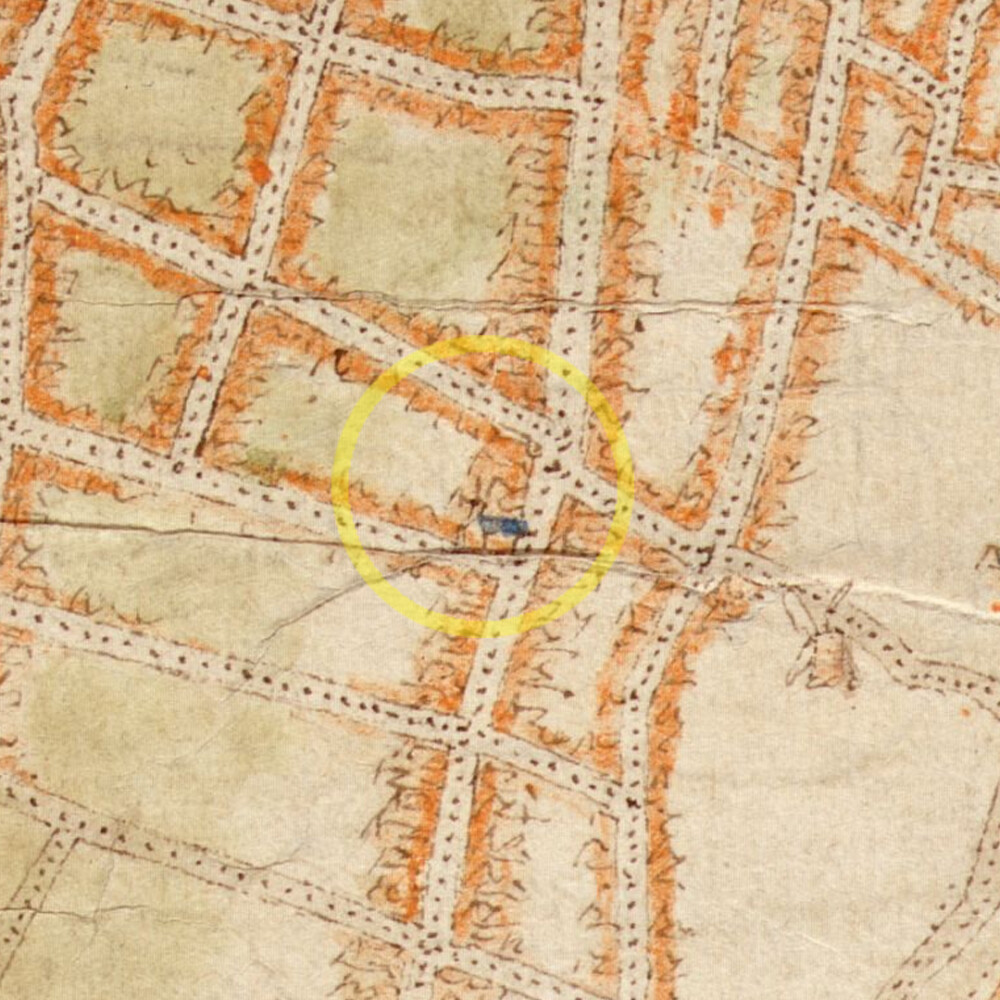
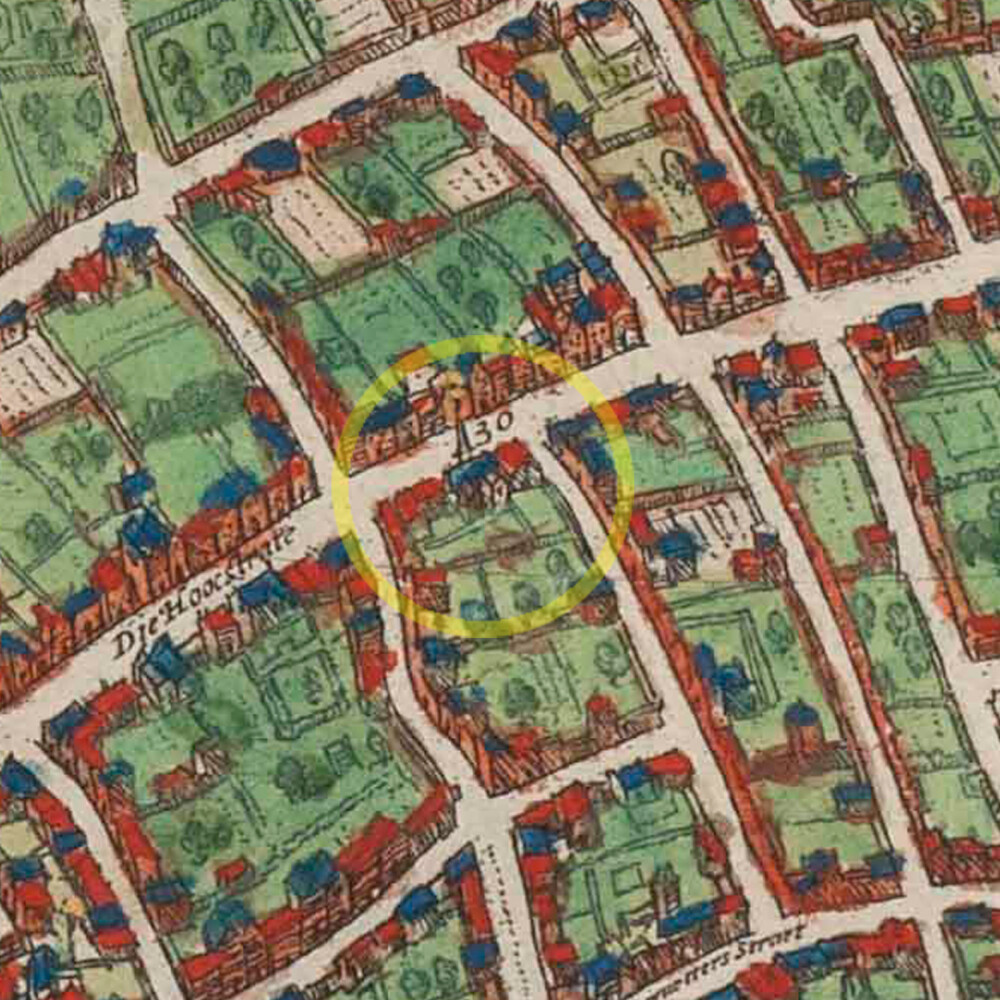
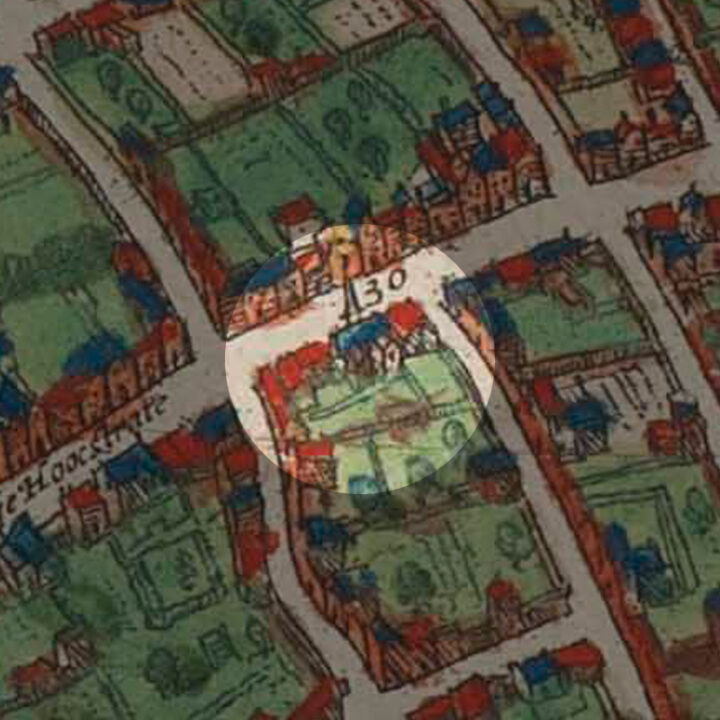
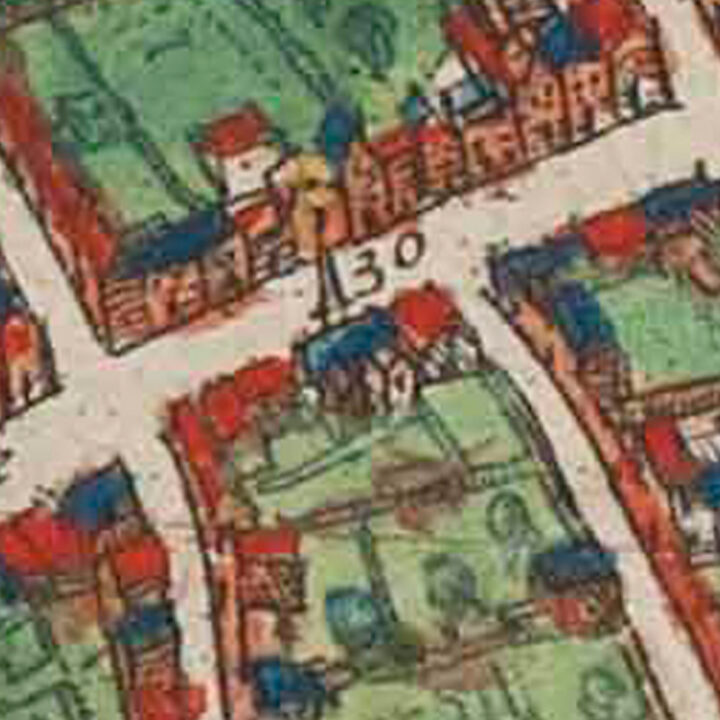
S.Geleÿns gasthuÿs
Original name in Dutch:
Sint-Juliaangasthuis
Other names:
Sint-Gillijnsgasthuis, Sint-Gisleinsgasthuis
19th century name in French:
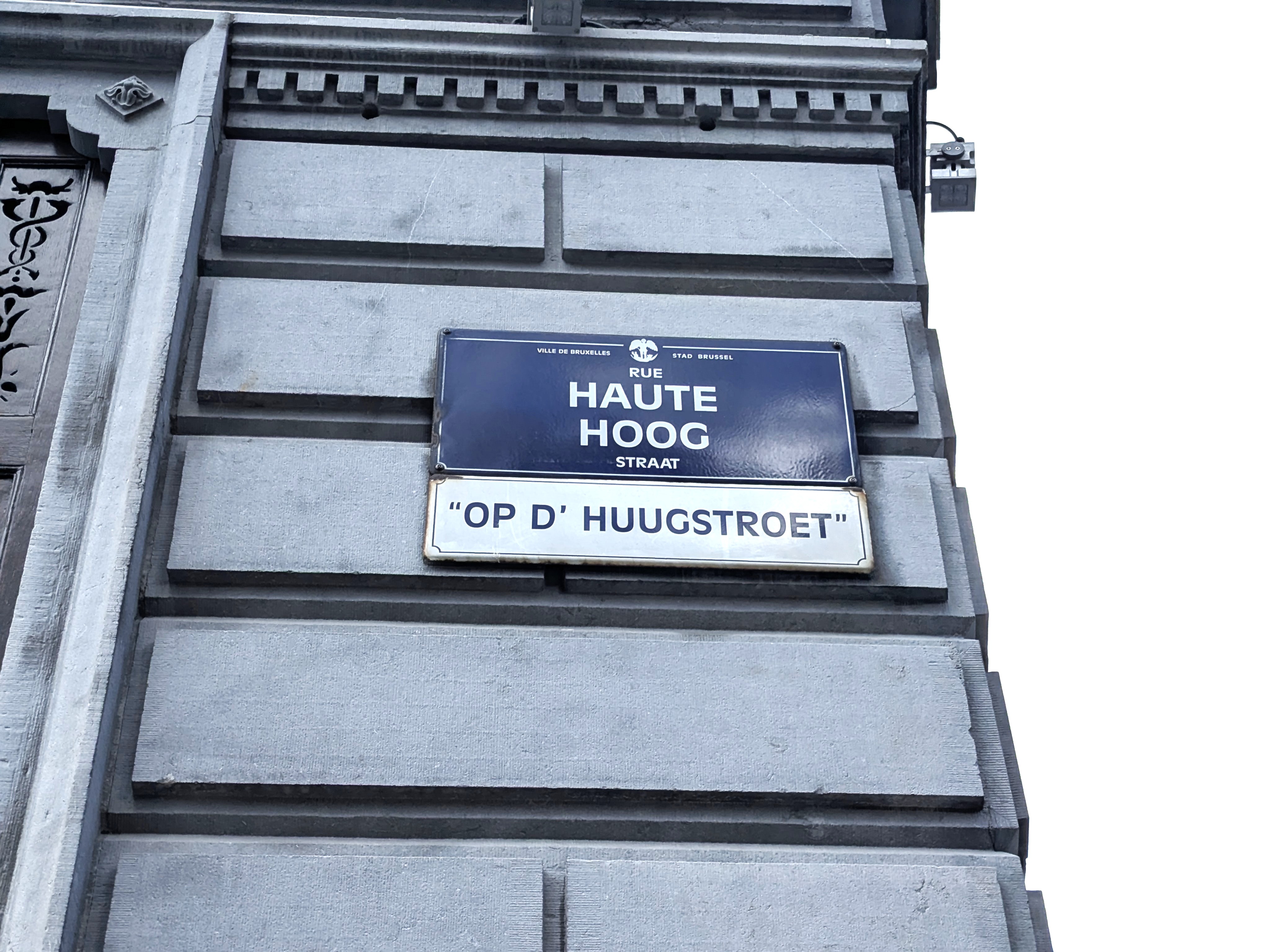
Hôpital Saint-Ghislain
Current name:
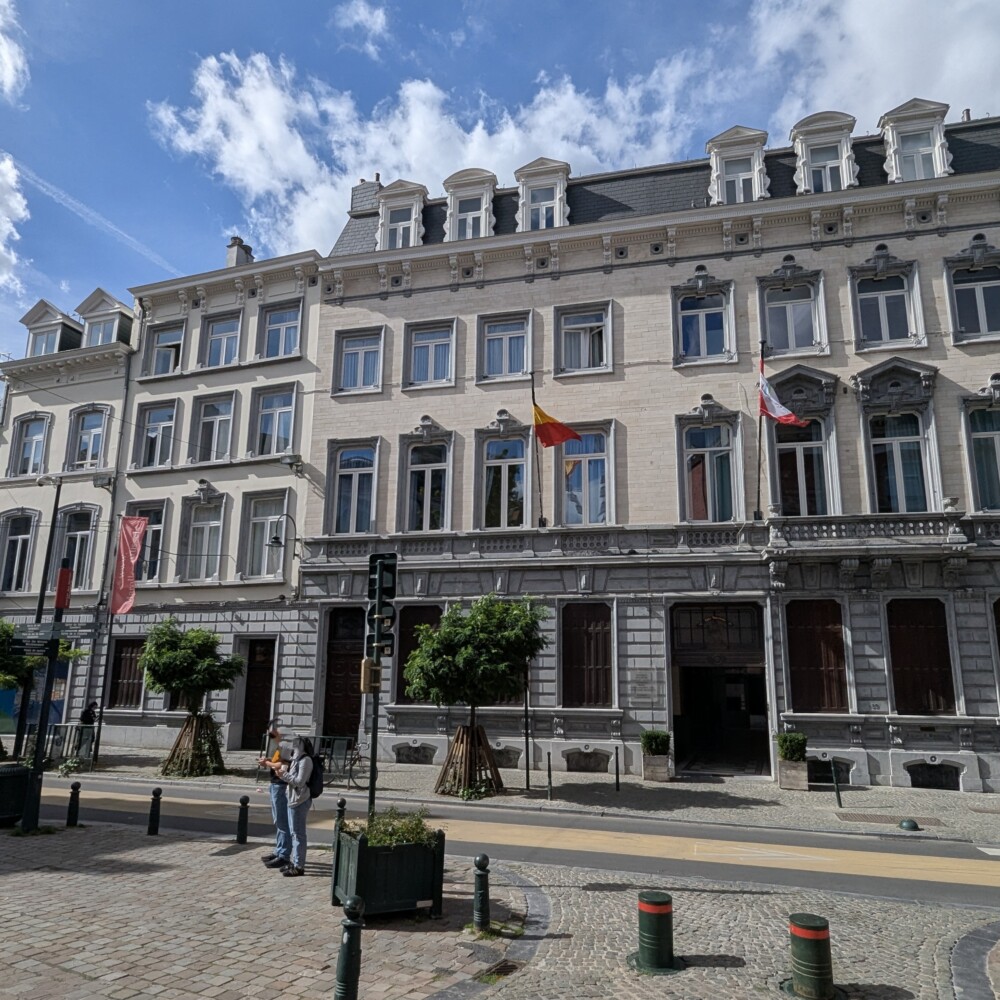
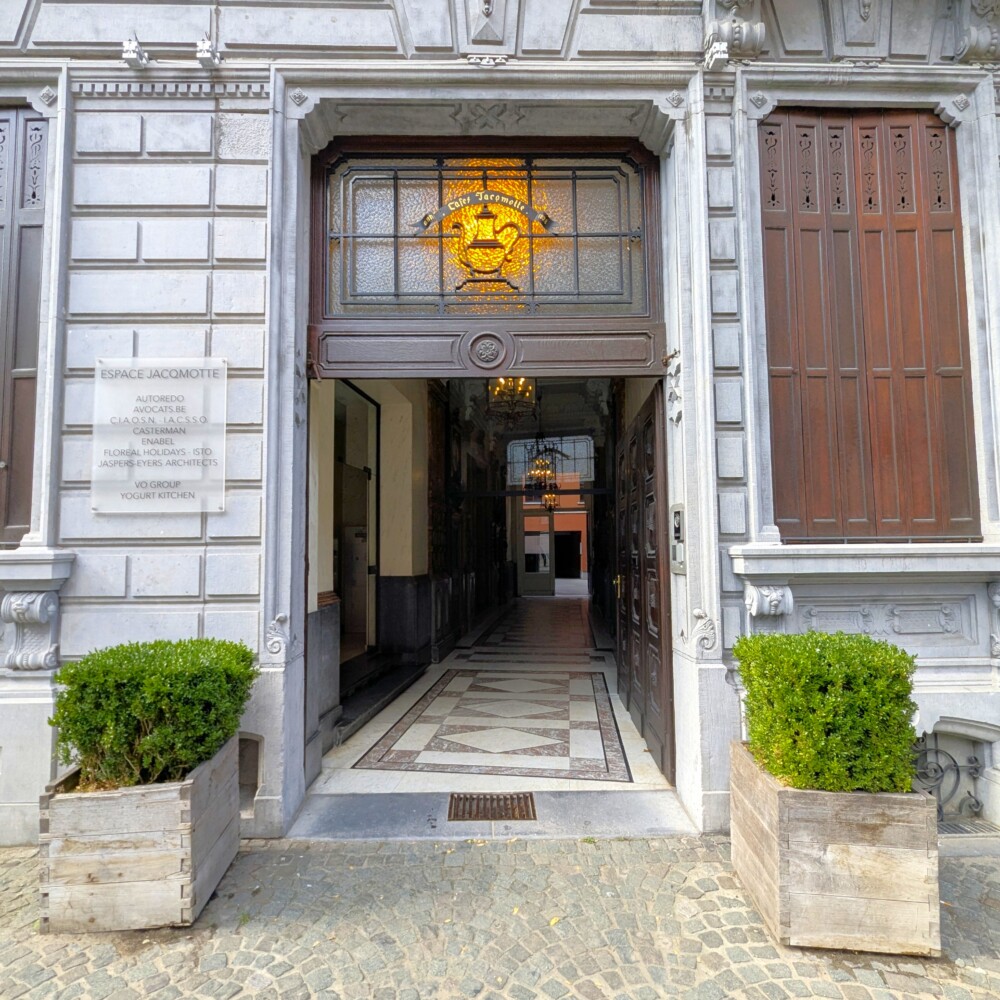
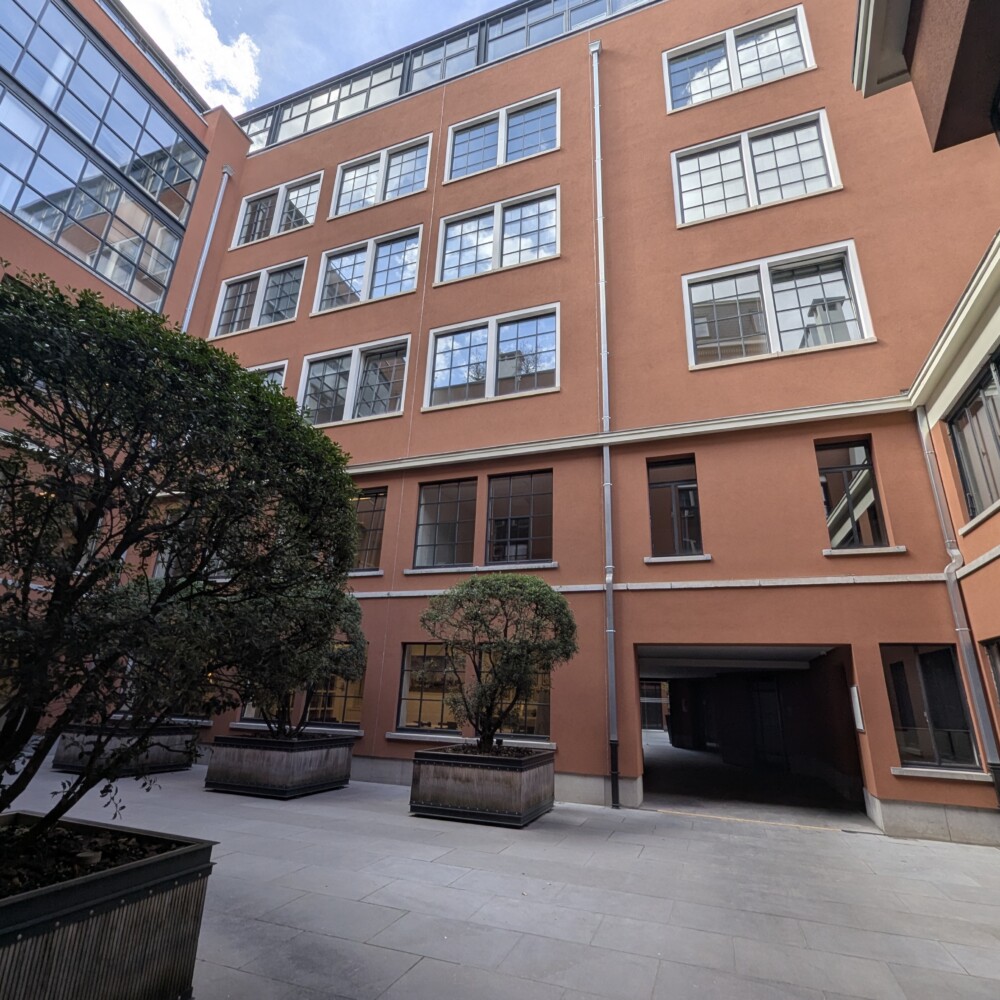
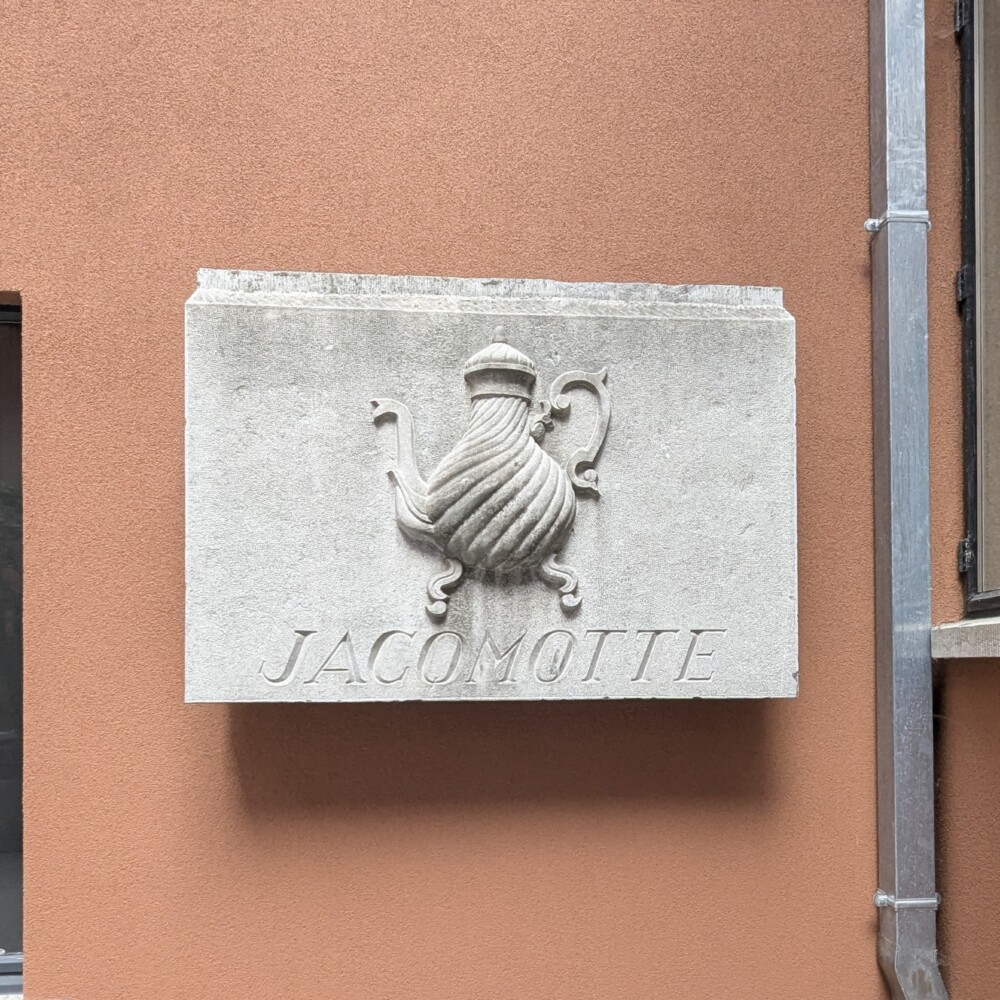
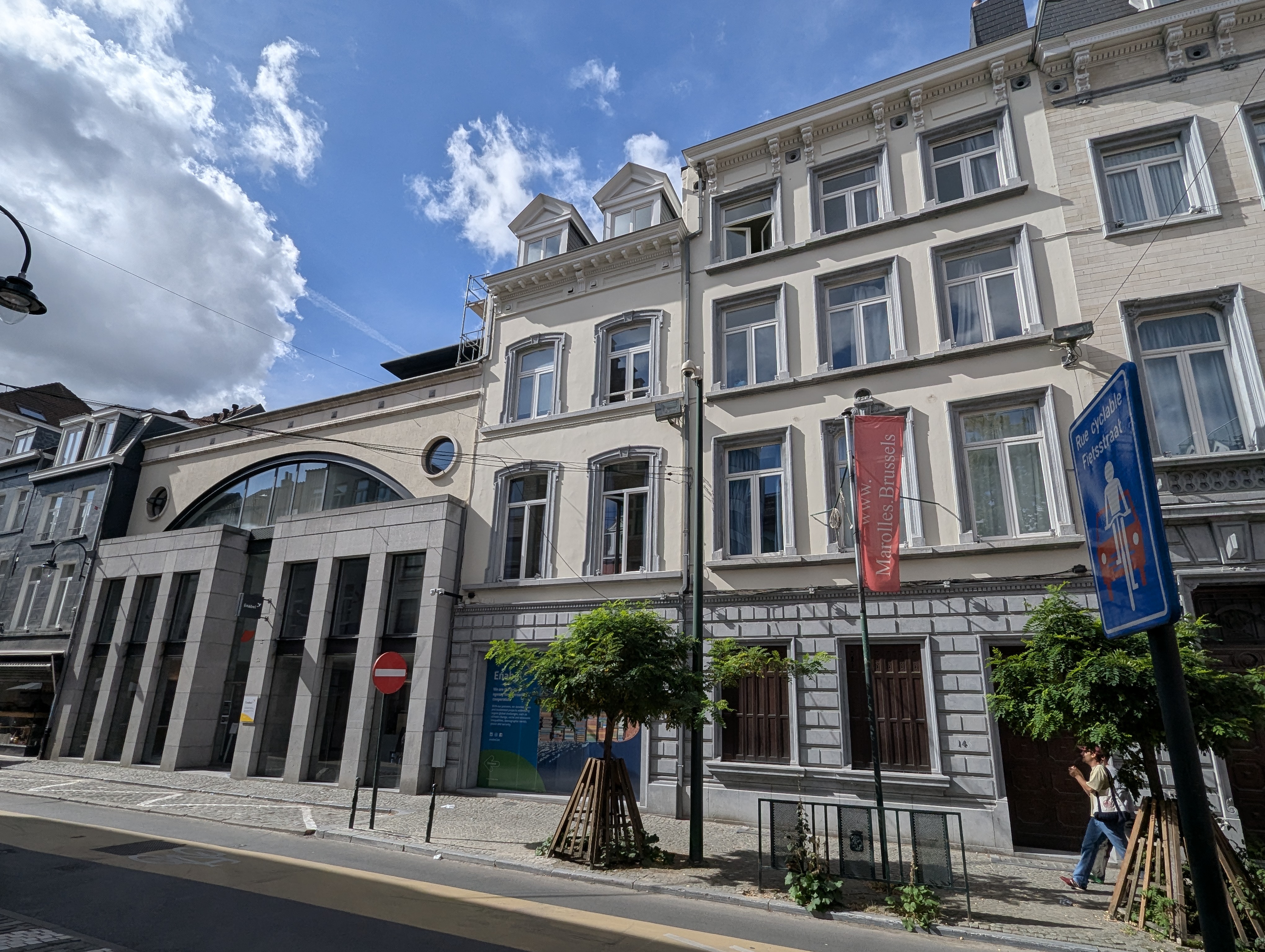
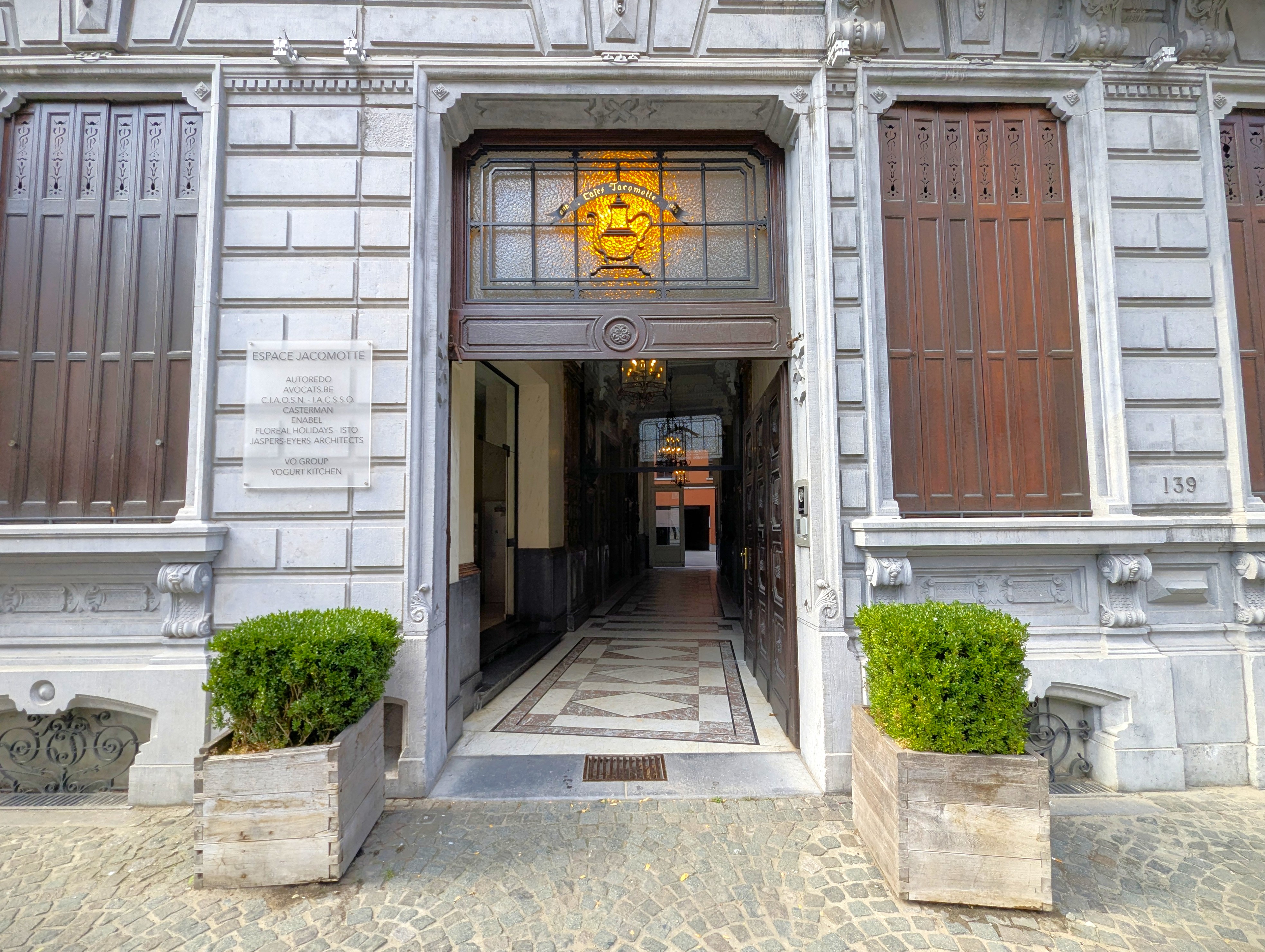
Espace Jacqmotte, Enabel Belgian development agency
ABOUT
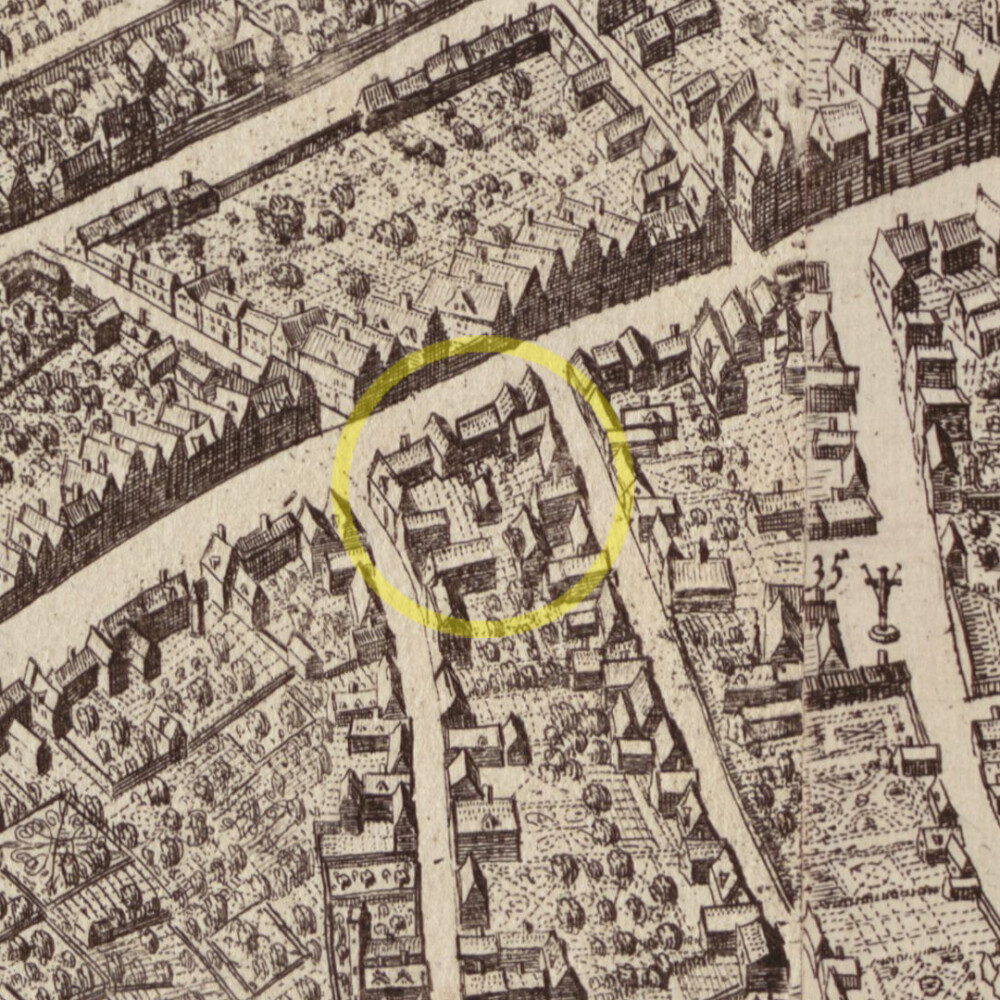
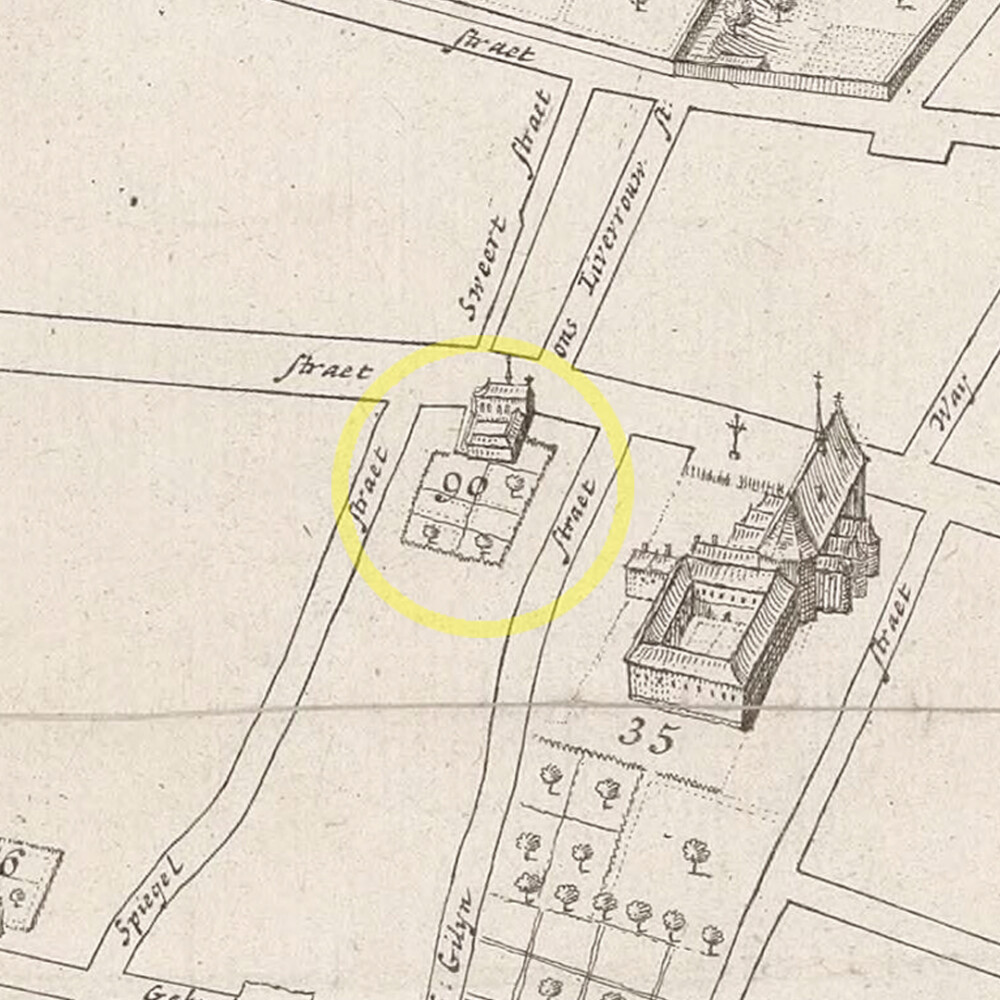
Along Brussels’ main medieval artery of the long Hoogstraat (High Street), a modest ‘guest house’ dedicated to Saint Julian the Hospitaller was founded in the year 1356. Donated in the will of the brothers Spiegheleren, the Sint-Juliaangasthuis – sometimes known as the Sint-Gillijnsgasthuis or Sint-Gisleinsgasthuis – was situated in the lower parish of the Kapellekerk (Church of Our Lady of the Chapel) approaching the ancient city boundary. The hospital originally occupied two adjoining houses on the corner of the Hoogstraat and the Spiegelstraat (Rue du Miroir), extending along what is today the Sint-Gisleinsstraat (Rue Saint-Ghislain).
Origin
An Overview of Brussels’ Hospitals in the Middle Ages
In the 12th century, when Brussels was first taking the form of a city, medical care for the population was like the rest of western and northern Europe a task administered by the church. The first hospital – for the poor – was established in 1127 by the chapter of the Collegiale kerk van Sint-Michiel en Sint-Goedele, dedicated to the Virgin Mary and the Twelve Apostles. The second one was set up in 1129, at the Sint-Niklaaskerk. The third was requested by Duke Godfried III of Brabant in 1162 to the Order of the Hospitaliers of Saint John of Jerusalem to set up a hospital at the l’Ordre des Hospitaliers at the Saint James Church by the ducal palace, the Sint-Jacob-op-Koudenberg.
By the 14th century however, the nature of medical care changed with the subtle appearance of the merchant class. At this time, four hospitals with entirely different ways of functioning and organisation were formed: the Sint-Jacobsgasthuis (Saint James Guesthouse) closed to the Overmolenpoort (circa 1324), the Sint-Corneliusgasthuis (Saint Cornelius Guesthouse) on the Steenwech (circa 1350), the Sint-Juliaangasthuis – Sint-Gillijnsgasthuis in local tongue (Saint Julian Guesthouse) (1356), and the Sint-Laurentiusgasthuis (Saint Laurence Guesthouse) (circa 1360).
To clarify, the term in Dutch “Gasthuis” and in English “Guesthouse” are the direct equivalents of the Latin term “hospitia” from which the Norman French words “hospital” and “hotel” derived. It is not today’s idea of a holiday rental. Rather, these were places that offered food and care, especially medical care, for the poor, for the injured, for travellers (often pilgrims who were travelling somewhere to pray for recovery from an illness).
According to Thibault Jacobs, in his work “Des hôpitaux de métiers à Bruxelles ? Nouvelles perspectives sur la charité et la bienfaisance en milieu urbain à la fin du Moyen Âge“, the misconception inherited about medical care in the Middle Ages in Brussels, and certainly in the whole of Brabant, that it was administered only to the poor and the pilgrims is very much misguided.
This traditional misconception presumes that prior to the French Revolution, medieval Europe existed only in three estates: the clergy, the nobility, and the commoners. With increased mobility and trade, even before the commoners rose up in France, there were signs of a growing merchant class that was organising itself. We can see that with the predecessor of social security offered by the Sint-Lookapel for the profession of craftsmen.
With the four hospitals in Brussels, we can see that they are in fact proof of a merchant class taking care of itself.
The Founding of the Sint-Juliaangasthuis: For Weary Travellers
The founding of the Sint-Juliaangasthuis emerged from a deeply personal act of lay piety and neighbourhood solidarity in 1356. On 27 August of that turbulent plague-ridden year, two wealthy unmarried brothers, Jacob de Spiegheleren and Hendrik de Spiegheleren, drew up a joint testament before the notary Franco de Loembeeke. In it, they decreed that upon their deaths, their own dwelling houses along the Hoogstraat should be converted into a brand-new charitable hospice.
The Latin founding act, formally executed on 10 December 1356, consecrated the house to “Almighty God, the Glorious Virgin Mary, Saint Julian the Confessor, and All Saints”:
“Preterea voluerunt utique et nomine testamenti ordinaverunt (…) quod statim post eorum amborum decessum in domistadiis eorundem cum domibus suprastantibus sitis in parrochia beate Marie de Capella iuxta muros bruxellenses supra altam stratam (…) per dictos executores de bonis suis unum hospitale de novo in honorem omnipotentis Dei gloriosissimeque virginis marie eiusdem Dei genetricis sanctique Juliam confessoris et omni sanctoris Dei fundaretur ad hospitandum ibidem perpetue pauperes peregrinos advenas et alios quoscumque indigentes recipiendi.”
The Sint-Juliaangasthuis’s explicit mission was to provide shelter, beds, and food to poor pilgrims, travelling strangers (“peregrini advenae“), and the destitute. This formal establishment codified what Jacob and Hendrik had already been practicing informally during their lifetimes: opening their doors to weary travellers entering Brussels through the nearby southern gates.
To ensure the institution’s survival, the Spiegheleren brothers endowed it with substantial real estate, including additional houses in the Kapellekerk parish, five annual urban rents, and twelve agricultural estates located in the rural hinterland of Vlezenbeek, Gaasbeek, Tourneppe, and Woluwe-Sint-Lambertus.
What's so special about this place?
So is it Saint Julian or Saint Ghislain?
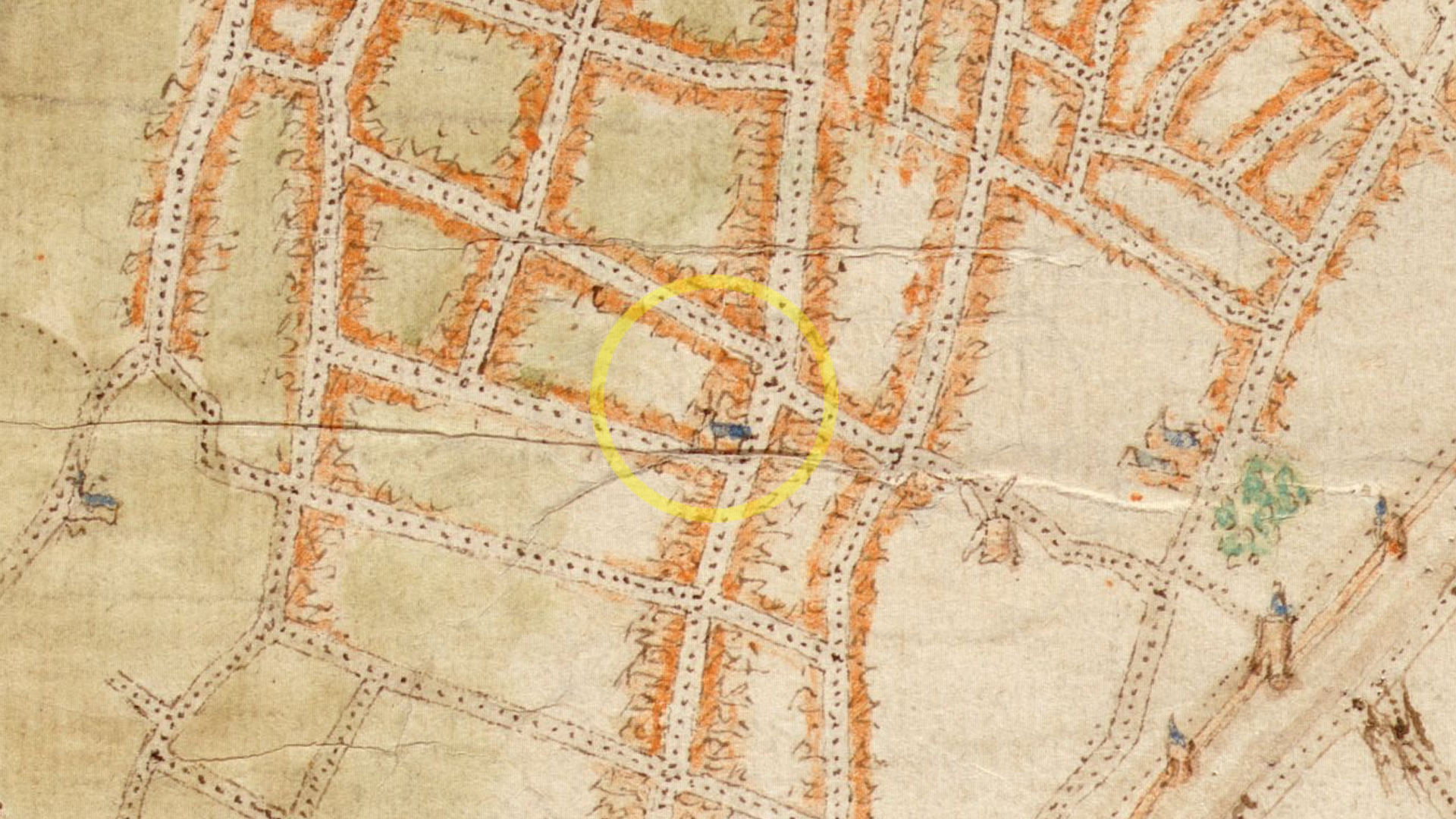
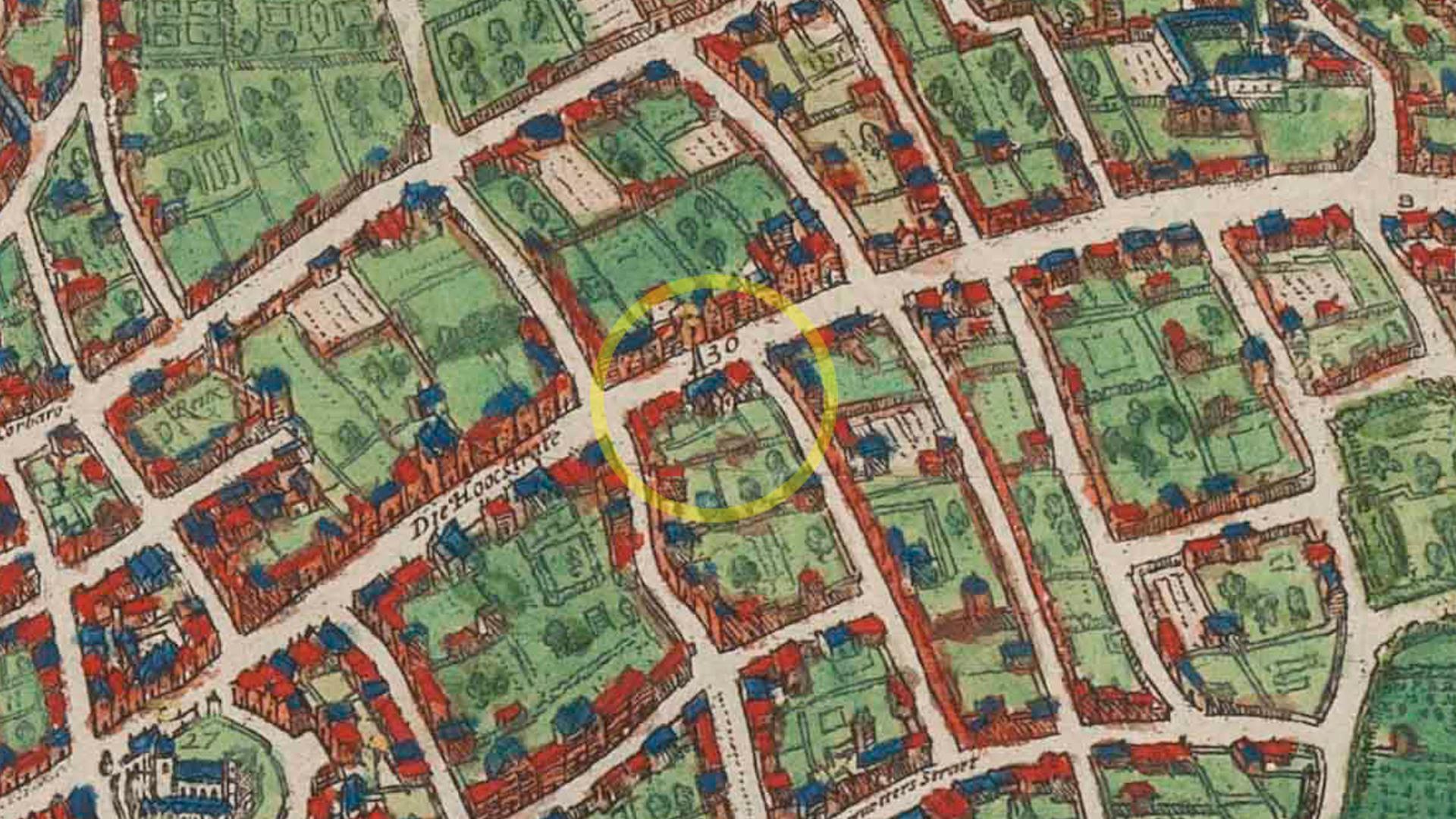
As you can see in the map from 1572, the hospice was called “S.Geleÿns gasthuÿs“, not Saint Julian.
Yet in the founding charter, the institution was explicitly placed under the protection of Saint Julian the Hospitaller (known in Dutch as Sint-Juliaan), the traditional patron saint of innkeepers, travelers, and pilgrims. As historian Thibault Jacobs demonstrated, this corresponded with the purpose of the hospice – to look after weary travellers.
There is also a tradition in Brabant that saints tied to the region were venerated, which makes sense. And Saint Julian was also said to have been born in the region of Ath in the 8th century AD.
The original Latin founding act leaves no doubt that the hospital was dedicated to Saint Julian, not Saint Ghislain.
There is also another linguistic situation specific to the bilingual atmosphere of Brabant that involves these two saints.
First of all, there existed, and probably still does, the tradition of “accessory first name”. Names of protective saints are added to the first names of children to protect them from harm. Popular saints are Saint Julian and Saint Ghislain. Saint Ghislain of Henegouwen, having supposedly evangelised in the region of Mons, was added to boys’ names to protect them from convulsions. In the context of Gallo-Romano languages such as Walloon, Liegois and Picardian – i.e. NOT French nor ‘dialects’of French, the name evolved into the likes of ‘Gilles‘ or ‘Julien‘. Often, the names of Ghislain and Julien are thus inter-changeable due to the similar sounds. On the other side of the linguistic border where Middle Frankish (today’s Dutch) was spoken, speakers also interchanged the name ‘Gislein‘ or ‘Gillijn‘ with ‘Cornelius‘ or ‘Cornelis‘. The vernacular name ‘Juliaan‘ is an even harder word to use, which is why the Latin name ‘Julianus‘ is still used more commonly as the name of the saint.
In the context of our Sint-Juliaangasthuis, the Germanic speakers of Brussels could not say the name ‘Sint-Juliaan’, so they picked the similar name of ‘Sint-Gilijn’ instead. The local vernacular thus morphed the name over generations. By the early modern era, the hospice was universally referred to as the ‘Sint-Gisleinsgasthuis‘, eventually giving its name to the street (Heekstraat) that ran alongside it.
Mirror, mirror on the wall, who were the founding brothers of Brussels’ Sint-Juliaangasthuis?
A long-standing debate among Brussels genealogists concerns the identity of the founders, Jacob and Hendrik Spiegheleren or ‘de Spiegheleren’. ‘Spiegel‘ means ‘Mirror’. Older histories frequently confused them with the patrician family ‘vanden Spieghele‘ (or ‘de Speculo‘), who belonged to the noble ‘Sleeus‘ lineage — one of the Seven Lineages of Brussels (Zeven Geslachten) — and derived their name from the inn ‘de Spiegel‘ on the Bergstraat or the nearby Spiegelbeek.
However, archival research confirms that the Spiegheleren brothers (whose surname translates to “mirror-makers”) were not patricians, but affluent bourgeois who lived and worked outside the first city wall. Rather than mixing with the urban aristocracy, their social world was bound to the local leather trade centred in the Marollen quarter. Their sister Catherine was married to Thomas de Calenvoort, a prominent tanner, while the hospital’s first provisors and executors — Willem SerSoys, Jan SerSoys, and Gillis Goedertieren — were active members of the tanners’ guild (‘huidenvetters‘).
Like the other guesthouses in Brussels, the Sint-Juliaangasthuis is another example of the merchant class taking care of themselves.
In this context, the ‘travellers’ would most likely be the travelling traders associated with the leather trade who travelled through the main artery of Hoogstraat.
The street where the hospital stood, initially known as the Beerselborrestraat, was later renamed Spiegelstraat (Mirror Street) – or ‘Speegelstroet‘ in the local Brussels-Brabant dialect – in the 17th century, preserving the memory of the mirror-making founders whose hospice anchored this neighbourhood.
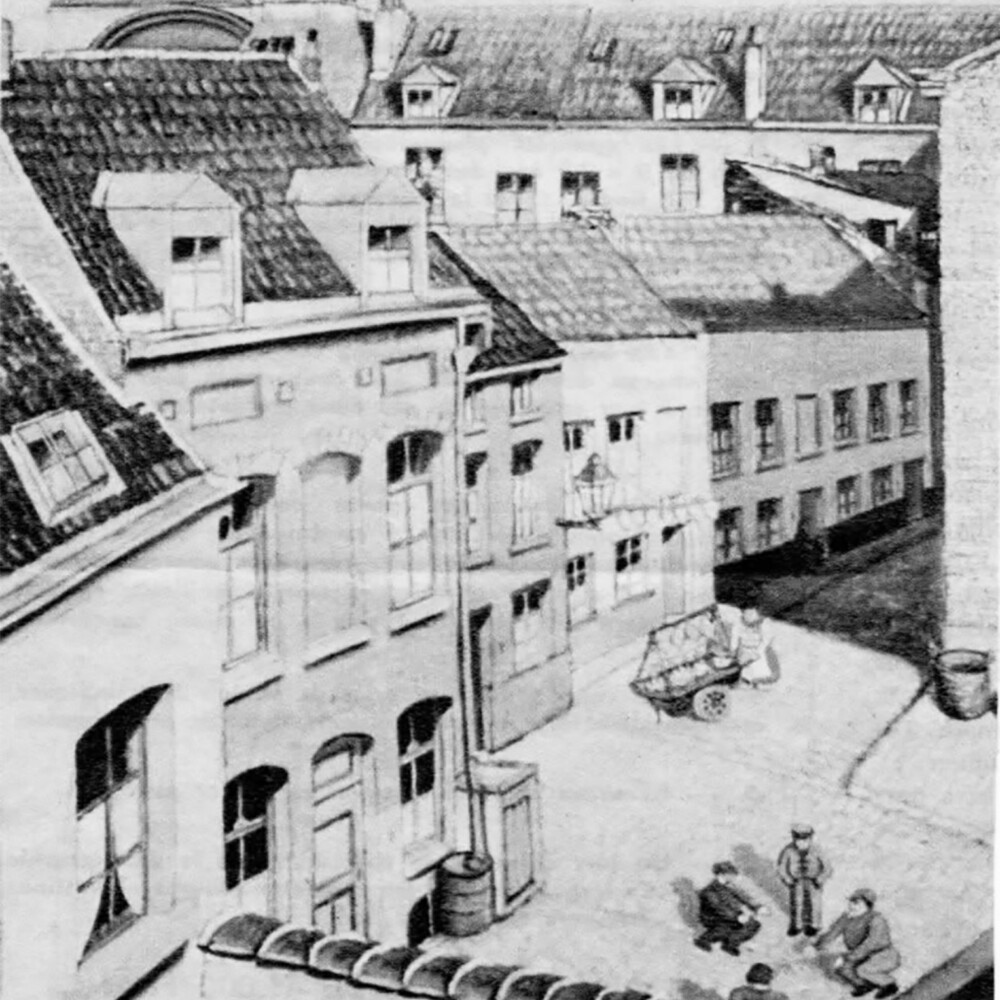
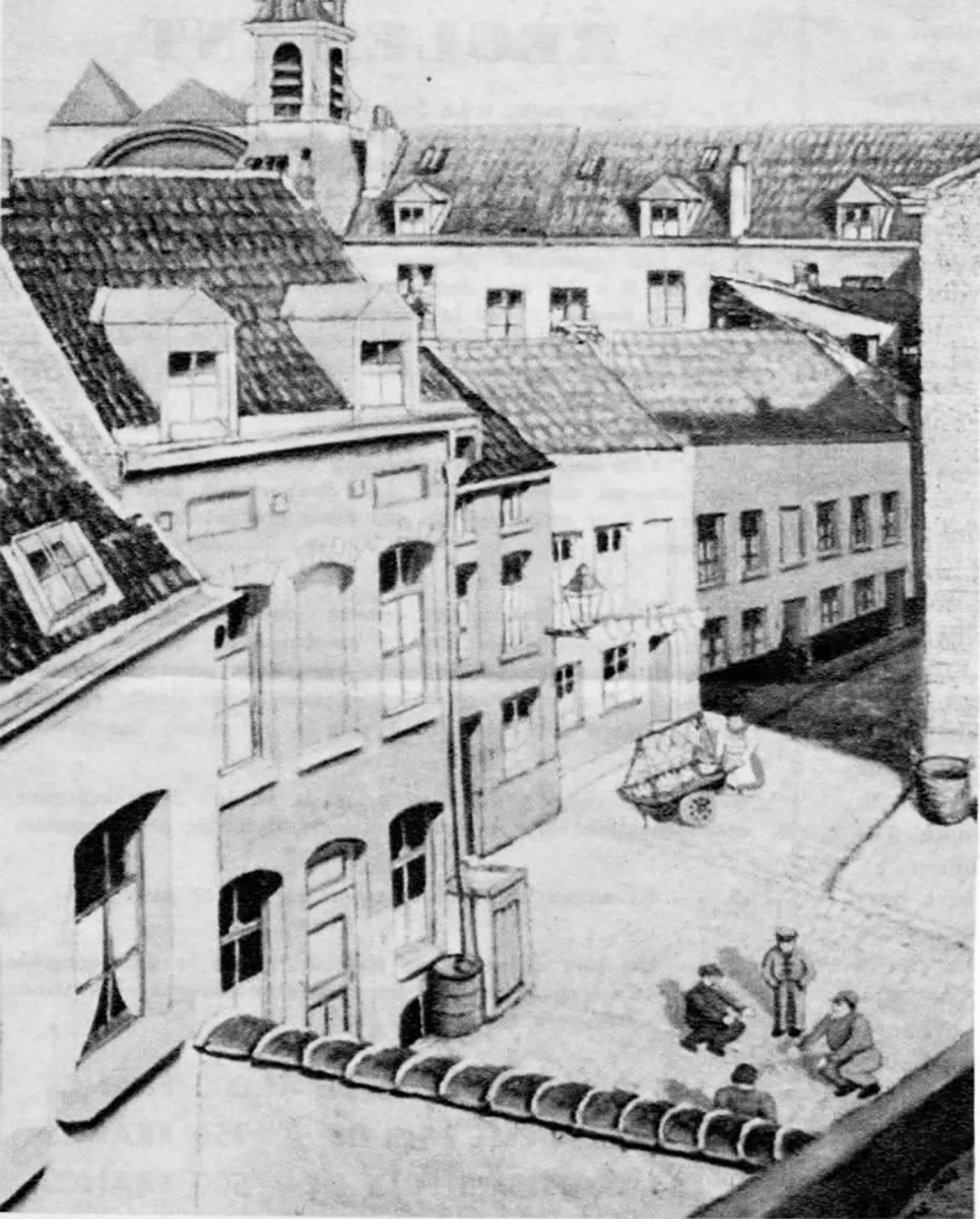
The Spiegelstraat had always been a popular neighbourhood with narrow alleys filled with families cramped into one room especially in the 19th century, such as the ‘Impasse du Cadre‘ as depicted in the drawing below. There, you can see the chapel of the Sint-Juliaangasthuis located on the Hoogstraat in the background.
From Oak to Angel then to Saint
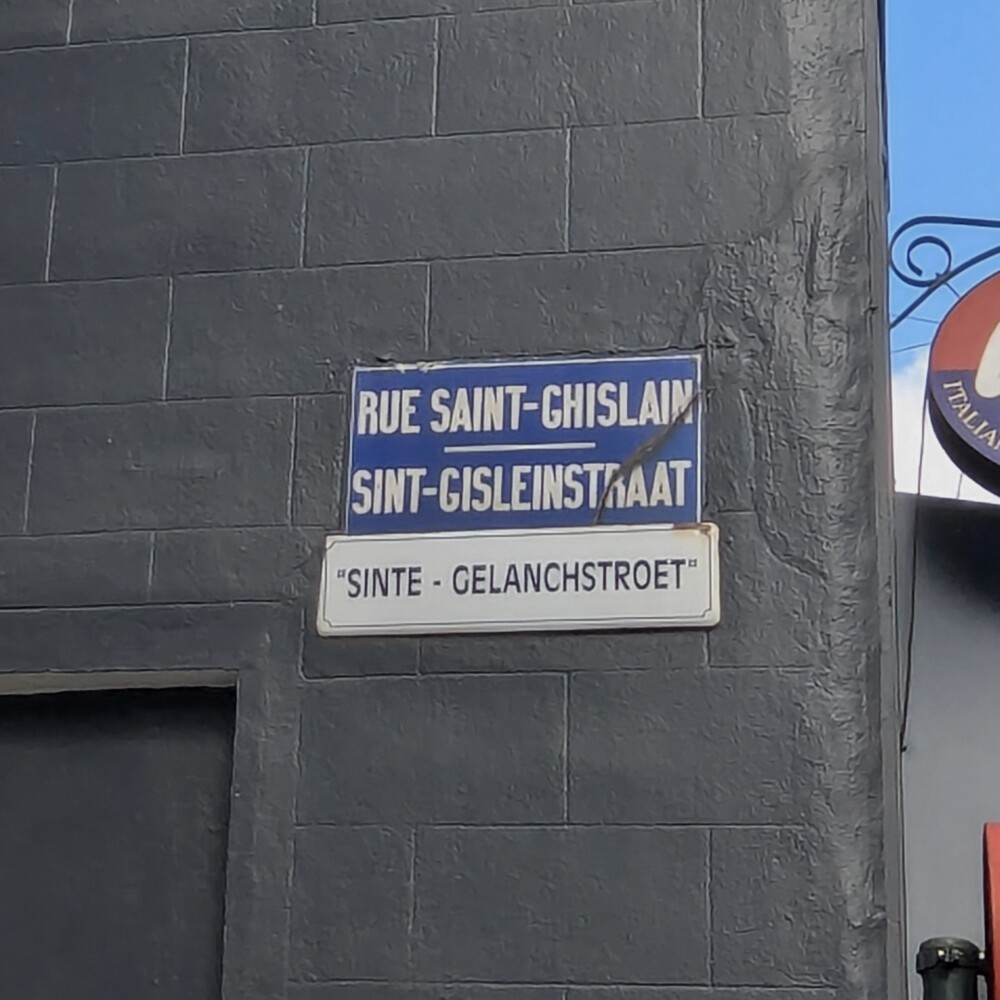
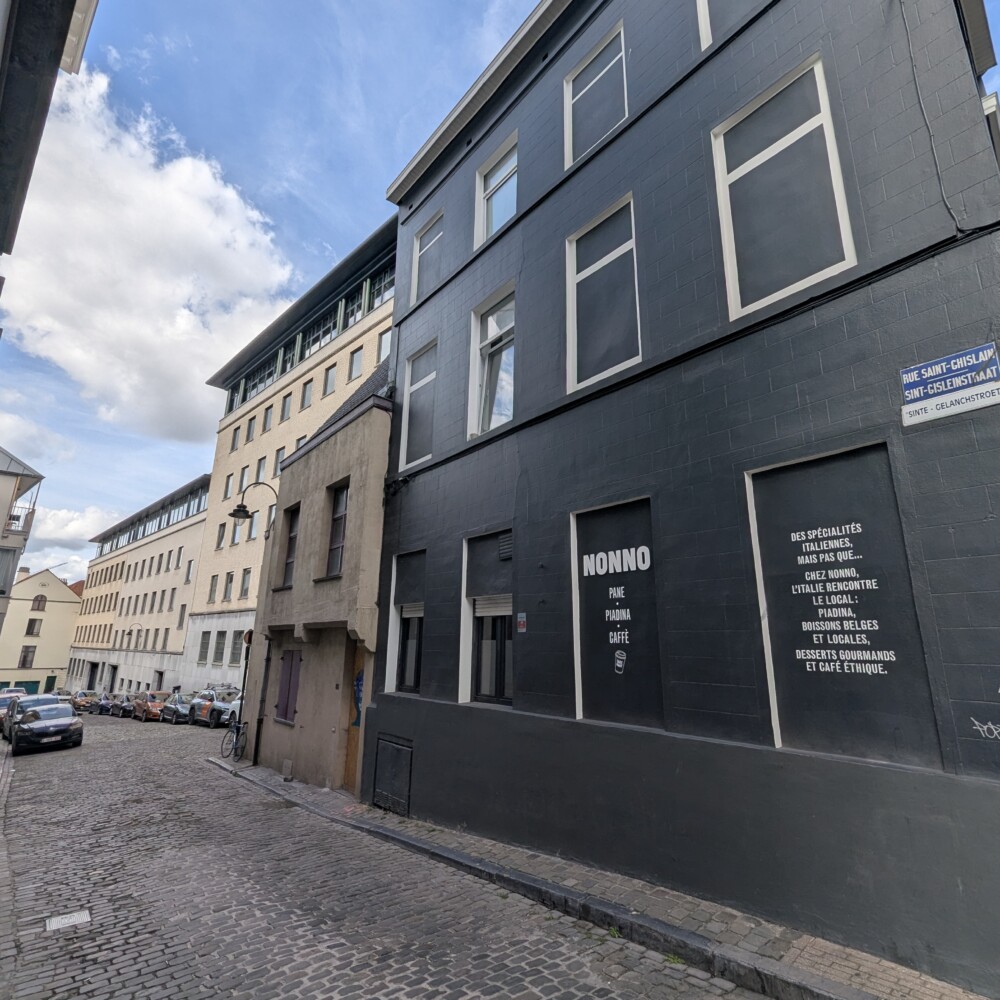
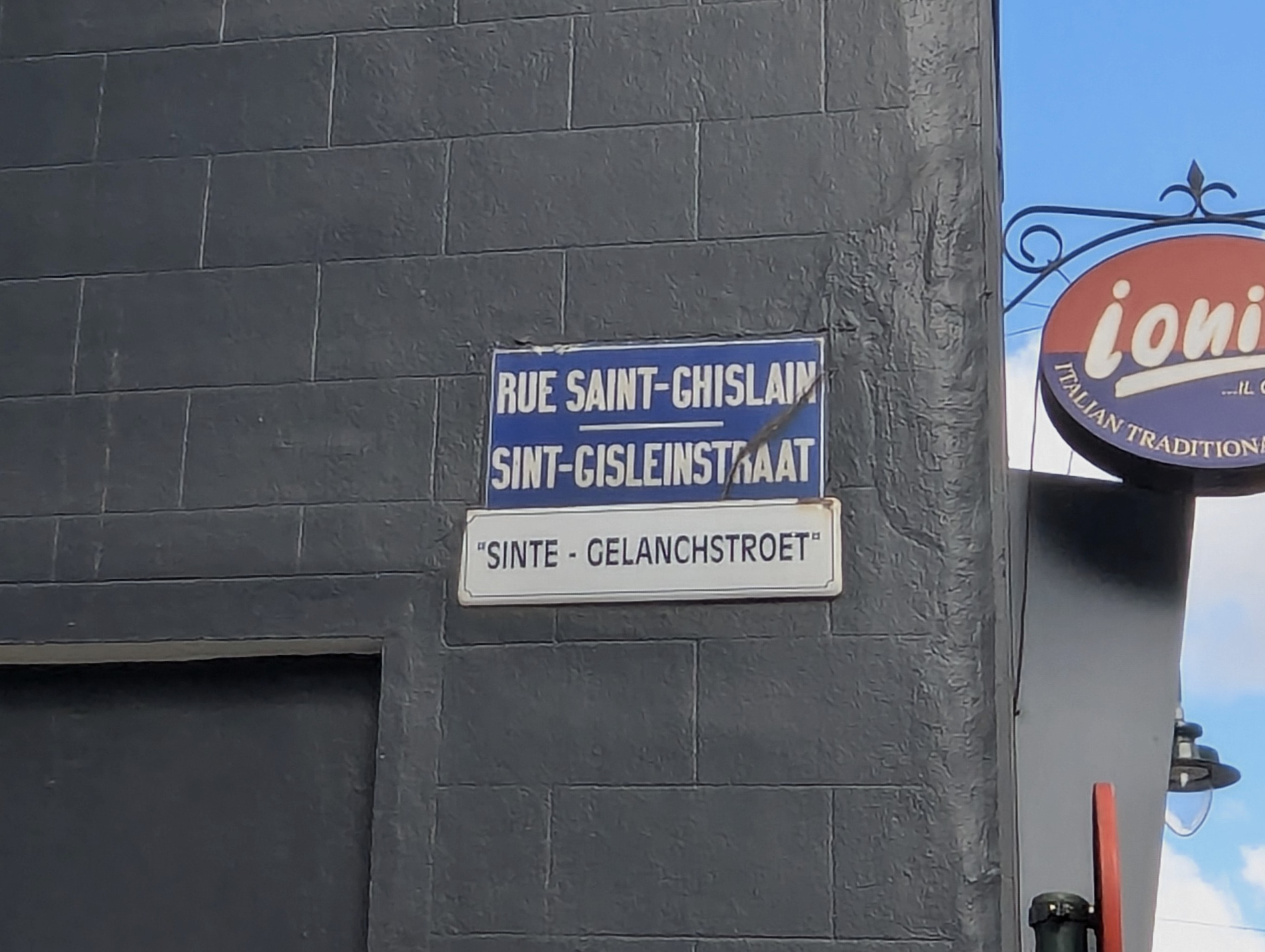
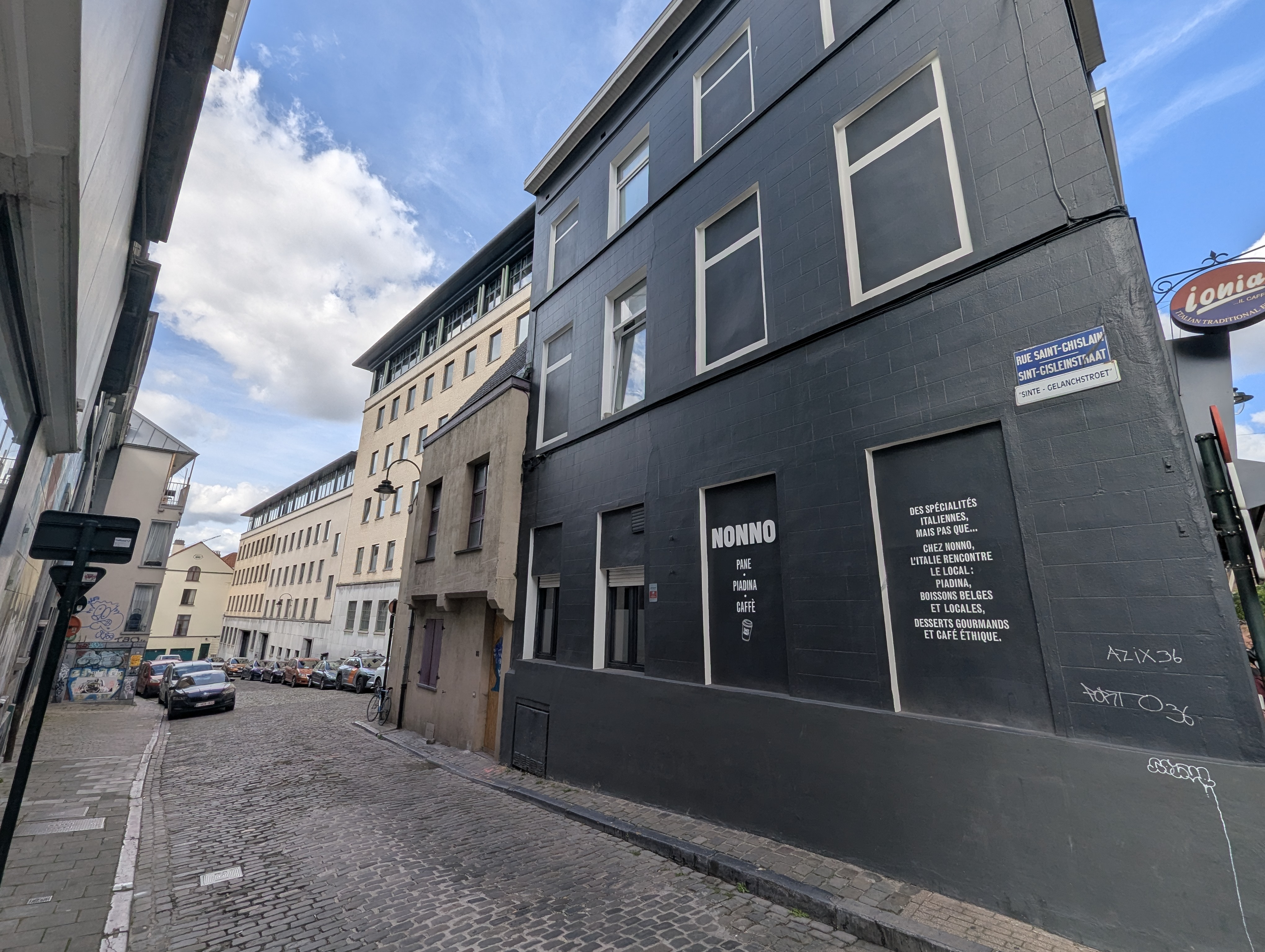
On the other side of the Sint-Juliaangasthuis, running perpendicular to the Hoogstraat, was the ‘Heekstraat‘, now known as Sint-Gisleinsstraat (Rue Saint-Ghislain) after the guesthouse. First documented in 1305 as the ‘Heecstrate‘, the street was said to derived its name either from a prominent 14th-century landowner, Gossuinus vander Heect, who possessed a grand estate with a gatehouse, vineyard, and barn in the area. However, historian Bram Vannieuwenhuyze proposed that it simply derived from the Middle Dutch word ‘eect‘ (a grove of oak trees). I agree with his proposal as streets named after people were very rare in medieval Netherlands.
By 1491, the street appeared in records as the ‘dIngelstrate‘ (Angel Straat), likely after an inn bearing the sign of the Angel.
Only after the hospice of Saint Julian/Ghislain grew into a dominant landmark did the entire street assume the name ‘Sint-Gisleinsstraat‘, cementing the memory of the medieval foundation in the urban landscape.
How did it look like?
In the 16th century, the Sint-Juliaangasthuis was a modest but bustling urban hospice built around two adjoining gabled houses along the Hoogstraat. The ground floor featured a communal sleeping hall with hearths and timber beds where poor wanderers could rest for one or two nights, while the upper floors housed private rooms for the provisors and storage for agricultural rents collected from Vlezenbeek and Gaasbeek.
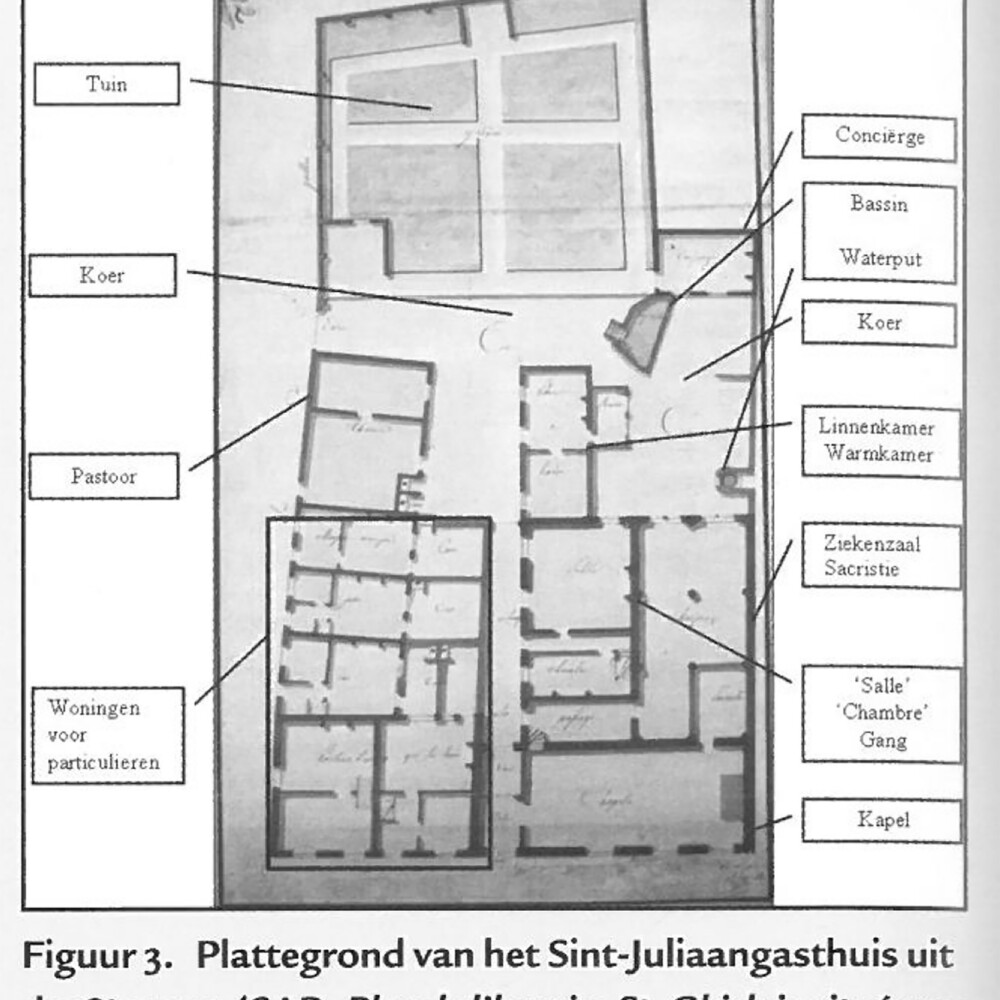
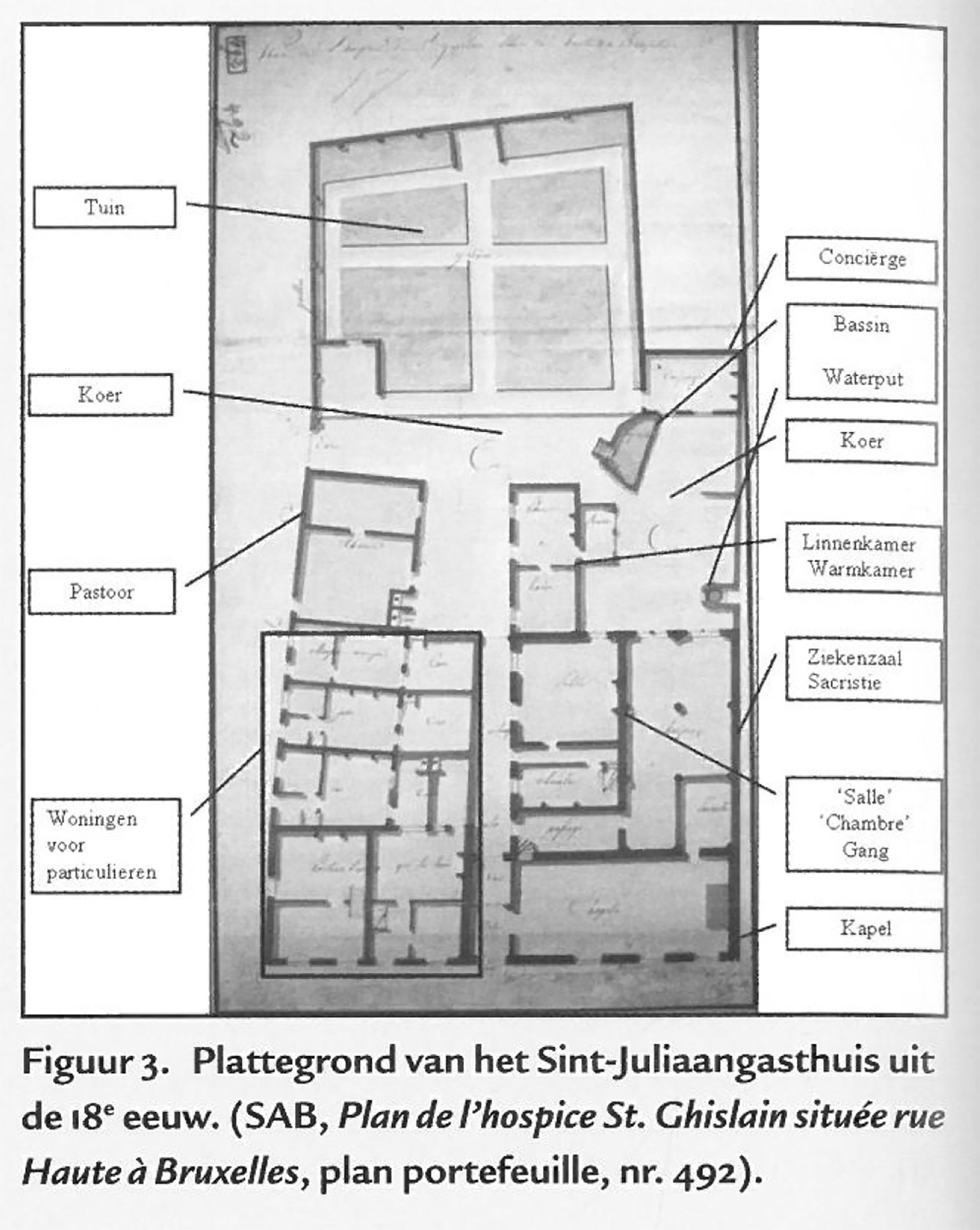
According to the very thorough analysis by Bijloos in 2010 entitled “De ruimtelijke organisatie van een gasthuis in de achttiende eeuw – Het verdwenen Sint-Juliaangasthuis aan de Hoogstraat in Brussel“, the complex contained sleeping halls, kitchen and dining area, and some houses perhaps for the personnel in the side of the Sint-Gisleinsstraat. The chapel definitely was located on the Hoogstraat itself on the corner with the Spiegelstraat. From the surviving floor plan below, dating from the second half of the 18th century, you can see how the guest house was divided. What Bijloos emphasized, was the garden, which was also a feature of the other hospices of Brussels. The garden of the Sint-Juliaangasthuis was modest and walled, had paths in the form of a cross, although it was not fully symmetrically a square. Whether the garden contained medicinal herbs or was used to plant vegetables and fruits is not known.
The hospice survived religious upheavals, Calvinist rule, and the bombardment of 1695, continuing its charitable function well into the 18th century. However, during the French occupation in 1798, the institution was suppressed and its assets nationalized. In 1804, the hospice building was sold as national property and converted into private commercial housing, leading to the gradual dismantling of its medieval interior.
The ‘Apparition of Christ to Saint Julian’ by Gaspar de Crayer
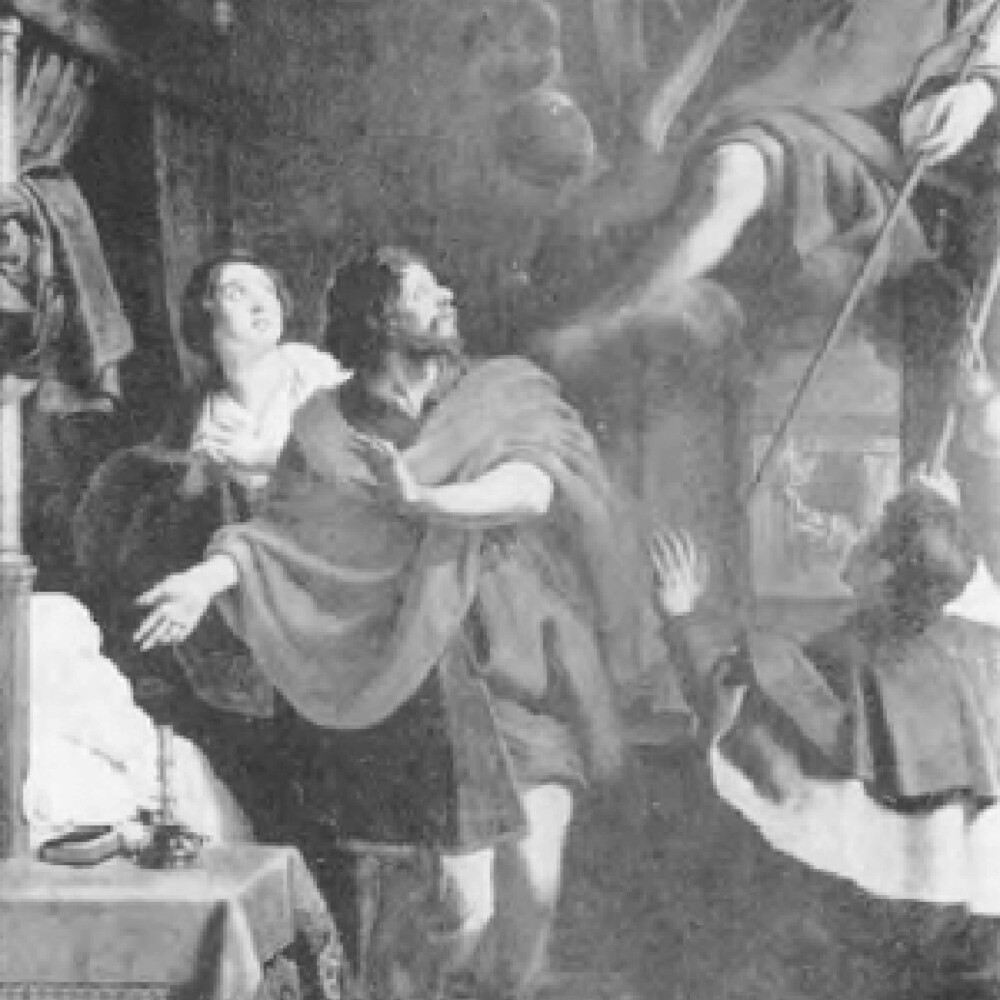
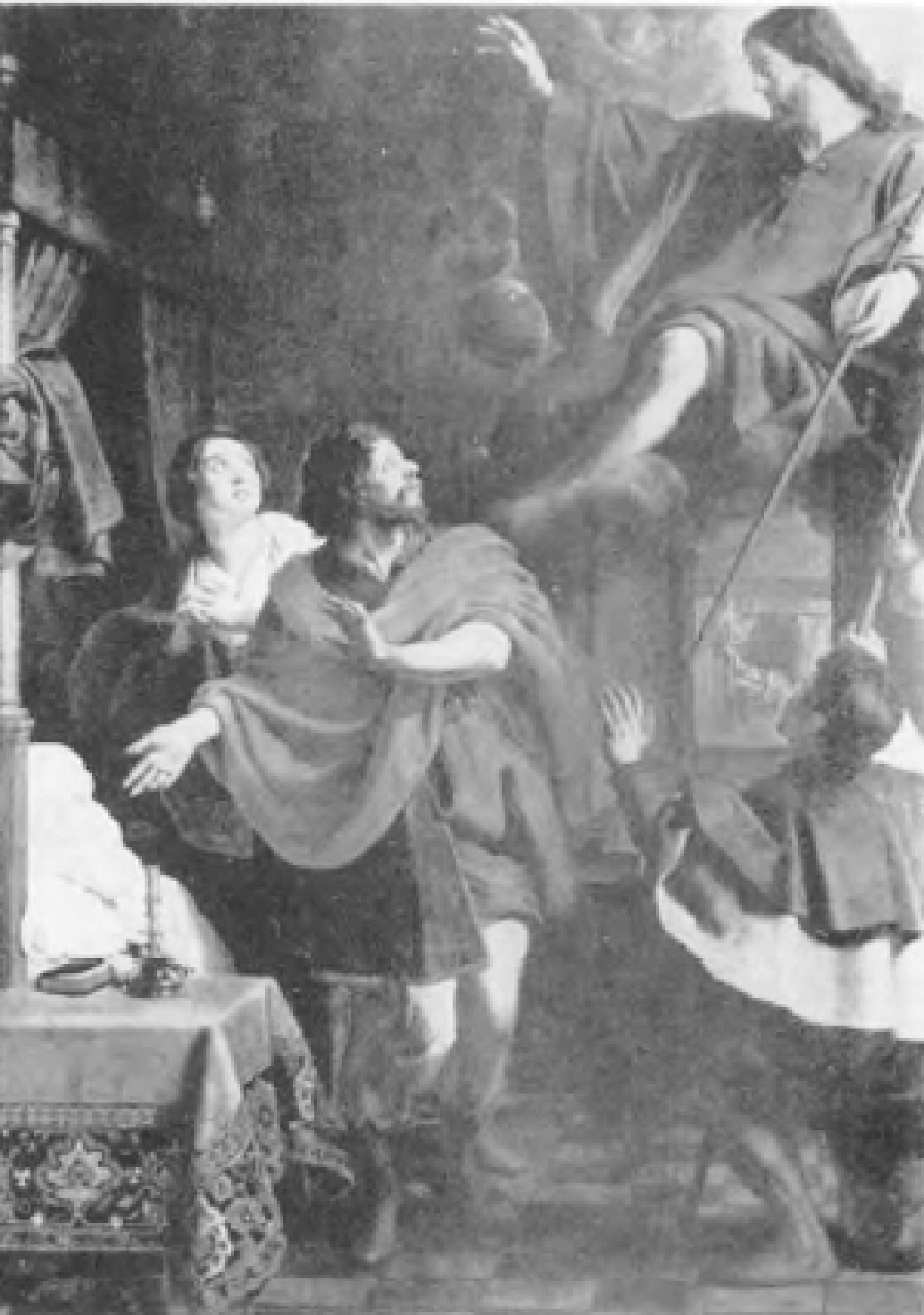
There is nothing left from the Sint-Juliaangasthuis, except for this painting known as ‘The Apparition of Christ to Saint Julian the Hospitaller‘ by Baroque painter Gaspar de Crayer (1584–1669).
Now preserved in the Fine Arts Museum of Belgium, the painting was in line with the style of the Counter Reformation and very much mirroring the works of Peter Paul Rubens. The work illustrates a key moment of the medieval legend about Saint Julian where, after he killed his parents by mistake, he withdrew himself to a river bank with his wife and transported travellers across to atone for his sins. His redemption came when he received a man dying from cold and leprosy, who turned out to be Jesus Christ who appeared to pardon him of his sins.
Once again, according to Bijloos, the painting was likely produced in 1623 when the chapel underwent a renovation.
There was also an interesting clue in the painting: there, where Jesus appeared to Saint Julian and his wife, was actually the common sleeping hall of the hospice!
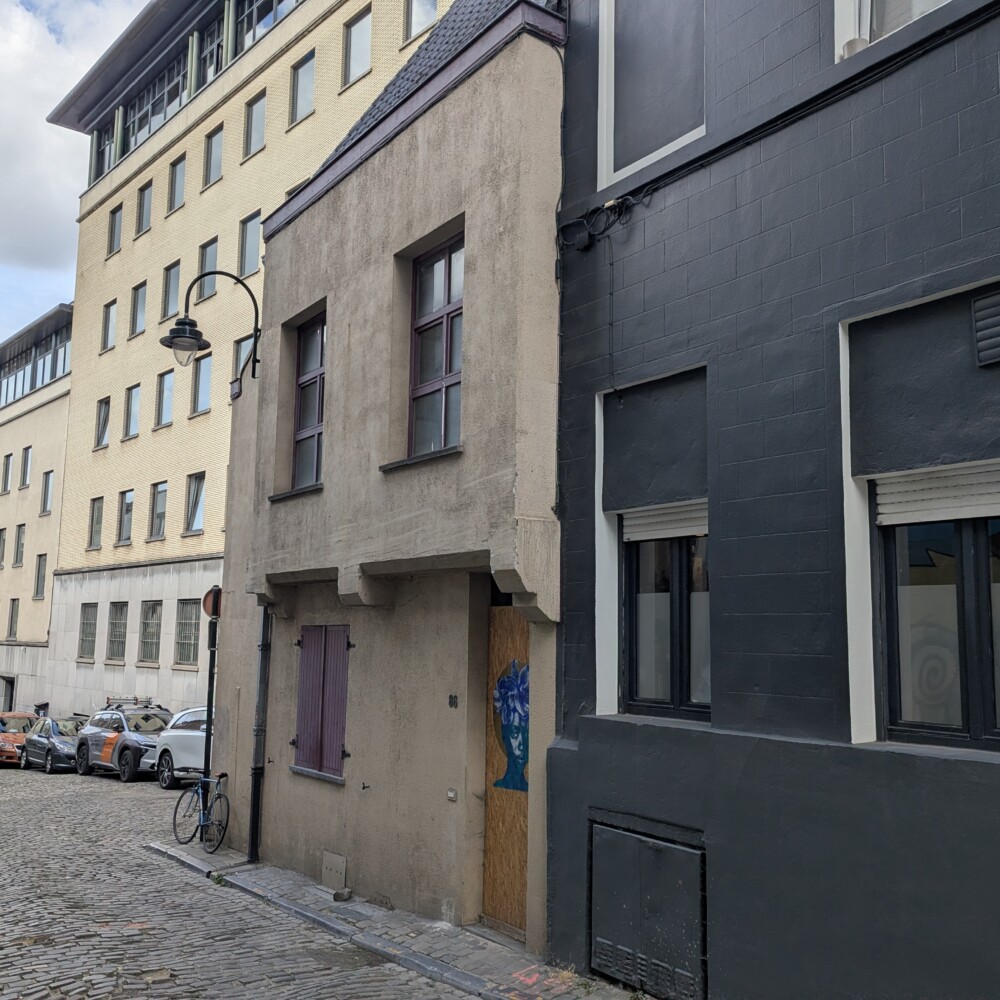
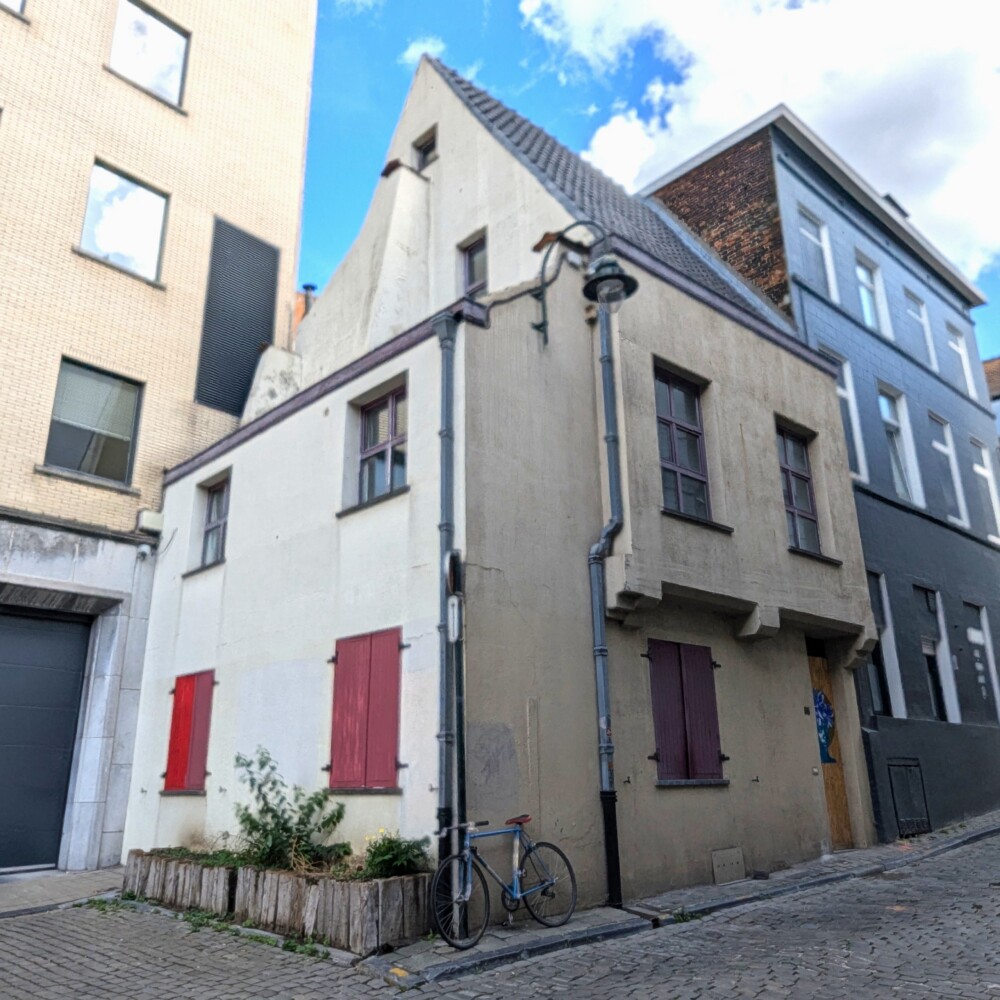
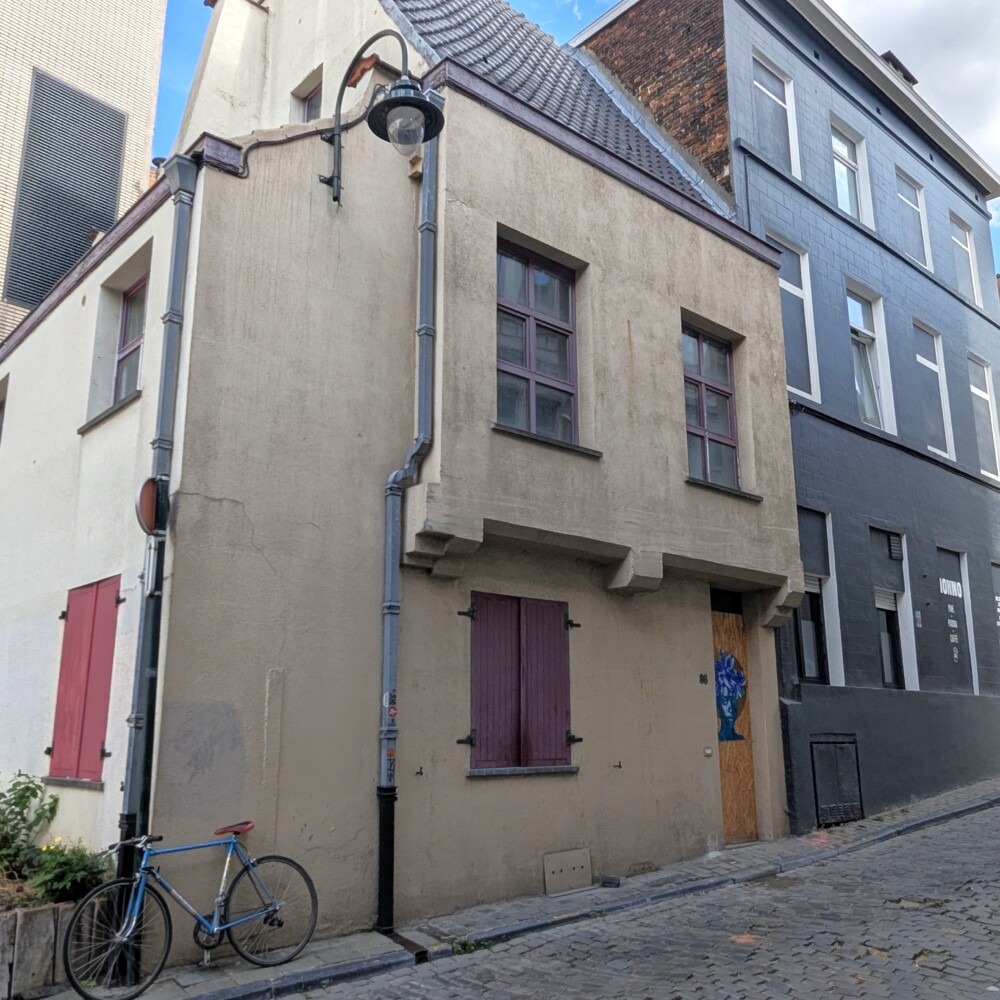
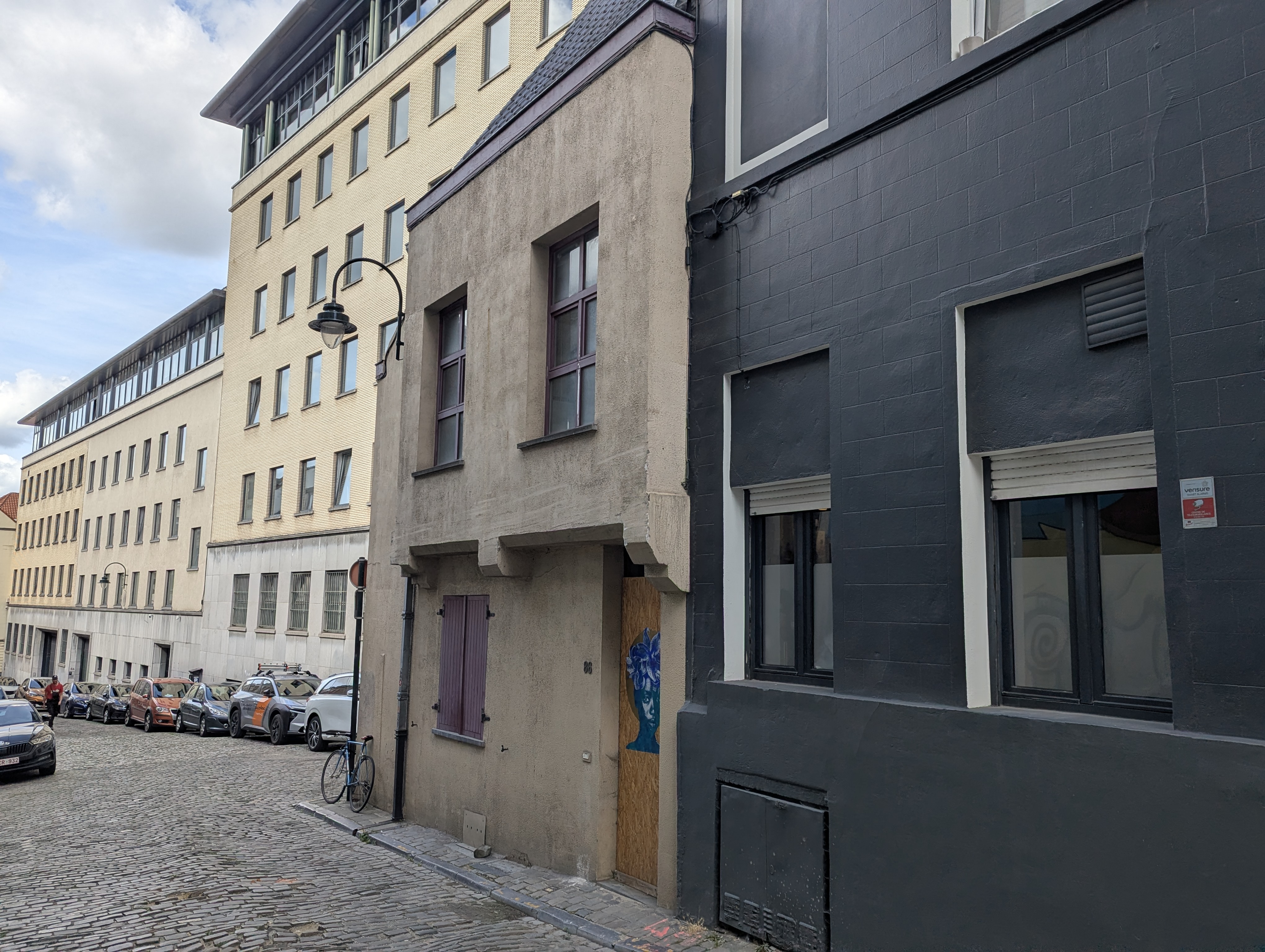
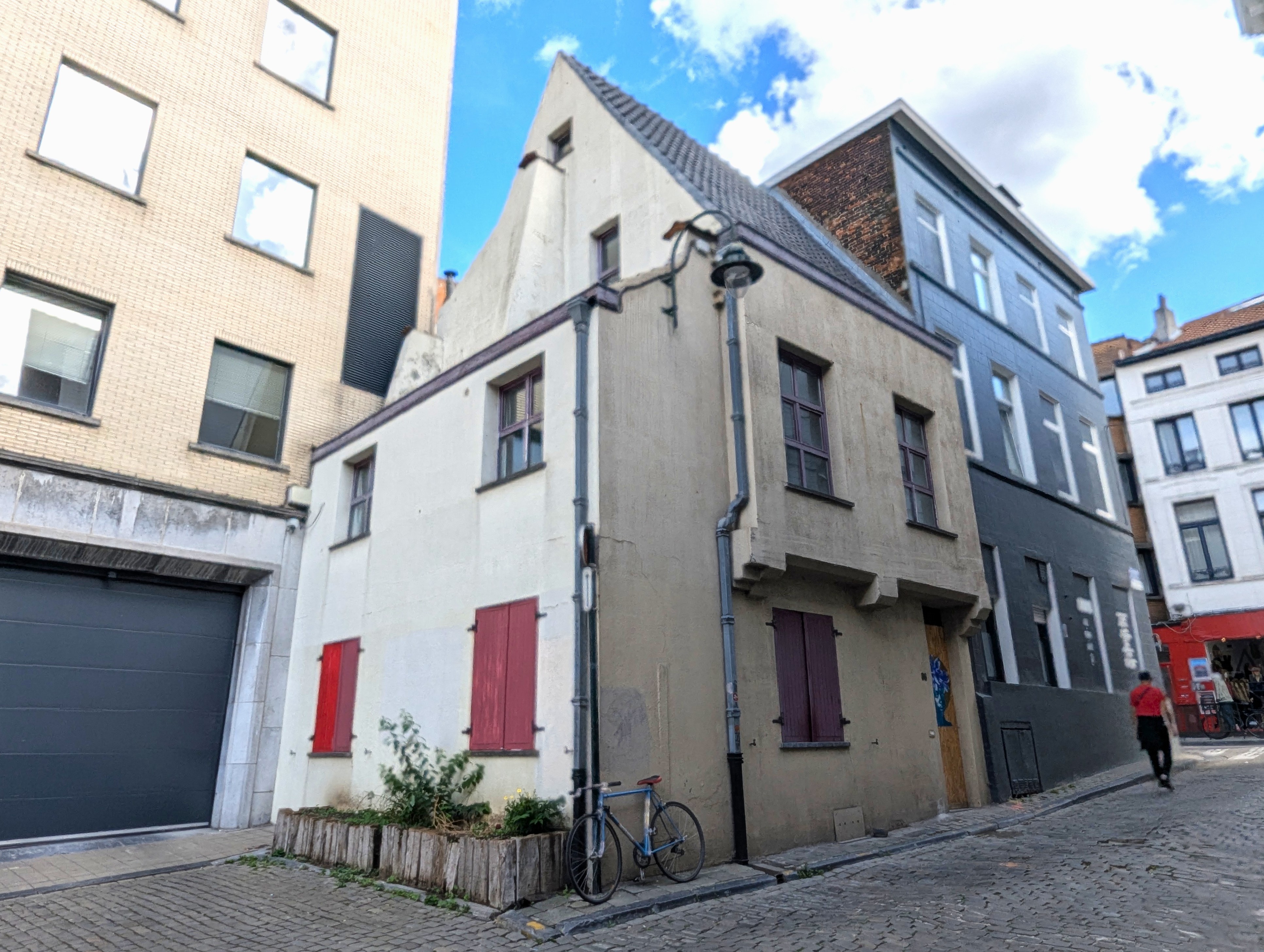
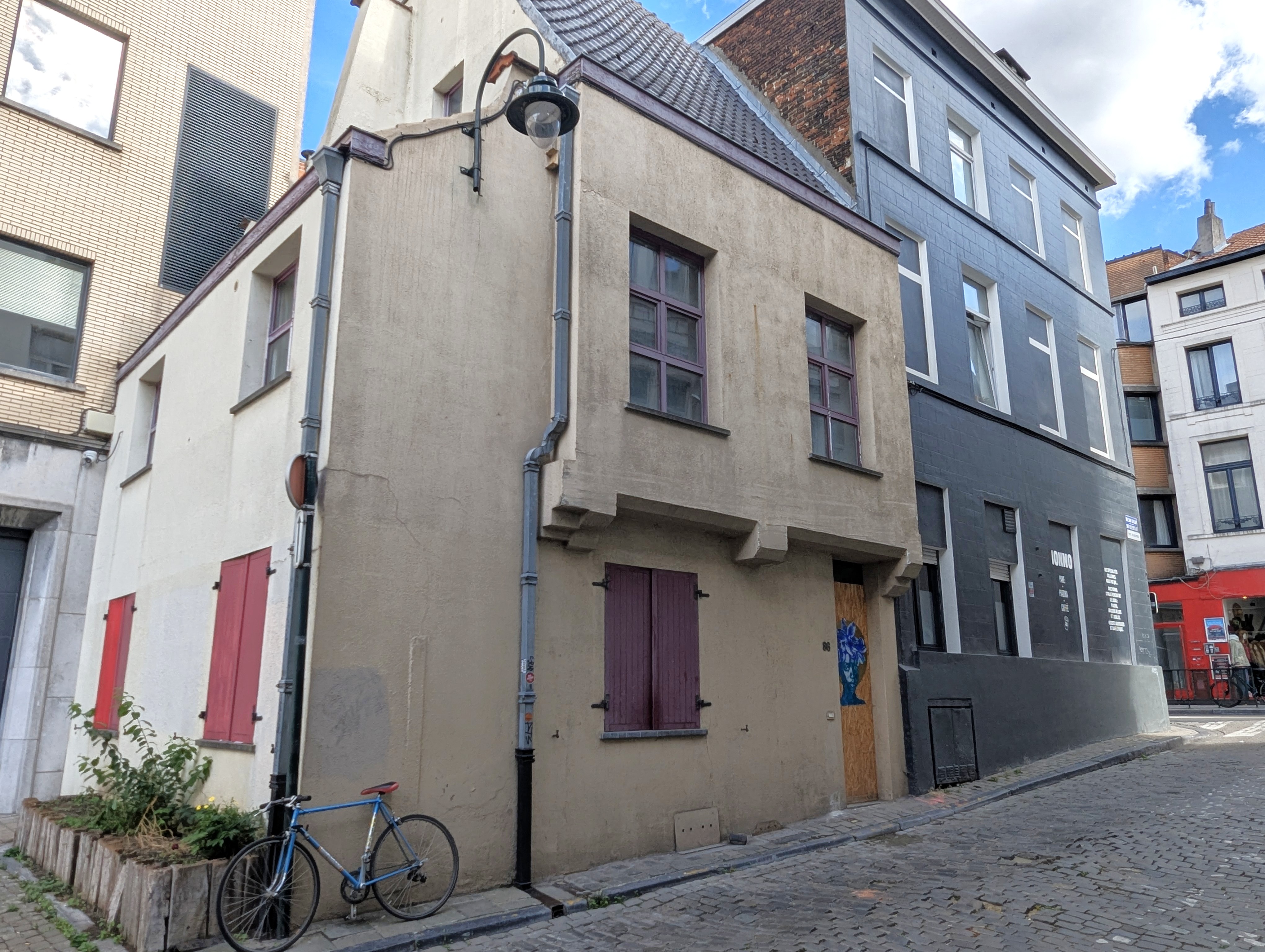
The Oldest House in Brussels? Sint-Gisleinsstraat Number 86
While the original hospital buildings were altered, a remarkable architectural contemporary survives just down the street. At Sint-Gisleinsstraat Number 86 stands a rare, double-bay timber-framed house dating from the first half of the 16th century (ca. 1500–1550).
Originally part of a larger row of three connected timber-framed dwellings, number 86 features an upper story that jetties over the ground floor on carved wooden corbels, flanked by heavy stone firewalls. Though two adjacent bays were demolished around 1960, this extraordinary survivor was meticulously restored in 1985–1986 under architect F. Bogaert, standing on the medieval building line as one of the last remaining half-timbered houses in all of Brussels.
Was this house part of the Sint-Juliaangasthuis complex that spread from the Spiegelstraat to the Sint-Gisleinsstraat? If so, this house would be the only surviving building of the medieval hospice.
Current situation
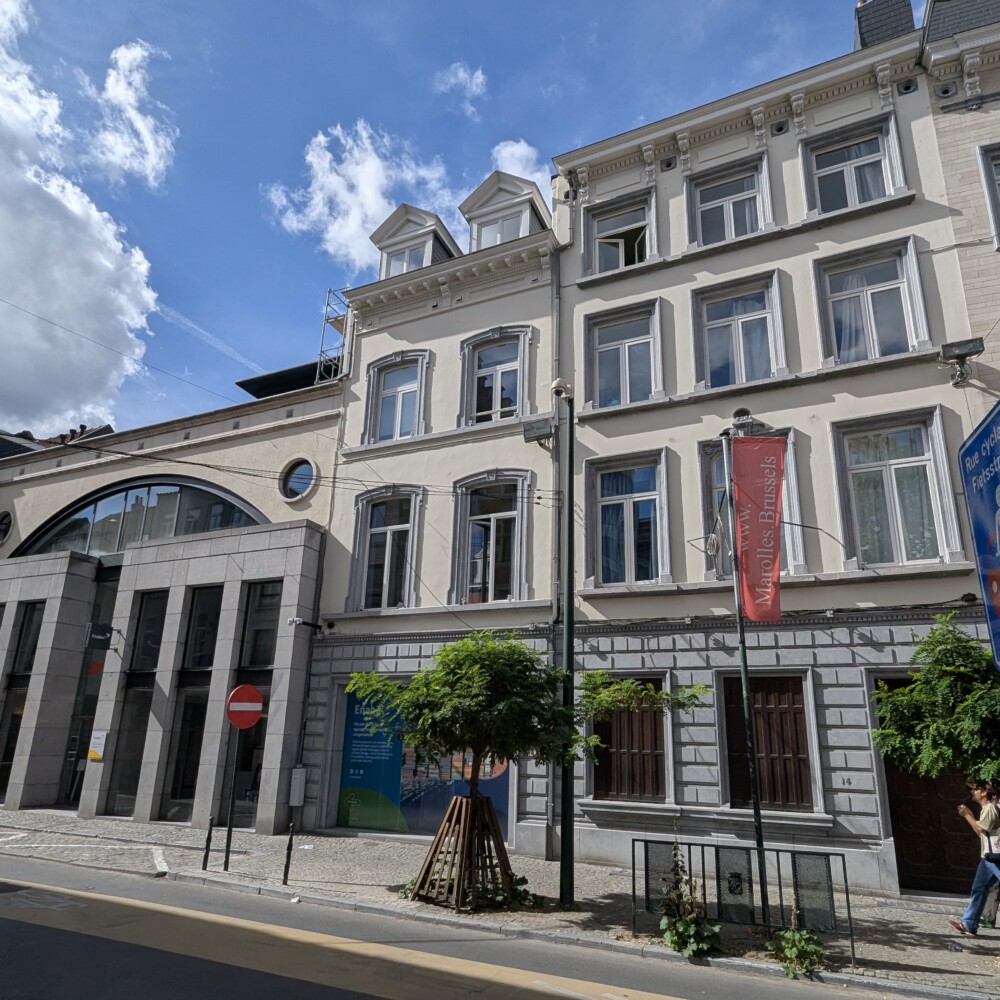
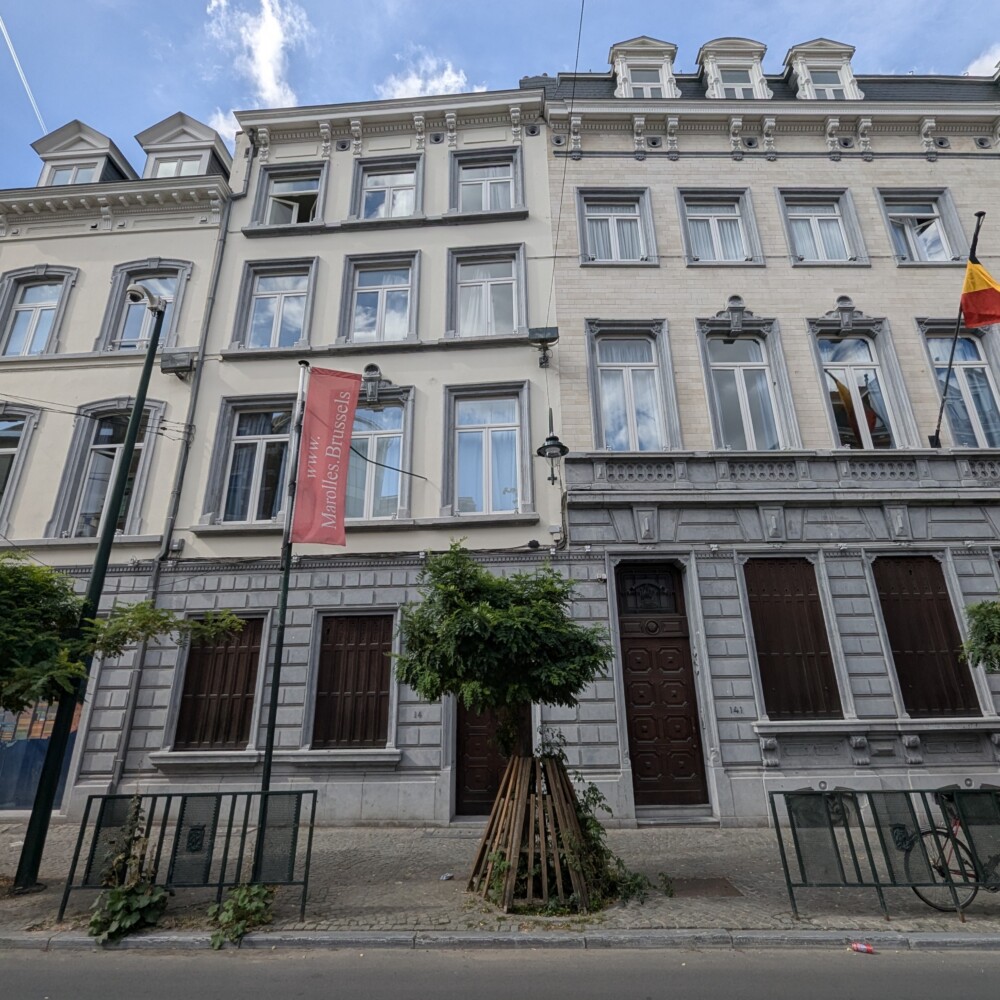
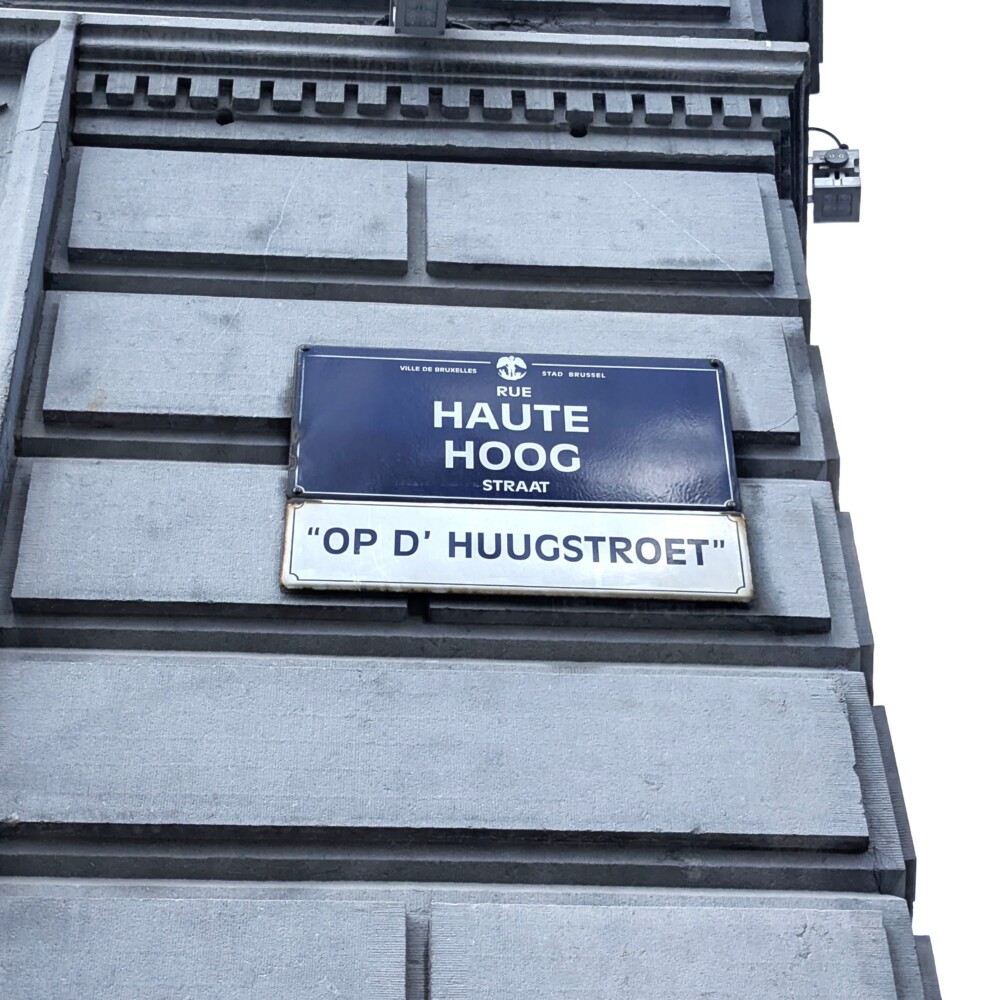
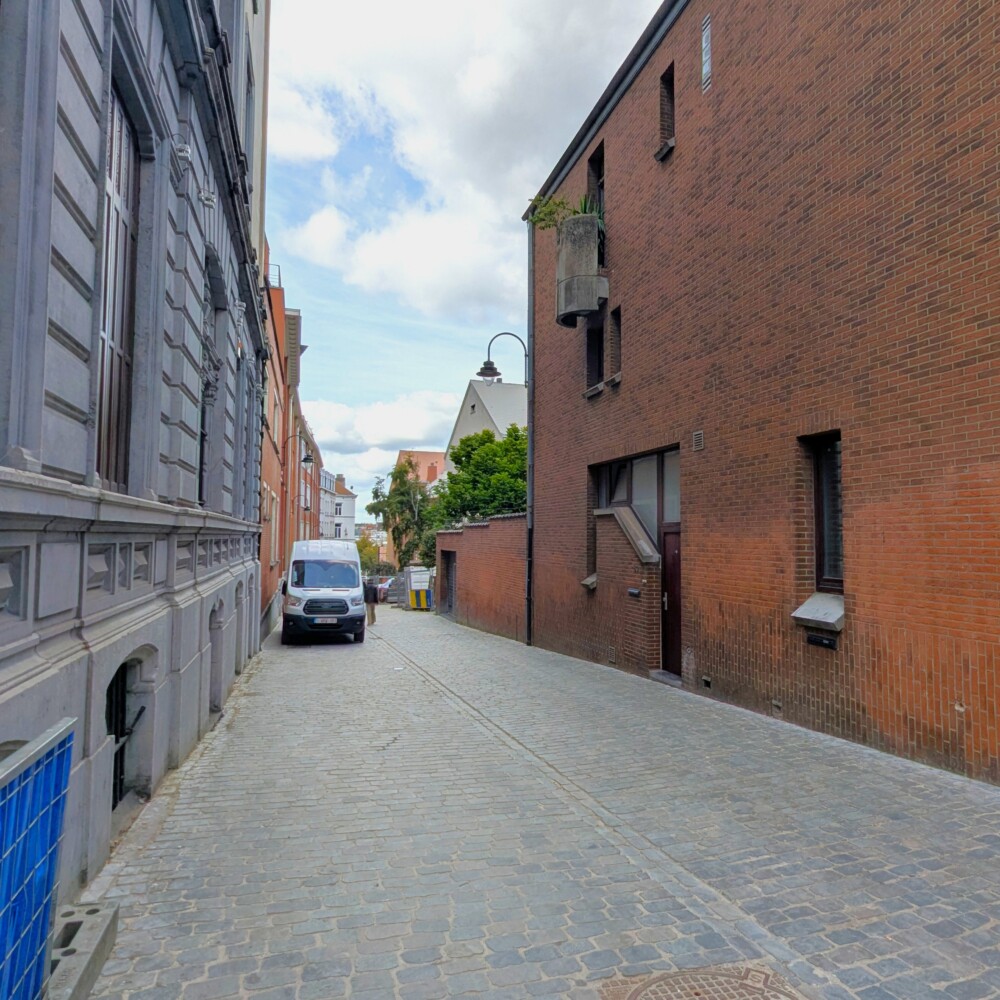
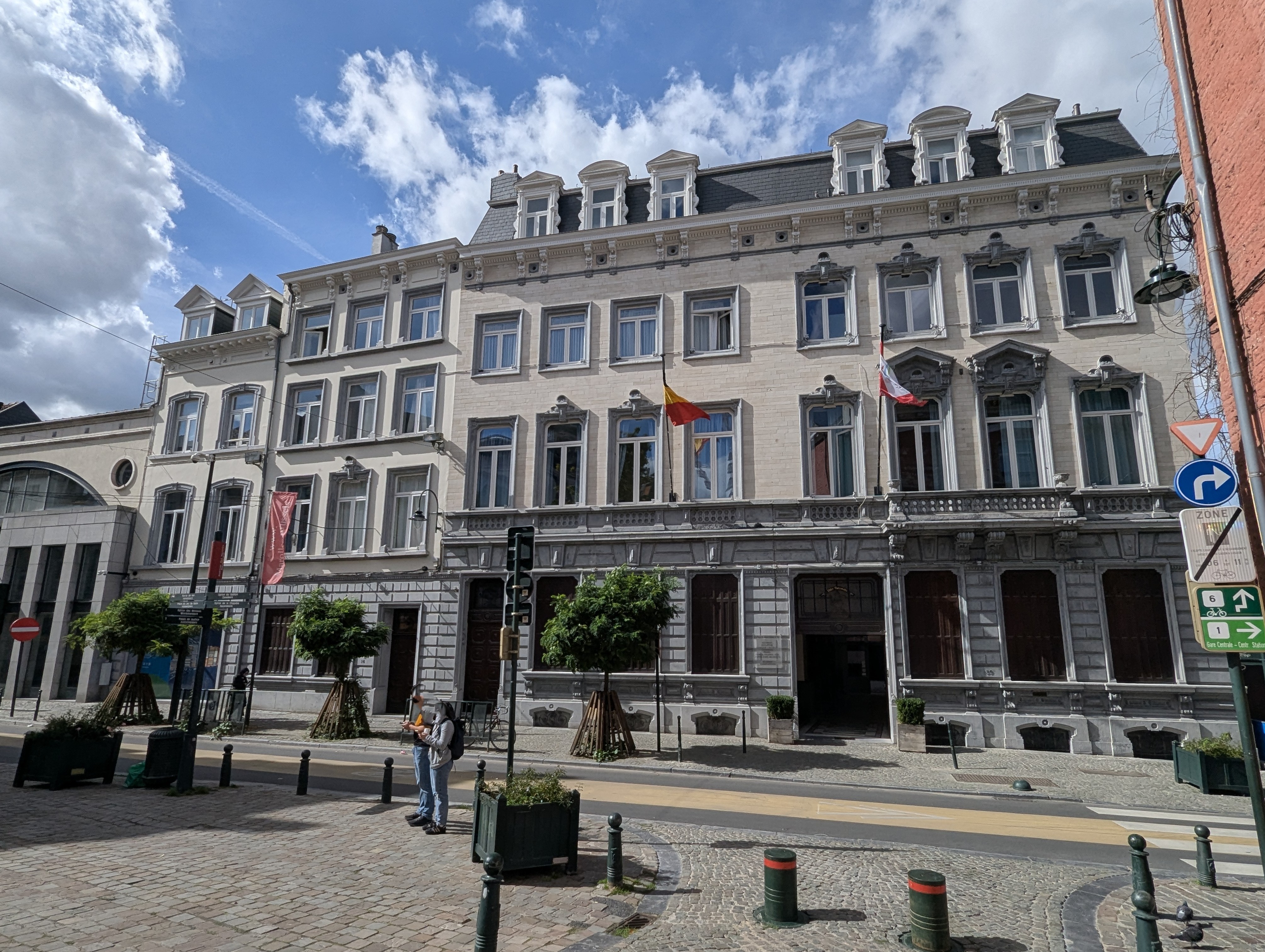
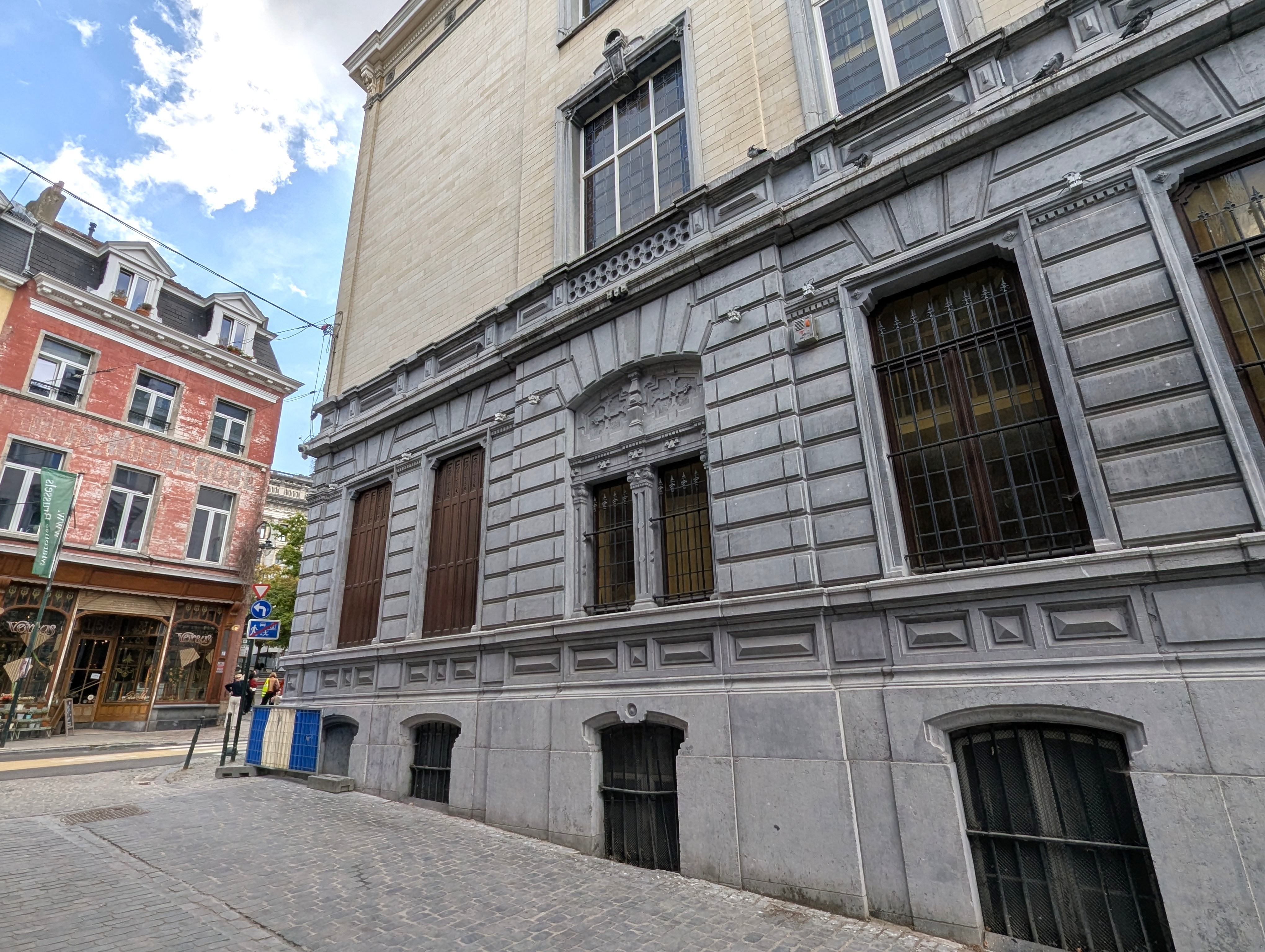
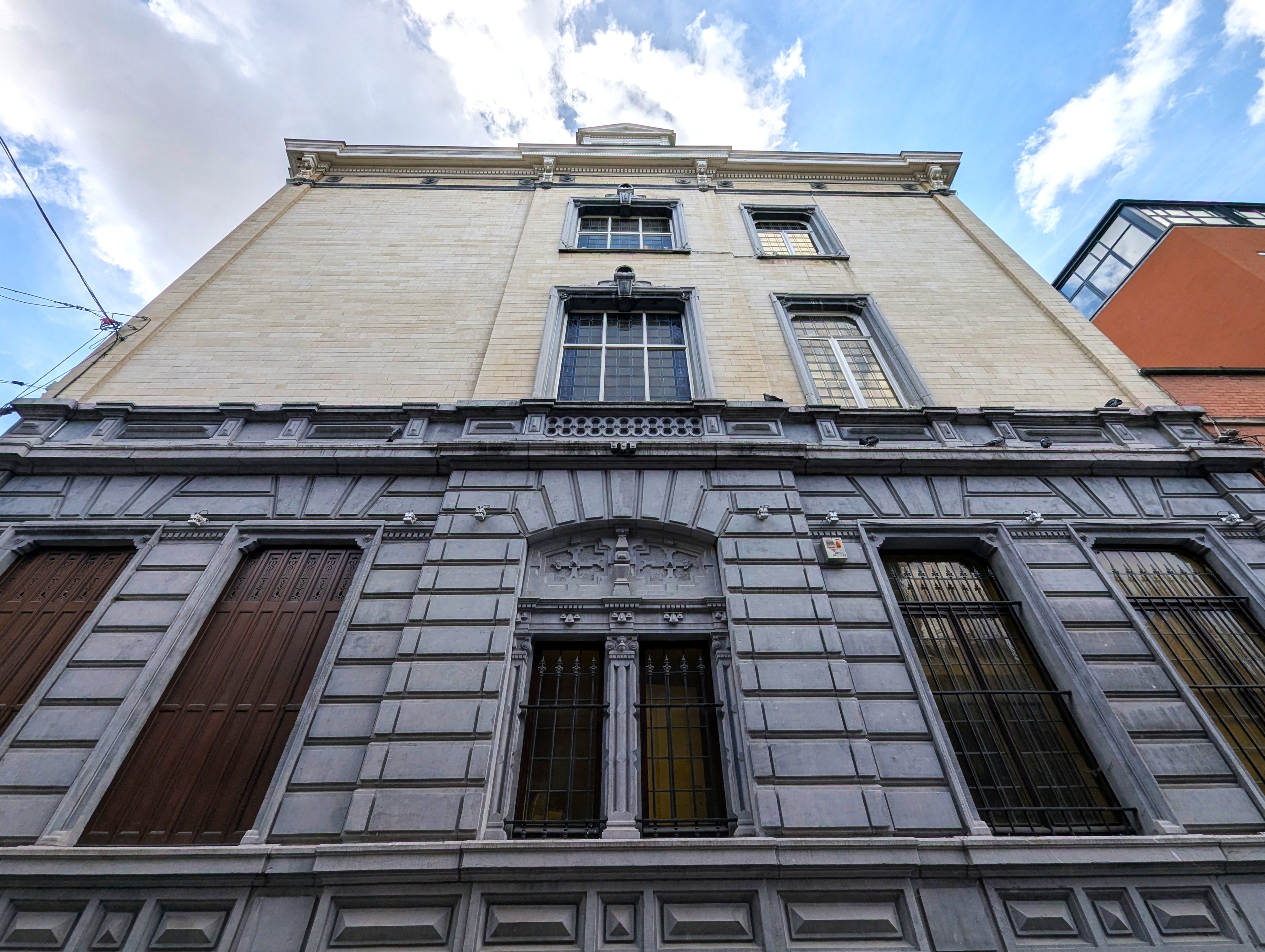
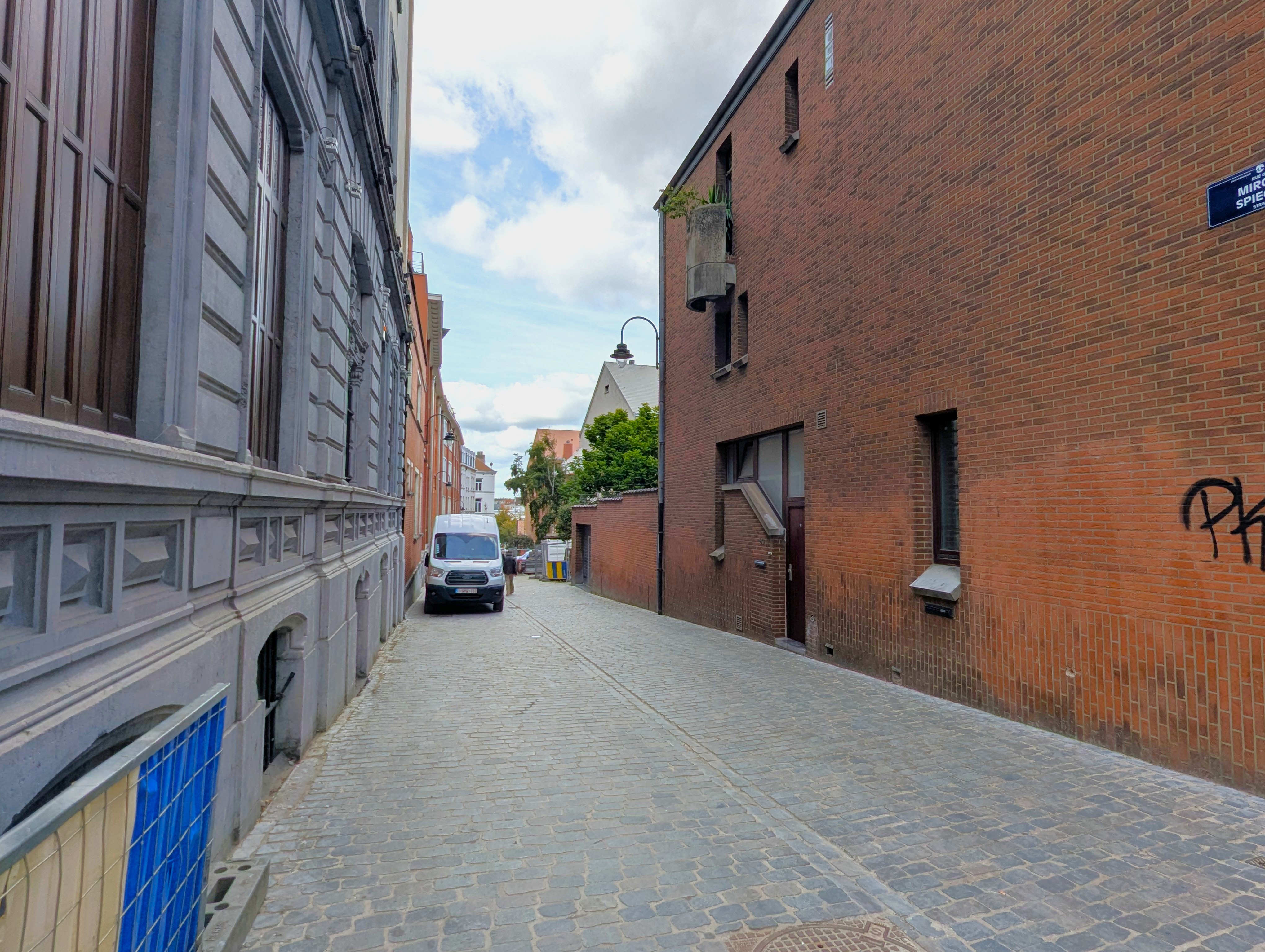
Today, the area around the former Sint-Juliaangasthuis forms part of the vibrant, historic Marollen quarter. The streetscape of Hoogstraat (Rue Haute), Spiegelstraat (Rue du Mirroir) and Sint-Gisleinsstraat (Rue Saint-Ghislain) underwent dramatic widening between 1891 and 1894 during the urban renewal of the so-called ‘Visitandines Quarter‘, which swept away narrow medieval alleys and replaced them with 19th-century artisan housing.
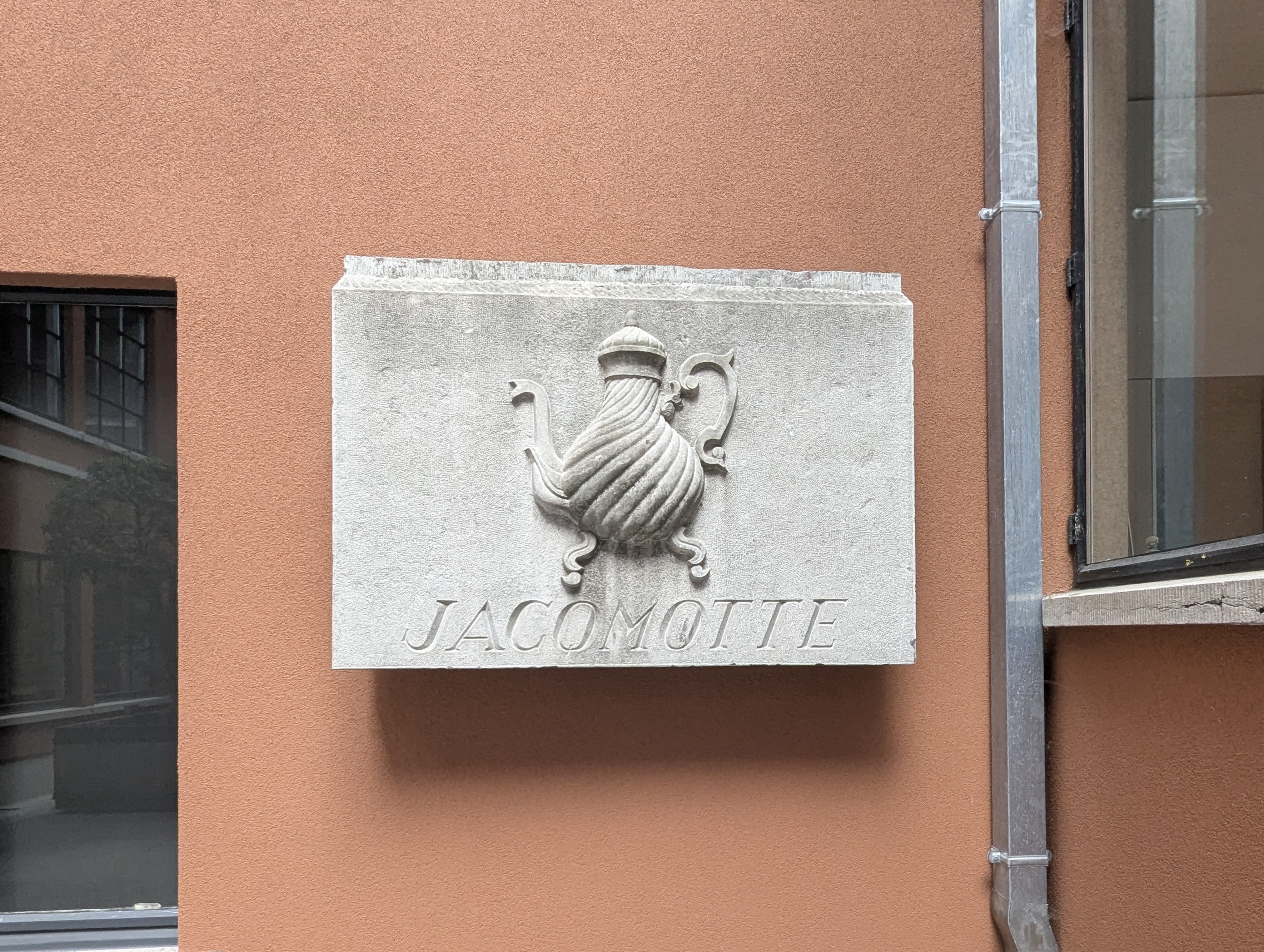
The Jacqmotte Coffee House
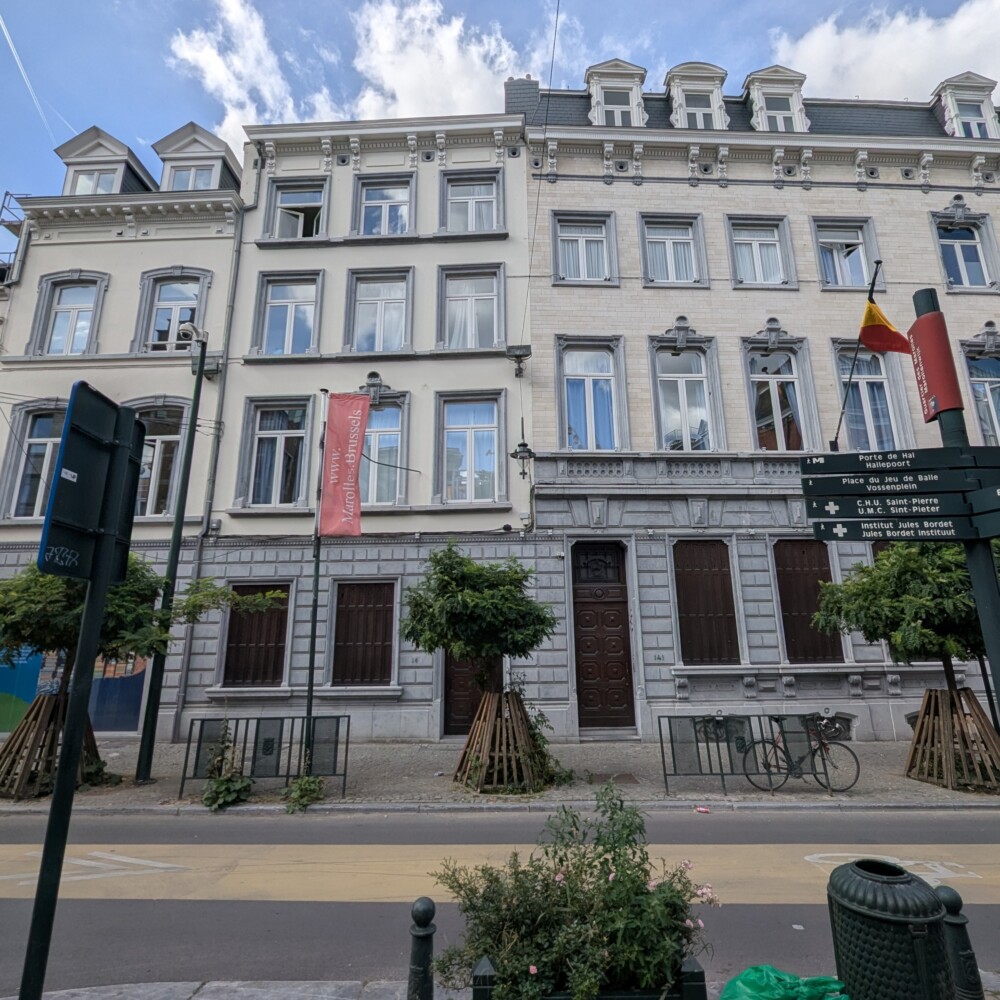
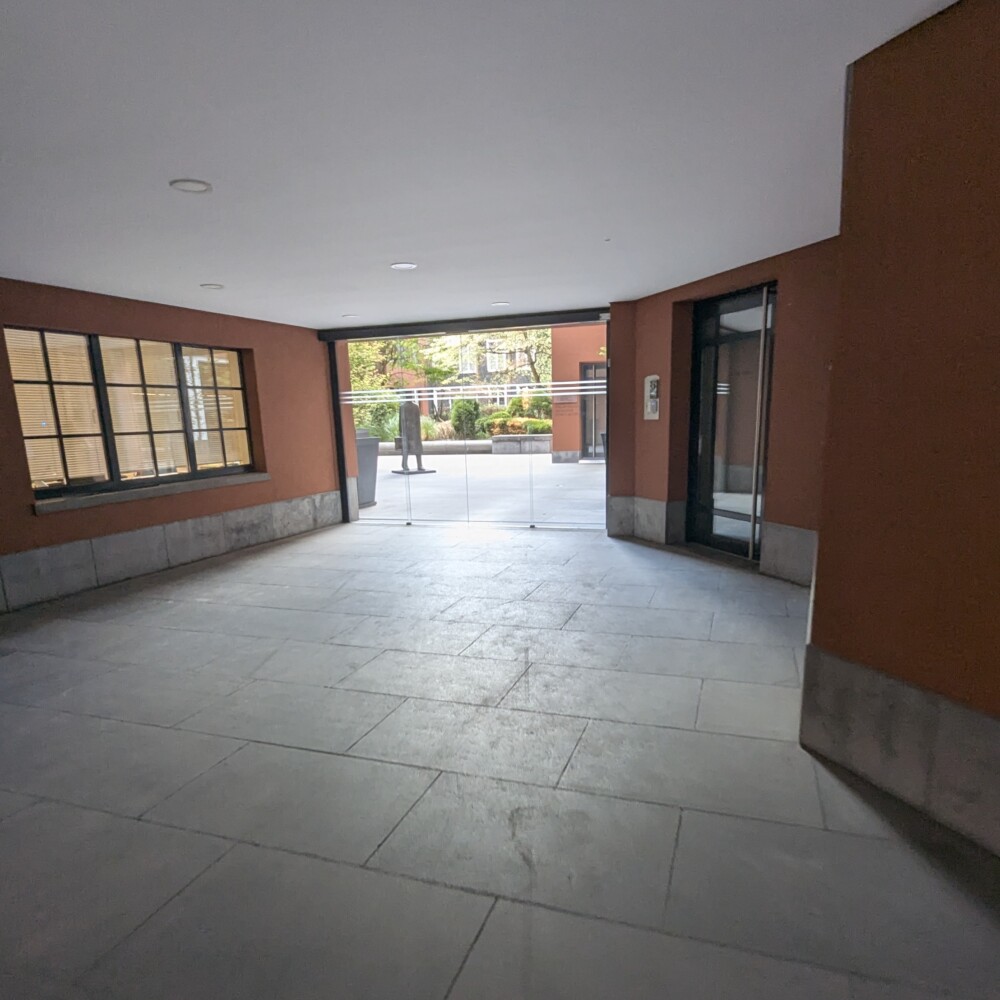
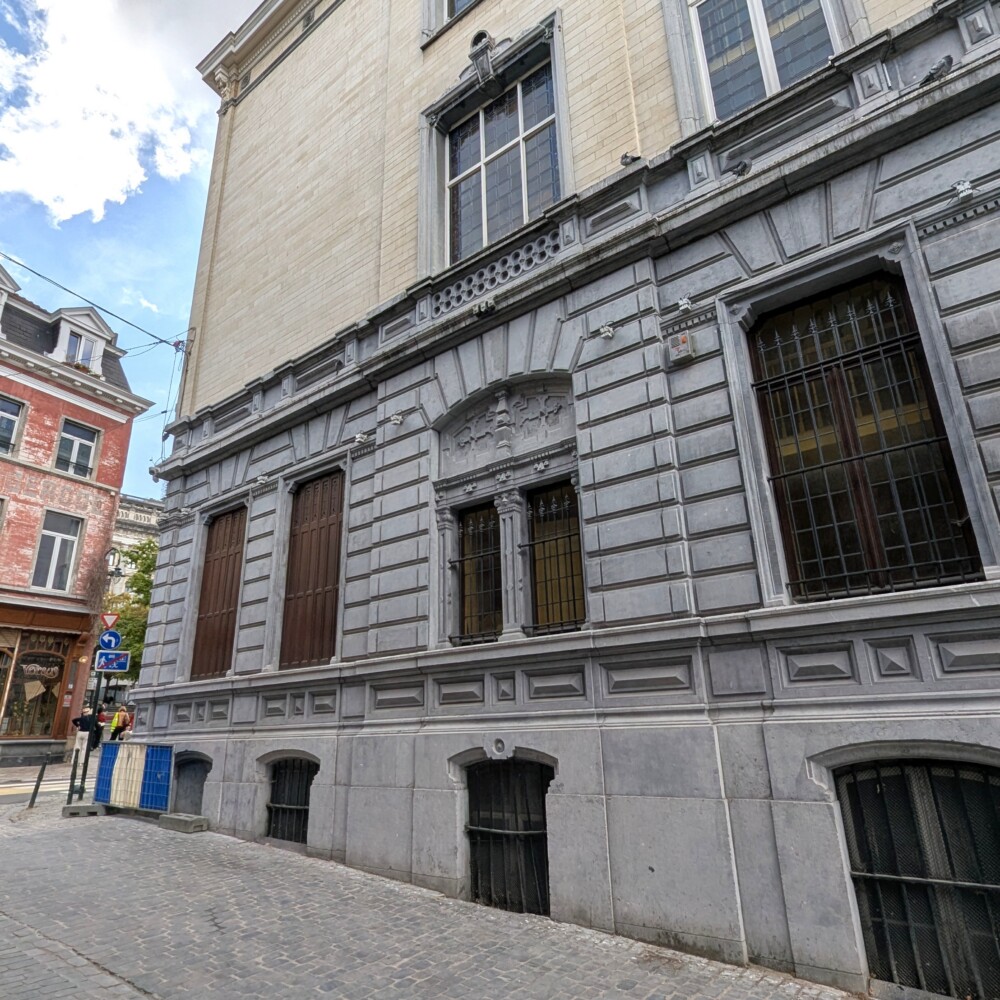
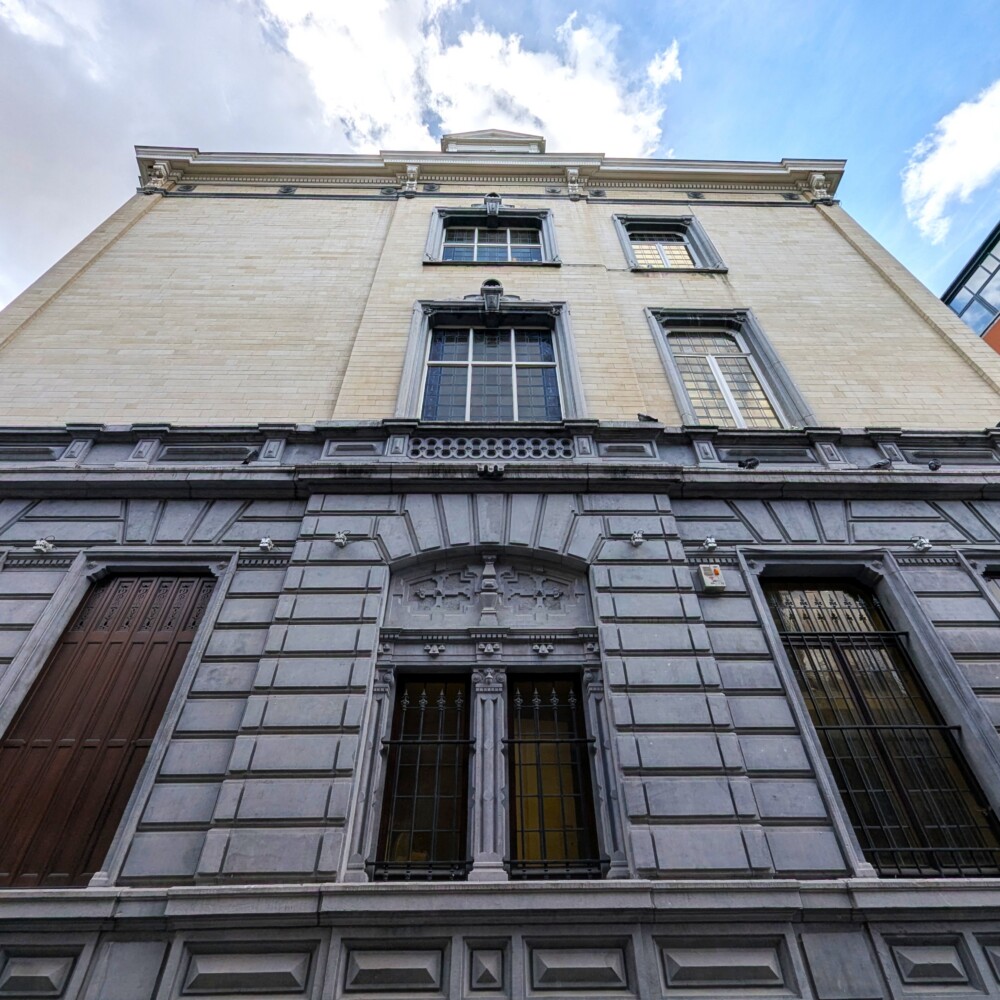
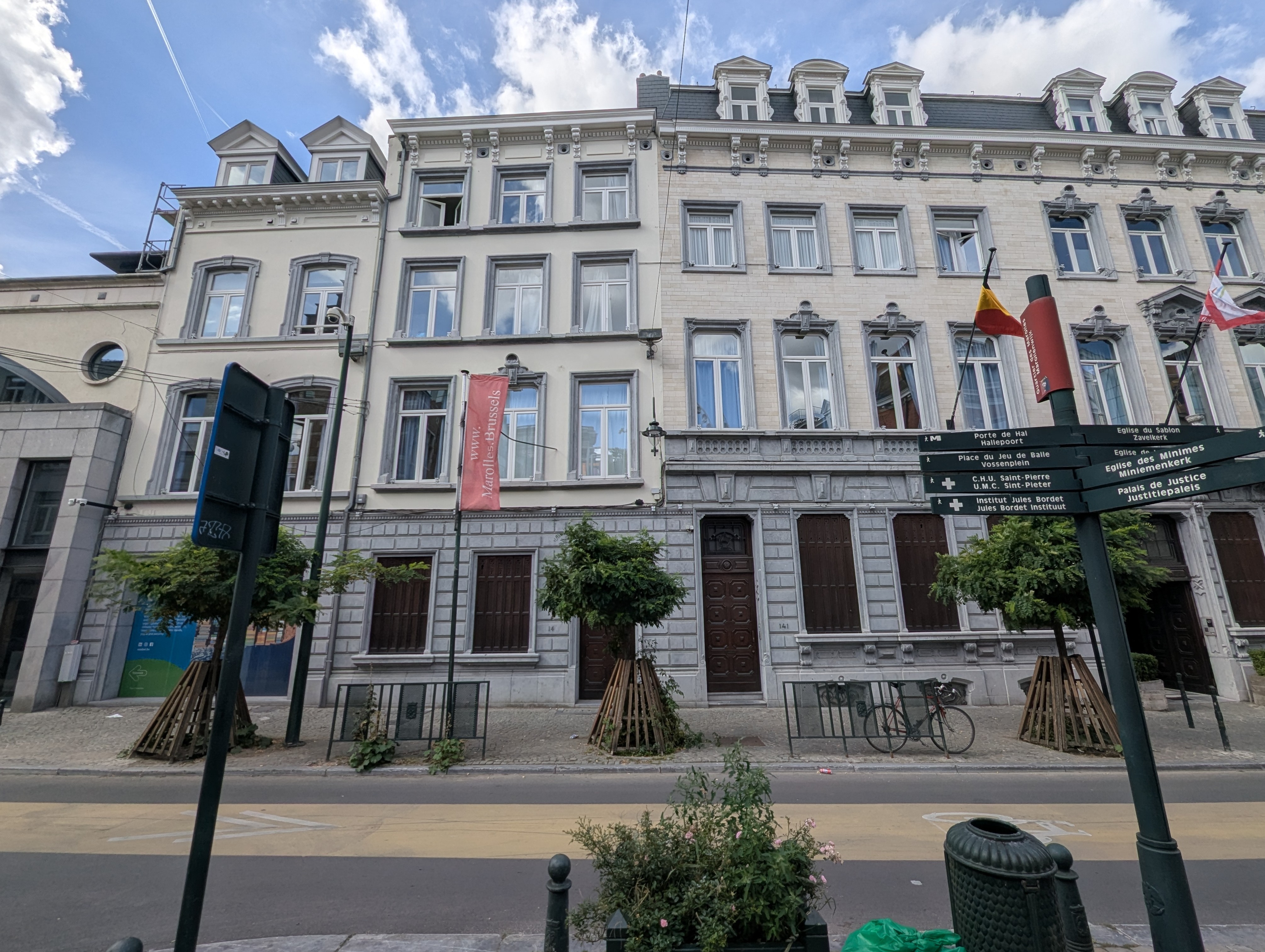
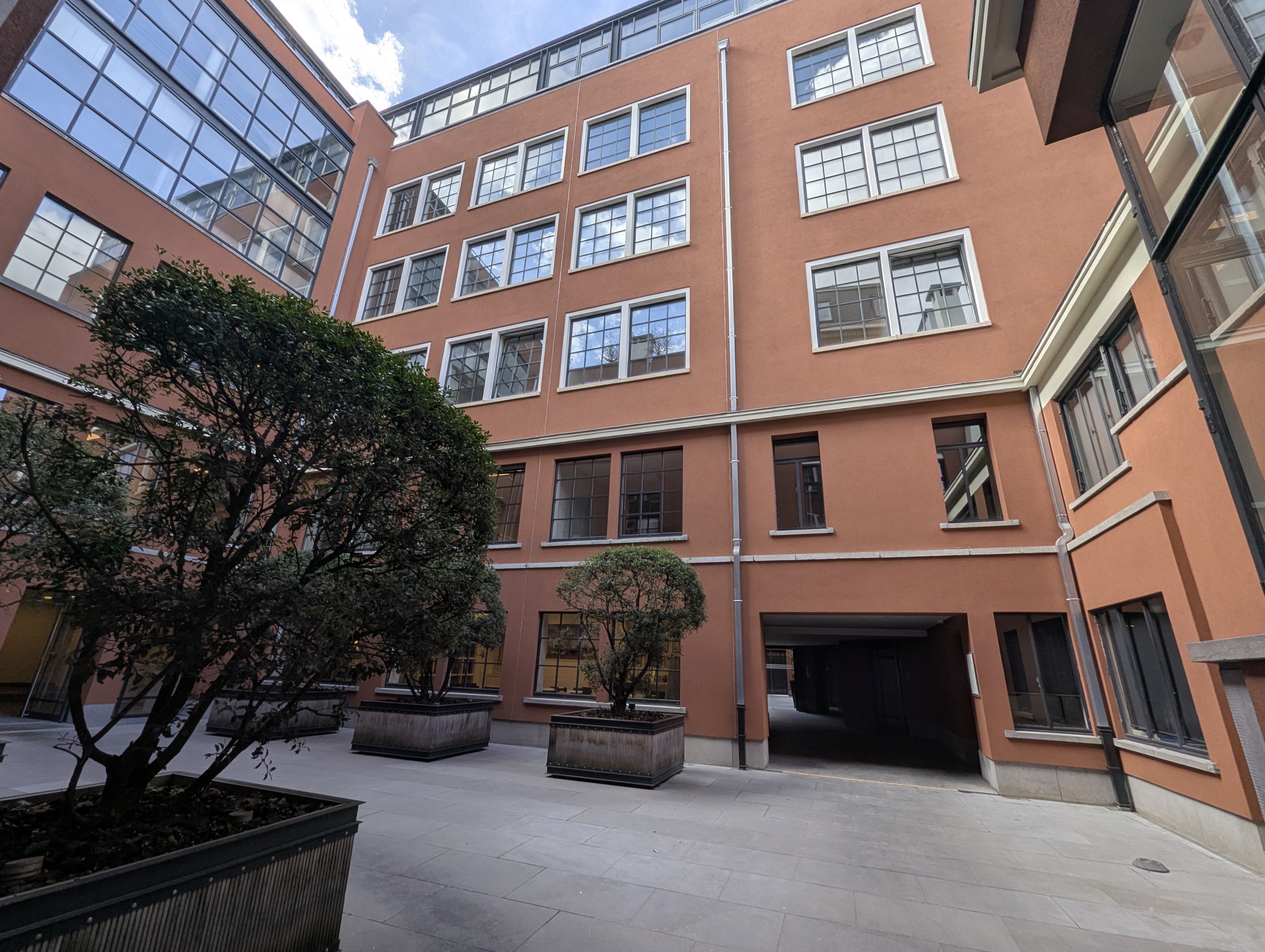
Dominating the corner of Hoogstraat and Spiegelstraat today are the mid-20th-century industrial facilities of the famous Jacqmotte coffee roastery.
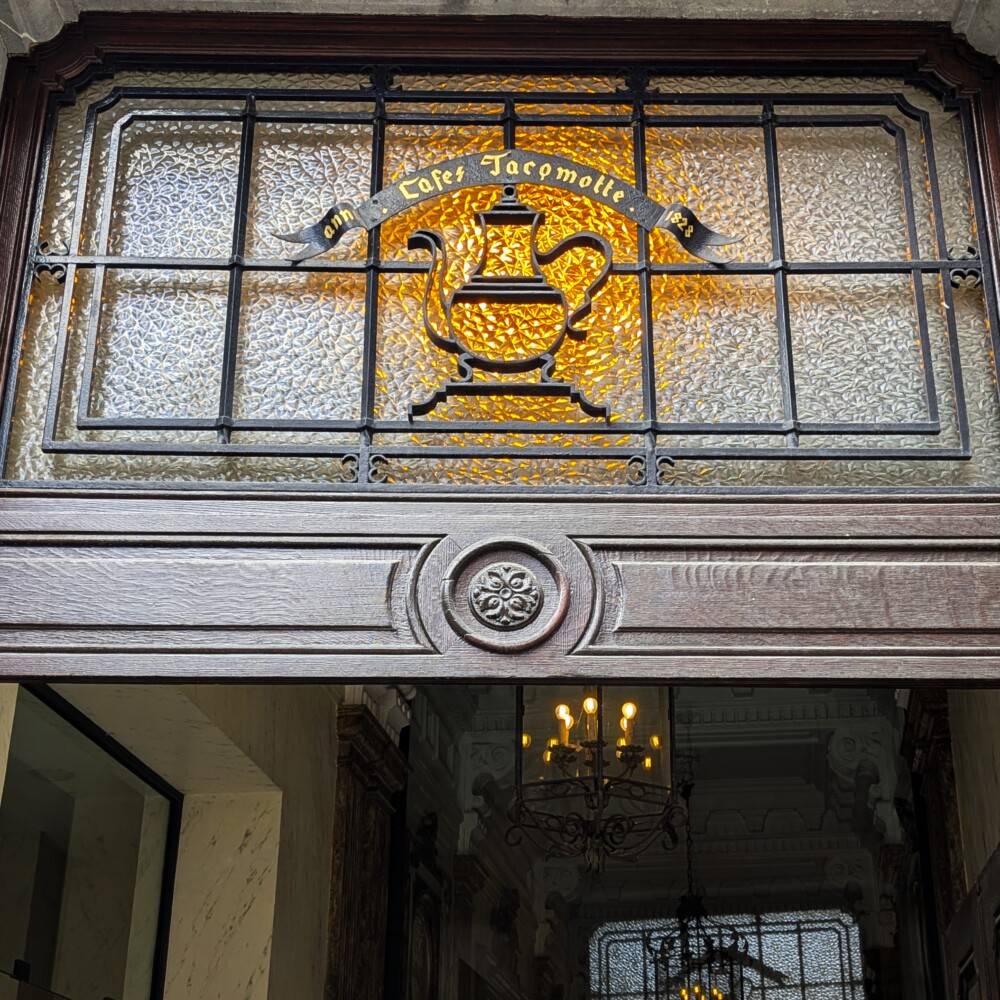
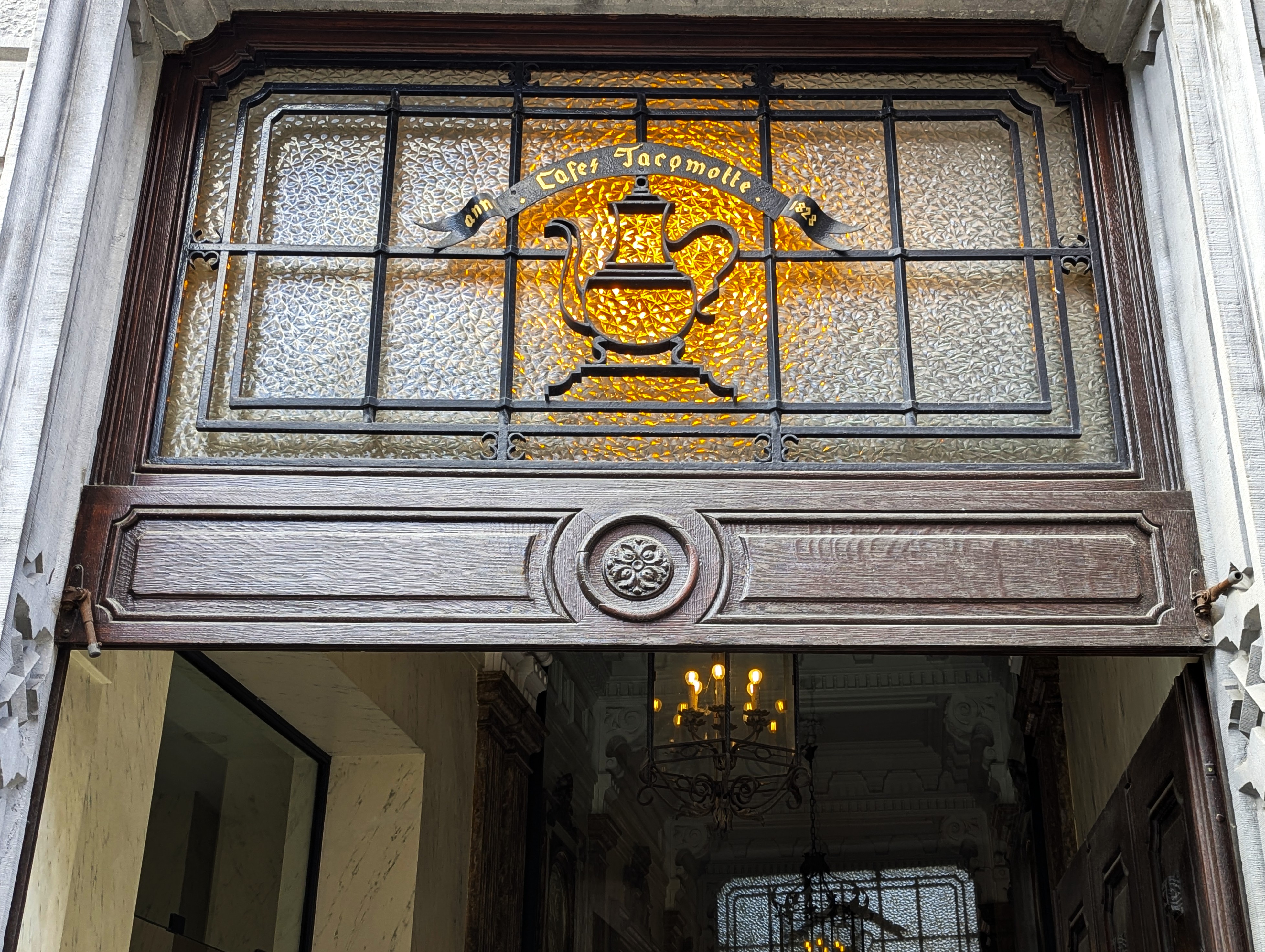
The story of Jacqmotte is an essential chapter in Brussels’ industrial heritage. Founded in 1828 by Amand Jacqmotte, the company began as a modest shop selling roasted coffee beans, fine teas, and exotic spices in the heart of Brussels. Over the 19th and early 20th centuries, Jacqmotte expanded into one of Belgium’s most celebrated coffee brands, renowned for its slow-roasting craftsmanship. In the 1950s and 1960s, the company erected a massive modern industrial complex along a widened alignment of the Spiegelstraat to house its primary roasting works and administrative headquarters. The site definitely sits on top of the chapel of the former Sint-Juliaangasthuis.
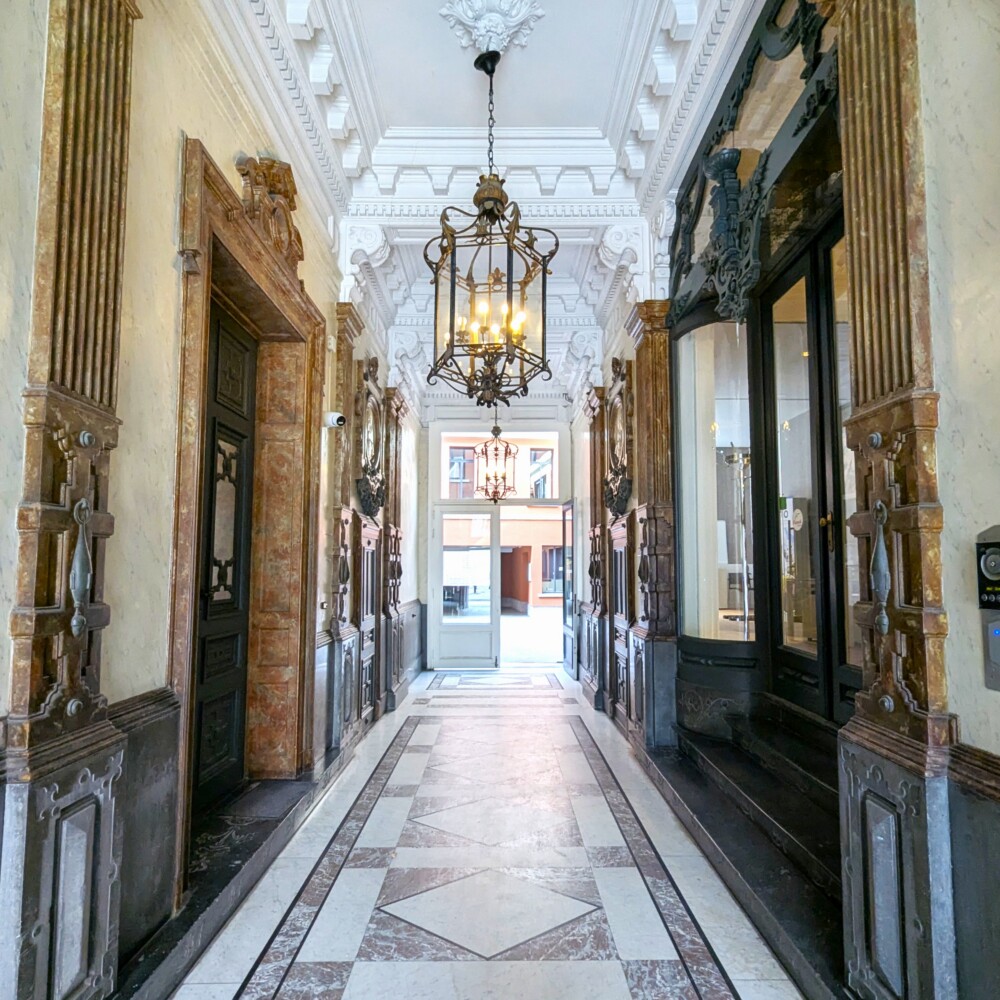
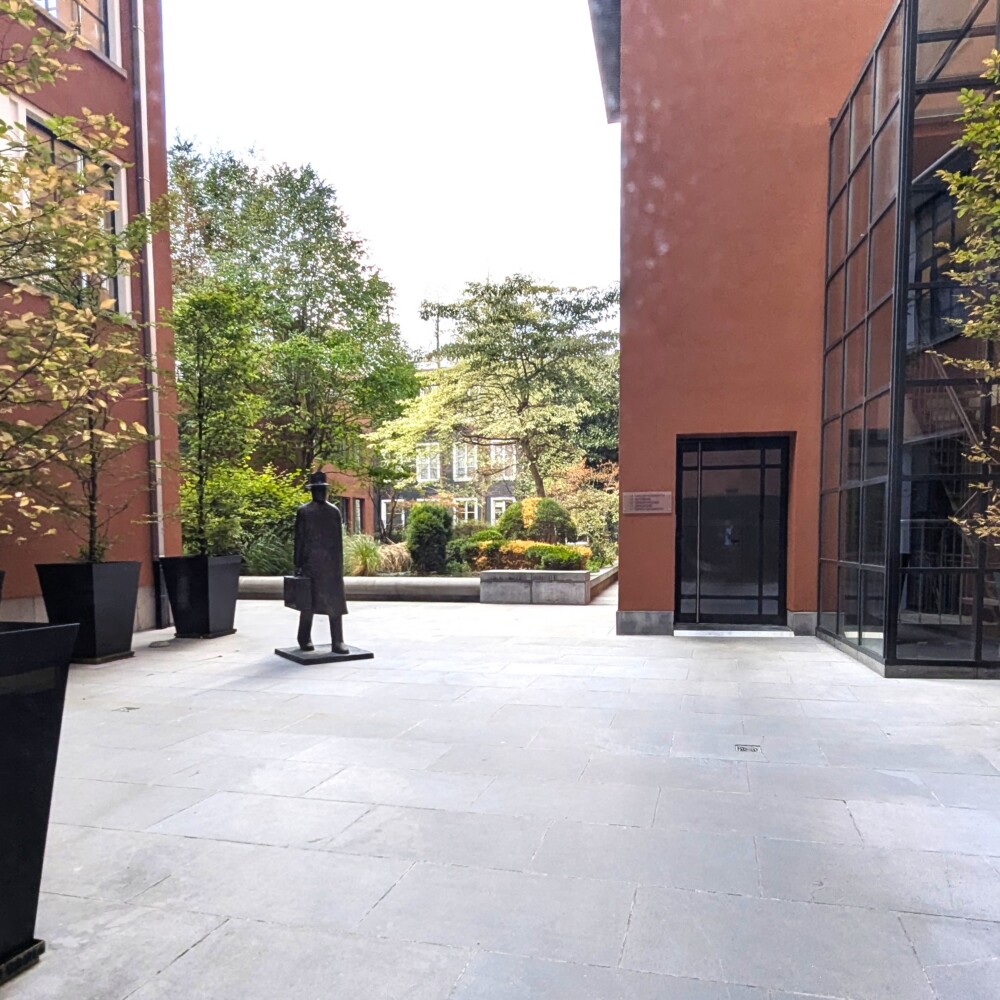
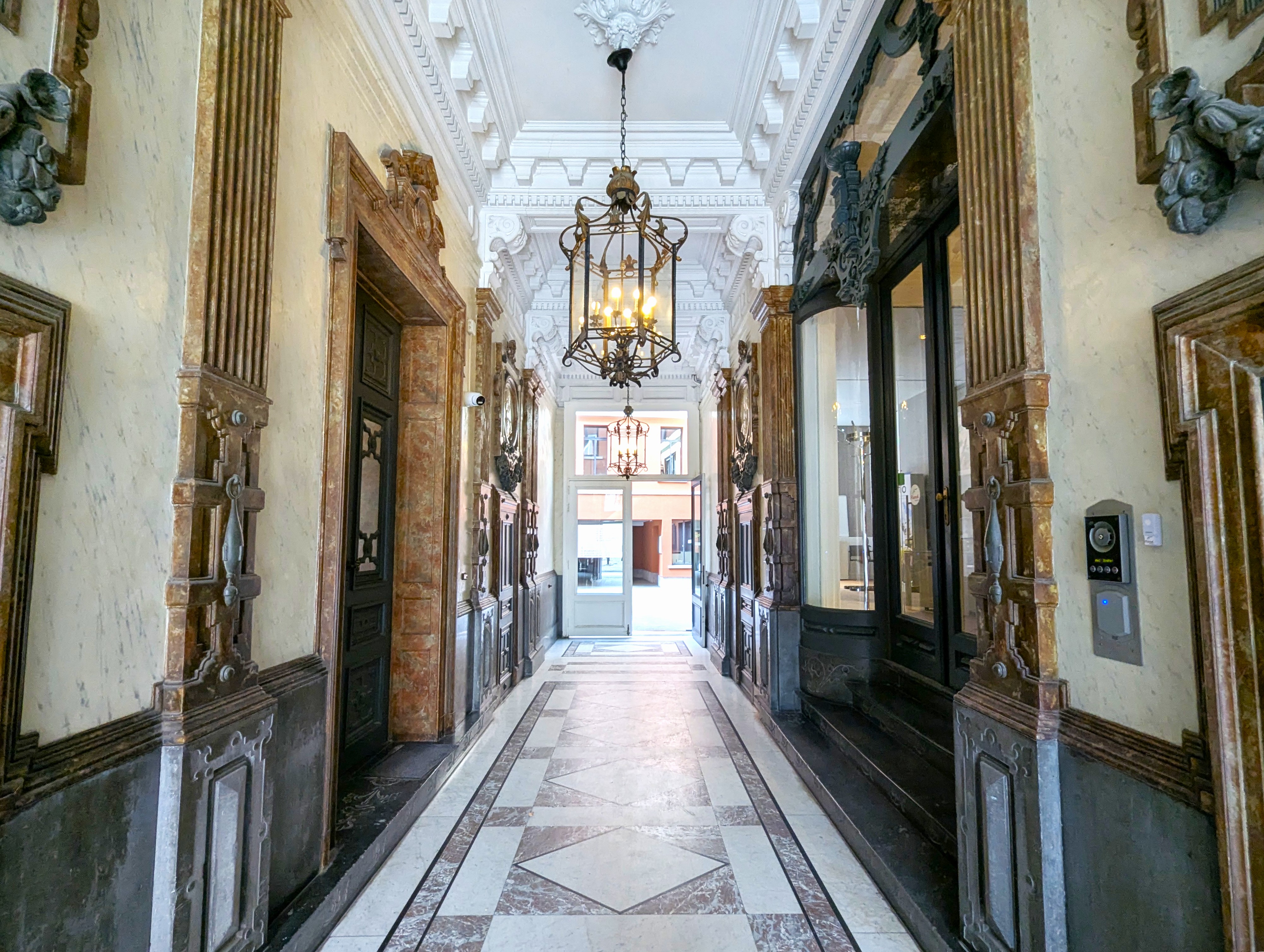
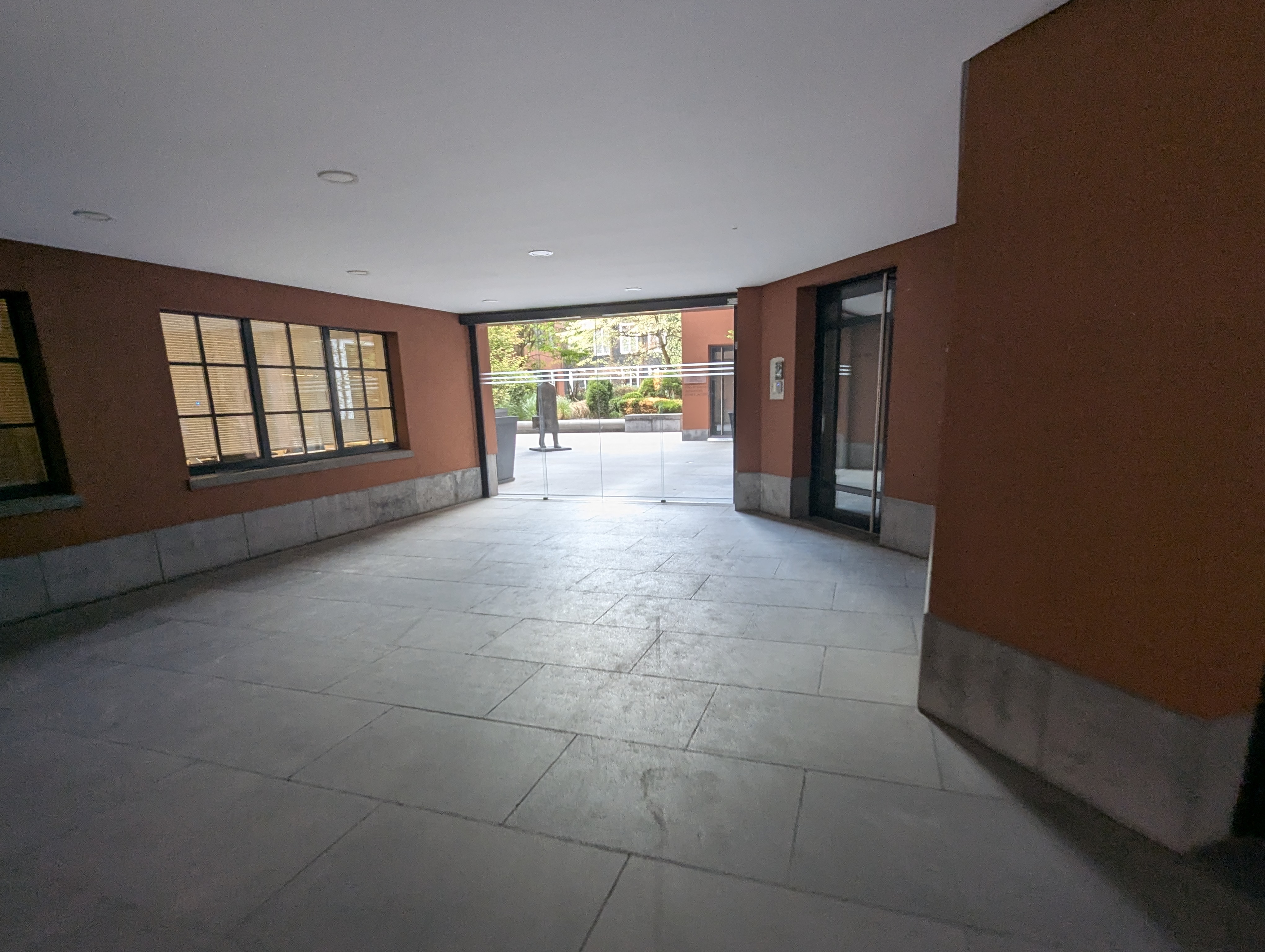
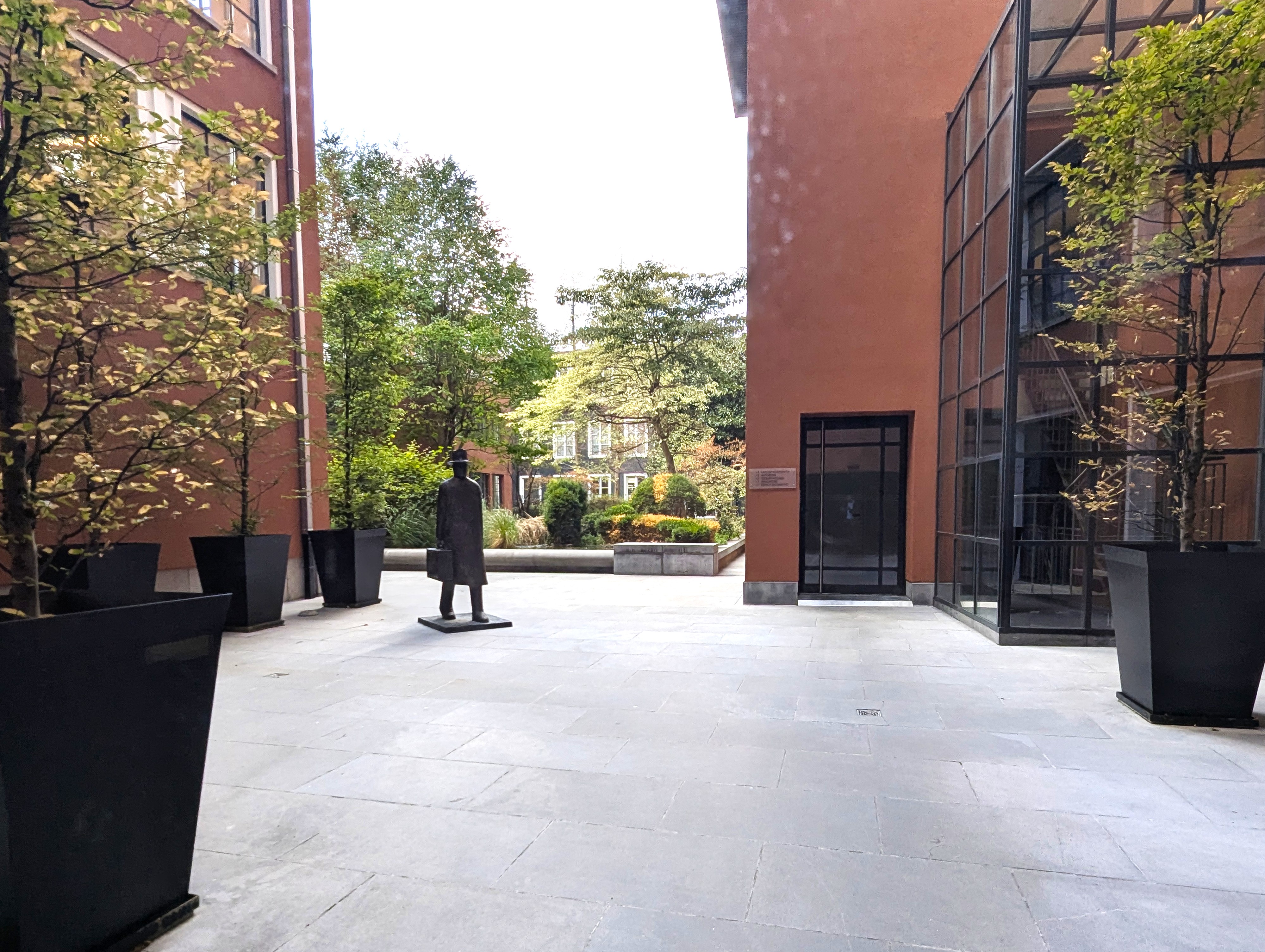
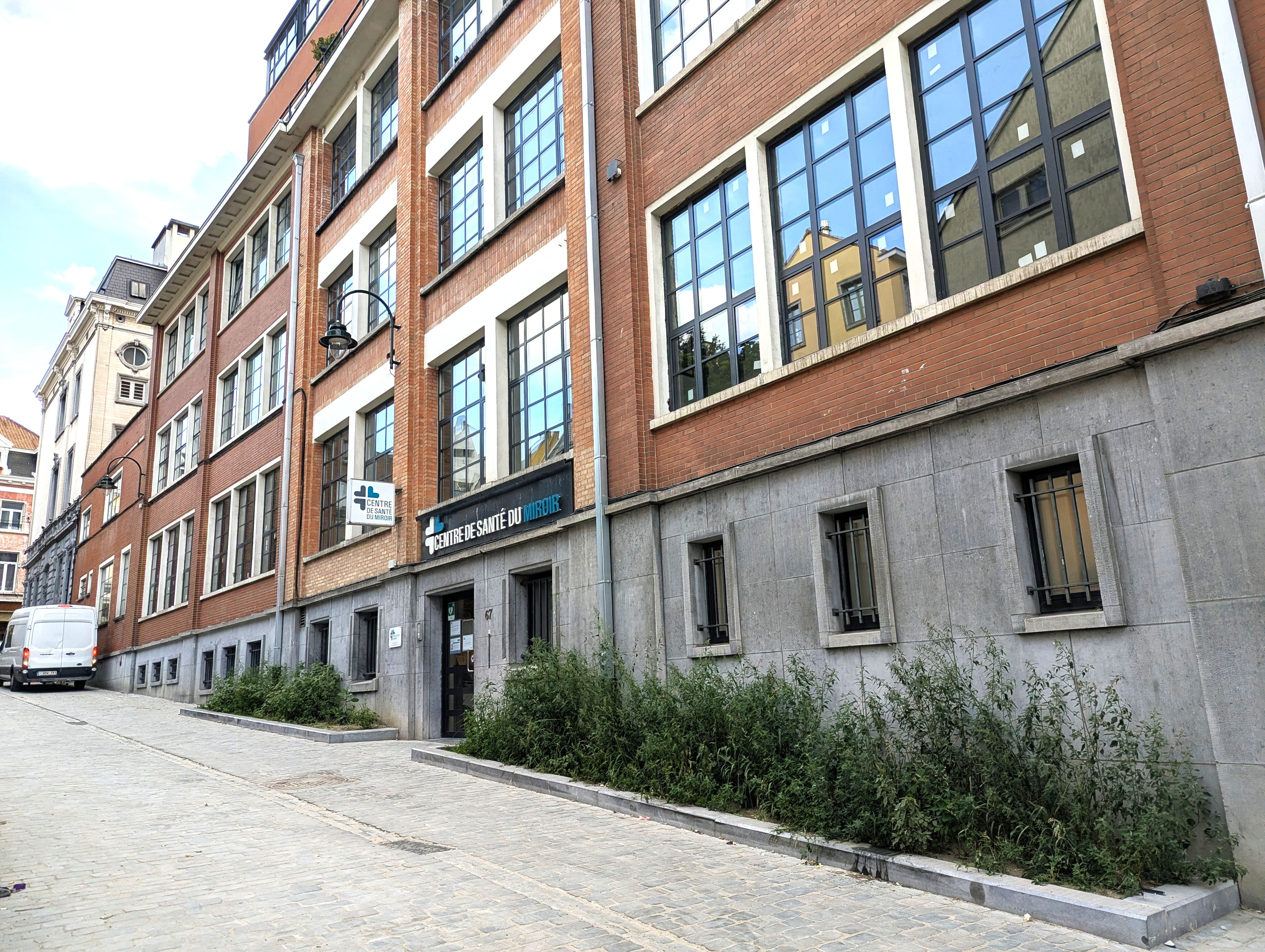
Though coffee roasting operations eventually relocated, the Jacqmotte building remains an iconic landmark in the Marollen. Today, the repurposed brick and glass complex houses lofts, creative studios, and cultural venues, blending the 19th-century coffee-roasting legacy of Amand Jacqmotte with the medieval memory of Jacob and Hendrik de Spiegheleren’s house of refuge.
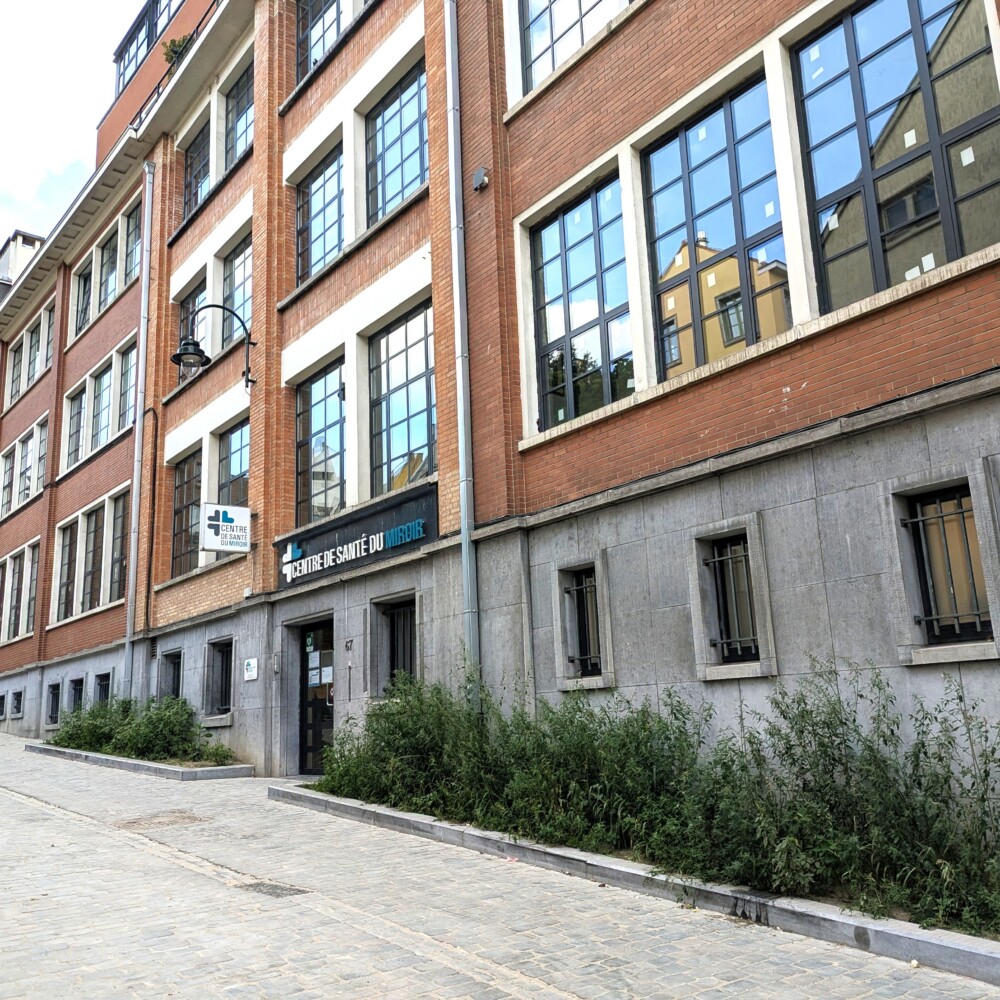
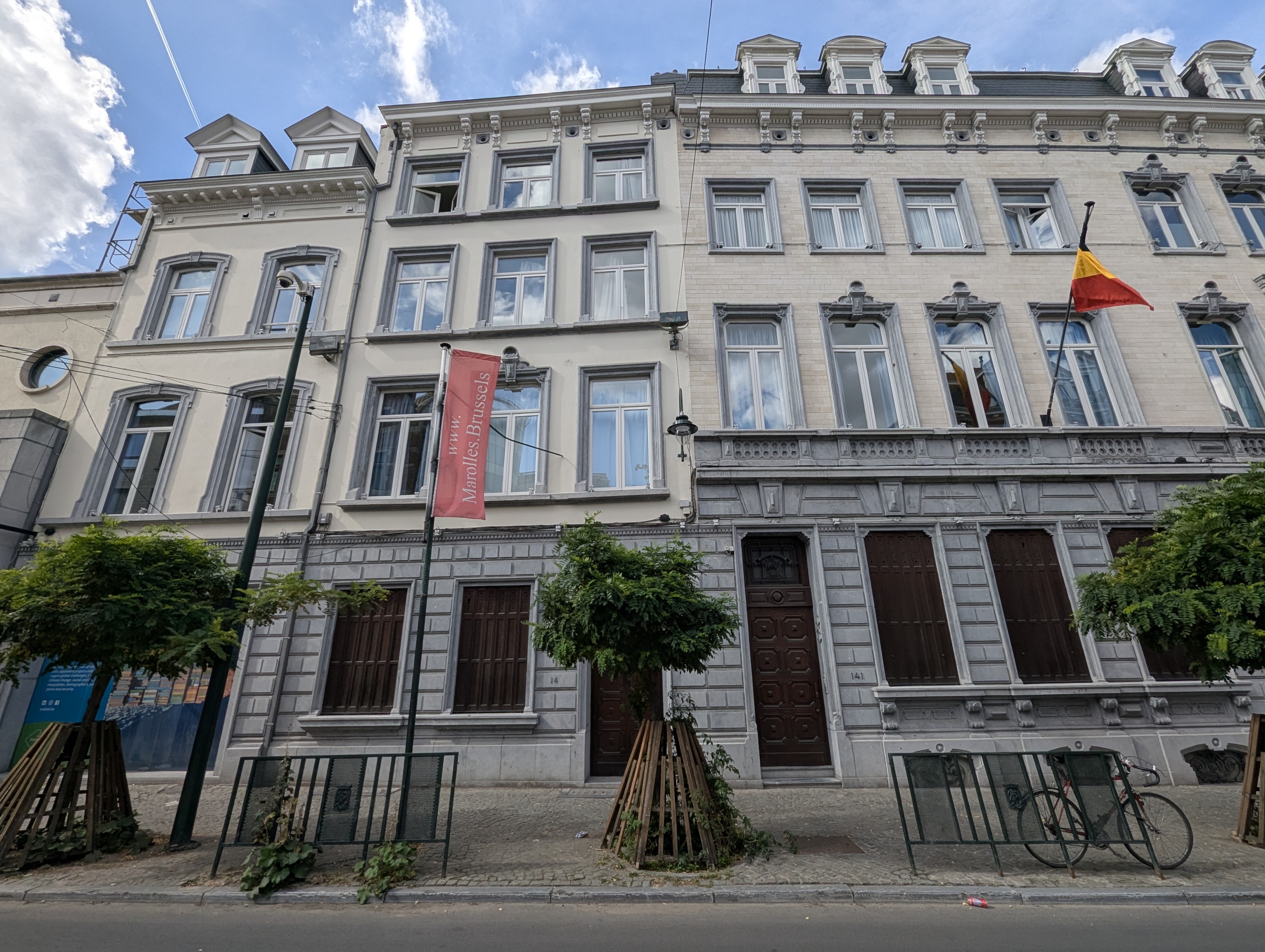
Today, on the side of the Jacqmotte Coffee House building, in the Spiegelstraat (Rue du Mirroir), there is a neighbourhood health clinic. I wonder if the inhabitants of this neighbourhood know that this is a continuation of a public service that lasted more than six centuries, all started by two brothers.
Sources:
Vannieuwenhuyze, B. (2011) “Brussel, de Ontwikkeling van een middeleeuwse stedelijke ruimte.” Amsterdam: Amsterdam University Press.
Henne, A. Wauters, A. (1845) “Histoire de la ville de Bruxelles. Volume I-III” Brussels: Librairie Encyclopédique de Périchon.
Hymans, L.S. (1884) “Bruxelles à travers les âges” Bruxelles : Bruylant-Christophe
Rombaut, J-A. (1777) “Bruxelles illustrée, ou description chronologique et historique de cette ville.” Brussels: Chez Pauwels.
Jacobs, T. (2013) “Des hôpitaux de métiers à Bruxelles ? Nouvelles perspectives sur la charité et la bienfaisance en milieu urbain à la fin du Moyen Âge” Brussels: Revue belge de philologie et d’histoire/Université Libre de Bruxelles.
Bijloos, M. (2010) “De ruimtelijke organisatie van een gasthuis in de achttiende eeuw – Het verdwenen Sint-Juliaangasthuis aan de Hoogstraat in Brussel” Brussels: Geschiedenis der Geneeskunde, 2010, Nr 4.
https://monument.heritage.brussels/nl/streets/10002110
https://monument.heritage.brussels/nl/buildings/31652#&gid=null&pid=1
https://fine-arts-museum.be/fr/la-collection/gaspar-de-crayer-lapparition-du-christ-a-saint-julien-lhospitalier?artist=de-crayer-gaspar
https://en.wikipedia.org/wiki/Julian_the_Hospitaller
https://en.wikipedia.org/wiki/Saint_Ghislain
https://www.persee.fr/doc/rio_0995-872x_1947_num_1_3_998
https://www.jacqmotte.be/fr-BE/
- Van Deventer, J. (1550-1565) “Atlas of the city of the Low Countries : 73 minutes between 1550-1565 on orders of Emperors Charles V and Philip II” KBR (image)
- Braun, G, Hogenberg, F. (1572-1617) “Civitates orbis terrarum” Universiteitsbibliotheek Utrecht (image)
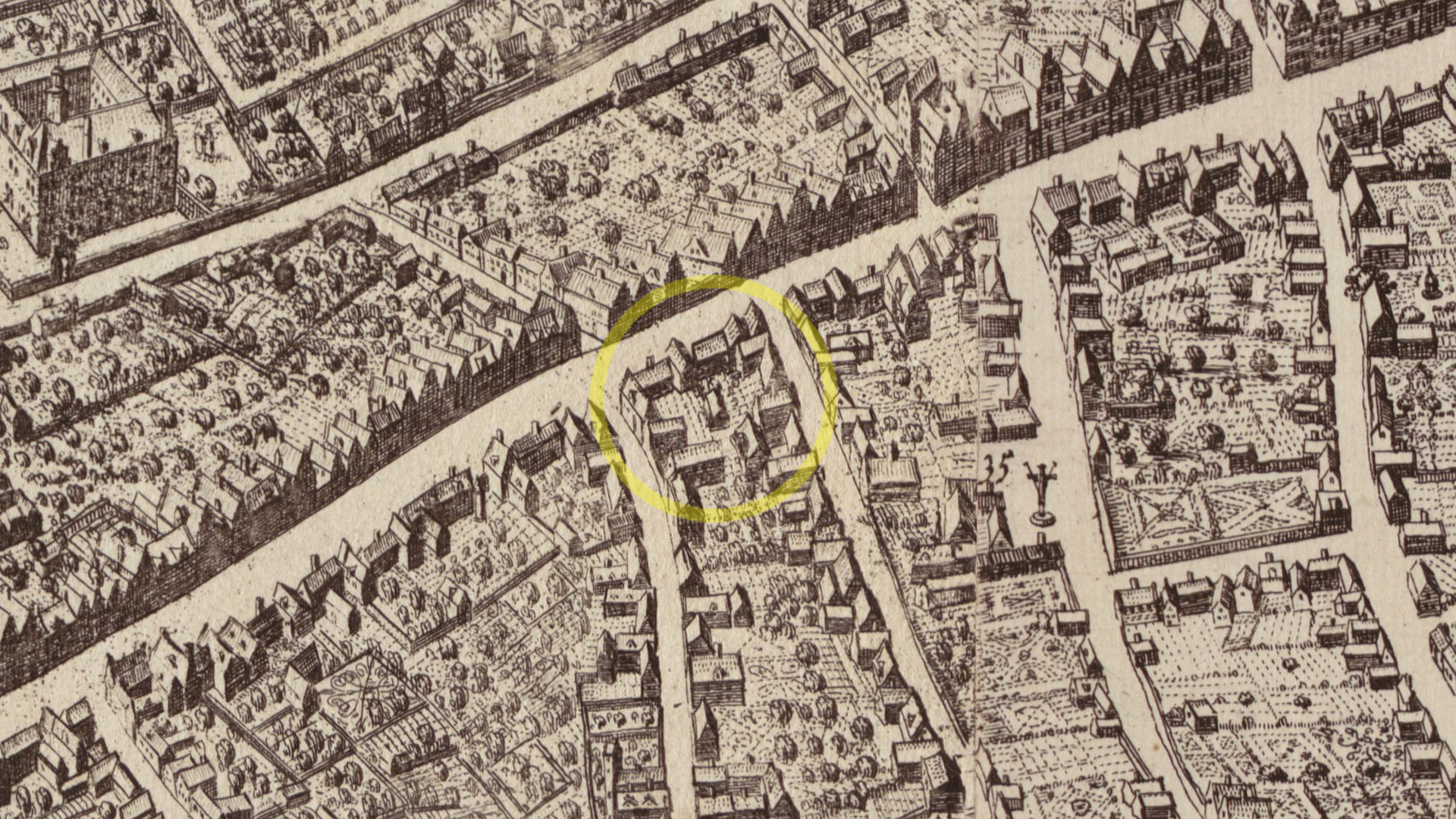
- de Tailly, M., van der Horst, N., Santvoort, A. D. (1640) “Bruxella nobilissima Brabantiae civitas anno 1640” KBR (image)
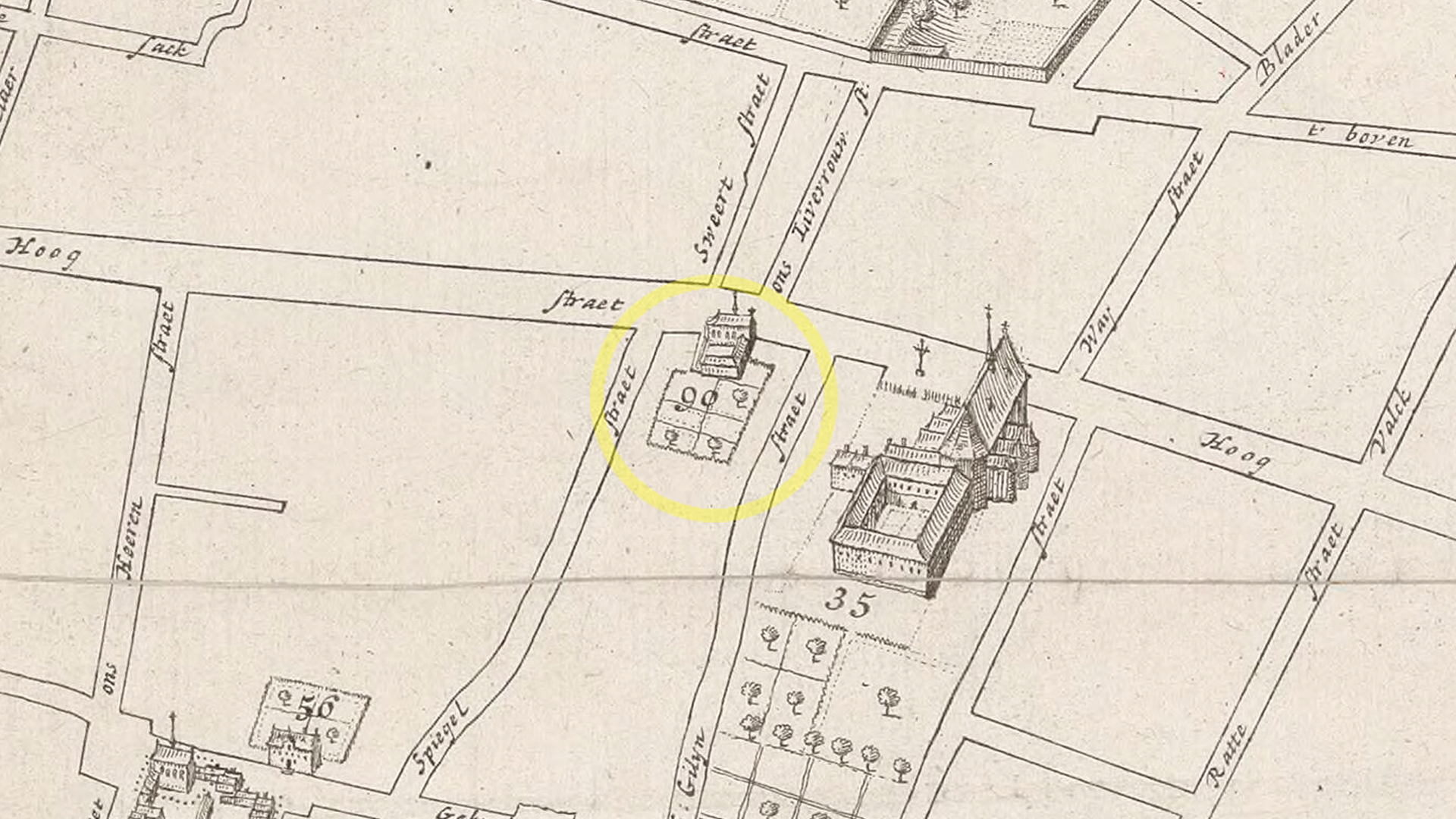
- Laboureur, J., Van der Baren, J., Harrewijn, J. (1695) “Bruxella Nobilissima Brabanti Civitasae” Bibliothèque Nationale de la France (image)
- Unknown. (1700s) “18th century floor plan of the Sint-Juliaangasthuis” (image)
- de Crayer, G. (1623?) “The Apparition of Christ to Saint Julian the Hospitaller” Brussels: Koninklijke Musea voor Schone Kunsten van België (image)
- Unknown. (1800-1899) “Impasse du Cadre – Spiegelstraat 82-84” (image)
HOW IT LOOKS LIKE TODAY
Click on the zoom icon to view the full size.