ABOUT
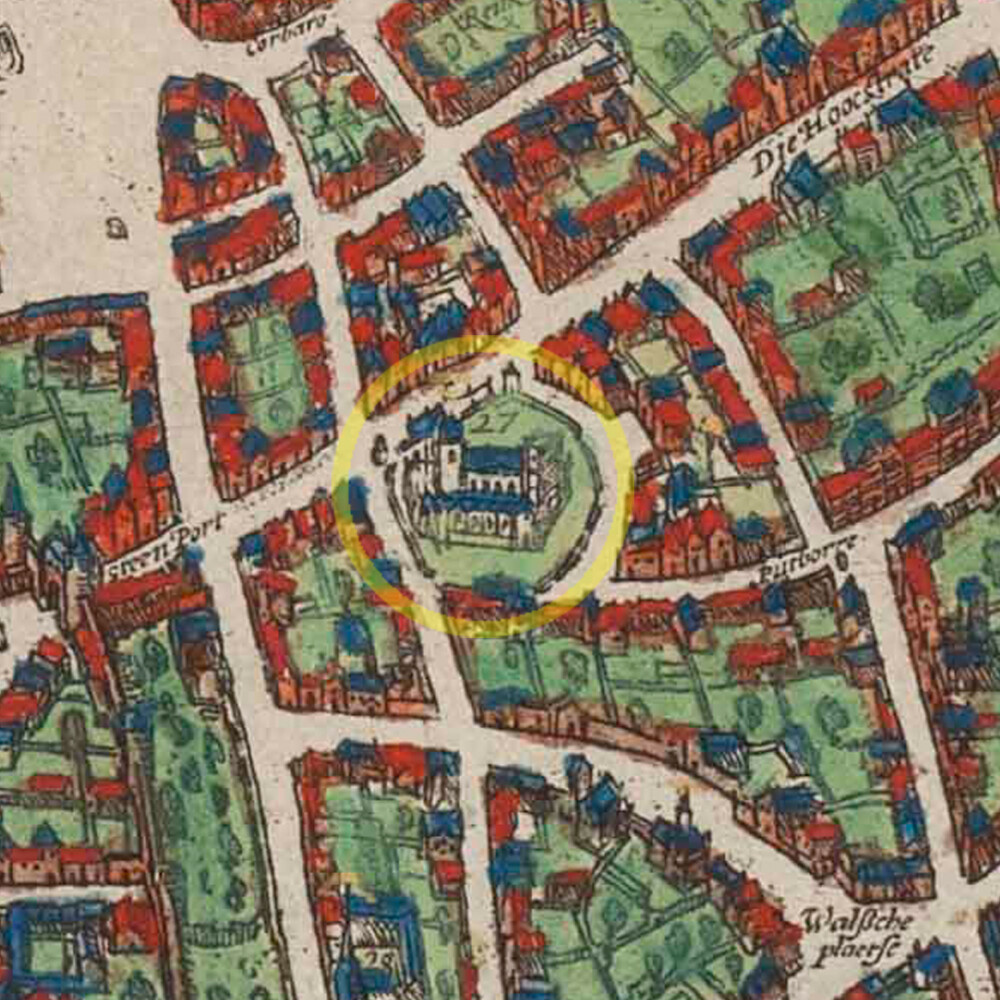
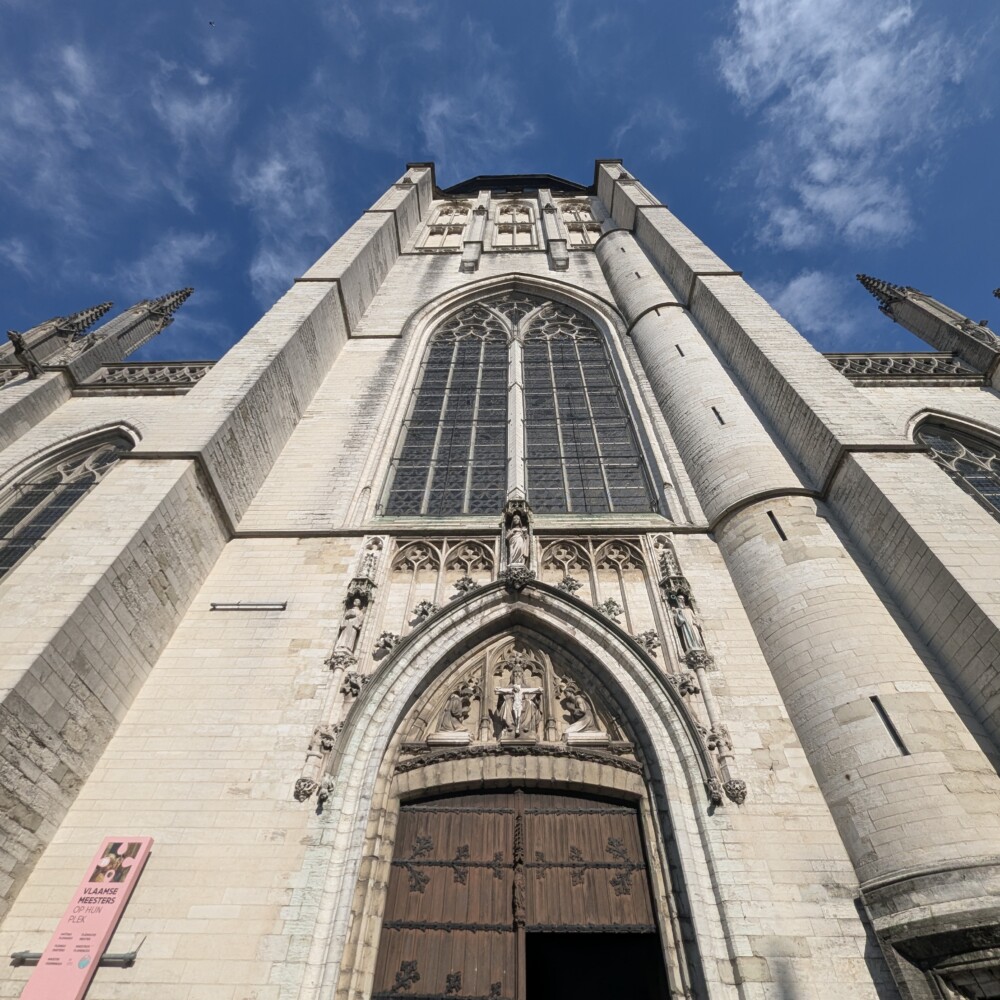
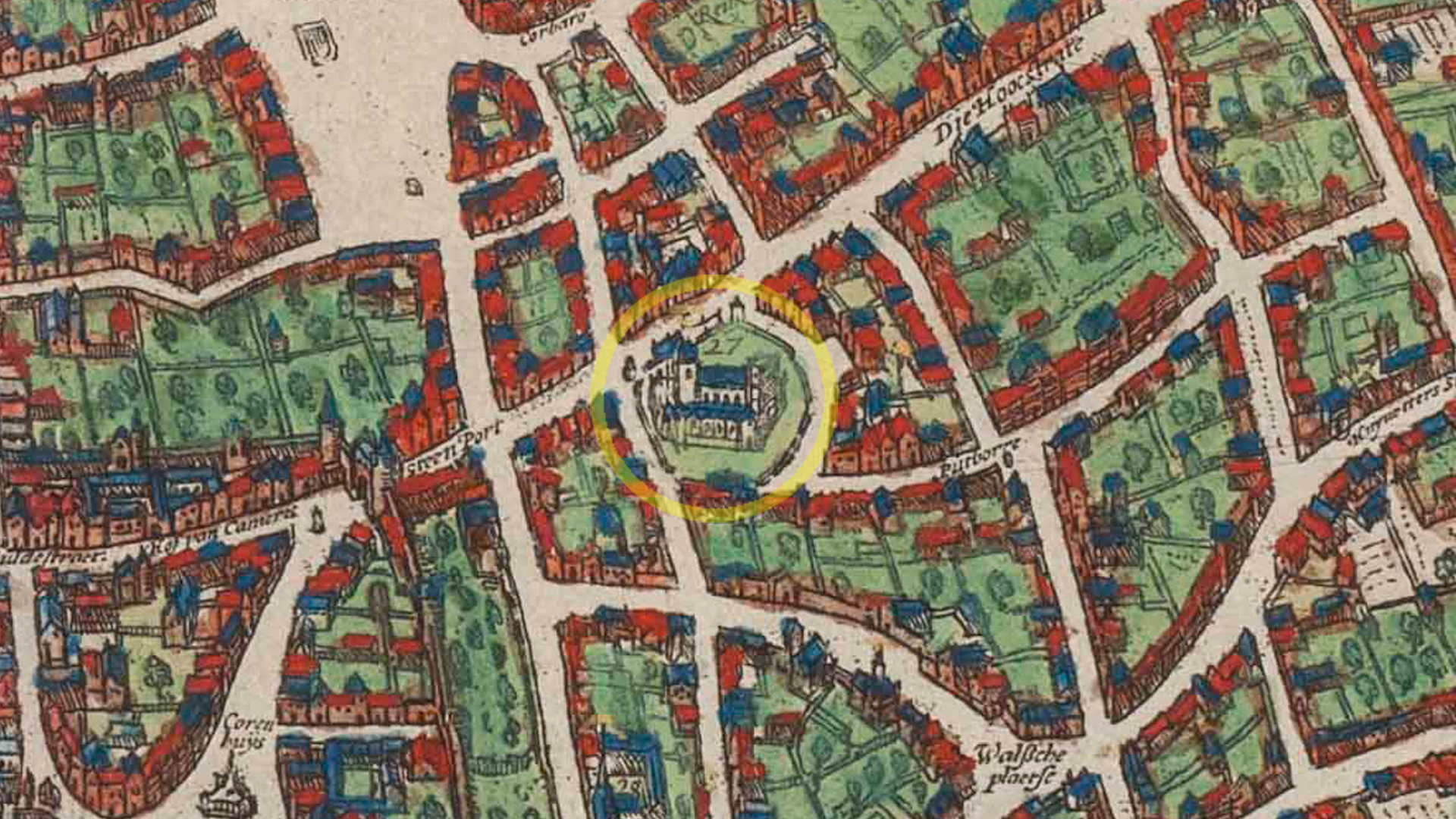
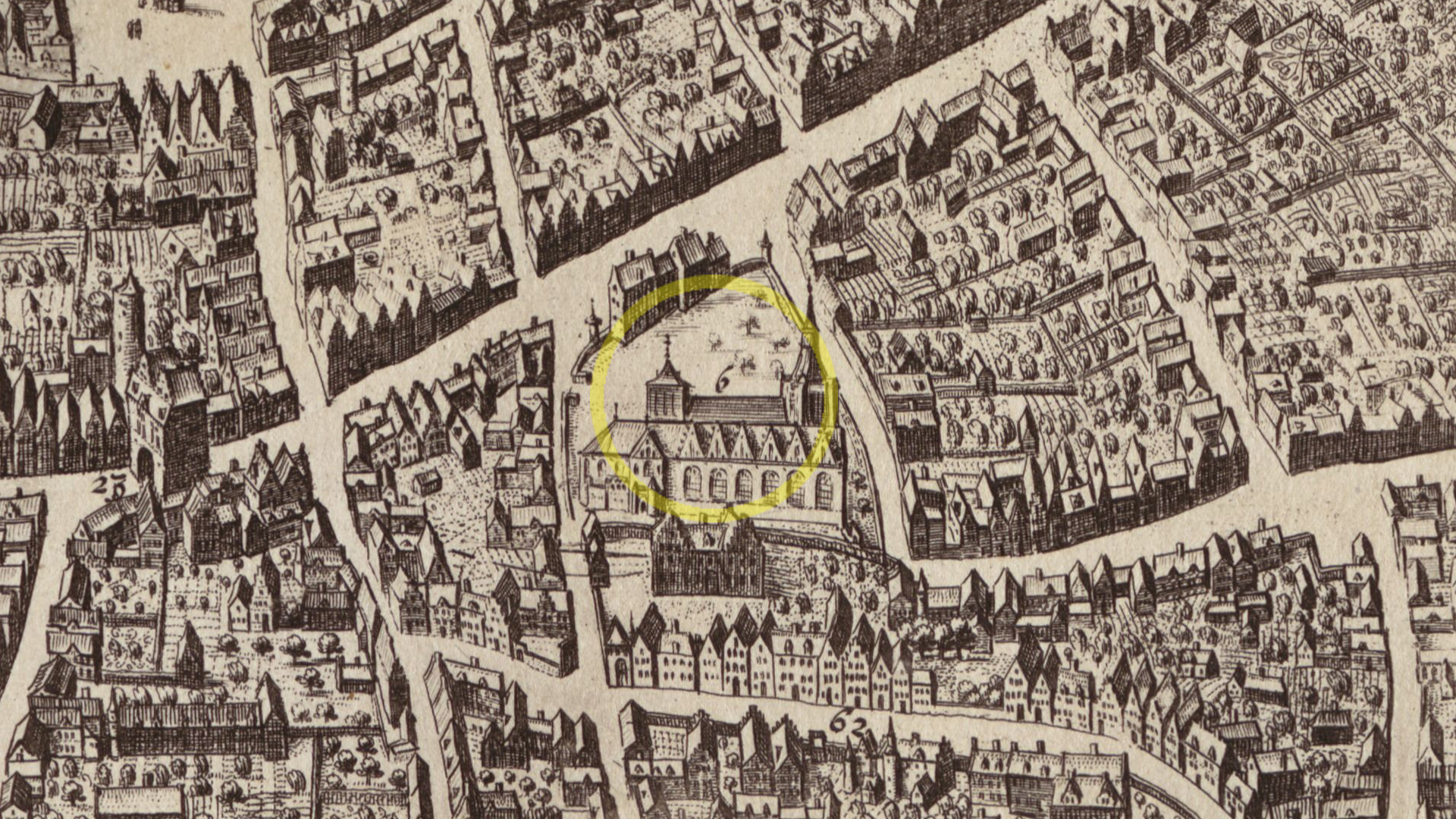
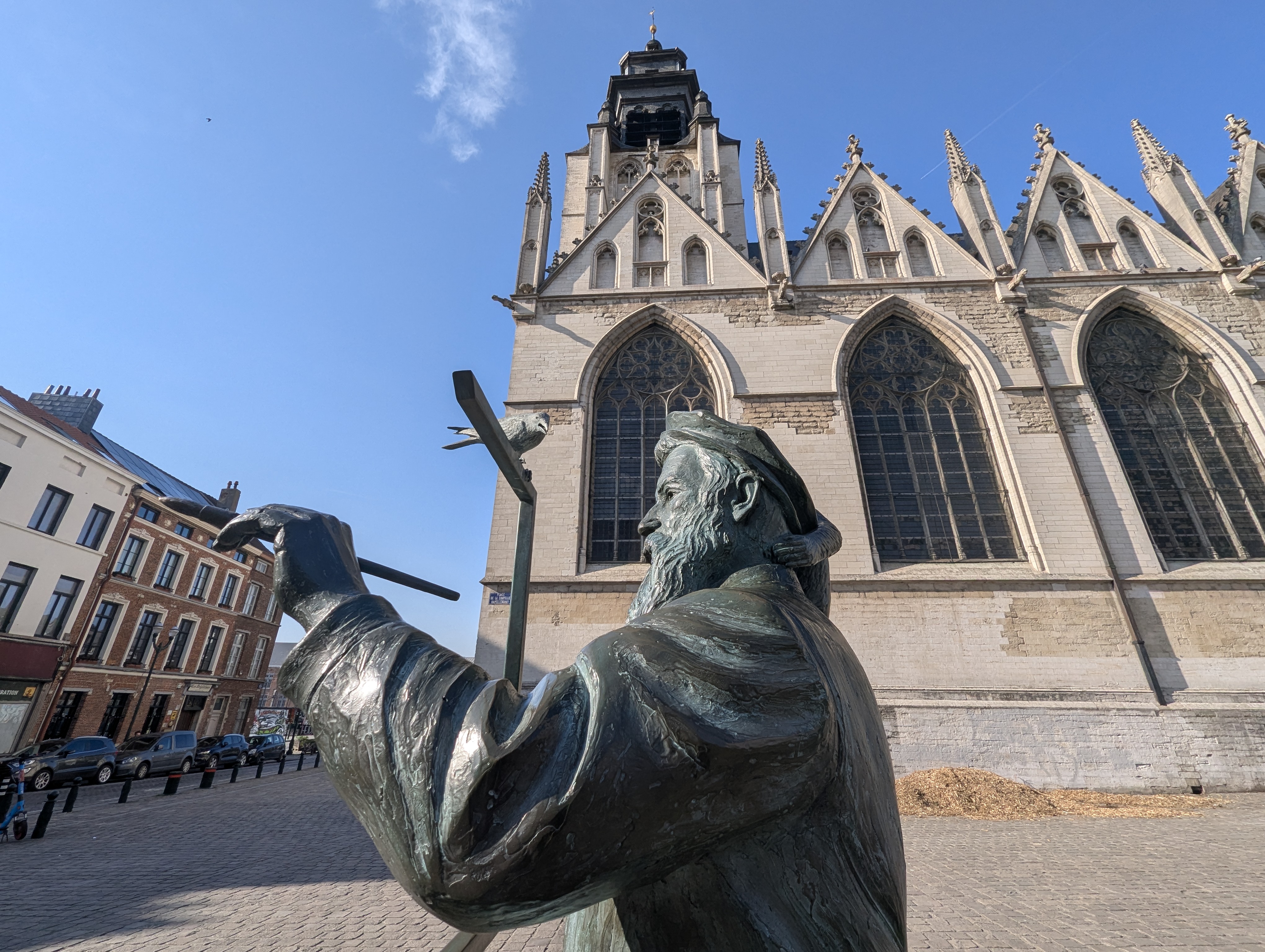
Brussels’ Onze-Lieve-Vrouw-ter-Kapellekerk (Church of Our Lady of the Chapel) – commonly called the ‘Kapellekerk’ – is situated at the Kapellemarkt (Chapel Market) [Place de la Chapelle] and marks the end of the long Hoogstraat (High Street) [Rue Haute] in the Marollen [Marolles] district. It stood strategically outside the first city walls, near the old Steenpoort (Stone Gate).
Origin
The history of this site begins in 1134, when Count Godfried I of Leuven (Godfrey I) donated a small chapel to the Benedictine monks of the Abdij van het Heilig Graf te Kamerijk (Abbey of the Holy Sepulcher at Cambrai). At the time, this area was described as being extra oppidum Bruxelli — outside the fortified heart of Brussels.
As the population grew along the old road leading into the city, the community outside the walls flourished. In 1210, despite initial resistance from the Sint-Goedelekapittel (Chapter of Saint Gudula) who wished to protect their income as the mother church, the chapel was elevated to become the second parish church of Brussels.
A Political Move
It was even stated in the founding act of the Kapellekerk that Godfried I (with the Beard) , Count of Leuven and Duke of Lower Lorraine, laid the first stone himself of the chapel in 1134. Located at the beginning of the later Hoogstraat (High Street) – the main trade artery into the then small military outpost of Brussels, the chapel was a way to consolidate the House of Leuven’s political reach all over the ancient region of Brabant.
Indeed, Godfried I founded no less than eleven abbeys in his lifetime.
By gifting the chapel to the Abbey of Kamerijk, Godfried I made sure that he could secure the recognition by the religious powers of his political dominion over what he regarded as his rightful inheritance from the earlier Lotharingen realm.
What's so special about this place?
Is it a chapel or a church?
With such a strange name – Chapelchurch, is the Kapellekerk a chapel or a church?
In fact, its full name in Dutch ‘Onze-Lieve-Vrouw-ter-Kapellekerk‘ explains the logic behind the name: it is the Church of Our Lady of the Chapel. When it was founded in the 12th century, it was a chapel dedicated to Virgin Mary.
The Resting Place of Brussels’ Famous Two Bs
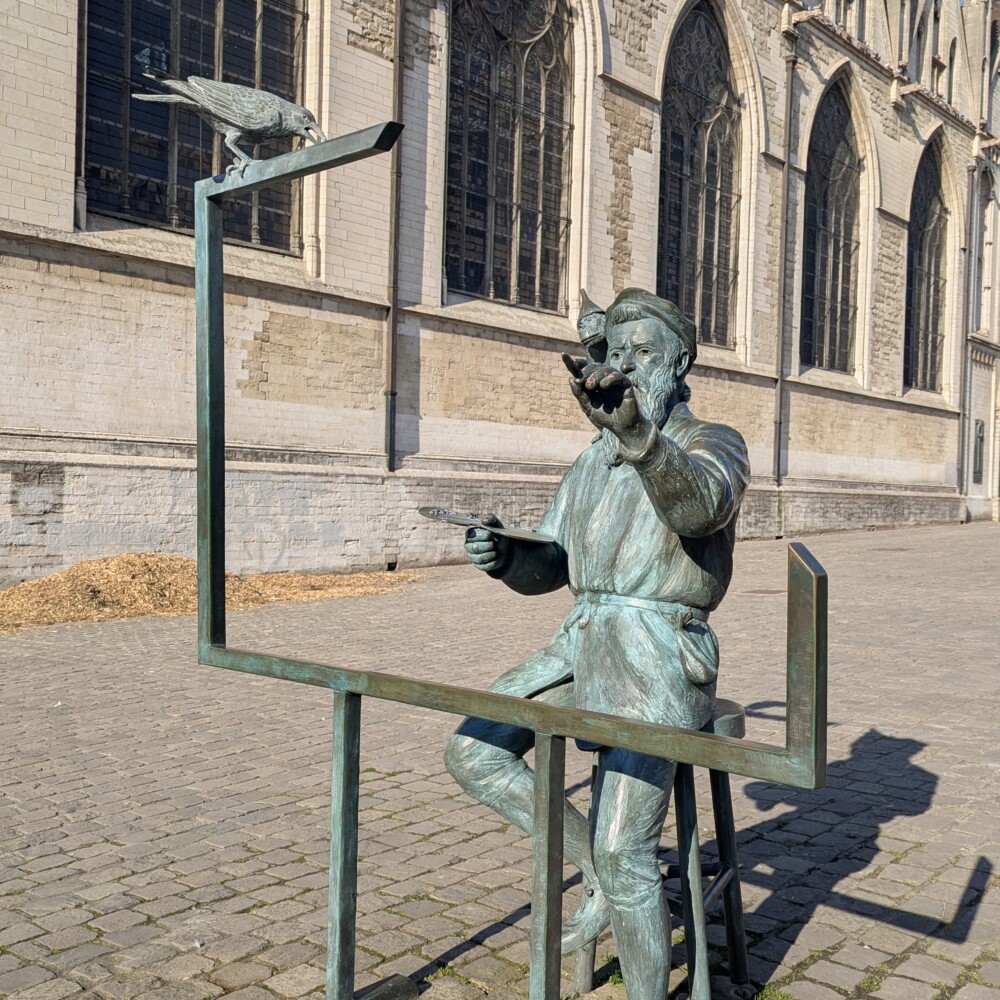
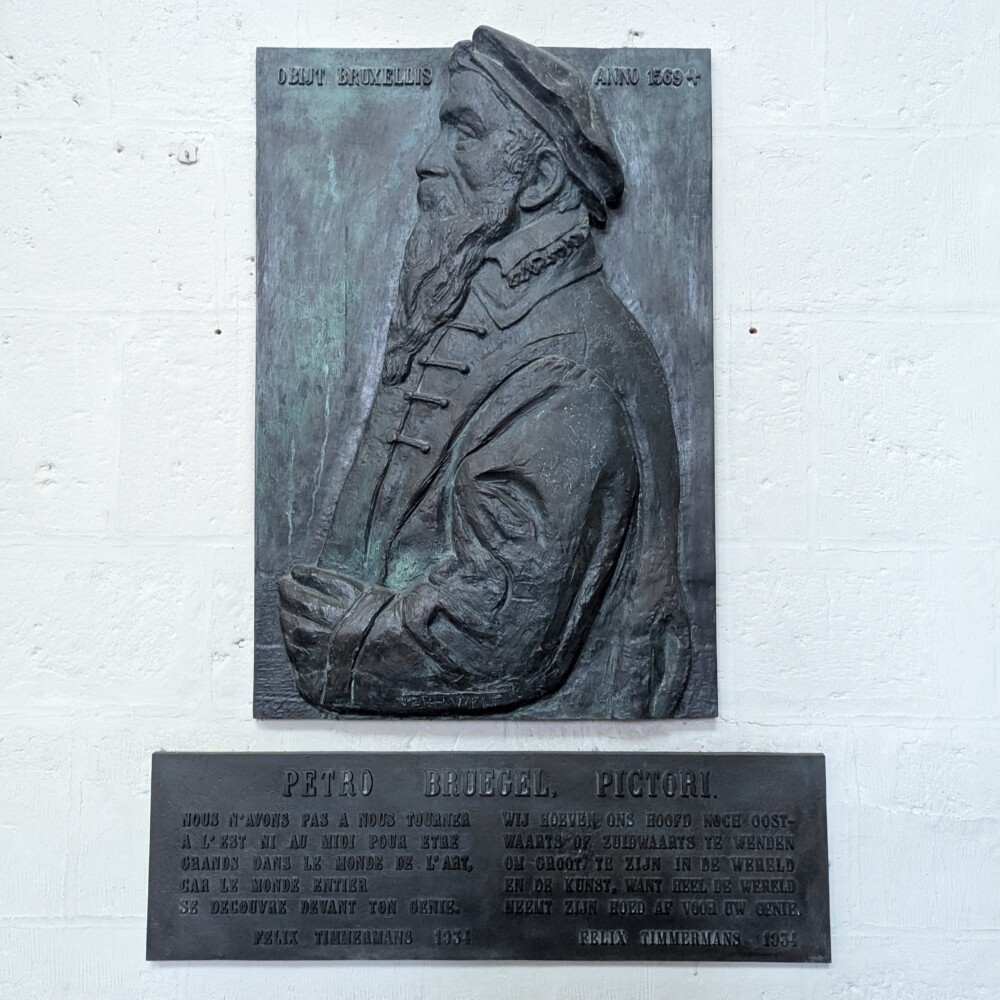
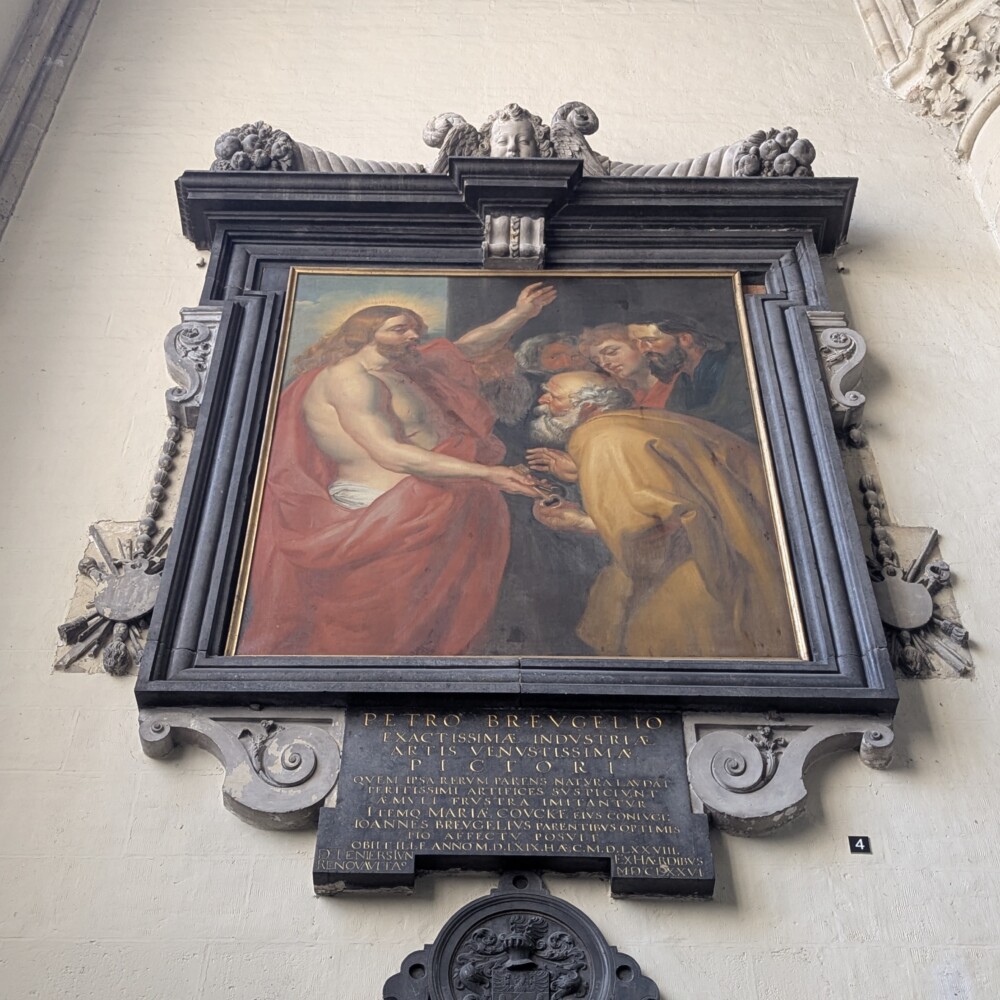
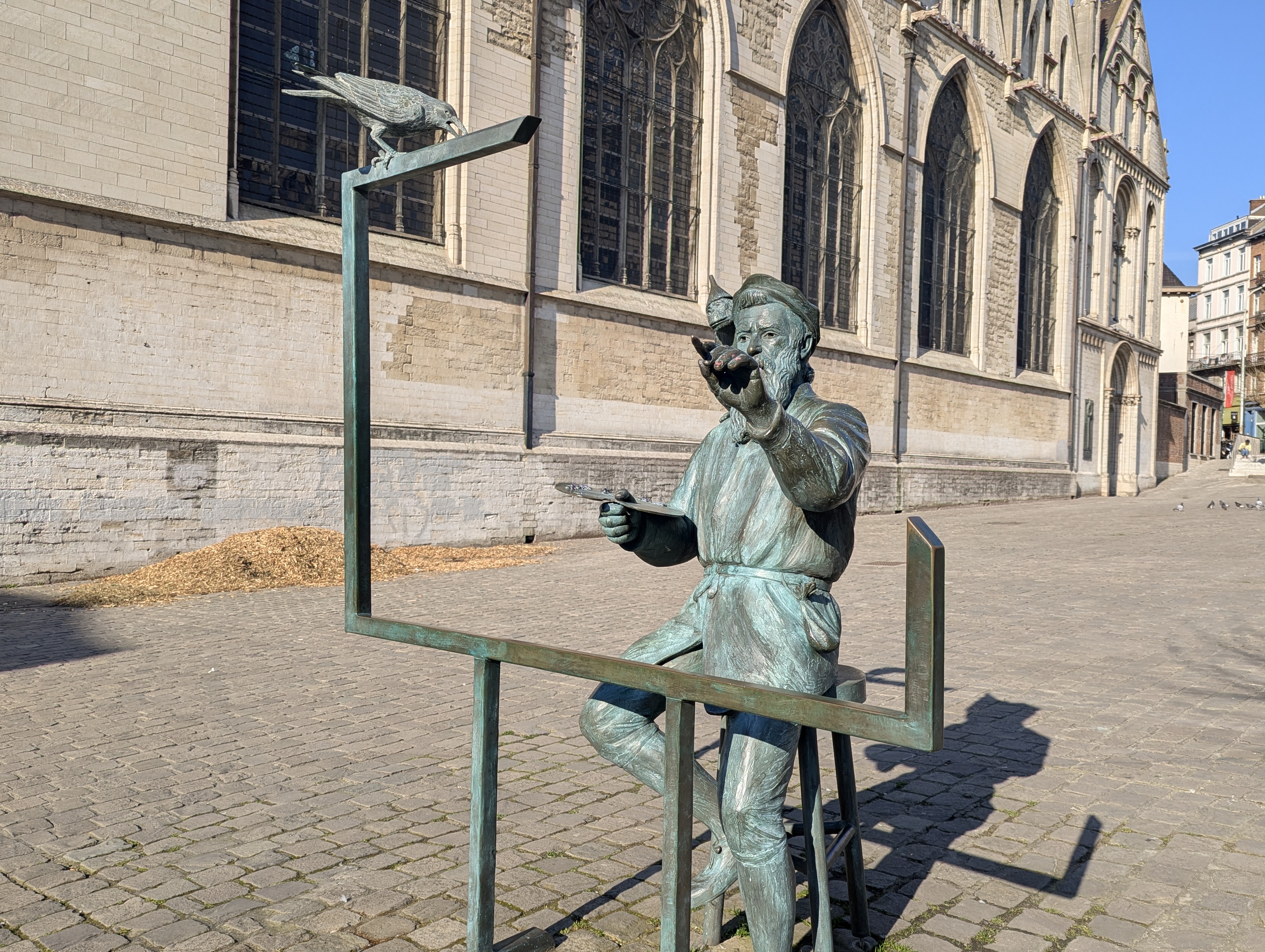
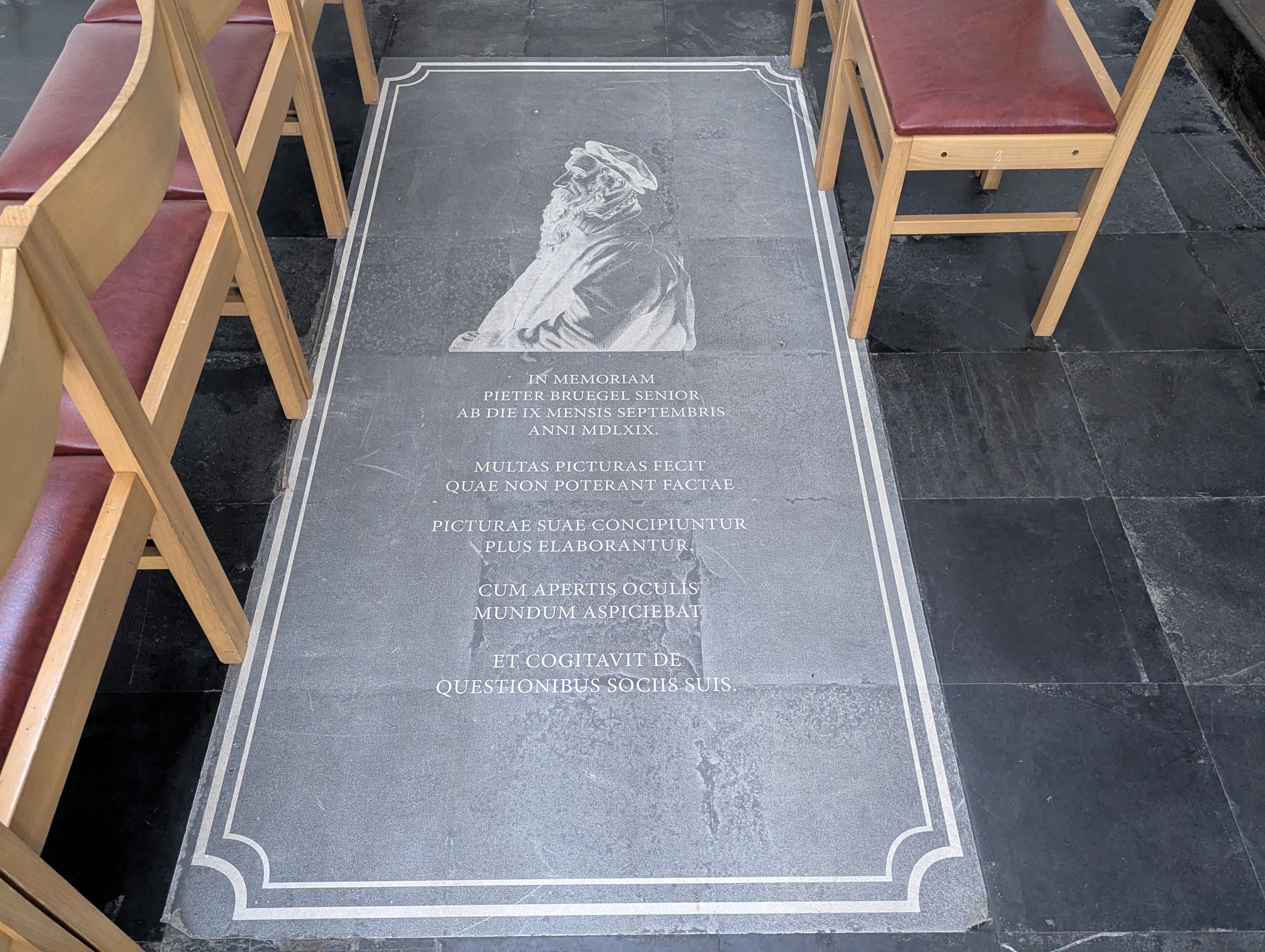
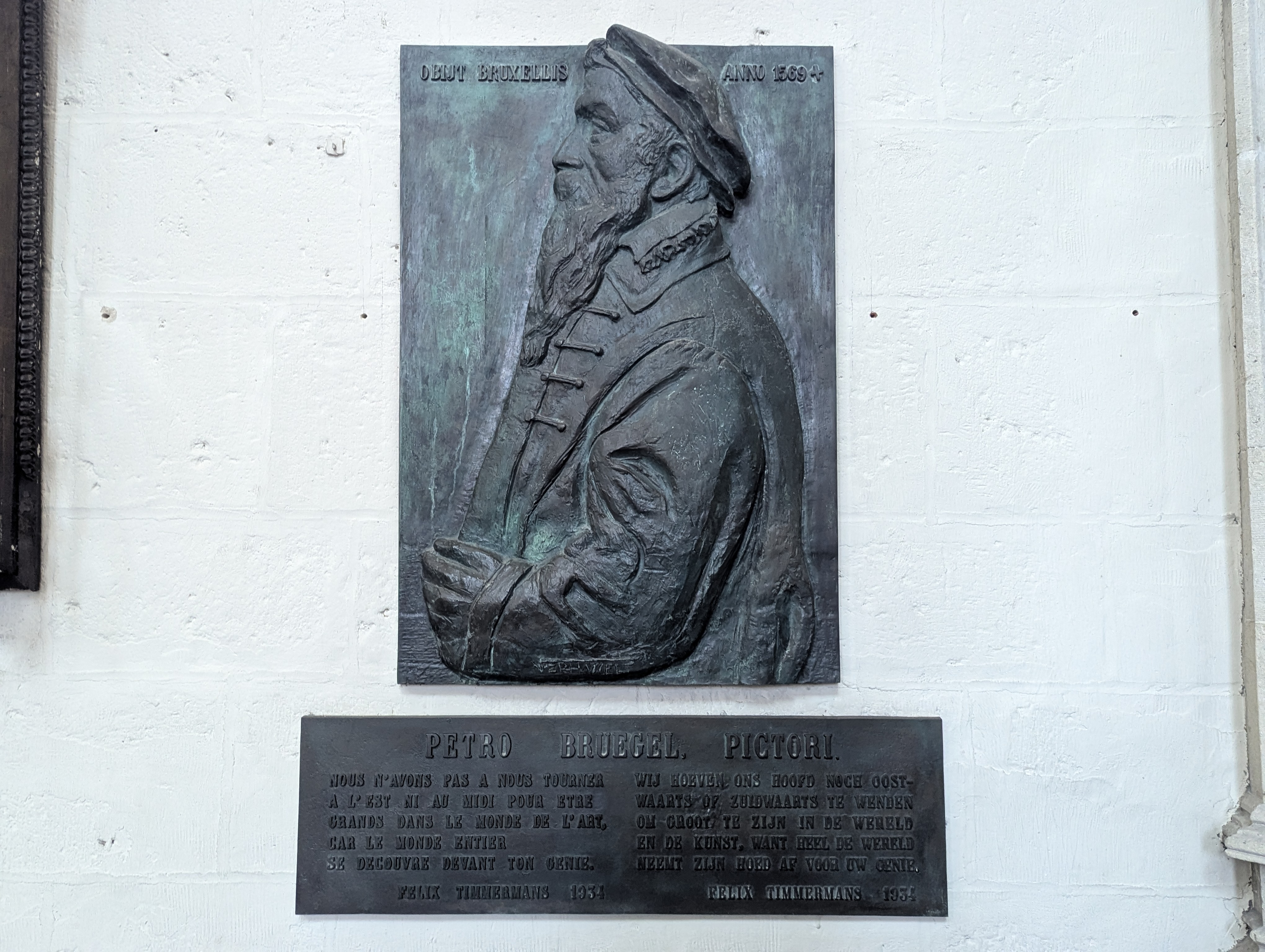
The Kapellekerk is the final resting place of two of Brussels’ most illustrious historical figures. The world-renowned painter Pieter Bruegel de Oude (Pieter Bruegel the Elder) was buried here in 1569; a monument erected by his sons still honours his memory.
Additionally, the church preserves part of the relics of Sint-Bonifatius van Brussel (Saint Boniface of Brussels). Born in the city, Boniface rose to become the Bishop of Lausanne before his death around 1266. Local tradition tells us that his father was a goldsmith who lived on the Cantersteen.
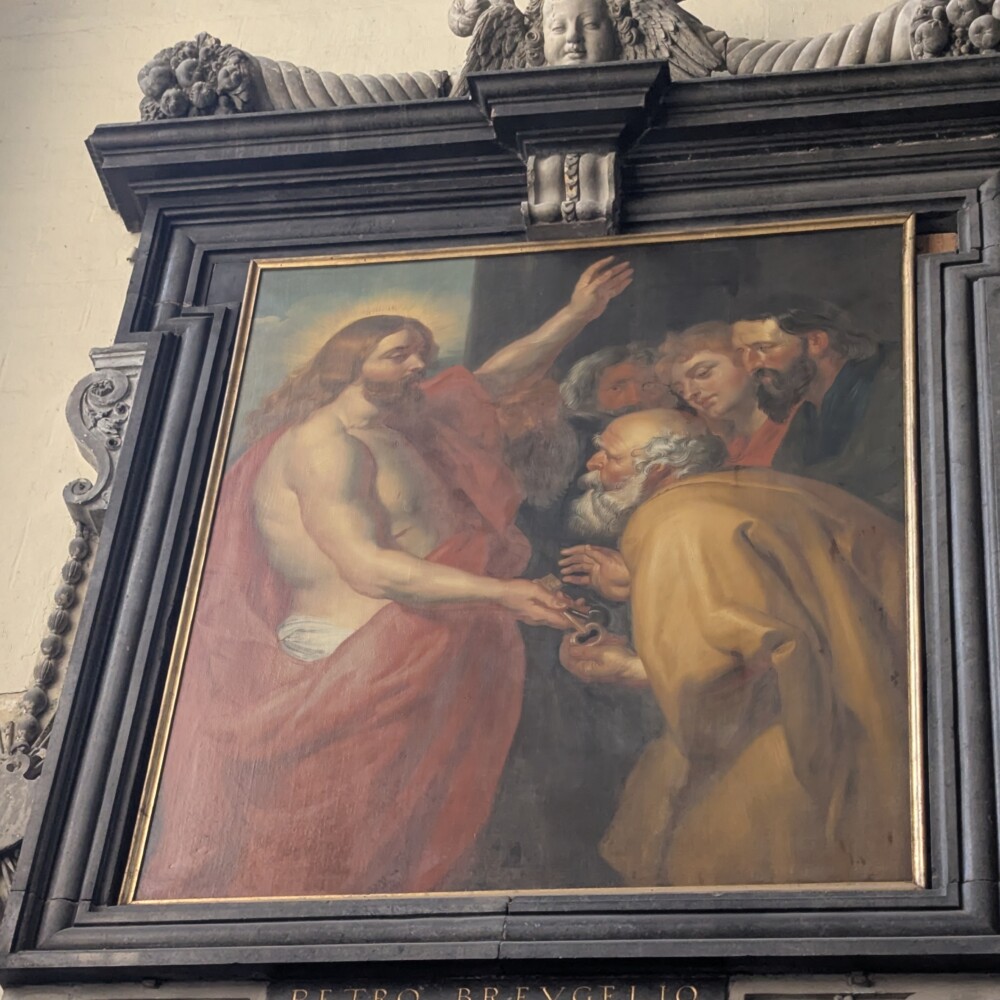
The church also holds a dramatic history of survival. It was damaged by Calvinists in the late 16th century and suffered during the French bombardment of 1695. Among its treasures is a copy of a Rubens masterpiece, ‘Christus overhandigt de sleutels aan de Heilige Petrus’ (Christ Handing the Keys to Saint Peter), which originally decorated the Bruegel family tomb.
The Scam of the Bloody Holy Linen
According to Henne et Wauters, there was a possible scam that took place at the Kapellekerk in the course of the 16th century. It was said that Hendrik van Bergen, the Bishop of Kamerijk, issued a ‘diploma‘ on 1 May 1493, that back in 1330, a priest at the Kapellekerk has discovered a miraculous corporal that was tainted with Christ’s blood. A corporal is a piece of altar linen, representing the linen that was wrapped around Jesus Christ, laid on the altar during masses. During Eucharist, the priest knocked the chalice that held wine and water over the corporal and it instantly transformed into blood. This miracle was then repeatedly accepted by successive cardinals and bishops who granted indulgences at the Kapellekerk. Of course, indulgences were payable back then, for God to forgive the payee’s sins.
Rumours began to circulate about how the holy linen at the Kapellekerk was in fact a scam, when a Dominican friar preached at the Sint-Goedelekerk about certain ‘indulgences and pardons accorded by fake miraculous corporals’. This prompted the Bishop of Kamerijk to investigate the corporal itself as well as all the witness given by successive priests. He consulted the major orders in Brussels and called in expert advice from the University of Leuven. The conclusion was that the hoax would be exposed on the Day of Ascension.
And then suddenly, the miraculous corporal disappeared. Later accounts claim its disappearance due to the religious troubles in the 16th century. Yet in 1578, in the inventary of the Kapellekerk, it was listed among its possession a ‘utensil that is used to contain the holy corporal’. Maybe the scam would have caused significant damage to certain individuals, so it was covered up. Who knows?
How did it look like?
The Transition from Romanesque to Gothic
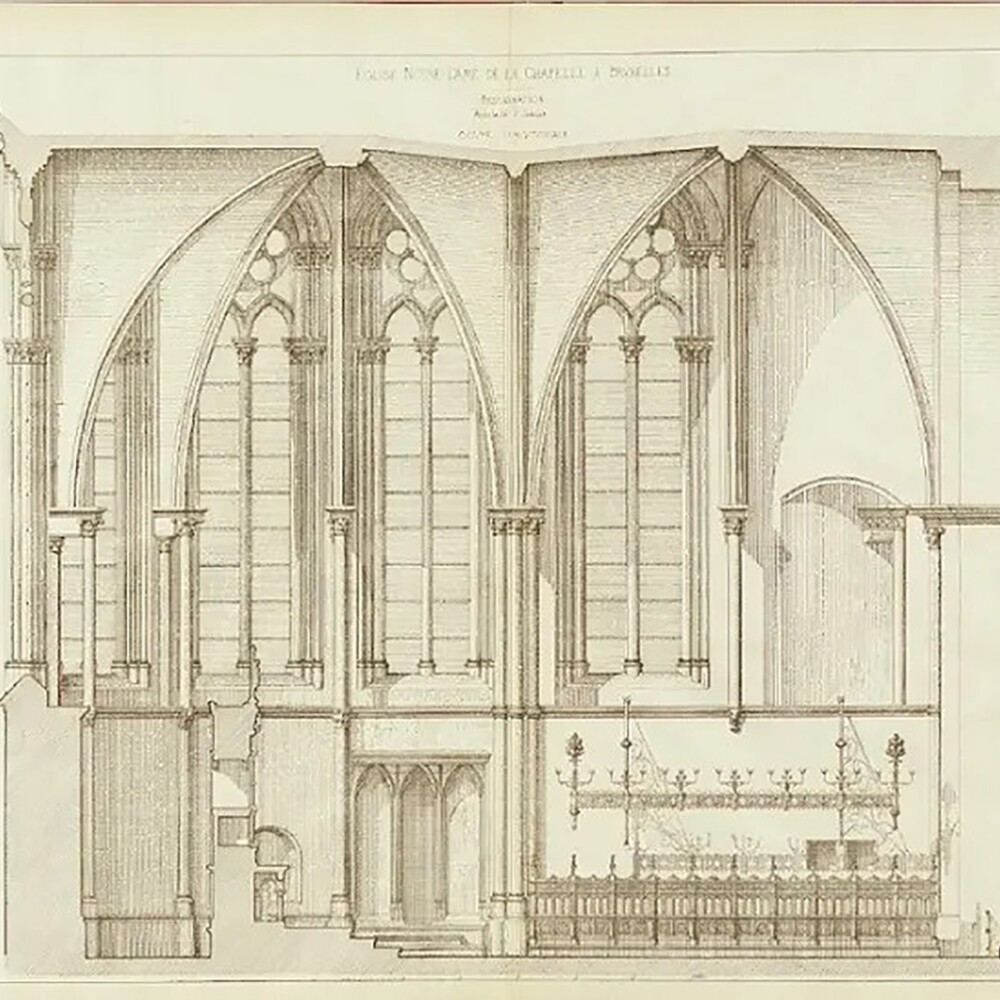
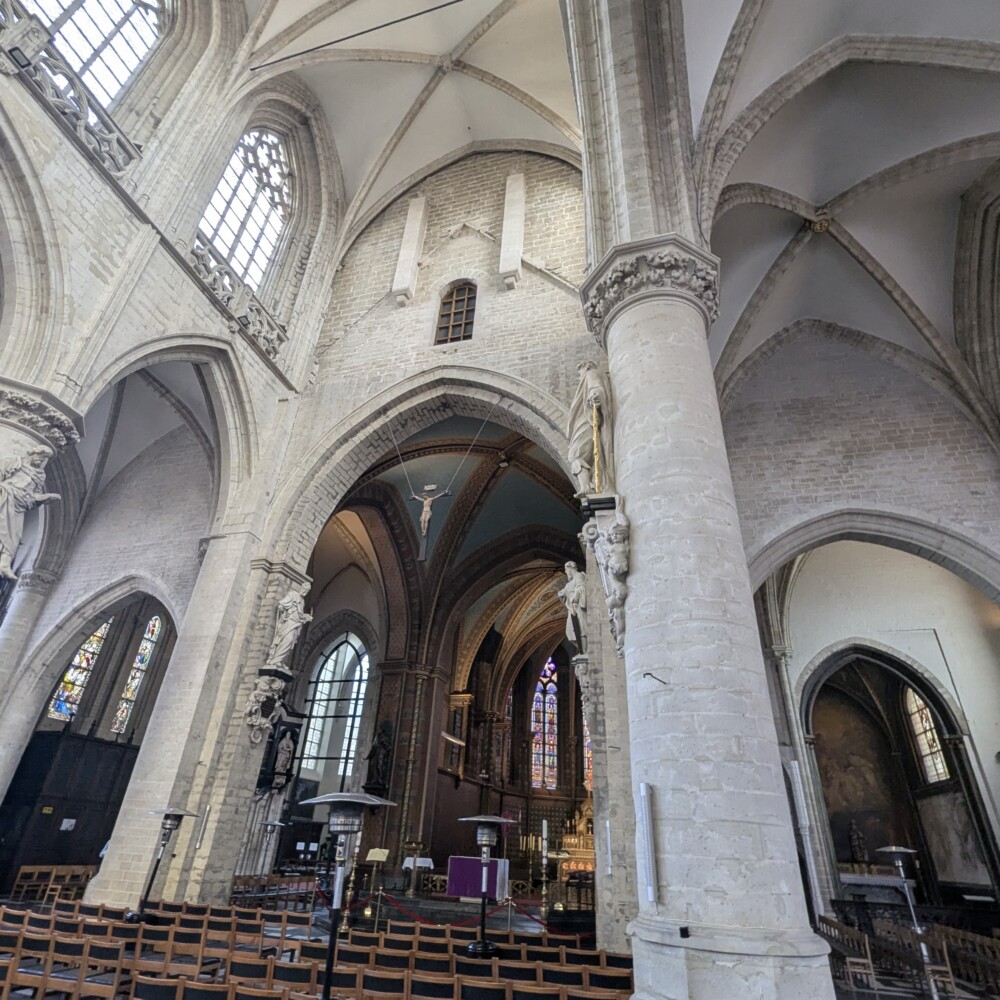
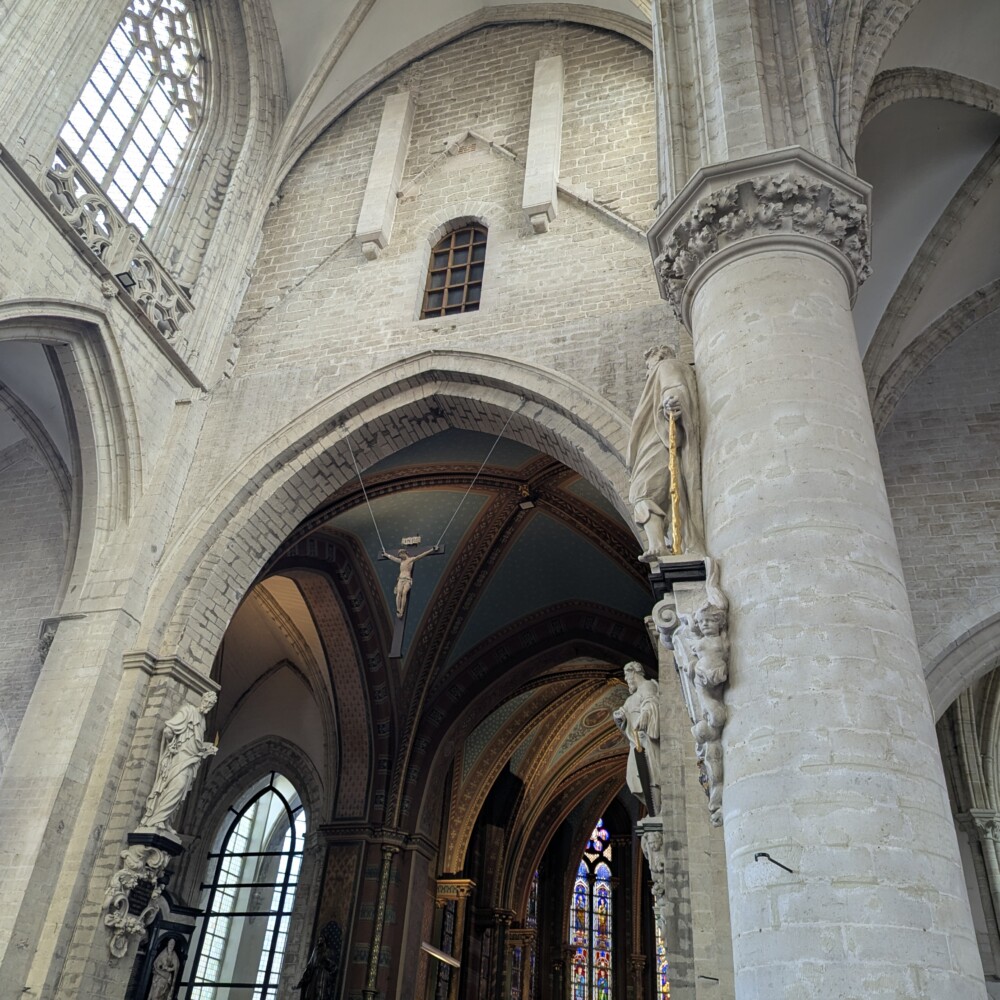
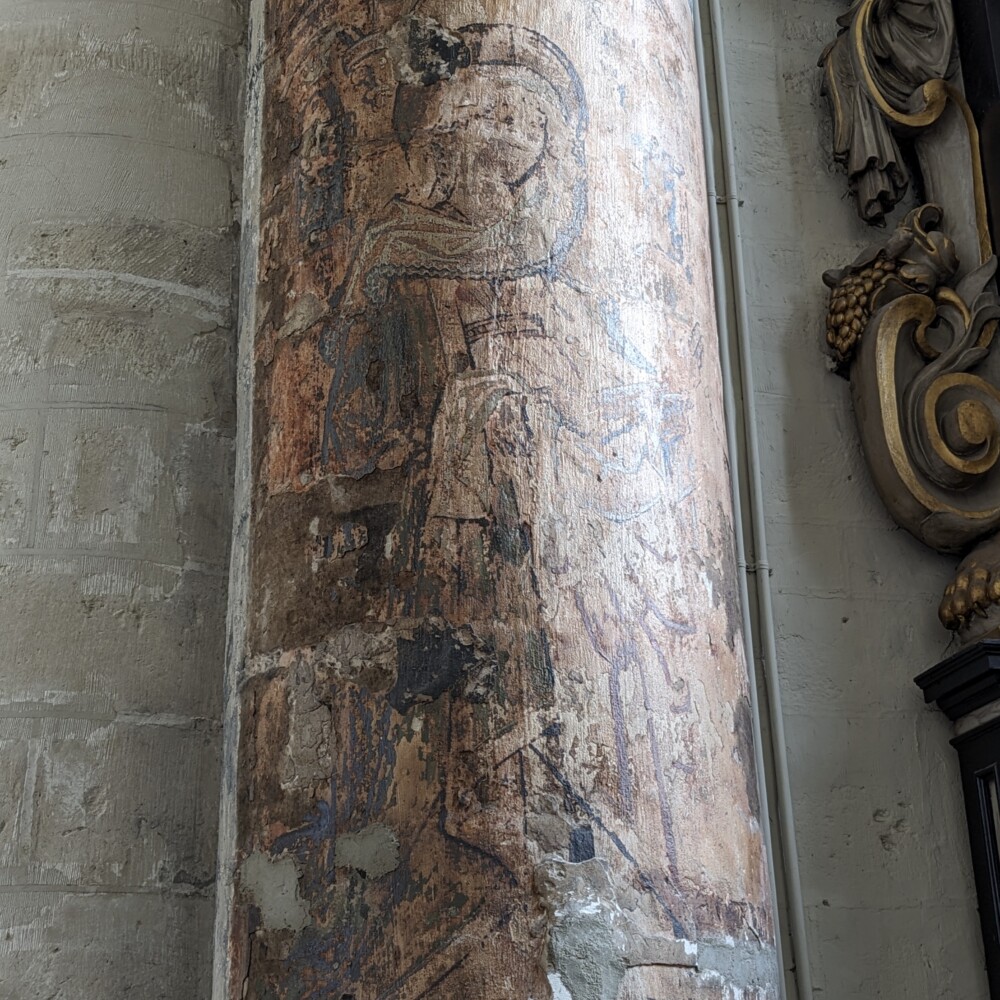
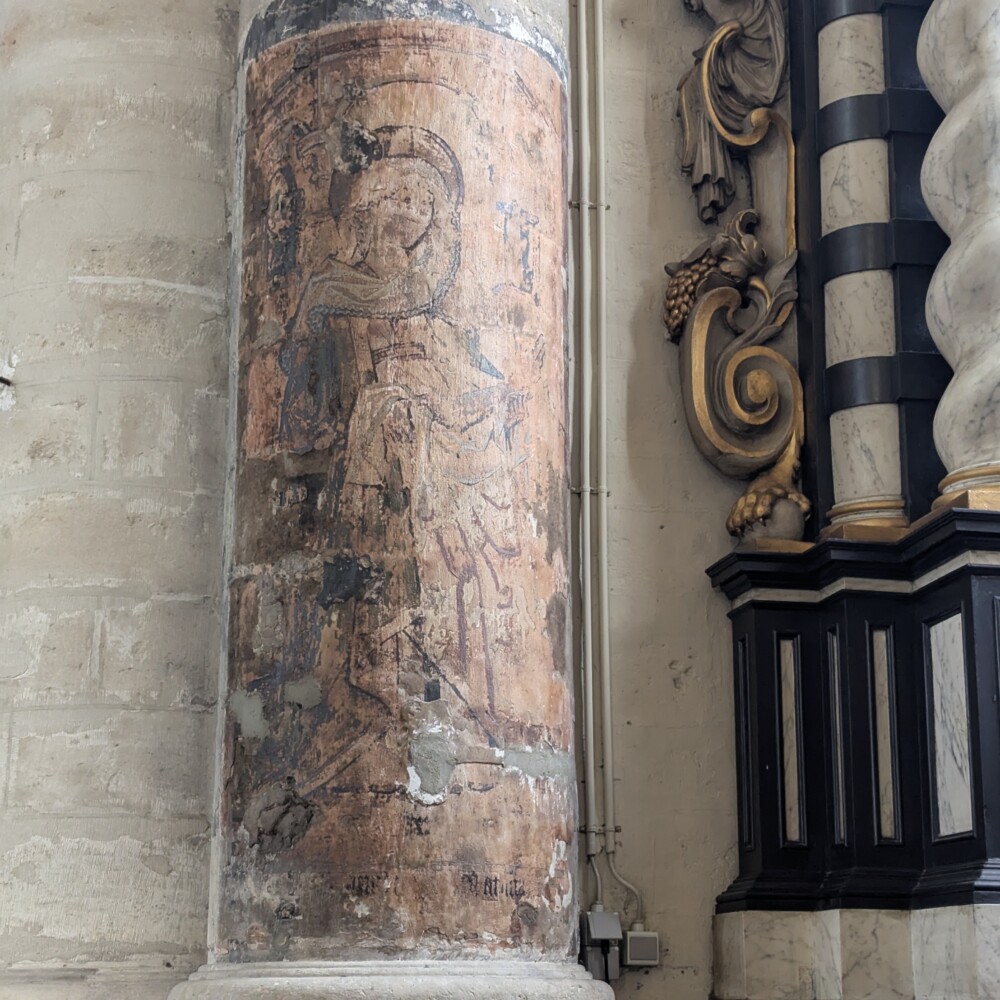
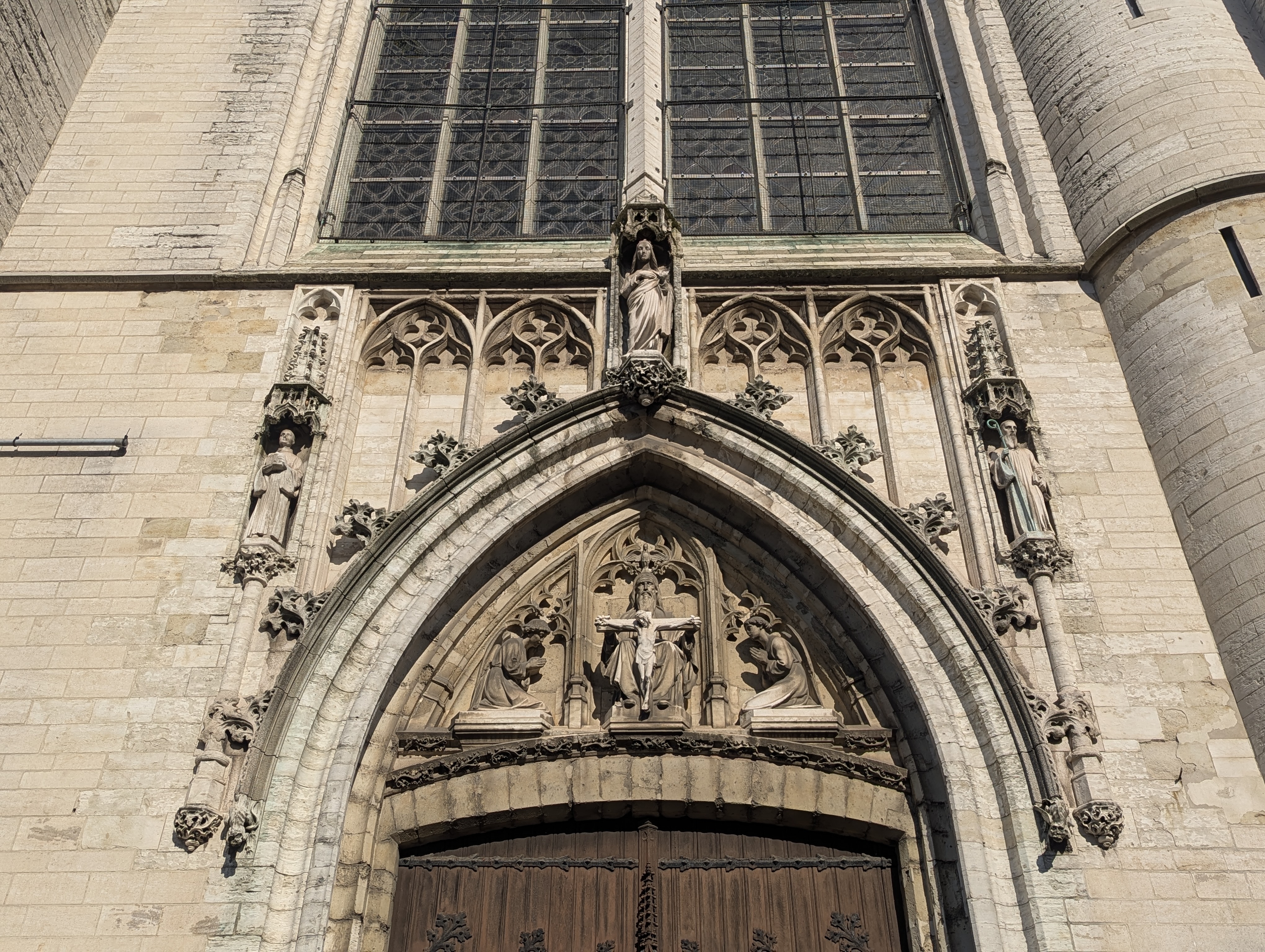
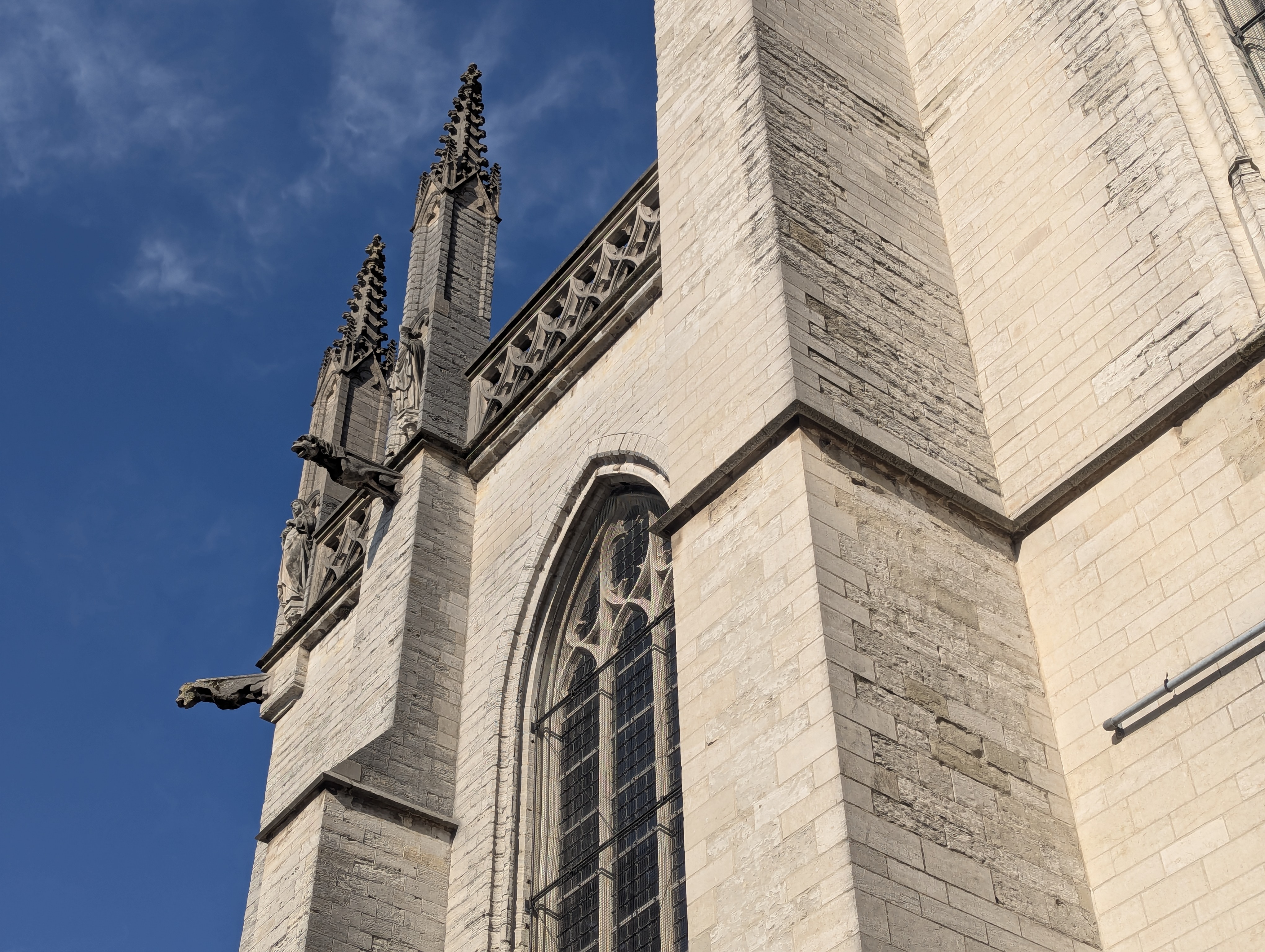
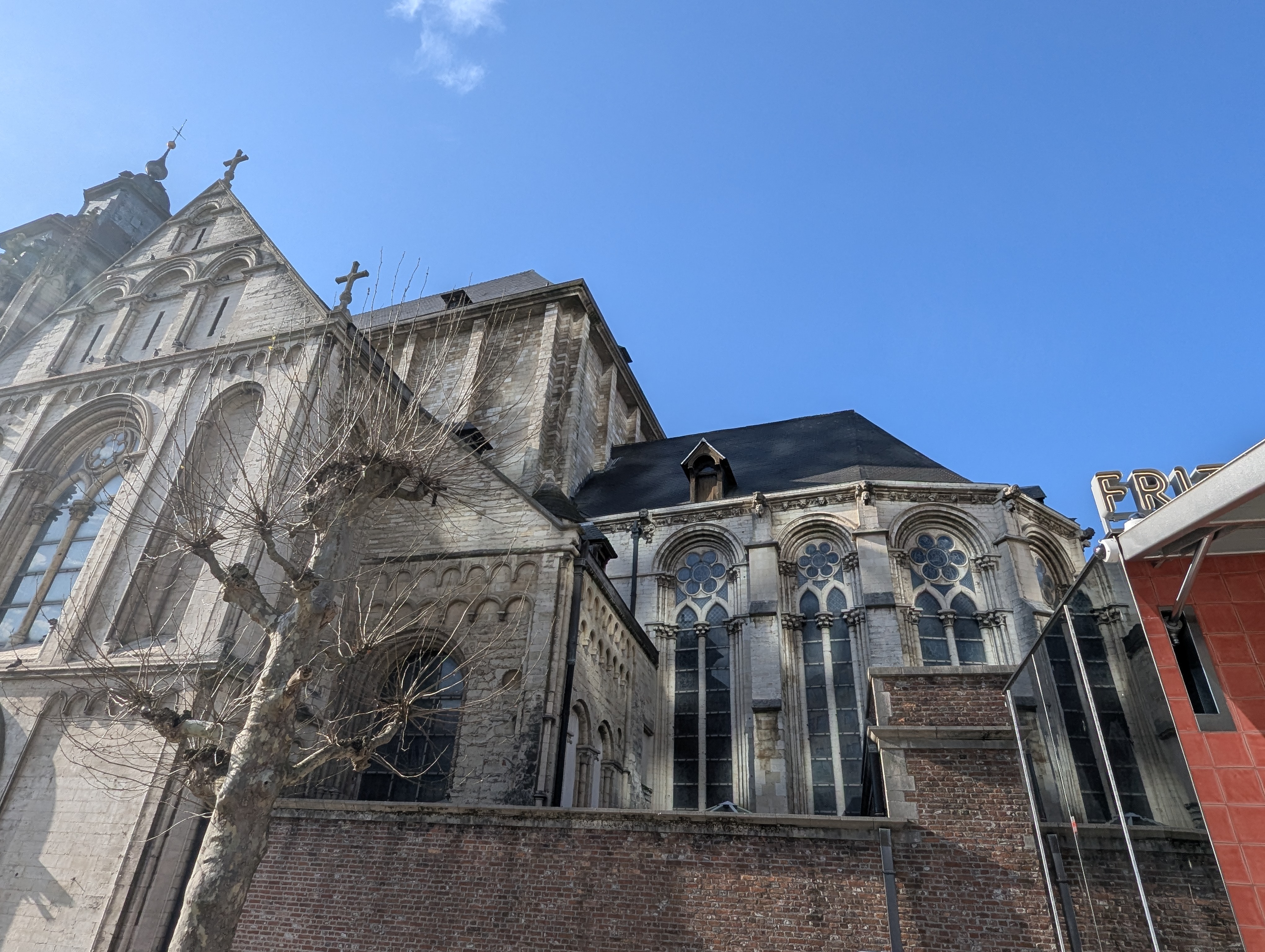
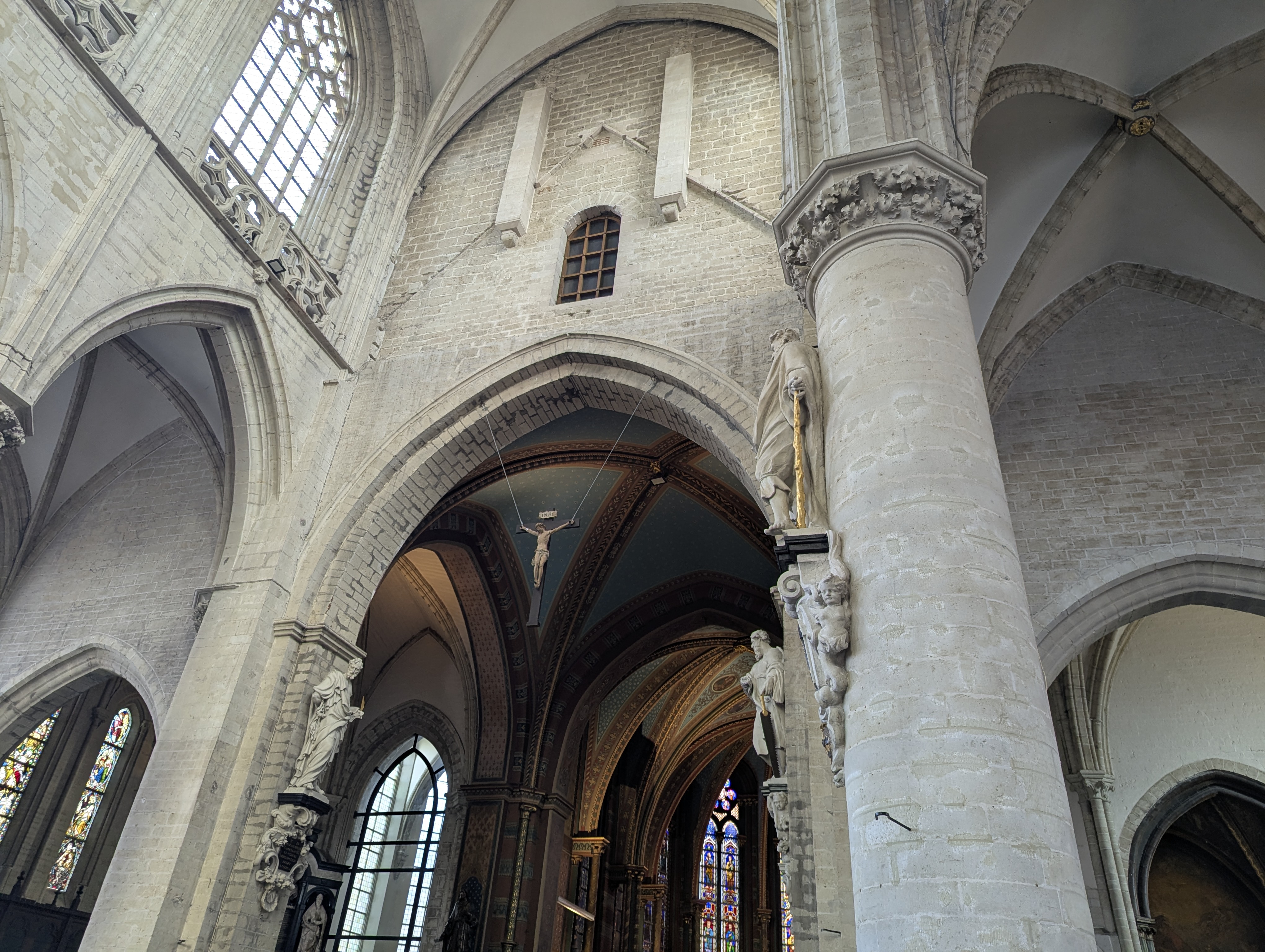
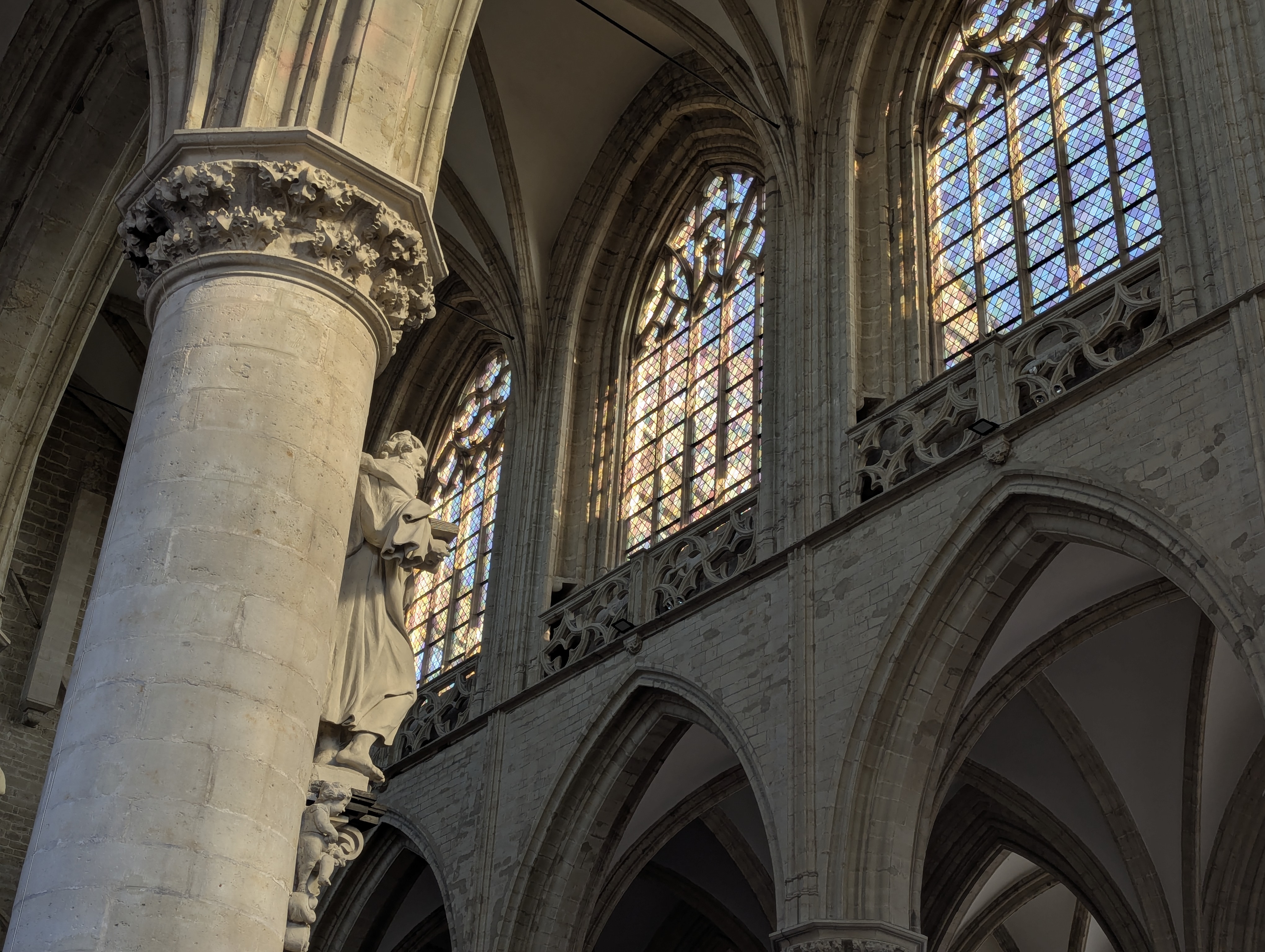
One of the most interesting aspects about the Brussels Kapellekerk is that one can see its different layers of architectural styles. During the renovations in the 1860s, some of its Romanesque elements were removed and that saved them from destruction in the subsequent years.
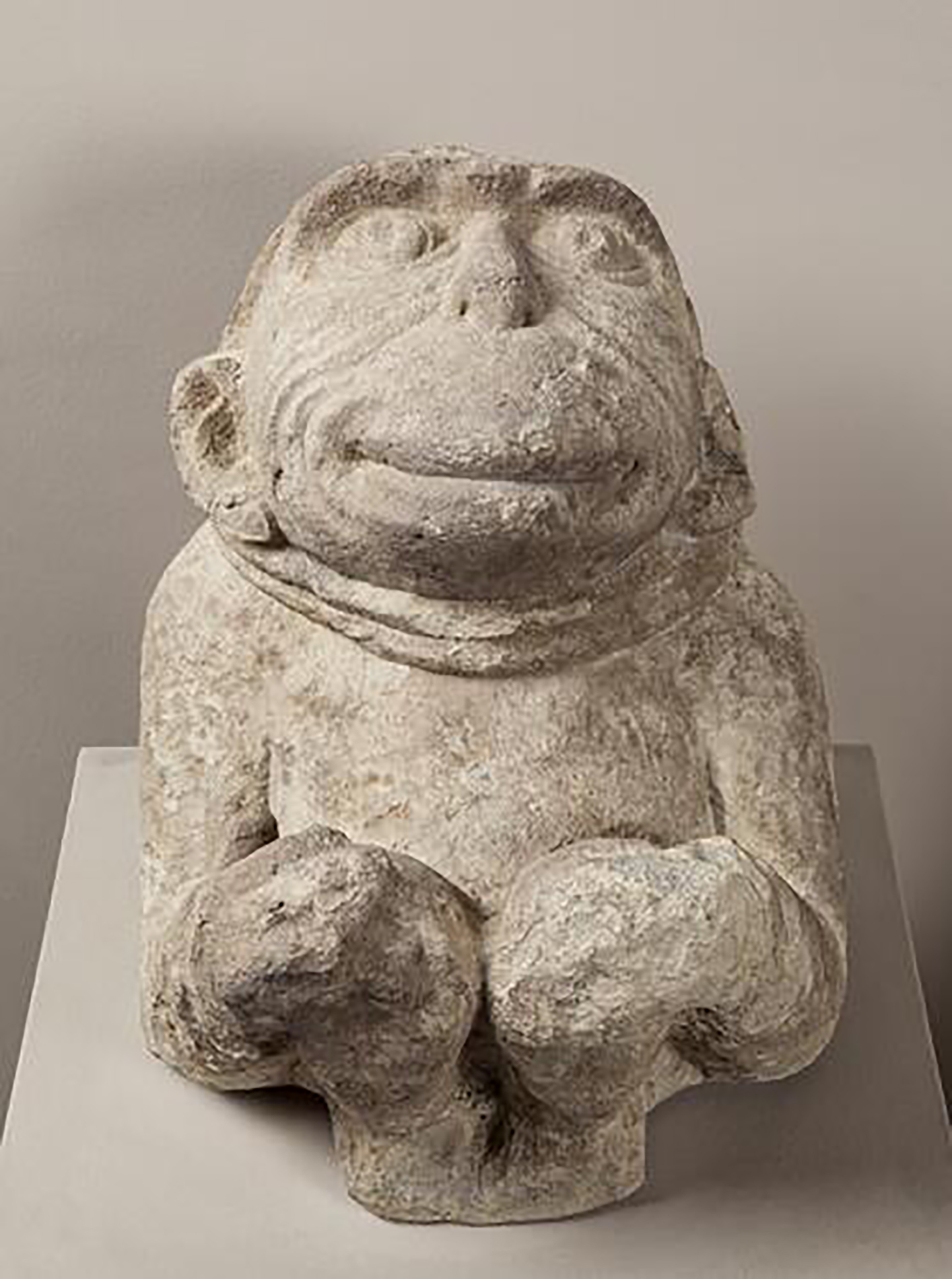
Most notably, two Romanesque monsters now preserved in the Brussels Broodhuis museum are among the earliest stone sculptures of the city, dating back to 1250-1300.
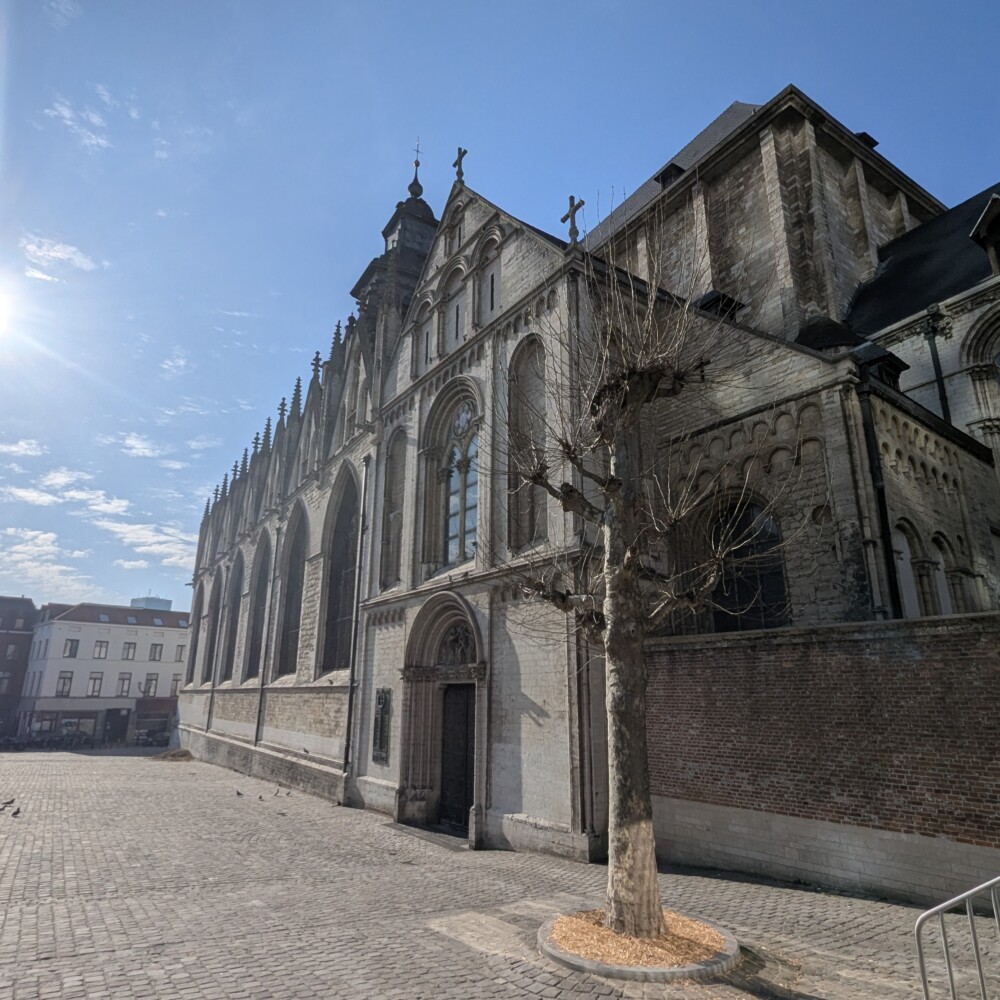
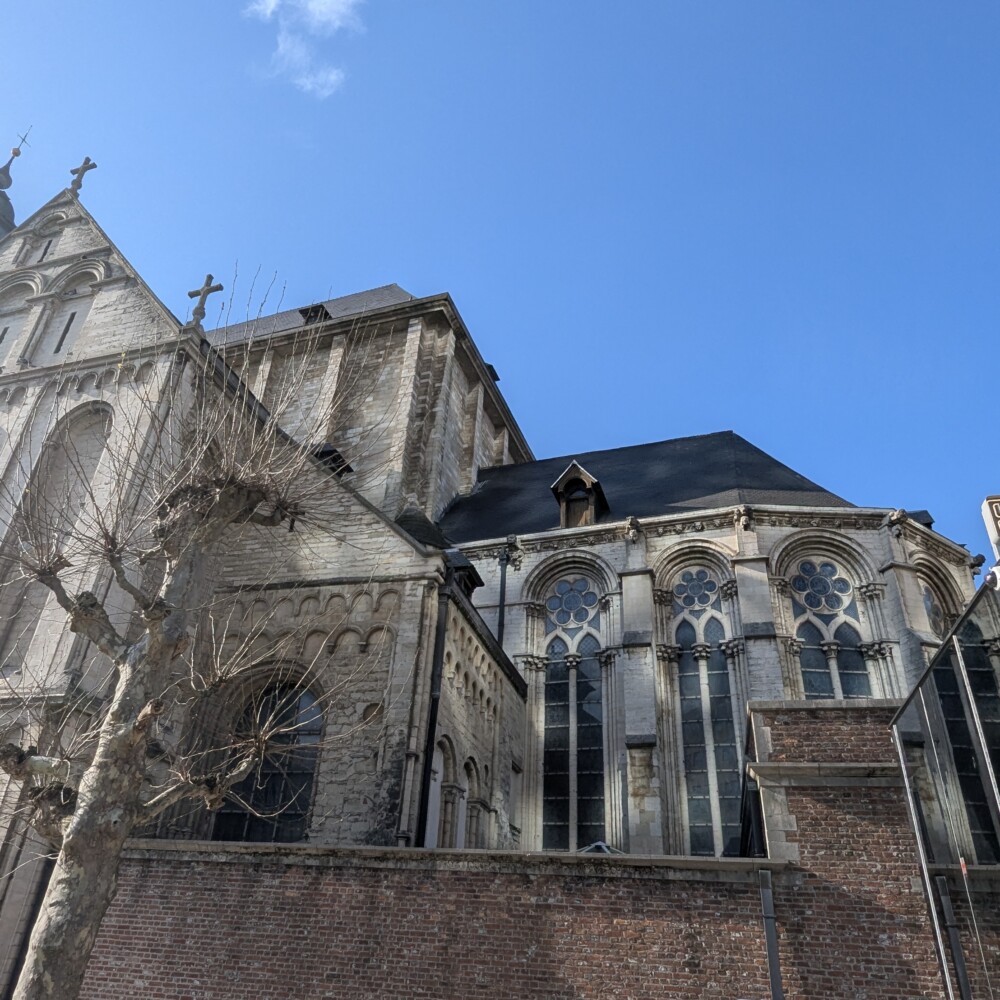
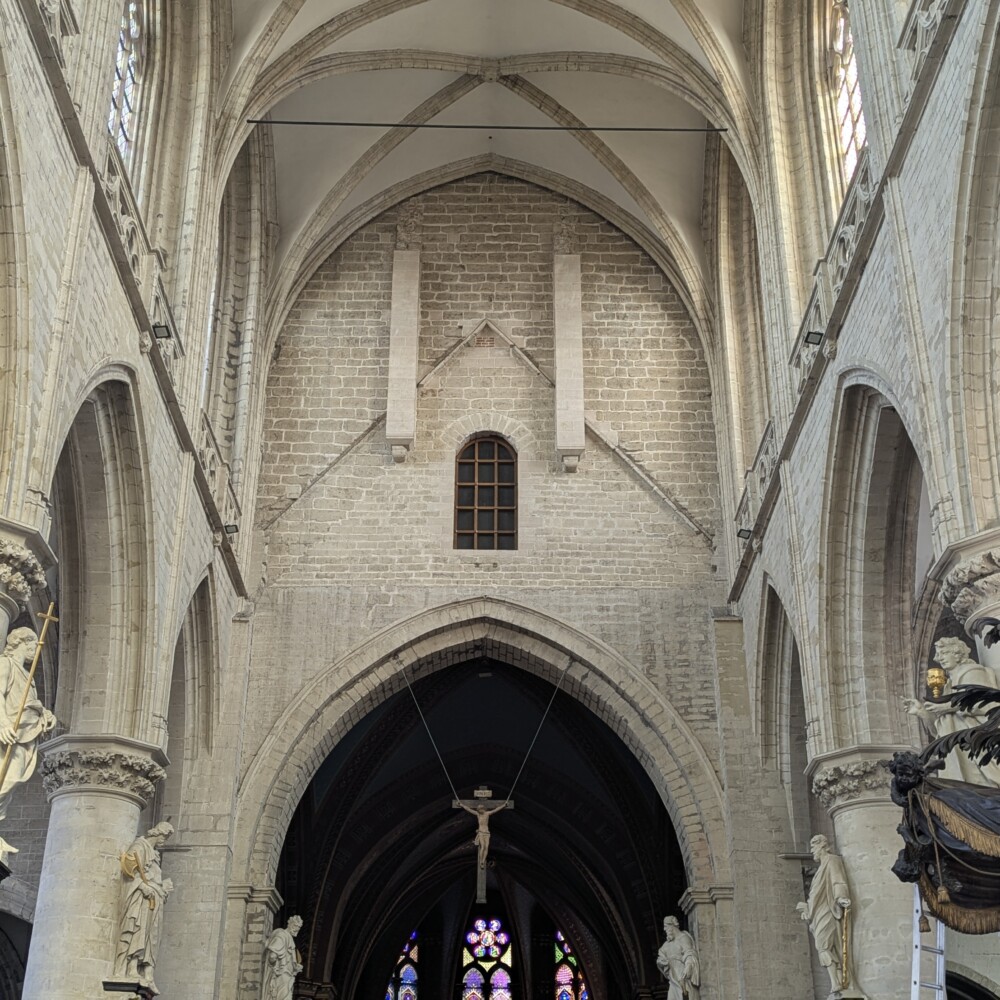
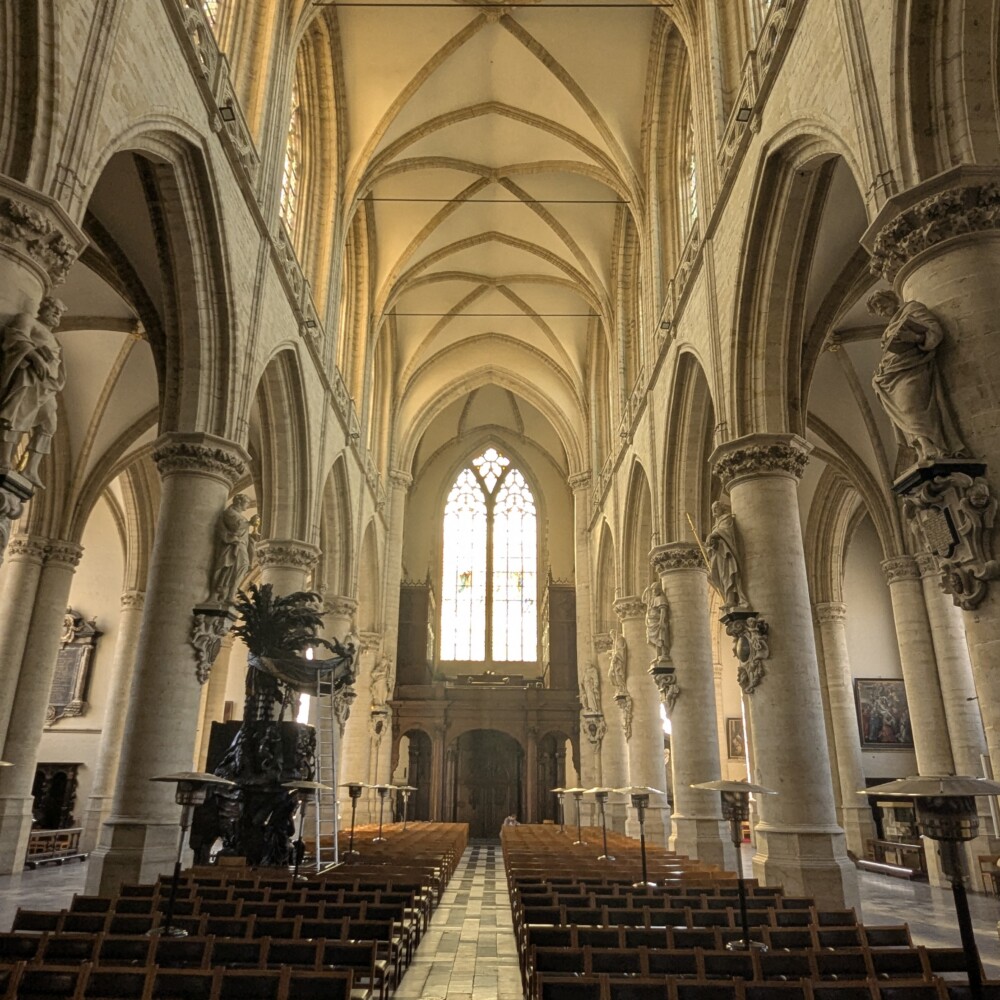
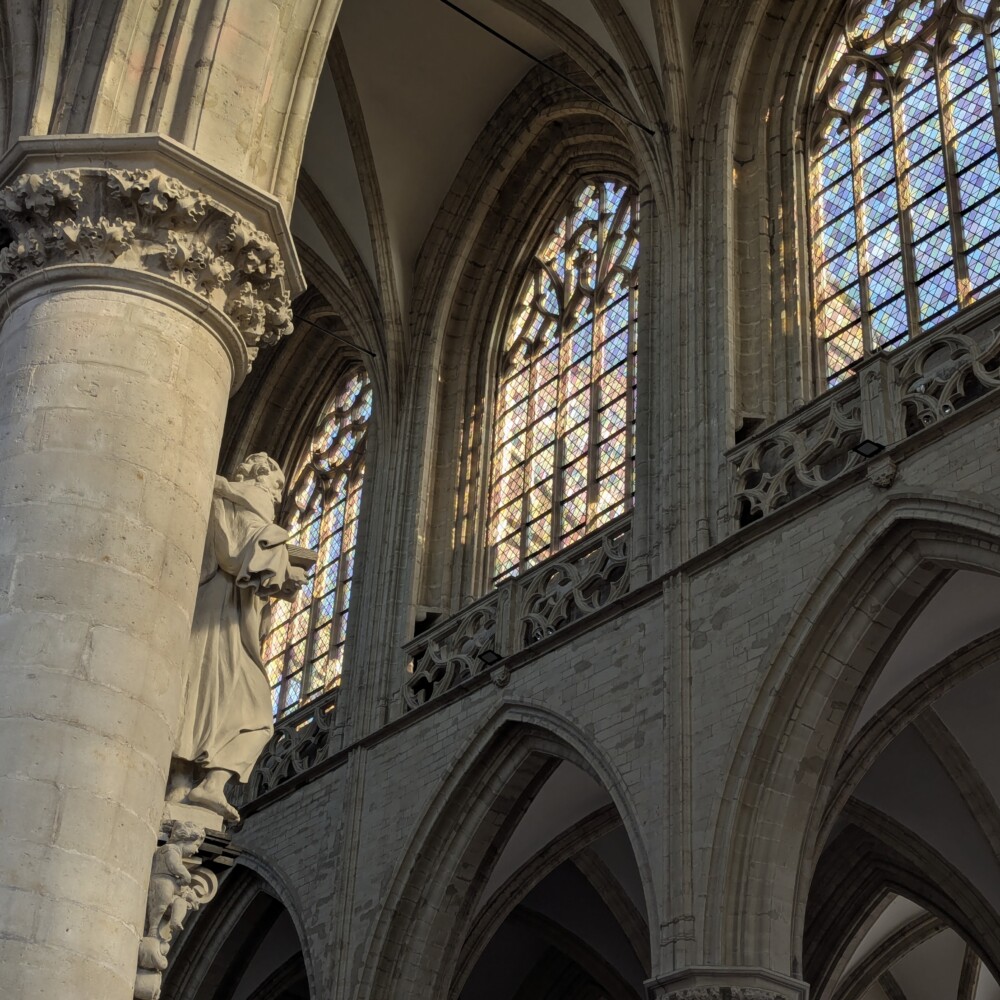
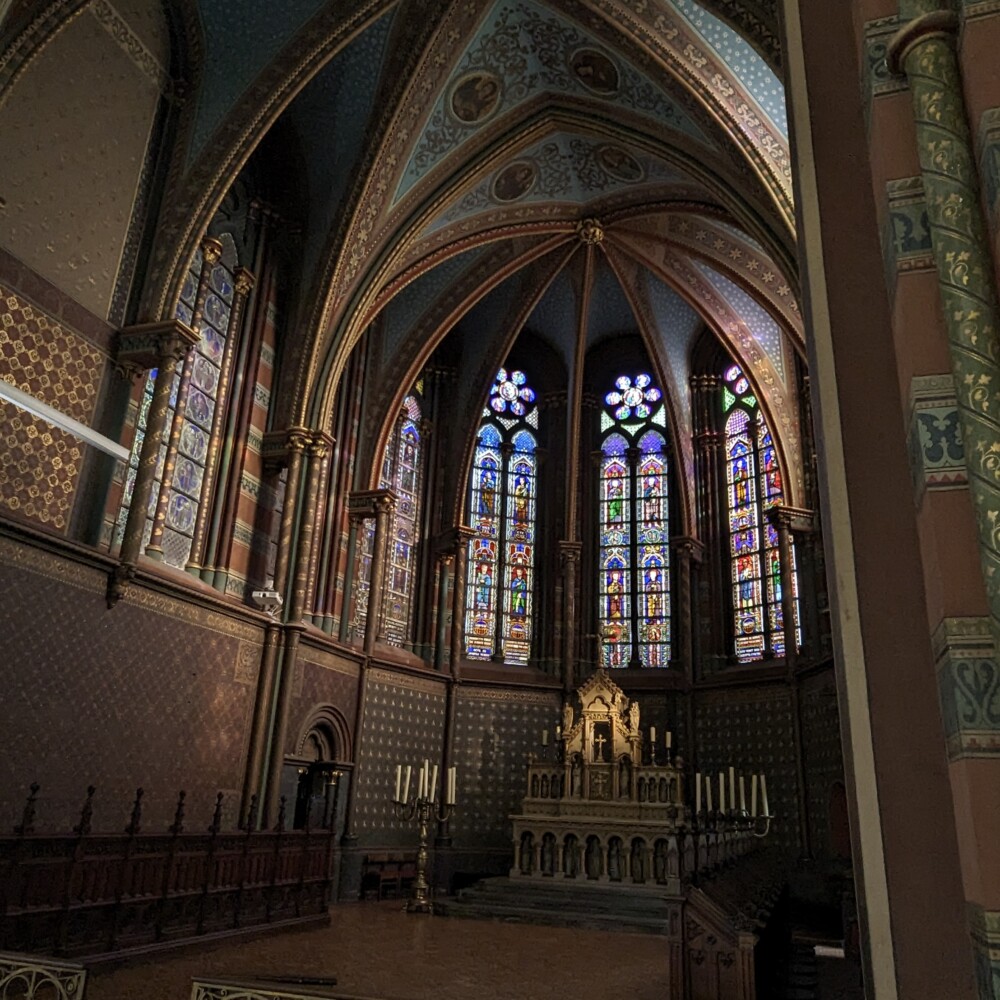
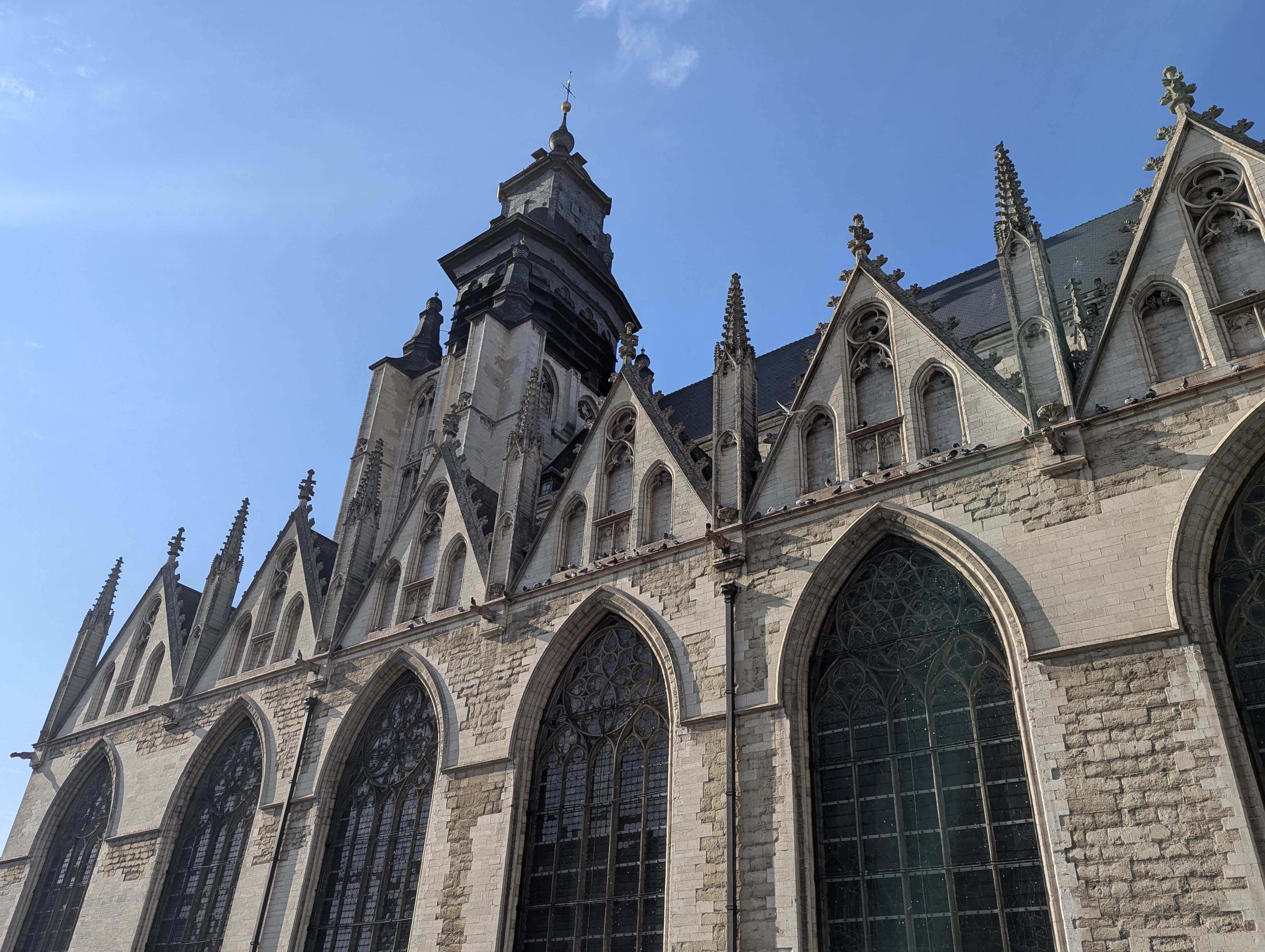
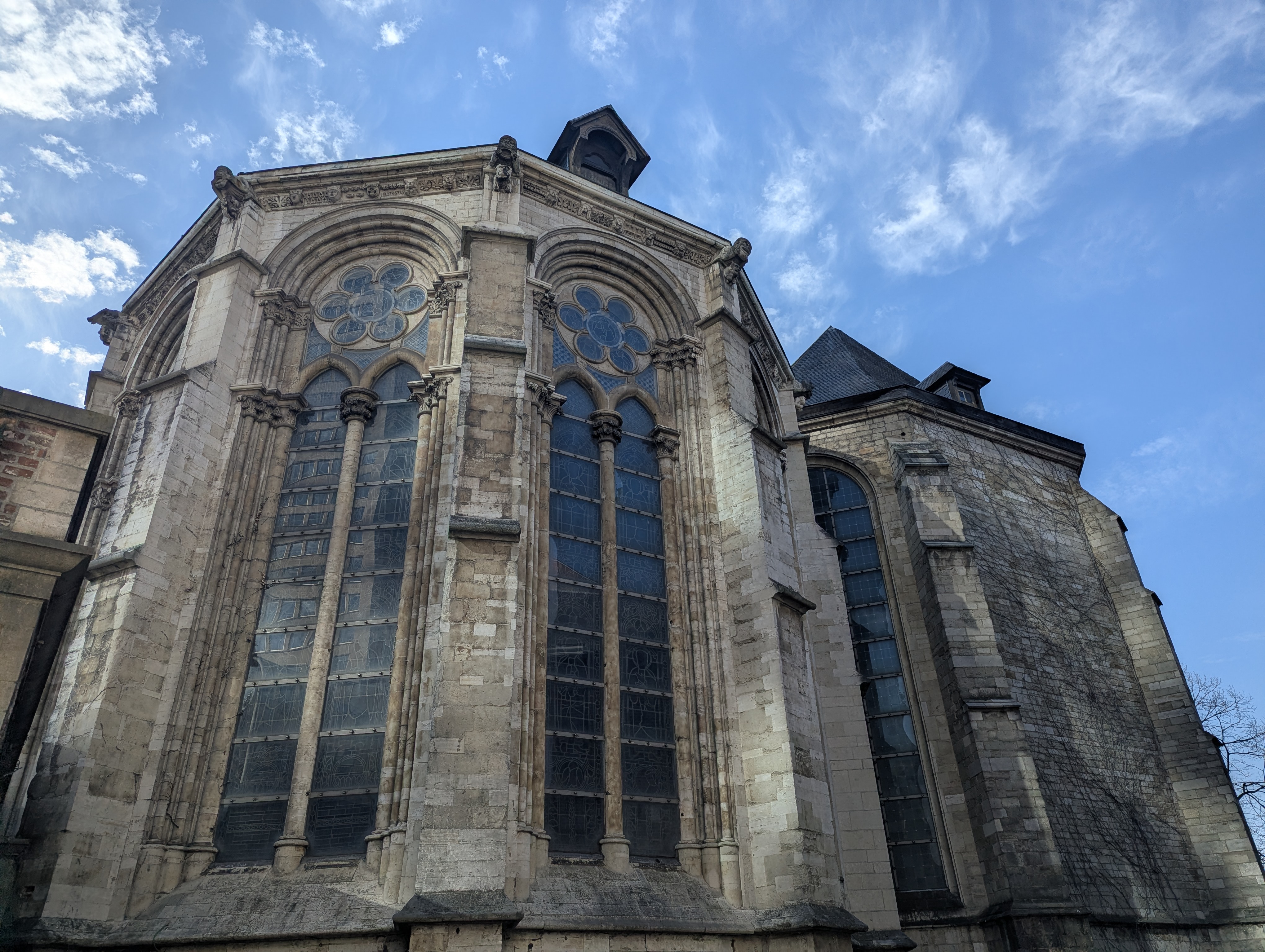
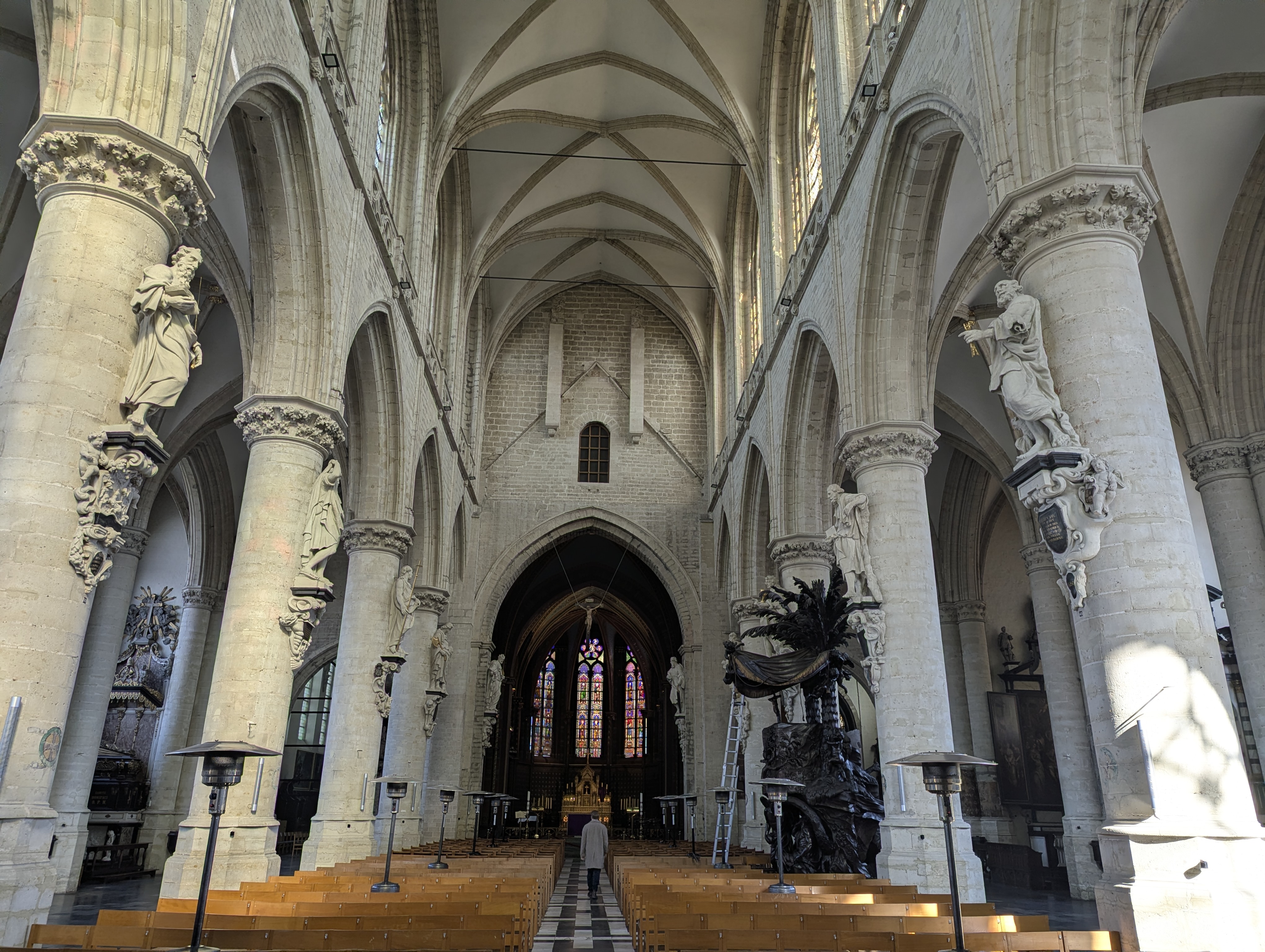
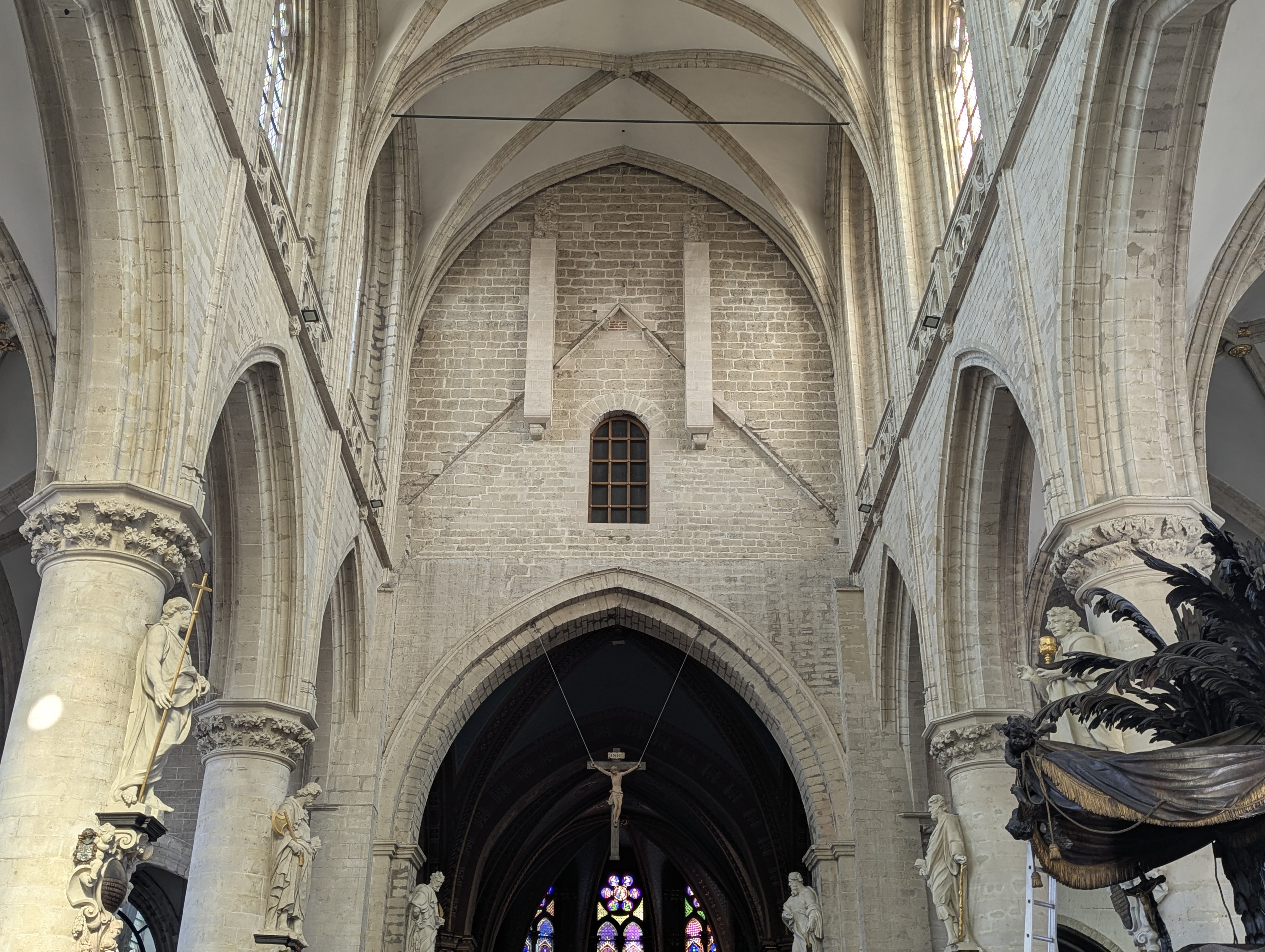
Architecturally, the church is a transition from the Romanesque to the Gothic style. The transept and choir, dating to the 13th century, represent the oldest surviving sections. After a major fire in 1405 destroyed the original nave, it was rebuilt in the expansive Brabantine Gothic style.
The Missing Crossing Tower of the Kapellekerk
Historians find the Kapellekerk a strange oddity: its origin before the founding by Count Godfried I was shrouded in mystery, it is filled with legends and rumours such as the scam of the holy corporal, and most interestingly its towers.
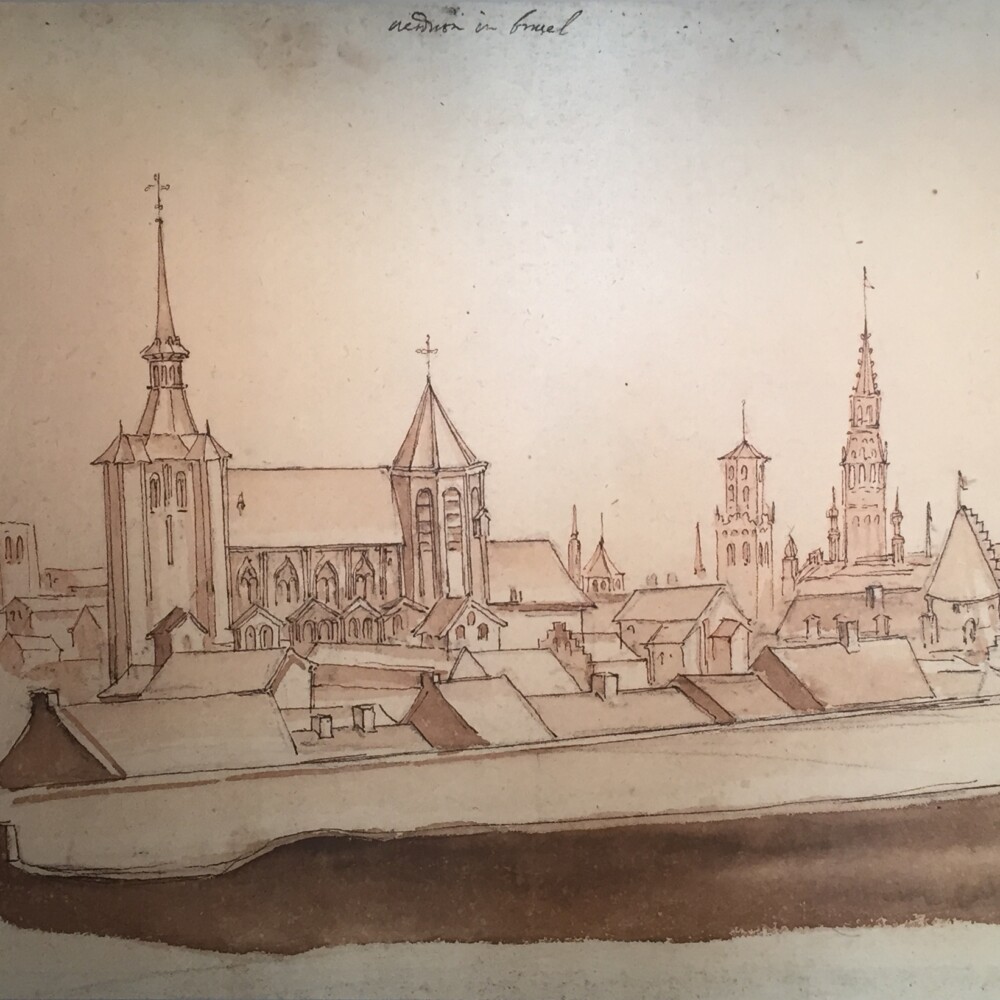
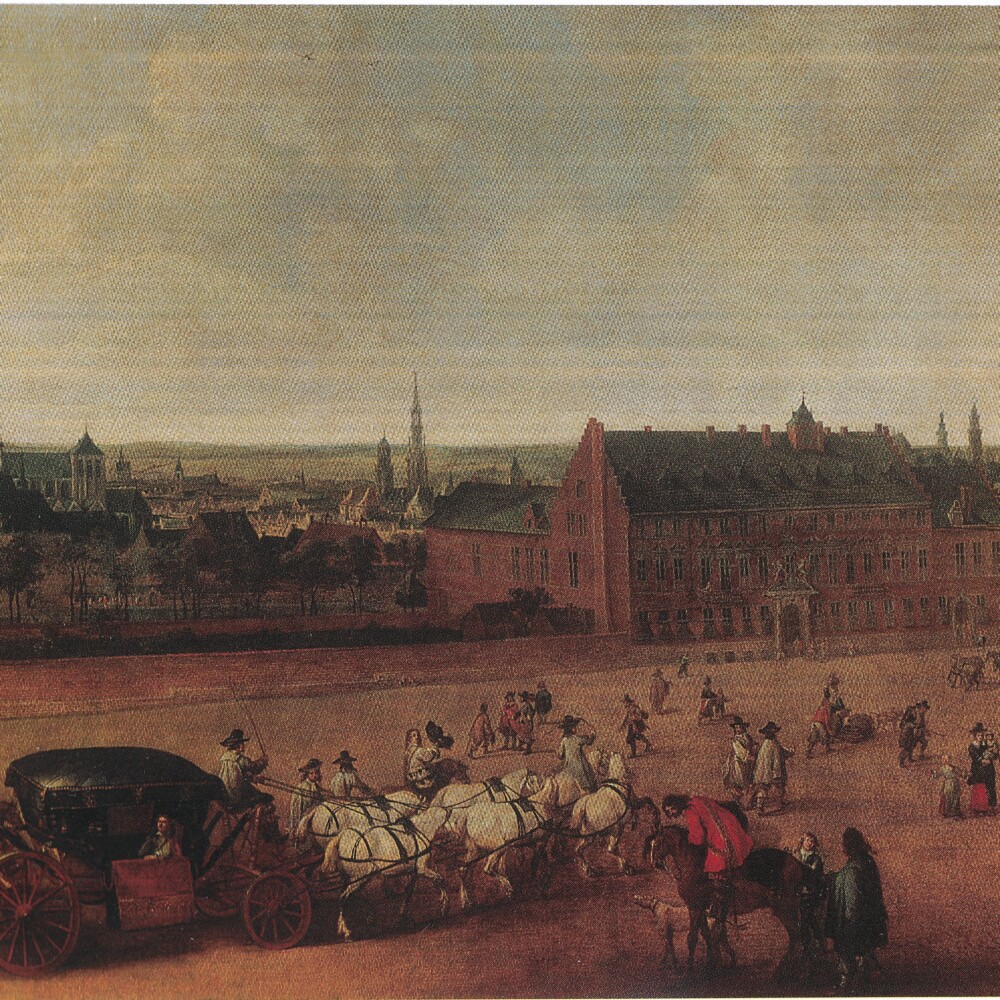
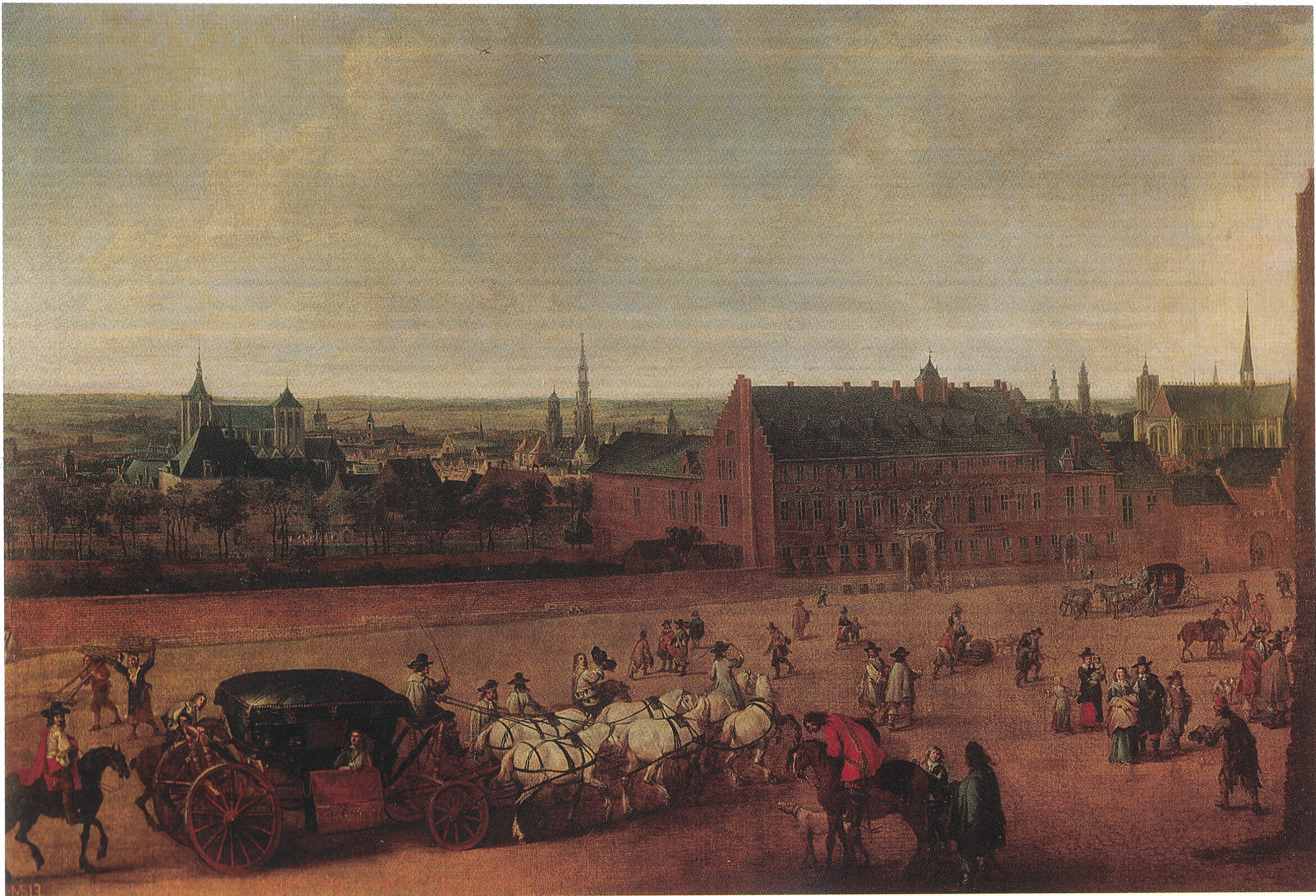
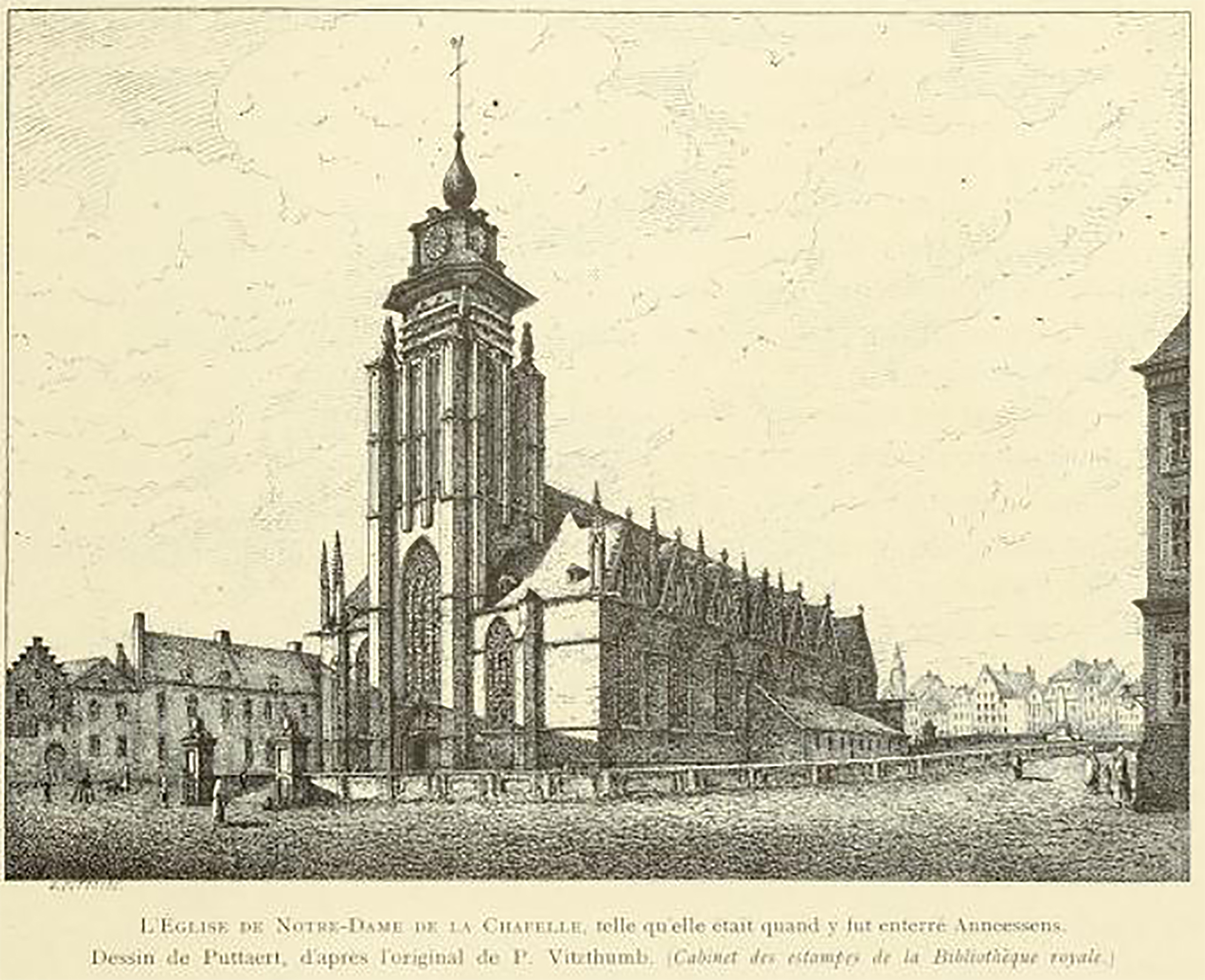
In pre-1800s drawings of the Kapellekerk, such as the sketch by Italian traveller Remigio Cantagallina and the painting of Peter Snayer in the 17th century, the church clearly had two towers: a western bell tower above its entrance – still is the case today, and a crossing tower that was in the ‘crossing’ between the nave and the transepts.
The first question was: did the western bell tower serve a military purpose?
Compared to its neighbouring country, the County of Flanders, where huge belfries were built as military lookout structures, such defensive functions are fulfilled by churches in the Duchy of Brabant instead. This was why the Sint-Niklaaskerk close to the Grote Markt had such an impressive bell tower. As it was built just outside the first city wall of Brussels, the Kapellekerk’s bell tower too must have served that purpose.
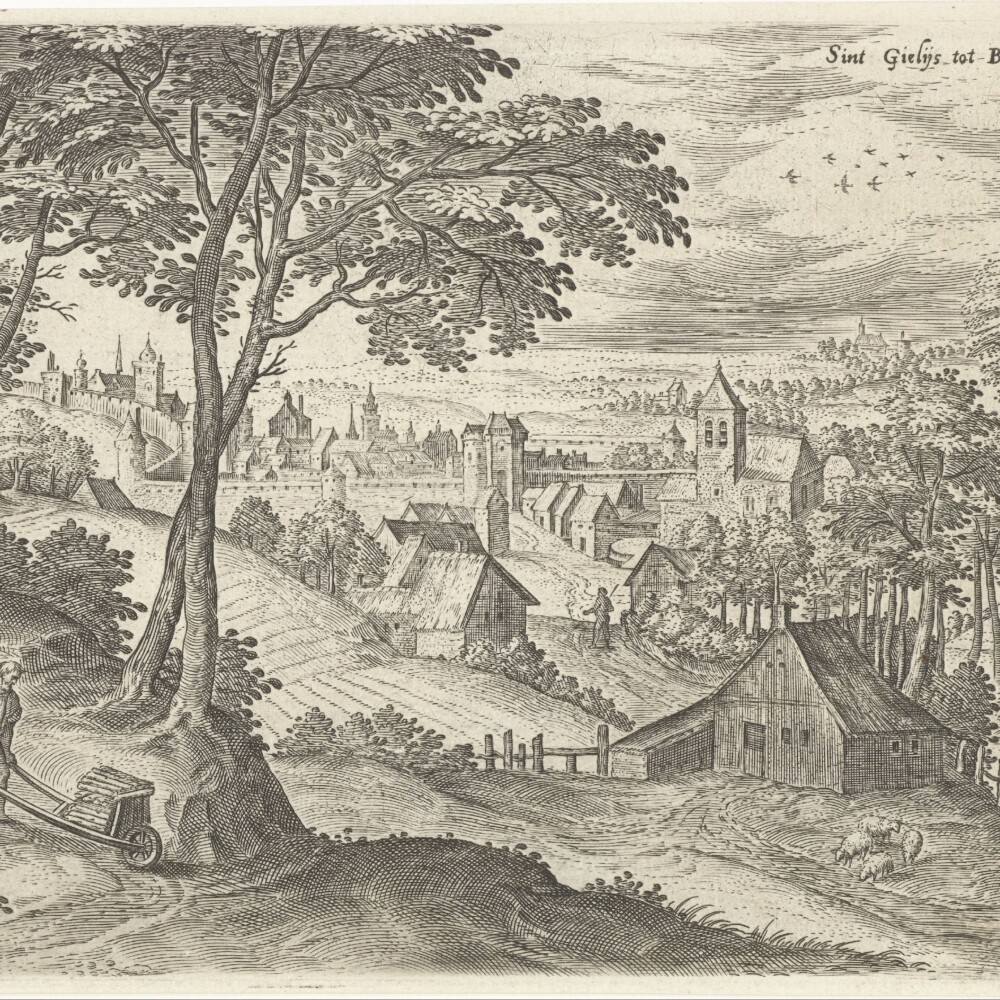
But as the second outer city wall was built, the church was now very much inside the city centre. In the Gothic version of the bell tower, we see that its height was not that impressive. Perhaps due to its less strategic location. What is notable is that the Kapellekerk stood right on the old trade route towards the village of Obbrussel (today’s Sint-Gillis). The outer city gate was known as the Obbrusselpoort or the Oude Brusselpoort, with the latter name indicating the longstanding merchant road.
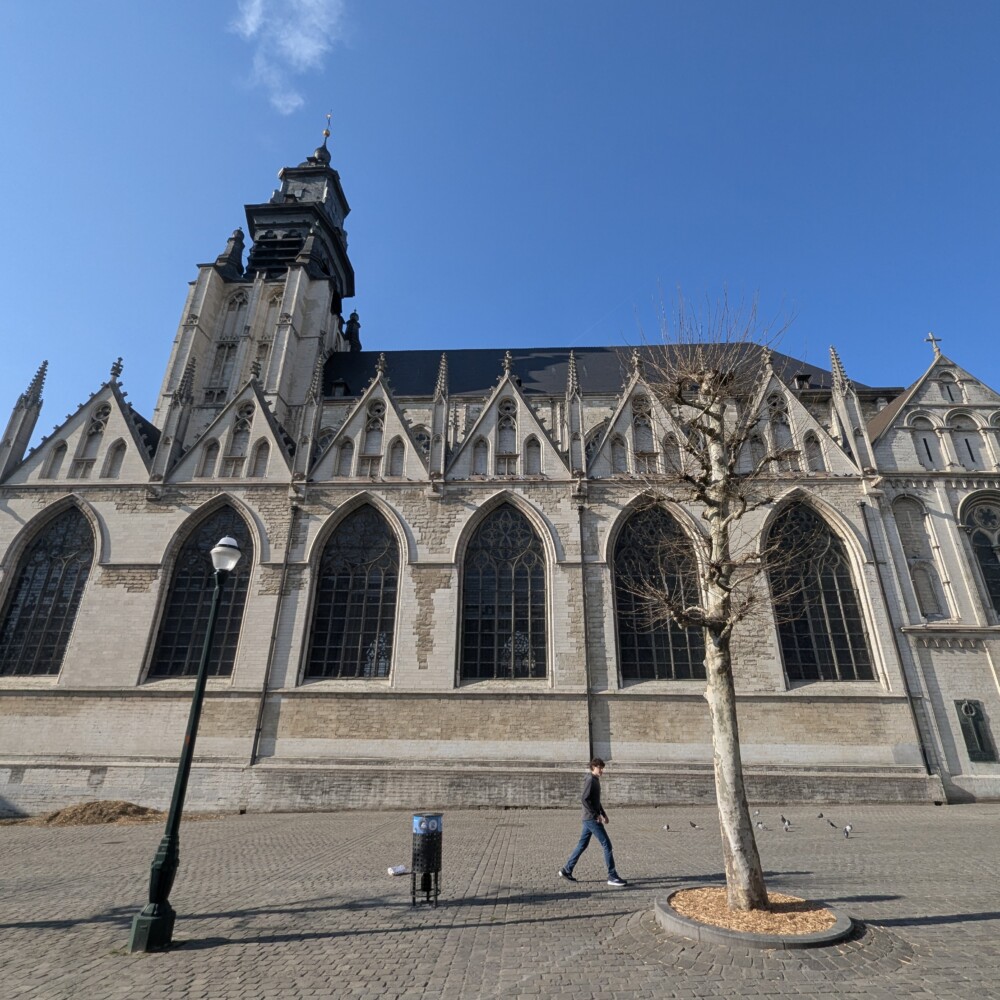
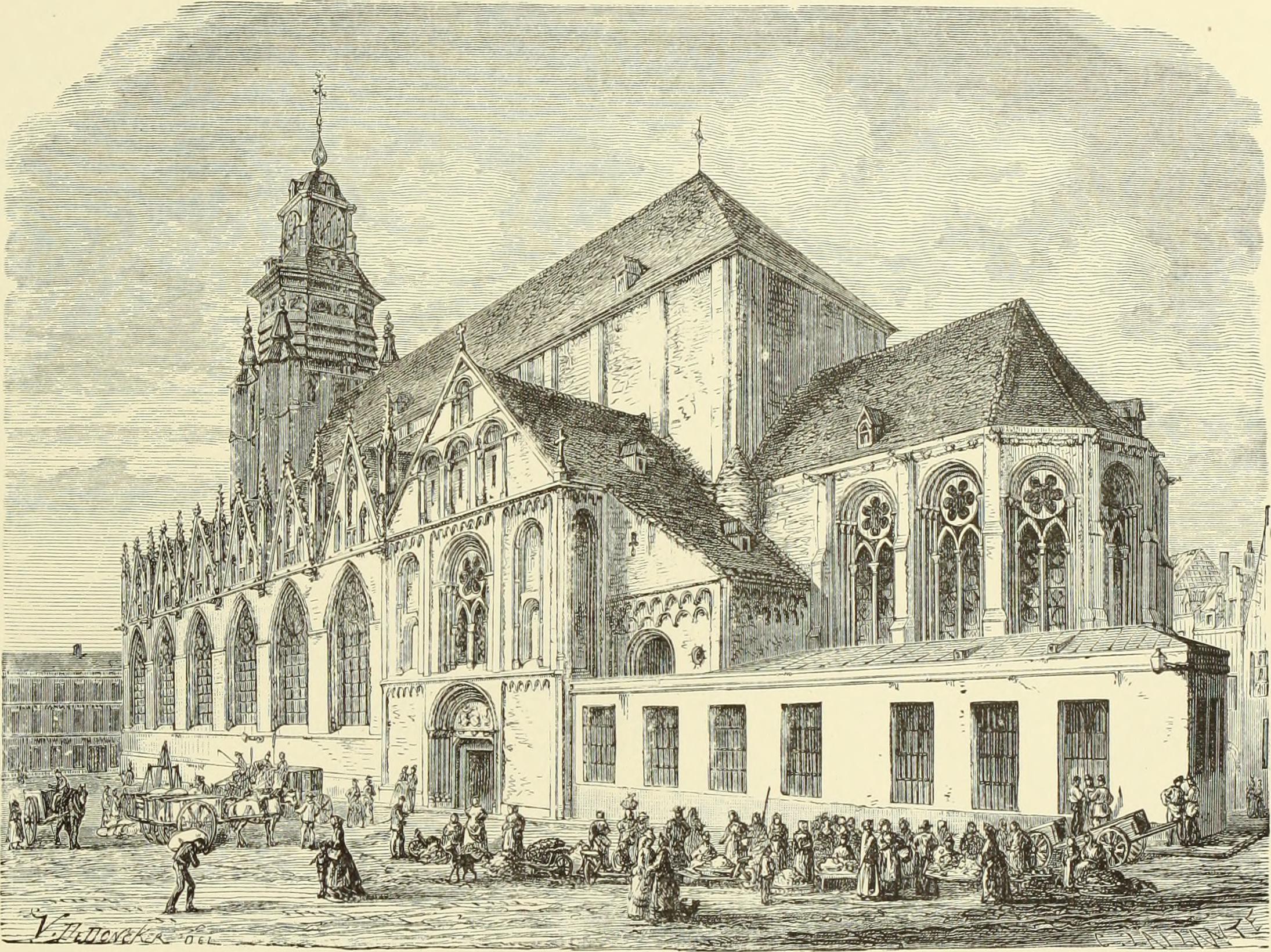
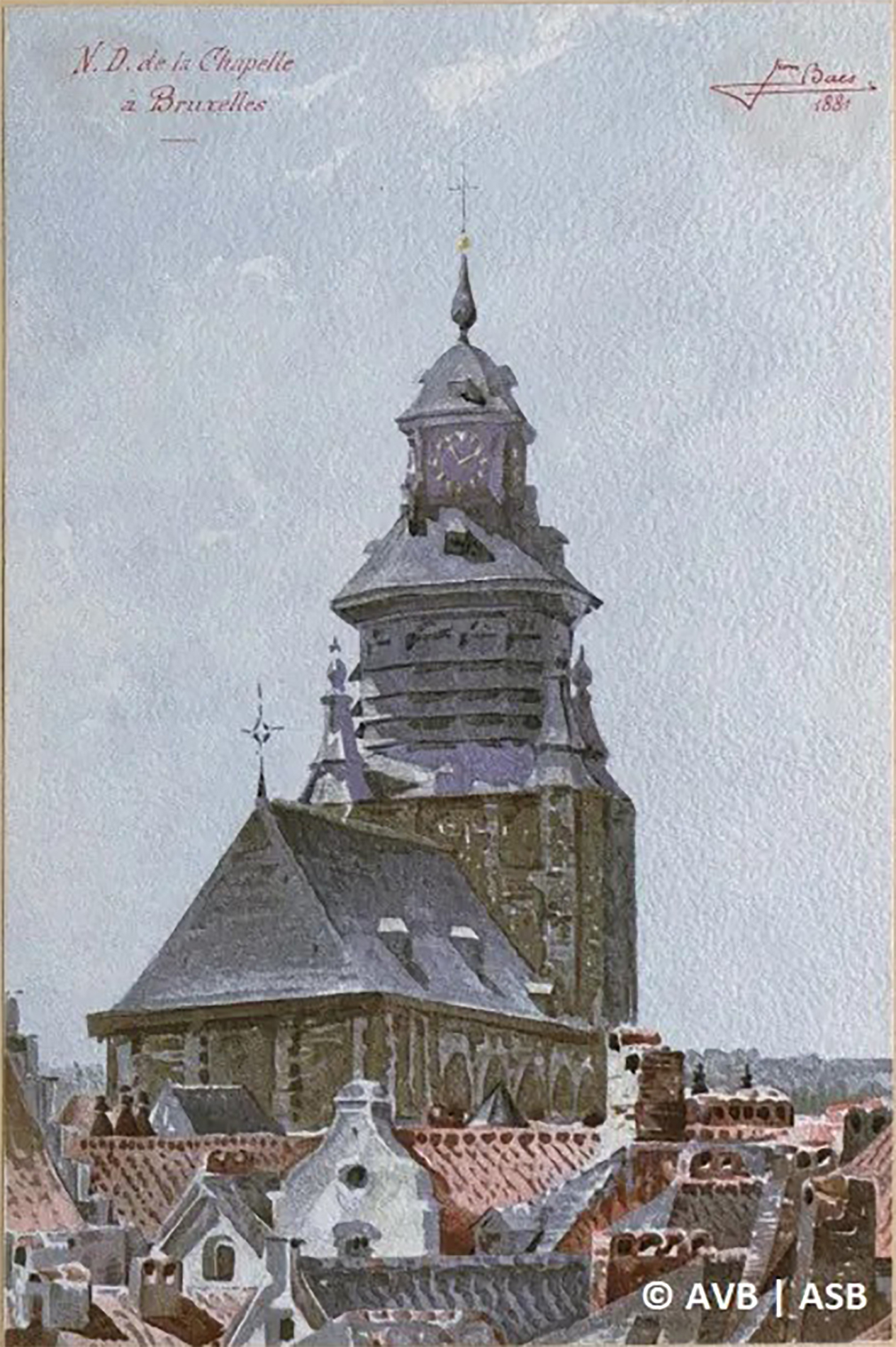
The current distinctive Baroque slate bell tower you see today was only added in 1708 by architect Antoon Pastorana.
The most interesting half of this story concerns the missing crossing tower. Bran Vannieuwenhuyse found traces of staircases that would have led up to the crossing tower. Why it was taken down and when is a complete mystery.
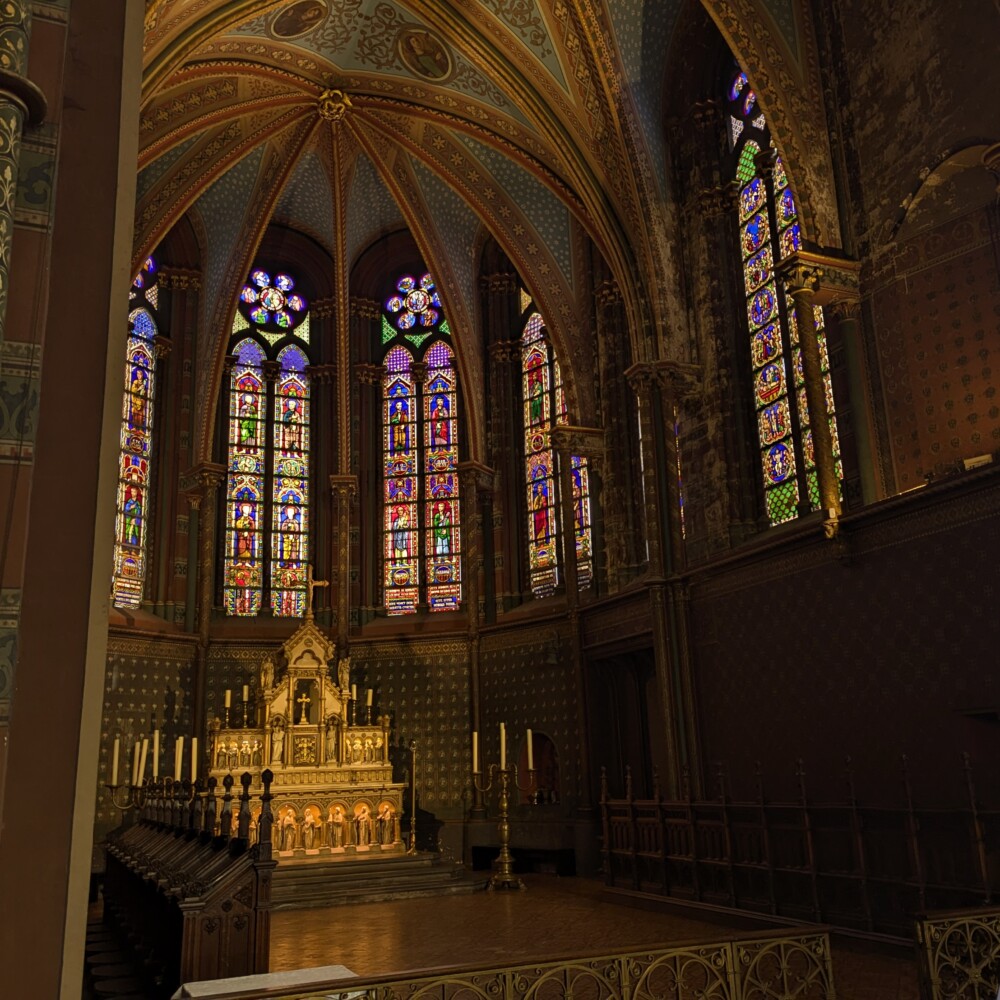
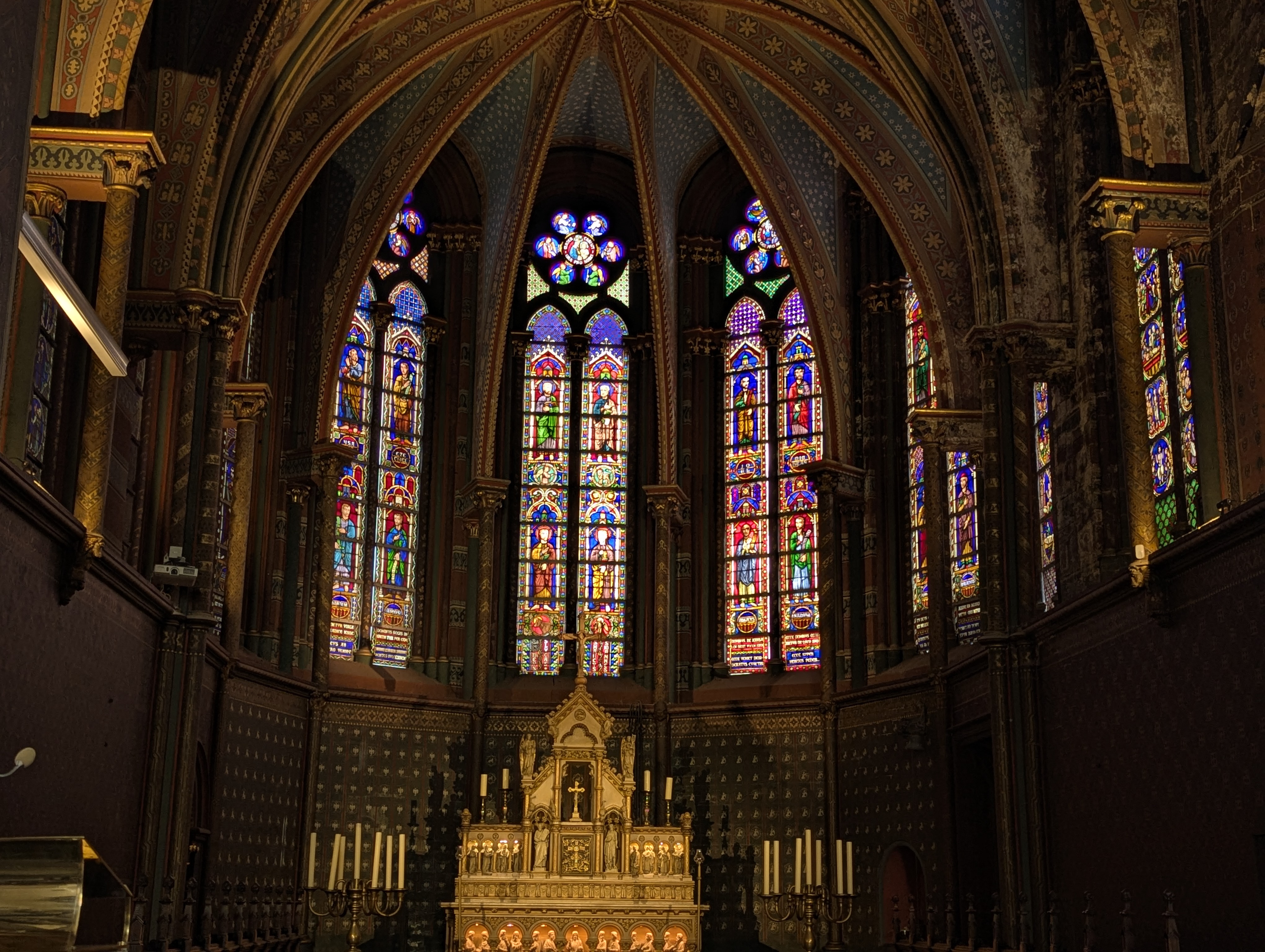
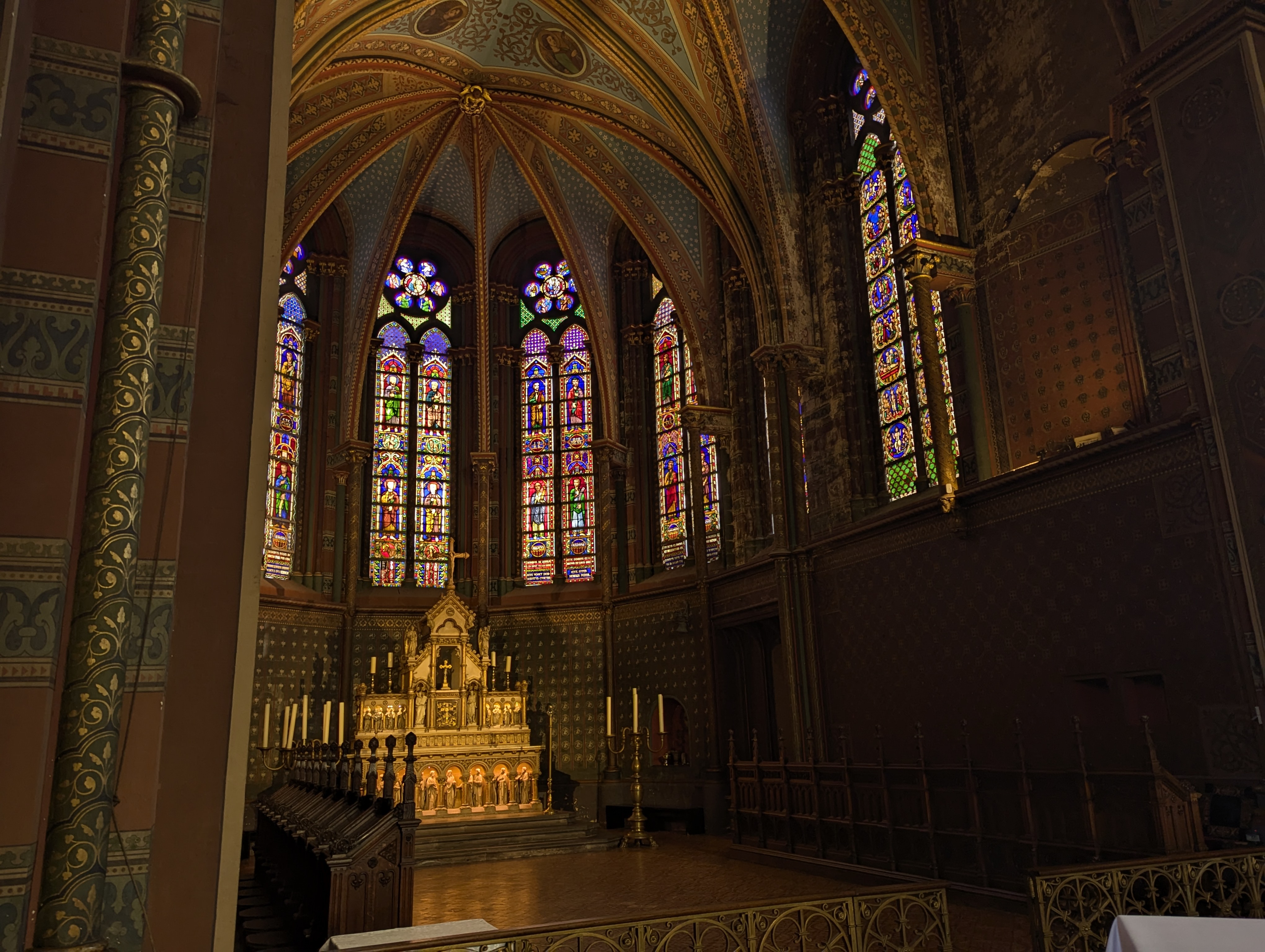
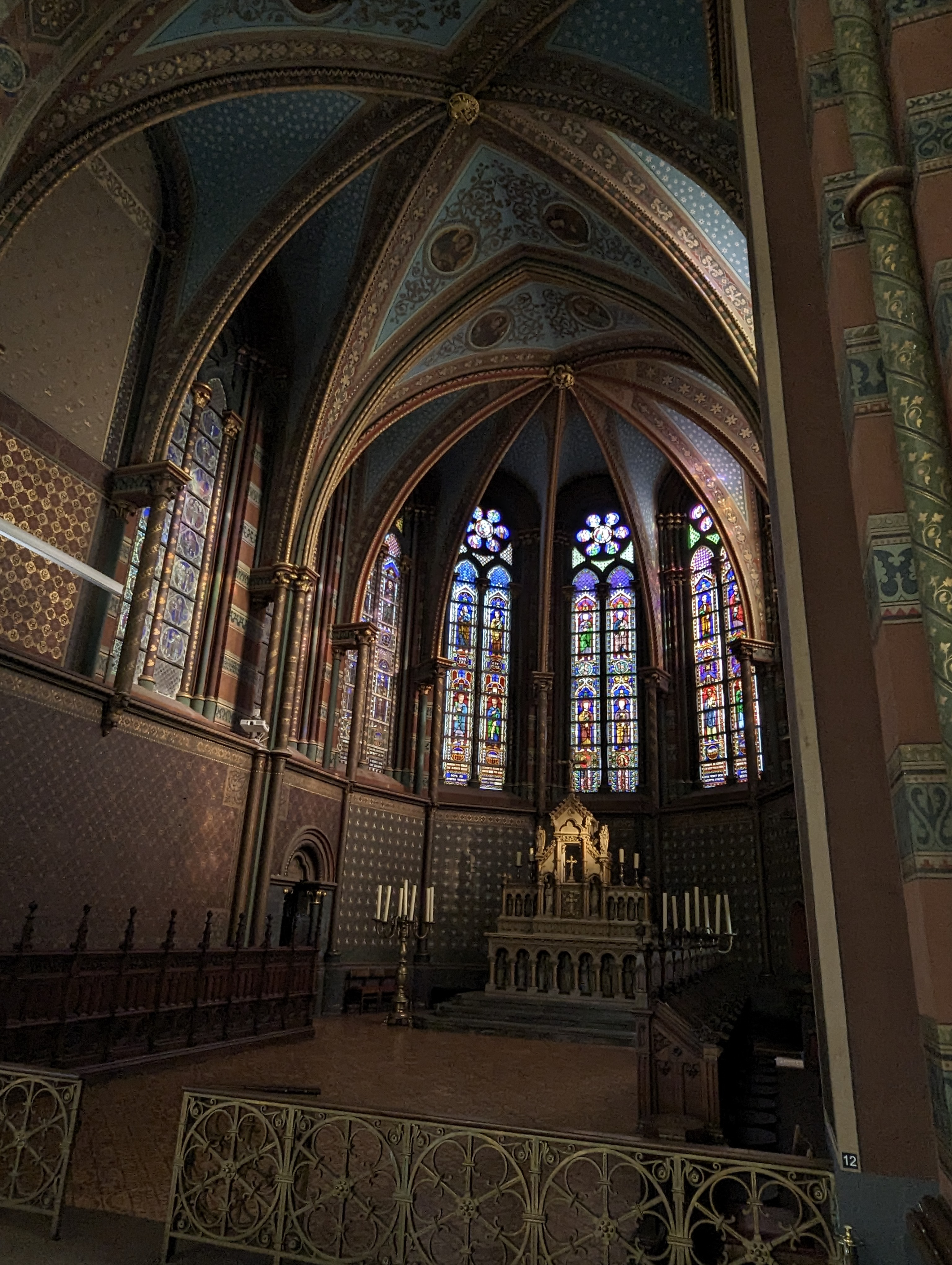
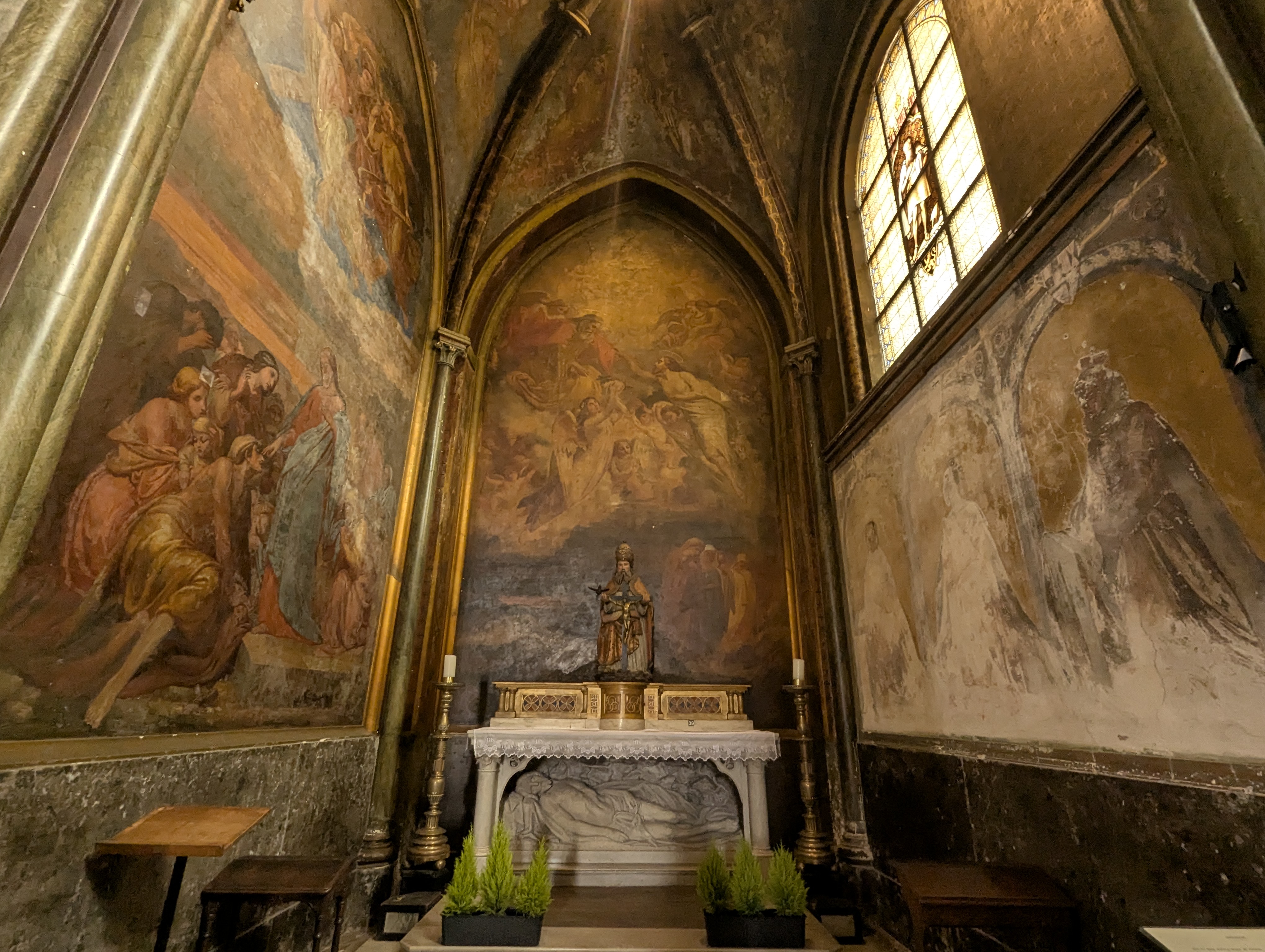
Despite the multitude of architectural styles and layers, you can still see the original Romanesque chapel’s structure right above the chancel. Inside, visitors can find significant artistic tributes to Saint Boniface, including:
- A painting from 1841 by J.-B. Van Eycken titled ‘Sint-Bonifatius van Lausanne smeekt Maria ten gunste van de zieken‘ (Saint Boniface of Lausanne pleading with Mary for the sick).
- The ‘Sint-Bonifatius reliekschrijn’ (Reliquary of Saint Boniface), a work of lacquered wood and gilded copper designed by Alphonse Balat in 1850.
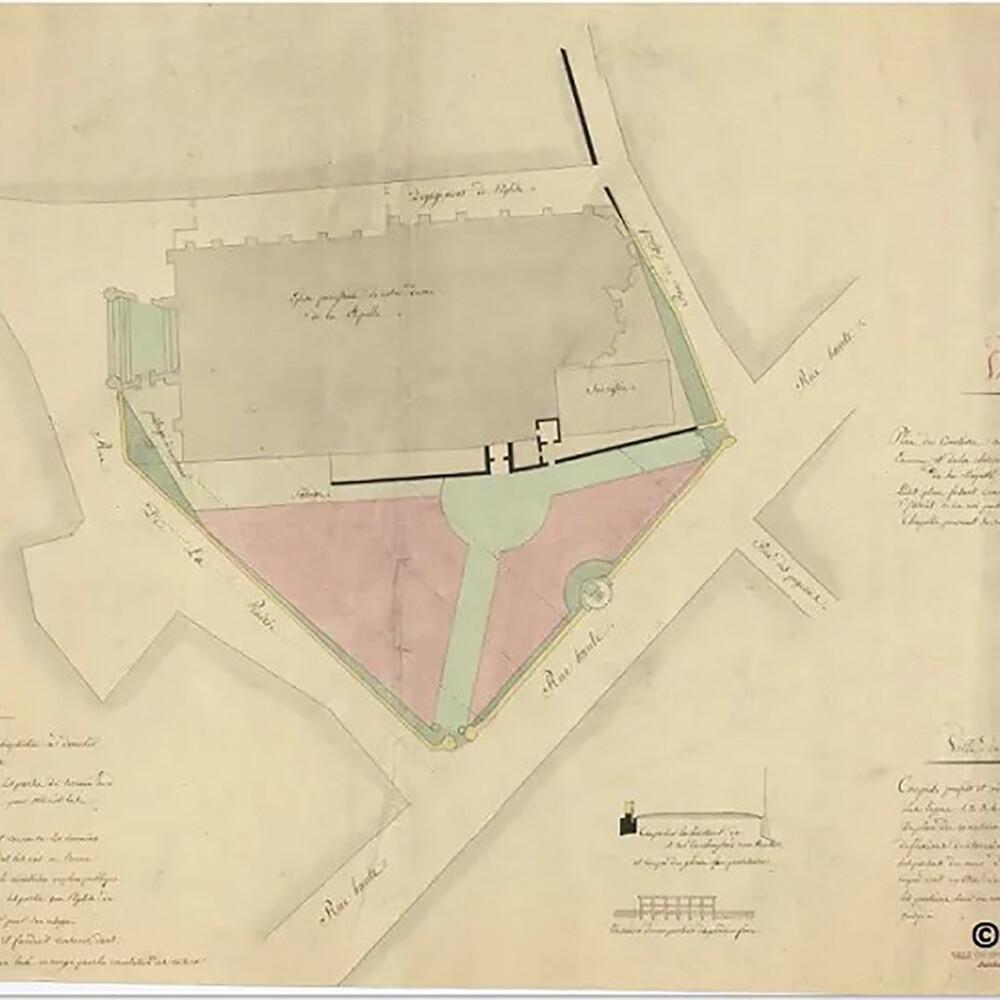
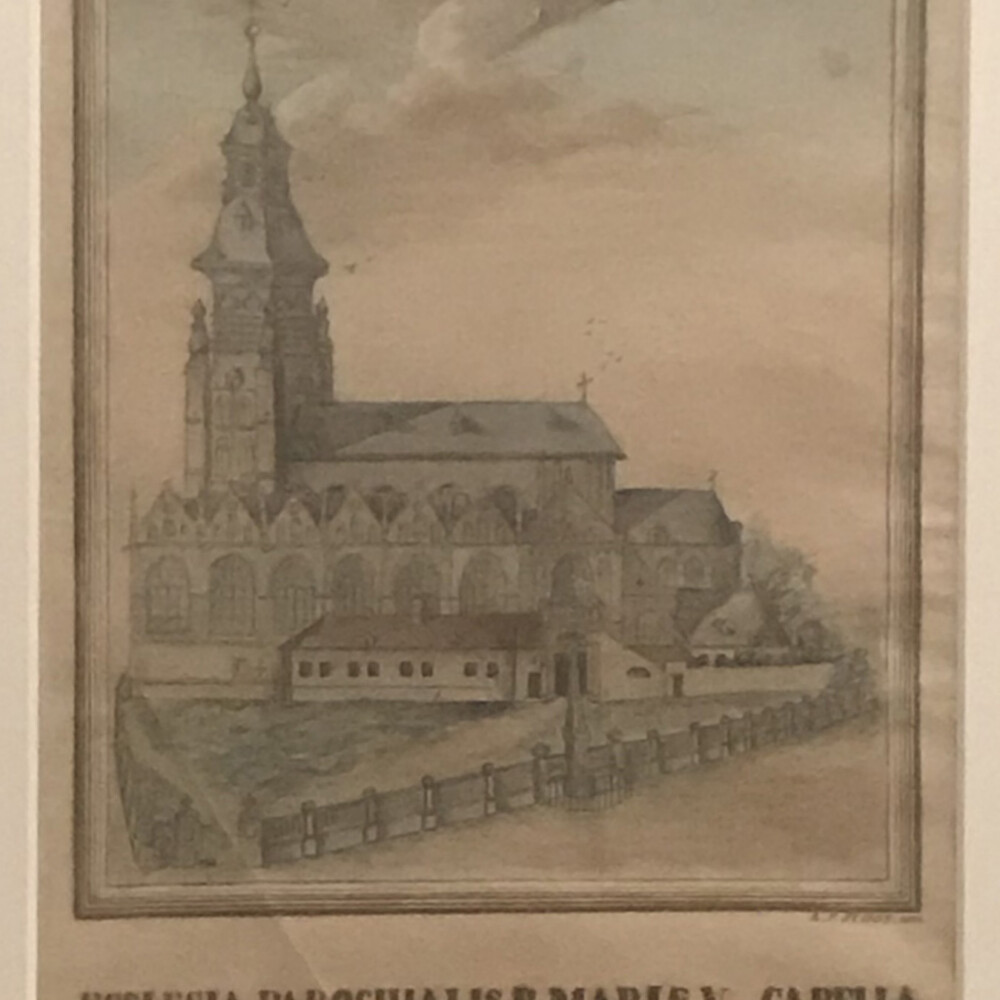
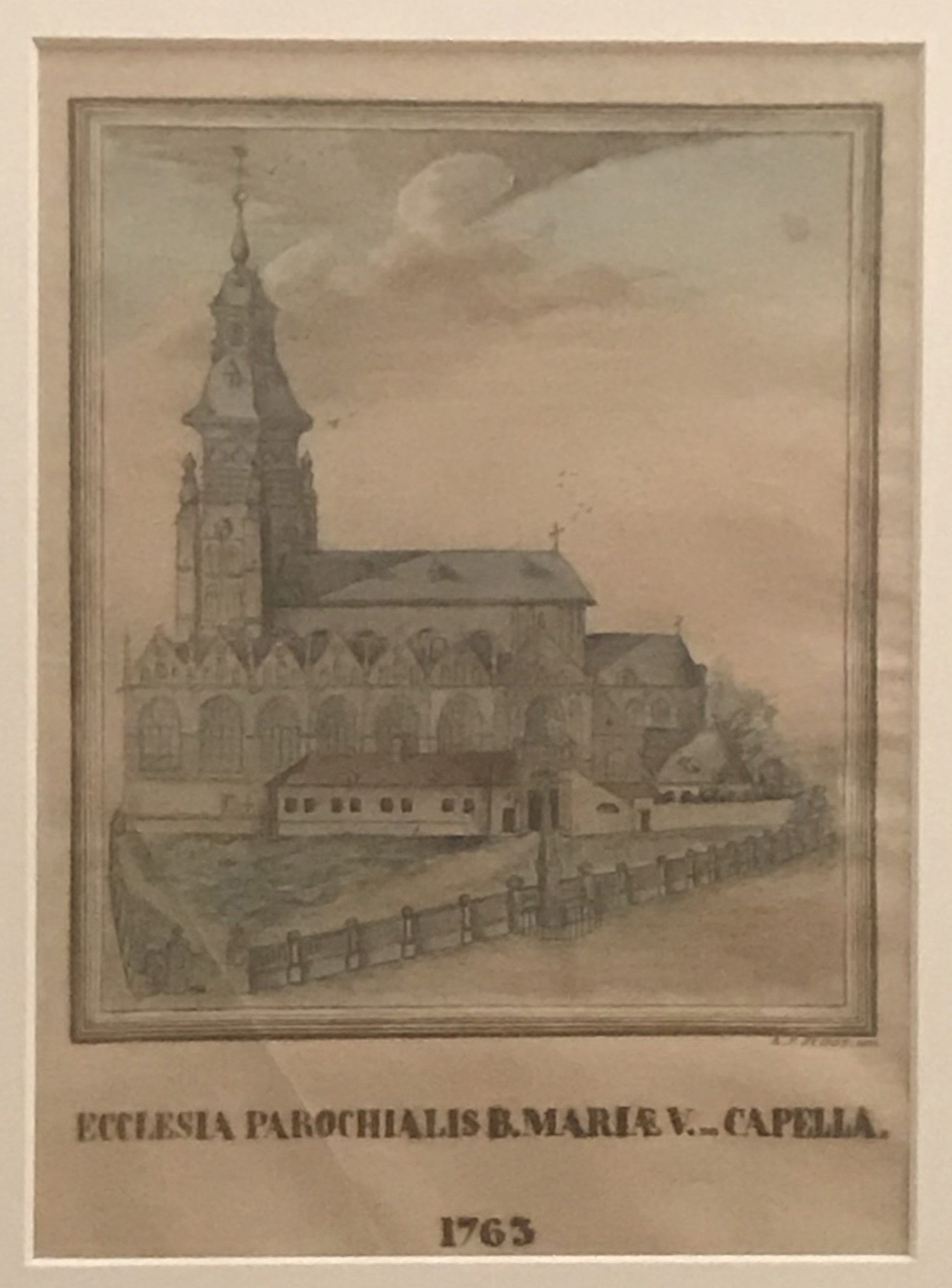
Outside the church, on what is today an empty square known as the Kapelleplein [Place de la Chapelle] was actually its churchyard. You can see this depicted in the 1854 painting by Auguste Félix Schoy who tried to show how the Kapellekerk looked like in the 18th century.
Current situation
Today, the Kapellekerk remains a landmark of the Marollen. Since 1803, it has served as a parish church once more and currently serves the Polish Catholic community in Brussels.
Despite the 20th-century construction of the North-South railway junction right beside it, which cut the church off from the other part of it’s parish, the church remains a vibrant treasury of Brussels’ medieval and religious heritage.
Our Lady of Sorrows
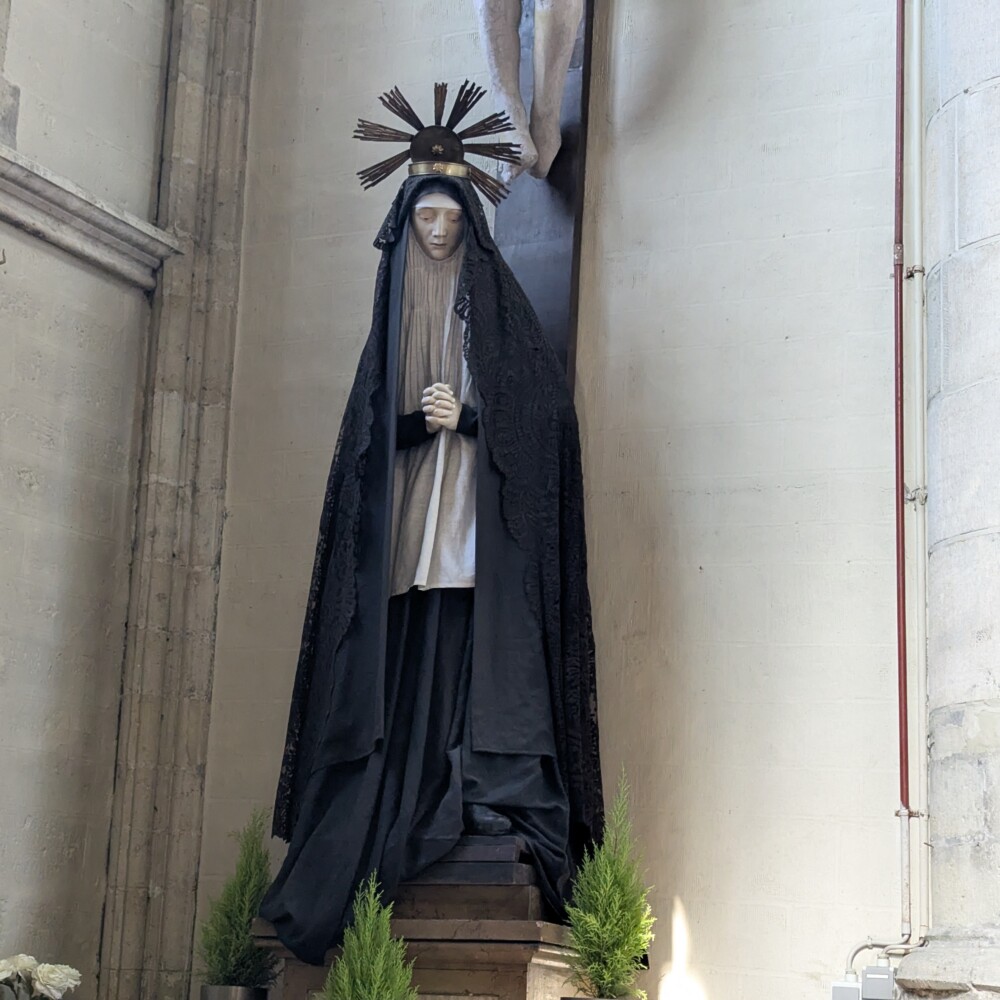
When you are today in the Kapellekerk, you will notice a statue of a weeping Virgin Mary in long black gown. Originally placed in Spanish Chapel of the Rosary at the former Predikherenklooster (Dominican Monastery), she was known by her Castillian name “Nuestra Señora de la Soledad”. Iberian soldiers who escaped the Calvinists on the island of Zaltbommel, a crucial battleground in the Eighty Years’ War (1566/1568–1648), came to Brussels to give thanks to her for escaping death.
Sources:
Vannieuwenhuyze, B. (2011) “Brussel, de Ontwikkeling van een middeleeuwse stedelijke ruimte.” Amsterdam: Amsterdam University Press.
Henne, A. Wauters, A. (1845) “Histoire de la ville de Bruxelles. Volume I-III” Brussels: Librairie Encyclopédique de Périchon.
Rombaut, J-A. (1777) “Bruxelles illustrée, ou description chronologique et historique de cette ville.” Brussels: Chez Pauwels.
https://en.wikipedia.org/wiki/Church_of_Our_Lady_of_the_Chapel
https://nl.wikipedia.org/wiki/Kapellekerk
https://fr.wikipedia.org/wiki/%C3%89glise_Notre-Dame_de_la_Chapelle_%C3%A0_Bruxelles
https://historiek.net/de-kapellekerk-een-brussels-godshuis-met-geschiedenis/43125/
https://www.flemishmastersinsitu.com/nl/locaties/onze-lieve-vrouw-ter-kapellekerk-brussel
https://monument.heritage.brussels/nl/buildings/30933
https://nl.wikipedia.org/wiki/Bonifatius_van_Lausanne
https://archiviris.be/fr/archives/10820
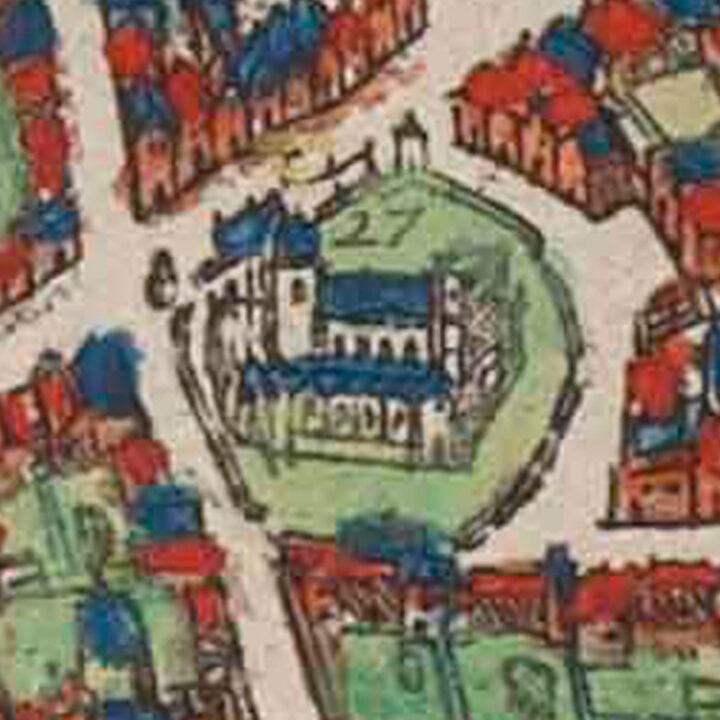
- Van Deventer, J. (1550-1565) “Atlas of the city of the Low Countries : 73 minutes between 1550-1565 on orders of Emperors Charles V and Philip II” KBR (image)
- Braun, G, Hogenberg, F. (1572-1617) “Civitates orbis terrarum” Universiteitsbibliotheek Utrecht (image)
- de Tailly, M., van der Horst, N., Santvoort, A. D. (1640) “Bruxella nobilissima Brabantiae civitas anno 1640” KBR (image)
- Laboureur, J., Van der Baren, J., Harrewijn, J. (1695) “Bruxella Nobilissima Brabanti Civitasae” Bibliothèque Nationale de la France (image)
- Unknown. (1250-1300) “Crouching Monster – original modillion of the choir of the Onze-Lieve-Vrouw-ter-Kapellekerk” Broodhuis, Brussels
- Unknown. (1250-1300) “Crouching ape-like monster – original modillion of the choir of the Onze-Lieve-Vrouw-ter-Kapellekerk” Broodhuis, Brussels
- Collaert, H (I) (1530-1580) “Gezicht op Sint-Gillis” Rijksmuseum, Amsterdam (image)
- Cantagallina, R. (1612-1613) “View on the lower city and the Onze-Lieve-Vrouw-ter-Kapellekerk from the gardens of Hof van Bournonville” KMSKB, Brussels (image)
- Snayer, P. (1649/1650) “The Duke of Bournonville in his carriage before his palace in Brussels” KMSKB, Brussels (image) – You can see the two-towered Kapellekerk in the left.
- City of Brussels. (1820-1821) “Project for the development of the area surrounding the church and its cemetery, Travaux publics et urbanisme (PP 60)” Archives de la Ville de Bruxelles (image)
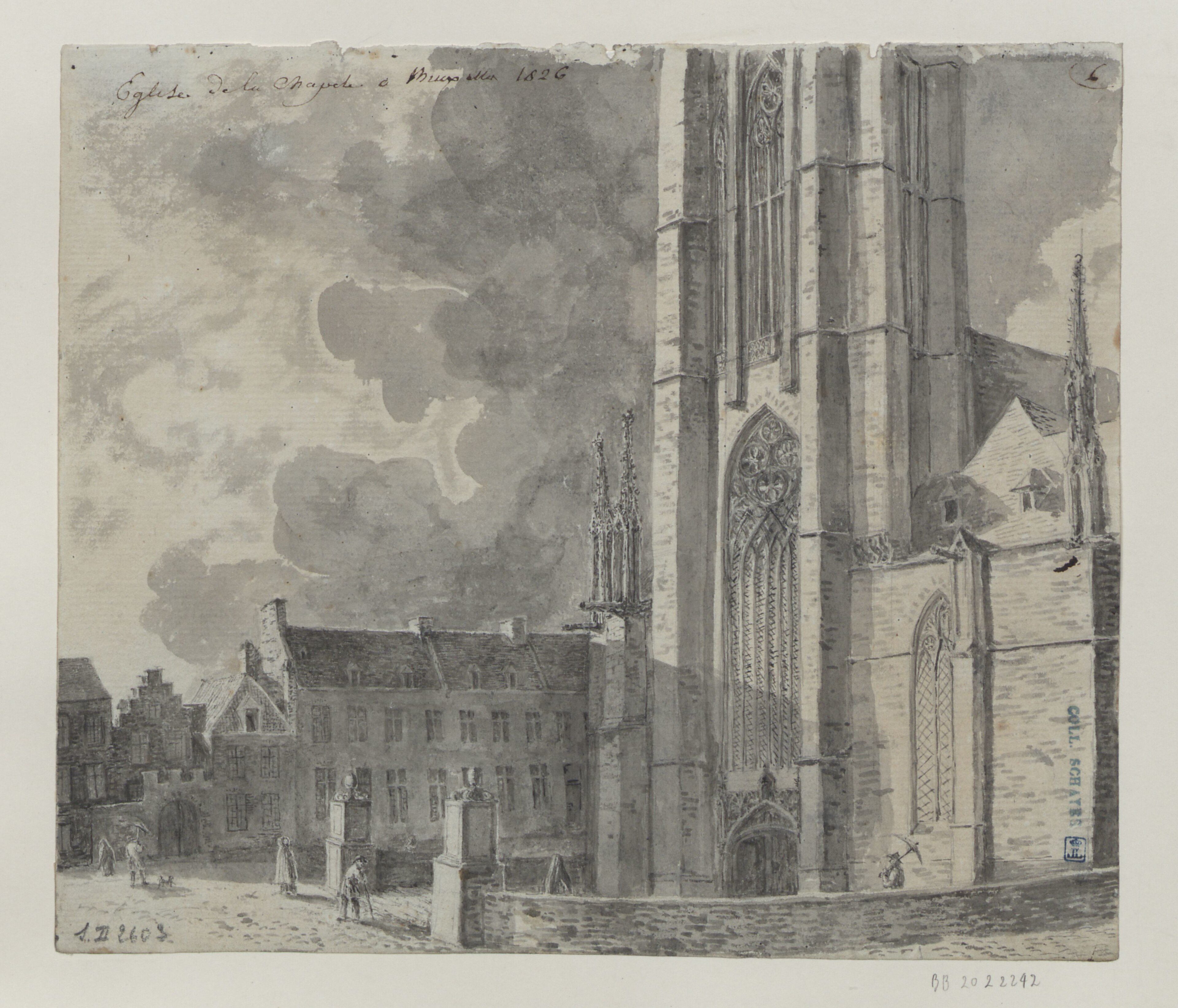
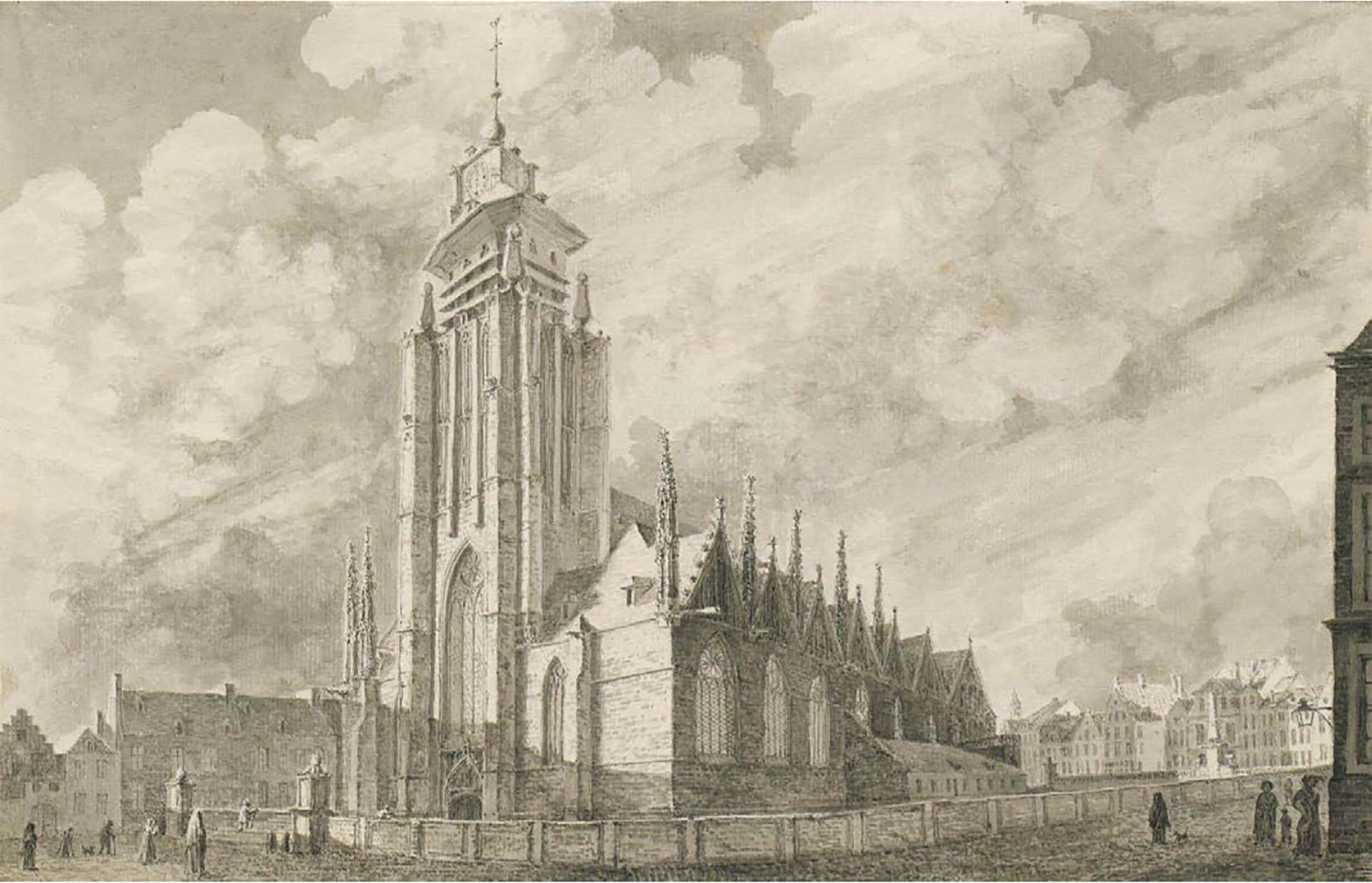
- Vitzthumb, P. (1826) “Église de la Chapelle à Bruxelles 1826” KBR (image)
- Dedoncker, V. (1827-1881) “Etching of the Kapellekerk, Brussels published in ‘Bruxelles à travers les âges’ (1884)” Wikicommons (image)
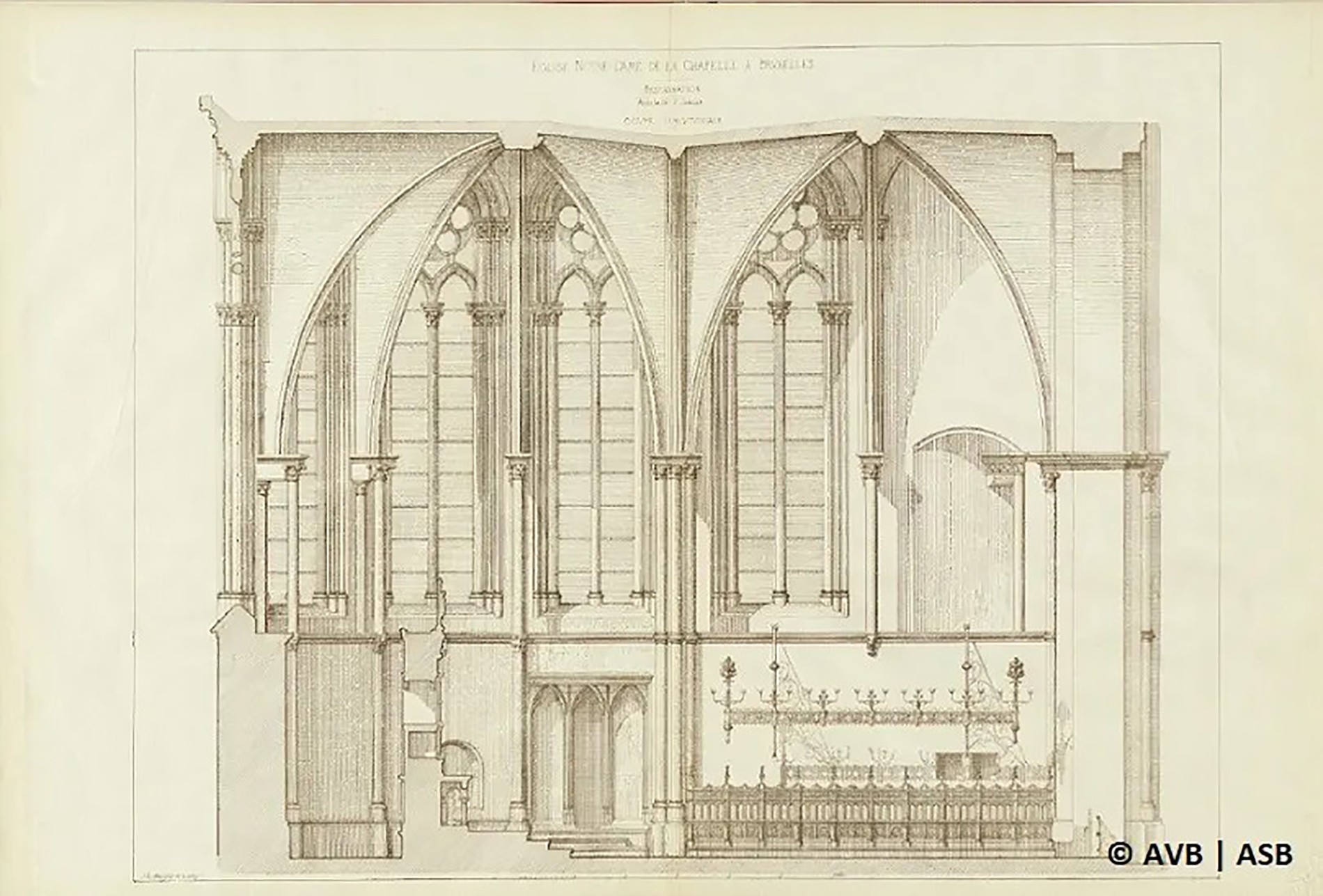
- City of Brussels. (1867-1869) “Longitudinal section of the choir carried out as part of the restoration work by Victor Jamaer, Collection iconographique (Album IX-20)” Archives de la Ville de Bruxelles (image)
- Schoy, A.F. (1854) “The Kapellekerk and its cemetery in 1763” Broodhuis, Brussels (image)
- Puttaert, E.? (1860s-1901?) “Kapellekerk at the time of the burial of François Anneessens in 1719” KBR, Brussels (image)
- Puttaert, E.? (1863/1869) “Etching of the Kapellekerk, Brussels. Attributed to Emile Puttaert” Wikicommons (image)
- Baes, J. (1881) “Clocher de l’église Notre-Dame de la Chapelle à Bruxelles” Archives de la Ville de Bruxelles (image)
- Stroobant, F? (1886) “Vue de l’église et de ses abords” Archives de la Ville de Bruxelles (image)
HOW IT LOOKS LIKE TODAY
Click on the zoom icon to view the full size.