ABOUT
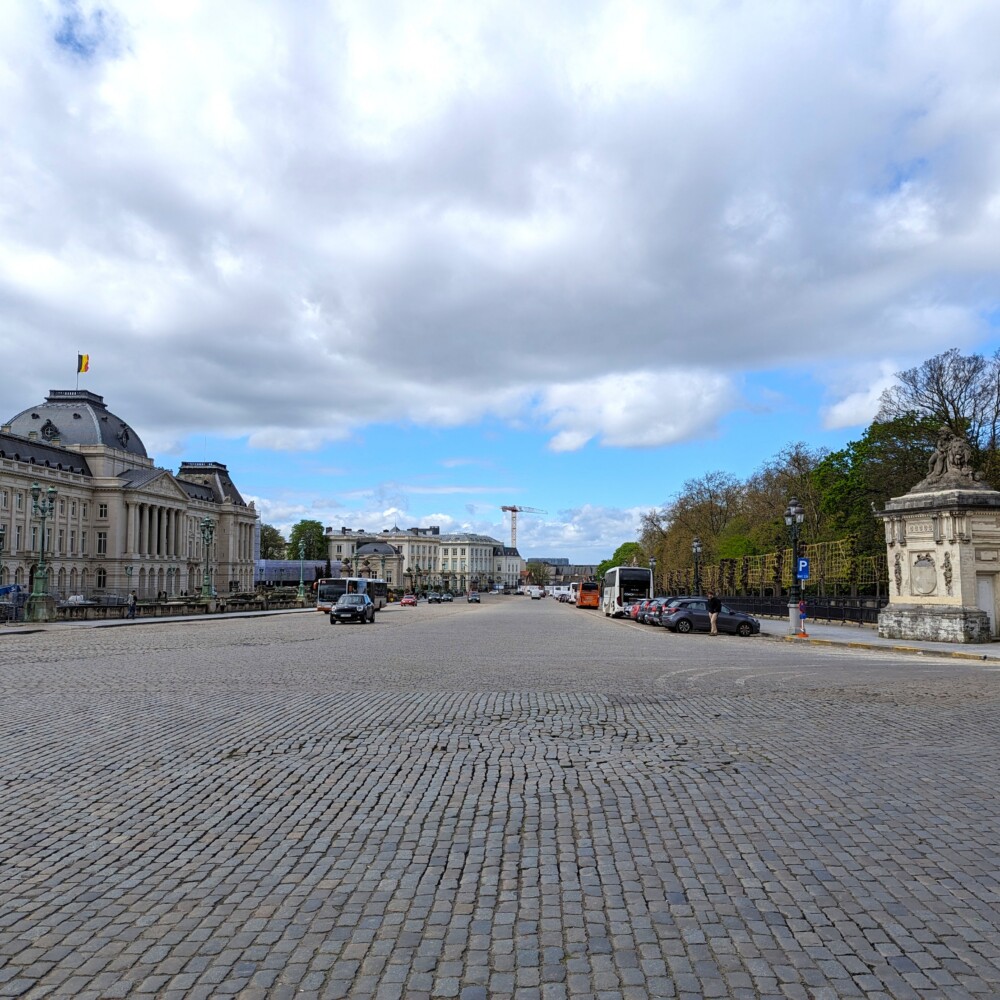
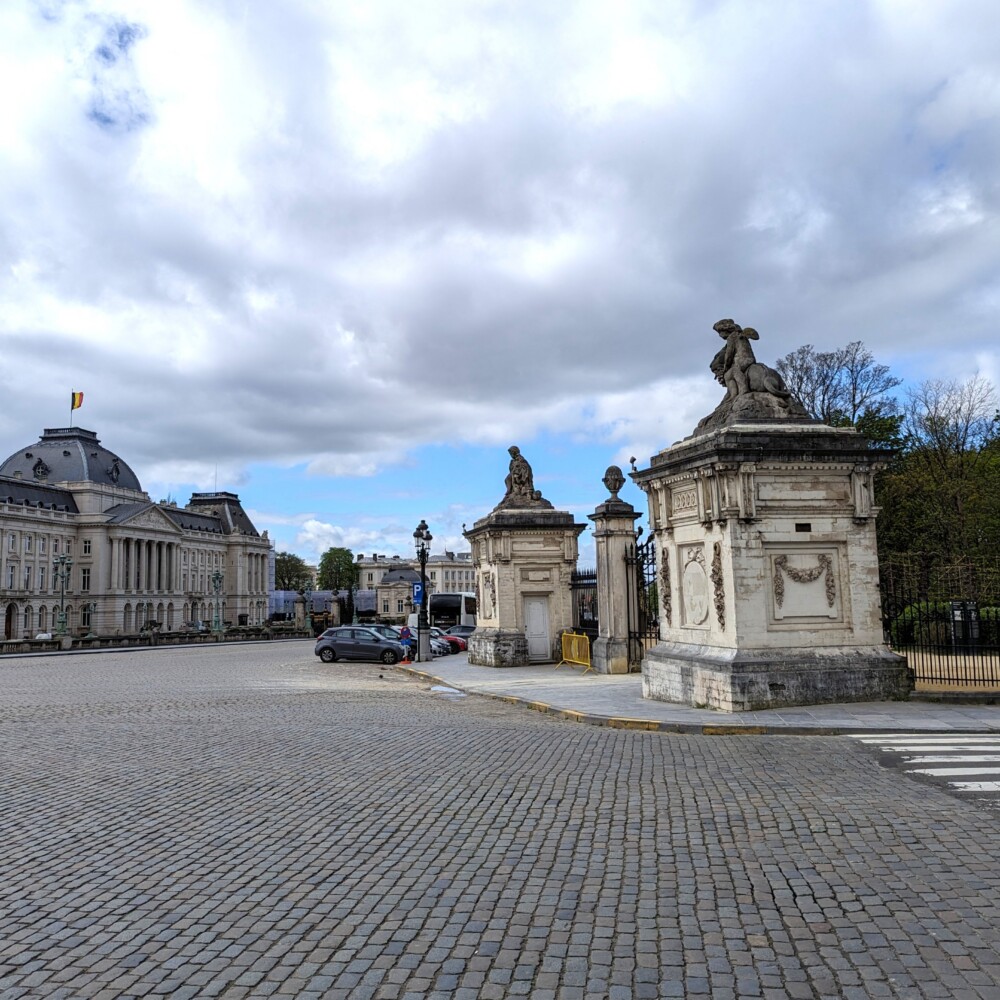
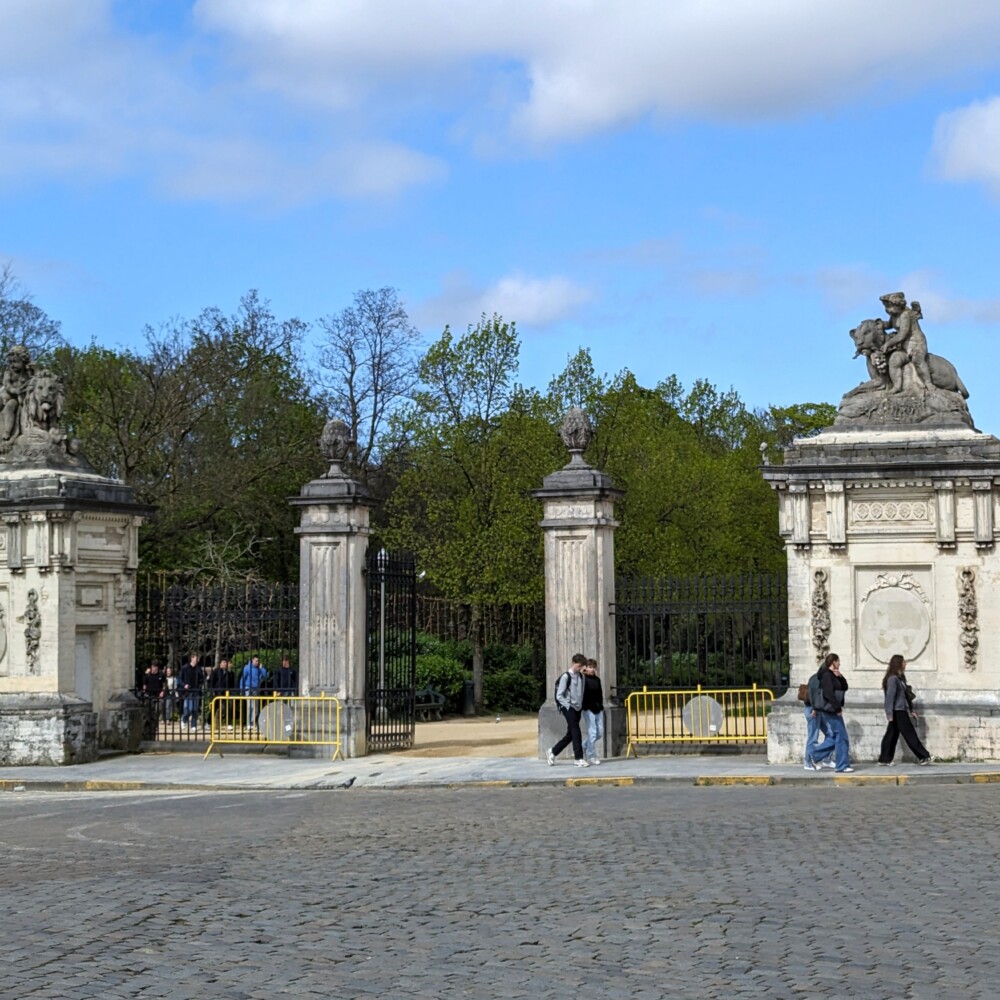
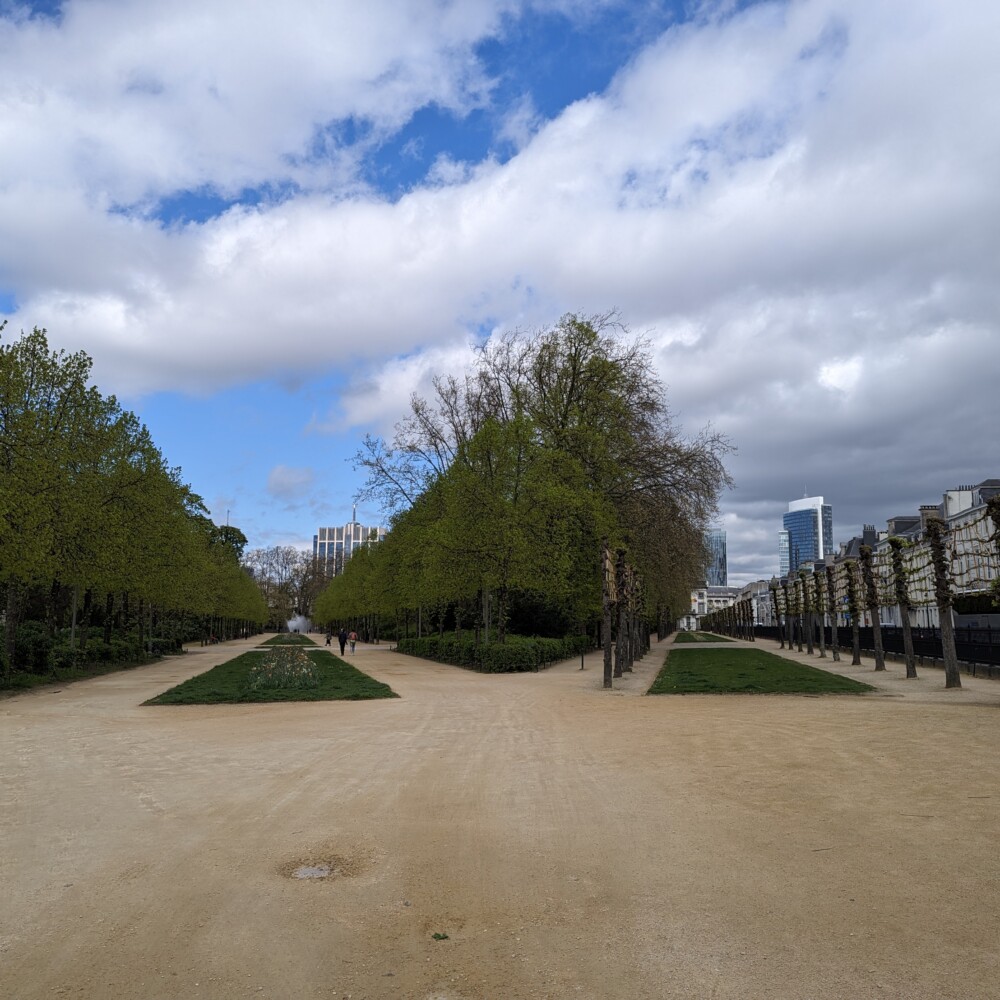
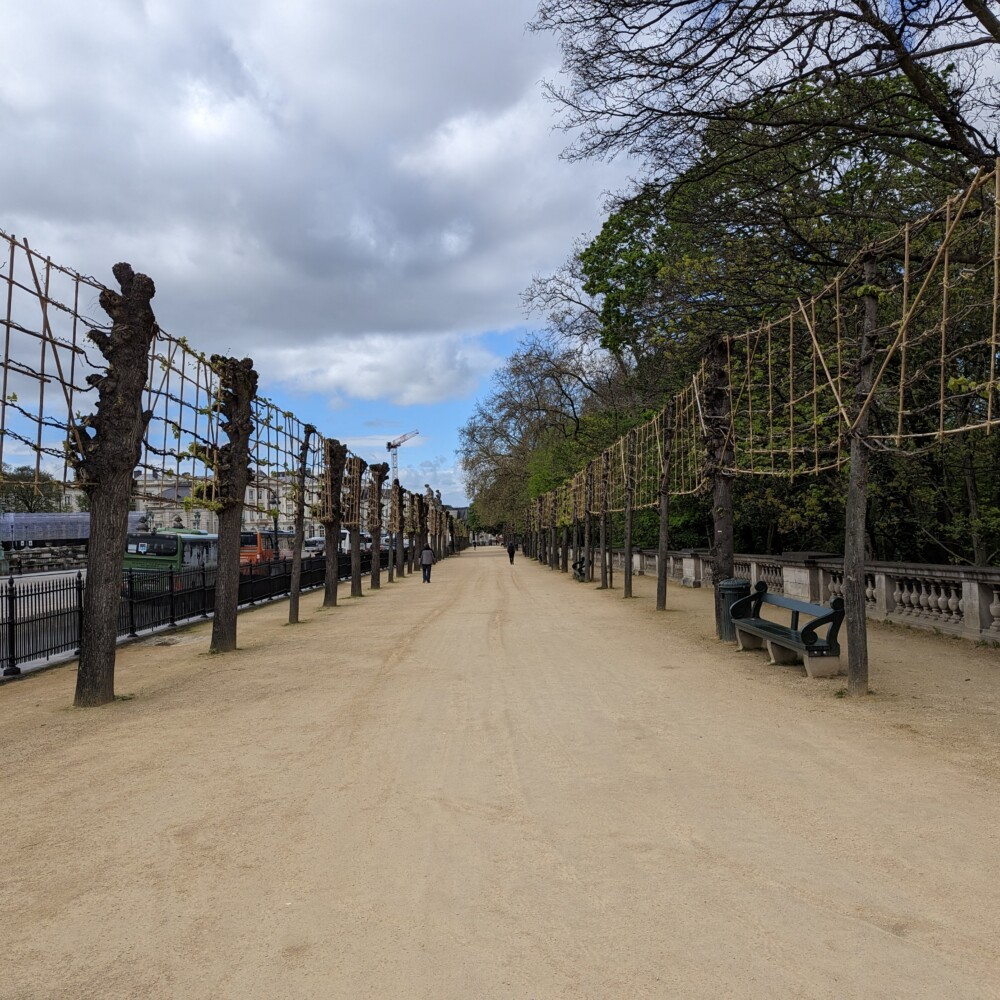
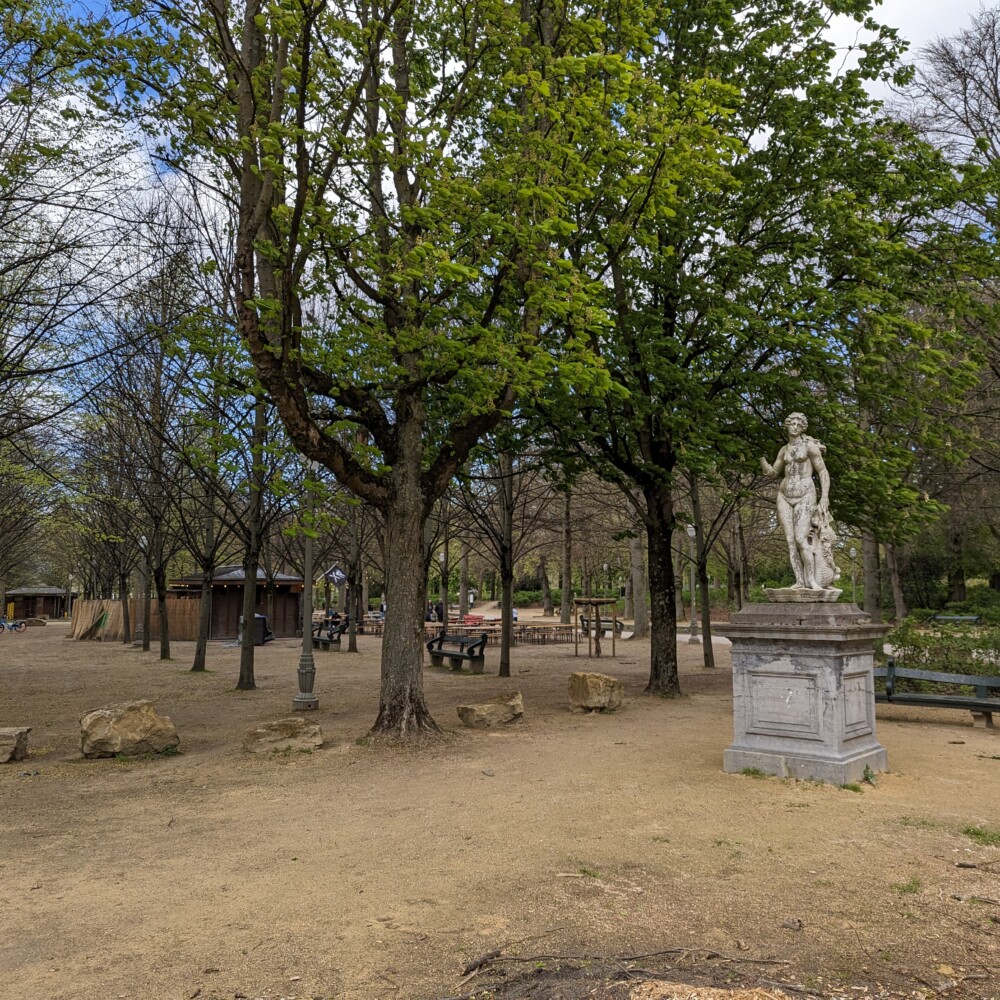
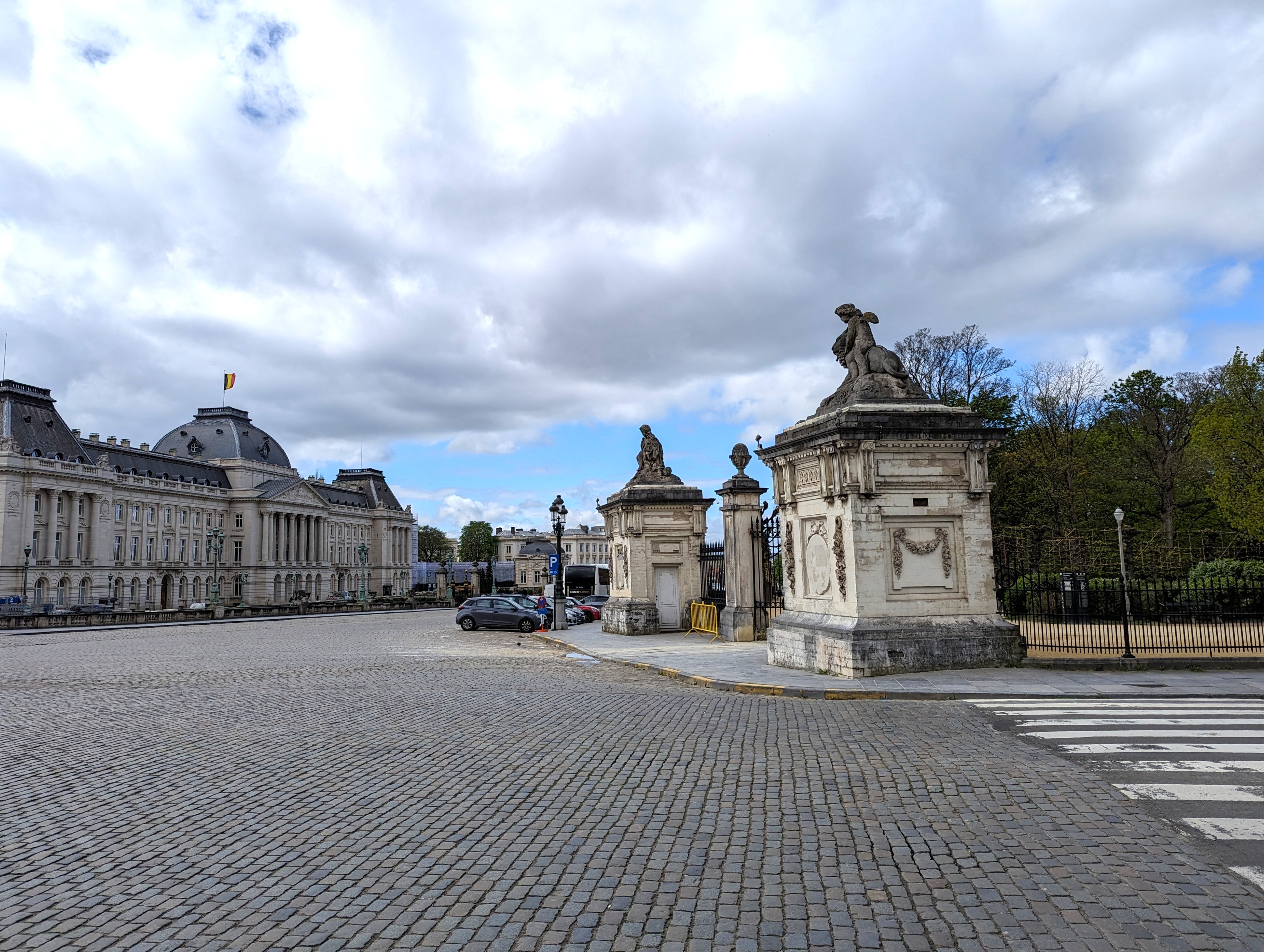
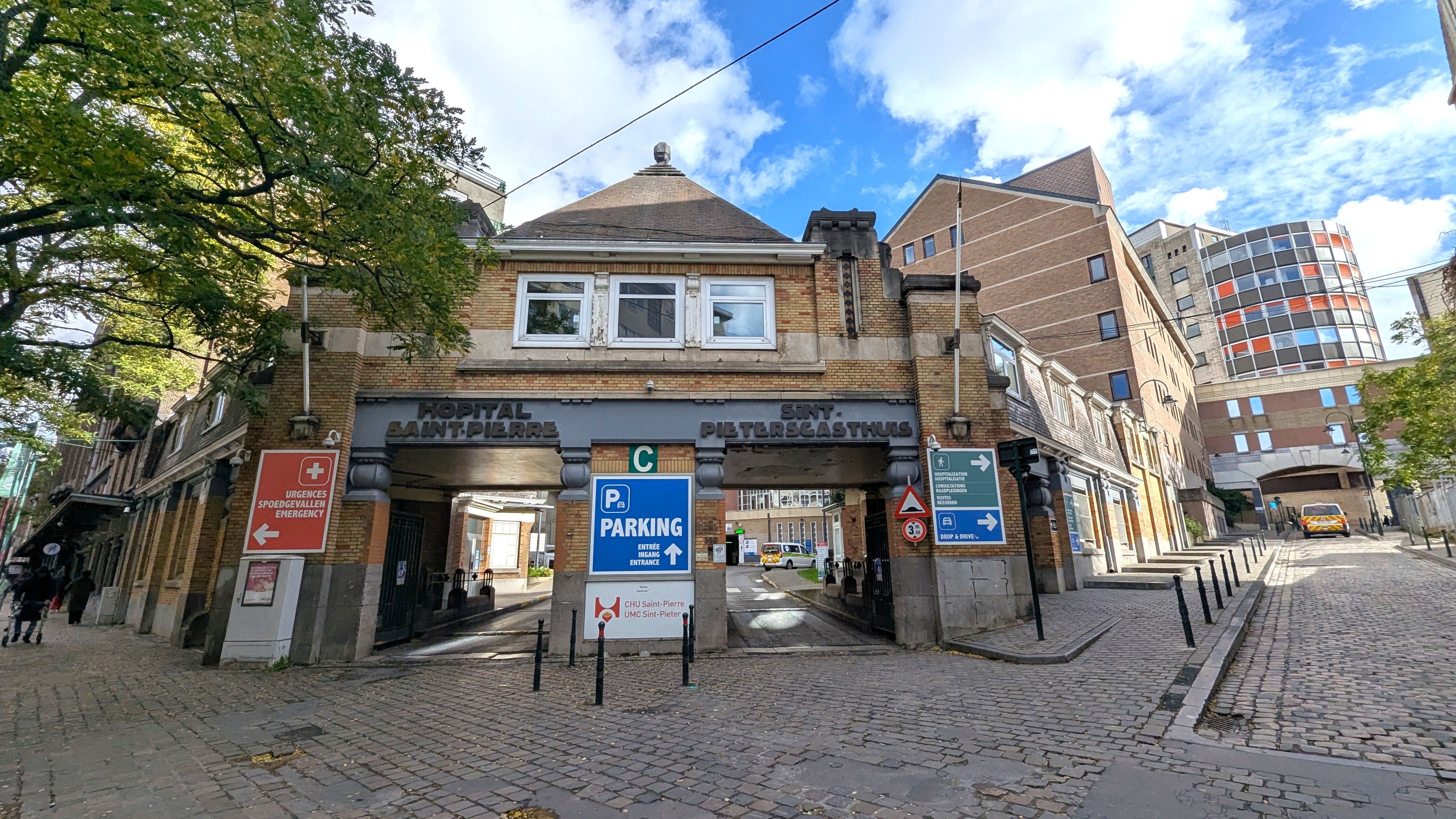
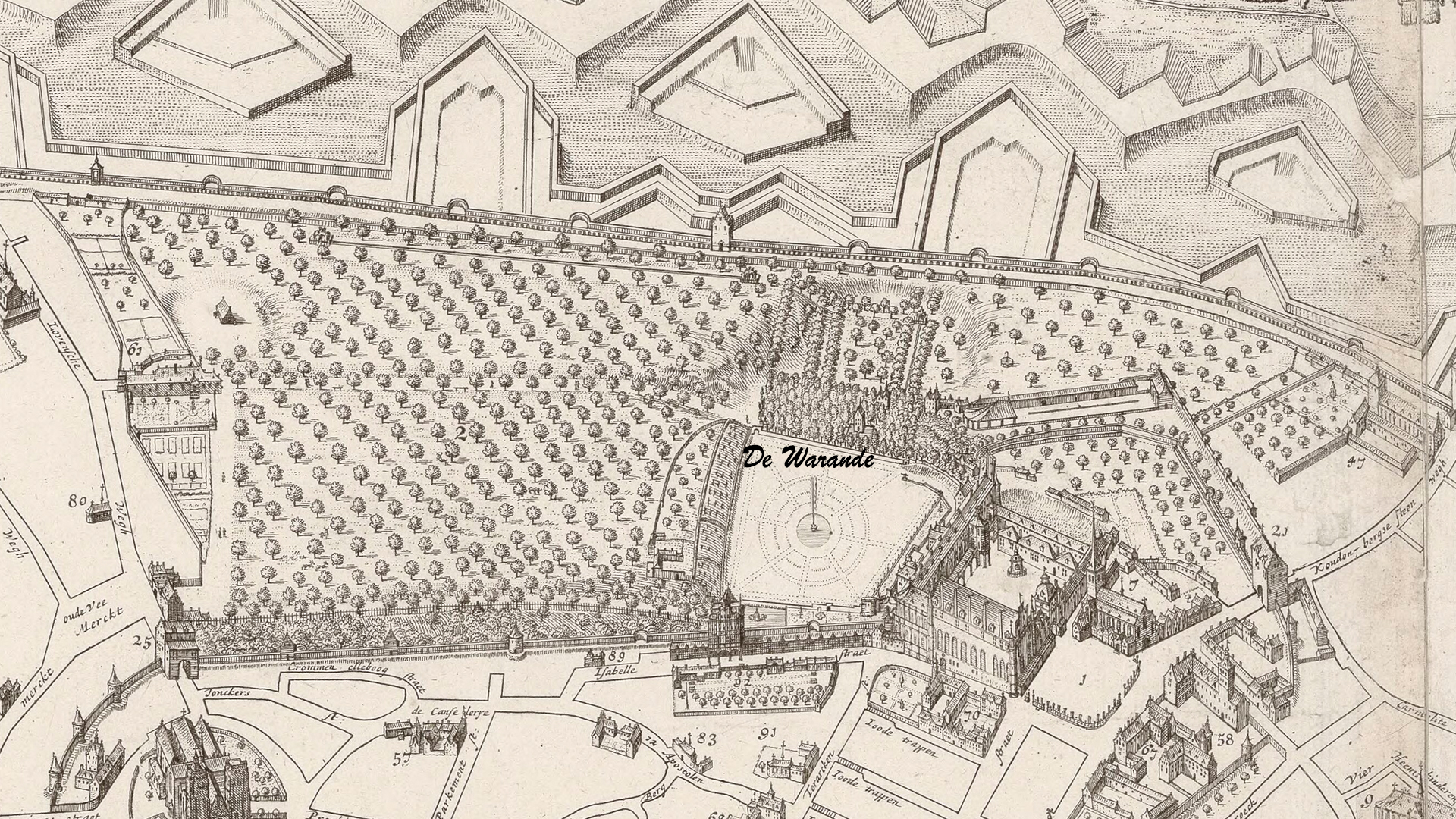
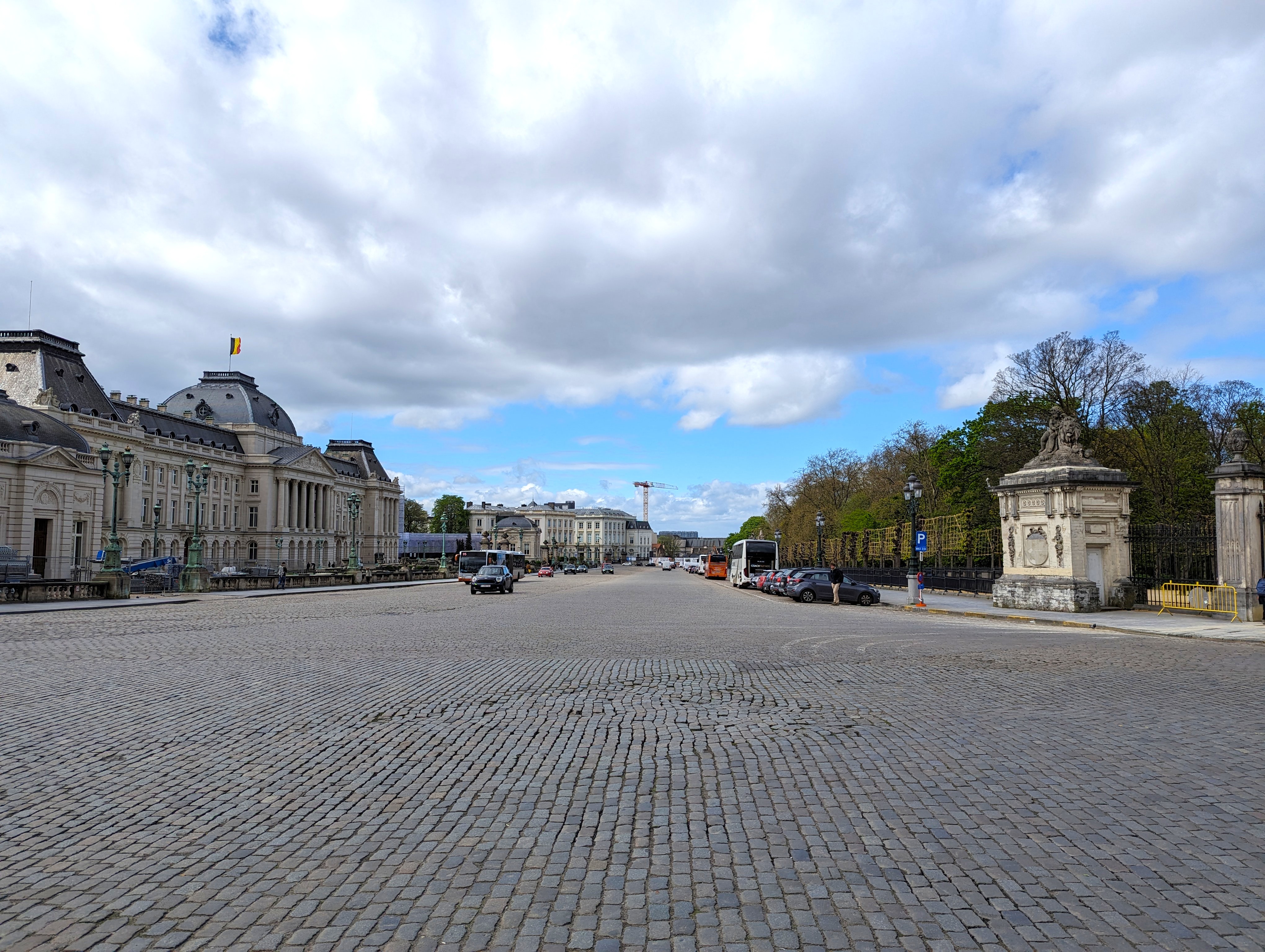
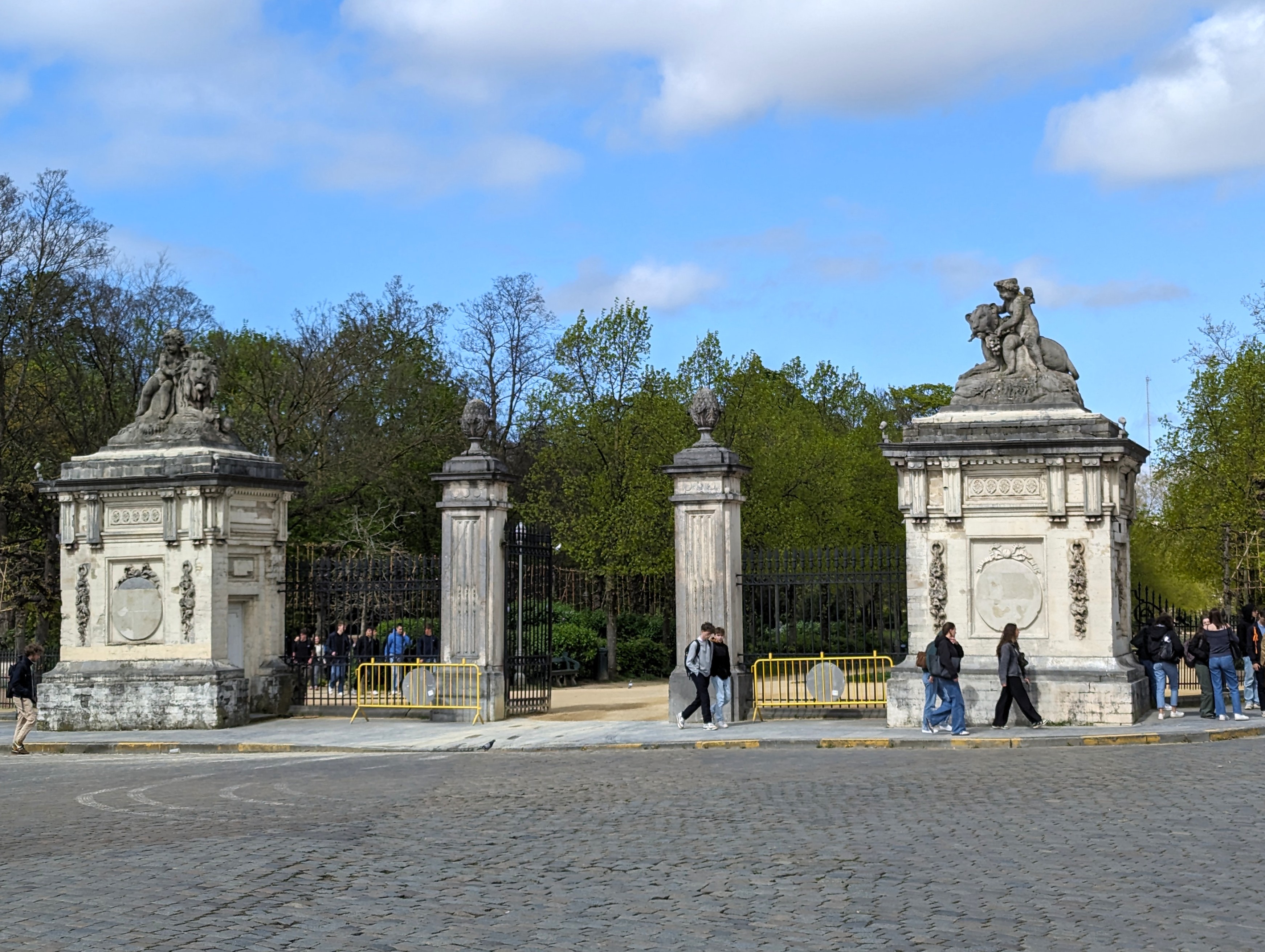
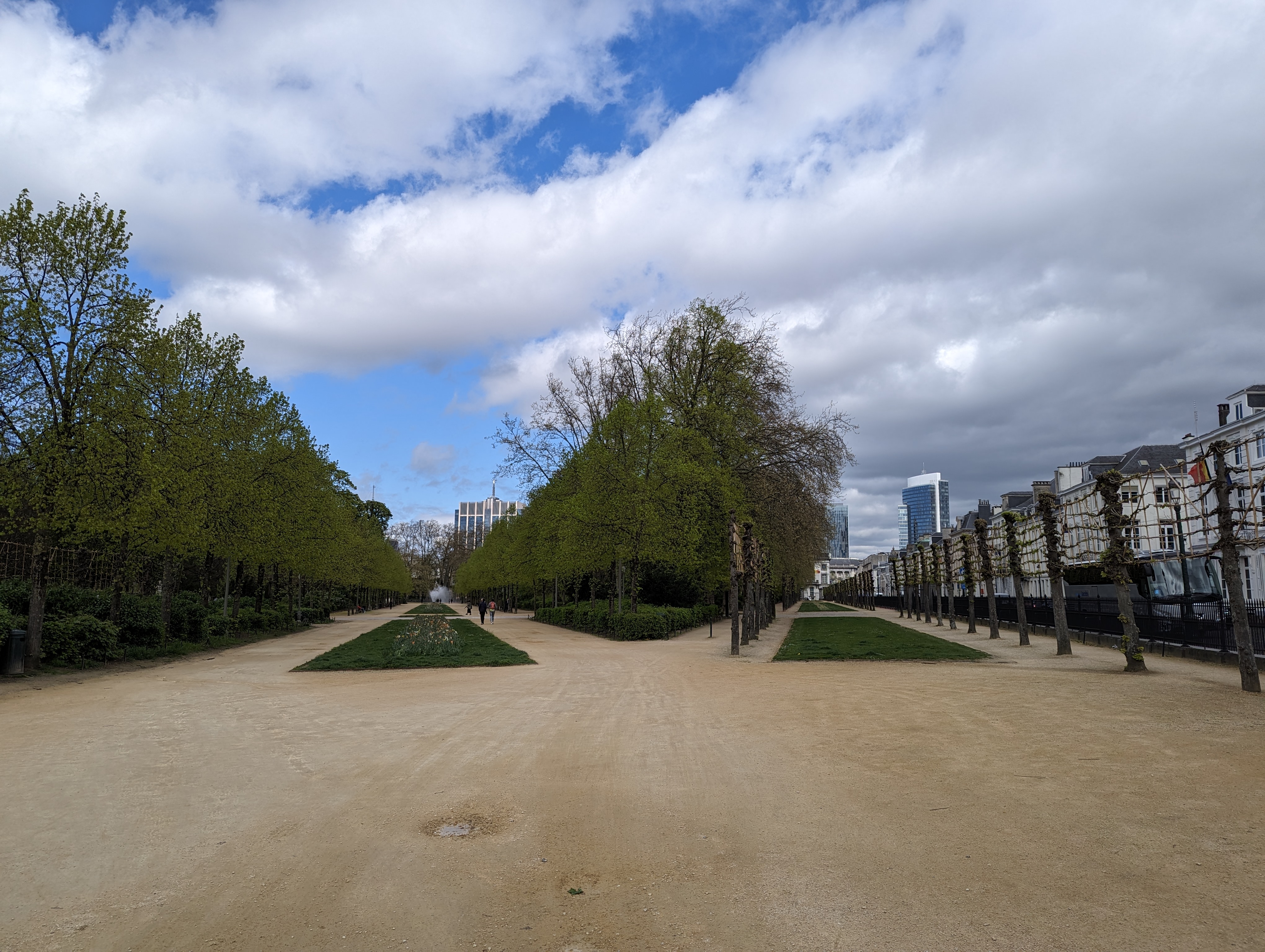
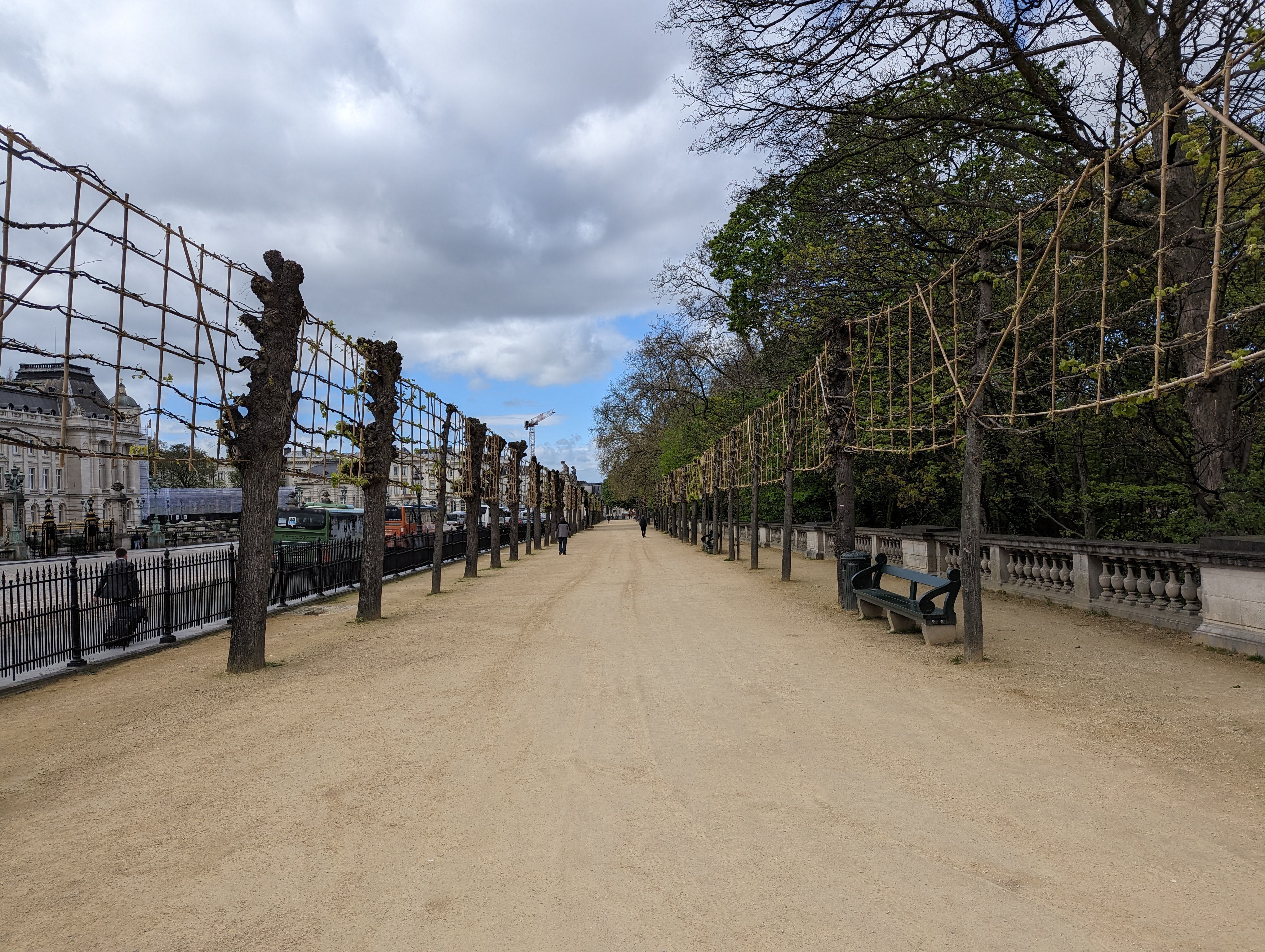
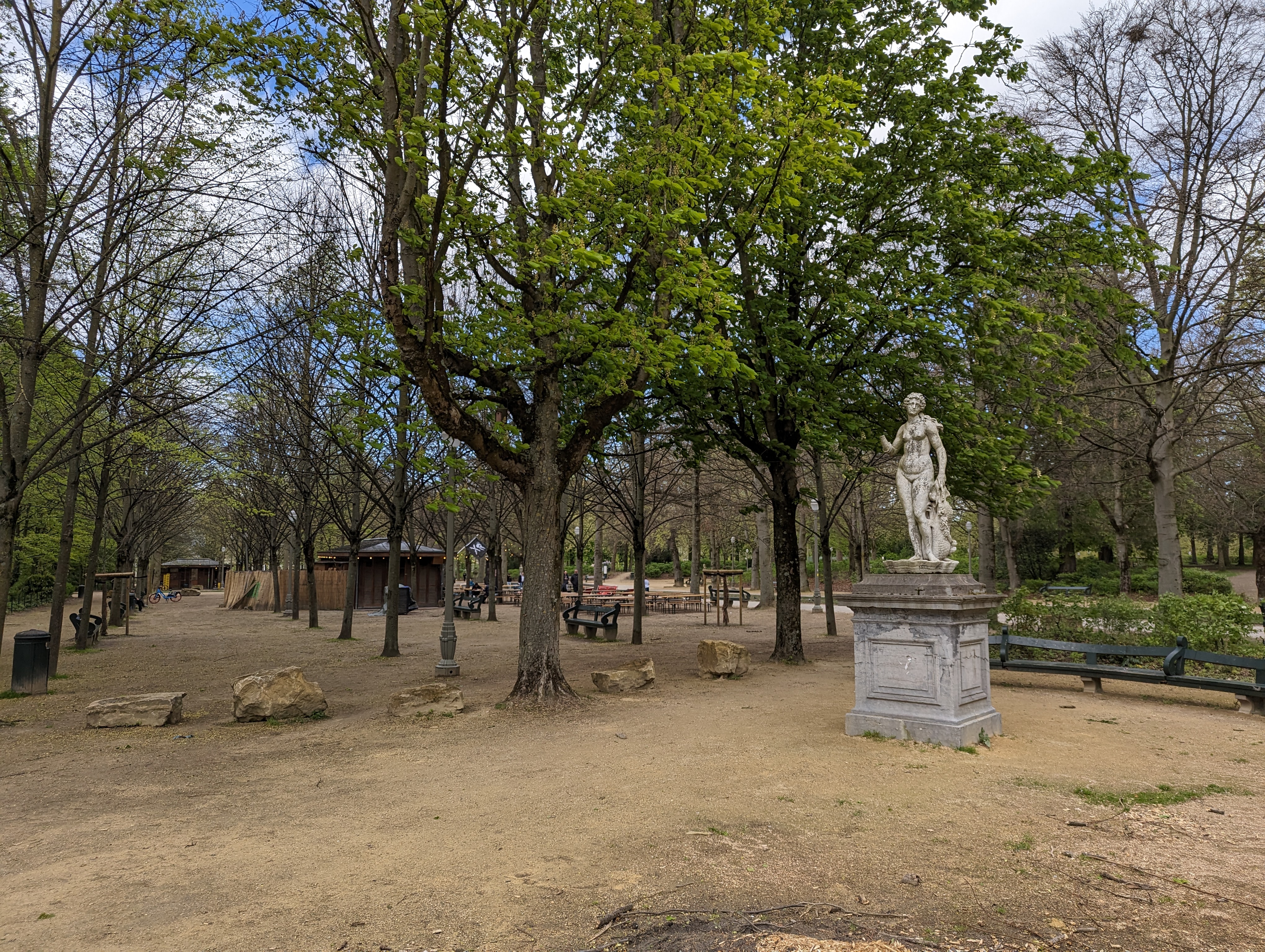
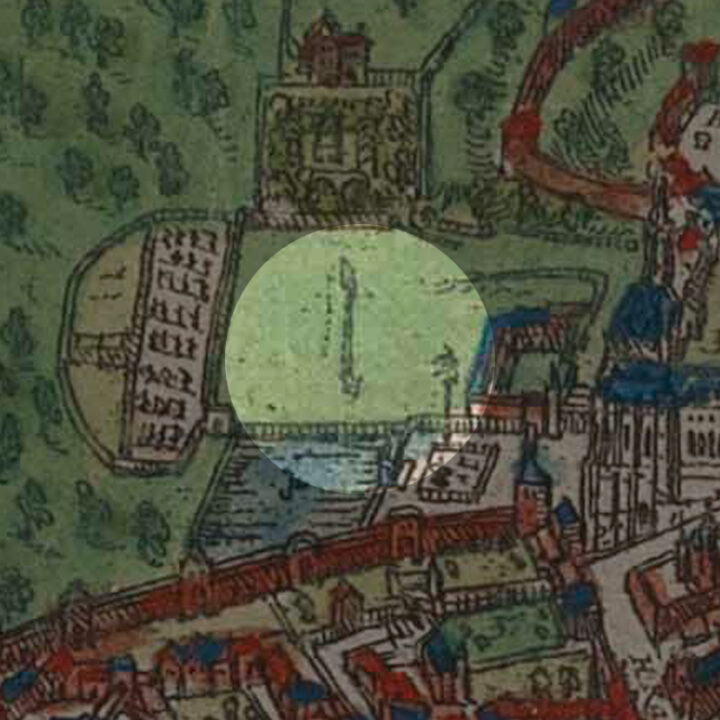
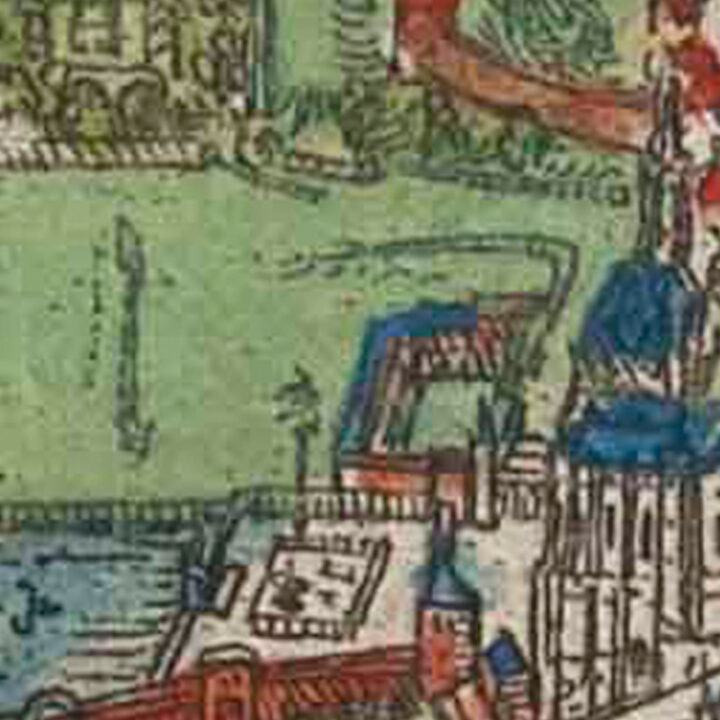
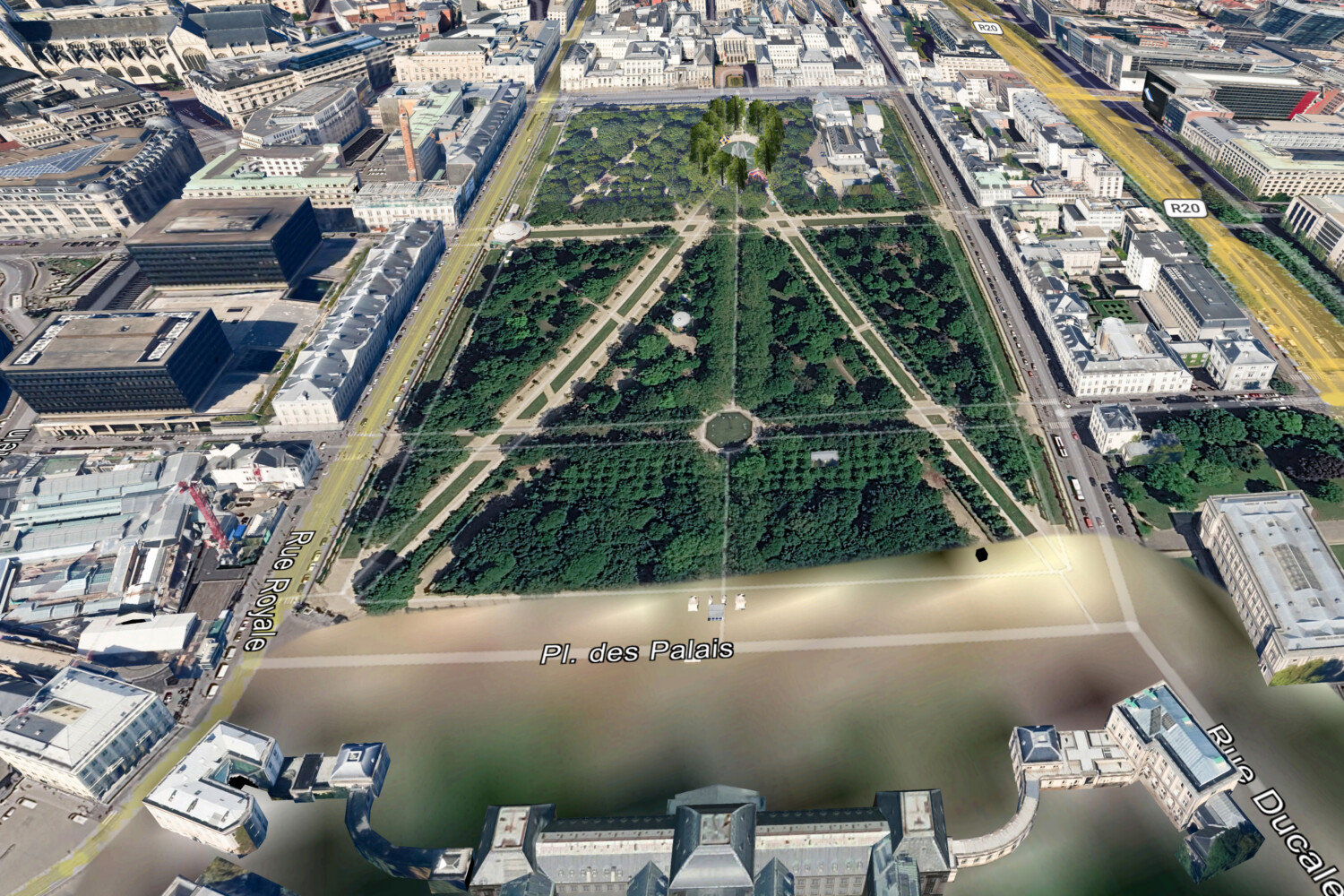
The ‘Warande’ was the former hunting grounds and gardens of the palace of the Dukes of Brabant in Brussels known then as the ‘Hof van Brussel’ (Court of Brussels). Today, the area has been transformed into a public park called the Brussels Park, surrounded by the Paleizenplein (Place des Palais)to the south, the Rue Royale/Koningsstraat (Rue Royale) to the west, the Wetstraat (Rue de la Loi) to the north and the Hertogstraat (Rue Ducale) to the east. The park faces the Royal Palace, and the Palace of the Nation which houses the Belgian House of Parliament.
Origin
The ‘Borgendaal’: Valley of the Fort
To understand the history of the Warande, we must go back to the origins of Brussels. Around the beginning of 1100s, the Earls of Leuven (‘Graaf‘ in Dutch) built a castle on top of a militarily-strategic hill known as ‘Koudenberg‘, above a small settlement in a marshy wetland known as ‘Broeksele‘. In fact, according to historian Bram Vannieuwenhuyze, Koudenberg (spelled also as Coudenberg) is the oldest attested toponym in Brussels. It was also likely that attached to this defence tower was a small chapel, and the first mention of the ‘castle’ was in 1121 when Duke Godfried I (with the Beard) of Leuven and of Lower Lorraine (?-1139) accepted a charter to the advantage of the Abbey of Affligem, where land would be given “apud Brussele super castellum” – near Brussels at the castle. At this time, ‘Broeksele‘ was under the jurisdiction of the Lords of Aa (in today’s Anderlecht) who ruled also as Viscounts (‘Burggraaf‘ in Dutch) of Brussels, answering to the higher authority in Leuven.
As a strategic lookout point, the Castle of Koudenberg overlooks large valley to its north, and this valley was known as the ‘Borgendaal’ or ‘Borgdaal‘ – valley of the fort. Today, this toponym has survived as a street that separates the Royal Palace and the church of Sint-Jacob-op-Koudenberg. Just behind this castle and its Saint James chapel, was a spring water well which flowed into a stream known as the ‘Koperbeek‘ (Buyers’ Brook) sometimes known as the ‘Spiegelbeek’ (Mirror Brook). The source of the water is today in the palace grounds somewhere near the intersection of the Brederodestraat and the Theresianenstraat, and the Koperbeek would have flowed from this point down the valley and then make a turn westwards and then emptied itself into the Zenne river near the Sint-Niklaaskerk. This is why the Borgendaal is known today as the Koperbeek Valley or the Koudenberg Valley.
Between the 12th and the 13th century, Brussels slowly grew in importance. Now part of the growing Duchy of Brabant, ruled from its mighty capital of Leuven, Brussels’ strategic position drew more attention from its ruler. To understand this, we need to explain the historical context: Brabant was a feudal ducal state, part of the Holy Roman Empire ruled from Aachen. In fact, Brabant had always been part of the Holy Roman Empire until the French Occupation in 1794! It was however a precarious border state. To its east, was the Kingdom of France and right at the border of the Scheldt river was the ambitious County of Flanders. Despite sharing a common folks’ tongue, which is the Germanic language of Lower Franconian known back then as ‘Nederduits‘ or ‘Nederdiets‘ – known today as the ‘Dutch’ language, the greedy Flemish counts loyal to their Parisian overloads were constantly vying to expand beyond the historic imperial river border. Brussels was thus an important defense location, to shield the Duchy’s seat of power further east in Leuven.
The castle fort atop the Koudenberg slowly developed into a ducal residence known as the Hof van Brussel (Court of Brussels). From the 13th century onwards, after a succession struggle, Duke Jan I of Brabant made Brussels his permanent residence instead, commuting every now and then to Leuven. This development meant that the Borgendaal with its lush woodland turned into his hunting grounds, and became now known as the ‘Warande‘.
What's so special about this place?
Where does the word ‘warande’ come from?
The Middle Dutch word ‘warande‘ means a ‘game park’ or ‘hunting reserve’ that used to belong to the nobility. Its only surviving Germanic cognate is the English word ‘warren‘ which means the same.
The word clearly has a Germanic origin: Early Frankish ‘warjan‘ or ‘waren‘ (to preserve, to protect) comes from Proto-Germanic ‘warōn‘ or ‘*warjaną‘. The modern Dutch word ‘bewaren‘ still carries the same meaning.
However, the word form betrays a Latin-Gallic influence: Picardian ‘warande‘ and Old French ‘garande‘ derived from the verb ‘garer‘ (to bring something somewhere to preserve and protect it) which was the romanisation of the Germanic-Frankish verb ‘waren‘.
A note about the w-p equivalents: Latin-Gallic speakers (i.e. Romanised Celts in Gaul and the Low Countries who were conquered by the Germanic-speaking Franks from 4th-6th century AD) could not pronounce the ‘w’ sound. They replaced it with ‘g’ or ‘gu’. This is why the g-cognates of Germanic words exist today in modern French:
- William: Guillaume
- Warden: Guardian
- War: Guerre
- Warranty: Garantie
The English cognate ‘warren‘ of Dutch ‘warande‘ comes from late 14th-century Anglo-French/Norman-French ‘wareine‘ or ‘garenne‘.
After the Middle Ages, some warande became more specific: like a ‘konijnenwarande‘ was a hunting reserve for rabbits, and a ‘vrije warande‘ was an unfenced terrain where those with the permission of the owner and with hunting rights were allowed to hunt freely on the hunting grounds.
The word ‘warande‘ is also better known in the southern Netherlands, such as in Brabant, than in northern Netherlands, because of the higher concentration of nobility back in the Middle Ages and Renaissance. Today, most ‘warande‘ have been turned into public parks and woodlands.
How did it look like?
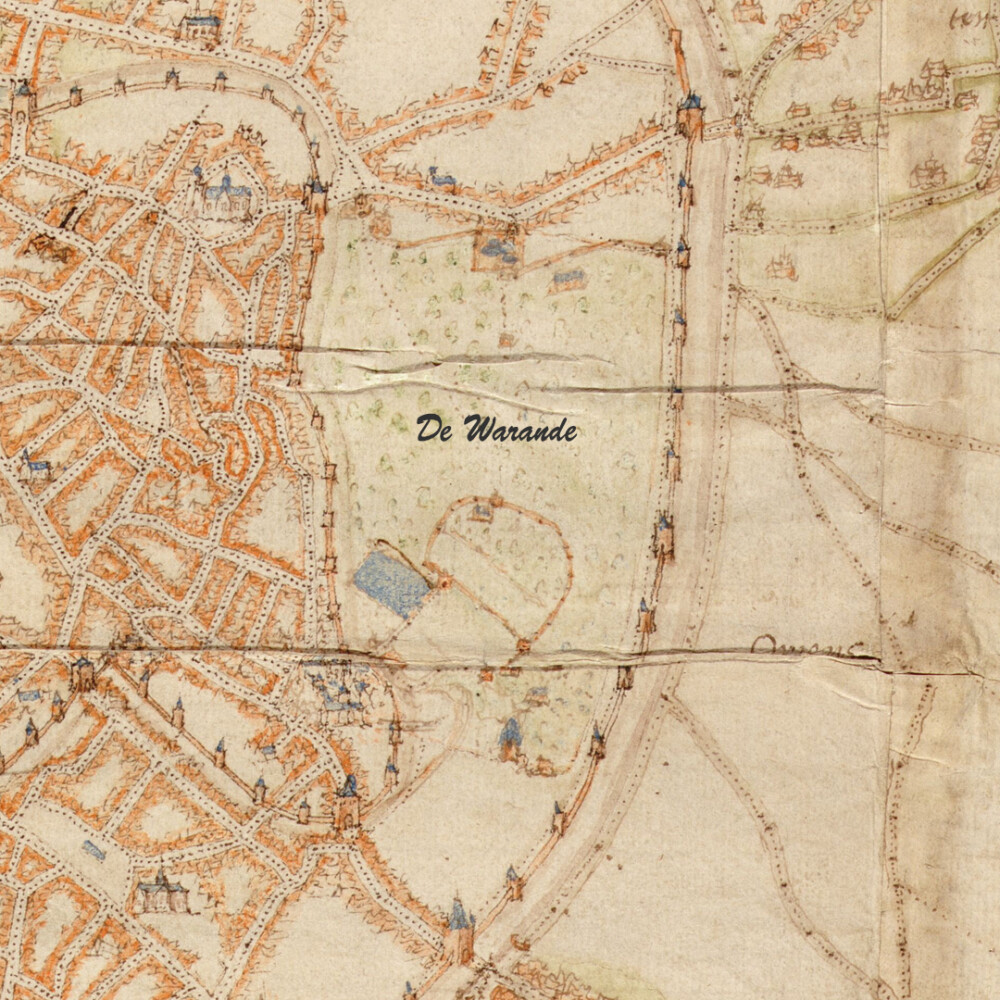
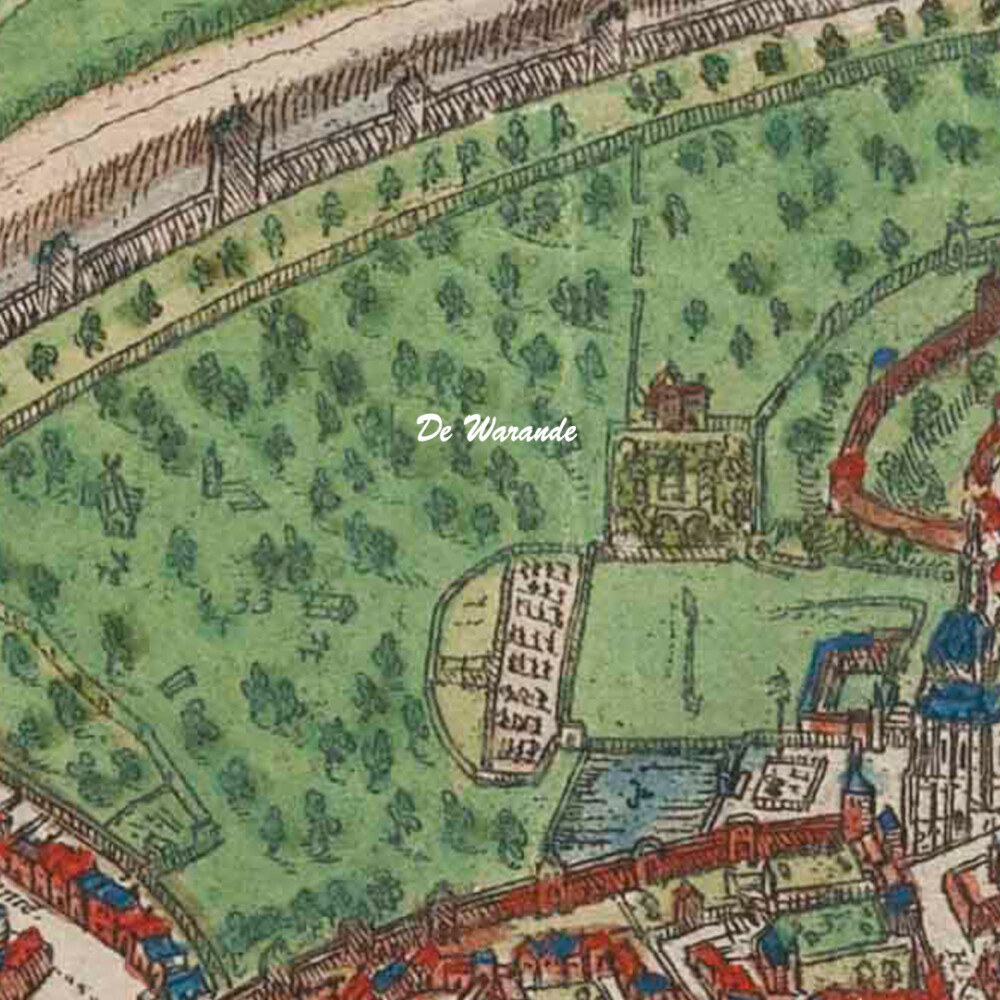
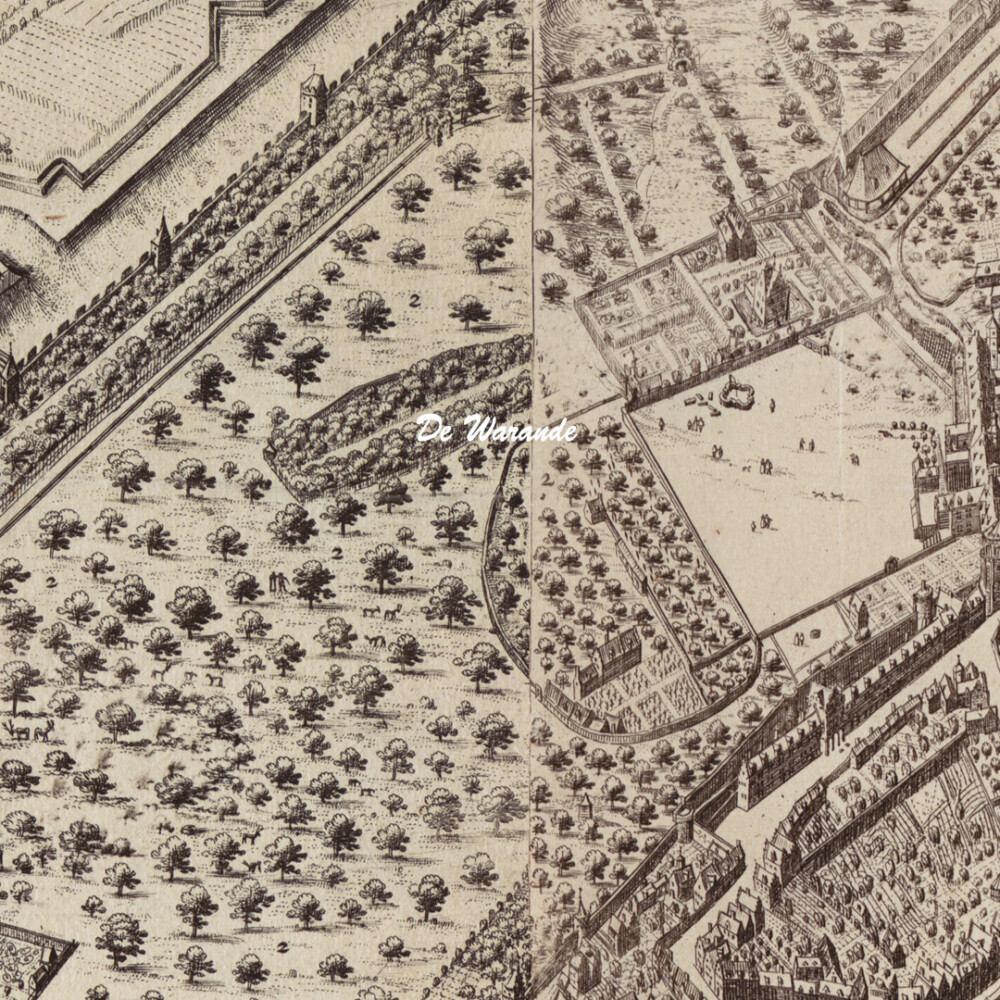
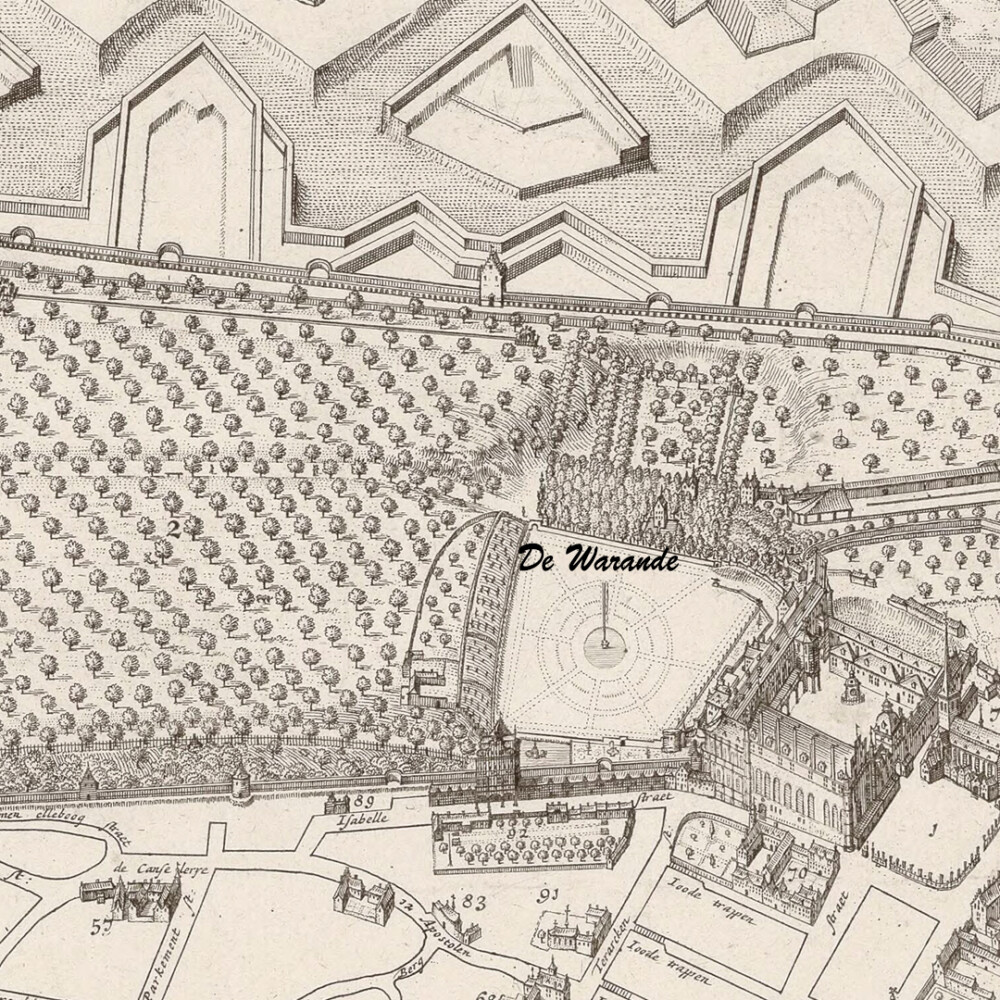
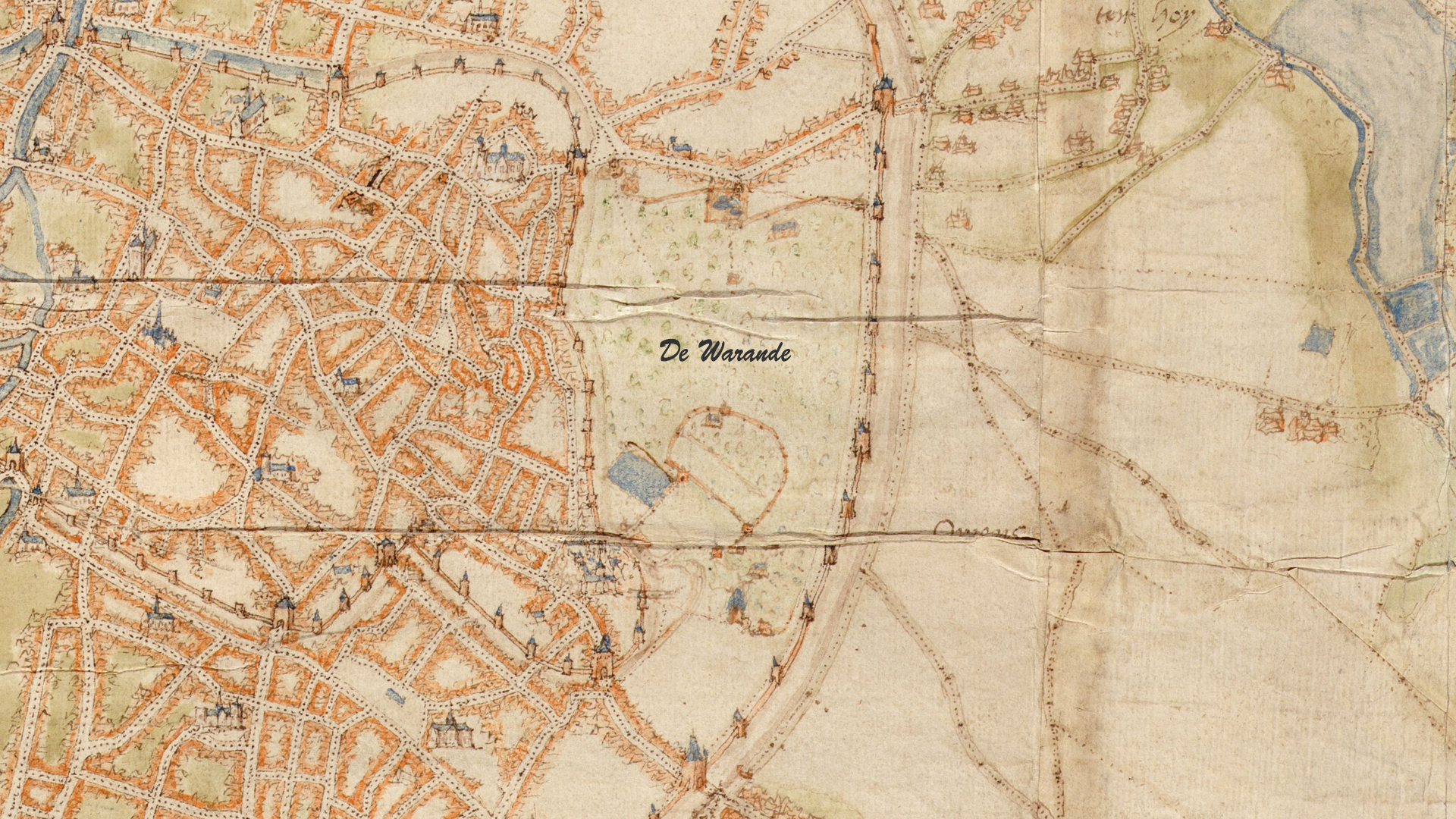
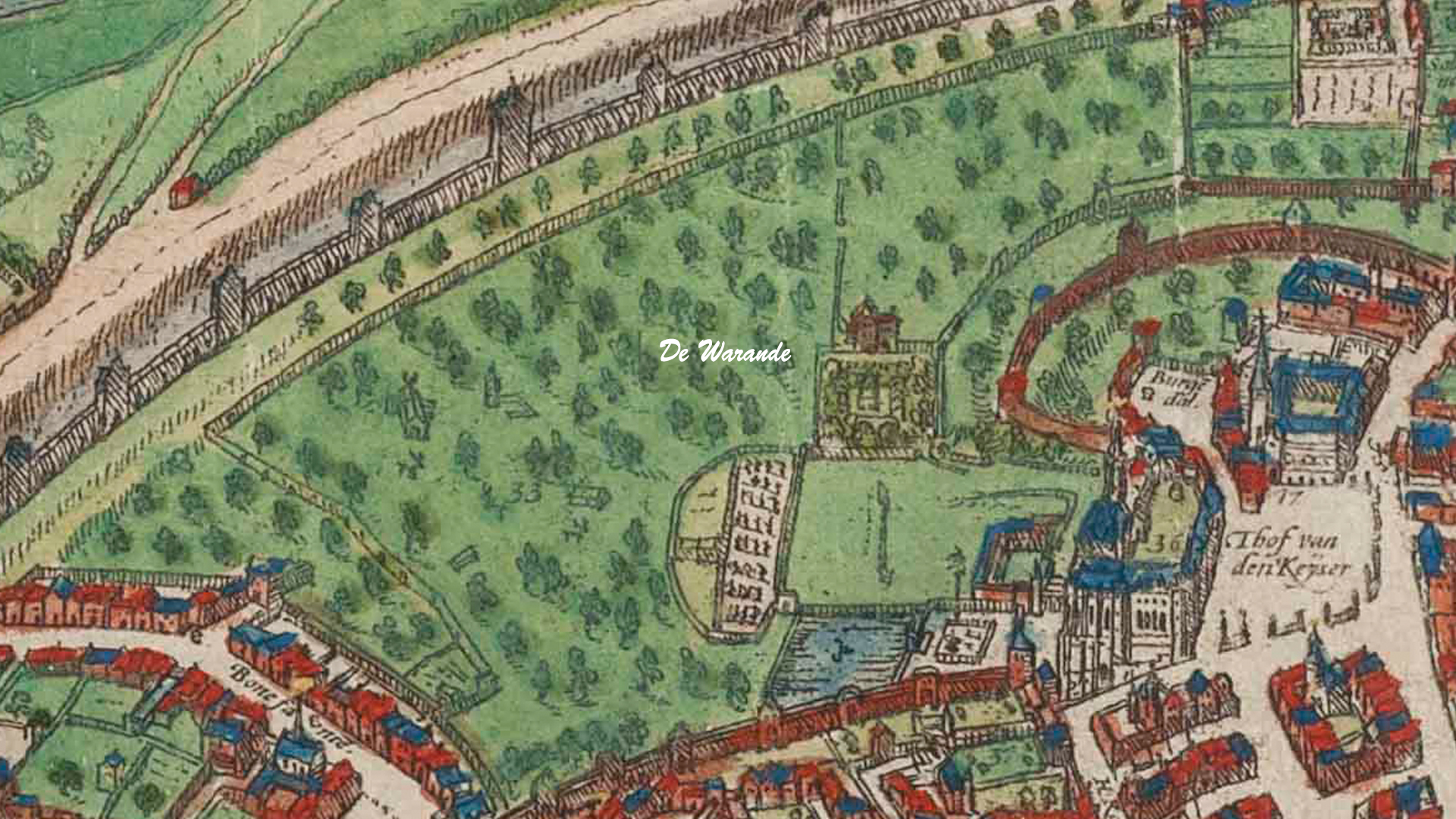
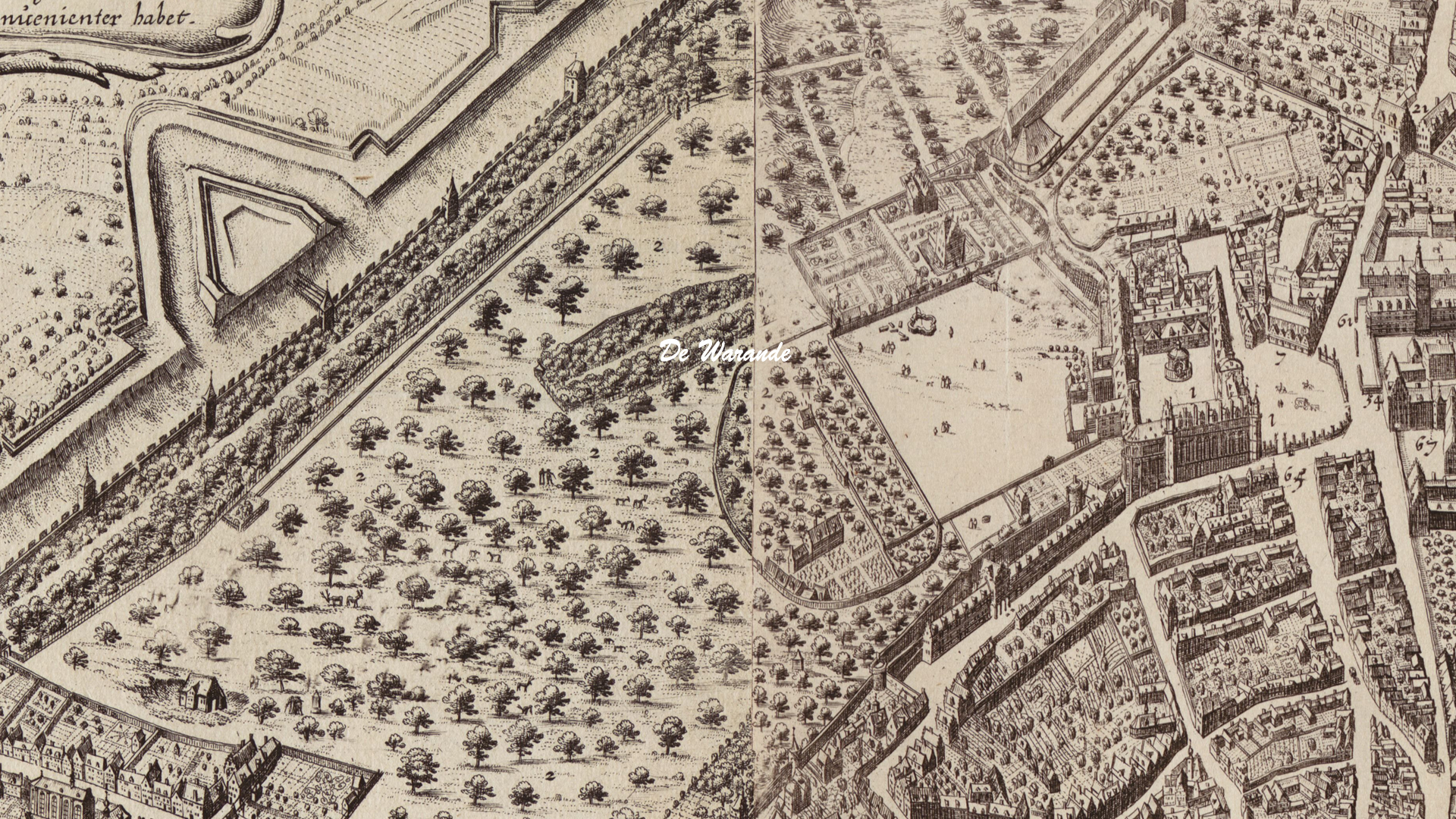
Once walled up, the Warande virtually did not change its surface area from the Middle Ages right up until the 18th century. From the ducal palace on higher grounds, the Warande covered an undulating landscape, traversed by the Koperbeek stream and stretched from the outer city gate of Nieuwe Koudenbergpoort (today’s Naamsepoort) to the gate of Leuvensepoort.
Right in front of the ducal court lay the smaller park, featuring an esplanade for tournaments and festivities known as a “kaatsbaan“, an enclosed garden “Labyrint“, the “Clutinck” pond to the west (its source was the Koperbeek stream), and to the east, a flower garden and a vineyard (which later became an orchard). From the Nieuwe Koudenbergpoort, the Duke could ride towards the forest of Zoniënwoud.
Behind the smaller park was the woods originally intended for game and hunting. Successive rulers introduced various embellishments to the Warande — most notably Duke Philip the Good of Burgundy, as well as Habsburg Emperor Charles V and the Archdukes Albert and Isabella, who favoured the Renaissance style.
Let’s go through the different paintings that featured the Warande and the ducal palace Court of Brussels.
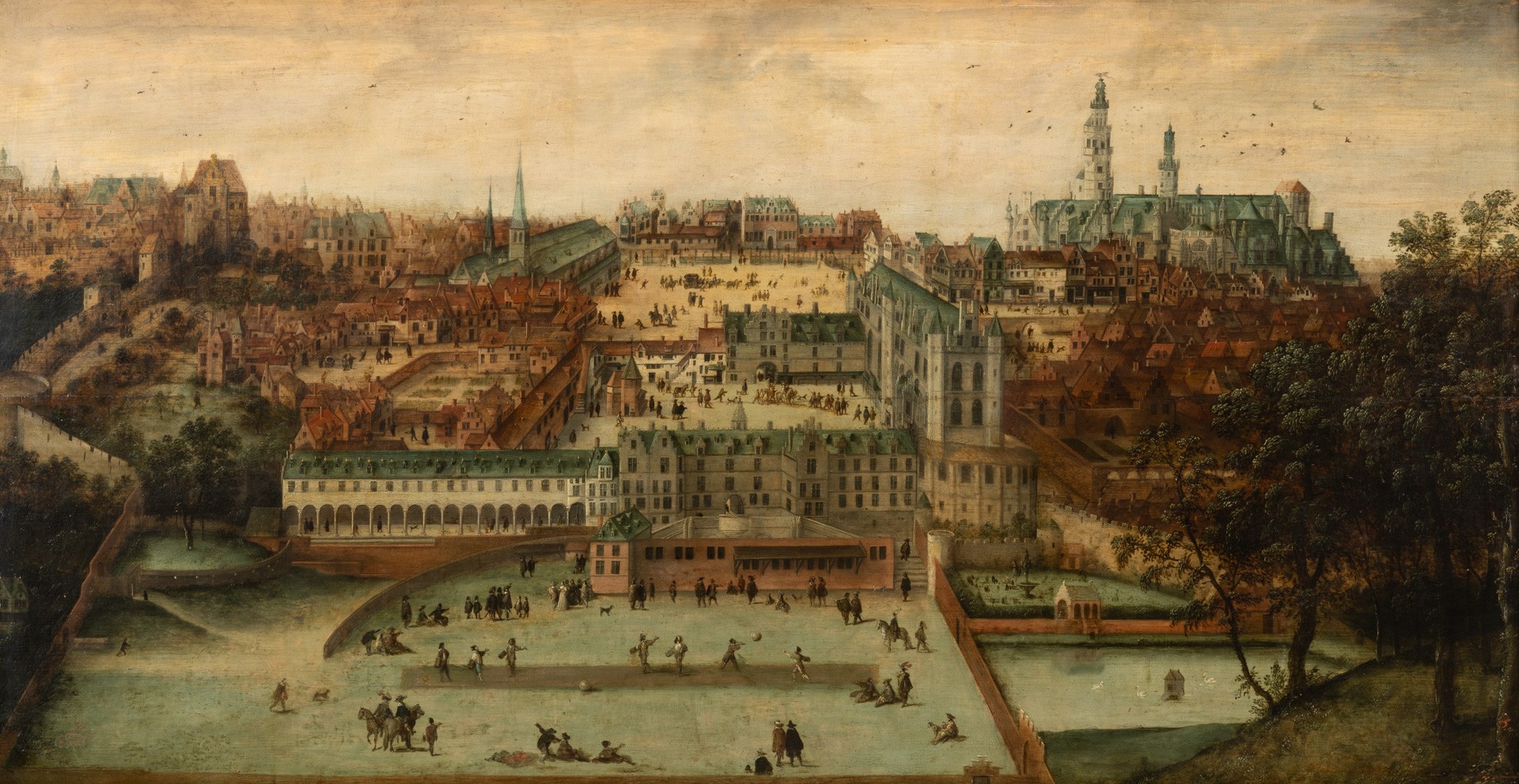
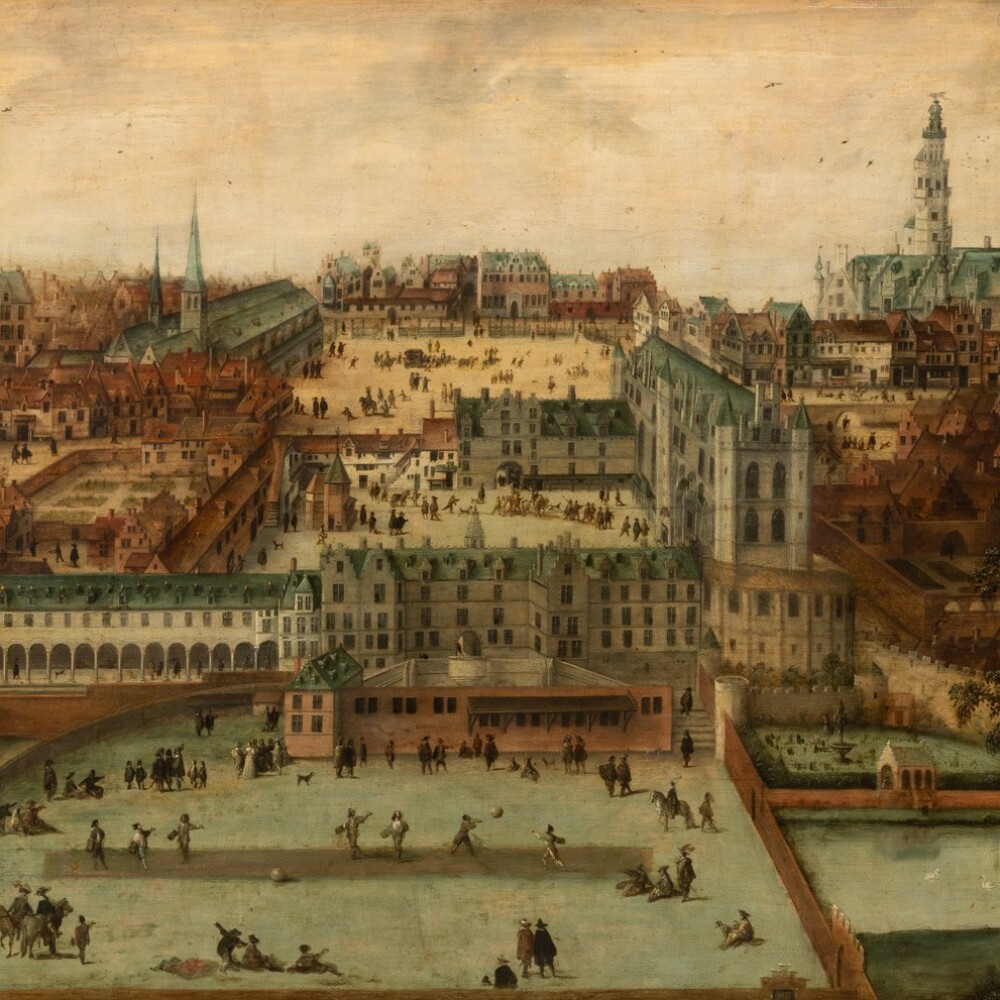
1540-1548: “Het paleis van de hertogen van Brabant op de Coudenberg” (The Palace of the Dukes of Brabant on the Coudenberg) by Lucas Gassel (1480-1568)
The former ducal court of Coudenberg, seen from the gardens of the Warande on the north side. The court was situated to the right of the present-day Place Royale (when facing the city centre). In the foreground, we see the tournament field, located behind the courtyard; in the background, the top left stands the outer city gate of the Nieuwe Koudenbergpoort (today’s Naamsepoort), the church of Sint-Jacob-op-de-Koudenbergkerk on the left of the big square, and we see the Court of Nassau on the right (where today’s Royal National Library and the Palace of Karel van Lotharingen are).
This is the oldest complete depiction of the former palace in Brussels, together with parts of the Warande.
The painting depicts not only the architecture but also various pastimes in the foreground — a joust and a game of ball — while the entrance to a labyrinth (originally an orchard) is also visible on the left. In fact, the space between the palace and the Warande contained a ball court and was also used in the 16th century to host chivalric games and festivities (the horsemen here are adorned in armor and elaborate helmets). Furthermore, in the very foreground, two deer lying on the ground beside the wall allude to the fact that the park (the Warande) served as a recreational forest.
This painting would go on to inspire later 17th century drawing by Jan Van de Velde (1593-1641), who would go on to inspire other paintings and engravings of the same scene.
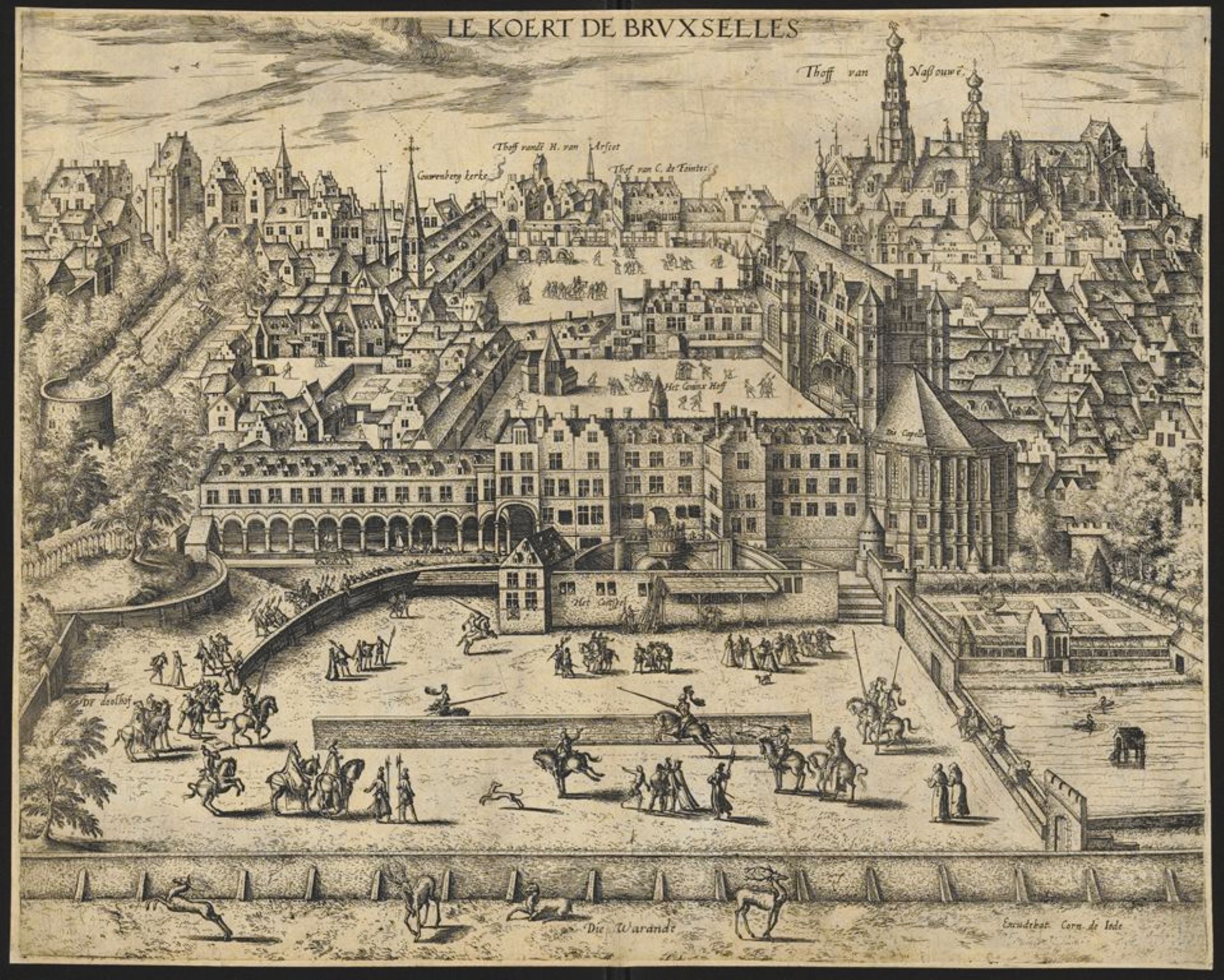
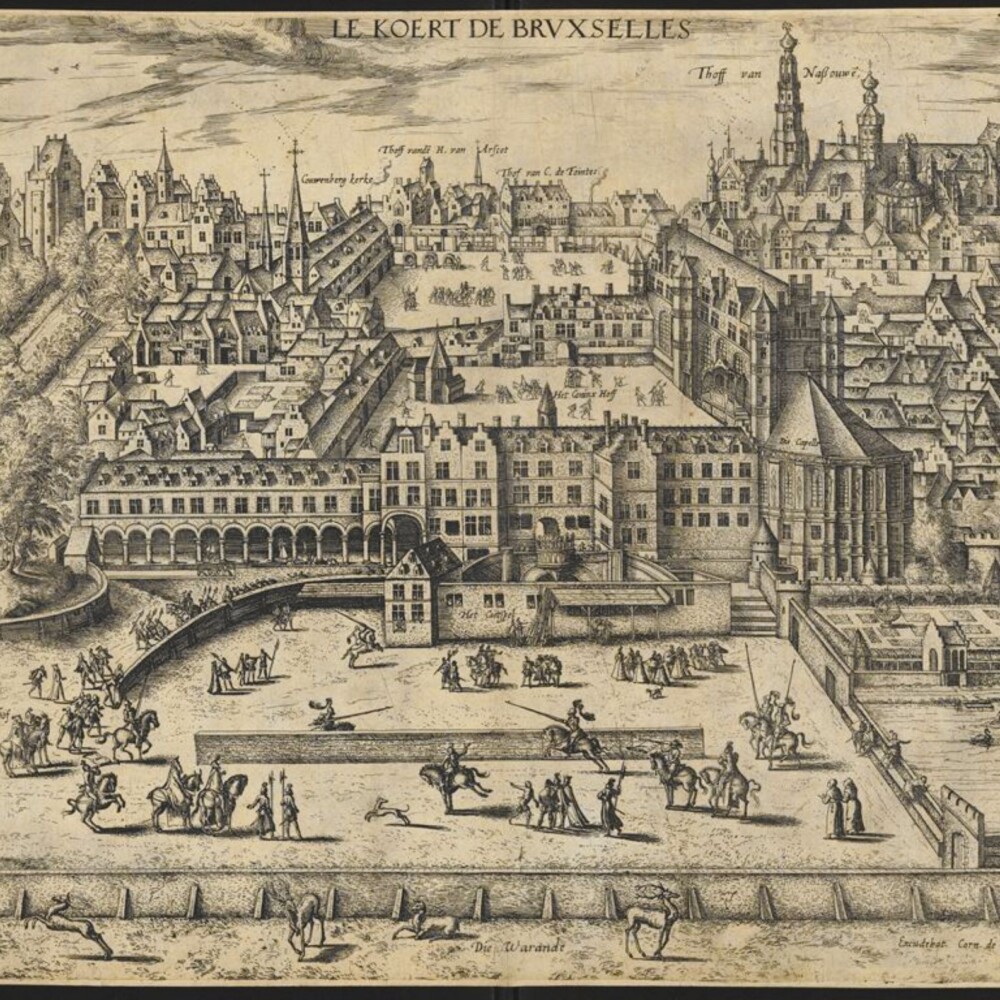
1550-1600: “Le Koert de Bruxselles” (The Court of Brussels) by Cornelis De Iode (1568-1600)
This engraving by Cornelis de Iode is based on the drawing by Jan van de Velde. Several versions of this print exist, created by different artists and issued by various publishers. In this particular version, the palace’s most significant buildings have been annotated.
The grounds between the palace and the Warande contained a “kaatsbaan” which was a court for a traditional ball game, which also served in the 16th century served as a venue for chivalric games and festivities. In the print, for example, the horsemen are shown wearing armour adorned with elaborate plumes on their helmets.
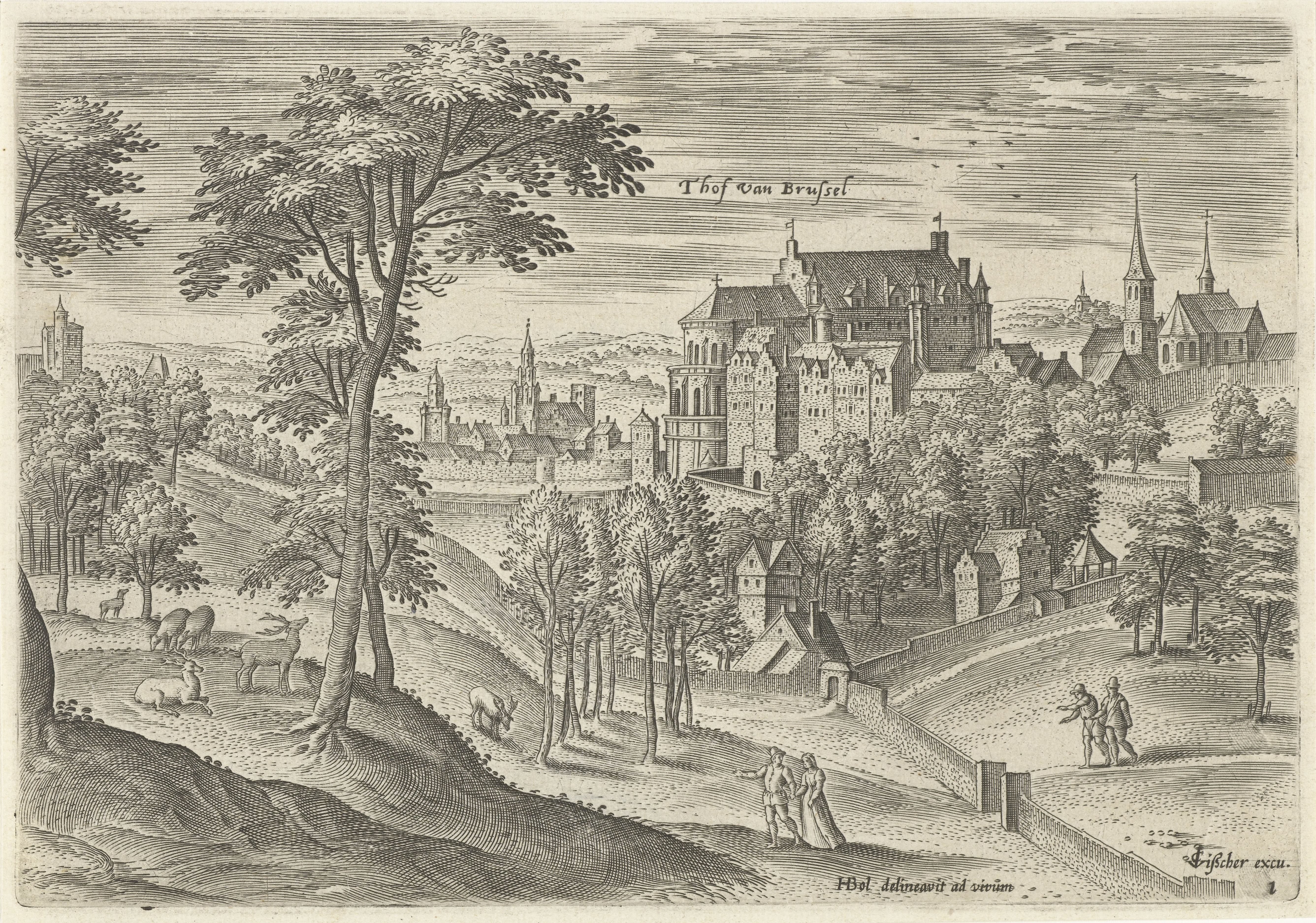
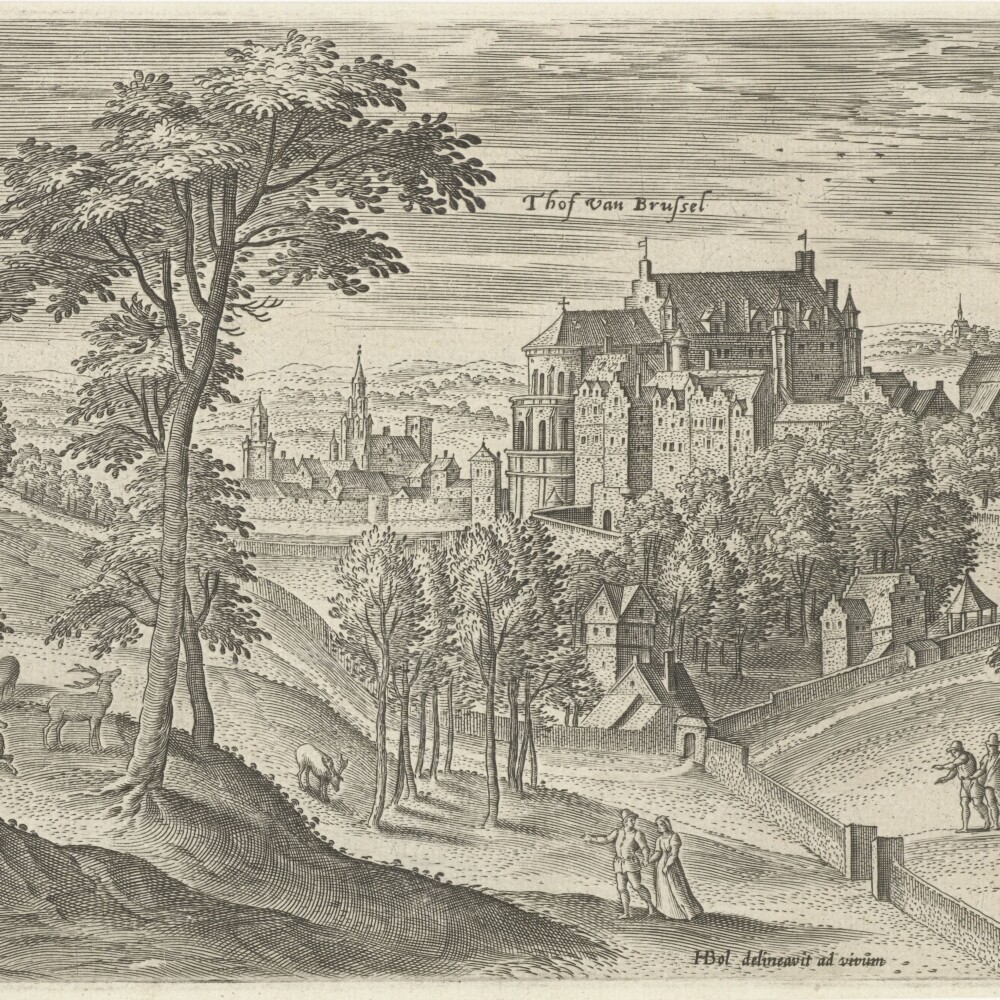
1575-1580: “Thof van Brussel” (The Court of Brussels) by Hans Collaert I
This is a beautiful view of the Court of Brussels from the Warande, with the church towers of Sint-Jacob-op-de-Koudenbergkerk and the Collegiale kerk van Sint-Michiel en Sint-Goedele in the background.
The print is part of a series featuring views from the area around Brussels published by engraver Hans Collaert (1520-1567). This particular view follows another engraving or drawing by Hans Bol (1534-1594) who copied painter Jacob Grimmer (1526-1590).
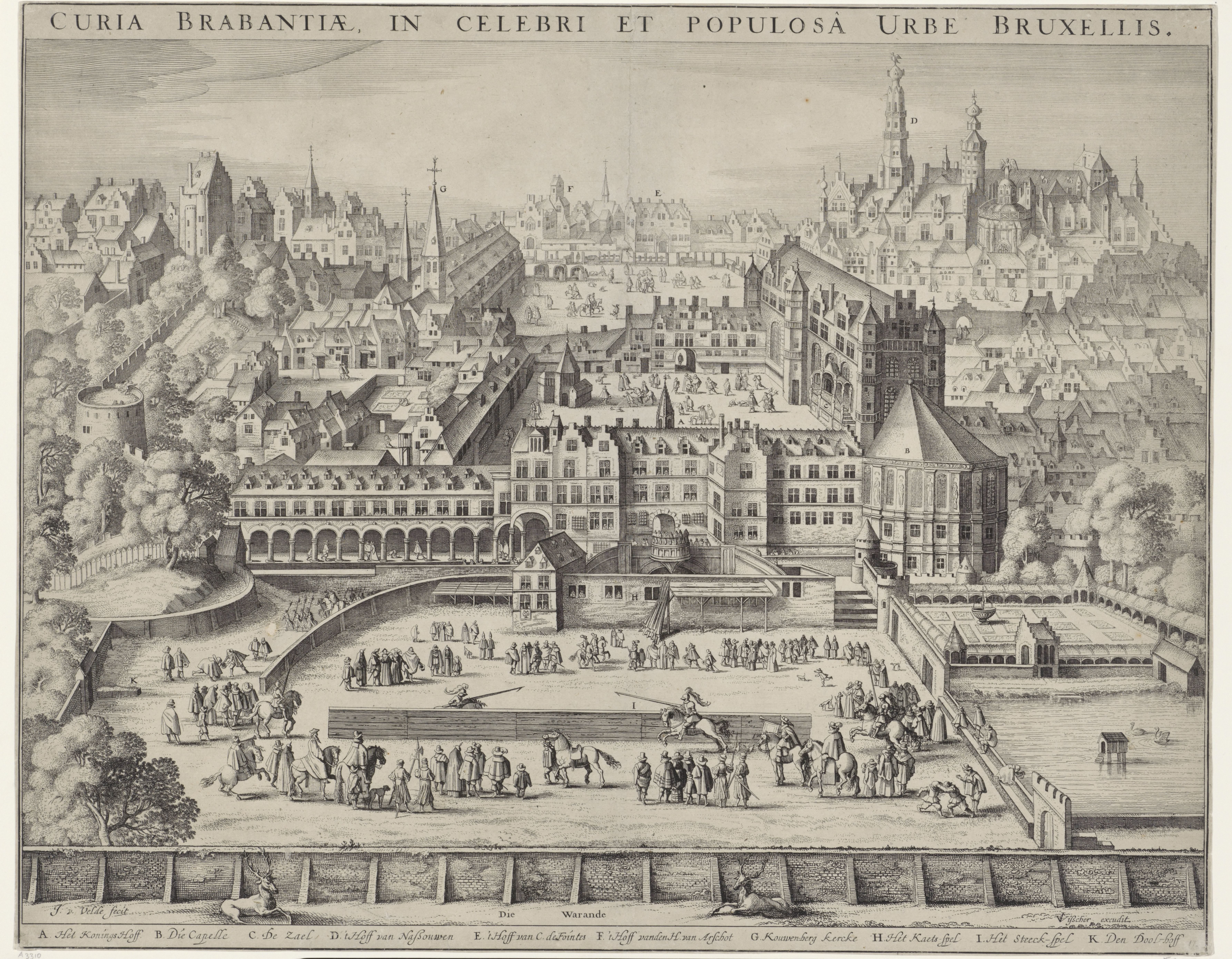
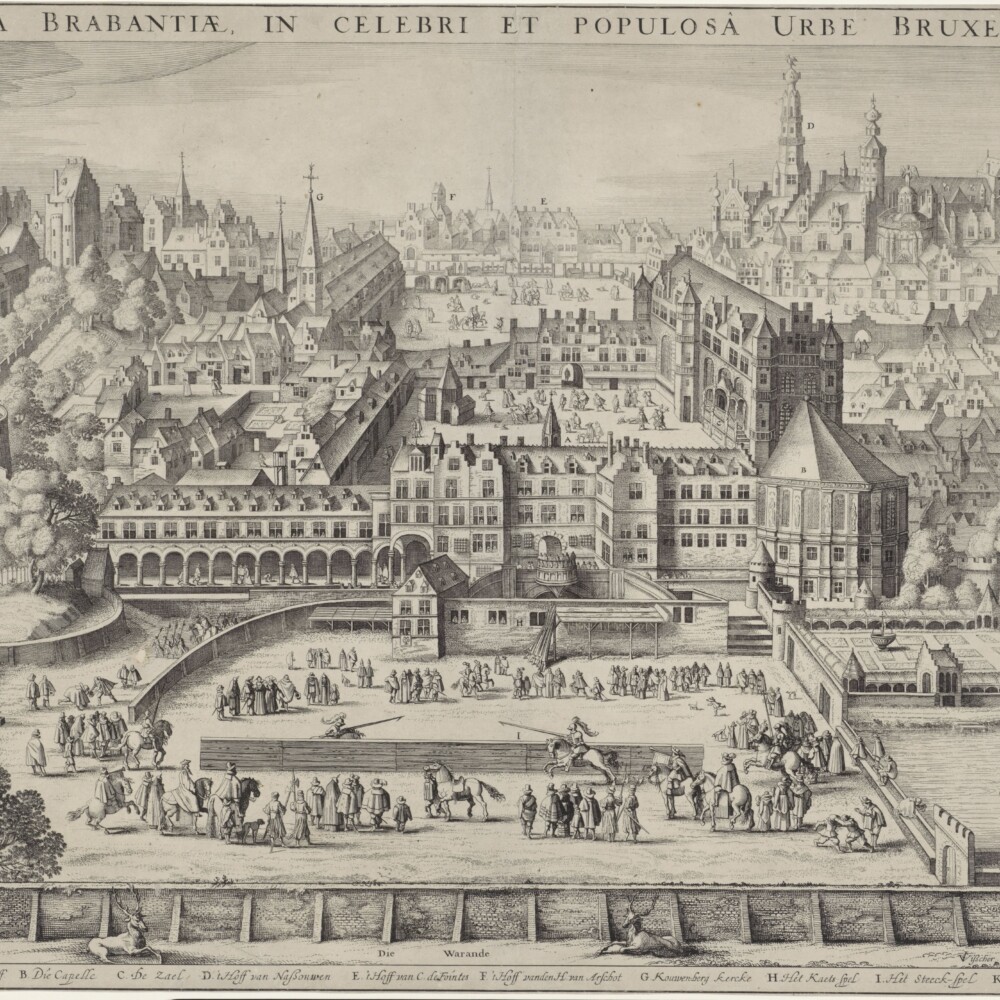
1603-1652: “Curia Brabantia In Celebre Et Populosa Urbe Bruxellis” (The Court of Brabant in the famous and populous city of Brussels) by Claes Jansz. Visscher II (1587-1652)
Based on the painting of Jan van de Velde who based it on the work of Lucas Gassel, Claes Jansz. Visscher II made an engraving of the palace scene but added several updates. While the ducal Court of Brussels itself remained faithful to Gassel’s, the painting depicts various pastimes in the foreground — a joust and a game of ball — while the entrance to a labyrinth (originally an orchard) is also visible on the left. In fact, the space between the palace and the Warande contained a ball court and was also used in the 16th century to host chivalric games and festivities (the horsemen here are adorned in armor and elaborate helmets). Furthermore, in the very foreground, two deer lying on the ground beside the wall allude to the fact that the Warande is now fenced off from the garden part of it as a dedicated hunting ground.
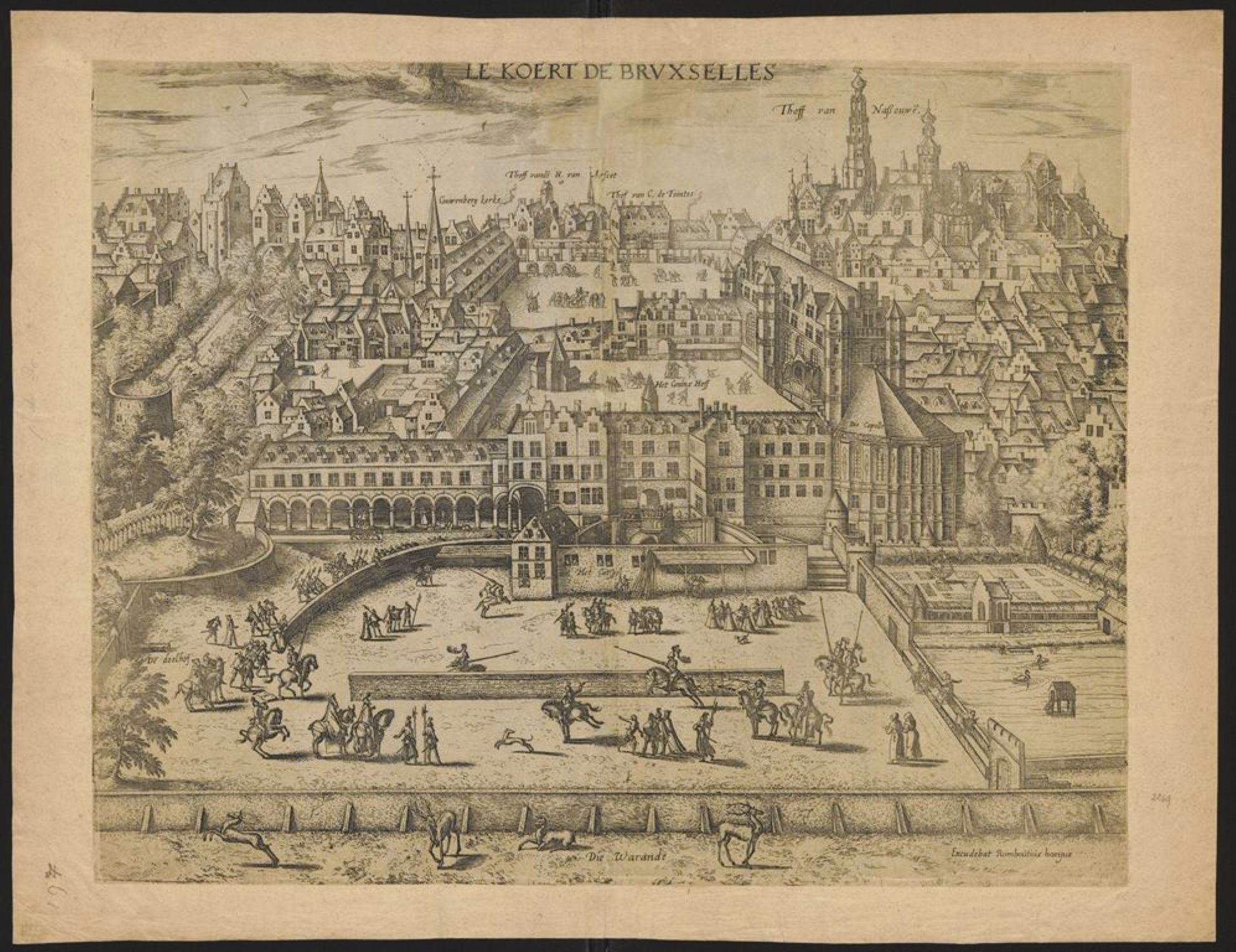
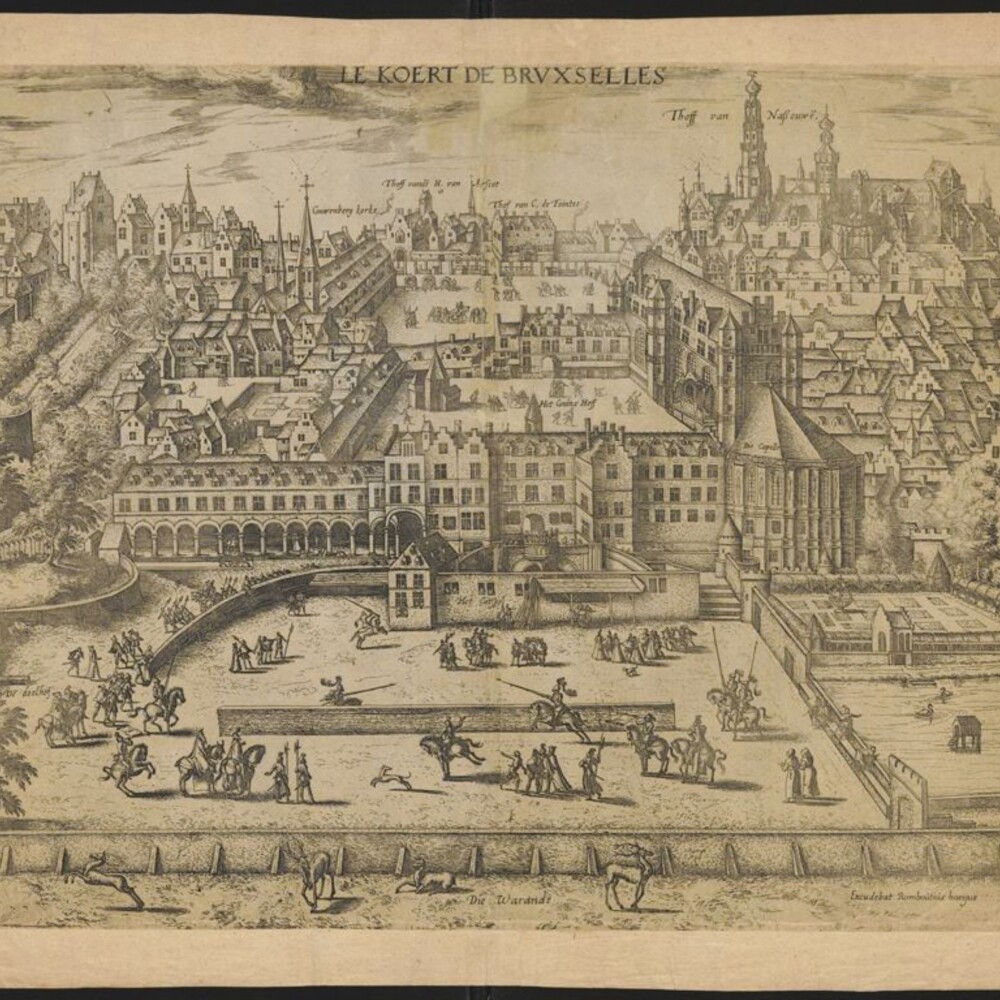
1600s?: “Le Koert de Bruxselles” (The Court of Brussels) by Rombout Van den Hoeye
This engraving by Van den Hoeye is yet another one based on the drawing by Jan van de Velde. It looks very similar to the one by Cornelis De Iode.
Like Visscher II’s version, the engraving depicts the Coudenberg Palace around 1540. For instance, the chapel can be seen under construction, featuring a temporary roof. It was situated as an extension of the Great Hall of Aula Magna — on the site previously occupied by the chapel of Duchess Joanna of Brabant. On the left side of the print, there is also a gallery, completed in 1537; its construction incorporated the foundations of the city’s first defensive wall. The ducal family could host private celebrations on the first floor.
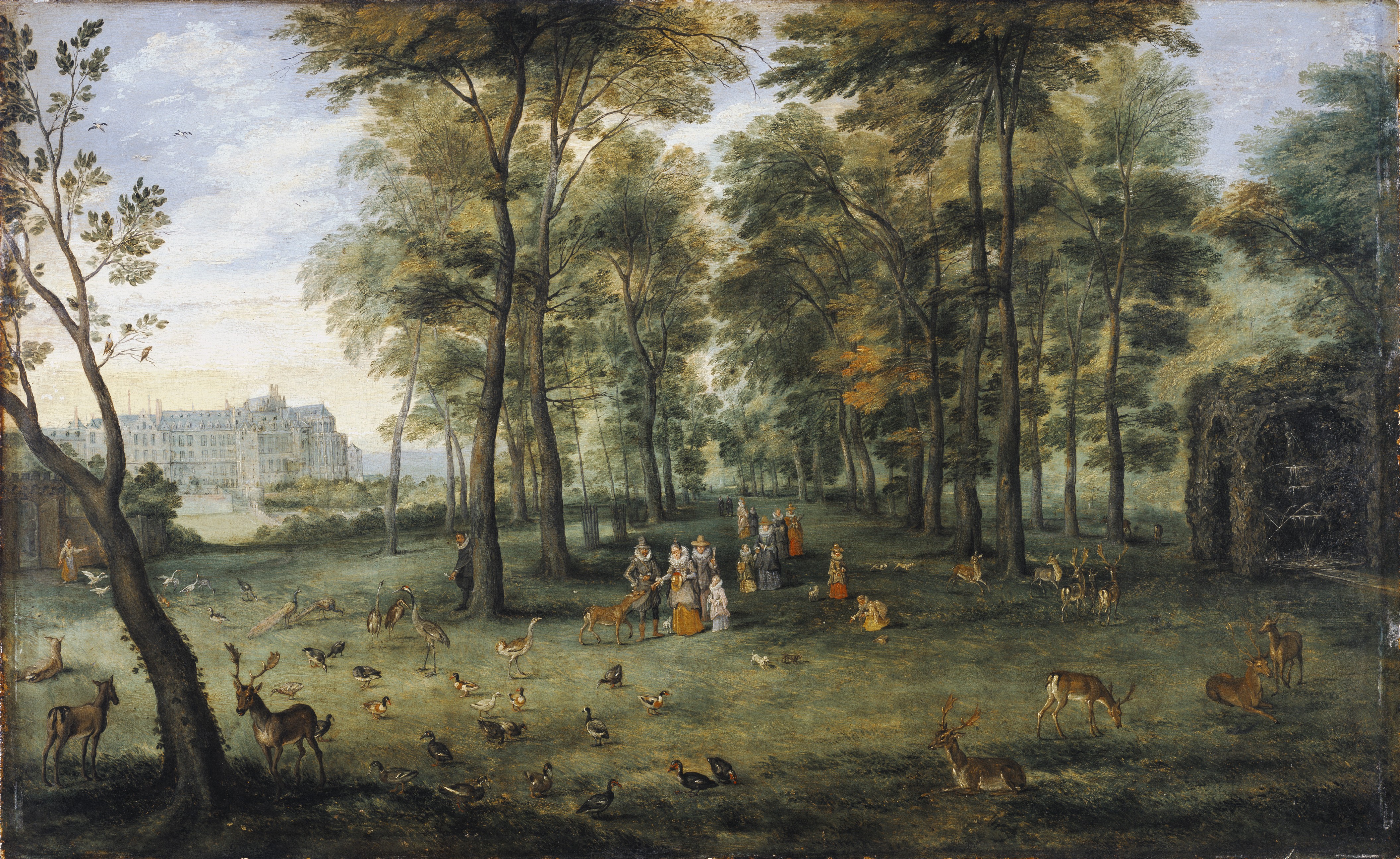
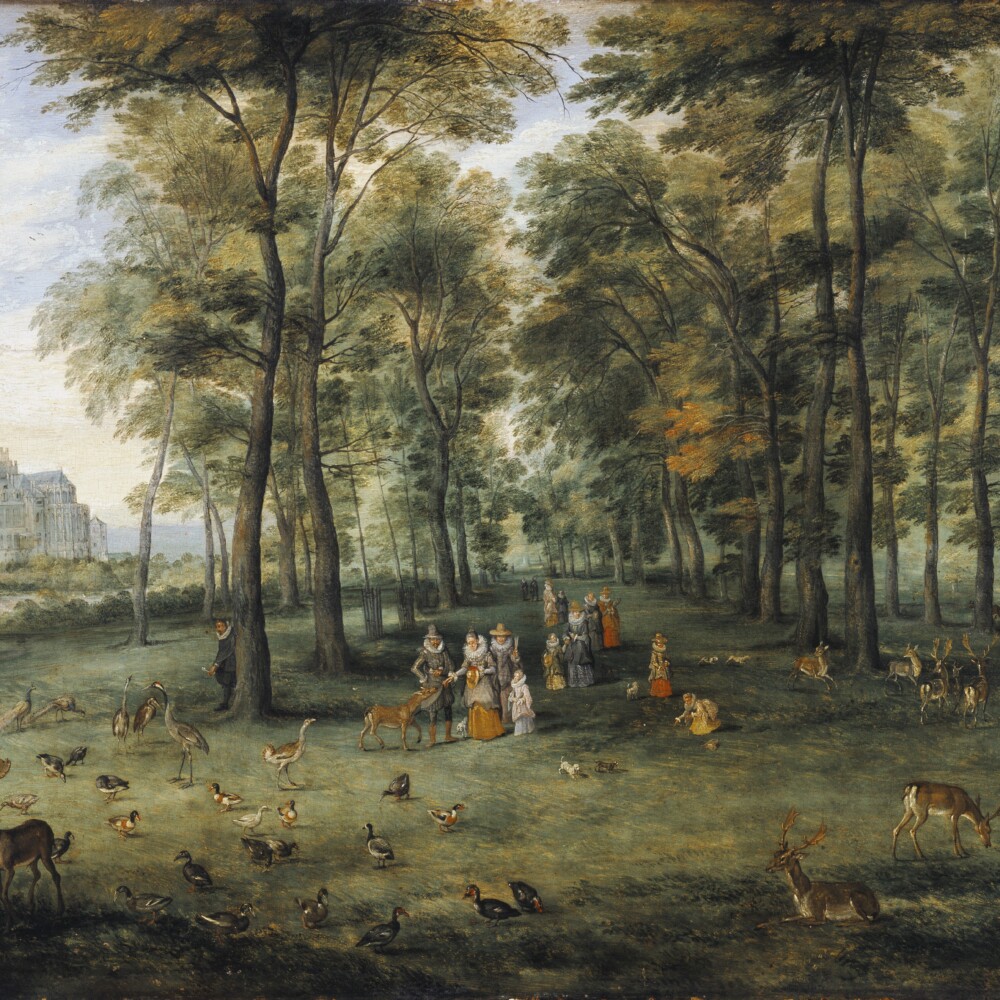
1620: “De aartshertogen Albrecht en Isabella in de tuin van hun kasteel op de Coudenberg te Brussel” (The Archdukes Albrecht and Isabella in the garden of their castle in the Coudenberg in Brussels” by Jan Brueghel the Elder (1568–1625)
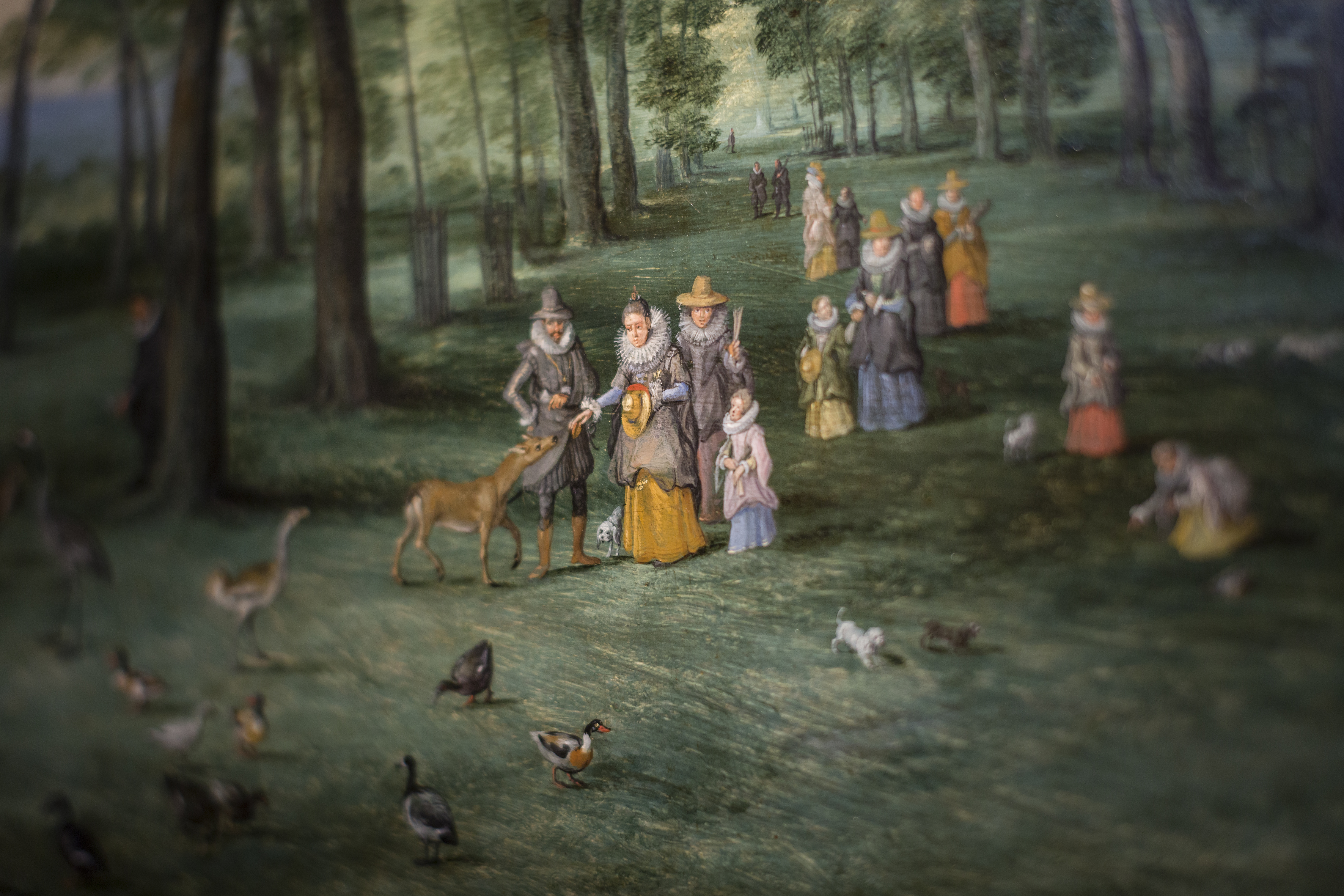
In 1598, ‘Infante‘ Isabella (1566–1633) inherited the position of Lord of Habsburg Netherlands from her father Philip (Duke Philip V of Burgundy and Lord of the Netherlands, King Philip II of Spain, King Philip I of Portugal, King Philip of England and Ireland).
She ruled the Netherlands with her husband Archduke Albrecht VII of Austria (1559—1621) as equal sovereigns, and from his death in 1621, she ruled alone until 1633.
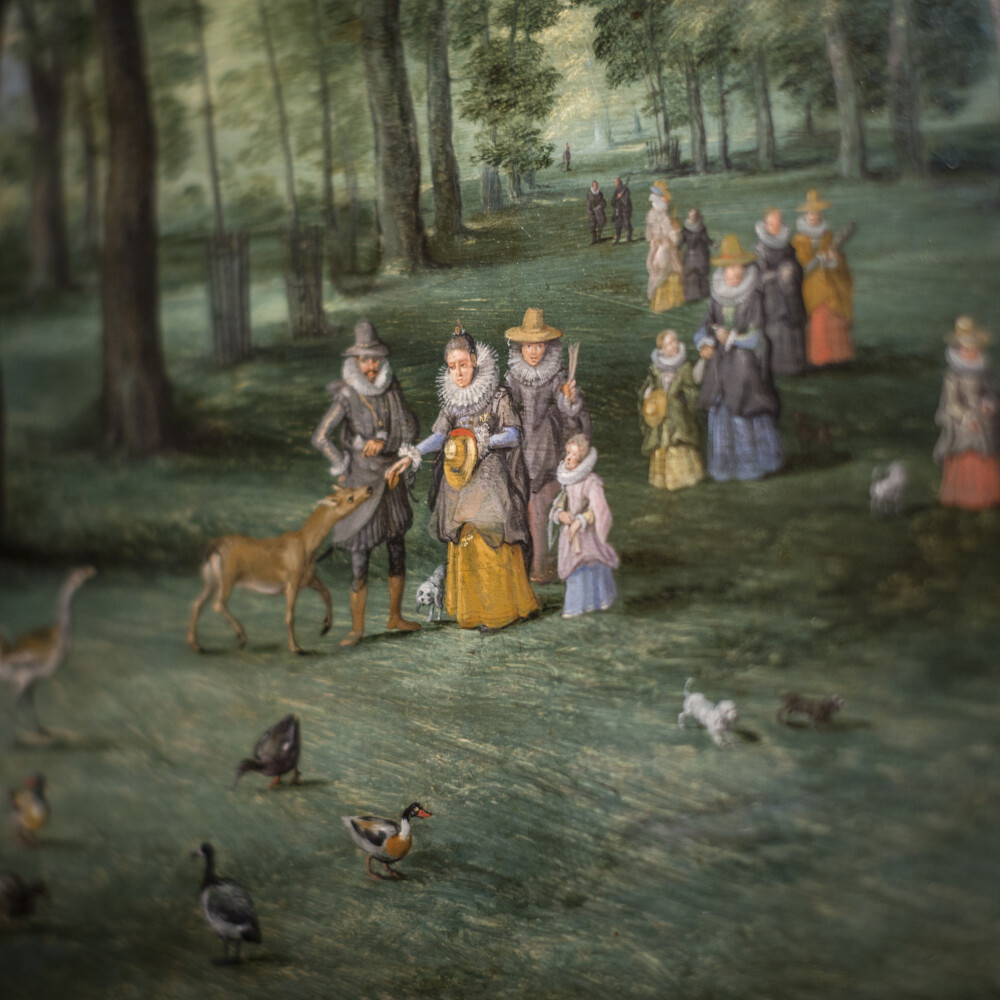
In this painting by the renowned Brussels Netherlandish painter Jan Brueghel the Elder (1568–1625), son of Pieter Bruegel the Elder, we see the Archdukes in a almost Eden-like scene set right in the heart of the Warande. Instead of hunting the animals, the couple is seen wild deers and ducks, surrounded by playing children and ladies of the court. The ducal palace in the background is almost white and imperceptible compared to the friendly and lively scene in the Warande.
According to Philippe Liesenborghs, on his web article “Het edele vermaak. De jacht in de Spaanse Nederlanden onder de Aartshertogen“, the arrival of the Archdukes marked a turning point in the history of the palace. It was completely refurbished to accommodate an ever-expanding court, with adjustments made to align with her Madrid court ceremonies.
The Warande, which contained the gardens of the Ducal Palace, also underwent major transformations under the direction of Salomon de Caus, who was assisted by Charles Darret, Pieter Noveliers, and sculptor Jeroen Duquesnoy. These projects included the construction of various grottoes, fountains, and a new ‘piquerie’ which was a building that housed activities for those involved in the hunt — such as training horses or overseeing the care of the animals.
There were also stables located at the corner of the street running from the Hof van Aarschot toward the Zavel. The city gate of Nieuwe Koudenbergpoort was also used to store equestrian equipment and the Archdukes’ weaponry.
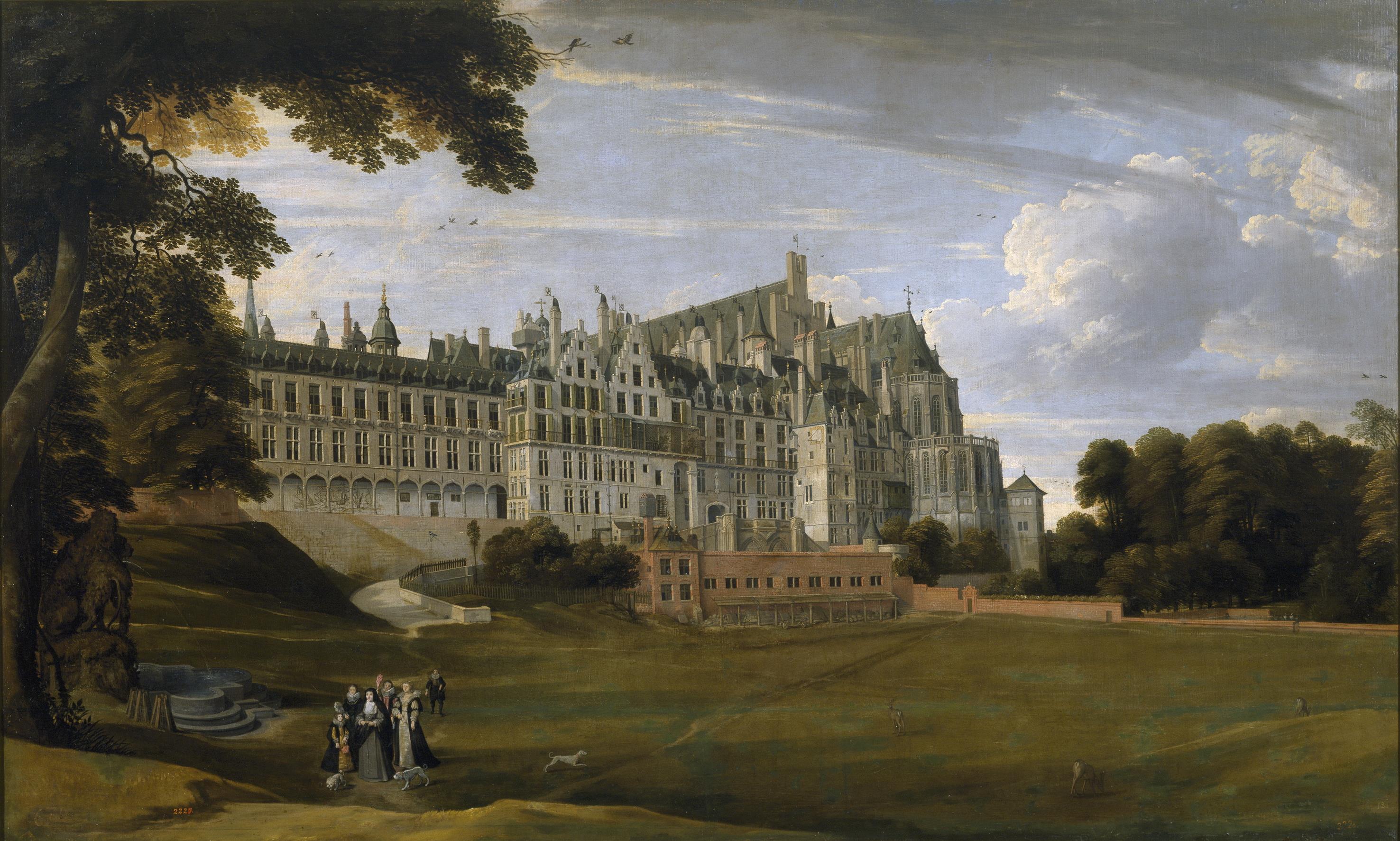
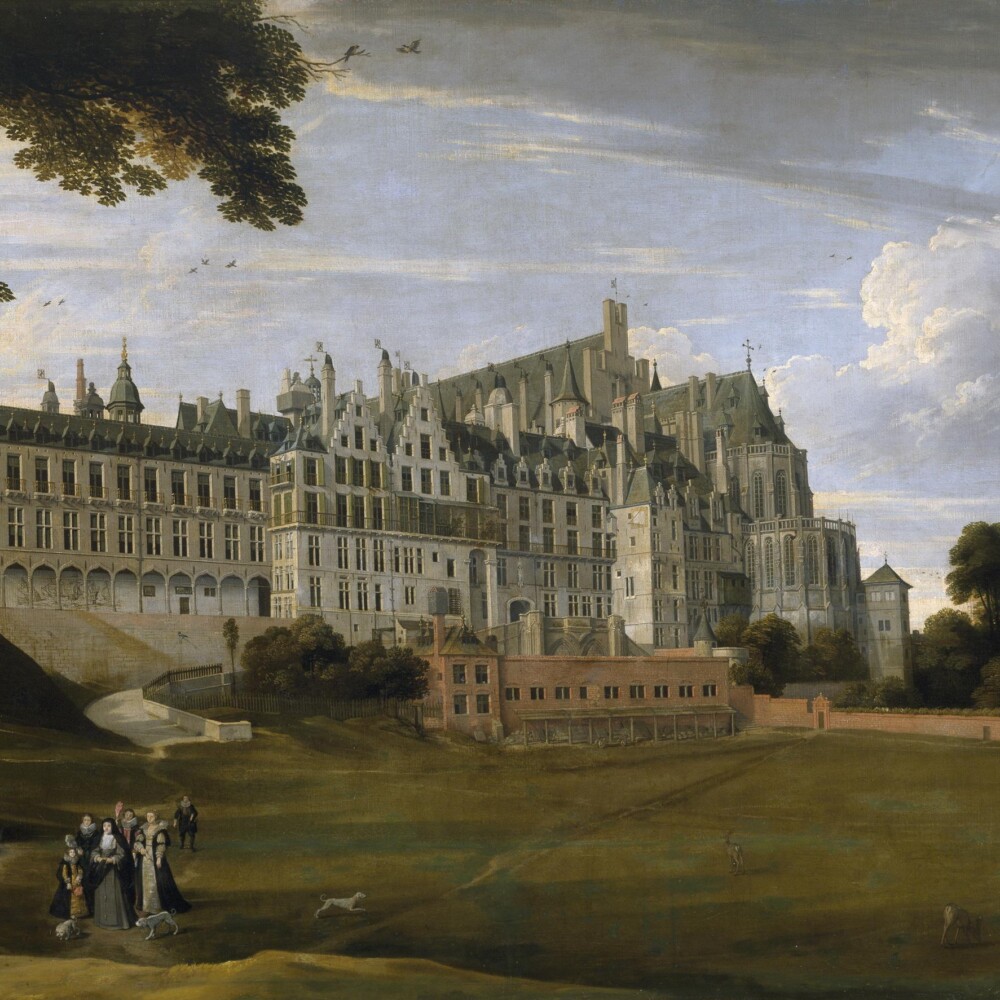
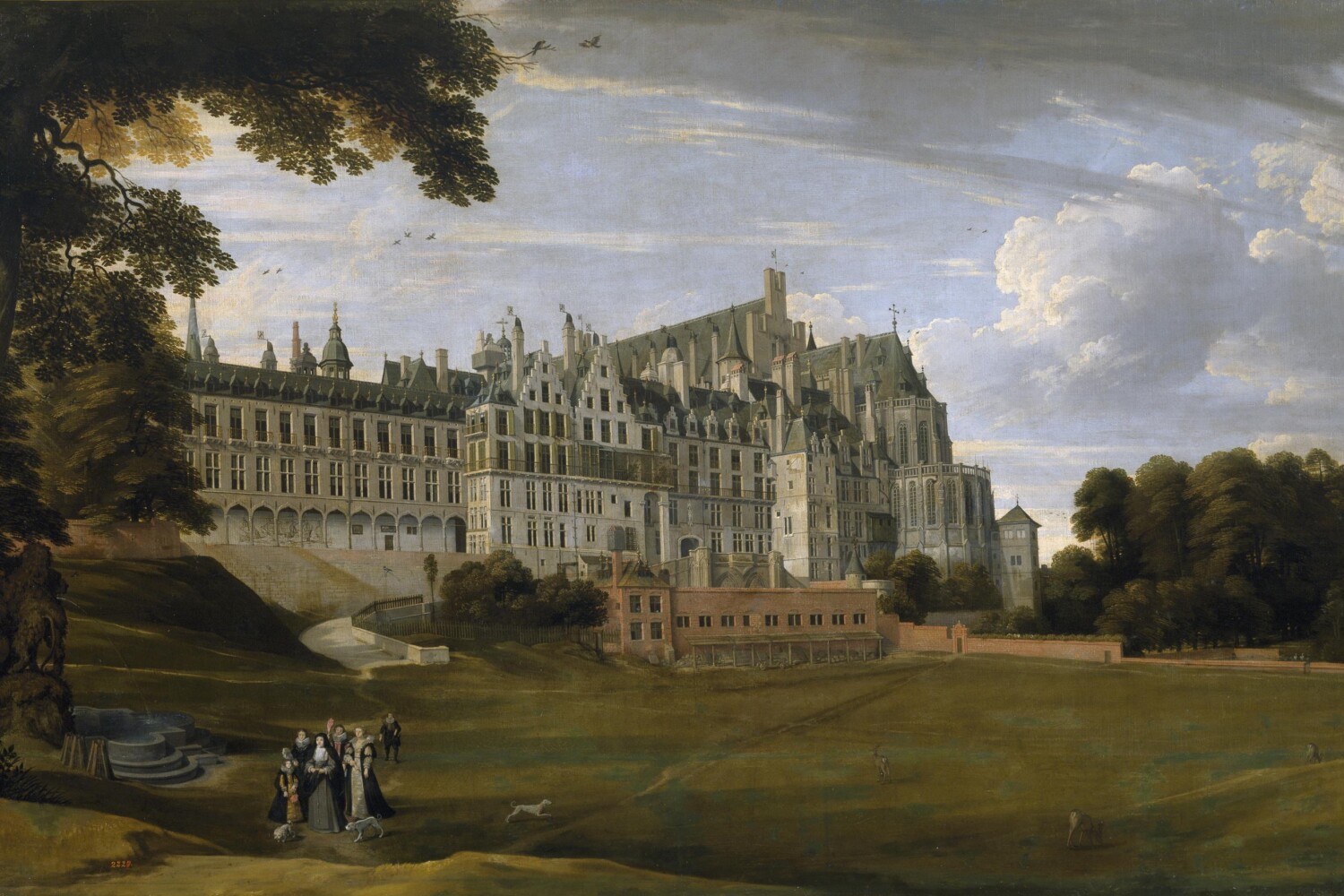
1627: “Het Paleis van Coudenberg” (The Palace of Koudenberg) by Jan Brueghel the Younger (1601-1678)
Jan Brueghel the Younger, son of Jan Brueghel the Elder and grandson of Pieter Bruegel the Elder, painted this magnificent painting of the Koudenberg Palace with the Warande in the foreground and the imposing palace rising in the background. The painting shows the expansive Gothic and Renaissance architectural complex of the imperial palace, including the prominent apse of the chapel built during the reign of Emperor Charles V.
What is interesting about this painting is the change of the mood from joyful to dark. Here, the Archduchess ‘Infante‘ Isabel Clara Eugenia (1566-1633), Governor of the Habsburg Netherlands, is walking in the Warande accompanied by a small retinue. She was probably out walking her three dogs.
After the death of her husband, Archduke Albert, in 1621, Isabella took vows as a tertiary nun in the Franciscan Order of the Poor Clares. She wore their simple monastic habit for the rest of her life, as can be seen here and in famous portraits by Peter Paul Rubens and Anthony van Dyck. Alongside Albert, Isabella actively supported the restoration and expansion of Catholic monasteries in Brussels after the destructive Calvinist Republic of Brussels (1576-1585). Although the Rich Clares were already established in Brussels since 1343, Archduchess Isabella much preferred the stricter and more orthodox regiment of the Poor Clares.
Compared to the painting of his father, Jan Brueghel the Younger’s version shows a woman in mourning. The joyful paradise in the previous scene has been replaced by a dark void.
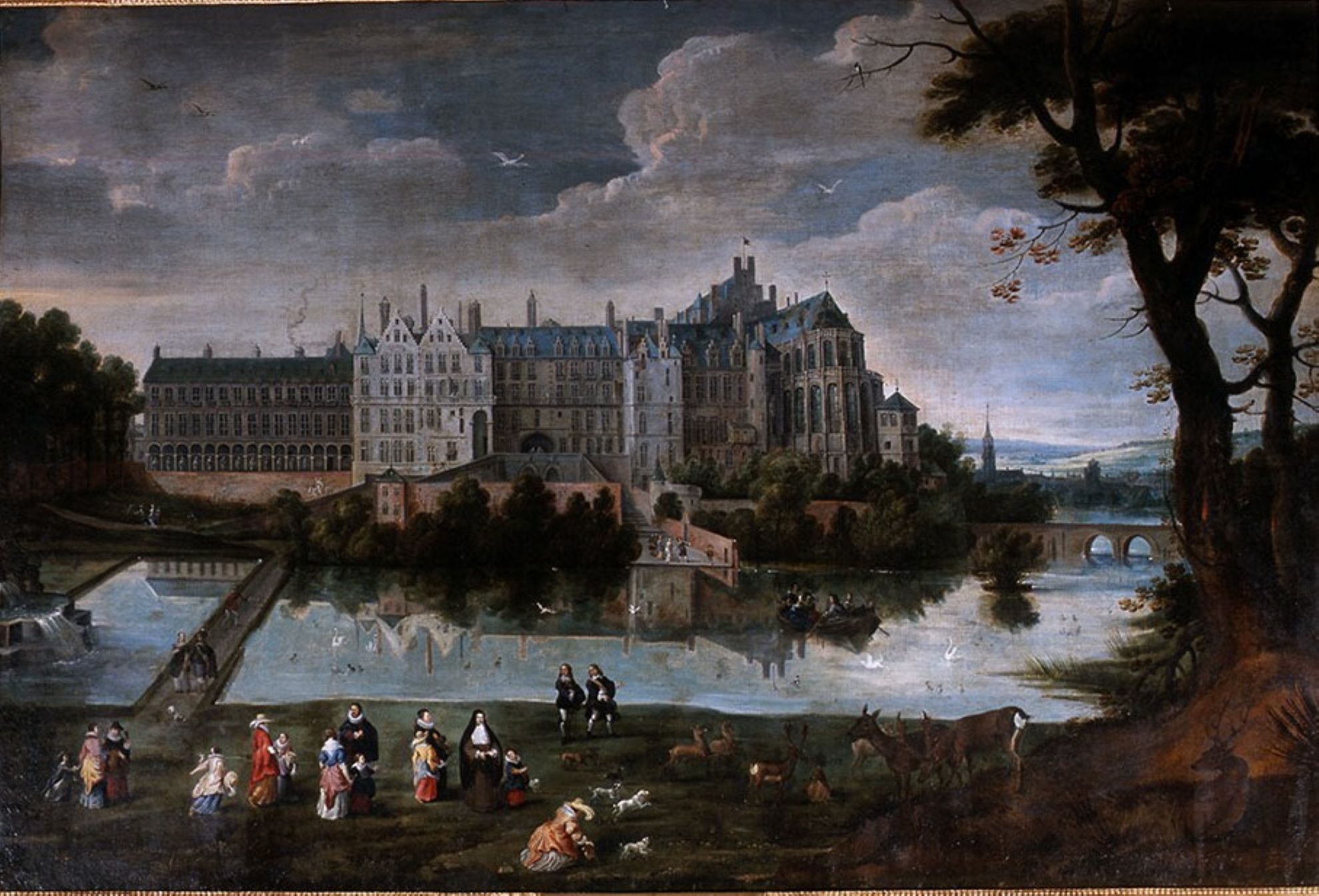
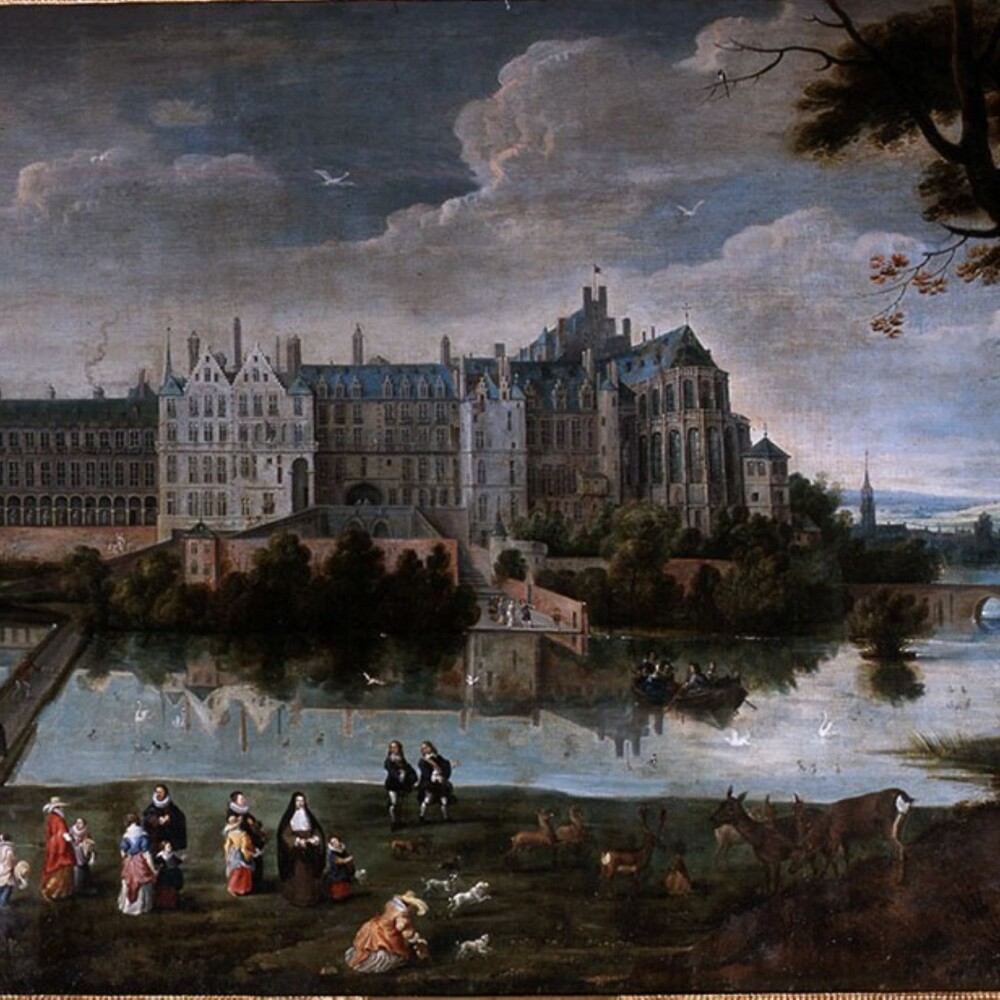
1624?-1633: “Infante Isabella in de tuinen van het voormalige paleis van de Hertogen van Brabant op de Coudenberg” (Archduchess Isabel in the Gardens of the Former Ducal Palace of Brabant on the Koudenberg) by Daniel Van Heil (1604-1662)
In this painting, Van Heil seems to have depicted an imaginary scene. Here, the Archduchess Infante Isabel, wearing the habit of the Poor Clares, is accompanied by figures from the French court — presumably the entourage of Marie de’ Medici. Between the lawn and the palace flows a large navigable river/lake, upon which a boat with several rowers can be seen, near a stone bridge with two arches, beyond which rise the old city walls. When looking at Butkens’ “Palatium Bruxellense Ducis Brabantiae“, it does look like there is a pond known as the “Clutinck”, but not as big as in this scene.
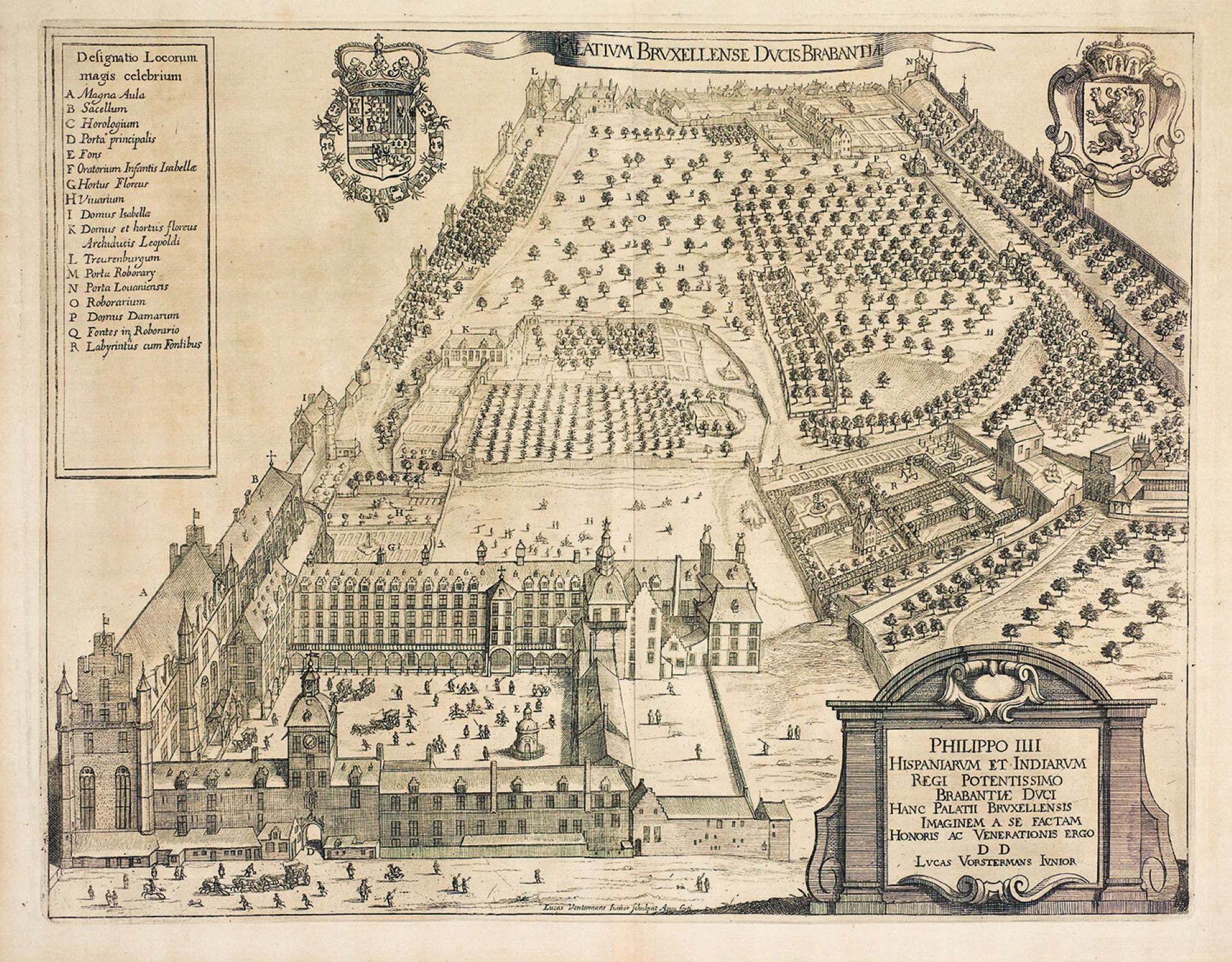
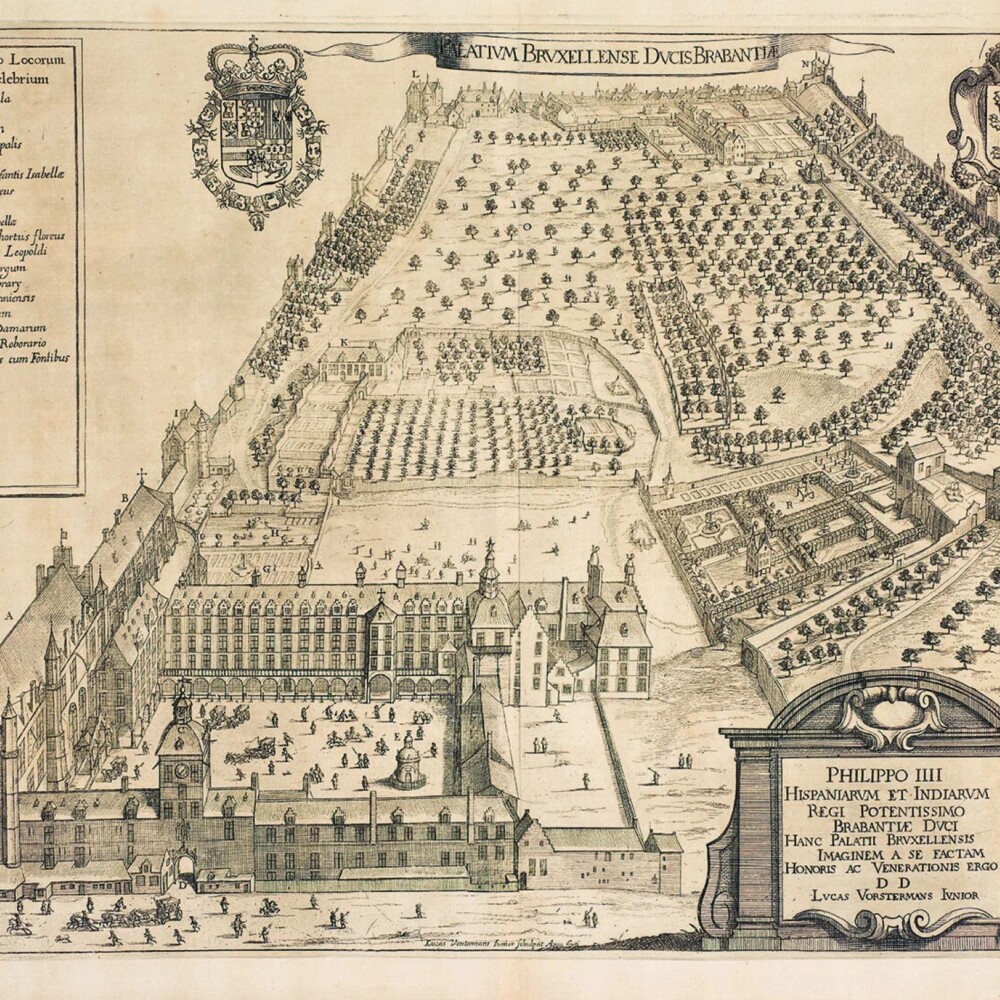
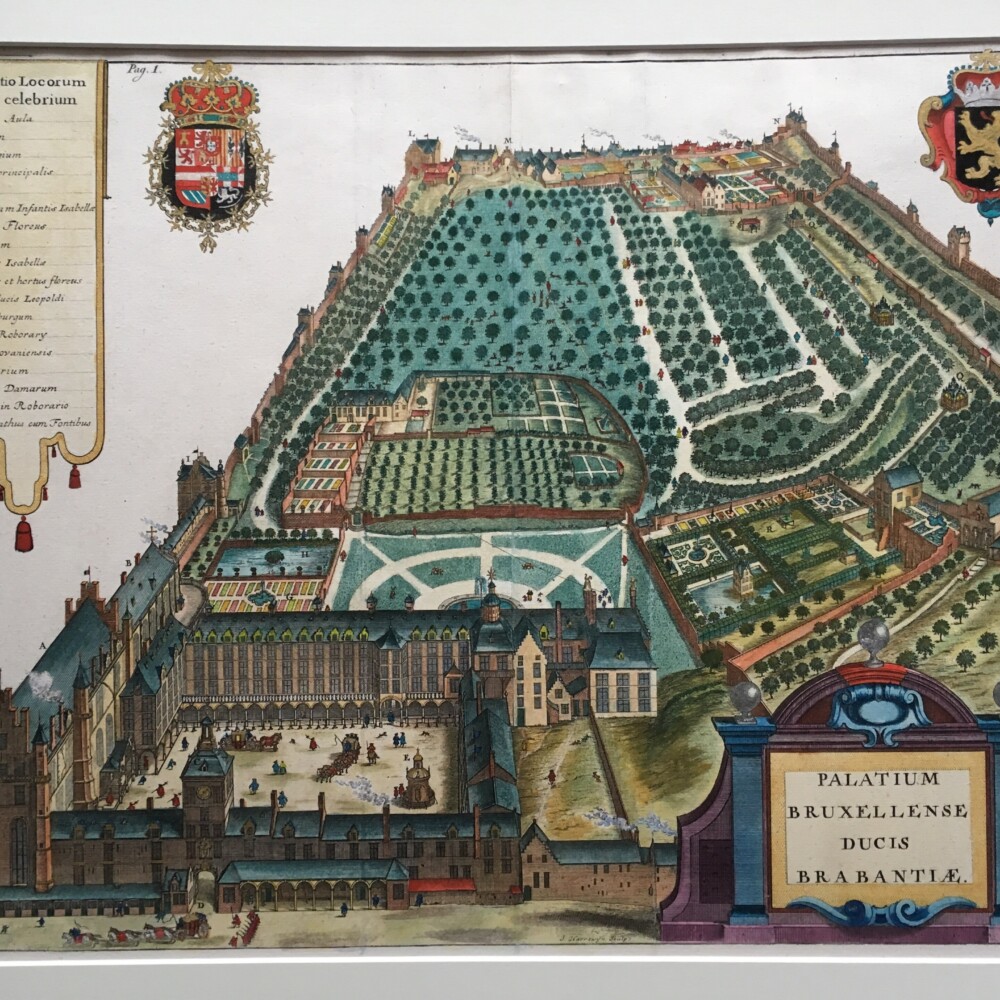
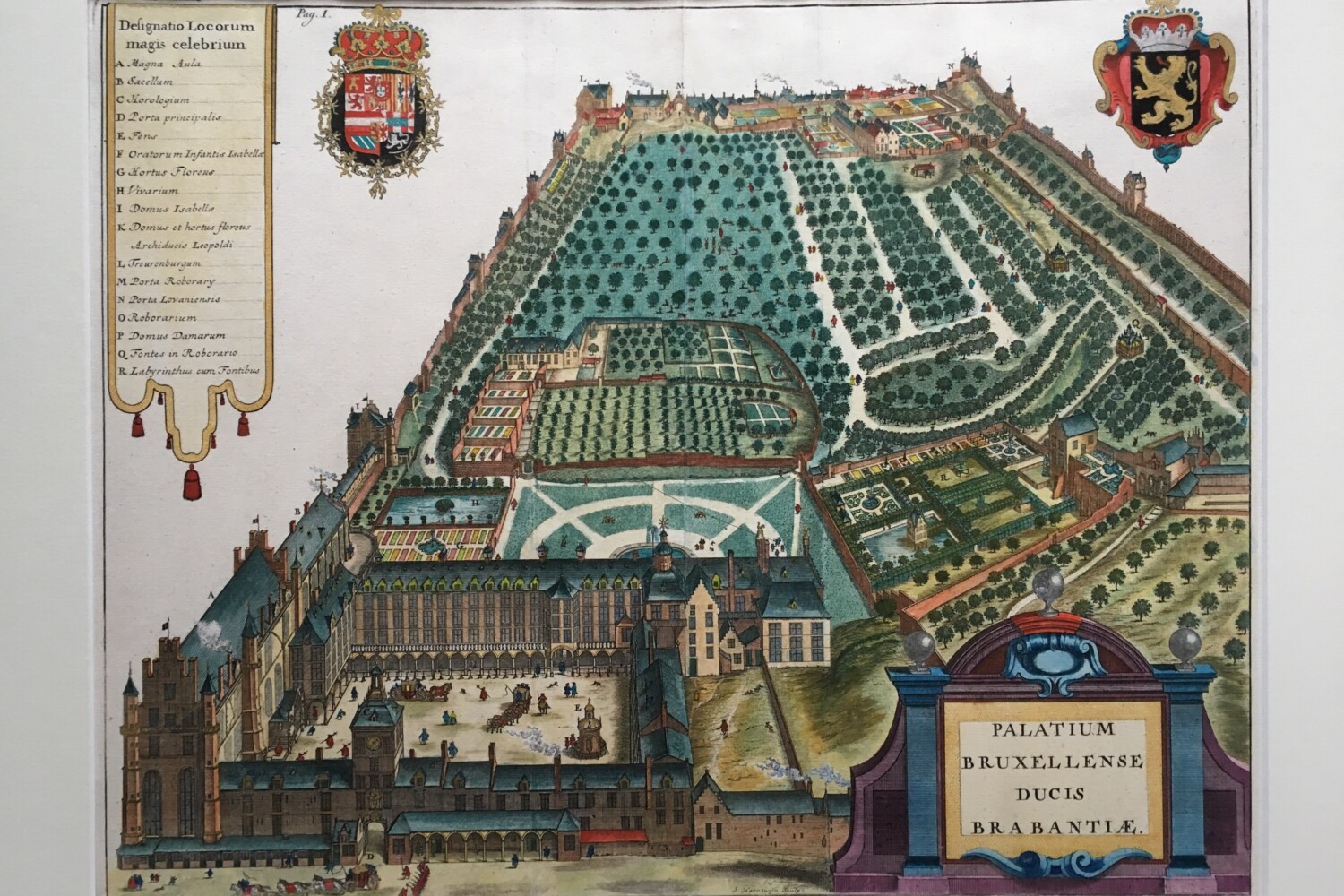
1659: “Palatium Bruxellense Ducis Brabantiae” (The Brussel Palace of the Duke of Brabant) by Lucas Vorsterman II (1624–1666/1676)
Lucas Vorsterman the Younger inherited his engraving trade from his father who worked with renowned Netherlandish painters such as Peter Paul Rubens and Anthony van Dyck. His work “Palatium Bruxellense Ducis Brabantiae” (The Brussel Palace of the Duke of Brabant), His bird’s eye view engraving of the ducal palace together with the Warande, was dedicated to “Philippo IIII“. This would be King Philip IV of Spain, also King Philip III of Portugal, and Duke Philip V of Brabant and Lord of Habsburg Netherlands. Here, one can see the development of the Warande in the 17th century, with more gardens and orchards put in place.
As can be seen in Jan Bruegel I’s painting, the Warande was teeming with a wide variety of fauna. It was home to pheasants, partridges, quails, ducks, black grouse, bustards, peacocks, fallow deer, roe deer, and even camels! In 1603, there were 244 fallow deer, for which a ‘Domus Damarum‘ (fallow deer house) was built on the eastern side of the grounds. You can see this in Vorsterman and Butkens’ panoramic engravings. The ‘Domus Damarum‘ is marked by ‘P’ in the top right corner of the walled grounds of the Warande.
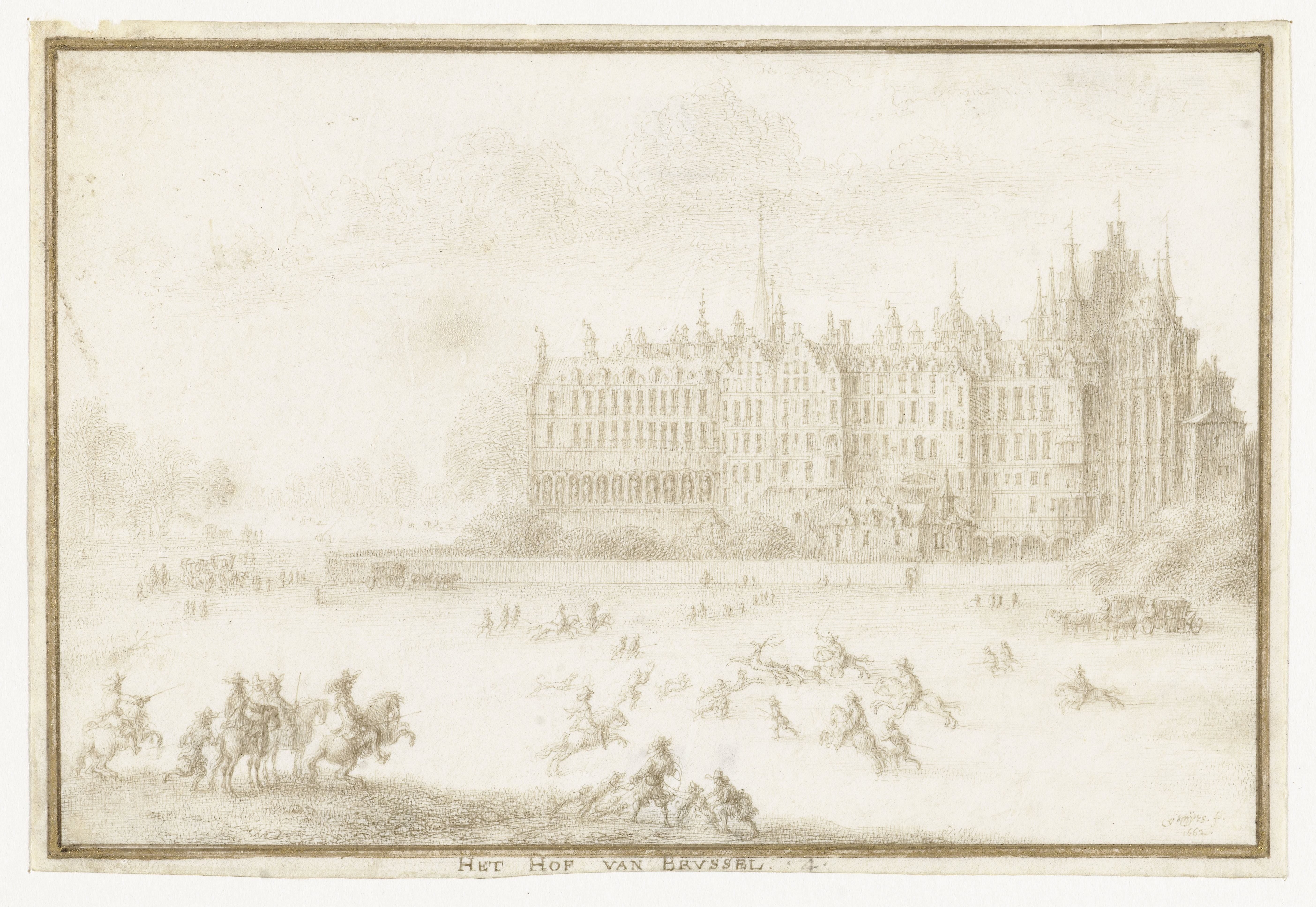
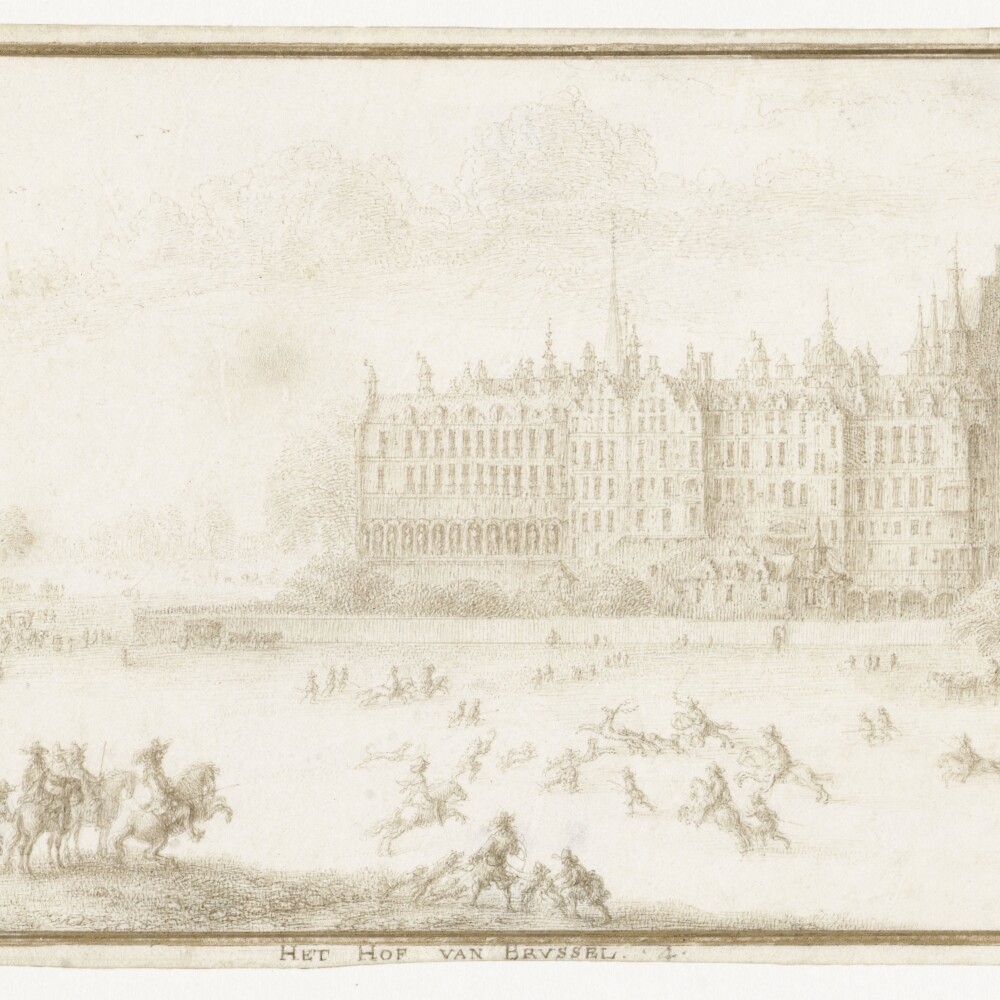
1662: “Het Hof van Brussel” (The Court of Brussels) by Gillis Neyts (1618/1623–1678)
This fantastic drawing depicts the middle of a deer hunting session in the Warande. It is filled with action, with dogs chasing around and men on horses. It was drawn by Gillis Neyts (also known as Aegidius Neyts) who was a 17th century Netherlandish landscape artist who is now mainly known for his italianising and topographical drawings of sites throughout the Southern Netherlands.
This would have been the rule of Duke Philip V of Burgundy but more commonly known nowadays as King Philip IV of Spain. His reign saw the bloody Thirty Years’ War (1618-1648), and the Habsburg Netherlands experienced a very different ruler from the Archdukes Albrecht and Isabella.
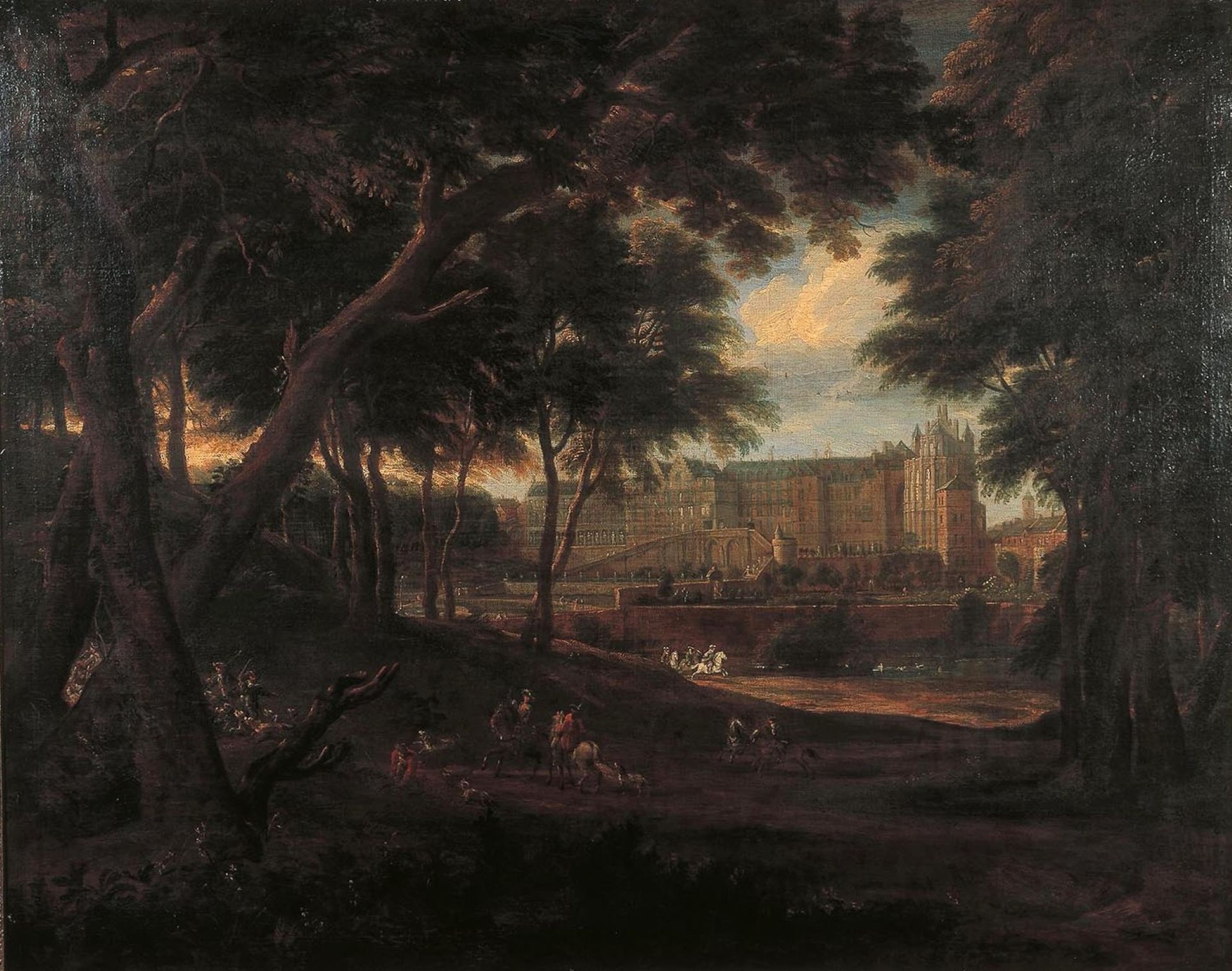
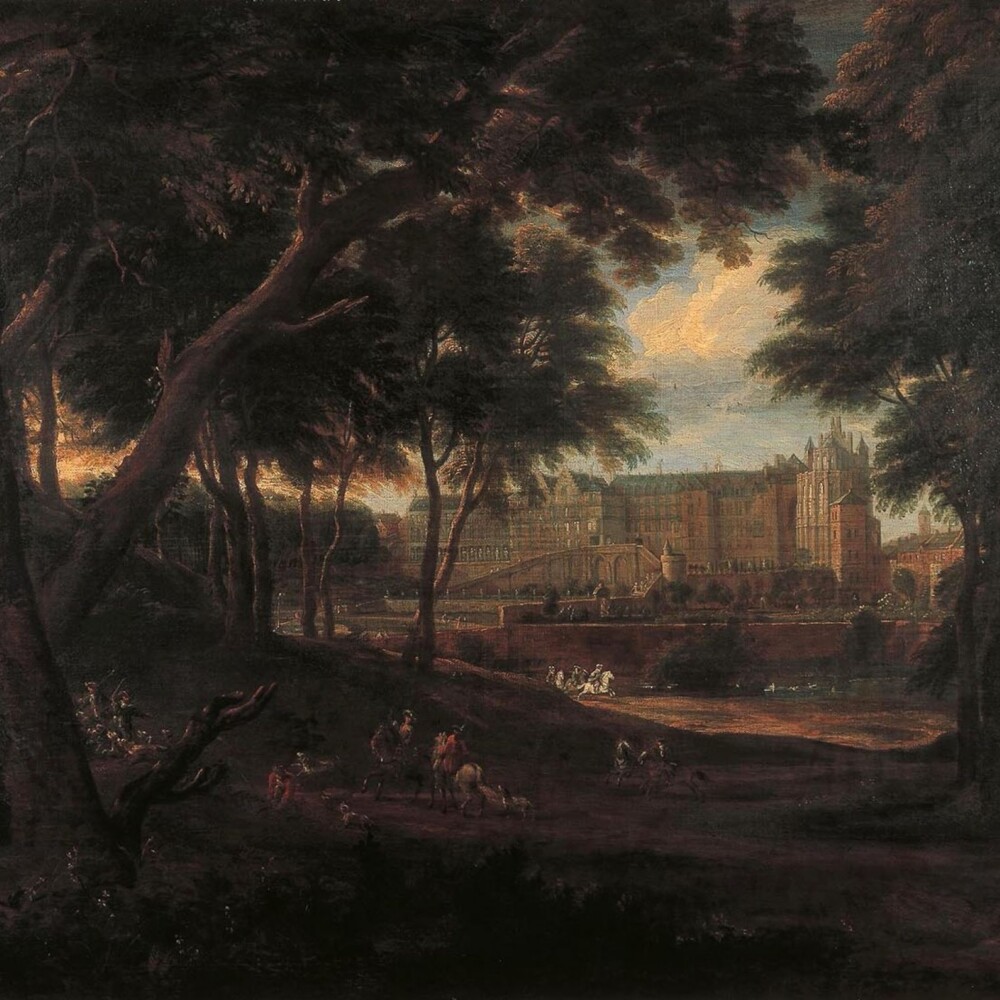
1667: “Jachtpartij in de warande” (Hunting Game in the Warande) by Ignatius van der Stock
The same hunting scene in the Warande is painted by Ignatius van der Stock. This time round, the leisurely gardens perused by the Archdukes are still present, so is the imposing ducal palace. Yet the focus is on the action in the foreground, with a hunt going on reminiscent of the drawing by Gillis Neyts.
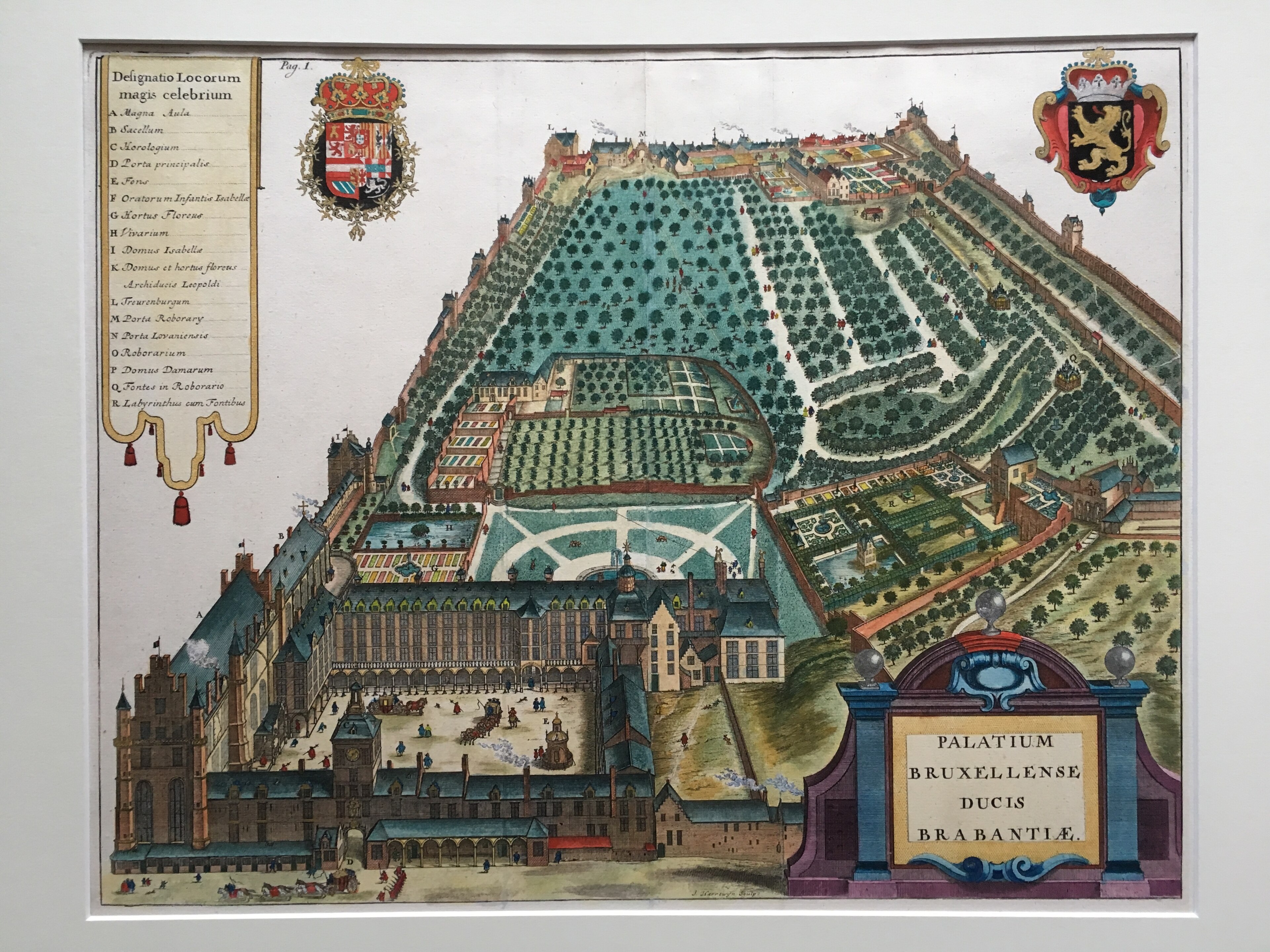
1726: “Palatium Bruxellense Ducis Brabantiae” (The Brussel Palace of the Duke of Brabant) by Christophorus Butkens (1590-1650)
Vorsterman II‘s scene was then copied by Christophorus (Christophre/Christophe) Butkens in his ‘Supplement aux Trophees tant sacres que profanes de Duche de Brabant’ – with some updates – published in The Hague by Chretien van Lom in 1726. This is part of the second and most lavish edition of this work with many copperplate engravings as opposed to the first edition with mostly woodcuts. This is an important work on history and genealogy of the Duchy of Brabant. Apparently the work is known for its wealth of information but also many blunders. This particular plate was made by Jacobus Harrewijn directly copying Lucas Vorsterman II.
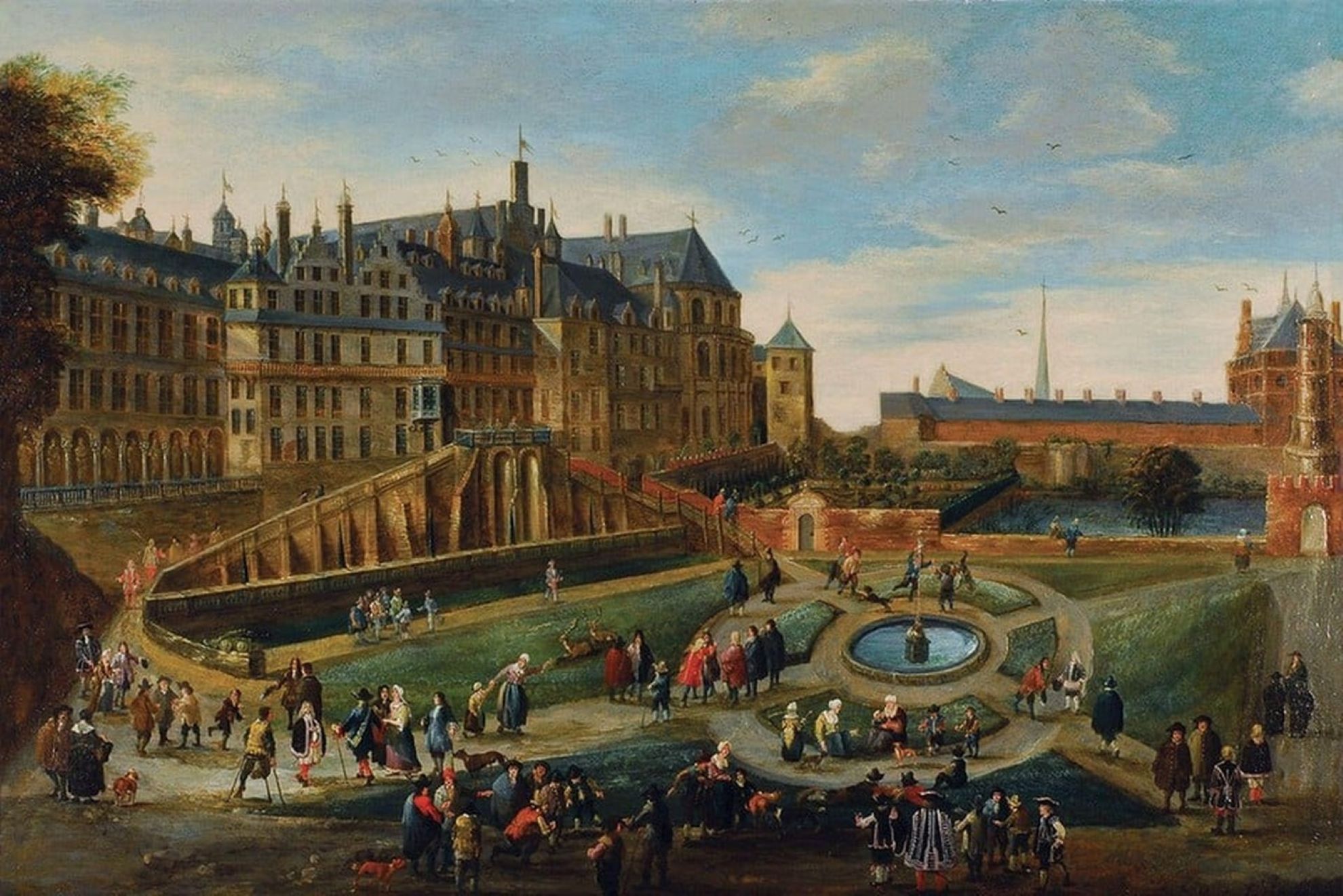
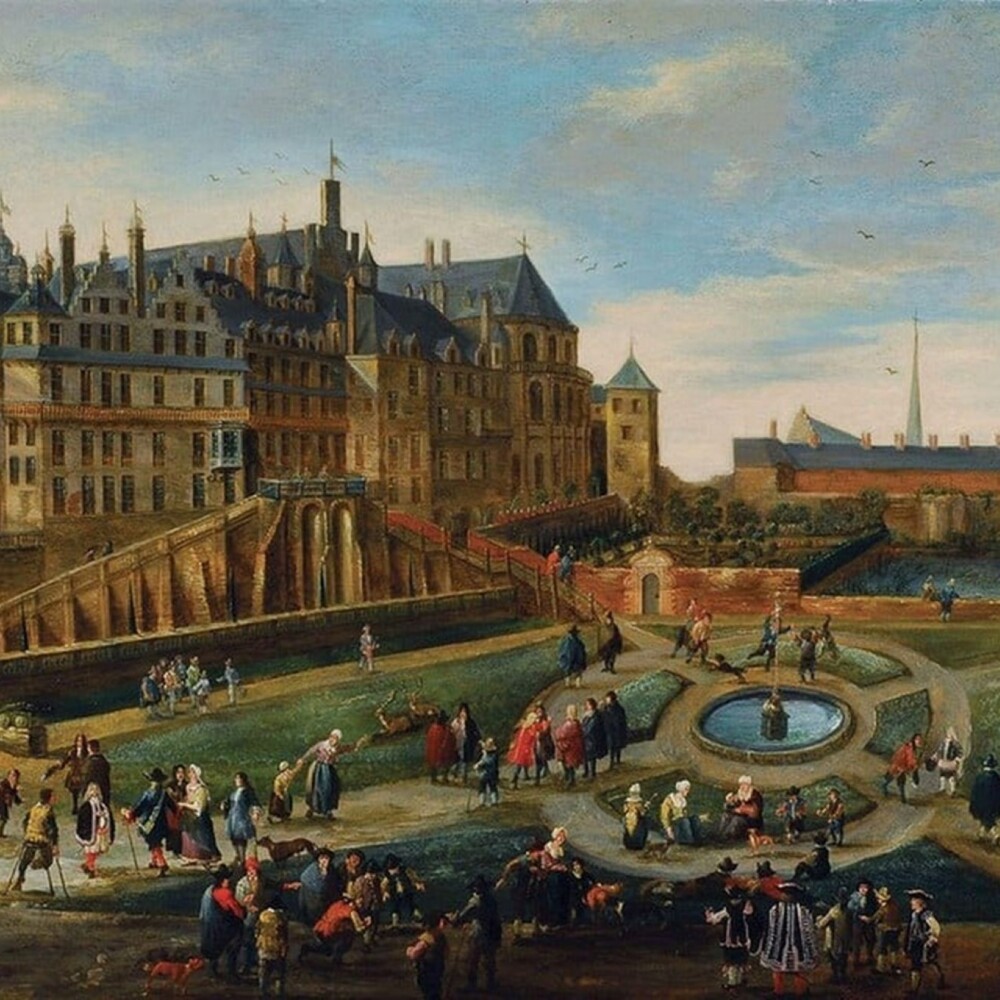
1726: “De tuin achter het paleis van de Hertogen van Brabant op de Coudenberg” (The Garden behind the Palace of the Dukes of Brabant on the Koudenberg) by Andreas Martin (1699-1763)
This 18th century painting features the garden part of the Warande closest to the palace. Similar to its depiction in Butkens’ overview, this elaborate garden replaced the “kaatsbaan” ball court and jousting grounds. Close to the ducal chapel lay the Clutinck pond, adjacent to a flower garden featuring a fountain, rose bushes, and a variety of herbs. In the 17th century, a large, circular basin with a fountain was also constructed here.
From Huntings Grounds to Public Park
Tragedy struck on the night of 3 February 1731. The Koudenberg Palace fell victim to the flames. The fire originated in the kitchens, where confectionery was being prepared for an upcoming ball. In the aftermath, the full scale of the disaster became apparent; even the Warande was not spared. A lack of funds made even a partial reconstruction of the severely damaged palace and its gardens an impossibility.
The palace and the park remained in ruins until, on the occasion of the 25th anniversary of the inauguration of Charles Alexander of Lorraine as Governor-General of the Habsburg Netherlands, the Estates of Brabant proposed erecting a statue in his honour. Georg Adam von Starhemberg, the plenipotentiary minister of Habsburg Empress Maria Theresa, suggested placing the statue in front of the ruins, which were to be cleared away. At the same time, he proposed enlarging the square, developing it with buildings in a consistent style, and restoring the park. On 1 July 1775, the Empress granted her conditional approval, stipulating that the city of Brussels would have to bear the costs. Following rigorous negotiations, two agreements were concluded on 10 May 1776 — one concerning the square and the other the park. The city was to level the ground for the creation of the park and three adjacent streets: the Koningsstraat (Rue Royale) [which traces the western walls of the Warande which were the inner city walls], the Brabantstraat (Rue de Brabant) — now the Wetstraat (Rue de la Loi), and the Hertogstraat (Rue Ducale). The government, for its part, would undertake the actual development of the park.
The idea was to transform the former ducal hunting grounds into a public promenade.
The project was designed by architect J.B.V. Barré in 1775, and subsequently realized under the supervision of French-born architect Barnabé Guimard. It encompassed the creation of a symmetrical design — featuring a “patte d’oye” (goose-foot) layout intersected by two cross-avenues — as well as the four surrounding streets: Koningsstraat (to the west) and Hertogsstraat (to the east), along with their connecting cross-streets; Brabantstraat (to the north, now Wetstraat); and Blysichtstraat (to the south, now Paleizenplein), which included the former Heraldiekstraat.
At the same time, this redevelopment of Warande Park coincided with the construction of the Koningsplein (Place Royale), which began in 1775 atop the ruins of the old ducal palace. The buildings along the edge of the park were designed and constructed in the same Louis XVI style as those on the Place Royale.
The transformation of the Warande took place between 1776 and 1783.
The Clutinck pond (near the balustrade of today’s Hôtel Errera) was filled up. Much of the ground first had to be levelled, because it was after all a valley and forested hunting grounds: 1,218 trees were felled to create new avenues that connect the Koningsplein (Place Royale), the Paleizenplein (Place des Palais), the Palace of the Nation, and the Troonplein (Place du Trône). By 1777, a new road called Koningstraat (Rue Royale) along the inner west wall of the Warande was constructed as far as the Leuvenseplein (Place de Louvain), and in 1780, a basin was built in front of what is now the Palace of the Nation.
By 1783, the transformation was complete. From then on, the Park of Brussels has remained much of its appearance until today.
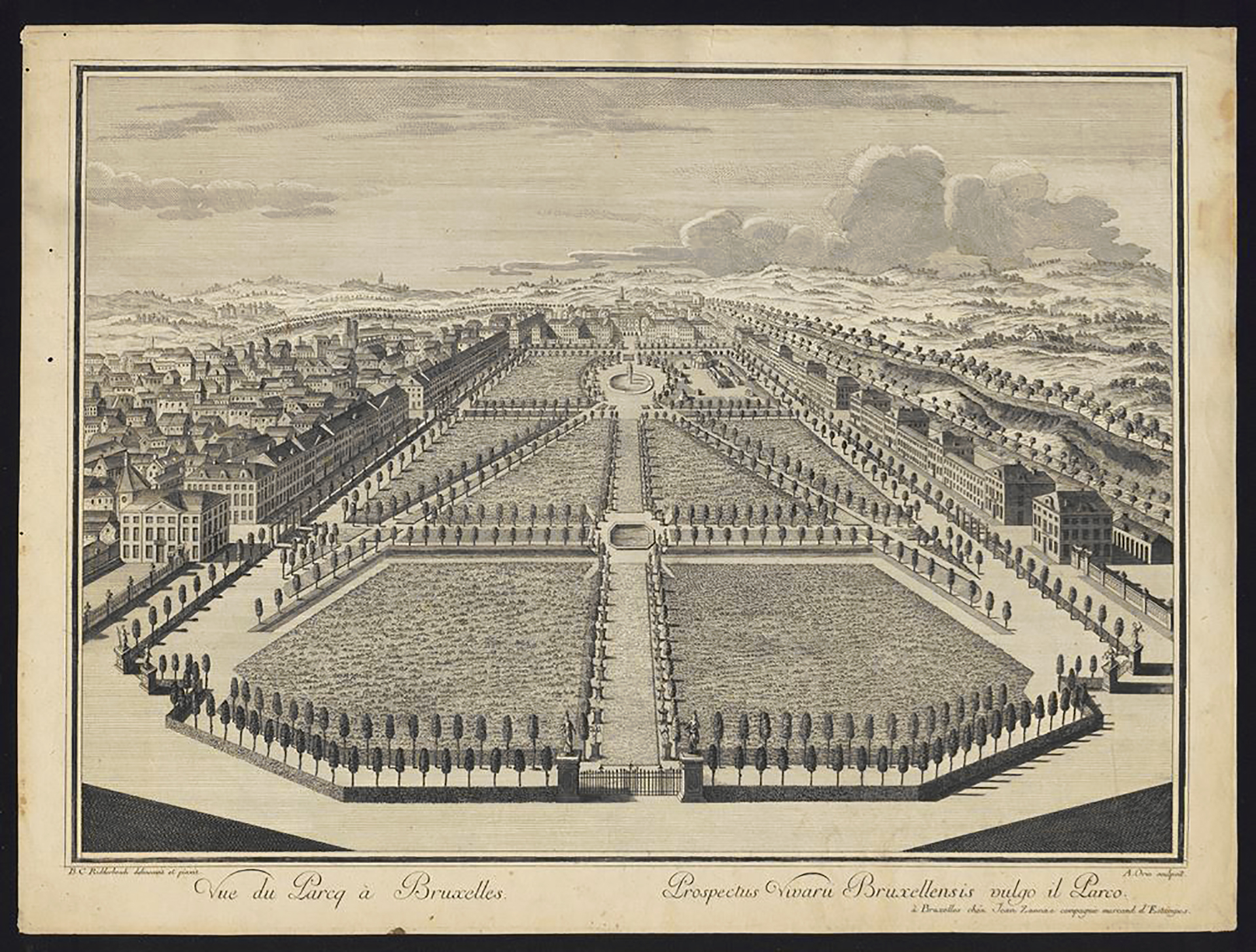
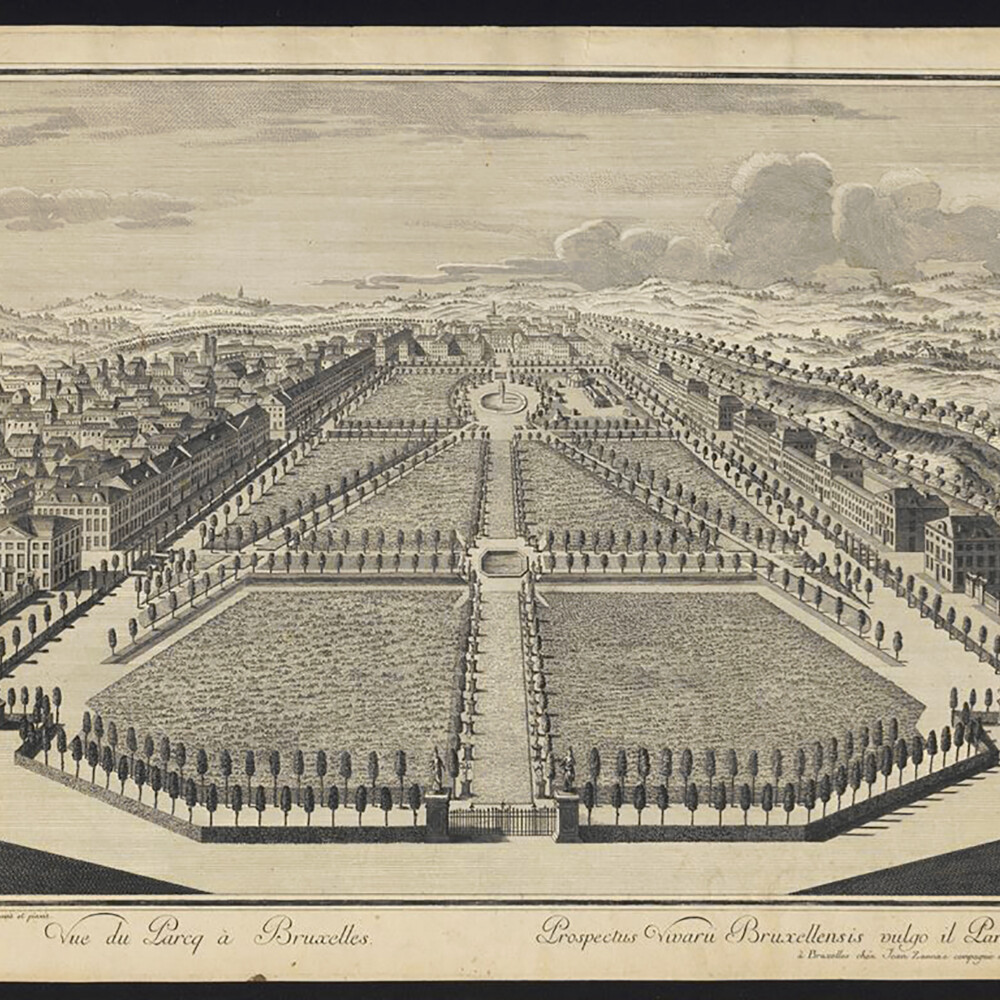
1783-1785: “Vue du Parc à Bruxelles” (View of the Park in Brussels)by Bernard Auguste Ridderbosch (1740-1790)
This drawing was made by Bernard Auguste Ridderbosch (1740-1790), engraved by Ambrogio Orio (1737-1825). Over the years, the park has undergone various additions and minor modifications; nevertheless, it has largely retained its original layout to this day. Compared to its former self, the Warande is now surrounded by buildings. The buildings around the park were constructed during the same era and in the same neoclassical style, including the Palace of the Nation, Hôtel Errera, 16 Rue de la Loi, and the Lambermont. To the east, the whole EU quarters of today from Arts-Loi to Schuman was all but the countryside.
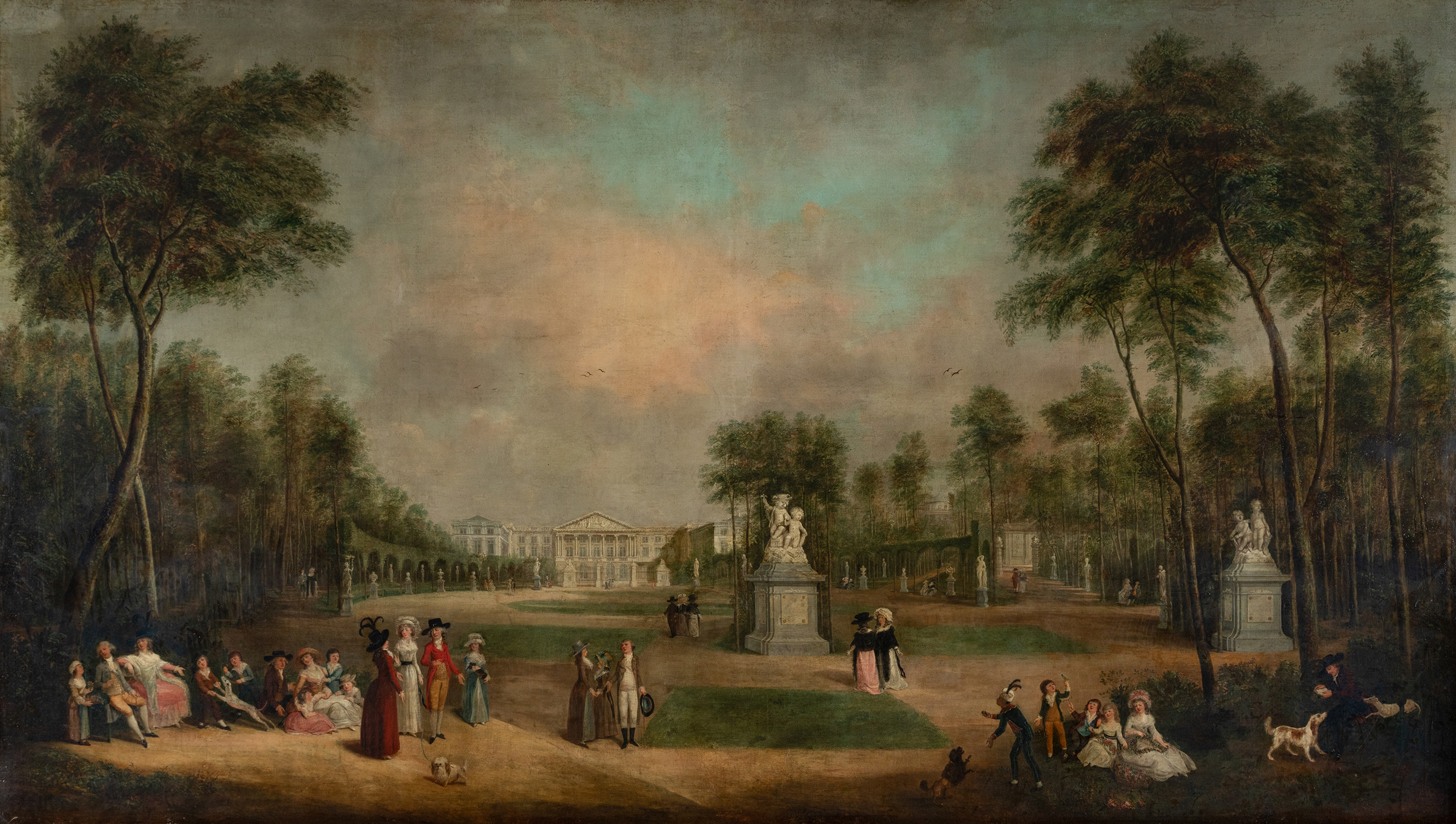
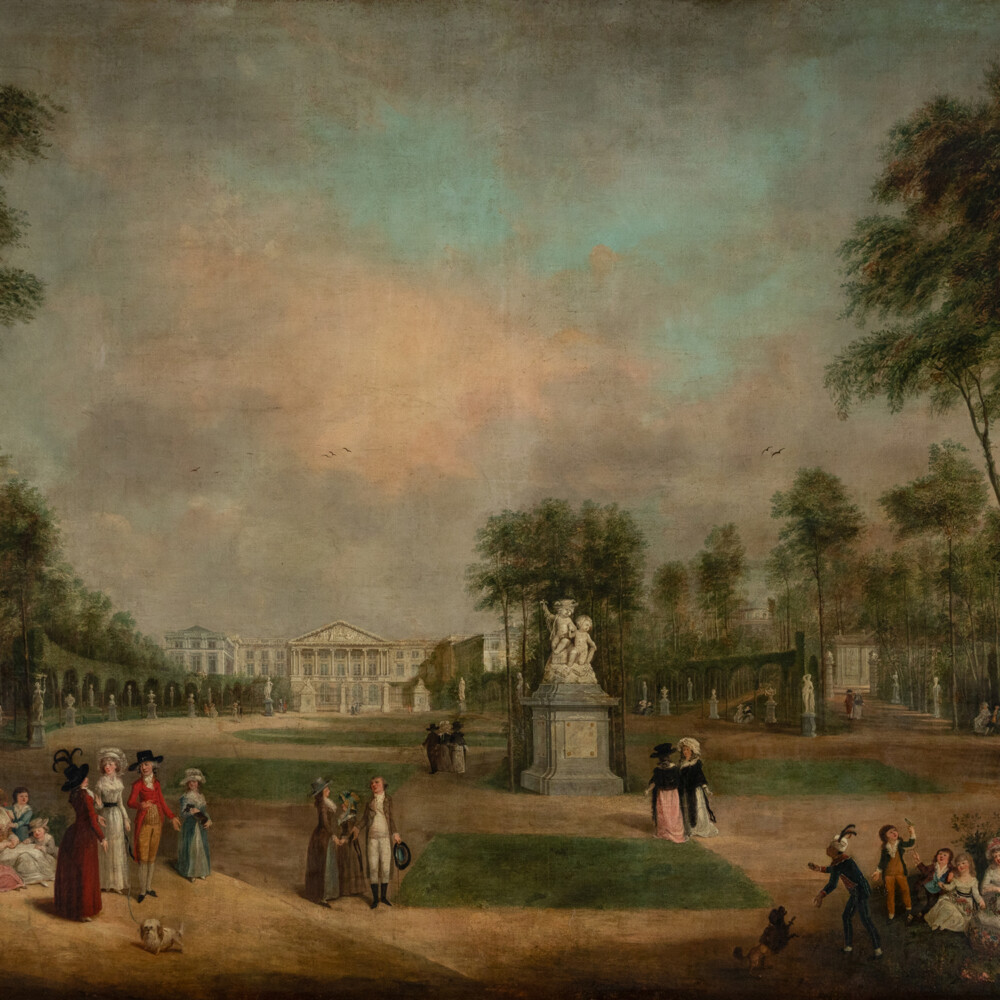
1789: “Le parc de Bruxelles et le Palais du Conseil du Brabant” (The Park of Brussels and the Palace of the Council of Brabant) by Aurèle-Augustin Simons
This painting shows life of the Habsburg rulers in the newly laid out Warande in neo-classicial style of the time. This same year, a revolution would break out in France which will soon lead to the occupation of the Habsburg Netherlands by the French. The painting by Aurèle-Augustin Simons is half of the pair – the other showing the hunting grounds of the Palace of Schoonenberg, the original name of the Palace of Laeken. The pair used to hang in the Court of Lannoy owned by the noble family de Ligne.
Current situation
The ‘Bas-fonds’: the gay ol’ Warande is still here
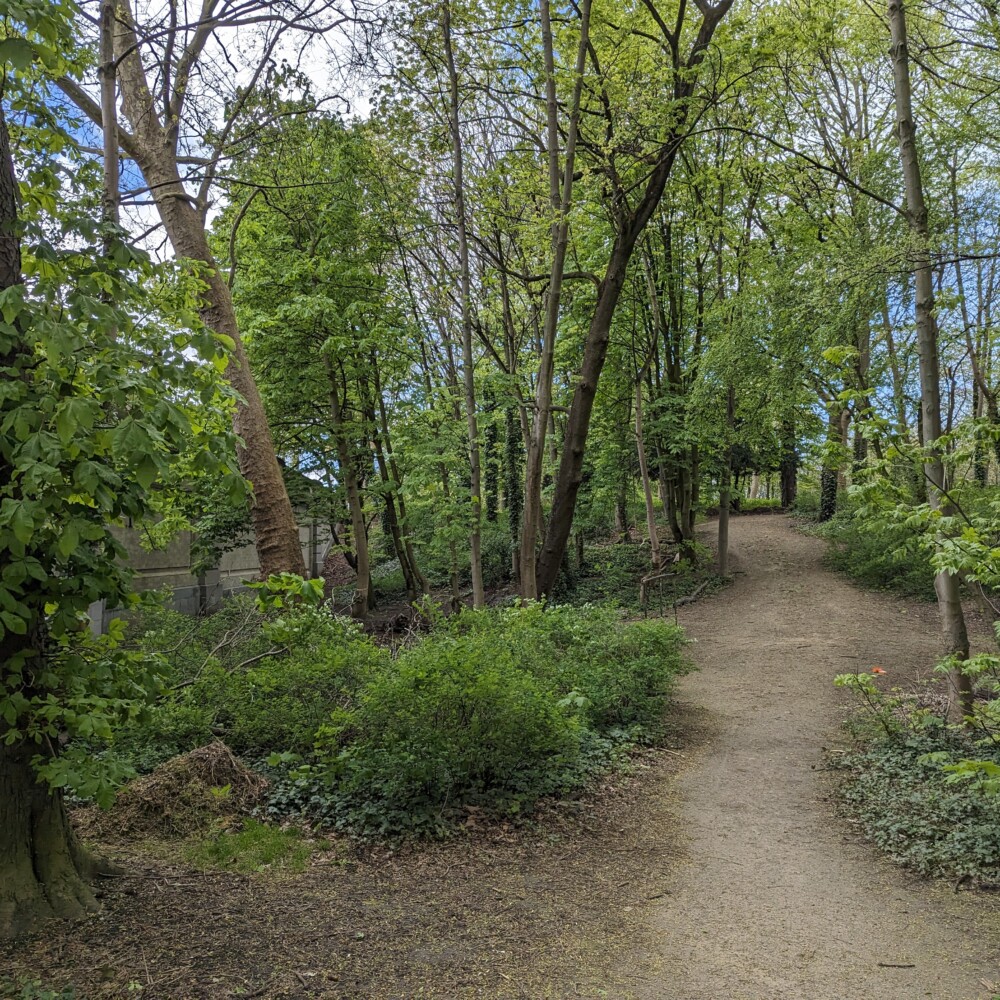
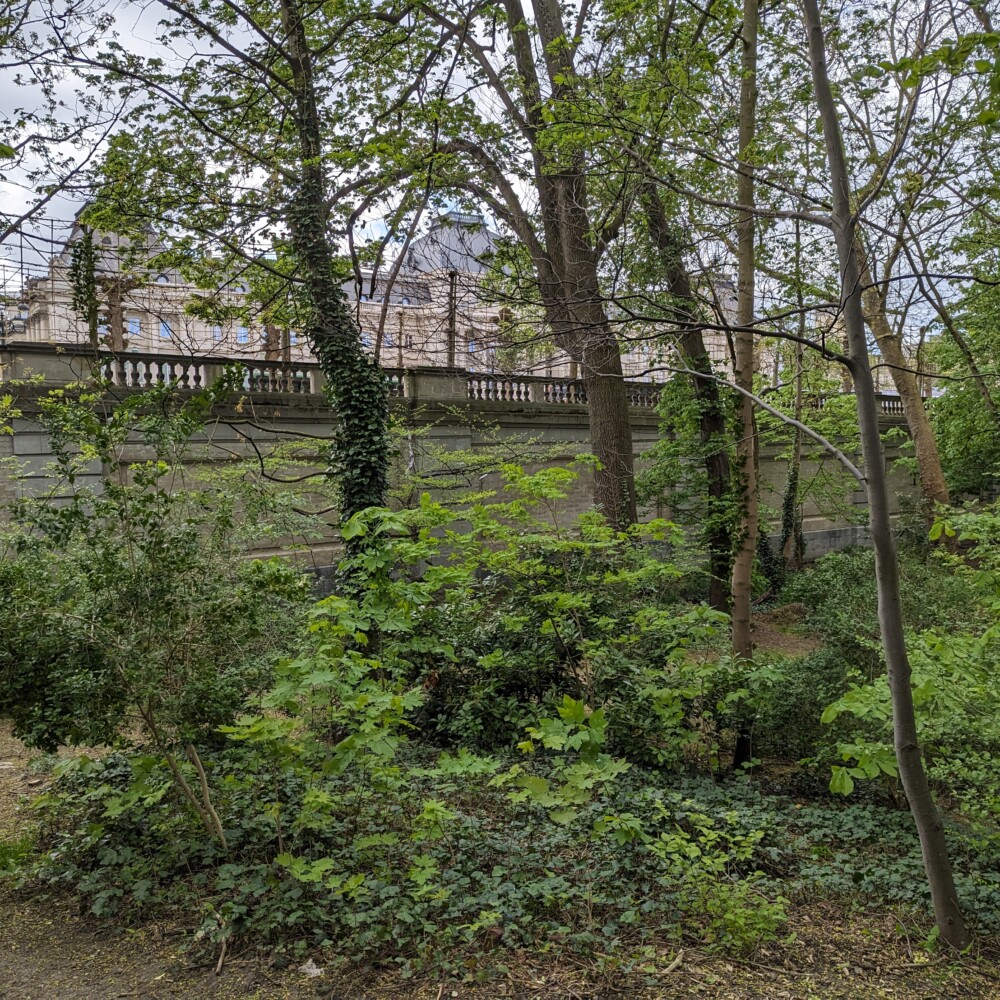
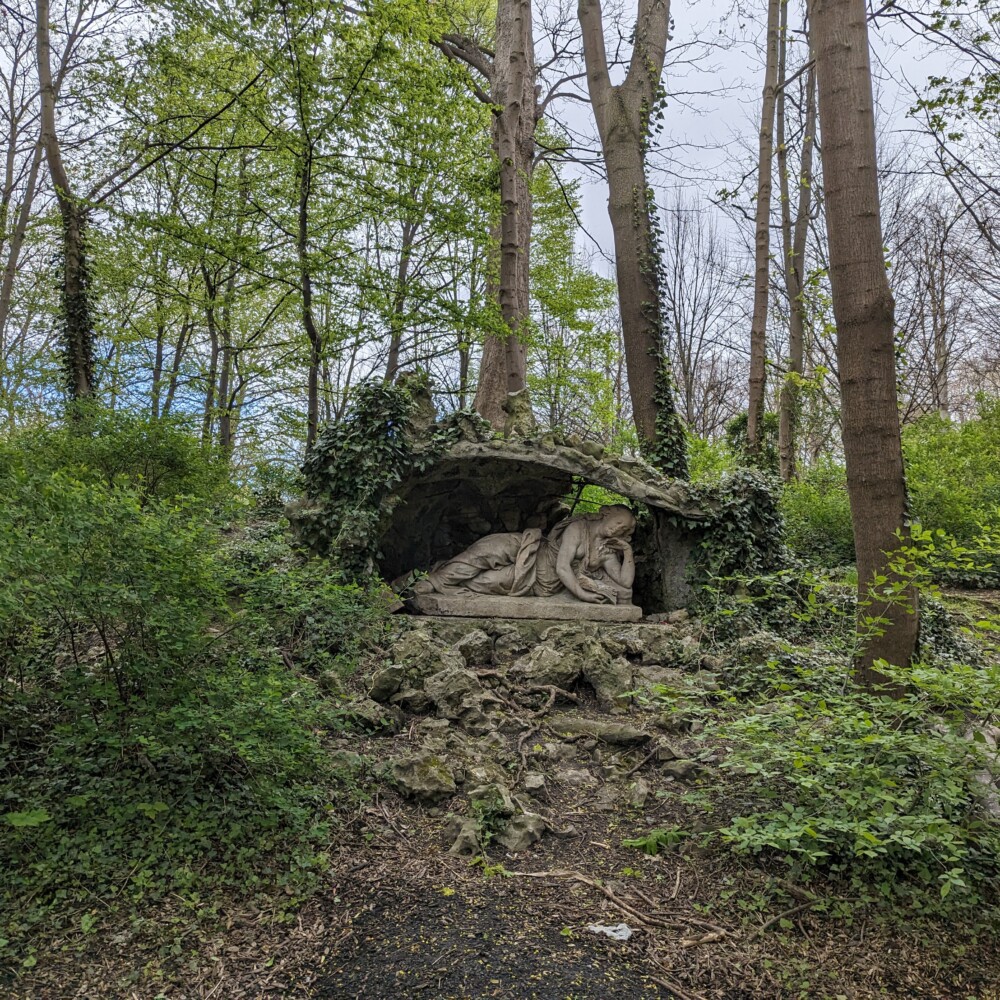
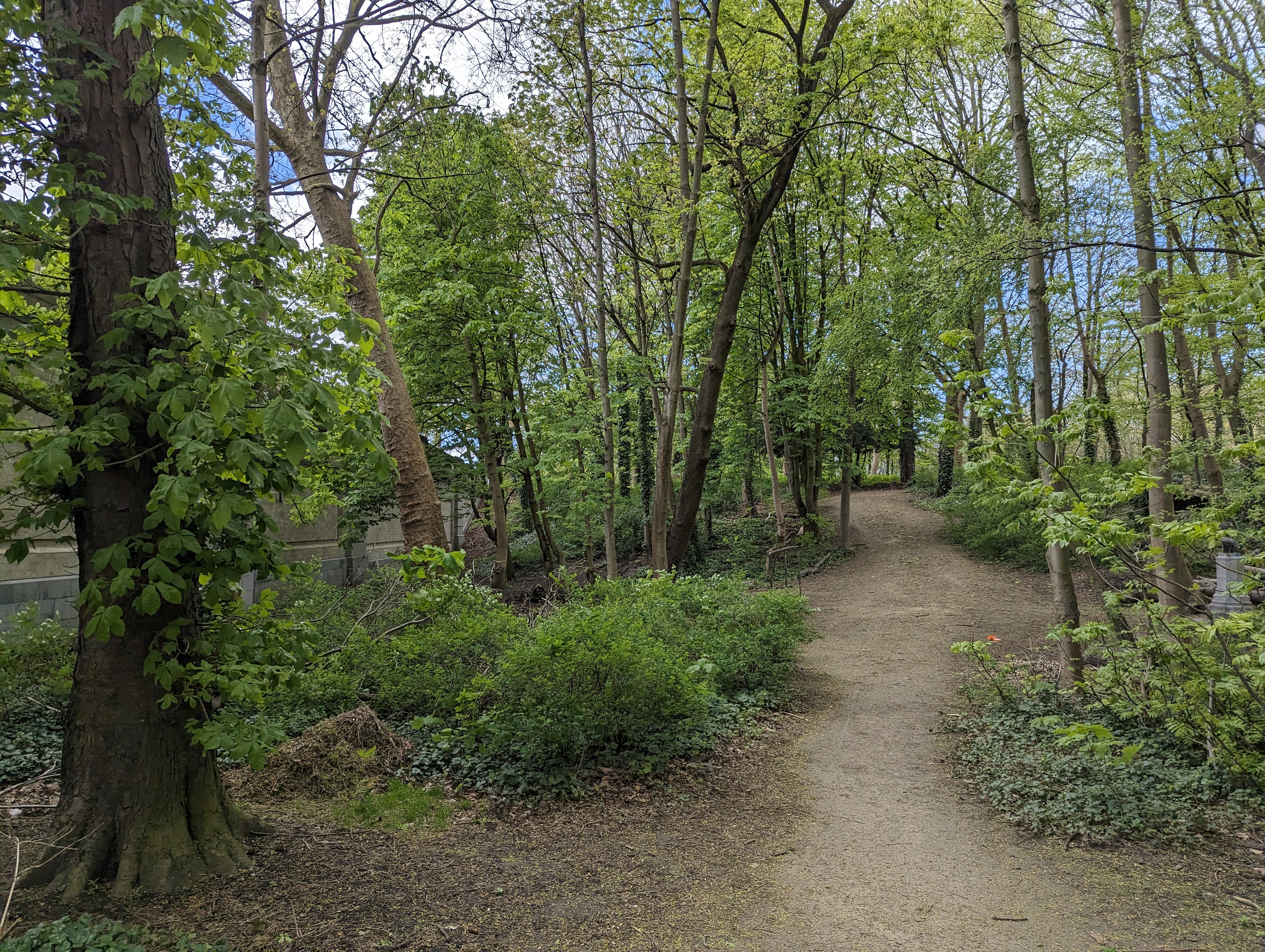
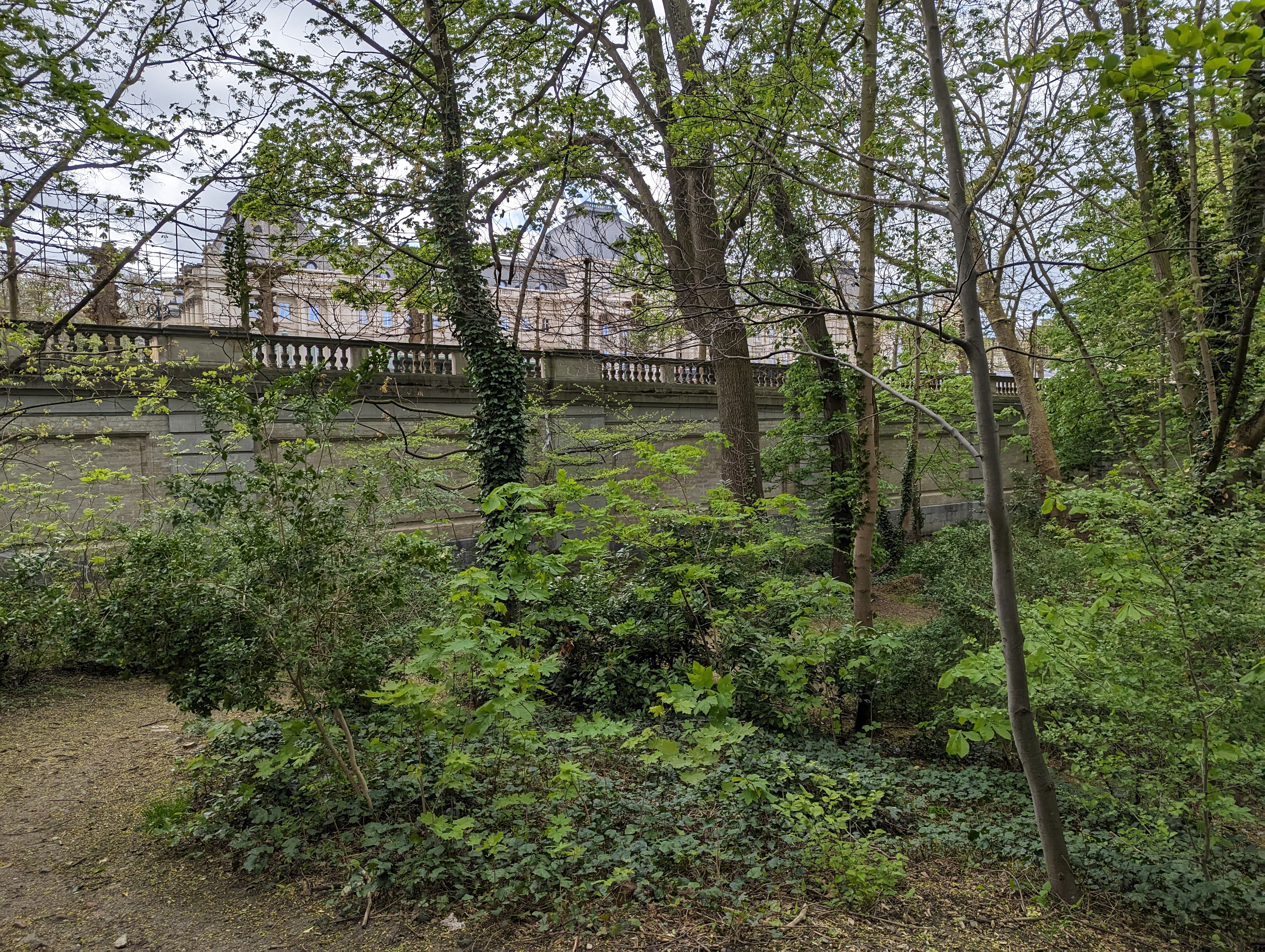
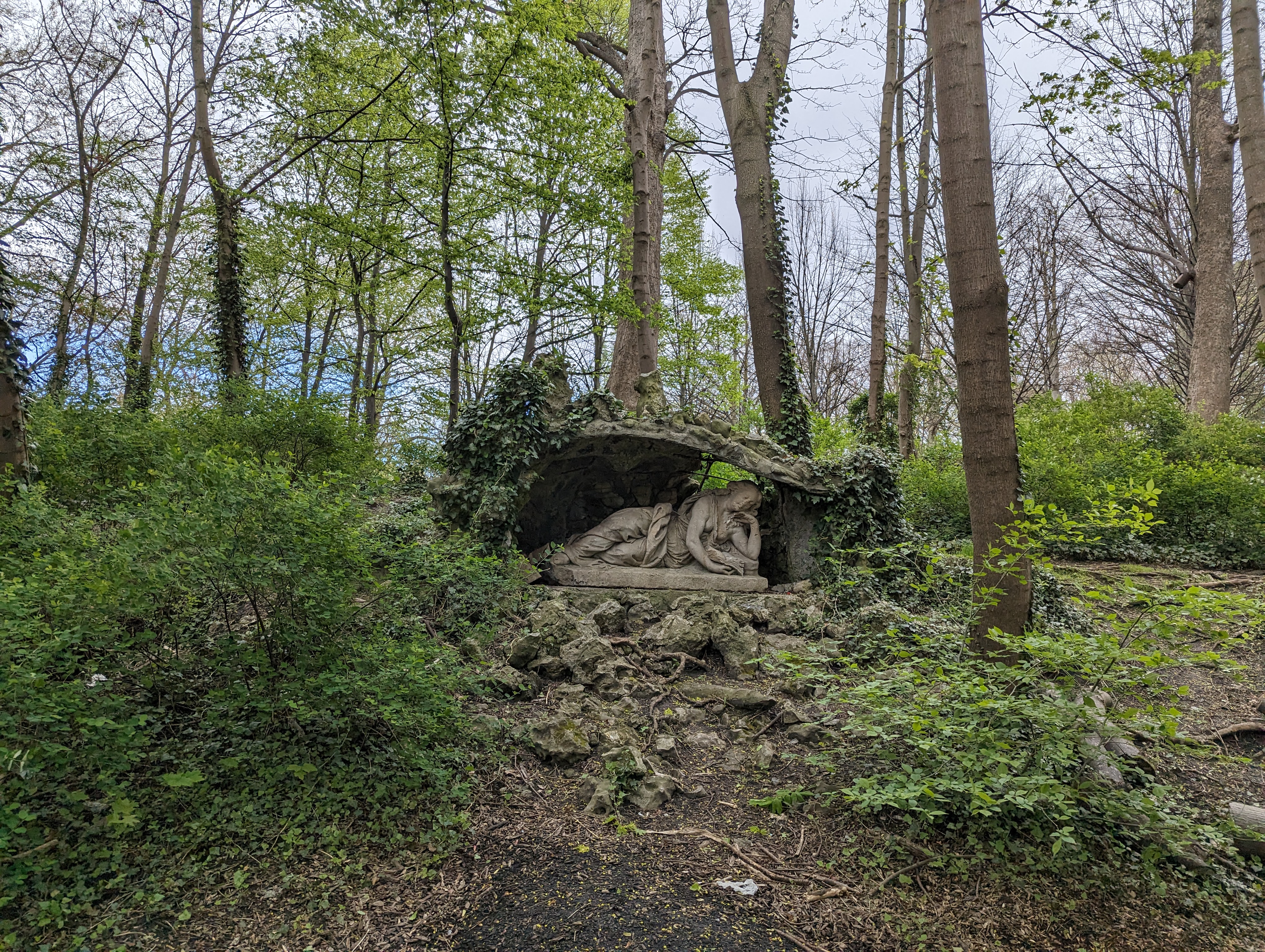
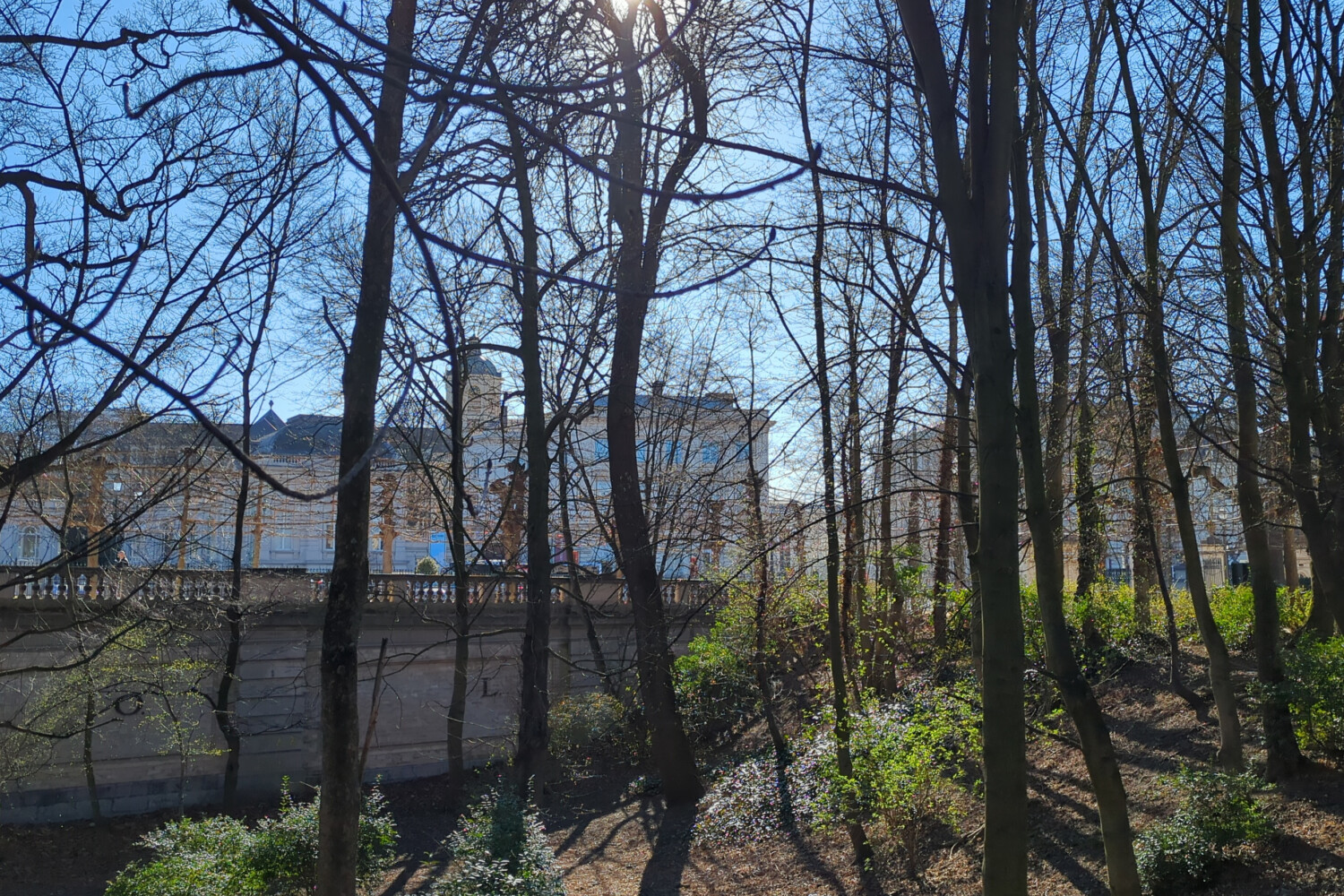
On the side of the Paleizenplein (Palace Square) lie two sunken, overgrown sections of the park, each eight meters deep. These are remnants of the old Warande — the ‘bas-fonds‘ — which were not covered over during the construction of the new park. The sheer scale of such an undertaking evidently deterred the square’s designers. Consequently, these ‘bas-fonds’ were repurposed as English-style gardens and fenced off.
In 1830, they served as a refuge and infirmary for wounded soldiers of the United Kingdom of the Netherlands, who were under attack in the park by French forces and a rabble incited by French agitators. Over time, the ‘bas-fonds’ gained a reputation as gay men’s cruising grounds where activities took place that shunned the light of day and deeply offended public morality — a reputation they maintain to this day! This notoriety eventually led to their closure to the public.
The retaining wall and balustrade bordering the ‘bas-fonds’ were designed in 1907 by Henri Maquet, the court architect to King Leopold II of Belgium. Despite protests from the city administration, Maquet had conceived a plan to further expand the Palace Square at the expense of the park. Three years earlier, the square had already been enlarged by 30 metres to accommodate the new façade of the Royal Palace and to allow for the creation of palace gardens — a process during which much of the ‘bas-fonds’ was lost. The indignant city administration took the matter to court and succeeded in having the King’s advisor held liable.
On the right-hand side wall, there are seven wrought-iron letters: V.I.T.R.I.O.L., while on the left-hand side wall, their mirror image appears: L.O.I.R.T.I.V. These letters are an abbreviation for:
“Visita Interioræ Terræ Rectificando Invenies Occultum Lapidem”
“Visit the interior of the earth, and by improving yourself, you will find the hidden stone”.
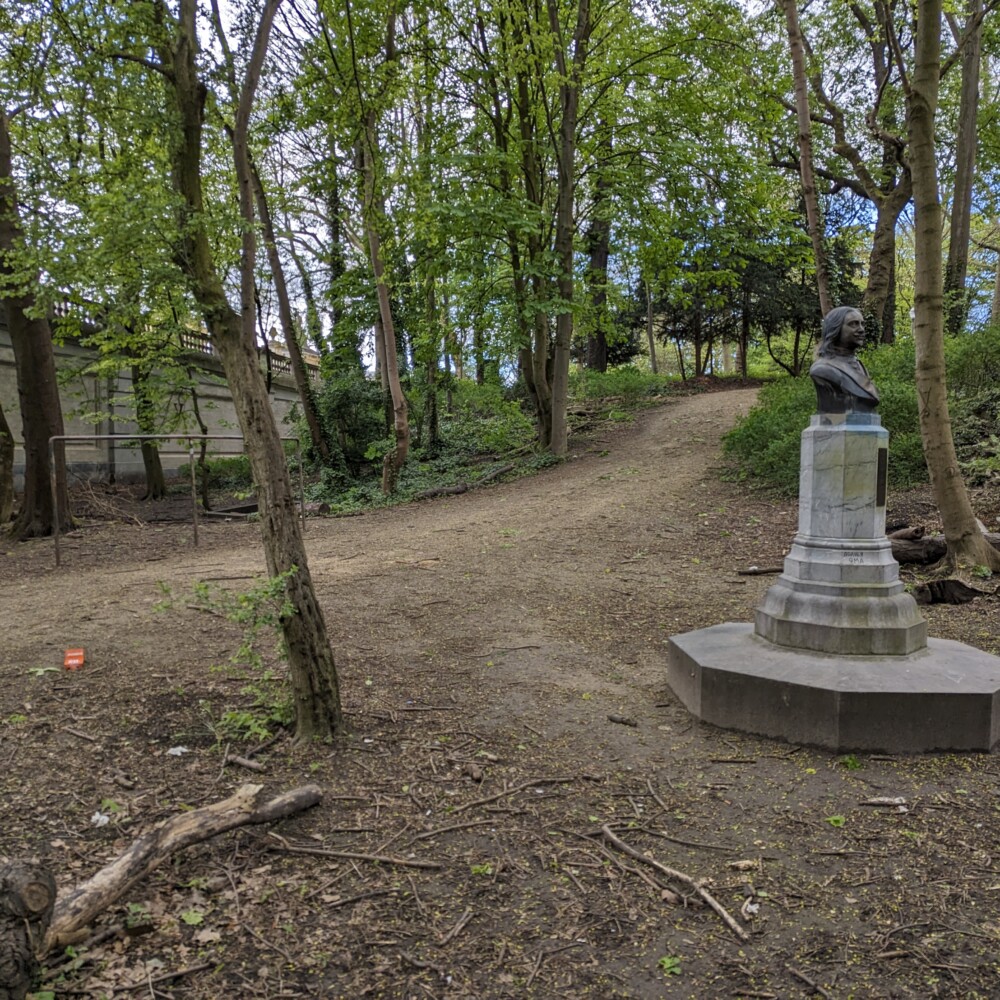
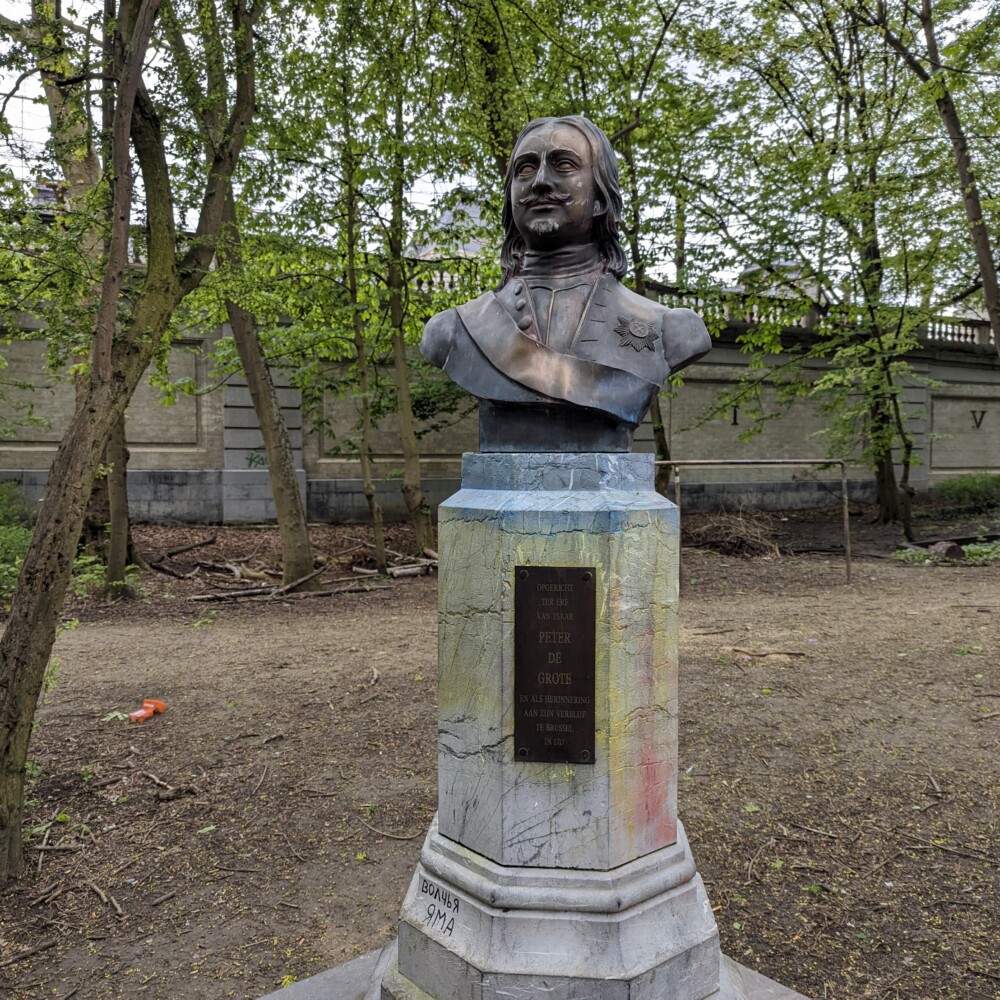
Peter the Great threw up here
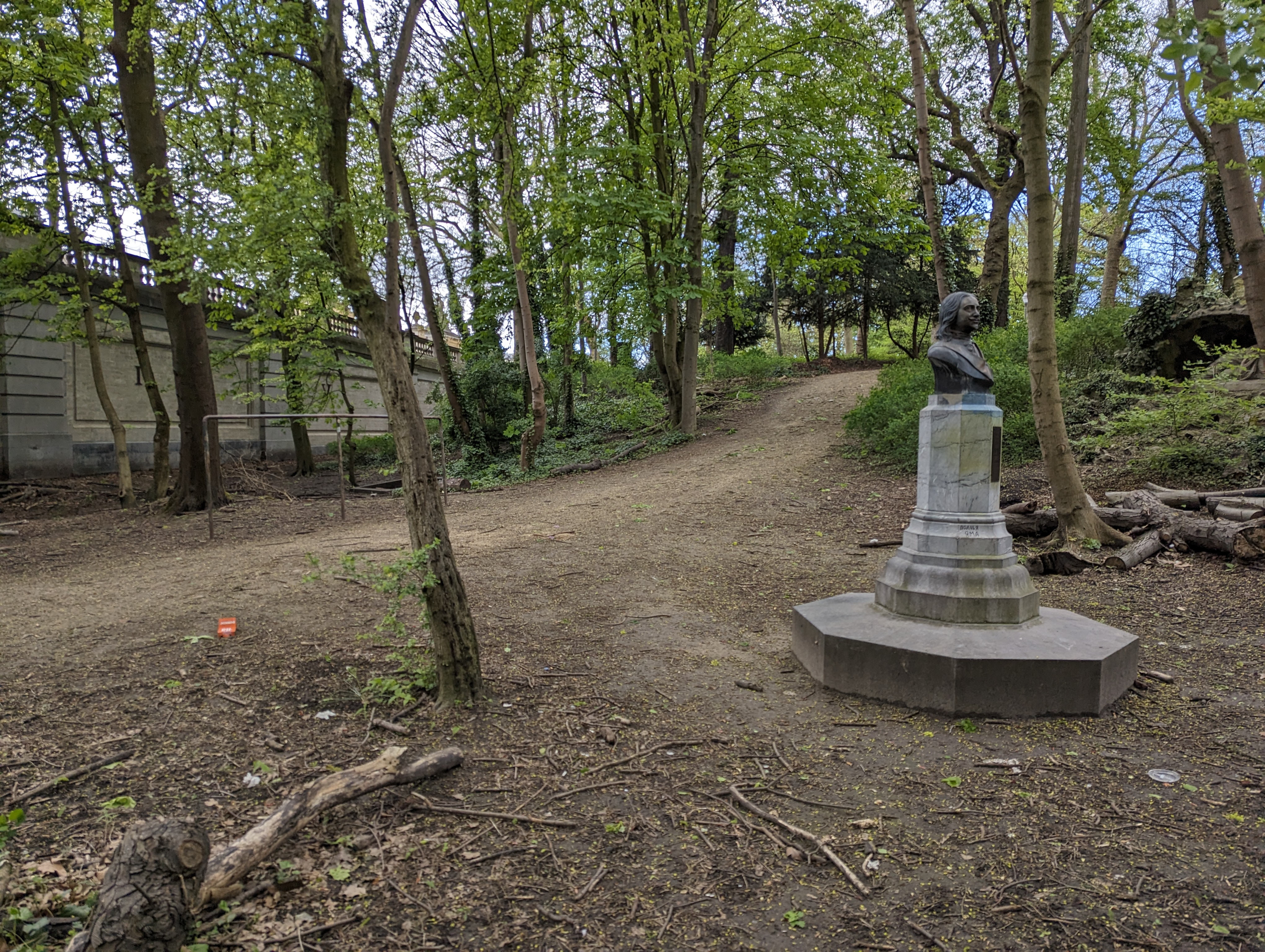
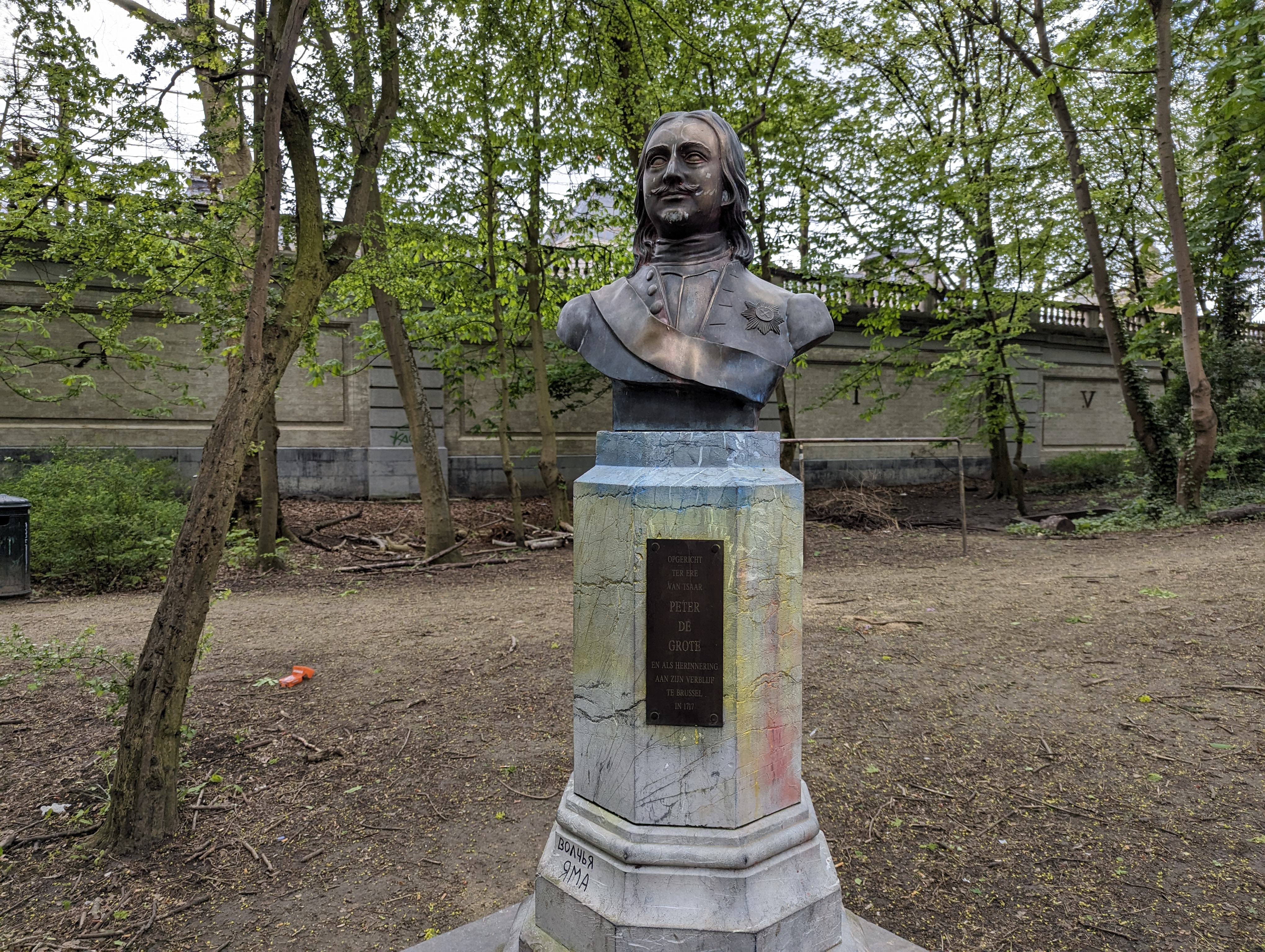
Today, also in the ‘Bas-fonds’ part of the new Warandepark is a bust of Russian Tsar Peter the Great, dating originally from 1854. The first version—which was stolen and subsequently replaced by a similar piece — was gifted to the city by Prince Demidoff to commemorate a boozy episode involving the Russian emperor: during his stay in Brussels in 1717, he had indulged so heavily in drink that he ended up vomiting at the foot of a statue of Mary Magdalene. The bust was placed near the fountain where Peter the Great had relieved himself in this fashion. On the surviving basin near the bust, the following inscription can still be seen:
“Petrus Alexiowitz Czar Moscovitae, magnus dux, margini hujus fontis insidens, illius aquam nobilitavit libato vino hora post meridiem tertia die XVI aprilis anno 1717”
“Peter Alexiowitz, Tsar of Muscovy, Grand Duke, while seated at the edge of this fountain, enriched its waters with the wine he had consumed, on the 16th of April 1717, at three o’clock in the afternoon.”
Sources:
Vannieuwenhuyze, B. (2011) “Brussel, de Ontwikkeling van een middeleeuwse stedelijke ruimte.” Amsterdam: Amsterdam University Press.
Henne, A. Wauters, A. (1845) “Histoire de la ville de Bruxelles. Volume I-III” Brussels: Librairie Encyclopédique de Périchon.
Hymans, L.S. (1884) “Bruxelles à travers les âges” Bruxelles : Bruylant-Christophe
Rombaut, J-A. (1777) “Bruxelles illustrée, ou description chronologique et historique de cette ville.” Brussels: Chez Pauwels.
https://nl.wikipedia.org/wiki/Warandepark_(Brussel)
https://en.wikipedia.org/wiki/Brussels_Park
https://fr.wikipedia.org/wiki/Parc_de_Bruxelles
https://en.wikipedia.org/wiki/Place_des_Palais
https://monument.heritage.brussels/nl/buildings/37936
https://www.coordinatiezenne.be/nl/documentatie/dossiers/bronnen/informatie-brusselse-bronnen.php
https://nl.wikipedia.org/wiki/Warande
https://nl.wiktionary.org/wiki/warande
https://etymologiebank.nl/trefwoord/warande1
https://www.lejardindemasoeur.be/jardinevents/emd63p7pk9xhezy-lrl9j-lkke6-pjnwh-c2z53
https://www.ethesis.net/jacht/jacht_hfst_1.htm
-
- Van Deventer, J. (1550-1565) “Atlas of the city of the Low Countries : 73 minutes between 1550-1565 on orders of Emperors Charles V and Philip II” KBR (image)
- Braun, G, Hogenberg, F. (1572-1617) “Civitates orbis terrarum” Universiteitsbibliotheek Utrecht (image)
- de Tailly, M., van der Horst, N., Santvoort, A. D. (1640) “Bruxella nobilissima Brabantiae civitas anno 1640” KBR (image)
- Laboureur, J., Van der Baren, J., Harrewijn, J. (1695) “Bruxella Nobilissima Brabanti Civitasae” Bibliothèque Nationale de la France (image)
- Gassel, L. (1540-1548) “Het paleis van de hertogen van Brabant op de Coudenberg” Brussels: Broodhuis (image)
- De Iode, C. (1550-1600) “Le Koert de Bruxselles” Brussels: Broodhuis (image)
- Collaert I, H. (1575-1580) “Thof van Brussel” Amsterdam: Rijksmuseum (image)
- Jansz. Visscher, C. II (1603-1652) “Curia Brabantia In Celebre Et Populosa Urbe Bruxellis” Amsterdam: Rijksmuseum (image)
- Van den Hoeye, R. (1600s) “Le Koert de Bruxselles” Brussels: Broodhuis (image)
- Brueghel I, J. (1620) “De aartshertogen Albrecht en Isabella in de tuin van hun kasteel op de Coudenberg te Brussel” Antwerp: Rubenshuis (image)
- Brueghel II, J. (1627) “Het Paleis op de Koudenberg” Madrid: Museo del Prado (image)
- Van Heil, D. (1624-1633) “Infante Isabella in de tuinen van het voormalige paleis van de Hertogen van Brabant op de Coudenberg” Brussels: Broodhuis (image)
- Vorsterman II, L. (1659) “Palatium Bruxellense Ducis Brabantiae” Leuven: Leuven, Bibliotheek Theologie (image)
- Neyts, G. (1662) “Het Hof van Brussel” Amsterdam: Rijksmuseum (image)
- van der Stock, I. (1600-1667) “Jachtpartij in de warande” Brussels: Broodhuis (image)
- Butkens, C. Harrewijn, J. (1726) “Palatium Bruxellense Ducis Brabantiae” Wikimedia Creative Commons (image)
- Martin, A. (1726) “De tuin achter het paleis van de Hertogen van Brabant op de Coudenberg” Brussels: Broodhuis (image)
- Ridderbosch, B.A. (1783-1785) “Vue du Parc à Bruxelles” Brussels: Broodhuis (image)
- Simons, A-A. (1789) “Le parc de Bruxelles et le Palais du Conseil du Brabant” Brussels: Maison du Roi (image)
HOW IT LOOKS LIKE TODAY
Click on the zoom icon to view the full size.