ABOUT
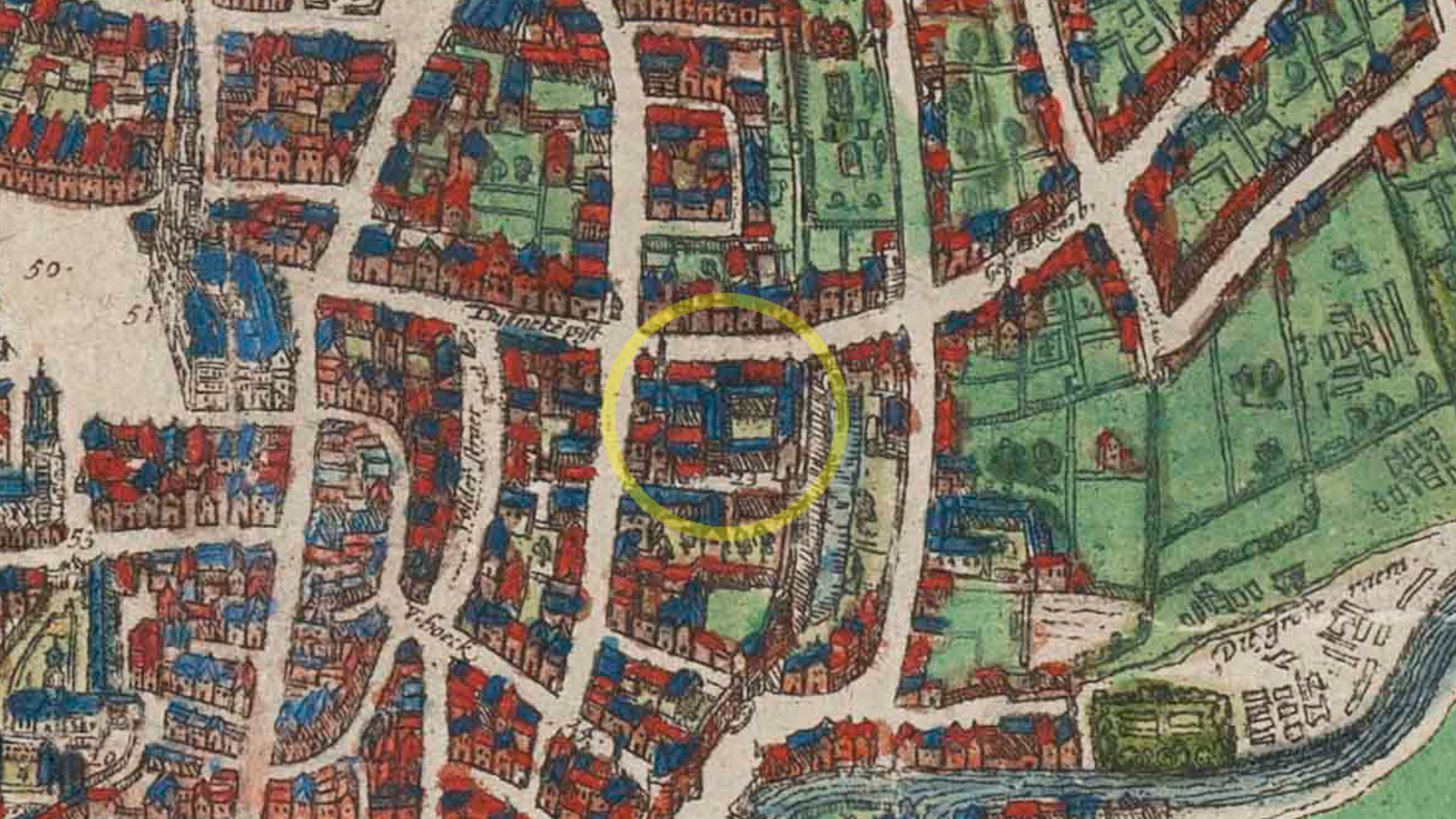
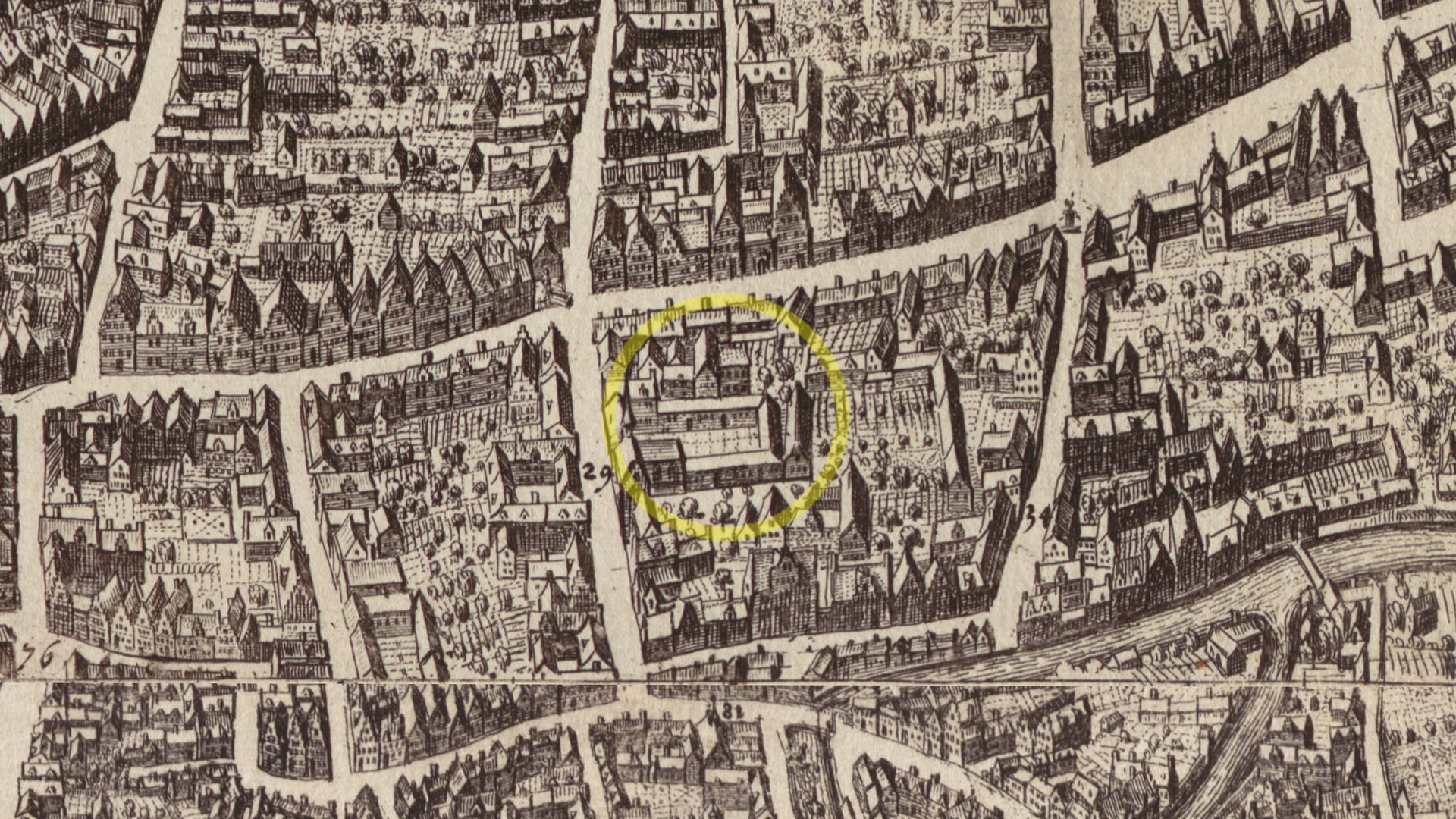
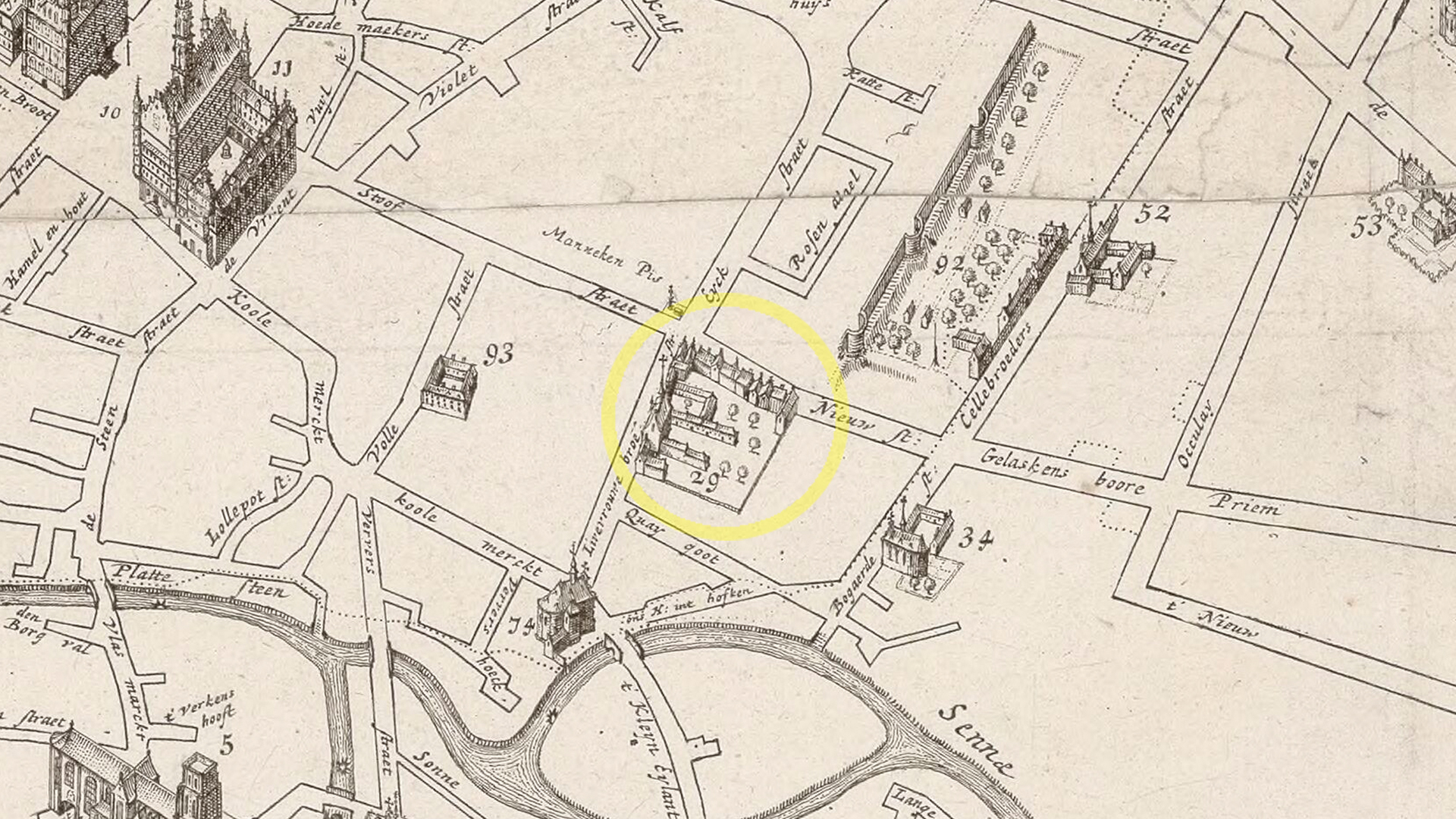
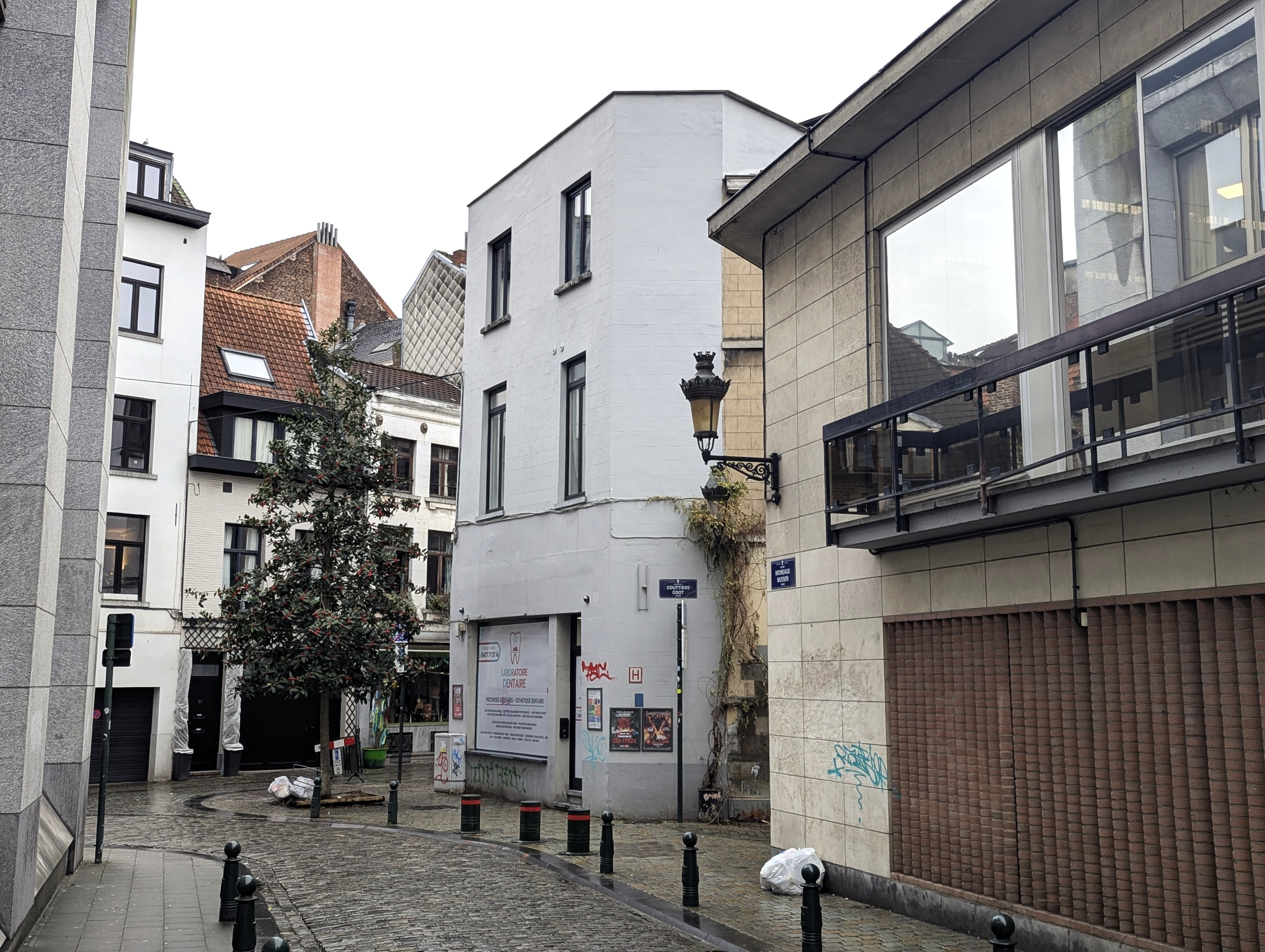
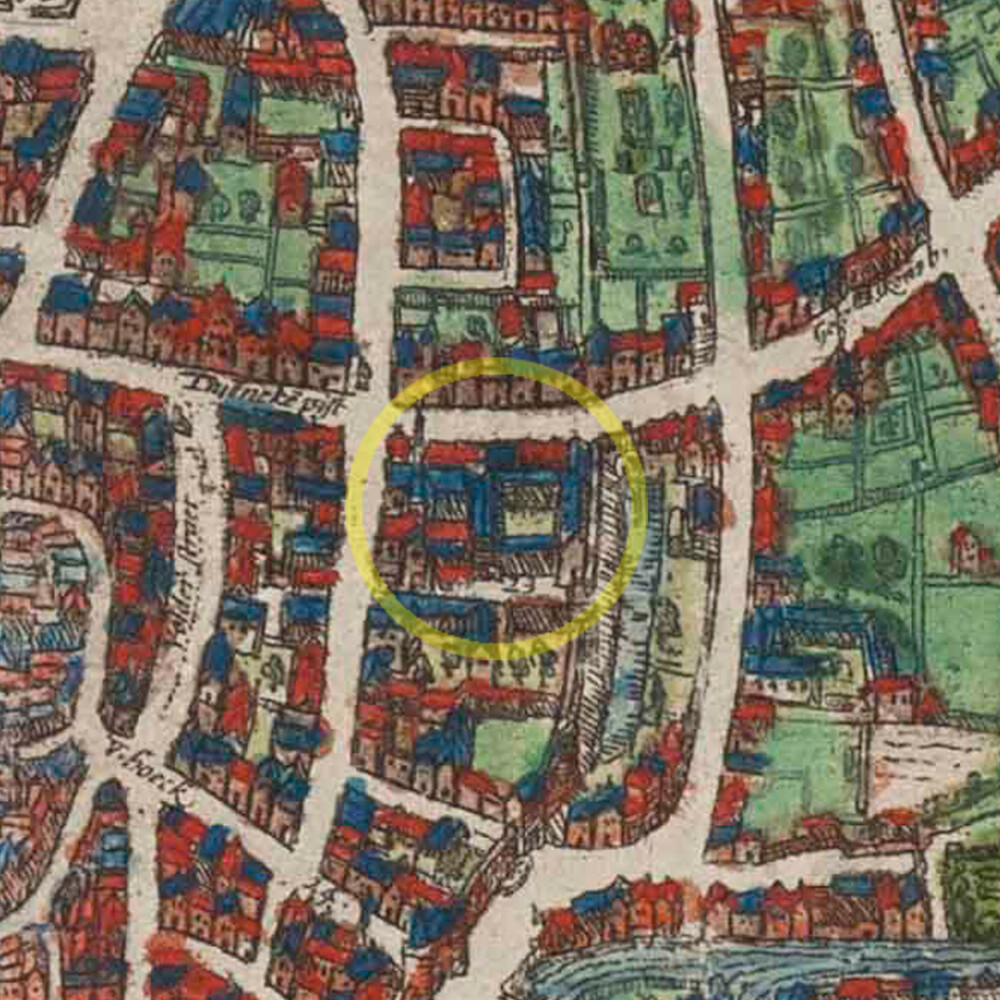
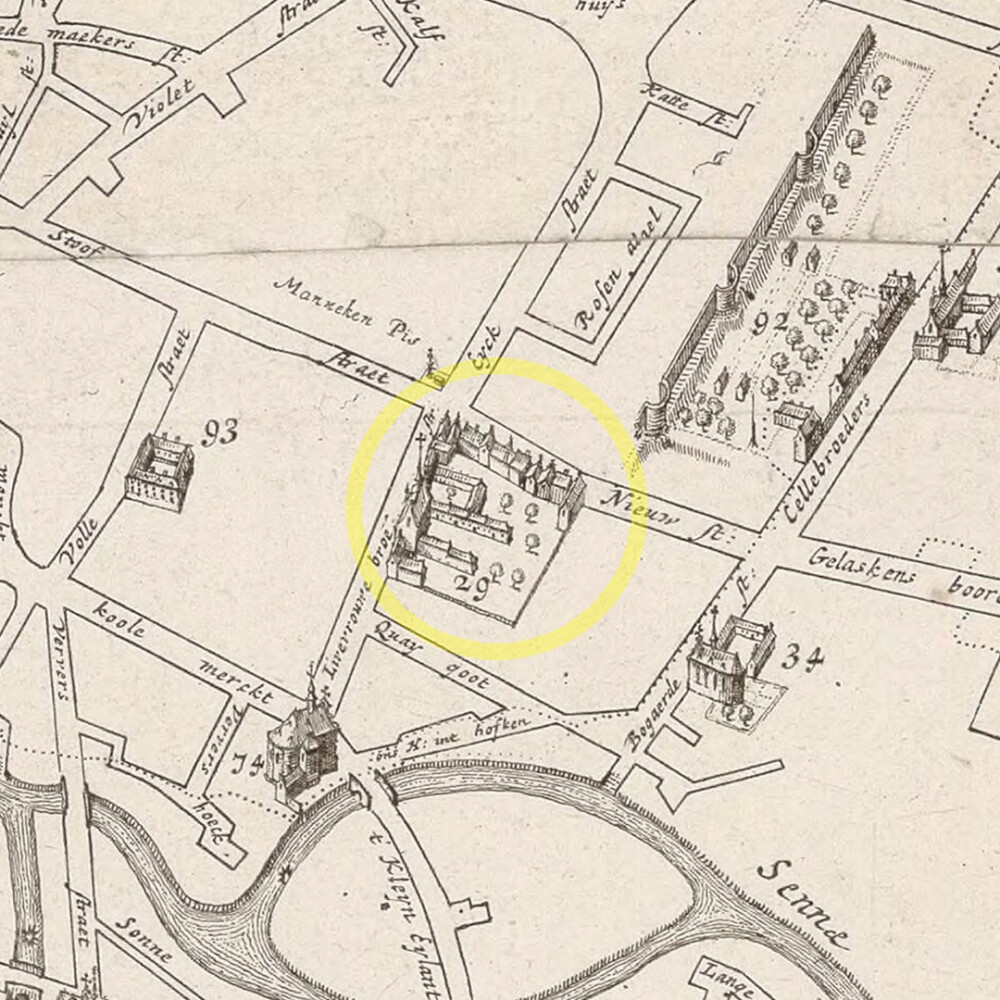
Along today’s Lievevrouwbroersstraat (Rue des Grands Carmes) and Stoofstraat (Rue de l’Étuve) once stood Brussels’ infamous Karmelietenklooster – Carmelite Monastery. This monastery of original Carmelites of the Ancient Observance was founded very early in 1249 in Brussels, built against the old city wall, and were only disbanded under the French Occupation in 1796. The new street created the following year, Mussenstraat (Rue des Moineaux), would have run right through the monastery compound.
Origin
The story of Brussels’ Karmelietenklooster begins in the middle of the 13th century, a period of quiet expansion beyond the city’s early core. In 1249, the fathers of the Order of Mount Carmel — their arrival marking the first establishment of the order in the entire Duchy of Brabant — settled on a plot of land granted to them by Duke Hendrik III of Brabant (1231-1261). Their new home was situated at the corner of the Nieuwstraat (today’s Stoofstraat, it was ‘new’ then because the street was extended to the Priemstraat once the old city wall was broken through) and what was then one half of the Eikenstraat (today’s Lievevrouwbroersstraat), in the Overmolenwijk district, just south of the Sint-Gorikseiland and leaning against the first city walls.
For a new religious community, building a permanent spiritual home was a gradual process. For seventeen years, the Carmelites likely worshipped in a simple oratory. Then, in 1268, they received formal permission from the Chapter of the Collegiale kerk van Sint-Michiel en Sint-Goedele to construct a proper chapel. This authorisation came with an obligation: an annual rent of 100 sous paid to the Chapter. A series of detailed agreements followed over the decades, particularly concerning the rights to burials, weaving the newcomers into the legal and spiritual fabric of the city.
The chapel flourished and grew in importance. By 1285, it had been promoted to the status of a church. This building would continue to evolve for centuries, being enlarged and finally receiving a tower in 1441. The monastery itself gained significant stature, enough to host general chapters of the entire Carmelite Order in 1456 and again in 1469, presided over by figures of European renown like Nikolaus von Kues (Nicholas of Cusa, who visited Brussels in February–March 1451).
The order’s foundation was cemented by enduring ducal patronage. Duke Jan III of Brabant granted the Brussels Carmelites a practical and valuable annual gift: 200 loads of wood from the Zoniënwoud.
This support was generously increased by half by Duchess Johanna of Brabant and Limburg (1322-1406), who held the Carmelites in particular esteem. Her confessor was the Carmelite Jan van Hertoghe, and she chose the monastery church as her final resting place. To honour her after she died in 1406, Duke Filips III “de Goede” (Philip the Good) of Burgundy (1396–1467) had a funerary monument erected for her in 1458 (a work by Jean Delemer, Jacob van Gerines and Rogier van der Weyden that was lost in the bombardments of 1695).
What's so special about this place?
The Sexual Deviancy of the “Homines intelligentiae”
Around 1410, a mysterious and short-lived sect known as the “Homines intelligentiae” — the ‘Men of Understanding’ — appeared in Brussels. Their story is preserved almost solely in the damning ecclesiastical verdict issued against them on 12 June 1411 by the Bishop of Kamerijk, Pierre d’Ailly. What made this local scandal particularly shocking was the high-ranking identity of one of its alleged leaders: Willem van Hildernisse, the prior of Brussels’ esteemed Karmelietenklooster.
As prior, Van Hildernisse led a religious house that enjoyed significant ducal favour. The prior’s deep involvement in a heretical sect therefore represented a stunning fall from grace and a major scandal for the order.
The sect’s central prophet was Aegidius Cantor, a layman who preached that believers had entered a state of grace where sin was impossible. This belief, according to the trial record, led to sexually deviant practices. Cantor was accused of advocating “modum specialem coeundi“, which was a ‘special way of intercourse practiced by Adam in Paradise.’ In the sect’s secret language, sex was called “aclivitas” and could supposedly be transformed into an act of prayer.
While Van Hildernisse denied personal participation in these excesses, his role as a sect leader was clear. The scandal severely damaged the reputation of the Karmelietenklooster, creating a stark contrast between its privileged position and the heretical activities of its prior. After a public recantation in Brussels, Van Hildernisse was removed and exiled outside the diocese, a solemn epilogue to an episode that had briefly shaken the city’s spiritual foundations.
The Refuge of the Imposter Jan Bolle
Just decades after the scandal of the “Homines intelligentiae”, the Karmelietenklooster again found itself at odds with civic authority in an episode that demonstrated its fierce, combative independence. This time, the conflict centred on a charismatic imposter: a priest named Jan Bolle.
Under the reign of Duke Filips III, Bolle had perpetrated an astonishing deception. Presenting himself at the Burgundian court as “Louis de Torreant“, a wealthy Catalan knight, he lived lavishly and travelled in high style until his fraud was uncovered in 1450. Imprisoned first in the Vroente, he engineered a daring escape. Recaptured and placed in the more secure Steenpoort, he even broke free a second time. With nowhere else to turn, he sought sanctuary within the walls of the Carmelite convent.
What followed was a direct confrontation. When the Steenswachter (prison warden), accompanied by sergeants of the Amman, arrived at the Karmelietenklooster to reclaim the fugitive, the friars refused to surrender him. Their resistance was not merely passive; they defended Bolle with tooth and nail, resorting to actual violence against the ducal officers.
This flagrant defiance of authority could not go unanswered. Duke Filips imposed a pointed punishment meant to humble the Carmelites. He obliged the monastery to celebrate an annual Mass of the Holy Spirit for the repose of his soul every year on the feast of Saint Philip — a perpetual reminder of their transgression. He also demanded the expulsion of the two most violent friars, the organist Jan Vrancx and Reinier Vanderlinden. However, after firmly asserting his sovereign authority, the Duke ultimately showed clemency and pardoned both men.
Contrary to what might be expected, this dramatic affair did not permanently sever the bond between the court and the Karmelietenklooster. The Carmelites survived the episode and successfully regained the trust of the powerful.
A Chapter of Knights: The Order of the Golden Fleece
The prestige of the Karmelietenklooster in the eyes of the ruling power was definitively confirmed at the turn of the 16th century through its association with the most exclusive chivalric order in the Burgundian Netherlands: the Order of the Golden Fleece. Founded in 1430 by Duke Filips III to celebrate his marriage to Isabella of Portugal (1397-1472), the order served as a potent instrument of dynastic prestige and political cohesion, binding the nobility to the Burgundian ducal court. Its chapter meetings, solemn multi-day gatherings for electing new knights and deliberating on affairs of state, were grand events typically held in cities of high importance.
It is a significant testament to the Carmelites’ standing that not one, but two such chapters were convened within their monastery. The first was held on 13 May 1500 under Lord Filips “de Schone” (Philip the Handsome) of the Habsburg Netherlands (1478-1506), followed by another on 22 January 1501. The choice of location was a clear mark of honour, signalling the Duke’s particular regard for the convent.
The 1500 chapter was historically momentous. There, Lord Filips de Schone created seven new knights. Among them was a newborn infant: the Duke of Luxembourg, who would grow up to become Habsburg Emperor Karel V. This election within the cloister’s walls was more than a ceremonial act; it symbolically marked the pivotal inheritance of the Burgundian Order of the Golden Fleece by its powerful imperial custodians under the House of Habsburg. The Karmelietenklooster thus served as the stage for a key moment in dynastic history, linking its own story to the ascent of one of Europe’s most powerful rulers.
Decline and Disgrace: The Final Centuries
The Karmelietenklooster entered a prolonged period of crisis and decline beginning in 1566, the tumultuous year that sparked the Dutch Revolt. As Brussels became a centre of Calvinist power, the monastery found itself physically and spiritually besieged. The defining blow came in 1578 when Archduke Matthias of Habsburg Netherlands placed the Carmelite church at the disposal of the city’s Protestant community. The monks were forced to cede the naves, which were permanently separated from the choir by a dividing wall, transforming their sacred space into a Calvinist temple for over six years.
Though spared from outright destruction — partly due to the prior’s personal connections — the friars were expelled from the city in 1581. They scattered to refuges in Germany and Enghien, enduring severe hardship. While they returned and purified their church in 1585 following the city’s reconquest by Catholic Habsburg forces, their reputation and internal discipline had been deeply eroded.
In a clear sign of lost confidence from the highest authority, the Habsburg regents Archduke Albrecht en Archduchess Isabella intervened in 1610. They invited a group of stricter ‘Ongeschoeide Karmelieten‘ (Discalced Carmelites) from Italy to Brussels. Their explicit mission was to provide spiritual guidance and reform the original convent, whose monks were now pejoratively distinguished as the ‘Geschoeide‘ (Unreformed) Carmelites. The symbolic weight of this was profound: the established order required correction by a new, more austere branch.
The old Karmelietenklooster’s final disgrace came at its own hand. In 1619, during an internal dispute, dissident friars rang the church bells on Easter Sunday to summon a mob against their own provincial superior. This public scandal, which also targeted the papal nuncio and forced him to flee, was a brazen act of rebellion that confirmed the community’s indiscipline. It shattered any remaining trust with the Habsburg rulers.
Following a forced reform in 1635, the Karmelietenklooster faded into silent obscurity. No longer a trusted institution of the court or a notable player in the city’s religious life, it left little mark on the historical record for its final 150 years, until its official suppression in 1796. Its story concludes not with a dramatic end, but with a long, quiet dwindling, its once-significant role usurped by the very reformers brought in to salvage its spirit.
How did it look like?
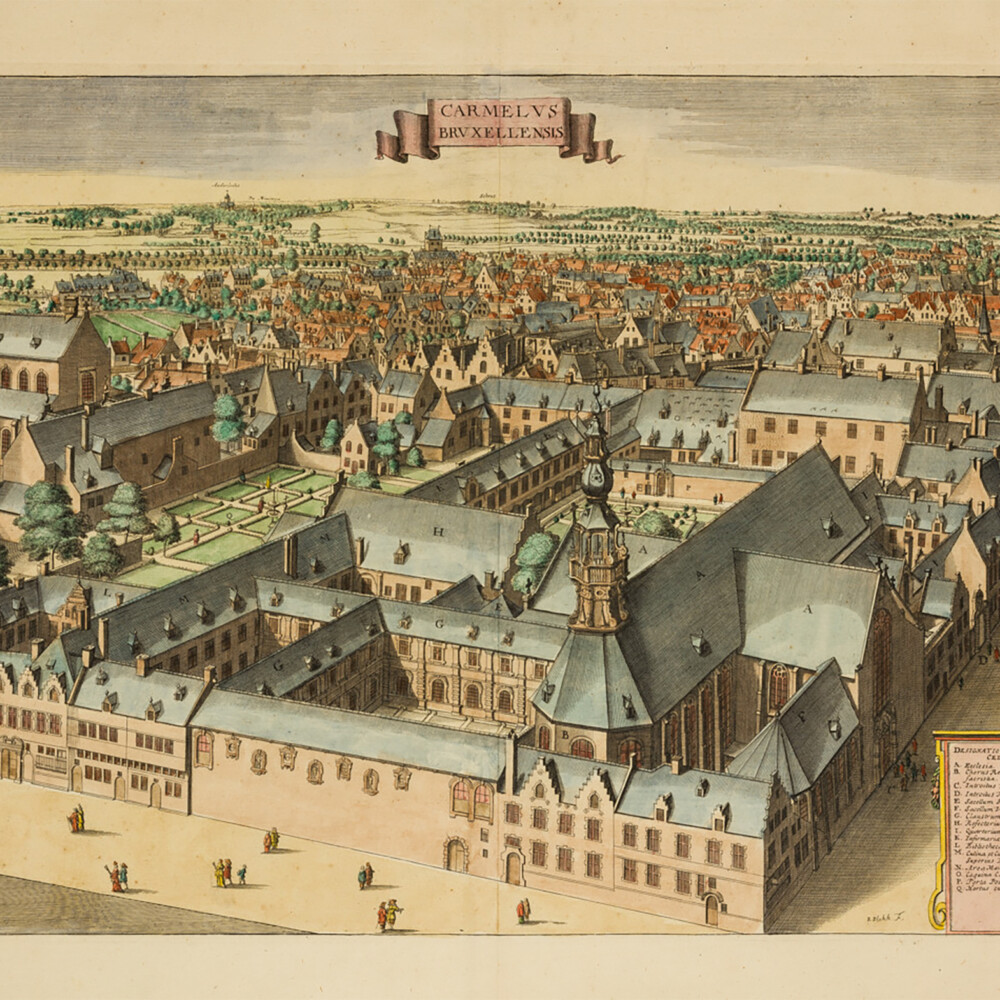
For centuries, the Karmelietenklooster was a complex of both spiritual devotion and considerable artistic wealth. Its church, originally consecrated in 1285 and significantly enlarged over time, presented a mix of Gothic and later Baroque modifications. Visitors entering from today’s Lievevrouwbroersstraat would access the right transept. The interior was a rich catalogue of Brabant’s artistic talent across the ages.
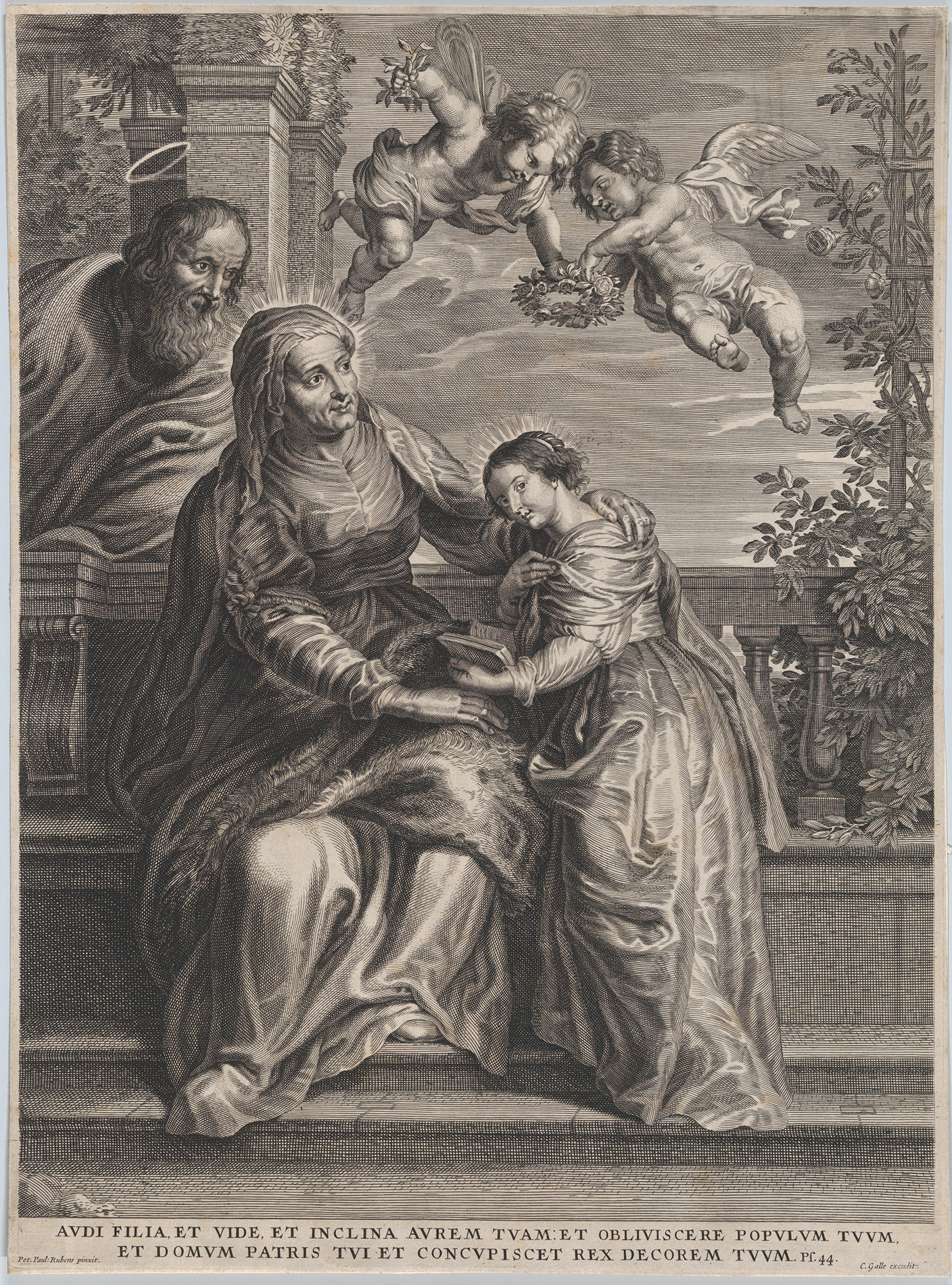
The choir was dominated by the high altar, an innovative design by Verbrugge that placed the organ case upon its pediment. The painter Janssens contributed significantly: his angels adorned balconies around the altar, three large canvases depicting the life of the prophet Elijah hung nearby, and his medallions of Carmelite saints decorated the choir stalls. Other notable works included a ‘Sacrifice of Elijah‘ by Van Helmont and De Hont, a ‘Last Judgement‘ by Duplessis, and a Rubens painting, ‘Saint Anne Instructing the Virgin.’
The monastery buildings, rebuilt in 1661, were considered unremarkable architecturally but housed treasures of their own. The refectory held a precious 1446 altarpiece by Rogier van der Weyden. The square cloister, illuminated by fine stained-glass windows, enclosed a tranquil garden. The library was renowned as one of the largest in the country. A peculiar and famously irreverent note was struck by the monastery clock: its jacquemart was said to strike the hour using its phallus! Quite a statement by a ‘sexually deviant’ community.
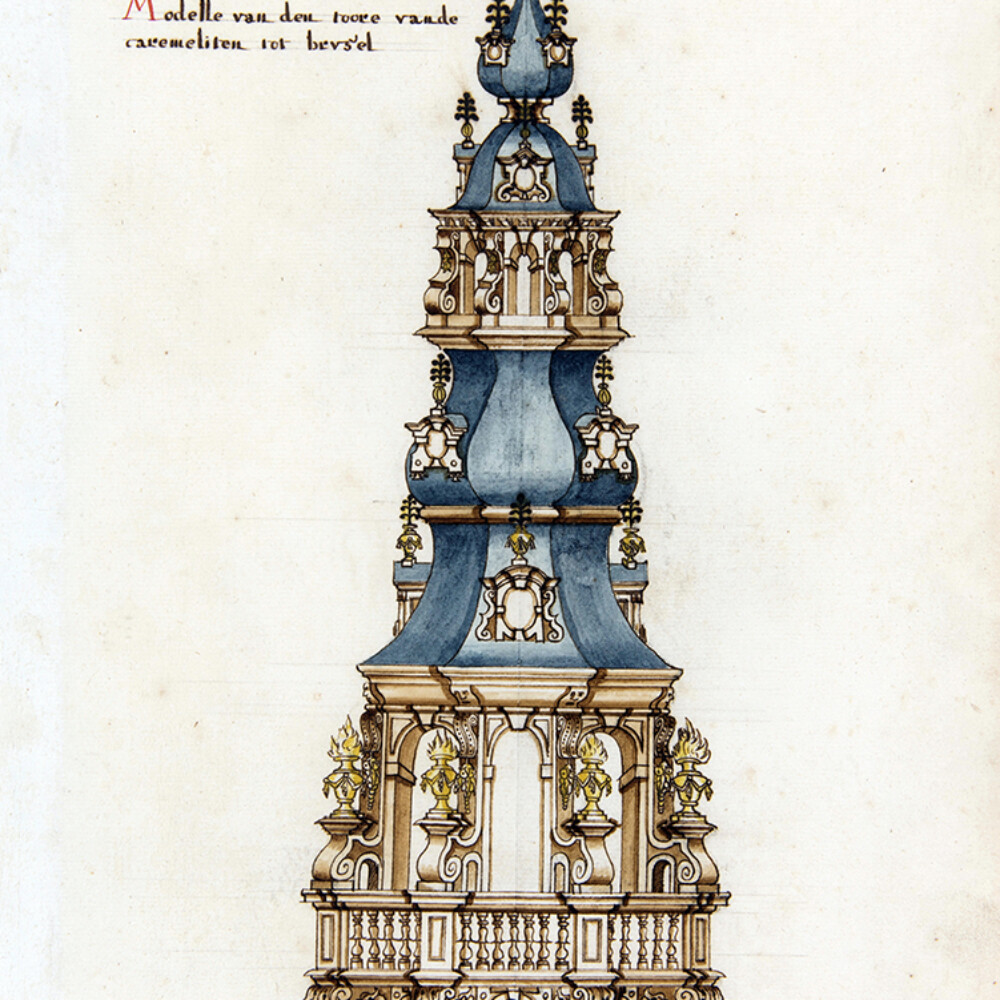
The bell tower of the Karmelietenklooster was the most conspicuous and ornate feature of the building. As is seen in a contemporary drawing below, it would have been a sight to behold when entering the city from the Naamsepoort.
The Tomb of Johanna van Brabant
The most prestigious funerary monument in the church was the tomb of Duchess Johanna, who died in 1406. Completed in 1458, it was a work of great sculptural artistry created by Jacquppe van Gerines, Janne de le Mer and Rogier van der Weyen. The four-foot-high mausoleum was surmounted by a statue of the Duchess. Its sides were adorned with twenty niches, each containing a delicate weeping figure, a typical feature of high-status Burgundian tomb sculpture. This monument of dynastic memory stood in the centre of the choir until it was utterly destroyed in the French Bombardment of 1695. A drawing from 1641 shows how it looked like.
The Chapel of the Brotherhood of Saint Dorothy
In 1640, the ‘Confrerie van de heilige Dorothea‘ — a devotional brotherhood of horticulturists, the first of its kind in the Southern Netherlands — was founded at the monastery. Its first provost, the lawyer Jan Baptist Maes, donated a magnificent high altar, as you can see in the drawing below. Each year on February 6, the feast of Saint Dorothea, the patroness of gardeners, the altar was lavishly decorated with flowers, a winter miracle that impressed the city and inspired similar festivals elsewhere.
The altar was graced by a major painting, ‘The Martyrdom of Saint Dorothy,’ by the leading Netherlandic master Gaspar de Crayer (1584-1669). The artwork depicted the saint, moments before her execution, receiving a basket of celestial flowers and fruit from an angel. The composition, known today through a surviving preparatory sketch, was noted for its detailed narrative and dynamic figures. This painting, like much of the church’s art, later disappeared following the French Bombardment, a significant loss to the city’s artistic heritage.
The French Bombardment of 1695
The monastery’s physical existence was catastrophically altered on 13-15 August 1695, when the army of French King Louis XIV subjected Brussels to a punitive artillery bombardment. The Karmelietenklooster, located in the low town, was directly hit and reduced to rubble. This disaster obliterated irreplaceable treasures: the tomb of Johanna of Brabant, Van der Weyden’s altarpiece, De Crayer’s Martyrdom, and countless other paintings and sculptures were lost forever.
Although the convent and church were all rebuilt in the early 18th century, the new structures were considered architecturally undistinguished. More importantly, the destruction marked a symbolic end. The rebuilt monastery never regained its former prominence, and its story became a quiet prelude to its final suppression by French revolutionary authorities in 1796, after which its buildings were systematically demolished and its memory slowly erased from the cityscape.
Closure under the French Occupation
The final chapter for the Karmelietenklooster began not with a bang, but with a bureaucratic decree. The winds of the French Revolution had reached Brussels, and religious institutions were swiftly dismantled under the new anti-clerical regime. By a decree of 11 February 1793, the city’s provisional representatives had already repurposed the Carmelite slaughterhouse, placing it at the disposal of all citizens — a small, early sign of the communal property replacing monastic exclusivity.
The definitive end came three years later. On 25 October 1796, the French authorities officially suppressed the Carmelite order. The monastery was closed for good on 9 November, and the systematic demolition of its buildings began the following year, in 1797. The physical erasure was thorough.
Where the large monastery and its garden had stood for over five centuries, the city planners laid out a new street right through the compound. In a final, mocking gesture, they gave them the disparaging name Mussenstraat (“rue des Moineaux” — Sparrow Street). This was a deliberate pun, playing on the French word for monk, “moine“, reducing the once-powerful order to little birds.
With this, the Karmelietenklooster vanished from the city’s physical fabric. Today, only a single street name survives as a direct, if faded, echo of its long history: the Lievevrouwbroersstraat (rue des Grands Carmes) where ‘lieve vrouw broers’ was a local name for Carmelites, a quiet testament to the centuries of prayer, scandal, art, and ducal favour that once defined this corner of Brussels.
Current situation
The Rediscovery of the ‘The Martyrdom of Saint Dorothy’ by Gaspar de Crayer
As mentioned above, this painting was the highlight of the altar of the Chapel of the Brotherhood of Saint Dorothy.
But it was found that a similar painting exists that also corresponded with contemporary description and a detailed sketch by Sanderus in 1727 (see below). The discovery was known only through its description in the catalogue of the Clemens sale of 1788, and through a preparatory sketch for the work in the Museum of Fine Arts in Ghent.
Could it be that the painting was not destroyed by the French after all?
In his 1972 monograph, Professor Hans Vlieghe, Emeritus Professor of the History of Arts at KU Leuven, noted that the dimensions of the original are relatively restrained for an altarpiece of such detailed composition, and suggested that the painting sold in 1788 might have been a preparatory draft of the original painting.
He also noted several differences from the Sanderus sketch:
- the position of the dog in the latter was altered by de Crayer in the composition of the finished painting, being moved from the lower centre to the lower right corner.
- Here de Crayer added a third standing figure in the foreground while the third spectator is the figure behind the central group, only unclearly defined in the sketch.
The professor also noted several elements that are echoed in de Crayer’s other paintings: the downwards bent of the head and neck of the grey horse, and the raised banner, are also in the ‘William of Aquitaine converted by Saint Bernard’ now in Louisville Cathedral in Kentucky, whilst the handling of the drawing can be compared with that of the sketch for the 1650 painting of ‘Virgin and Child adored by Saints’ in the Saint Paul’s Church in Opwijk.
The rediscovered copy is now in the possession of the David Southwell Collection in Boston.
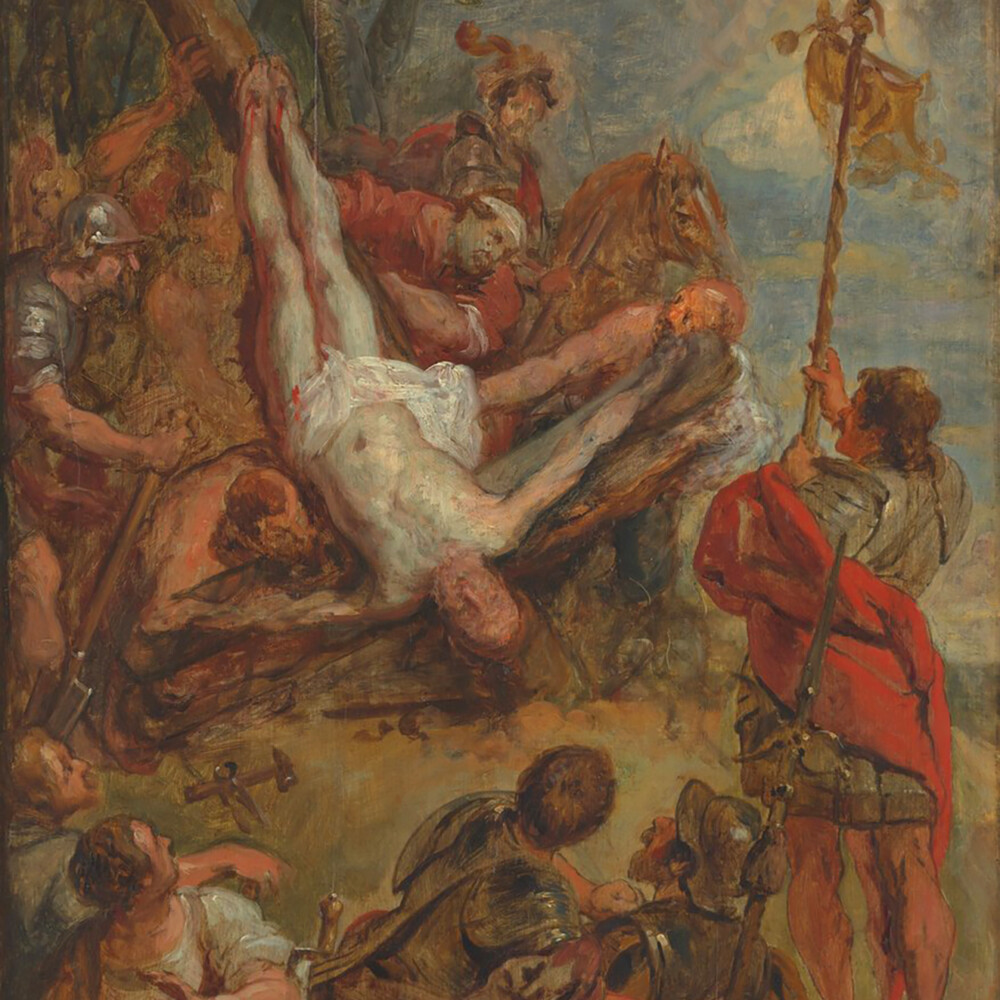
There was another masterpiece by Gaspar de Crayer in the Karmelietenklooster: the Martyrdom of Saint Peter (see image below). There is an draft painting by de Crayer from 1664 now in the Museum Boijmans Van Beuningen in Rotterdam, which might have a draft made for the Karmelietenklooster. There is also a very similar composition now in the Sint-Pieterskerk aan de Rink in Sint-Pieters-Leeuw, which experts have attributed to de Crayer and might have been the lost painting that originally hung in the church of Brussels’ Karmelietenklooster.
Another important work lost in the French Bombardment was Peter Paul Rubens’ ‘Saint Anne Instructing the Virgin.’ There is an etching by Cornelis Galle I dating from 1600-1650 of this very theme produced by Rubens’ workshop. The lost painting in the Karmelietenklooster could very well have used this same composition.
A physical remnant of the Karmelietenklooster is the baroque pulpit made by Pierre-Denis Plumier in 1721. Now housed in the Kapellekerk, the pulpit features the prophet Eliah fed by an angel in the desert.
The Traces of the Karmelietenklooster
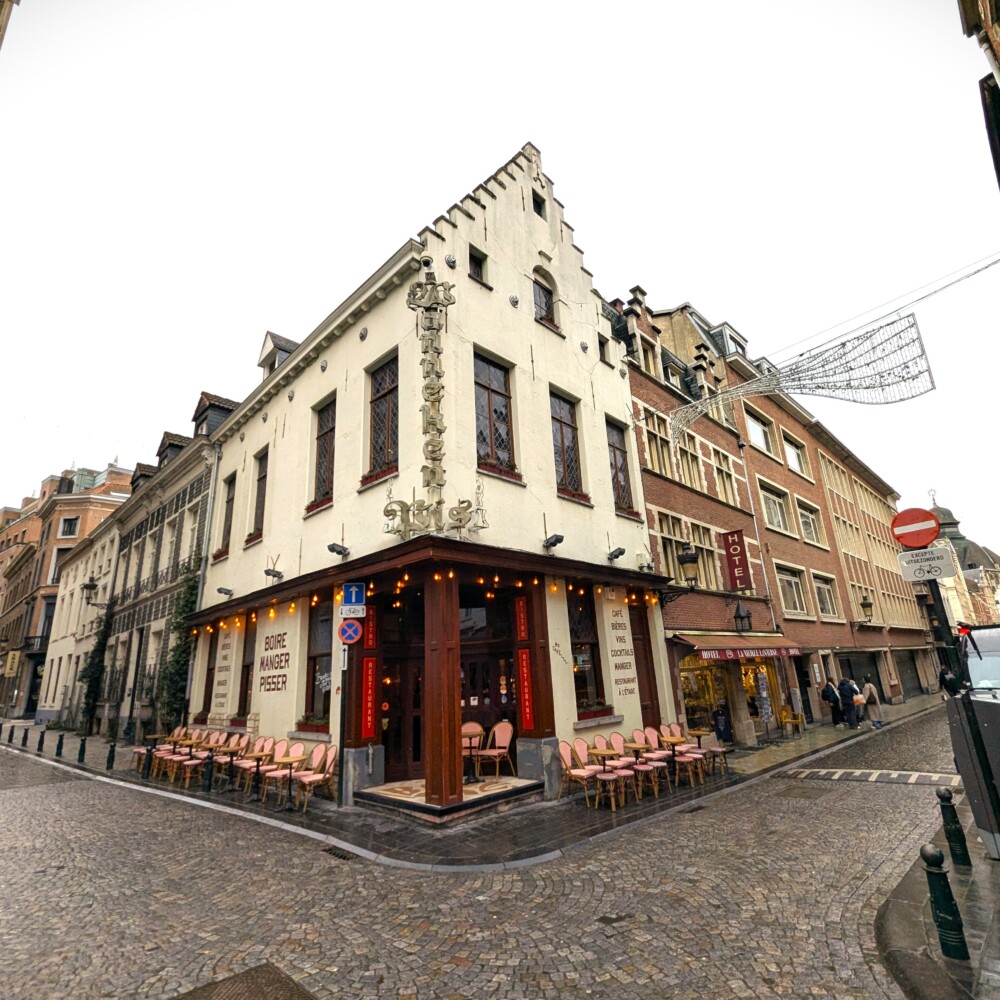
The French occupiers fully obliterated the Karmelietenklooster from Brussels by tearing down all its buildings and selling off all its assets. The only reminder of their 500 years of existence is the name of the street, Lievevrouwbroerstraat (Rue des Grands Carmes) where the main entrance to their church was located.
Yet some traces are still there.
Most crucially, the house opposite the famous peeing boy fountain ‘Het Manneke Pist’, at the start of the Lievevrouwbroersstraat dates from the 17th century is the only private house remaining that used to leant directly against the monastery buildings. You can see that corner house as how it was in the 1727 drawing by Antonius Sanderus named “Carmelus Bruxellensis” in his “Chorographia sacra Brabantiae”.
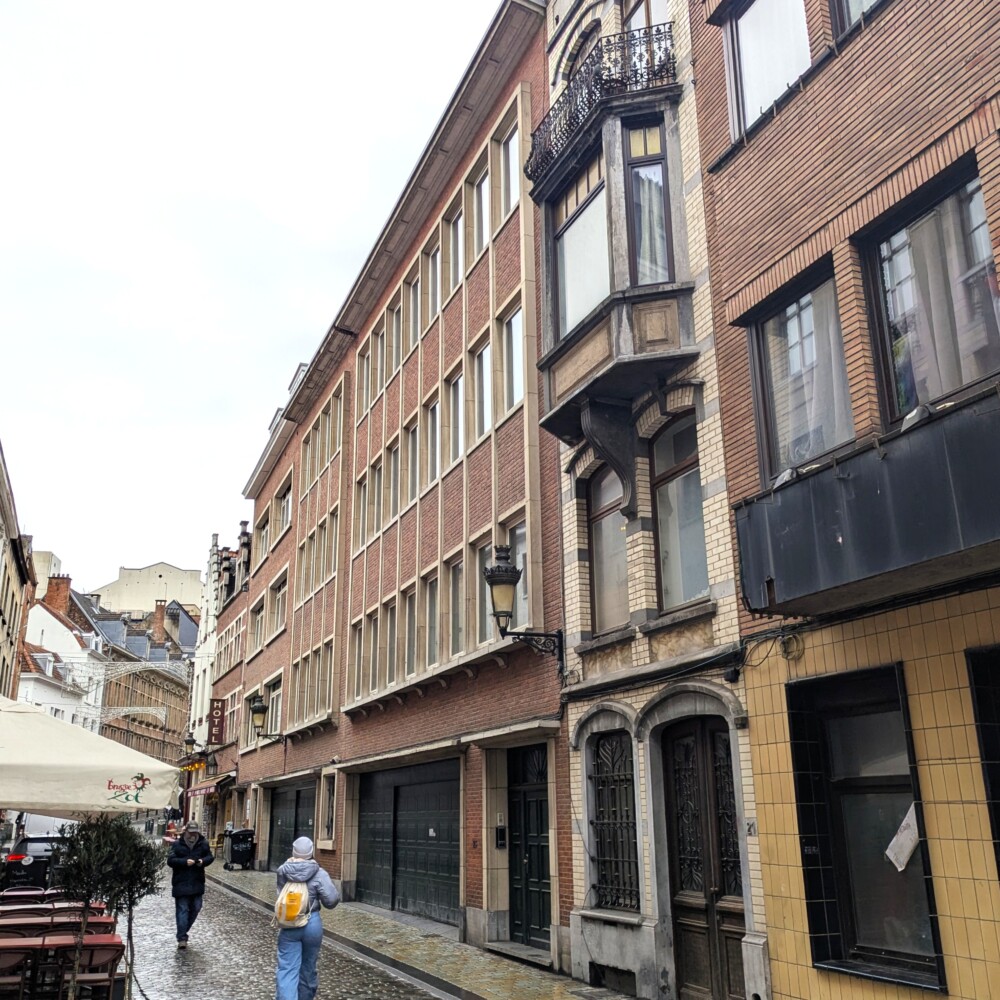
Another interesting element to explore is the limits of the first city wall, against which the Karmelietenklooster was built. By walking along the Stoofstraat, you will notice the curvature of the buildings on both sides of the street, which is a remnant of the houses that were built on the outside of the city wall.
Historian Chloé Deligne also shared the ground plan of the Karmelietenklooster in her 2005 publication ‘Brussel boven water ‘. Compared with the Sanderus sketch, the extension of the Mussenstraat from Gootstraat actually was not new at all. It was most likely an alleyway that led to a back door into the monastery compound when the brewery was located. This also explains why it is slanted when joined with the ‘new’ French built Mussenstraat. The Zuidstraat (Rue du Midi) was built later between 1840 and 1862.
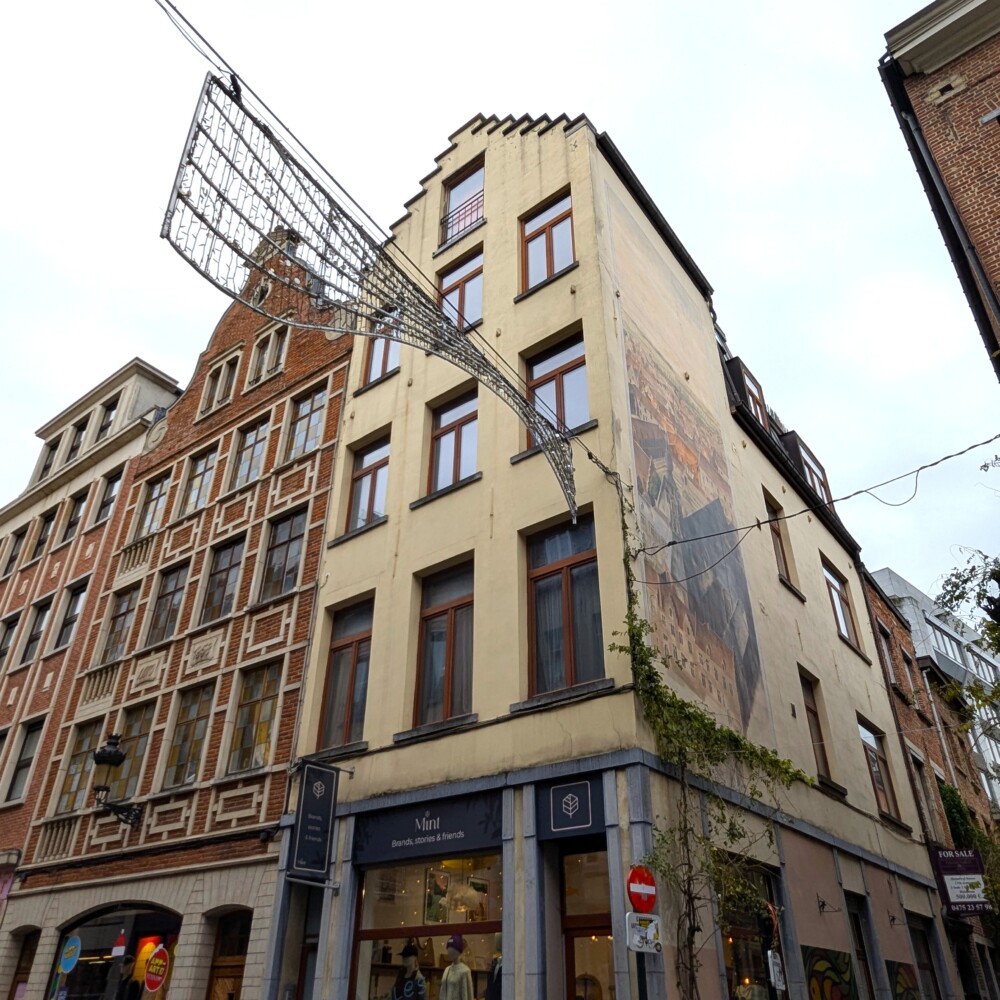
On the side facade of the house on the corner of the Lievevrouwbroersstraat and the Gootstraat, is a fresco based on the Antonius Sanderus sketch. This painting by Jean-Marc Collier is a modern reminder of the enigmatic history of the Karmelietenklooster right in the centre of Brussels.
Sources:
Vannieuwenhuyze, B. (2011) “Brussel, de Ontwikkeling van een middeleeuwse stedelijke ruimte.” Amsterdam: Amsterdam University Press.
Henne, A. Wauters, A. (1845) “Histoire de la ville de Bruxelles. Volume I-III” Brussels: Librairie Encyclopédique de Périchon.
Rombaut, J-A. (1777) “Bruxelles illustrée, ou description chronologique et historique de cette ville.” Brussels: Chez Pauwels.
https://nl.wikipedia.org/wiki/Karmelietenklooster_(Brussel)
https://de.wikipedia.org/wiki/Karmeliterkloster_(Br%C3%BCssel)
https://monument.heritage.brussels/nl/Brussel_Vijfhoek/Lievevrouwbroersstraat/10002054
https://monument.heritage.brussels/nl/streets/10002084
https://nl.wikipedia.org/wiki/Homines_intelligentiae
https://nl.wikipedia.org/wiki/Confrerie_van_de_heilige_Dorothea
https://www.metmuseum.org/art/collection/search/770869
https://monument.heritage.brussels/nl/streets/10002054
https://monument.heritage.brussels/nl/Brussel_Vijfhoek/Lievevrouwbroersstraat/31/31158
https://www.schleiper.com/gallery/collection/3-chorographia-sacra-brabantiae/239-couvent-des-grands-carmes-de-bruxelles?lang=fr
https://bdmurales.wordpress.com/2008/08/28/fresque-37-j-m-collier-les-grands-carmes/
-
-
- Van Deventer, J. (1550-1565) “Atlas of the city of the Low Countries : 73 minutes between 1550-1565 on orders of Emperors Charles V and Philip II” KBR (image)
- Braun, G, Hogenberg, F. (1572-1617) “Civitates orbis terrarum” Universiteitsbibliotheek Utrecht (image)
- de Tailly, M., van der Horst, N., Santvoort, A. D. (1640) “Bruxella nobilissima Brabantiae civitas anno 1640” KBR (image)
- Laboureur, J., Van der Baren, J., Harrewijn, J. (1695) “Bruxella Nobilissima Brabanti Civitasae” Bibliothèque Nationale de la France (image)
- Sanderus, Antonius. (1727) “Carmelus Bruxellensis (Chorographia sacra Brabantiae)” (image)
- Sanderus, Antonius. (1727) “Carmelus Bruxellensis (Chorographia sacra Brabantiae)” (image)
- Deligne, Chloé. (2005) “Grondplan van het Onze-Lieve-Vrouwbroersklooster (Brussel boven water : de relatie van de stad met haar waterlopen van de Middeleeuwen tot vandaag)” Museum van de Stad Brussel (image)
- Unknown. (1600s) “Modelle van den toore vande carmeliten tot brussel (Architectural drawing of the tower of the carmelite monastery of Brussels)” Wikimedia Commons (image)
- Derons, Ferdinand-Joseph. (1718-1762) “Naamsepoort from Elsene. The tower of the Karmelietenklooster was towering over the city gate.” Broodhuis Brussel (image)
- Butkens, C, van Diepenbeeck, A, Borrekens, M. “Tomb of Johanna van Brabant in 1641 (bronzework of Jacob van Gerines, sculptor Jean de le Mer and painter Rogier van der Weyden)” Wikimedia Commons (image)
- Santvoort, Abraham. (1640) [after Alexander van Fornenberg] “The high altar of the Brussels church of the Calced Carmelites during the feast of St Dorothea” KBR Brussel (image)
- de Crayer, Gaspar. (1640) “The Martyrdom of St Dorothea (rediscovered)” David Southwell Collection, Boston (image)
- de Crayer, Gaspar. (1664) “The martyrdom of St. Peter” Museum Boijmans Van Beuningen, Rotterdam (image)
- Galle, Cornelius. (1600-1650) “The education of the Virgin, with Saint Anne and the Virgin Mary reading with two putti overhead and Saint Joachim behind them at left (After Peter Paul Rubens)” The Elisha Whittelsey Collection (image)
- Plumier, Pierre-Denis. (1721) “Baroque pulpit showing the prophet Elia fed by an angel in the desert. Originally in the Karmelietenklooster, now in the Kapellekerk.” Kapellekerk Brussels (image)
-
HOW IT LOOKS LIKE TODAY
Click on the zoom icon to view the full size.






![Santvoort, Abraham. (1640) [after Alexander van Fornenberg] "The high altar of the Brussels church of the Calced Carmelites during the feast of St Dorothea" KBR Brussel (image)](https://dontthinktoomuch.com/wp-content/uploads/2026/01/Harold-Tor-DontThinkTooMuch-Project-Oud-Brussel-23-Karmelietenklooster-11-1000x1000.jpg)